Like many,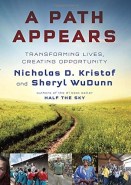 I contribute to some non-profit organizations, and have been a World Vision child sponsor for many years. More recently, I realize the responsibility to go from easy act of giving to more thoughtful consideration to give where it creates impact I care about.
If you are interested in changing lives for the better including your own, you would love this book “A path appears” by Nicholas Kristof and Sheryl WuDunn.
In this world of unequal opportunities contributed no less by the lottery of birth, the book offers, the best I have seen, a path on how to help those who lose at the birth draw.
With Cure-Violence to combat inner-city conflicts in the United States by applying principle of epidemiology; or organization which brings in older Americans to tutor students in public school across the country, it gives a catalog of opportunities to support babies to teens, from combating inner-city challenges to transforming slums in Kenya. The true stories are riveting and convincing how small acts of individual can make life-changing impacts to others.
I love the refreshingly bold section that talks about challenges in managing non-profit organizations and at times competition among them. Recently, I read about pe ople stop donating to a non-profit organization as they consider the CEO got a high pay (when it was pretty low compared to the business world). There is expectation that people associated with non-profit initiatives should be sacrificial. Such undermines abilities to attract best talent and create pressure to cut corners in the administration of non-profit organizations. Should we judge instead the impacts the organization make or not make?
The third and last section sums up to “help others help ourselves”. It echoes a childhood learning that helping is the origin of happiness. If altruism has a mixed record of success, it has an almost perfect record of helping ourselves.
If you just want to spare a minute on the topic, the last page lists six steps to take in the next six minutes.
Another on my reading list: “Half the Sky” from the same authors.
 of years ahead. It is a future time machine. It is about love. It is easy to love a bright future, it is something else to love the last mile of a journey. It is humbling and same deal to most. What motivates may just be the constant need to overcome new loss of ability to slow down the deterioration. Life is circular and we end where we start – nothing. Yet, if life is a circle, some draws a humongous one; some is more like a dot, a small number with negative radius. The world is almost shaped by those few who journeys a lot in their lives. Take an example, the smart phones are not a result of public voting, yet it changes how billions are spending their time every day. Internet and search are not the result of the work of the majority; it changes the lives of many. Automation of repetitive tasks is not the choice of majority of workers; it is the effort of bright minds who believe human intelligence will better be consumed in higher order than repetitive and mundane activities, maybe many would not mind mundane jobs to make a possible living. How the world evolves does not tie neatly with the advocacy of democracy in many political systems. No-one protest about technology, the smart phones, Internet, Wi-Fi nor the many apps, we endorse it most wholeheartedly. Are people being selective in the pursuit of democracy?
 of mostly disruptive behavior, however people justify them. The city has its share of problems, and more shares of fortunes when compared to many other places. The way it is going creates a real possibility that this generation grows up to see things from great to good, and could be in the hands of a few folks, from good to bad. There could be better outcome from brighter minds, and if not, life is circular so could the path of a city.
 n do we have a work week made up of two work days and three days of company holiday? It happened in this week of winter solstice, Christmas Eve, Christmas and Boxing Day. The anticipation for the week started after Thanksgiving holiday. And the week had its fair share of movies, feast and gifts.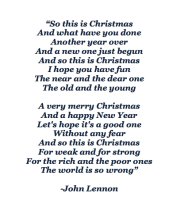
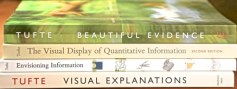 ta and information”, taught by Mr. Edward Tufte. Mr. Tufte is a professor emeritus of political science, statistics, and computer science at Yale University. He is a pioneer in data visualization. With hundreds of “adult students” in attendance, he brought his unique perspective on data and gave us highlights of the rich content of his four books on data visualization. It was back to classroom lecture and had reading material that took more of the brain bandwidth and really needed focus. Over the years, we build the habit of the right “messaging” in our presentation with data filtering; we worry about complexity to our audience, and cherry pick “easy” and relevant information to our target audience; our challenge becomes less of a mental and content but more of a political and presentation. It is a day of reminder that rich content is superior to beautiful slides; a reminder to not distort data; and the expectation that communication could be clear, precise and efficient at the same time.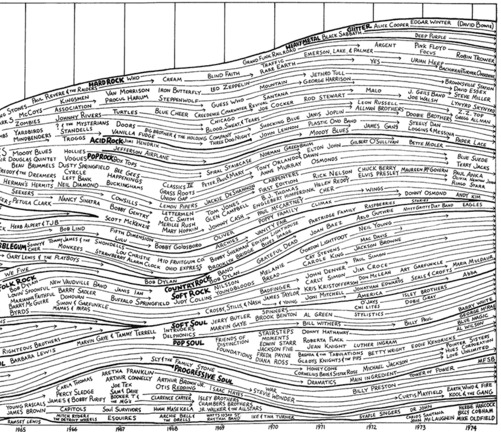
 any things convenient, efficient and improves the well-beings of many lives; and it is winning the race with non-technology alternatives. Yet, it is hard to wholeheartedly embrace a complete victory of technology.
 ikely way lower than the gasoline consumed in getting to shopping malls. It is as great a thing as free Wi-Fi.
 ng a hundred times will give a deeper understanding than the first attempt. After writing 100 blogs, I have learned or “relearned” a few things.
 not there, nor do I want to be there. They may just make it look easy.
 dset brings more inspiration. Three years have gone by between the 1st and the 100th. There are changes every day, let alone three years – mindset, parents, children, friends, career, workload and health. When we are relaxed and happy, the same thing looks more interesting and the world looks wonderful; no wonder the tennis players p
 he summer reading list of President Obama, it raises enough curiosity to pick up this book on a foreign topic – the history of species evolution and extinction.
 cks a species that is emblematic – the American mastodian, the great auk, an ammonite talks about extinct species; the increasingly fragmented Amazon rainforest, the ocean acidification and the endangered corals at Great Barrier Reef talk about the present landscape; plus many more around mammals and human. If any of these is new to you, the author will carry you to these new territories.
 n theory of mega fauna extinction, it is mind boggling on how human arrival may correlate the closest the species extinction when human predators unintentionally disrupts their long reproductive cycle; and the species reduction triggers forest overgrowth, then climate change. And how modern human species drive to extinction o
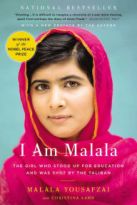 am Malala” covers her fifteen years of life in Pakistan, her families, her childhood, her schools and the global terrorism before she was almost shot to death.
 she relentlessly advocates for education through her blog, her speech and her bravery. When her family became internally displaced,
  the thing she missed the most was her books. When she recovered in the hospital, she wanted her books, and she missed the school examinations. Malala’s love of learning and school is a lesson for all the kids in many countries, where education is taken for granted.
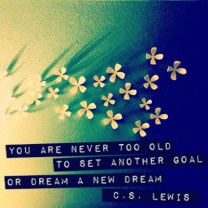 d me ahead what has happened since, I probably would have no idea. It is not that the past three years have been dramatic; just that the daily drudgery sometimes limit our imagination.
 ring is not rewarding”, yet, volunteer rate was reported to be 25.3% in US in 2013. It is a mystery to me.
 more time doing other jobs than his/her first position. With that, listening skills, communication skills, self-management, versatility and ability to learn become as important as the current job fit. Among these skills, listening skills seem the most under-appreciated. It is a skill that seems to disappear over time; it takes lots of practice to keep the curiosity and humility. We don’t learn things by saying what we already know; we know new things by asking questions and seeking a new answer.
 e motivation is valued and needed.
