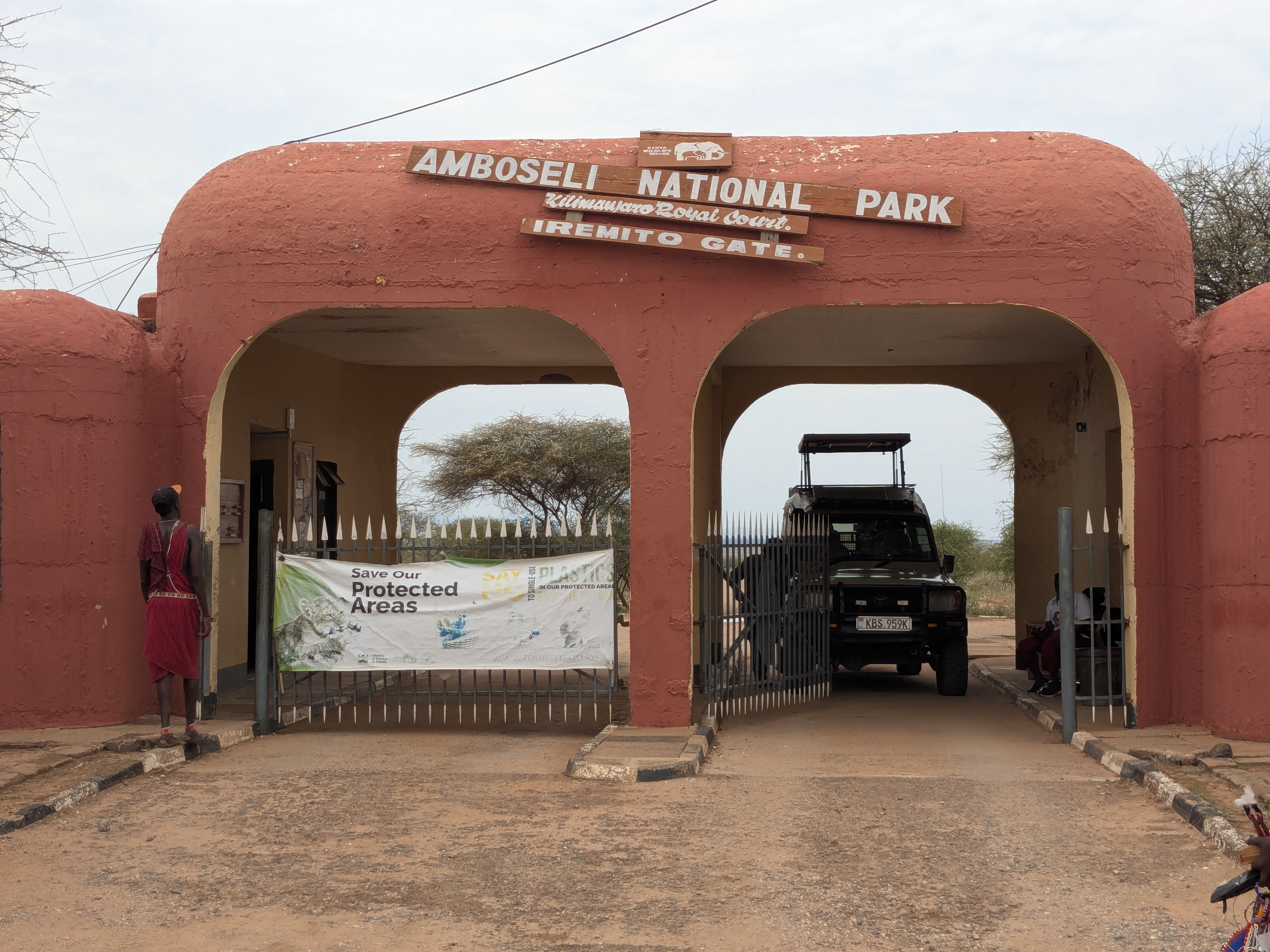
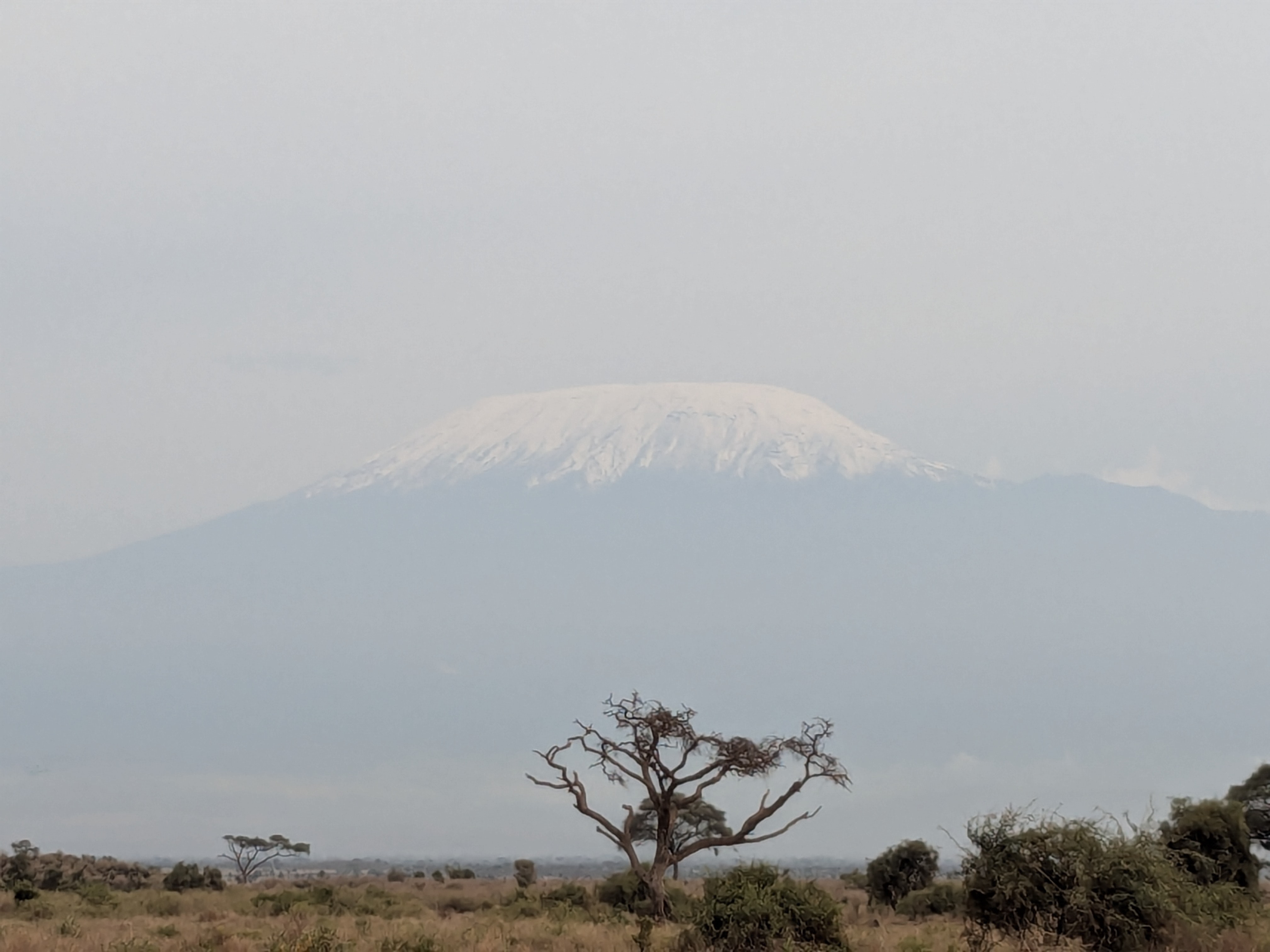
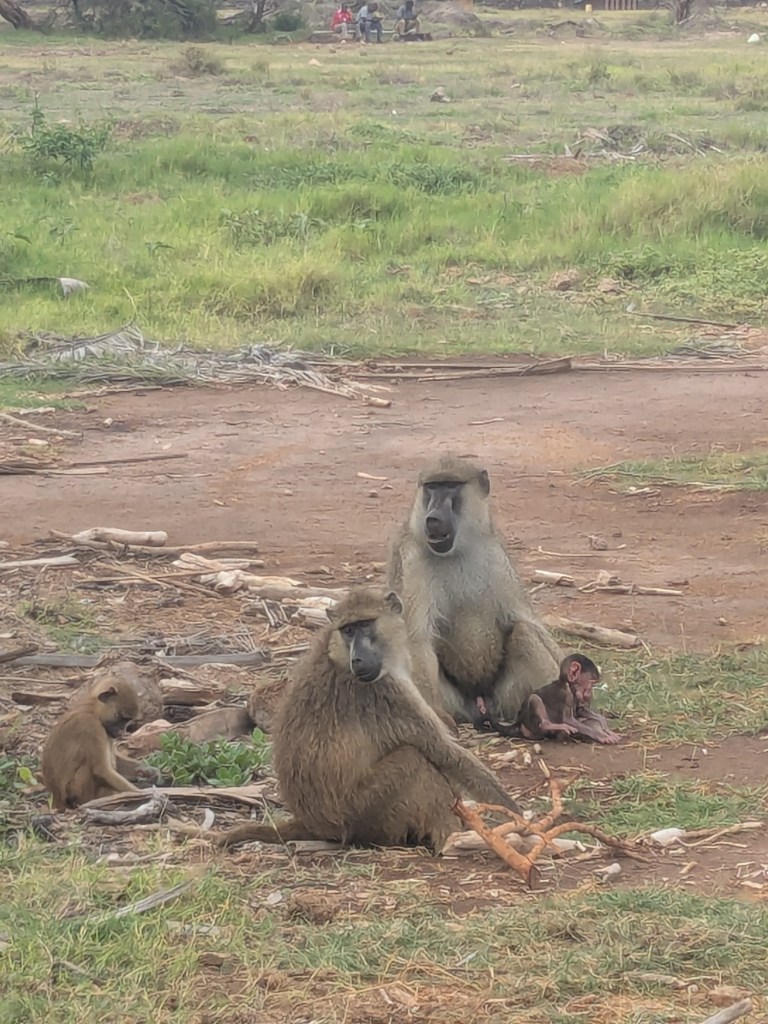
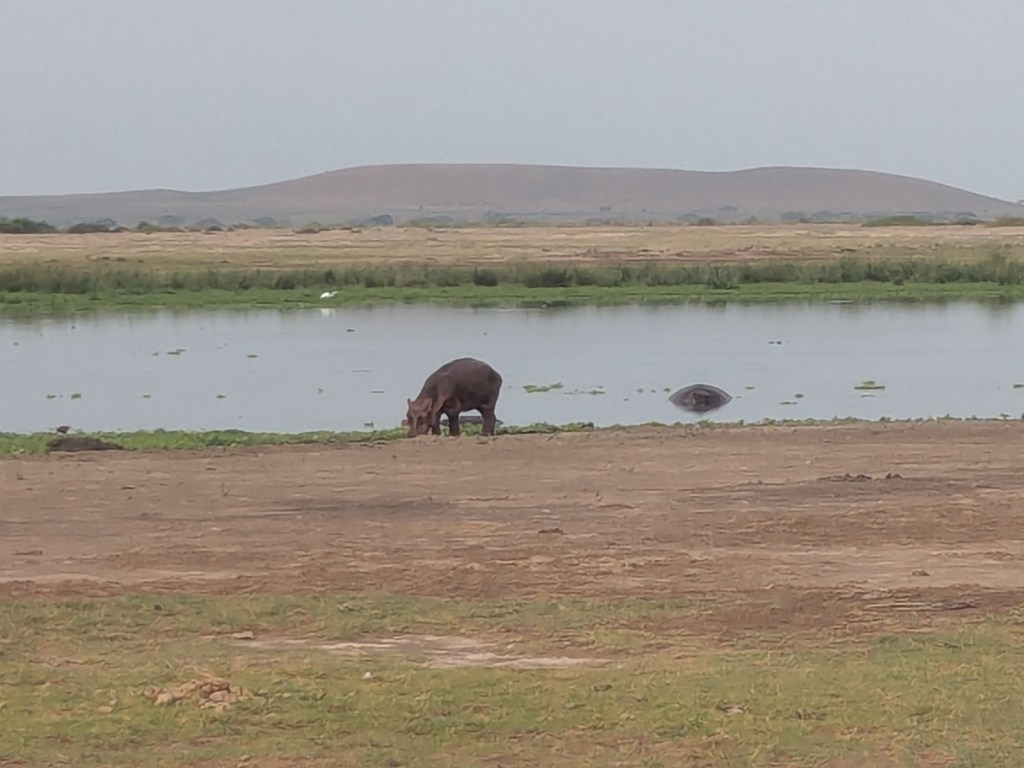
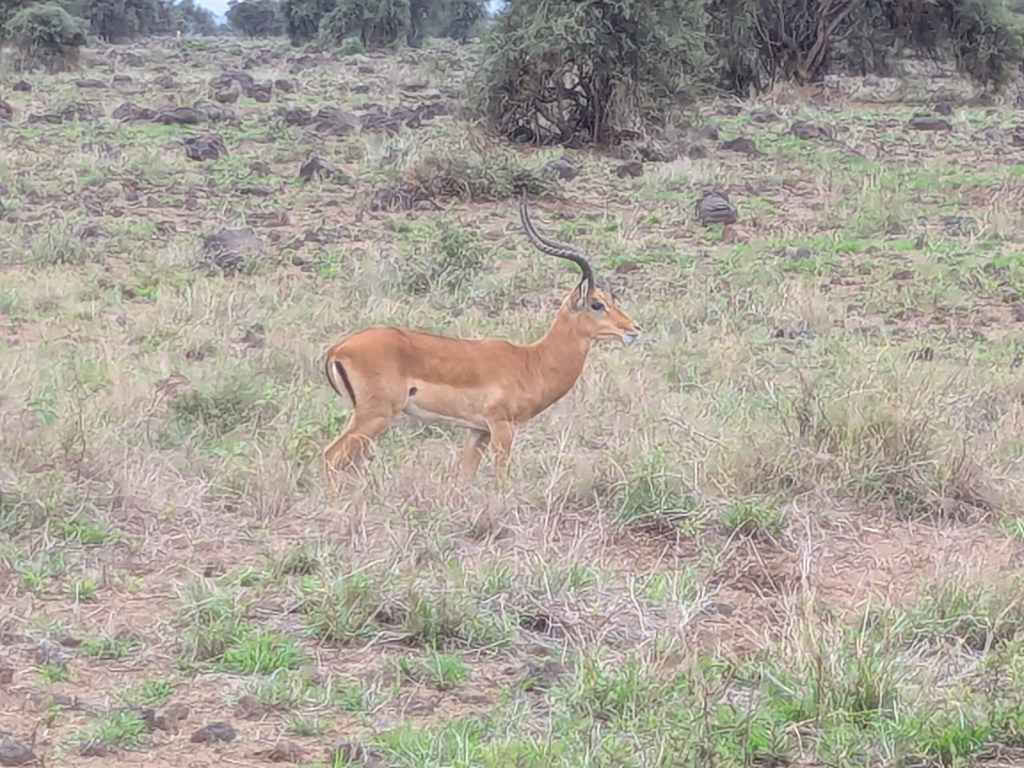
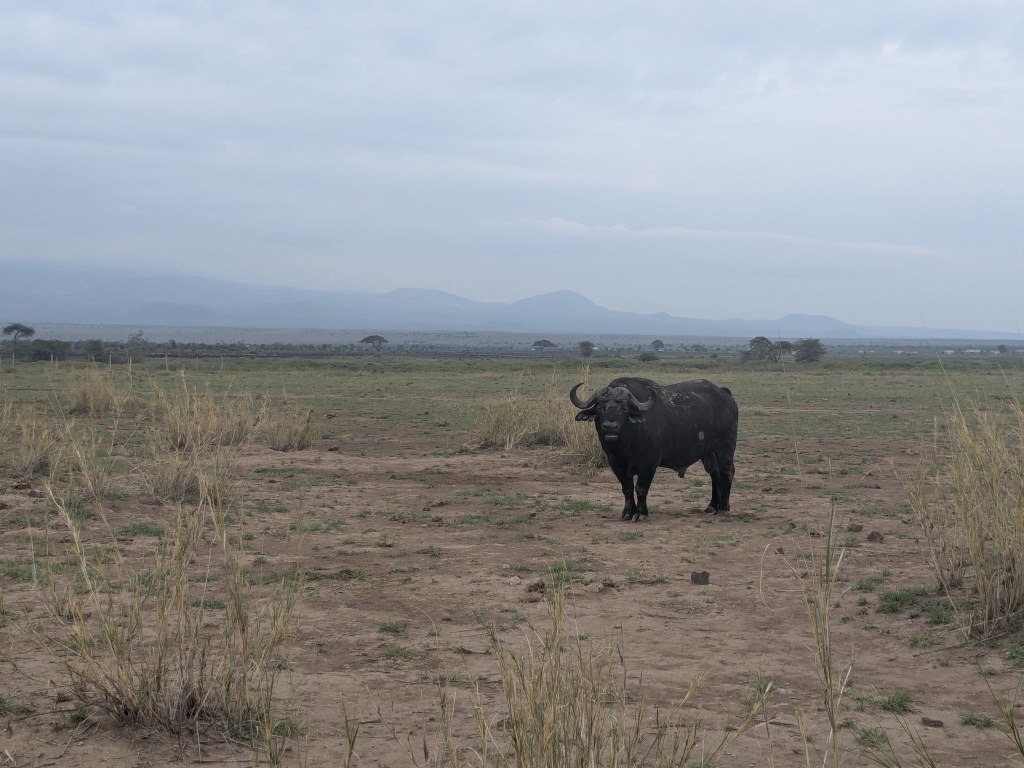
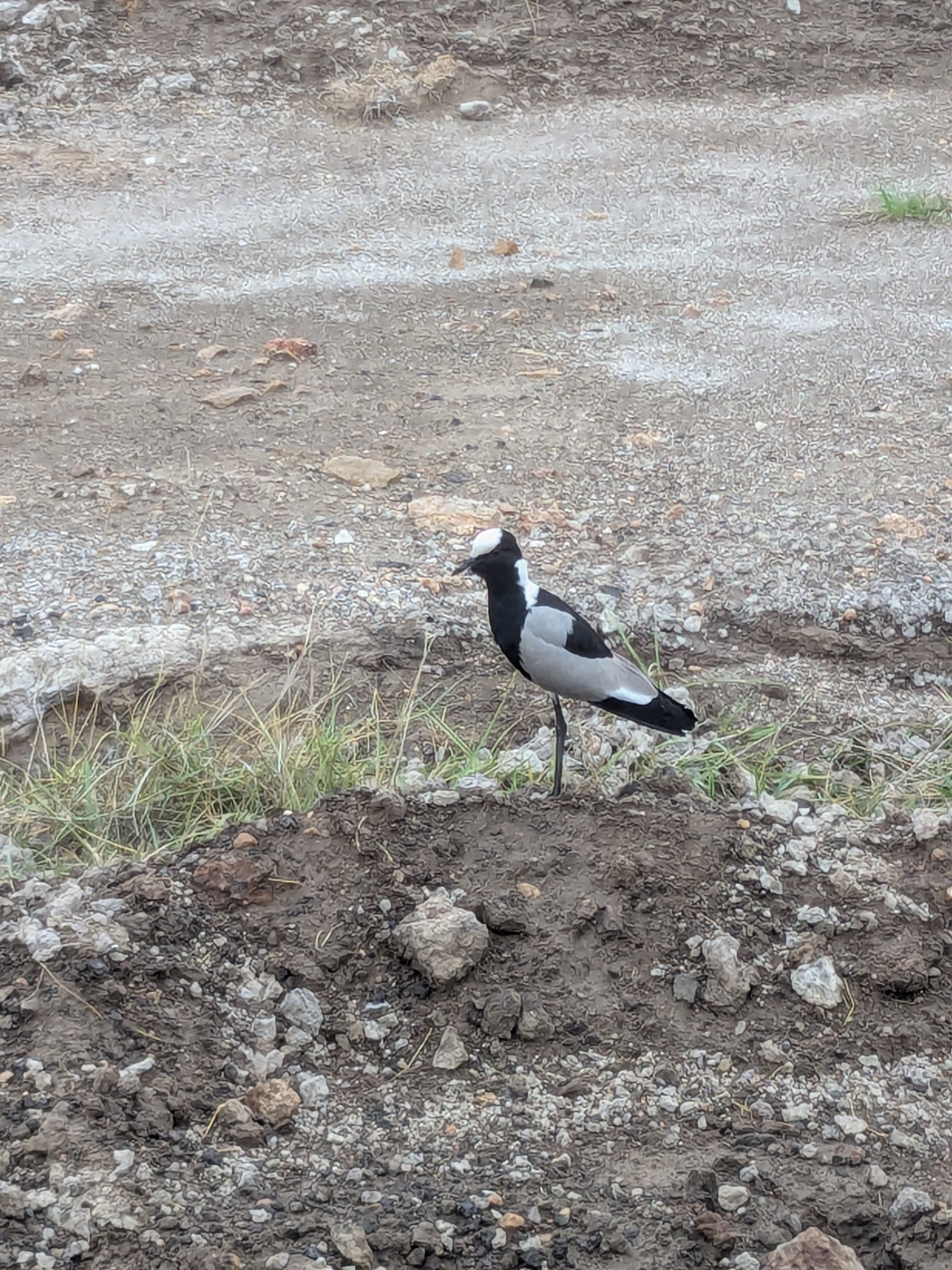
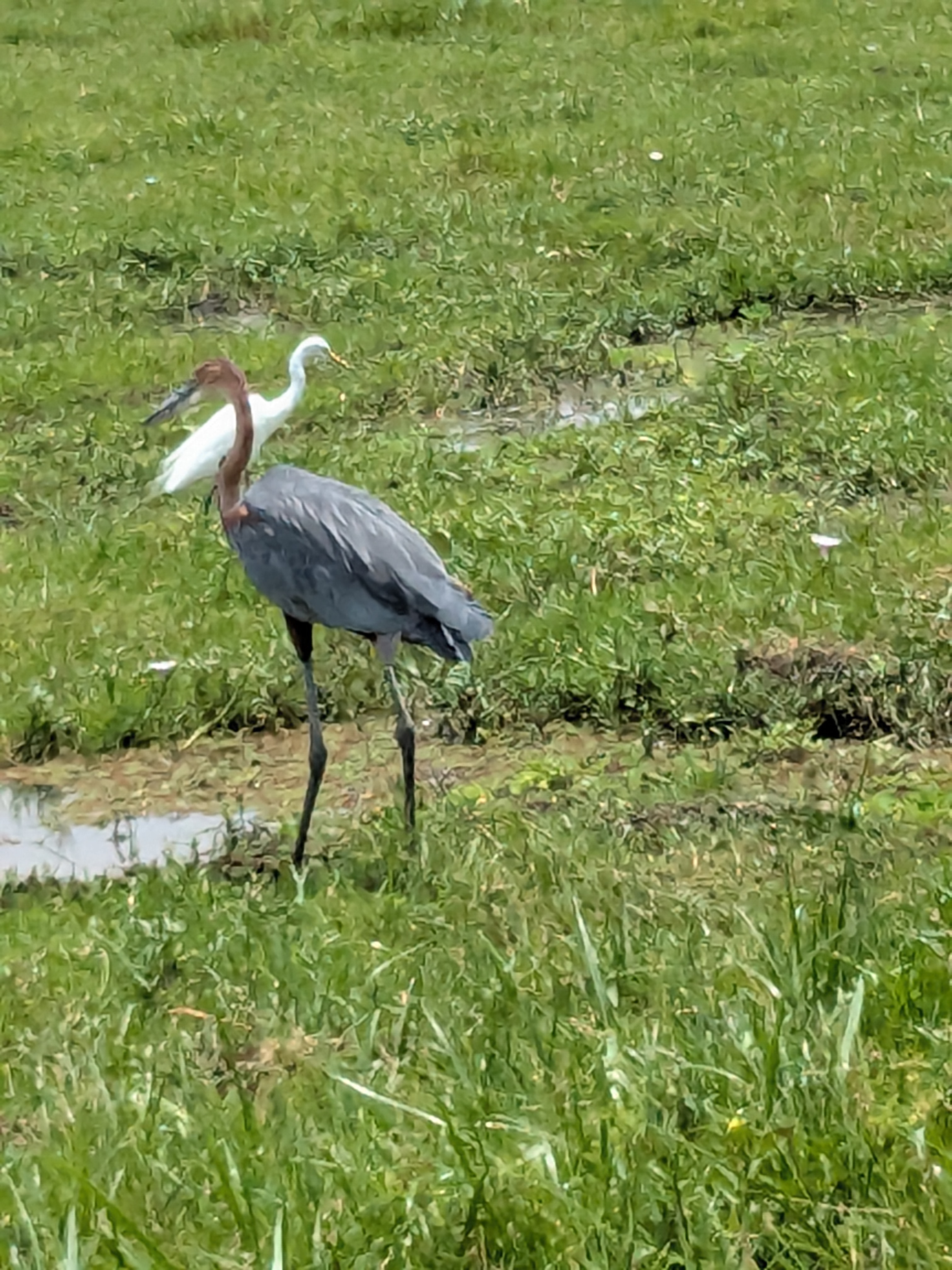
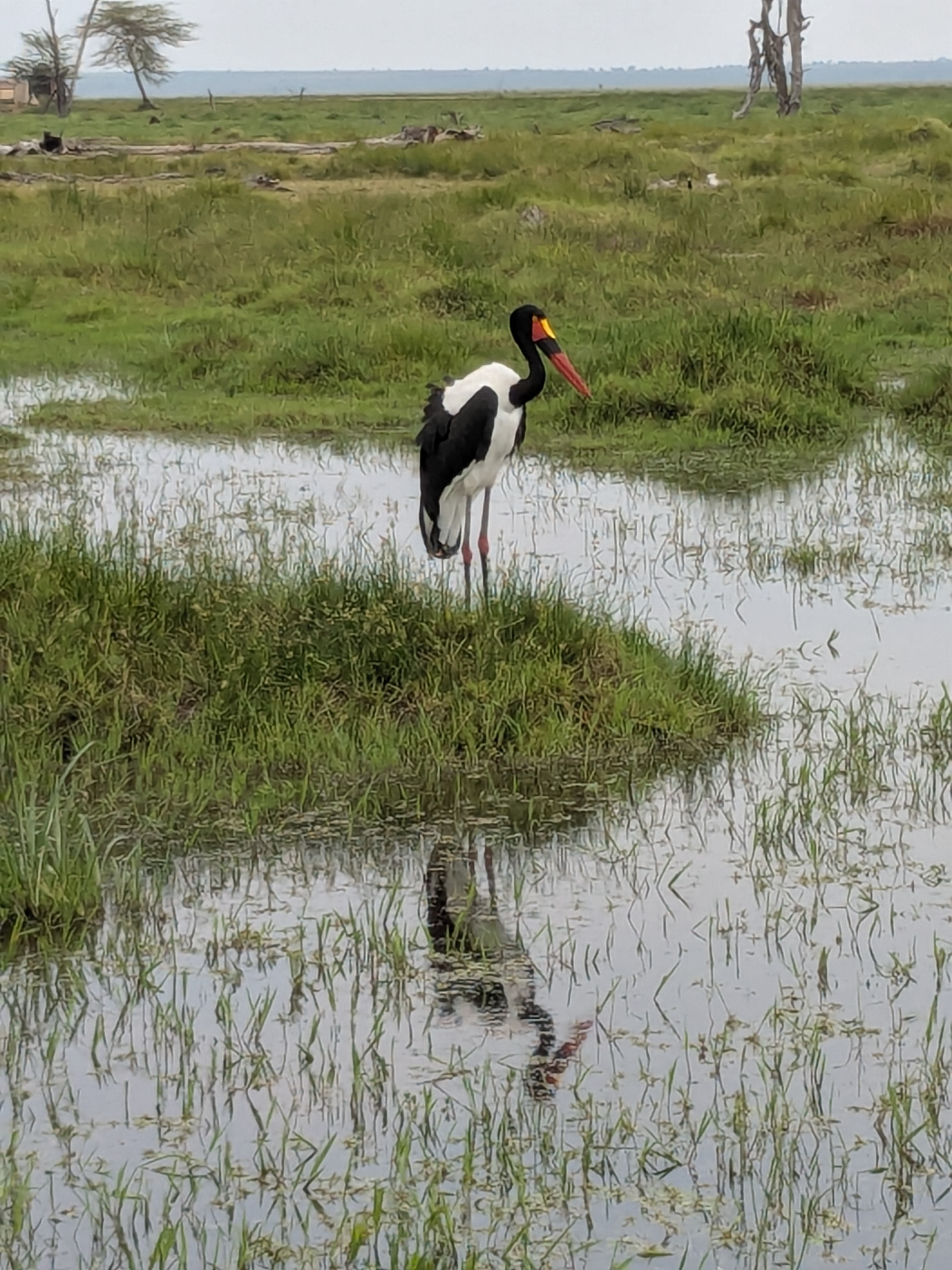
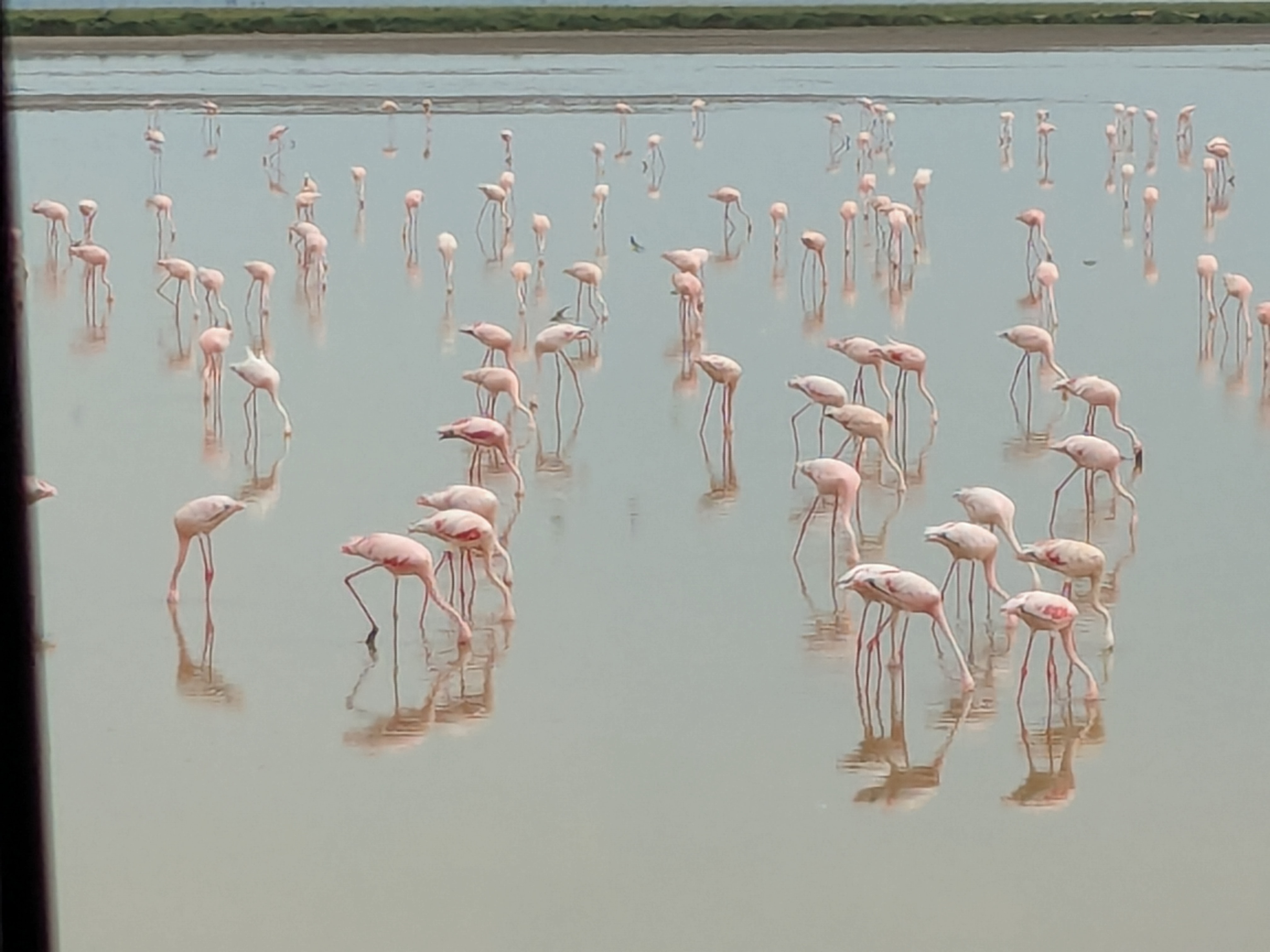
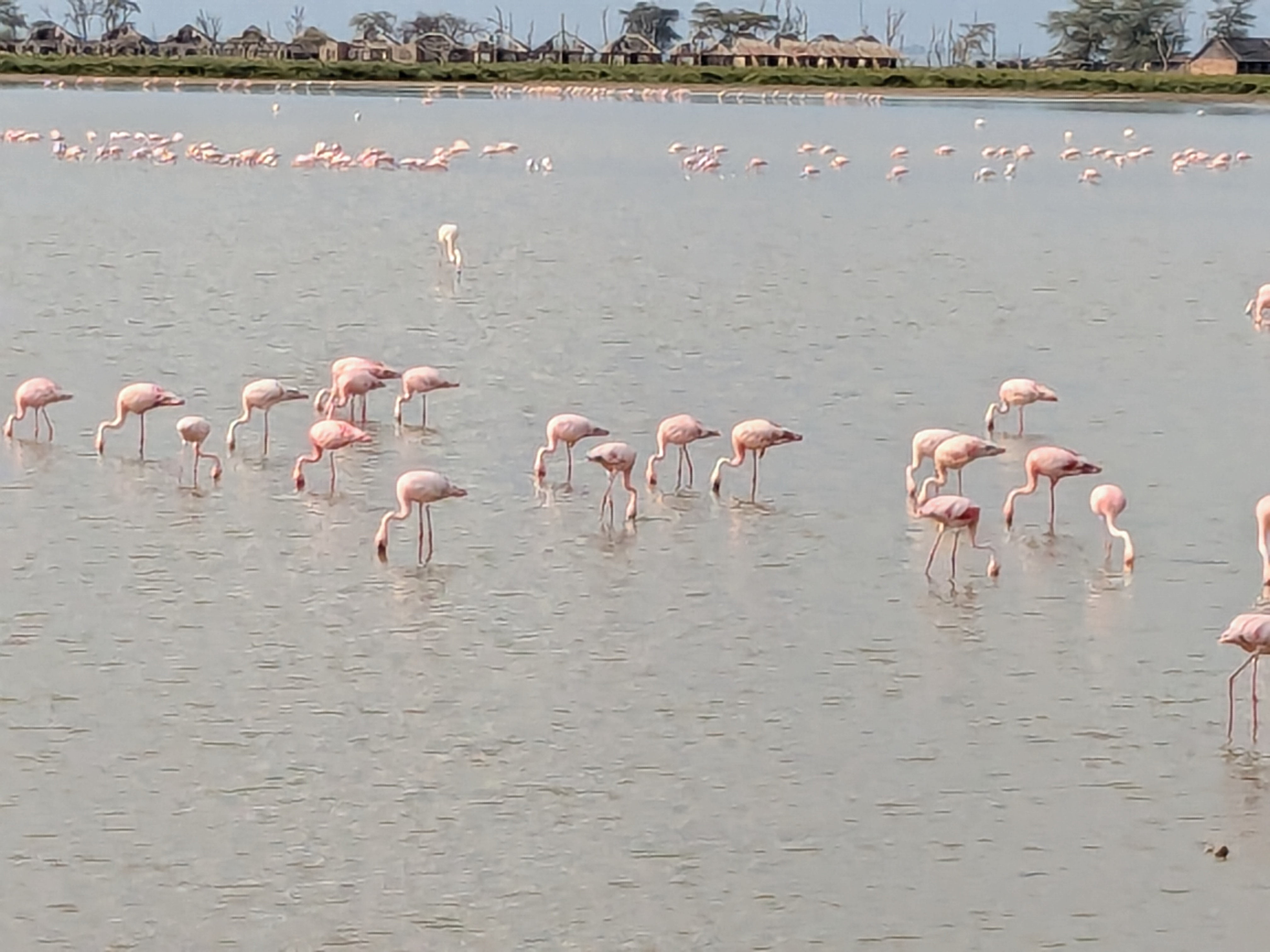
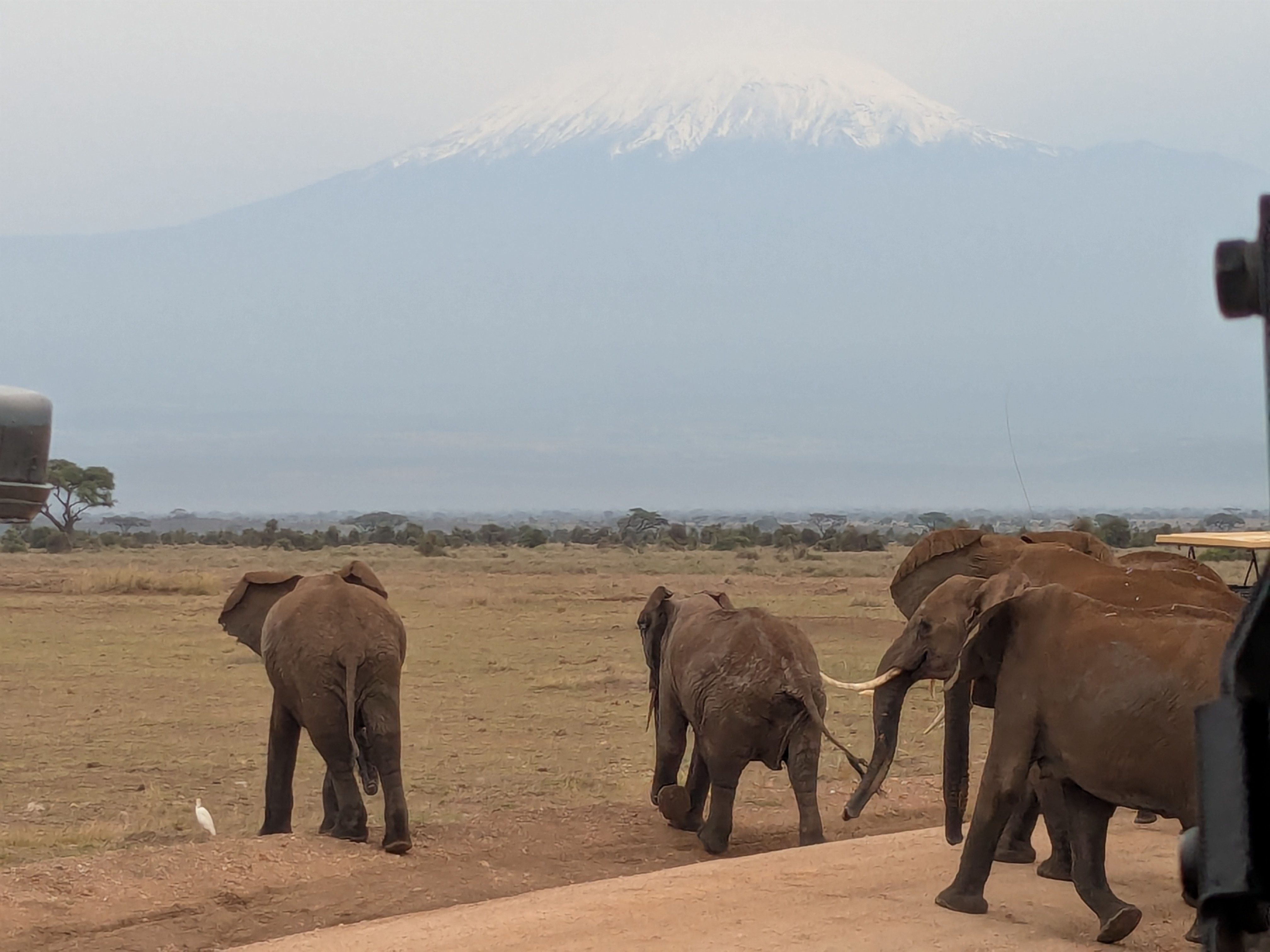
Amboseli National Park, the only Safari we visited on this trip, is a famous Safari. Amboseli National Park has more open plains than hiding places. It makes a good habitat for the African elephants and birds, but not so much for many animals who would rather have natural protections. On a clear day, the snow-capped peak of Kilimanjaro is visible. We have seen the peak of Kilimanjaro, some herds of elephants 🐘, zebras, lion and lioness 🦁, wildebeests, hyenas, buffalos, hippopotamus, gazelles, antelope, impala, waterbuck, baboon, rock python and more. We had related Safari to mammals, and did not quite expect to see the beautiful birds. There were many: Crown Crane, Blue heron, Egret, Colorful Stork, Spoonbill, Blacksmith plover, saddle-billed stork and many others I could not name. Giraffes are less common, likely due to the flat plains. On the way to the Park and at the border of the Park, where there are taller bushes, we have seen a few giraffes 🦒.
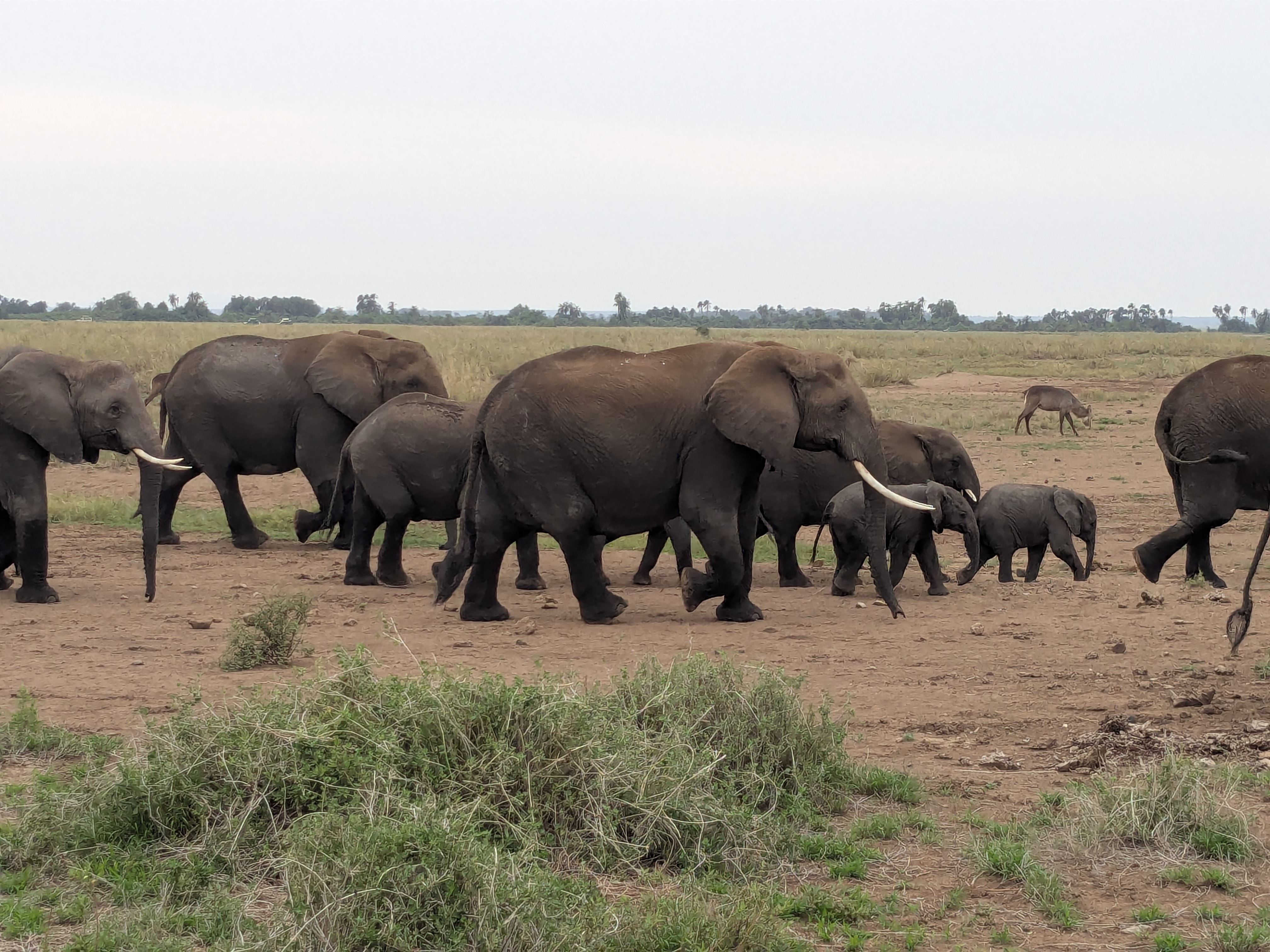
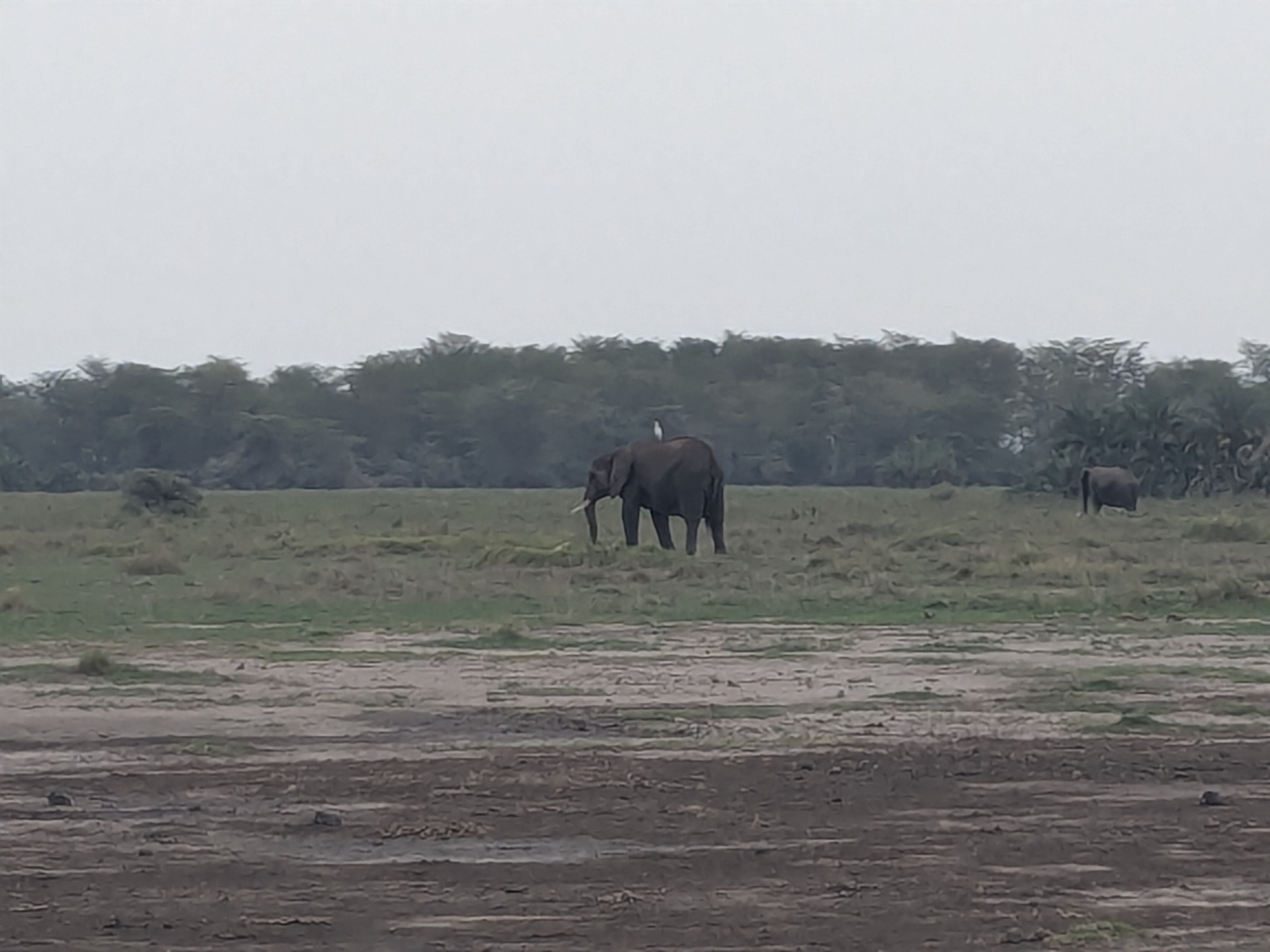
African elephants are amazing animals. The adult elephants are huge yet gentle and graceful. They let the cattle egrets freely stand on their back. The egret and the elephant look surprisingly harmonious with each other. As elephants walk, their massive weight flushes out insects from the grass, giving the egret an easy meal. In spite of their weight, their strolls look slow, steady and effortless while covering distances effectively. They are not bothered by the jeeps parking on the road nor by the audience watching them, and simply mind their own business gracefully. The baby elephants are cute and walk close to the adults. I still have not figured out how the babies can catch up with the adult, but they do. The tour guide shares that the African elephants typically go through six sets of molar teeth in their lifetime. Each set lasts a few years. African elephants typically live to about 60 years of age. The final set lasts for roughly 20 to 30 years. When the last set of molars wears down, the elephant sadly faces starvation, which is a major cause of death in older elephants. Just watching the graceful elephants, the zebras, and the giraffes in nature is worthy of visiting the Safari.
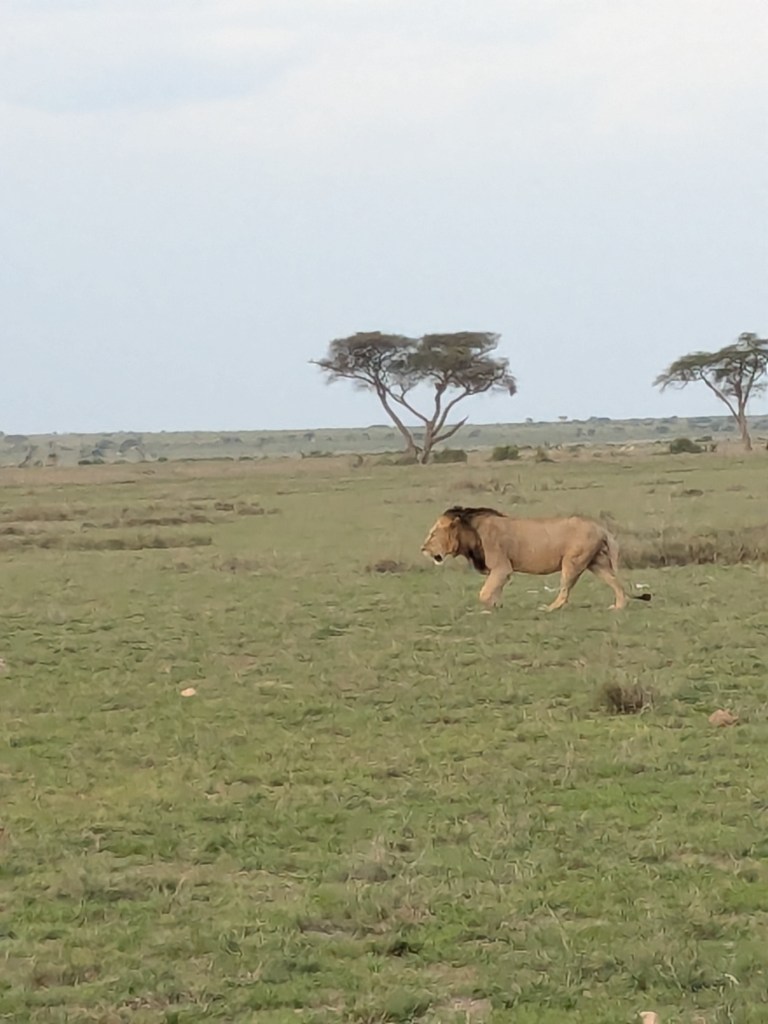
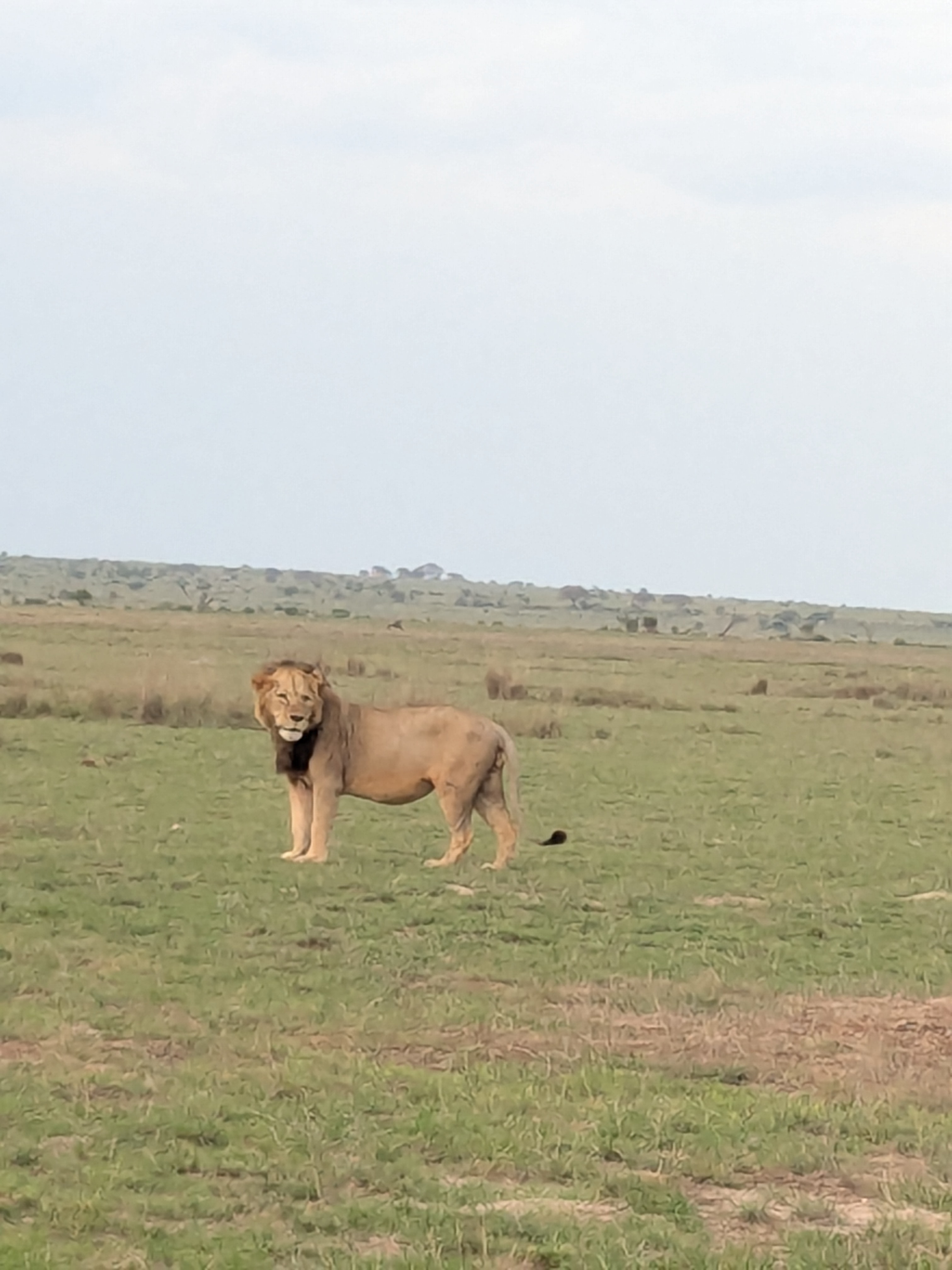
Every Safari tourist loves spotting wild animals. As much as we love spotting a male lion, it has not been as chilling when all the Safari jeeps sped to the same spot on the bumpy roads once the jeep drivers got the news of a lion sighting from the radio. When these jeeps parked along the road, it started to feel like watching a lion in a zoo. In spite of its ferocity, the lion on the day was not huge. He walked fast and covered a good distance simply by strolling. When the lion wanders around to claim the territory, the lioness is the hunter. That lioness, we witnessed, lied low and waited patiently in the short grass for the two zebras, almost within striking distances. On that day, the zebras did not wander close enough for the lioness to attack and we avoided a bloody scene.
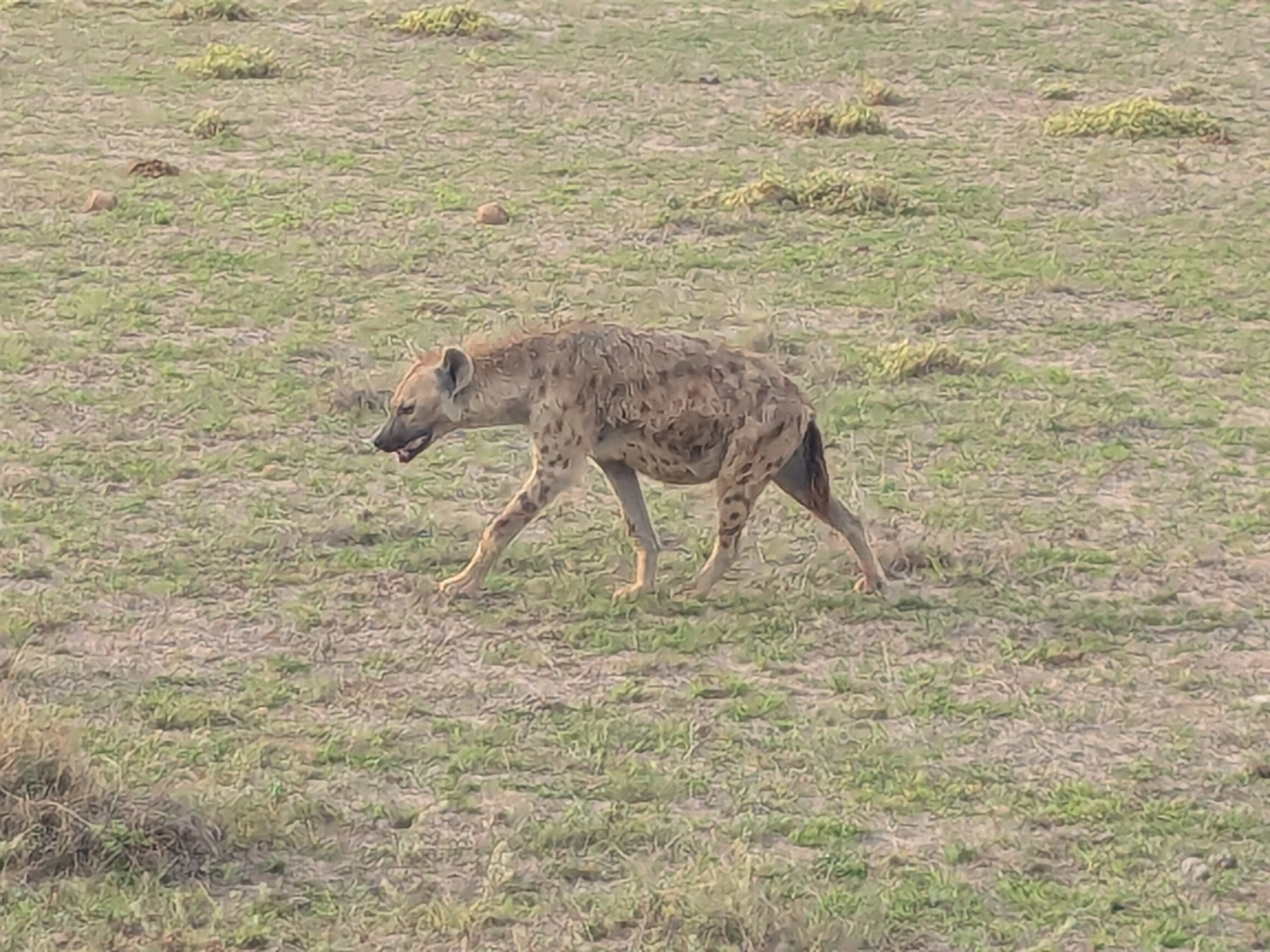
The movie “Lion King” has given hyenas a bad reputation. Their appearance has not helped. Hyenas just look hungry, wild and dirty. In actuality, hyenas are the “environmentalist” in the animal world. They are not picky in their diet and will finish cleaning up the leftovers. They are frugal and do not kill when there are leftovers available. On this trip, we saw these hyenas pretty closely. In that relationship between lion and hyena, on this trip, we witnessed, from afar, a hyena and a lion taking a nap in each other’s company.
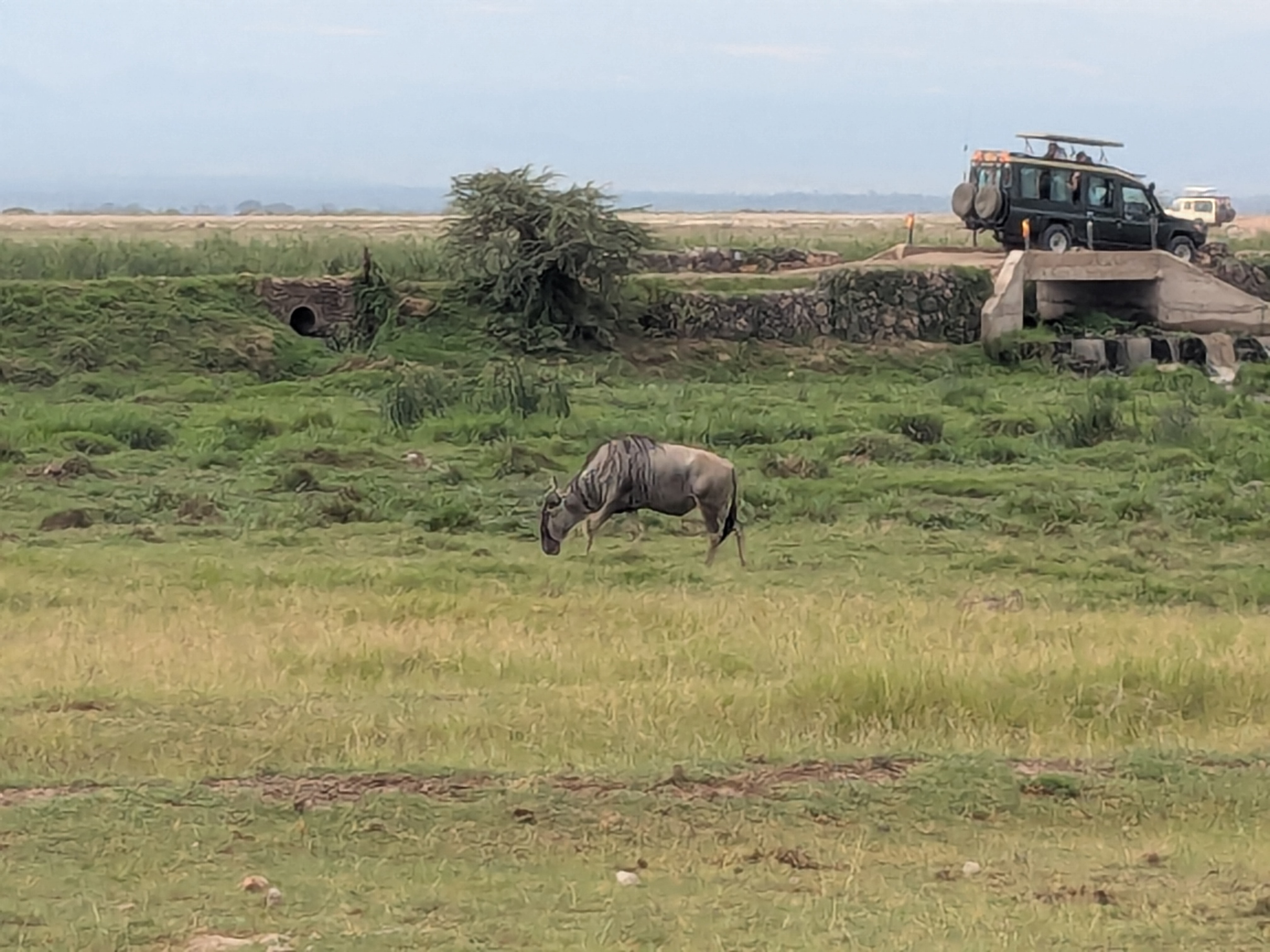
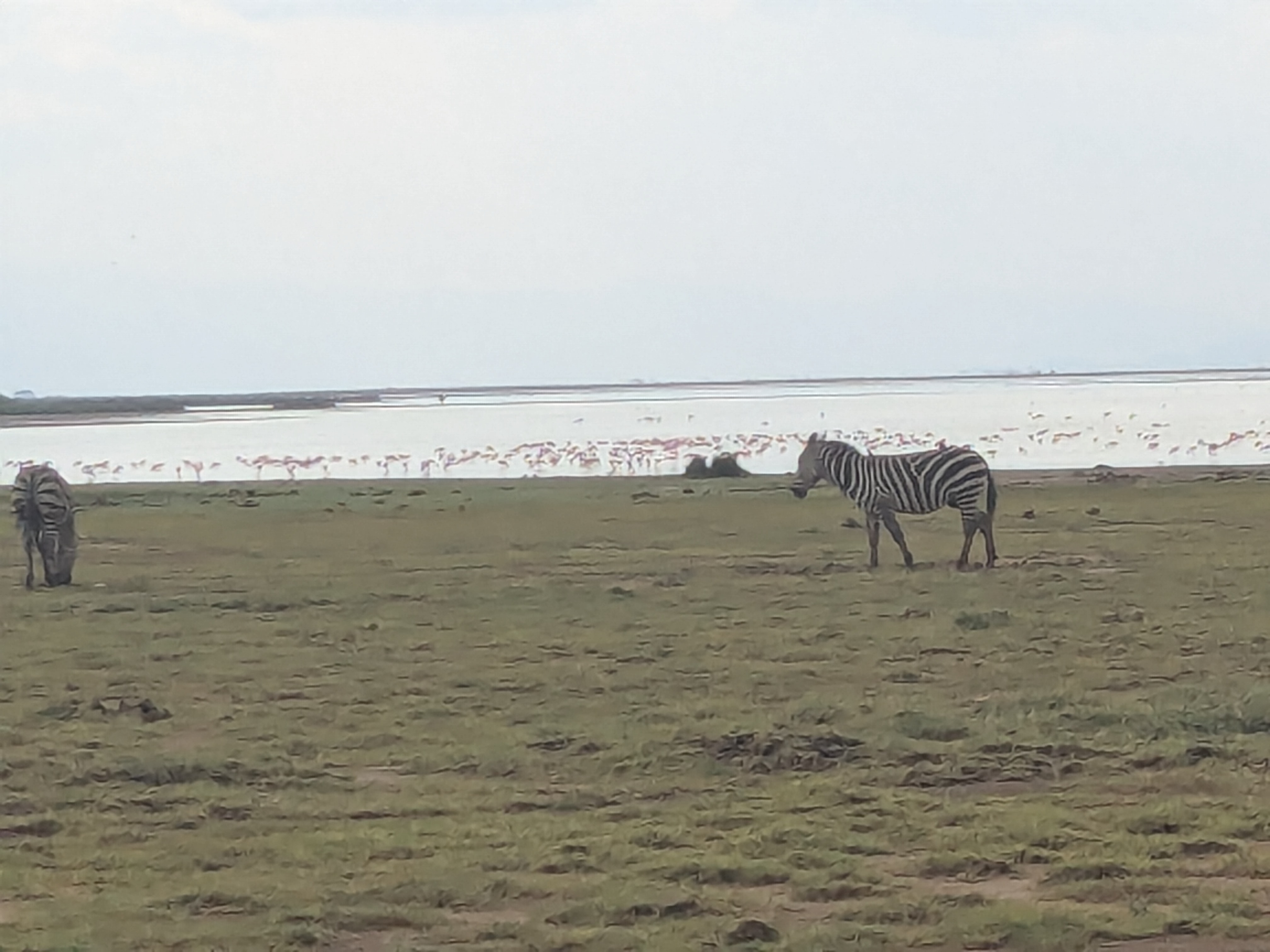
We did not know about the wildebeest until this trip. The wildebeest, an African antelope, is such a unique animal that it should be more famous. It is a combination of many animals. The joke is that God runs out of the raw materials for the wildebeest, or that it was created using the leftovers from the other animals. It has the zebra stripes, the buffalo horn, the horse body, and the slender antelope legs. There are quite a few “confusion” (i.e. “herd”) in the park, and often they are accompanied by a couple of zebras. The wildebeest are herbivores and are gentle animals.
The diets tell more about the aggression than the size. Elephants, giraffes, zebras, wildebeests are gentle and graceful on their plant-based diet, while omnivorous or carnivorous animals come across as more dangerous. Regardless, our jeep, with a capacity of 6 to 8 passengers, is safe, and capable on the rather bumpy roads leading to and inside the park.
Safari makes the perfect place to see the diversity of the mammals and birds in nature.
On our last day in this Kenya trip, we were back to Nairobi before flying back to the US. We visited the National Museum of Kenya in Nairobi. I wish I had visited the museum before the Safari and had more visiting time, to understand more about the animals, the 1000 species of birds, the butterfly in addition to the unbelievable exhibits and the history of homo erectus.
The National Museum is a not-to-be-missed for any tourists in Nairobi or Safari visitors.
Unlike our travels in many other parts of the world, Africa felt different to us. We found comfort in leaving the logistics and guiding to those who know the land best. We never felt we had enough confidence to venture out entirely on our own—at least not yet. felt the confidence enough to venture out entirely on our own, at least not yet.
 oliviatamccue
Leave a comment