oliviatamccue

about everything, anything or something

LA Attractions: Channel Islands National Park (Part 2 of 2)

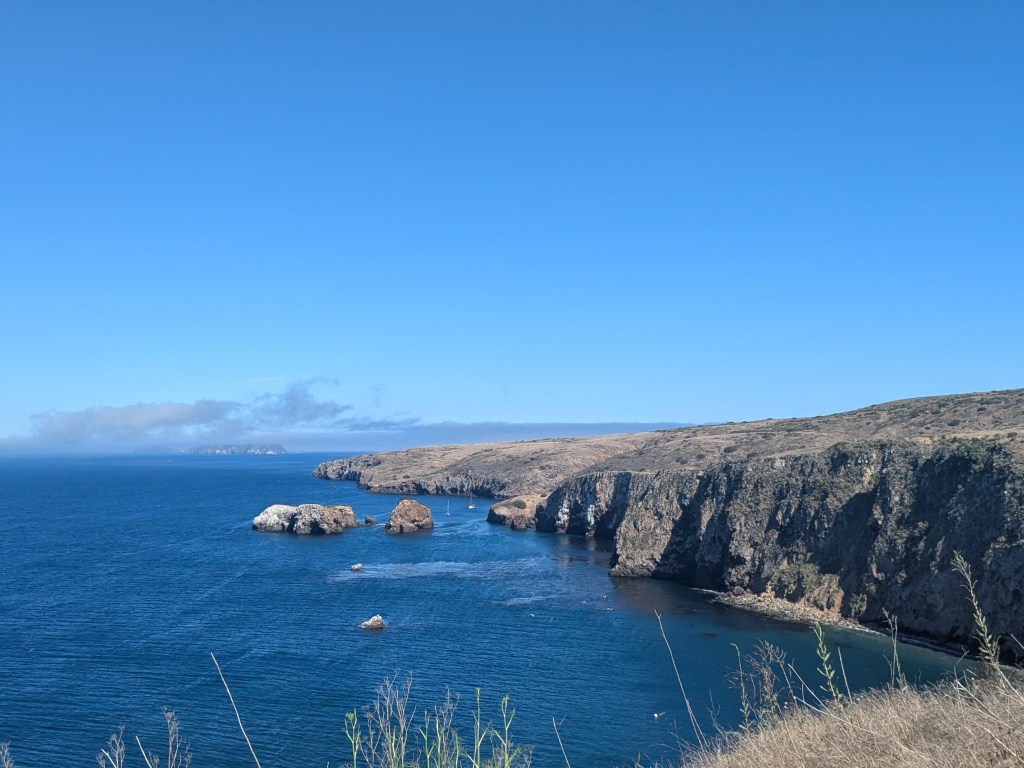
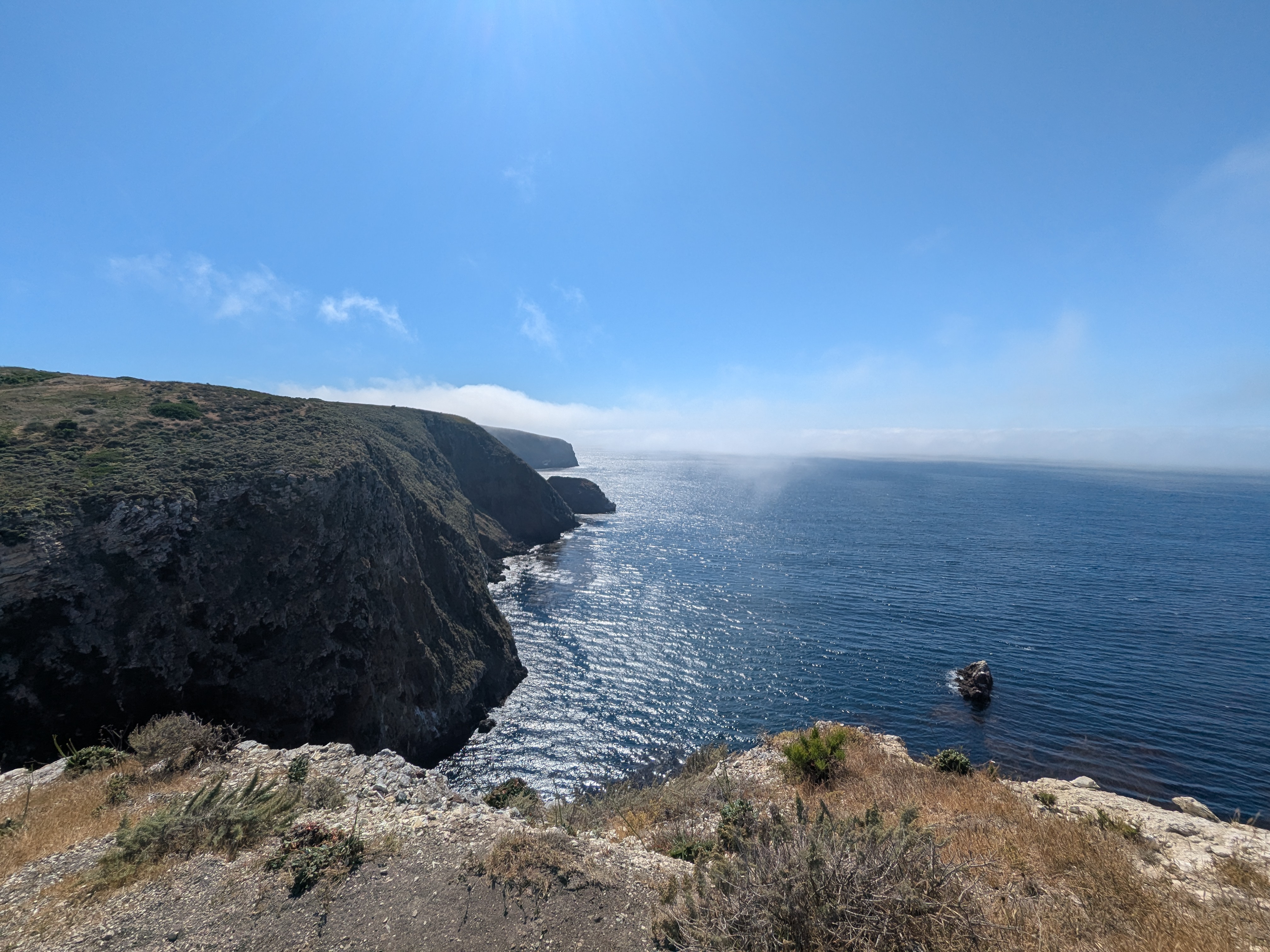
The Channel Islands National Park, near Los Angeles,  is sometimes described as the Galapagos of America. It comprises five islands, with Santa Cruz island, the one we visited, as the biggest. Each island is pretty unique. All of them are relatively rare in human footprints. 

In spite of its proximity to LA, this Channel Islands National Park is not as much visited as other National Parks in California. Unlike most other National Parks, there are almost no amenities on the Channel Islands National Park. This island is  unique in showing what nature would look like on an island without human interventions.  Its inconvenience makes it less appealing for city dwellers.

Santa Cruz island is about 2 hours of boat ride from LA. The boat leaves on time. If you arrive at the LA pier on time, you will miss the boat. On our way to the Channel Islands, we were excited to see some dolphins. That was however nothing compared to what we saw on our way back (later). We saw quite a few oil rigs that I did not quite expect to be on the Californian coast. These oil rigs are huge. 

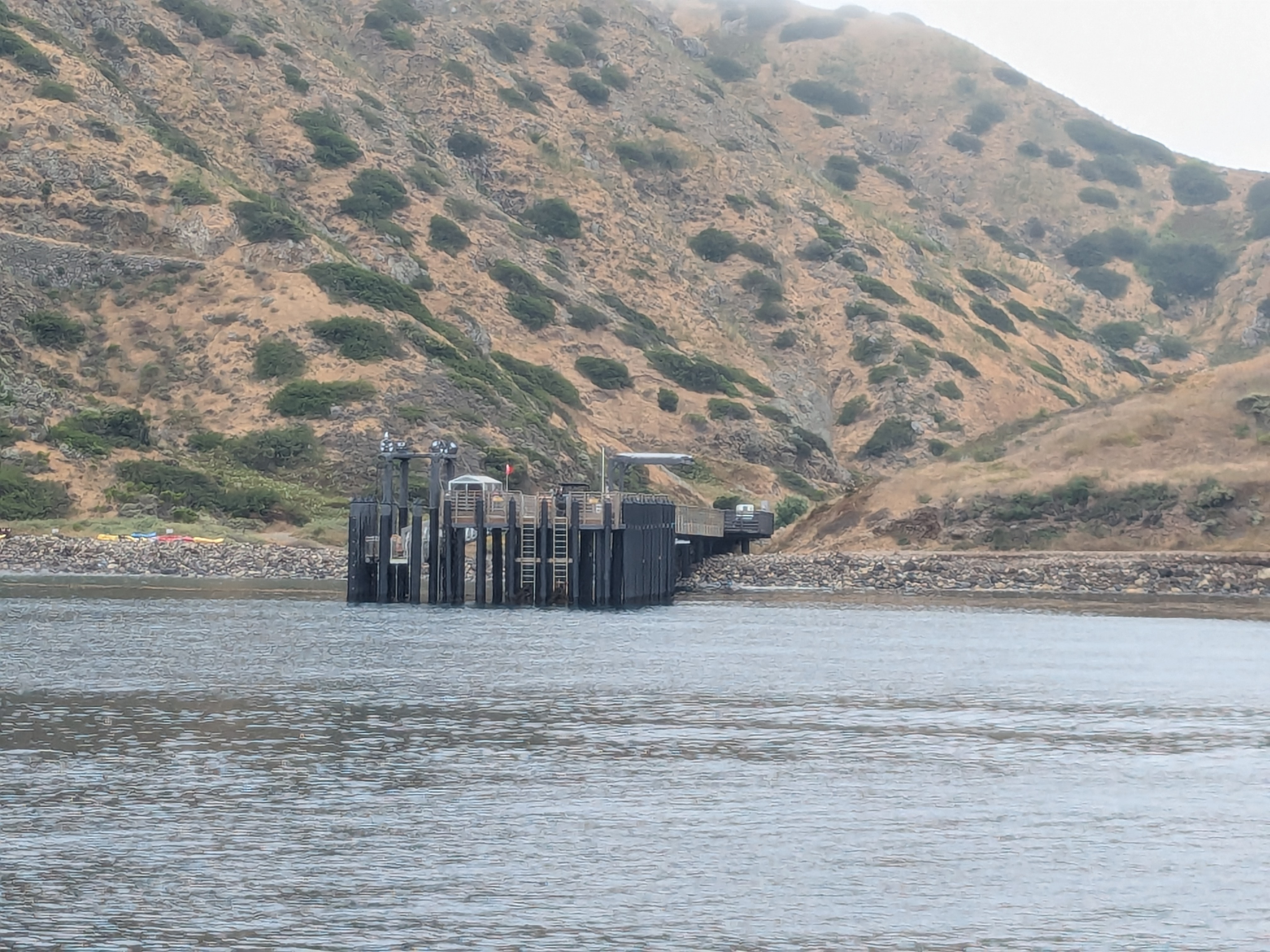
Santa Cruz island greeted us with a very basic pier, an uncommercialized beach and a “local guide” to take us to the beach and also to where we would meet for the afternoon kayak tour.  This island has no restaurants, no shops.  The visitor center is self-service for those who collect passport stamps. There are a couple of toilets.  The toilets are quite miserable and are to be used only when it is absolutely necessary. There are a few campsites with tents set up by seemingly scout troops. 
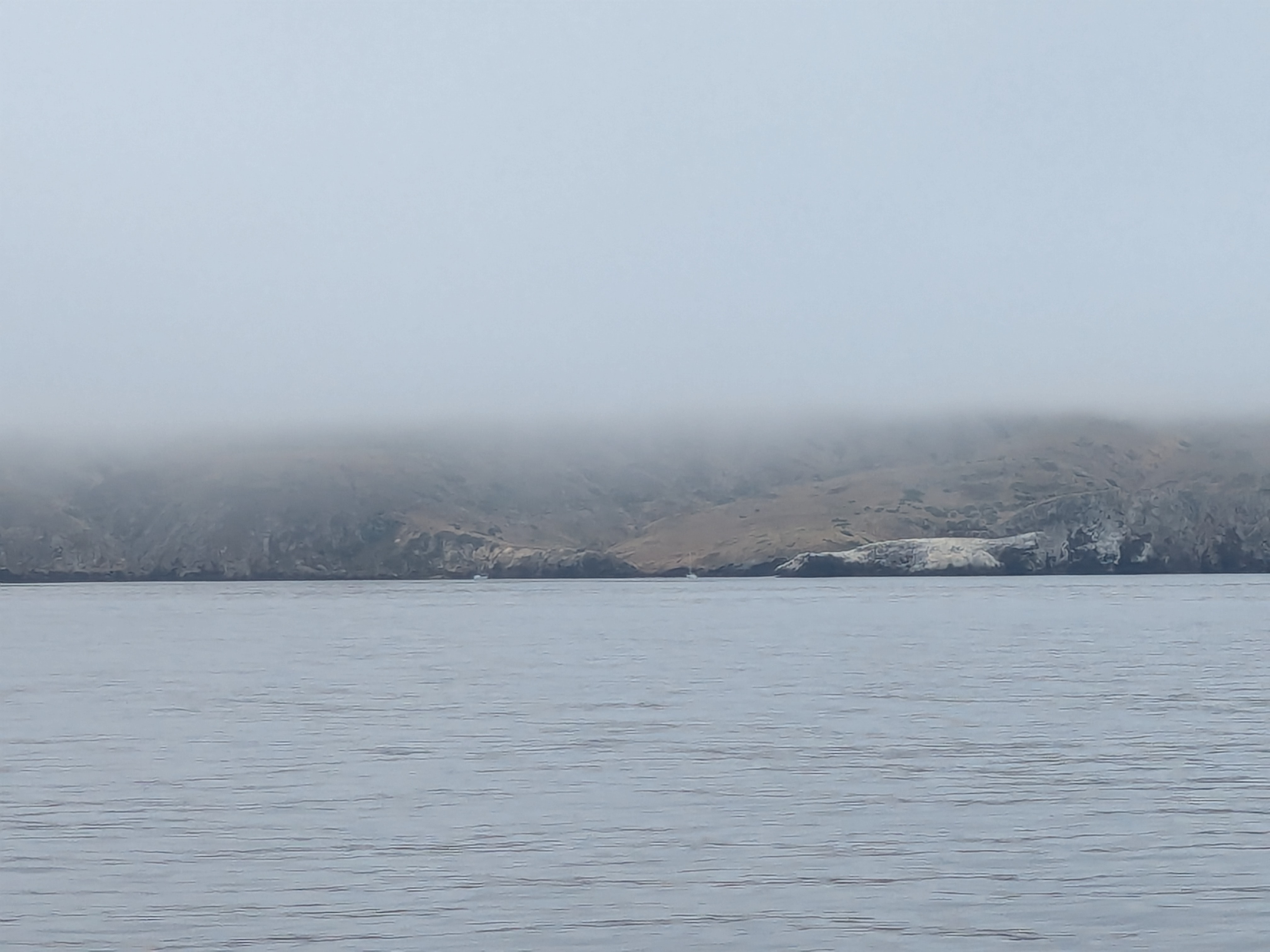
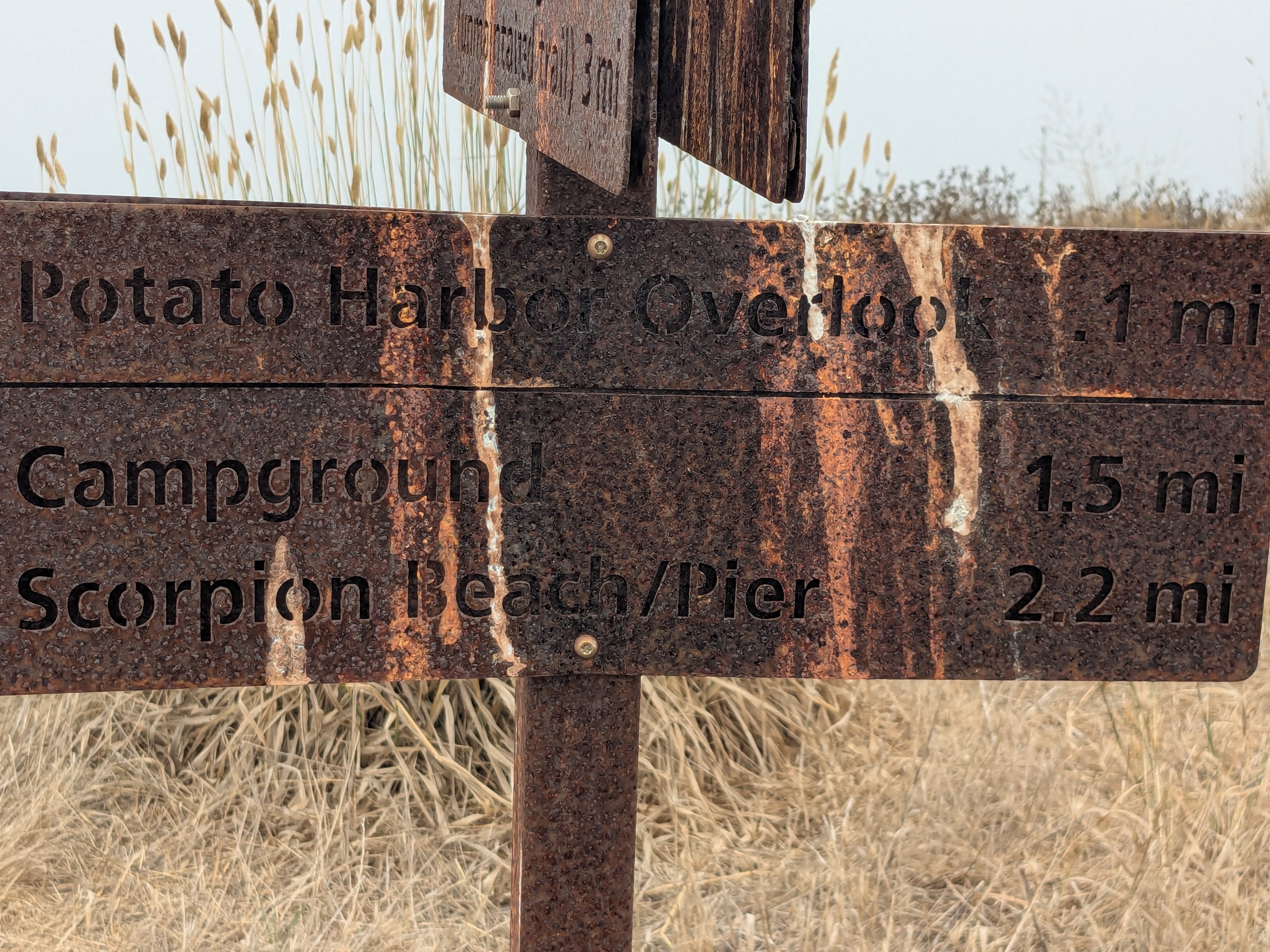
We had a couple of hours to hike and did an afternoon kayak tour. The Potato Harbor and Cavern Point Loop are comfortable hikes. Along the trail, there is not much variety of fauna nor flora, other than some larger-than-usual ravens and a few smaller-than-usual foxes. It is a bit surprising given how “remote” the islands have been. On this cloudy day, Potato Harbor and the beach were in the mist. It made a quiet trail with few hikers.

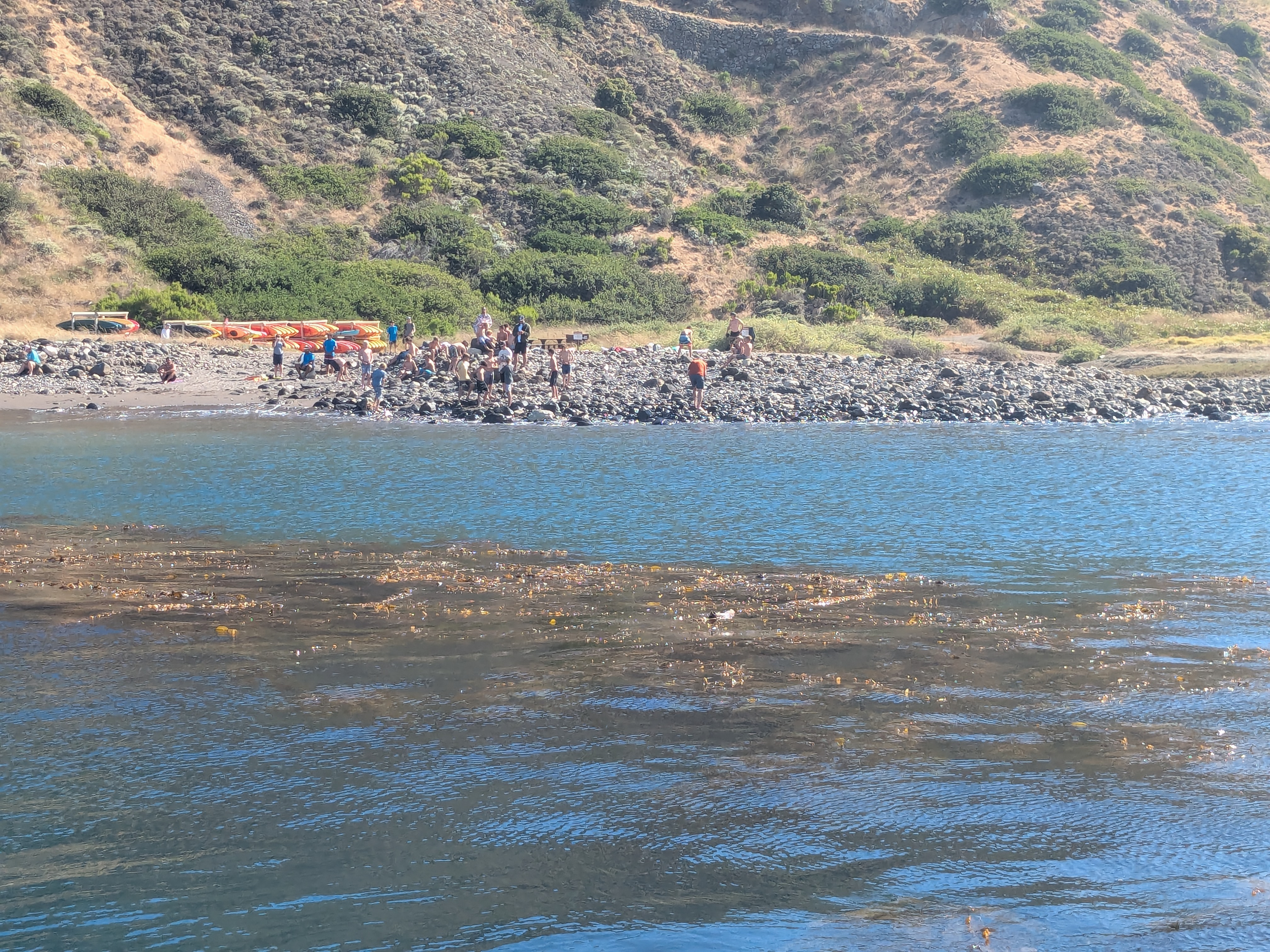
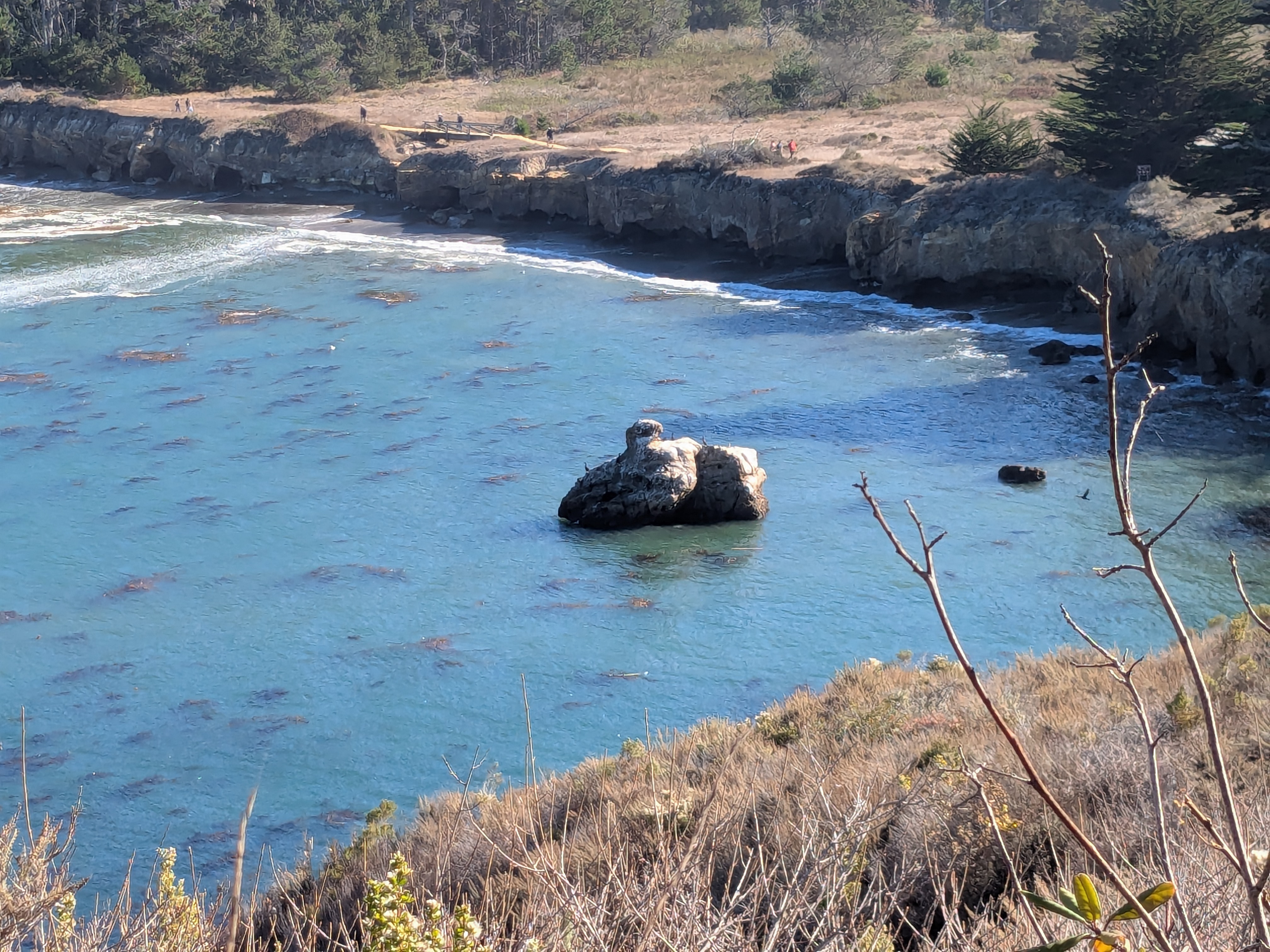
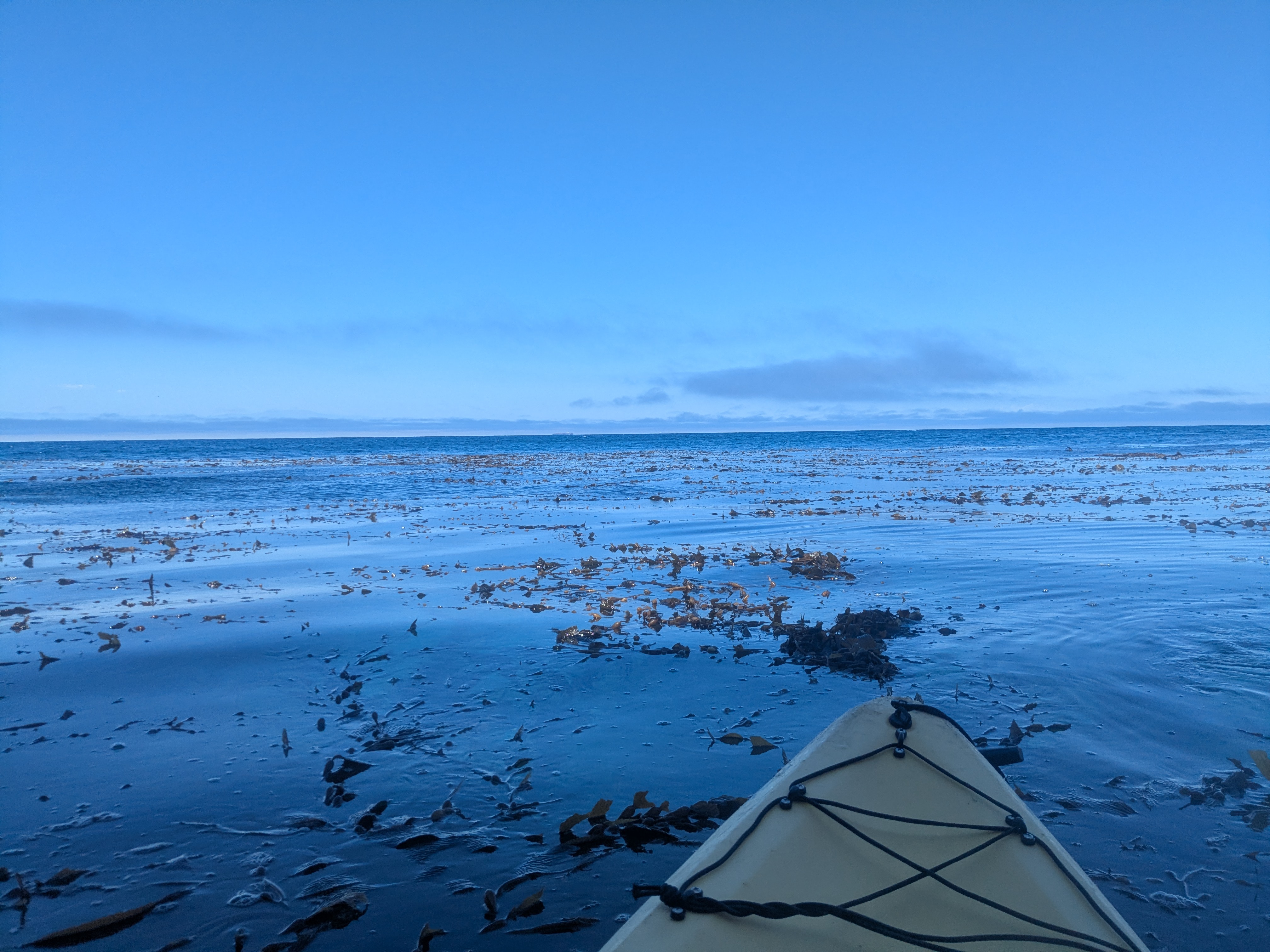
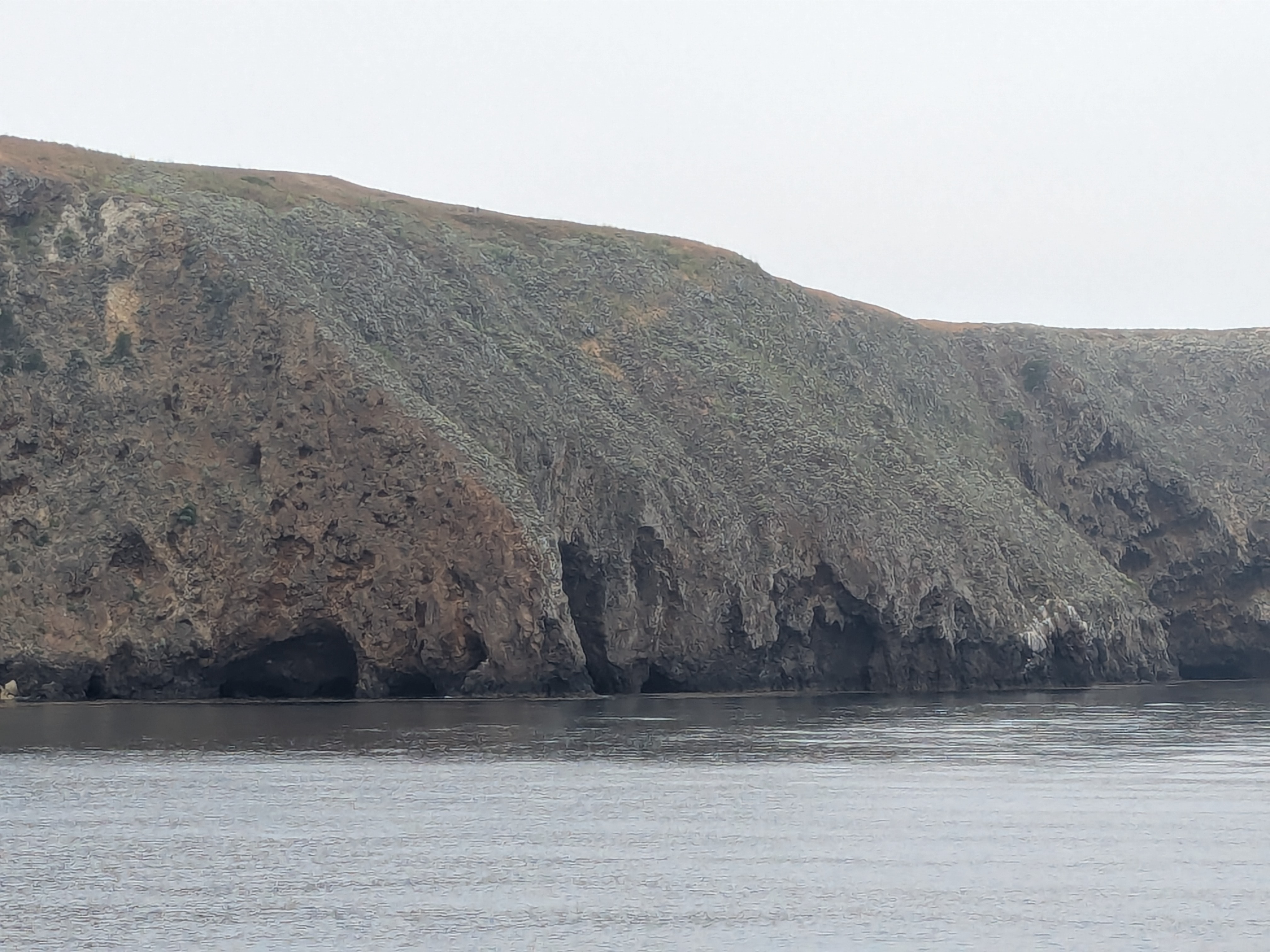
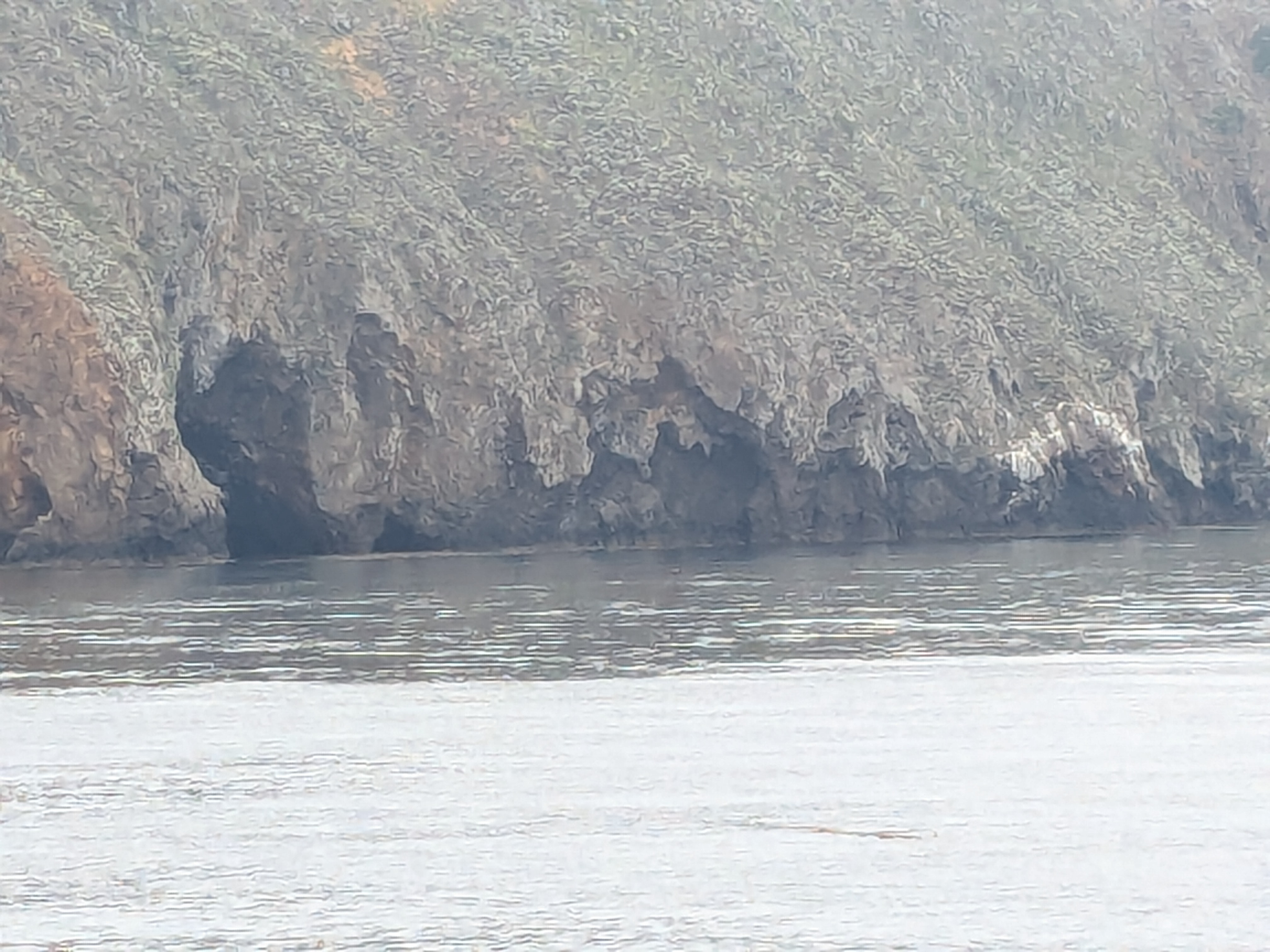
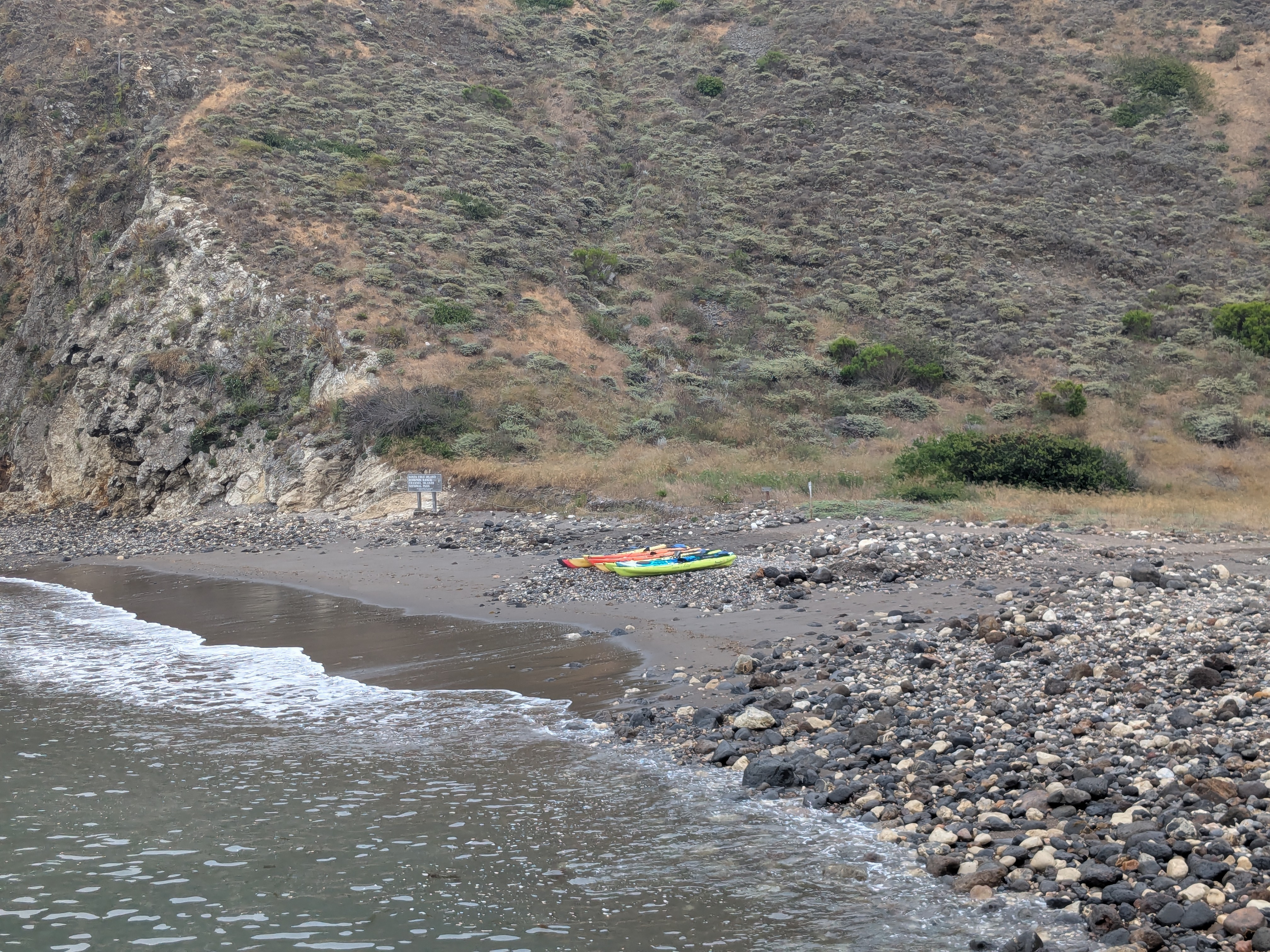
The area we gathered for the  kayak tour has simple structures as storage and coverage for the crew.There we met our kayak guide. After putting on the life vest and storing our belongings in simple wooden crates, we walked a few minutes, carrying the kayak paddle, to the beautiful beach. We did not have time to take a dip at the beach. The clear and warm water would make a comfortable swim and one might even swim with a seal cub. Just after I got onto our 2-person kayak, a seal cub showed his curious and cute little face just above the water. The Channel Islands have forests of kelps, edible for survival but certainly do not taste like the seasoned seaweeds in supermarkets. The kelps are strong, and can serve as an anchor, as we hold on to it while waiting or resting. We paddled along the island to a couple of sizable sea caves. These sea caves are naturally created by the surrounding ocean waves and are quite fun to explore using kayaks. According to the kayak guide, it takes 5 days to kayak around the islands. We can imagine the thrill of kayaking around the island in the ocean even though our stamina is better matched with this half-day kayaking. There are occasional choppy waves where it takes more diligent paddling to push ahead. From the  kayak, we marvelled at the crystal-clear emerald green water, and explored some of the largest sea caves. 
On our return boat ride, pods of dolphins leapt in and out of the water alongside us. Some dolphins came so close to our boat that we could see their true colors. From afar, they appeared almost black against the water. Up close their bodies revealed rich shades of brown. I had never seen hundreds of dolphins putting on such a spectacular show for so long. Watching them leap and glide around us, I felt the connection with these dolphins, feeling that they were escorting us back to LA.  

The Channel Islands, the kayaking tour and the dolphin show made another memorable LA experience.
LA Attractions: the ones less travelled (Part 1 of 2)

Leave a comment »

LA Attractions: the ones less visited (Part 1 of 2)

There are so many touristy attractions in Los Angeles. After many trips to LA, these tourist attractions are no longer attractive enough for a return trip. This June, we decided to visit the attractions less visited after attending the Rush concert there. 

The Huntington Library, the Reagan Library are unique attractions in the LA area. They are independent research libraries. The public do not come here to read books. They visit the art galleries and beautiful gardens.  In a way, these “Library” are a celebration and immortalization of the celebrities which the Library is named after.  It reminds us of the legacy of the ultra powerful, like former presidents, and the ultra rich, like the railroad tycoons.

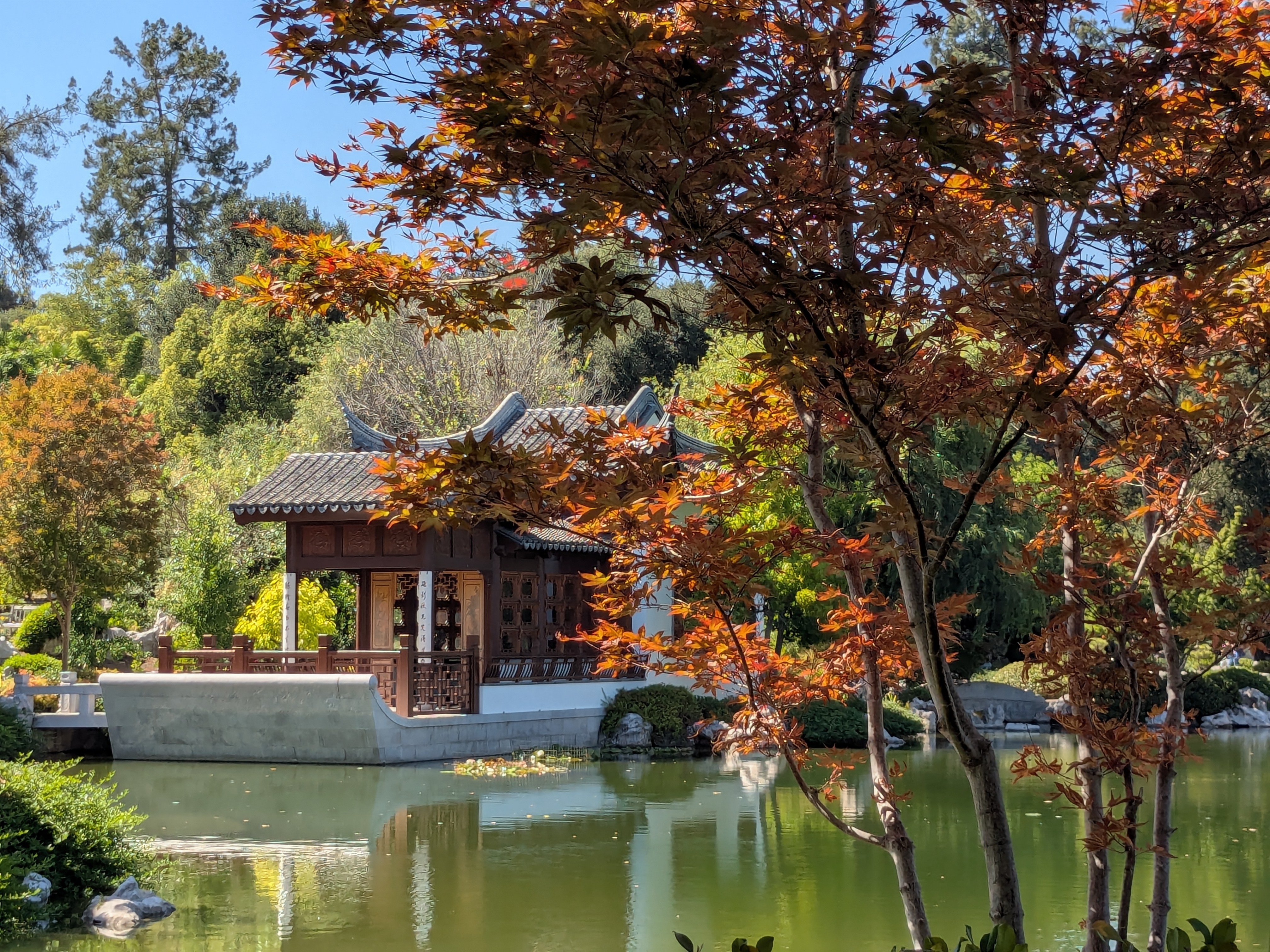
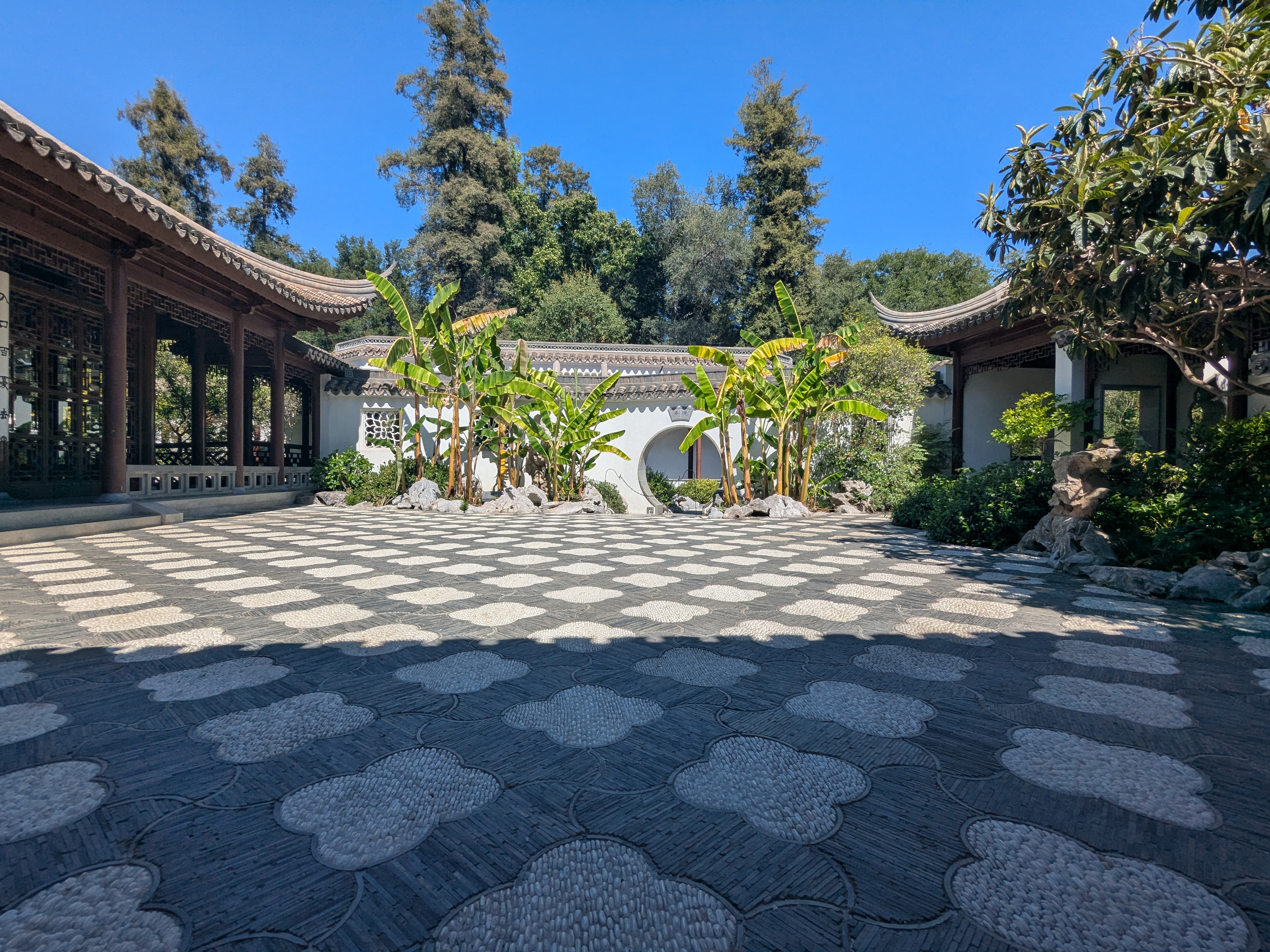
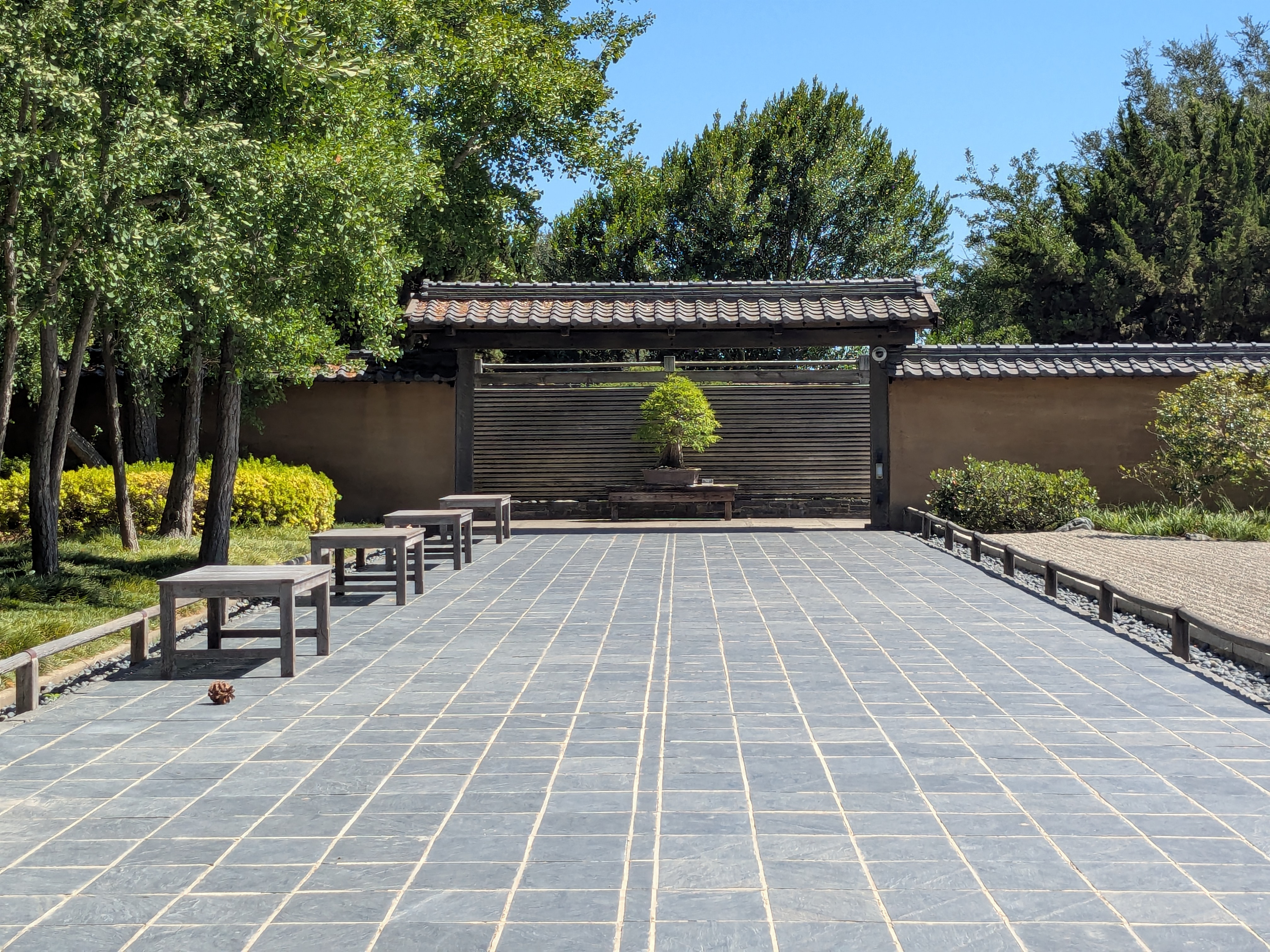
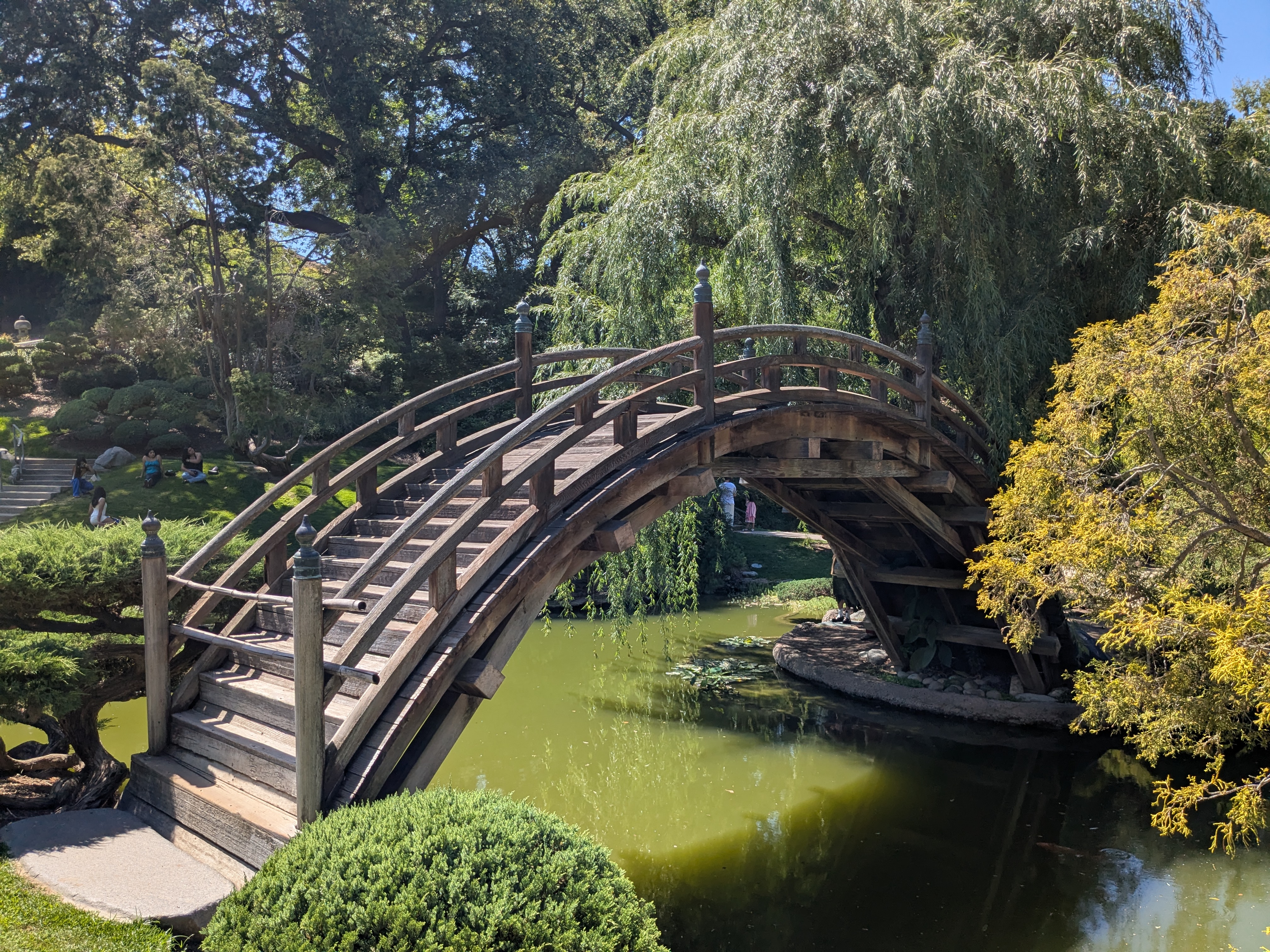
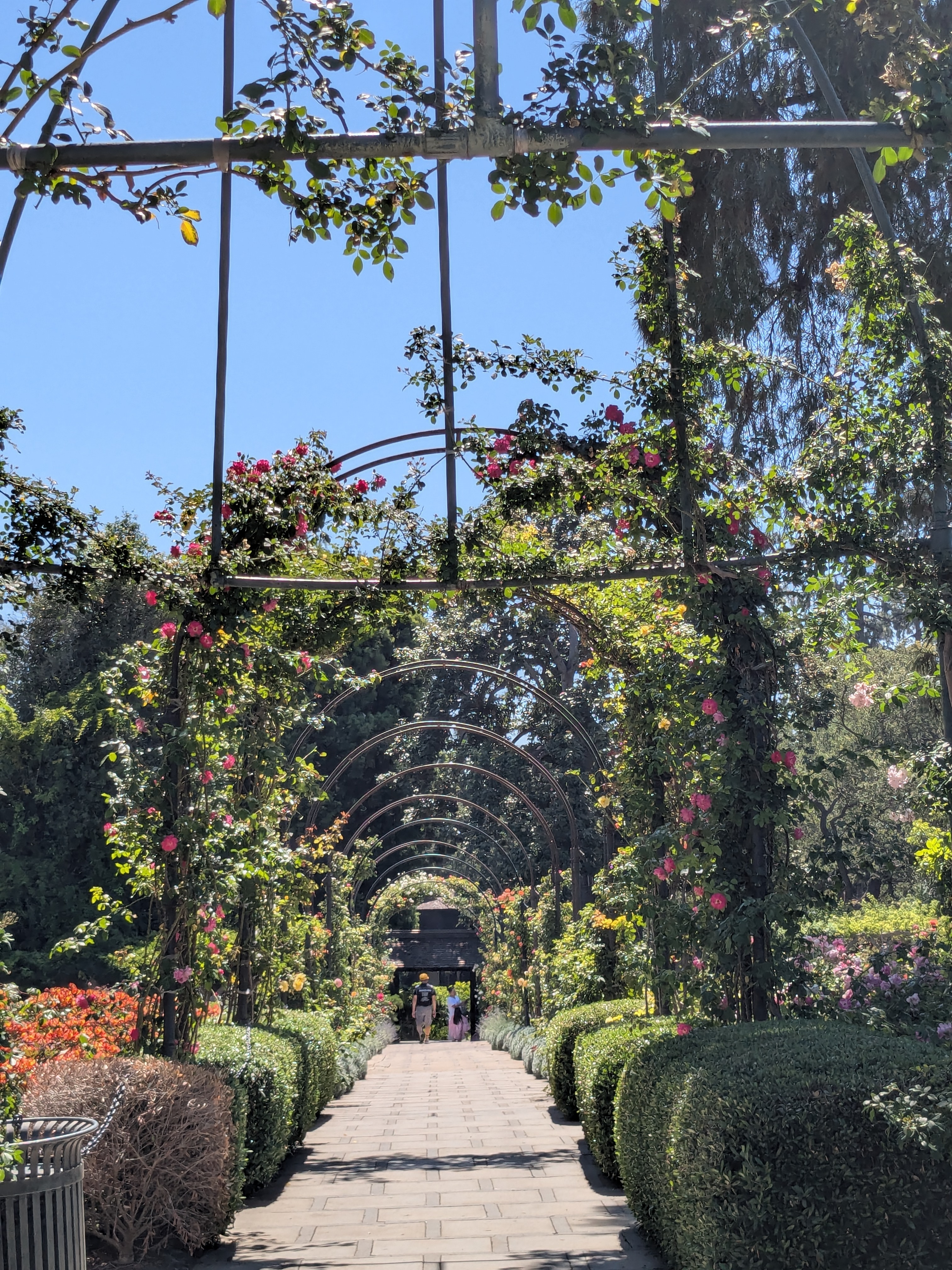
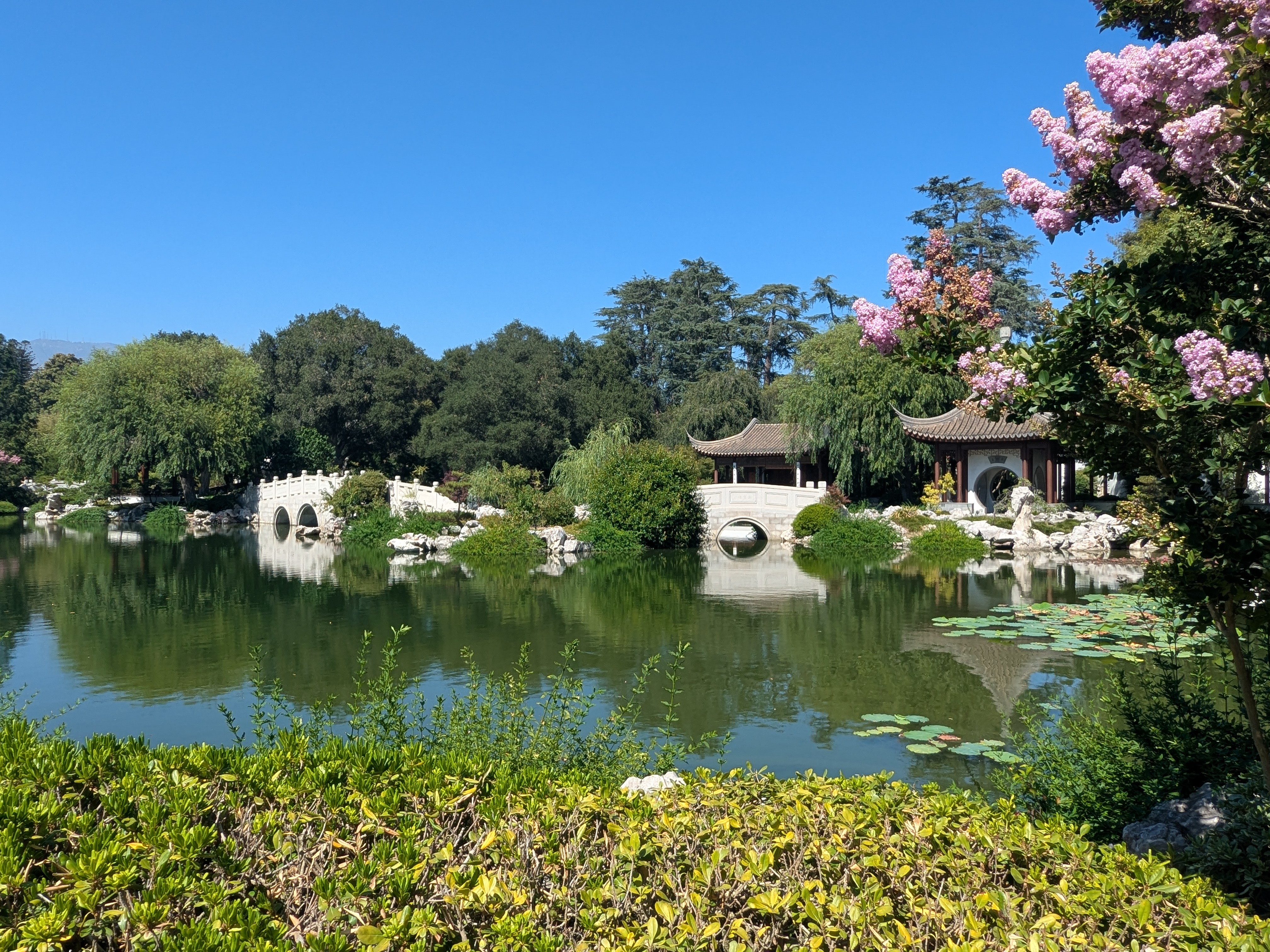
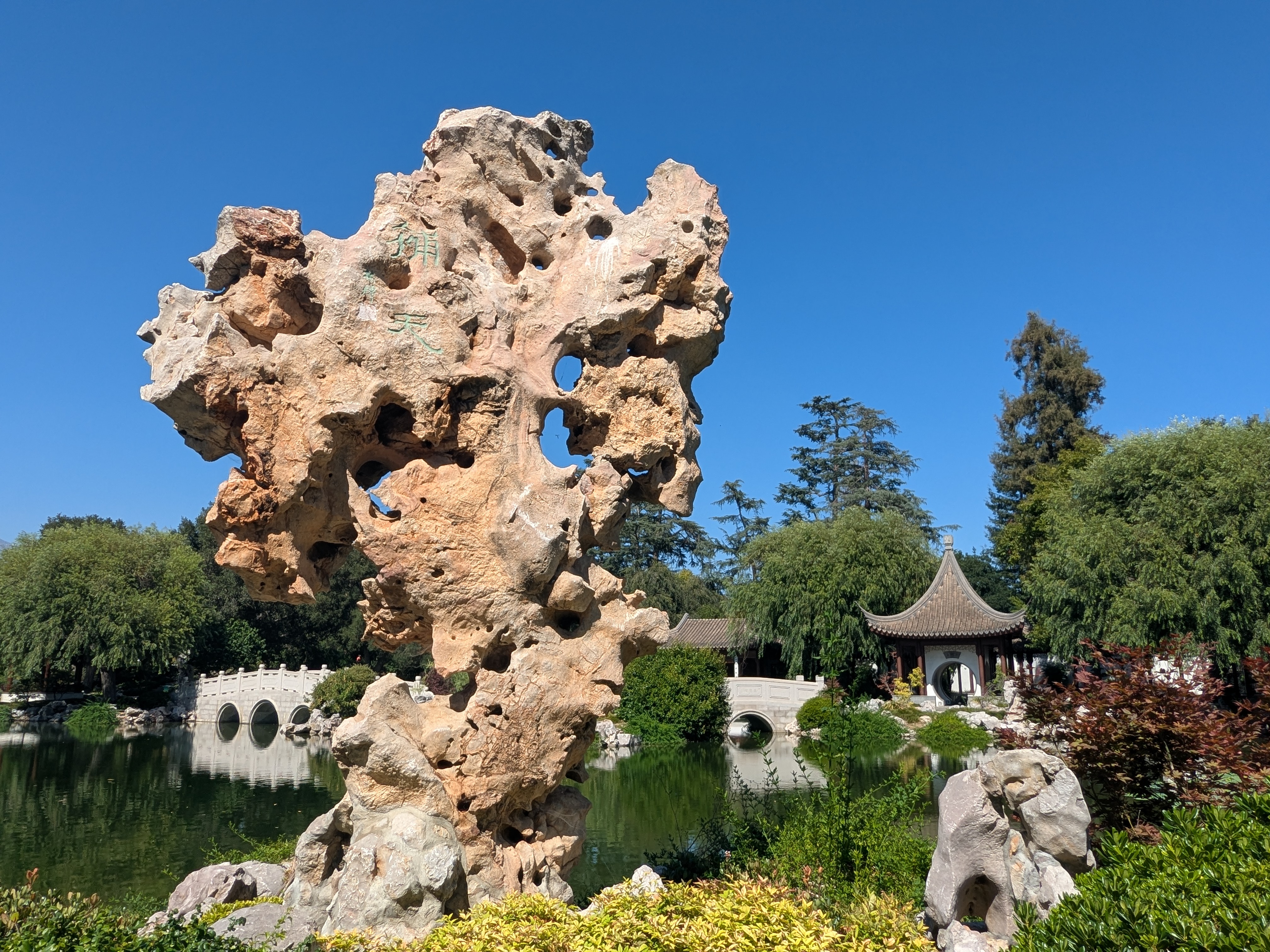
Located near Pasadena, the Huntington Library was founded in 1919 by railroad tycoon Henry E. Huntington and his wife, Arabella. It has been open to the public since 1929.  The Library has gift shops, and a surprisingly good offering of eateries, including one that serves high tea in the middle of the garden areas. We were too late for the high tea. The collection of gardens are impressive. For half of the day, we visited the Chinese Garden, the Japanese Garden, and the Rose Garden, all aesthetically pleasing gardens each with a culturally representative landscape. There are other gardens too. Among these gardens are the indoor art galleries. The European art gallery made a good stop. These art galleries are not quite in the same league as the carefully curated arts found in world-renowned museums. They are still very impressive for a private collection over the years. It reflects what money can buy but maybe money still cannot buy time nor personal taste.

After the Huntington Library, I thought we had an idea of what was to be expected in a “Library”. I could not be more wrong when I got to the Reagan Library. Reagan Library is a presidential library, one that a former president can raise funds to establish. This is my first visit to a presidential library. Reagan, as a president, was not popular internationally, yet, he was considered as a great president in the States. He was powerful and commanding. Just reading about his life, and watching his recorded speeches, he was no doubt a very very charismatic leader. His narrow escape, from an assassination, remained miraculous. Reagan seemingly had a lot of influence on international politics, especially Gorbachev. The two were recognized very differently by their own country in the history books.

The Reagan Library is no doubt a place to celebrate his story. We particularly enjoyed having the internal view of the Oval Office, the menu and the toast when the president hosted the visiting head of the state/government. The state dinners, the diary, the gifts all are reflections of the international relationship at the time.

Like several memorials I have visited in the United States, the Library’s historical exhibits focus on what happened from an American perspective, and offer few insight into why events unfolded as they did. Without that context, it is difficult for Americans to know the different perspectives and then learn from the real lessons of history.  

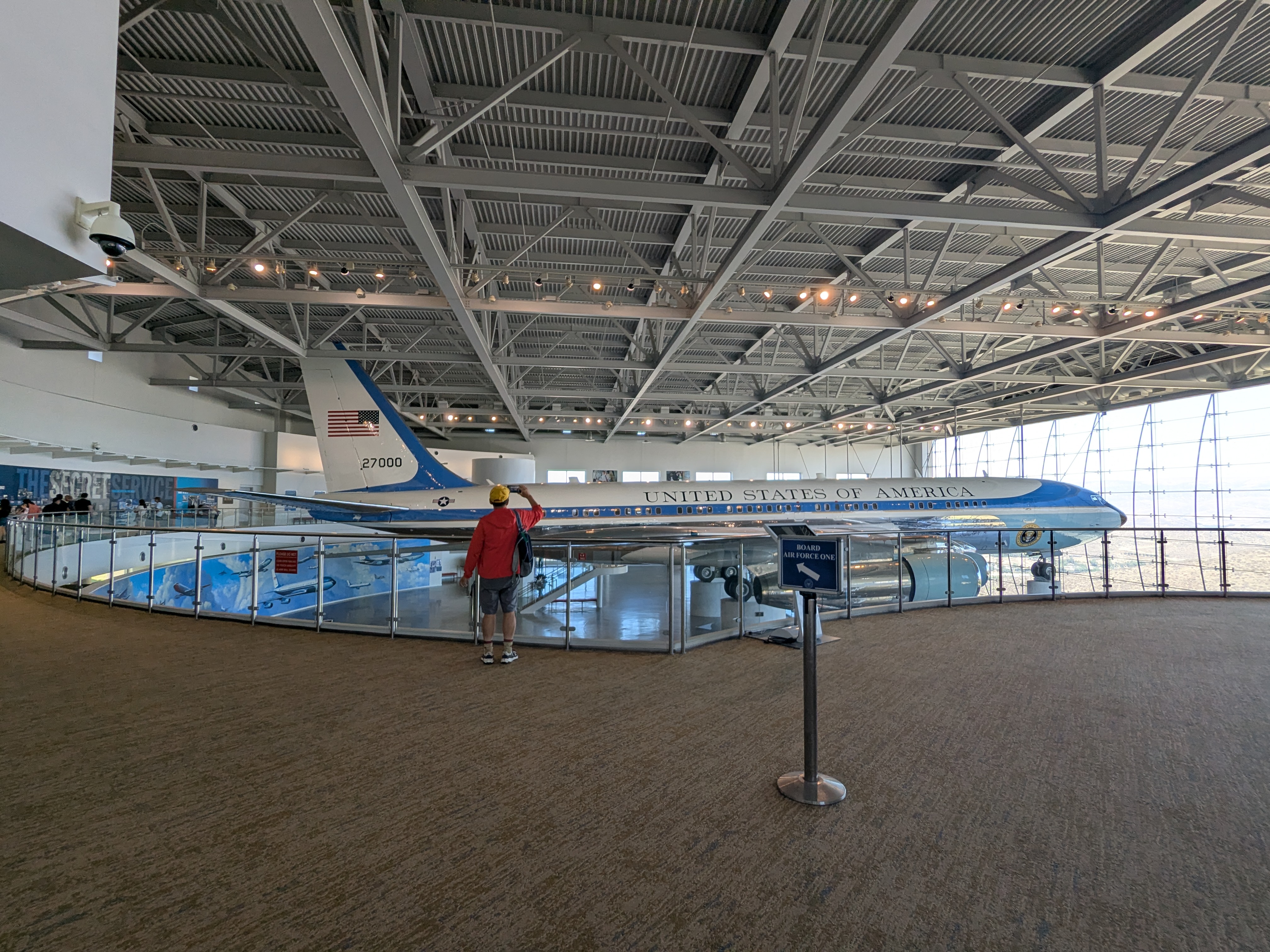
It is an engineering feat to move the Air Force One into the Reagan Library as an indoor exhibit. That plane has been retired and replaced by newer models. The plane was rather small, reminding us once again how lives have become more comfortable over time, just like the bed we sleep on is more comfortable than the beds of the royal families hundreds of years ago. Inside the Air Force One, there was no bed other than a couple of sofas. The media always accompanied the president, sat at a different section further away, allowing the president to “summon”. The plane also carried some motorcades. 

Unlike the Huntington Library, the Reagan Library has only one cafe with rather plain offerings.

Both the Reagan Library and the Huntington Library are impressive “libraries”. 

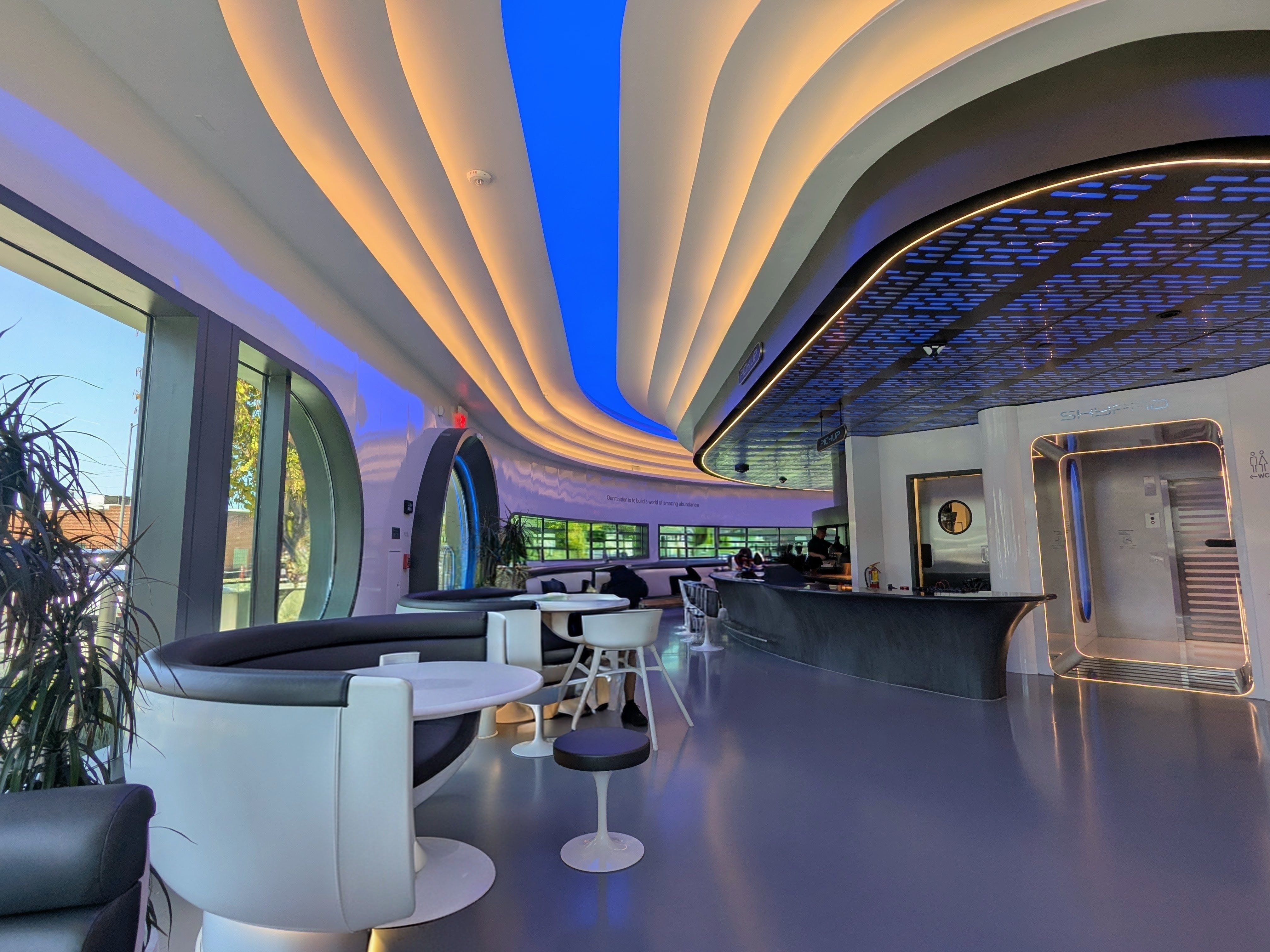
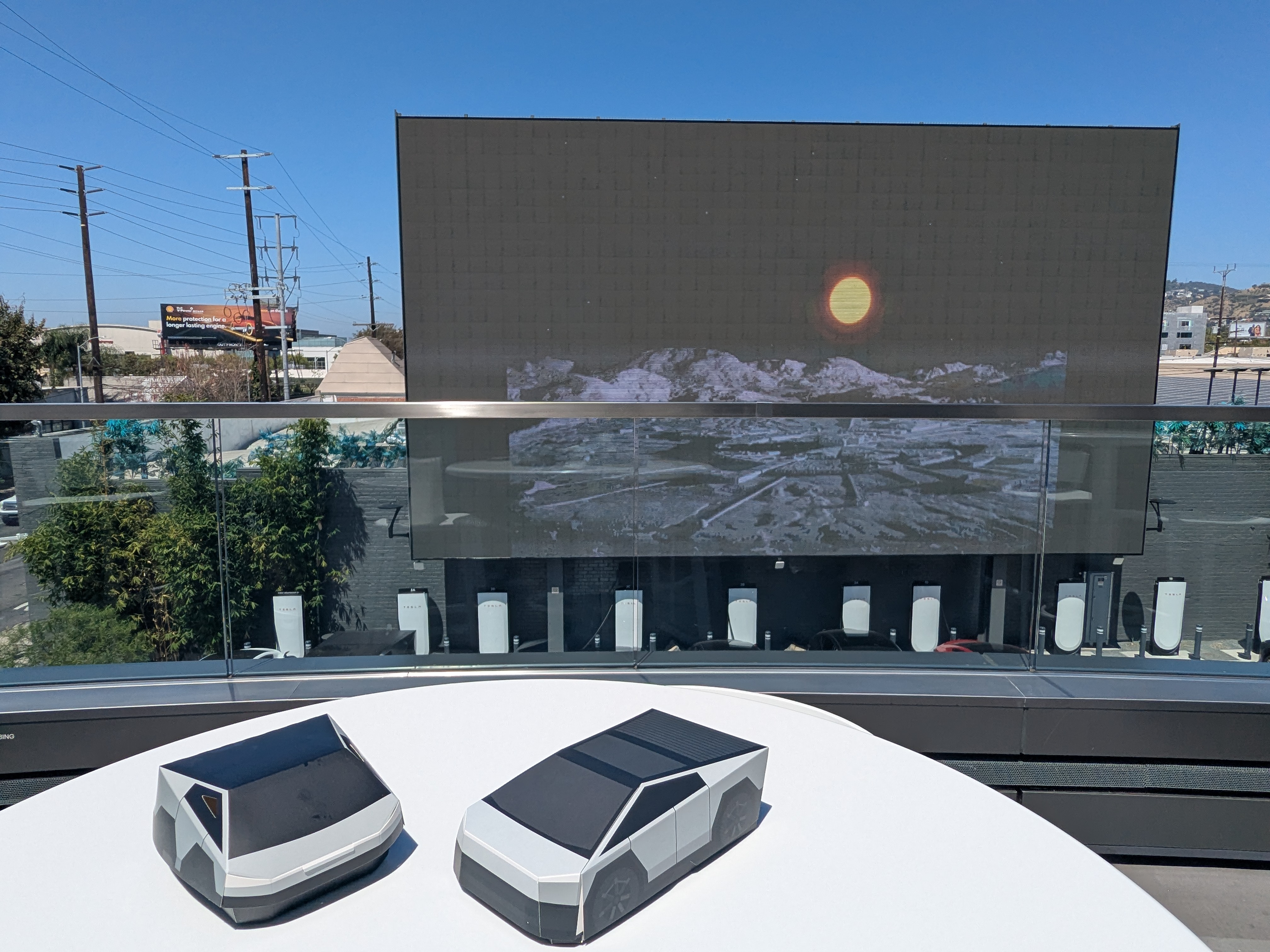
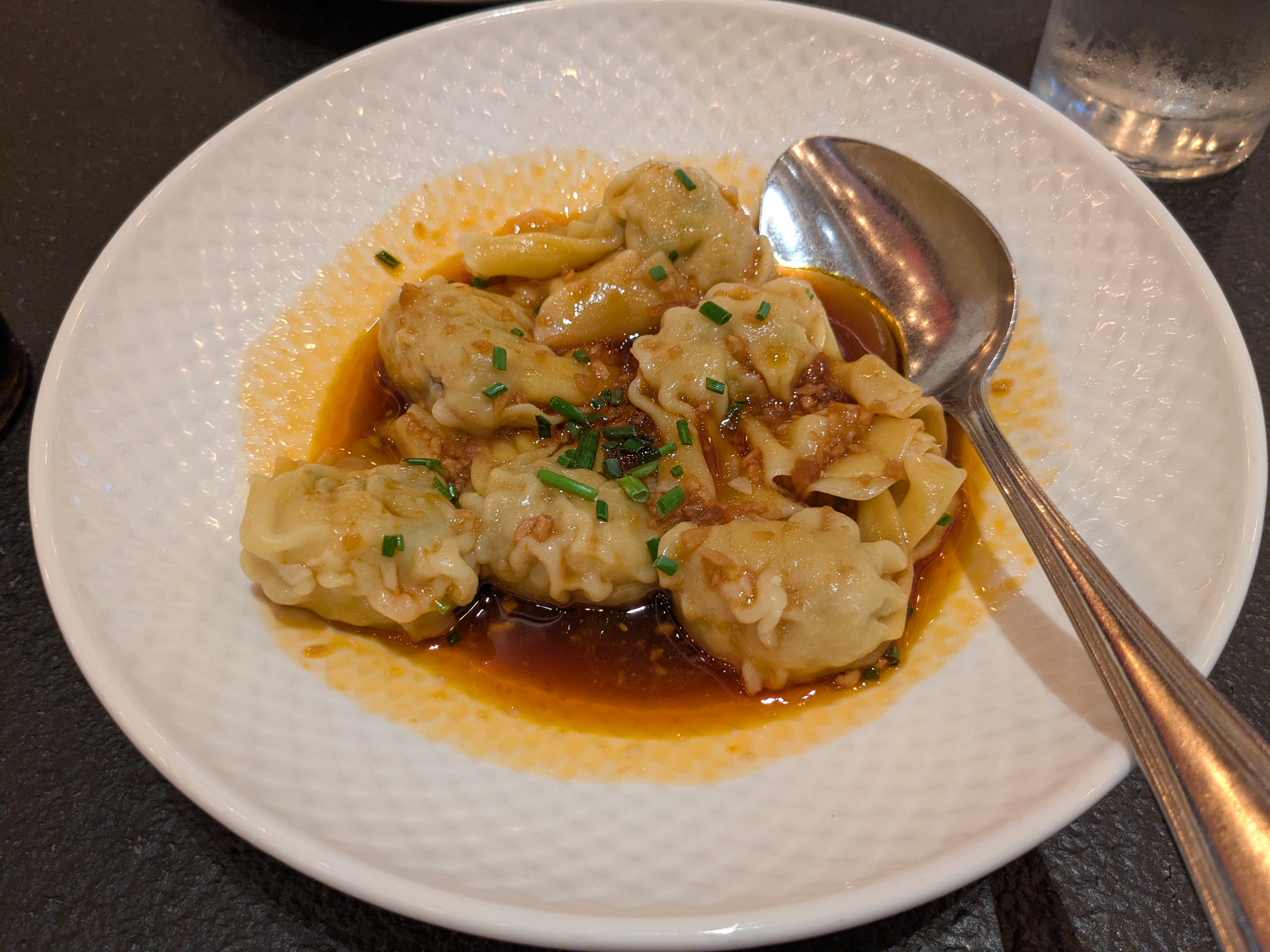
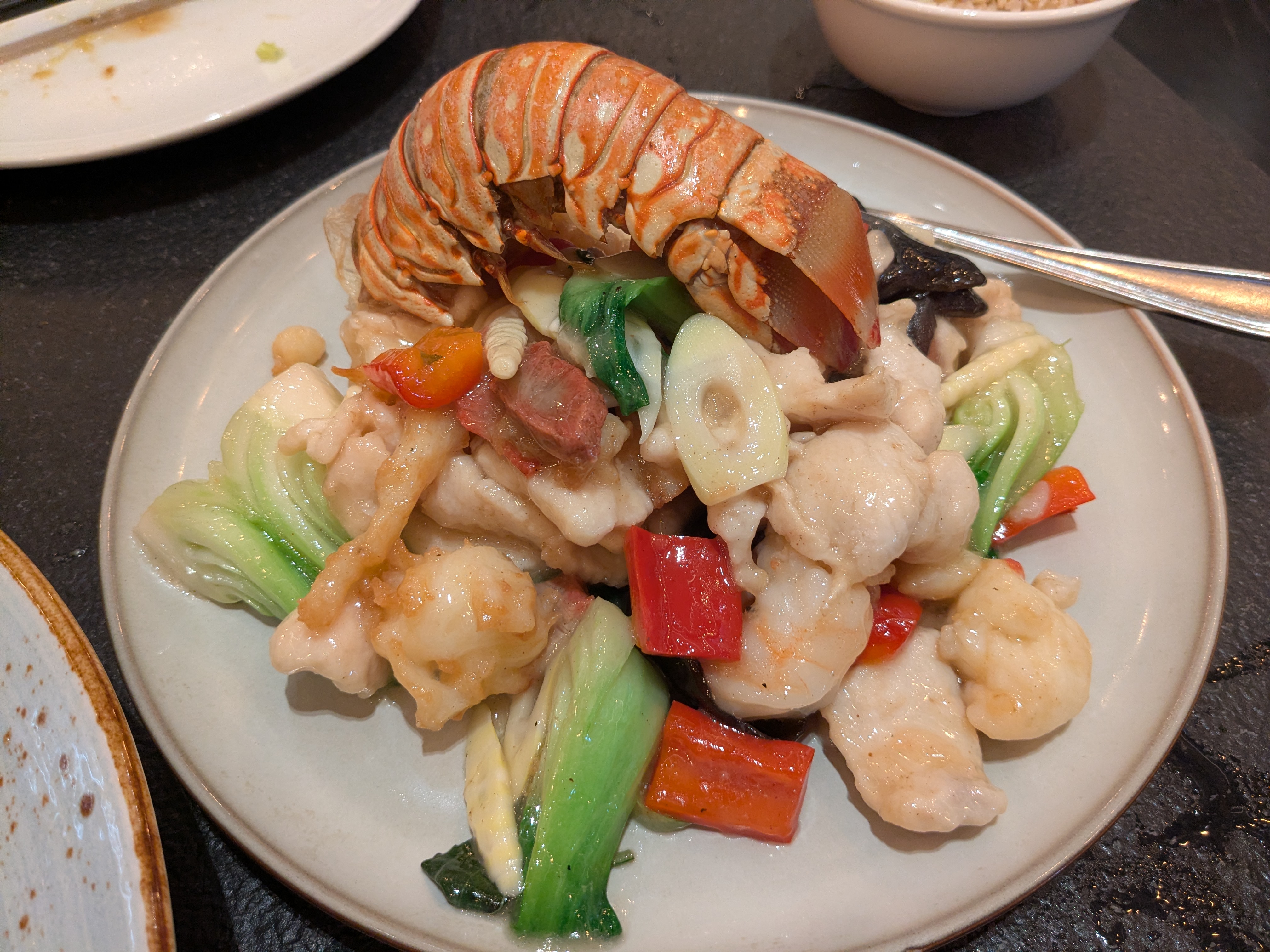
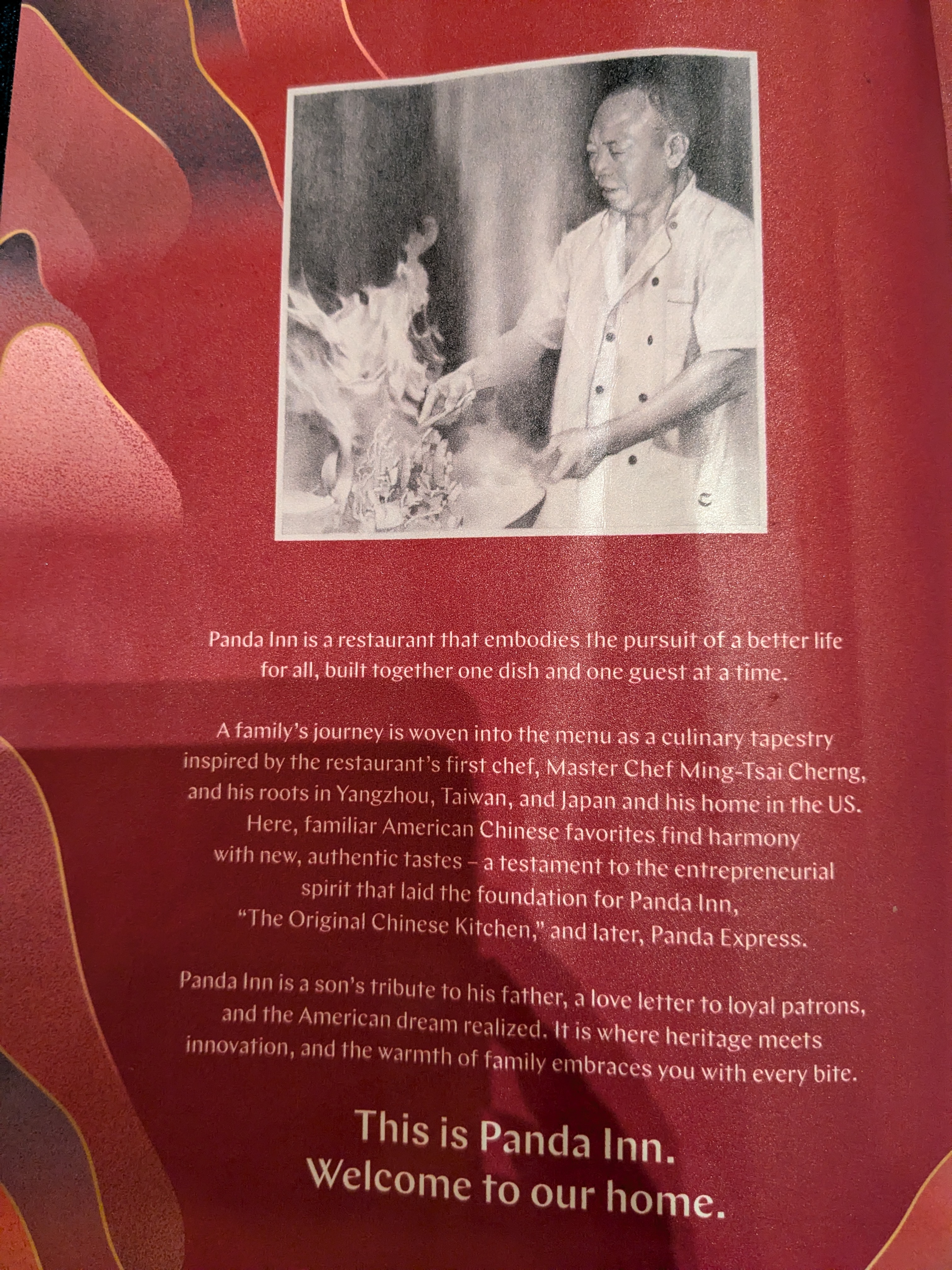
It was fun to visit the futuristic one-and-only-one Tesla diner in a mixed neighborhood of LA and the flagship Panda Inn, located at the very location of the very first Panda Express. Both are shining examples of unbelievable business successes. Yet, the Panda Express resonates more with its humble beginning and its successes remind us that there are hopes.

Part 2: Channel Islands National Park 

Leave a comment »