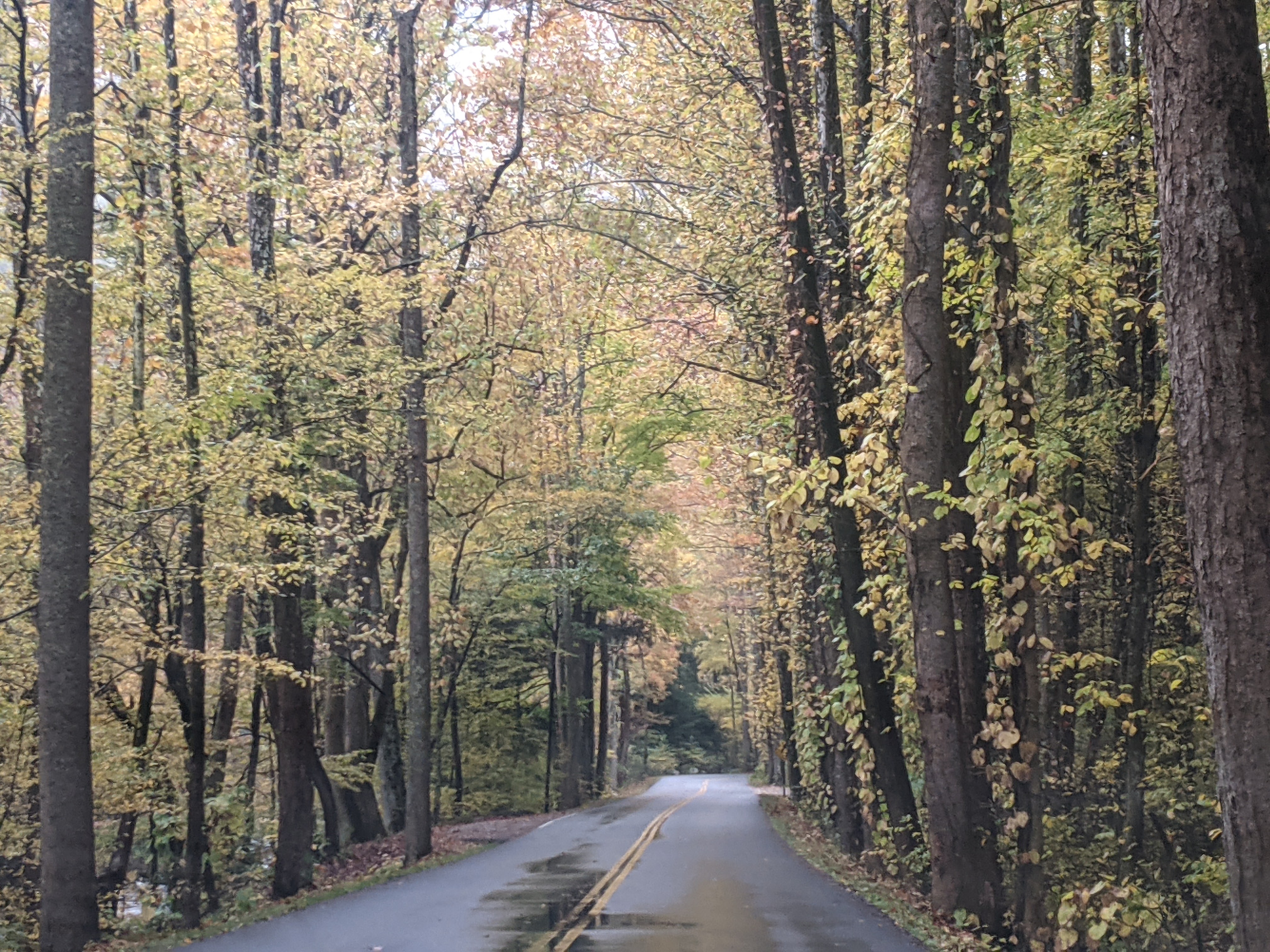
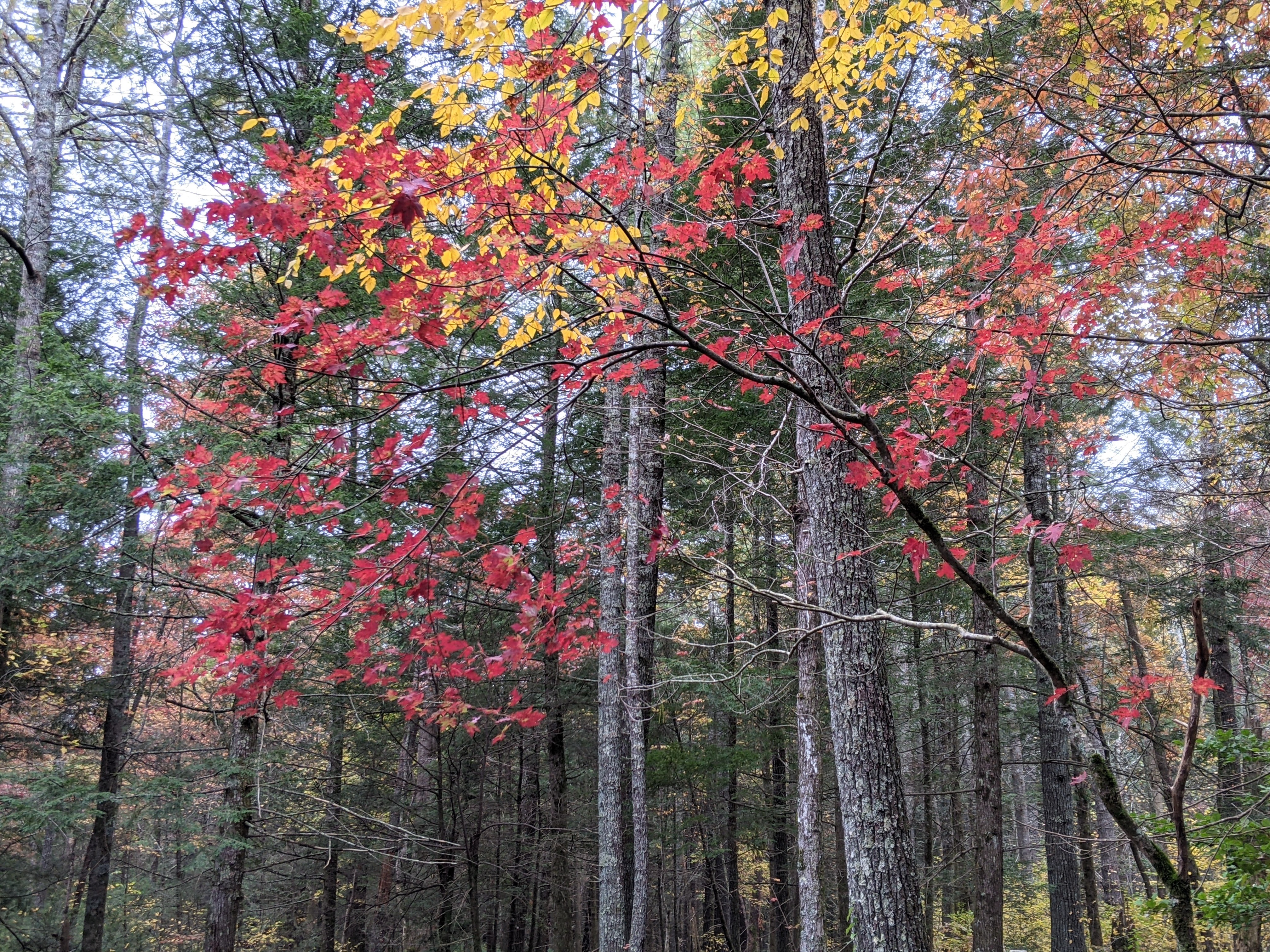
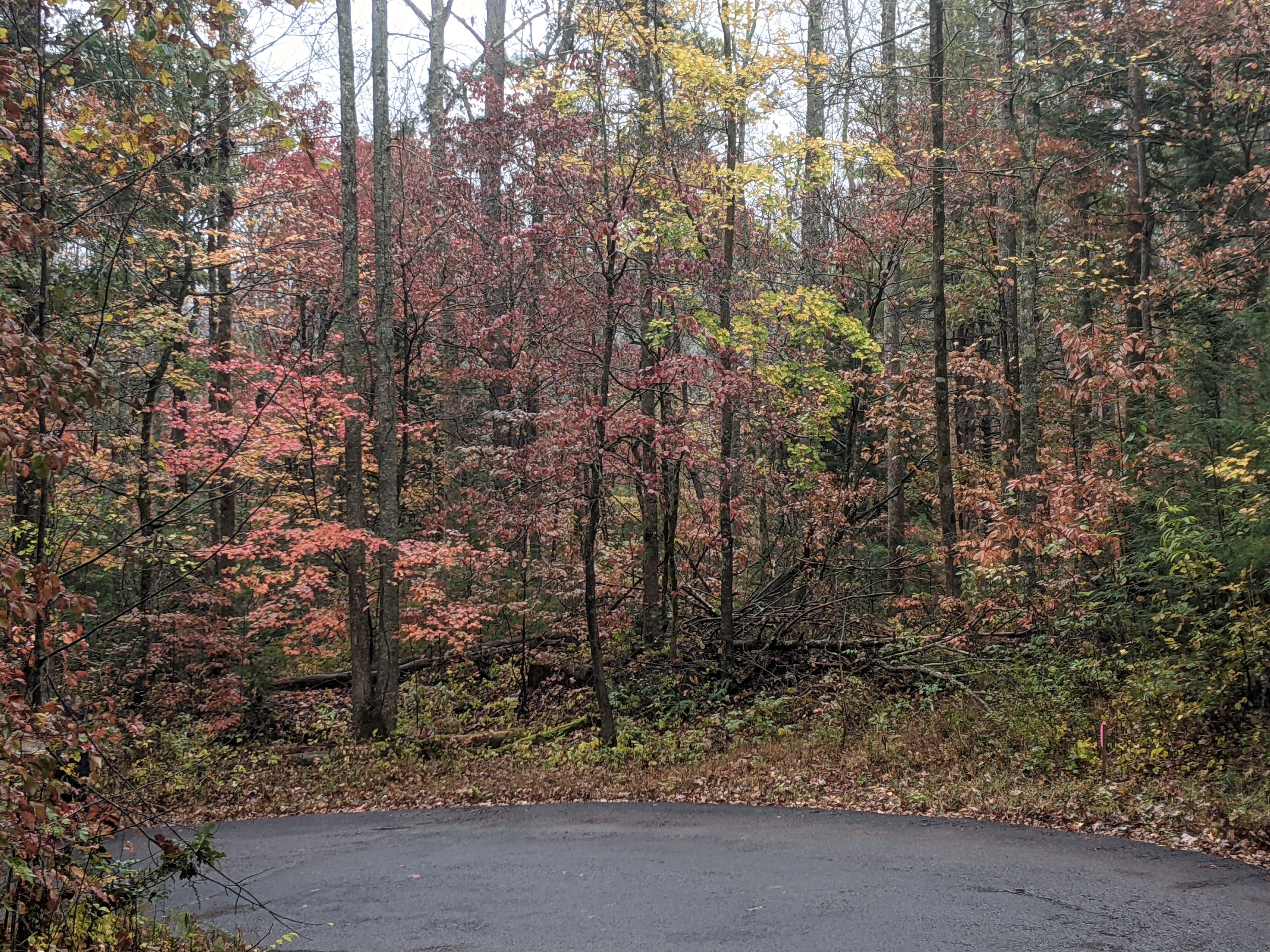
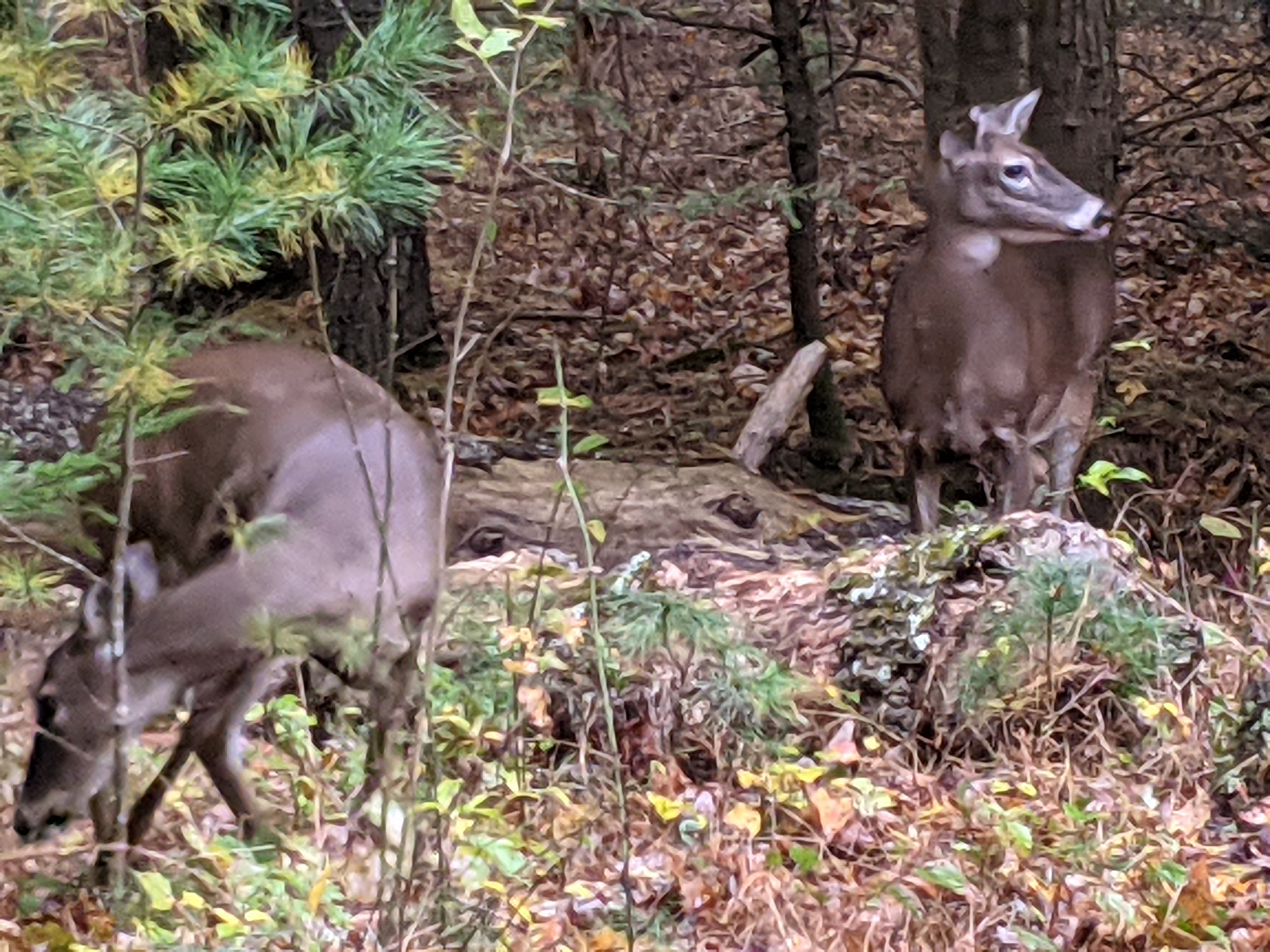
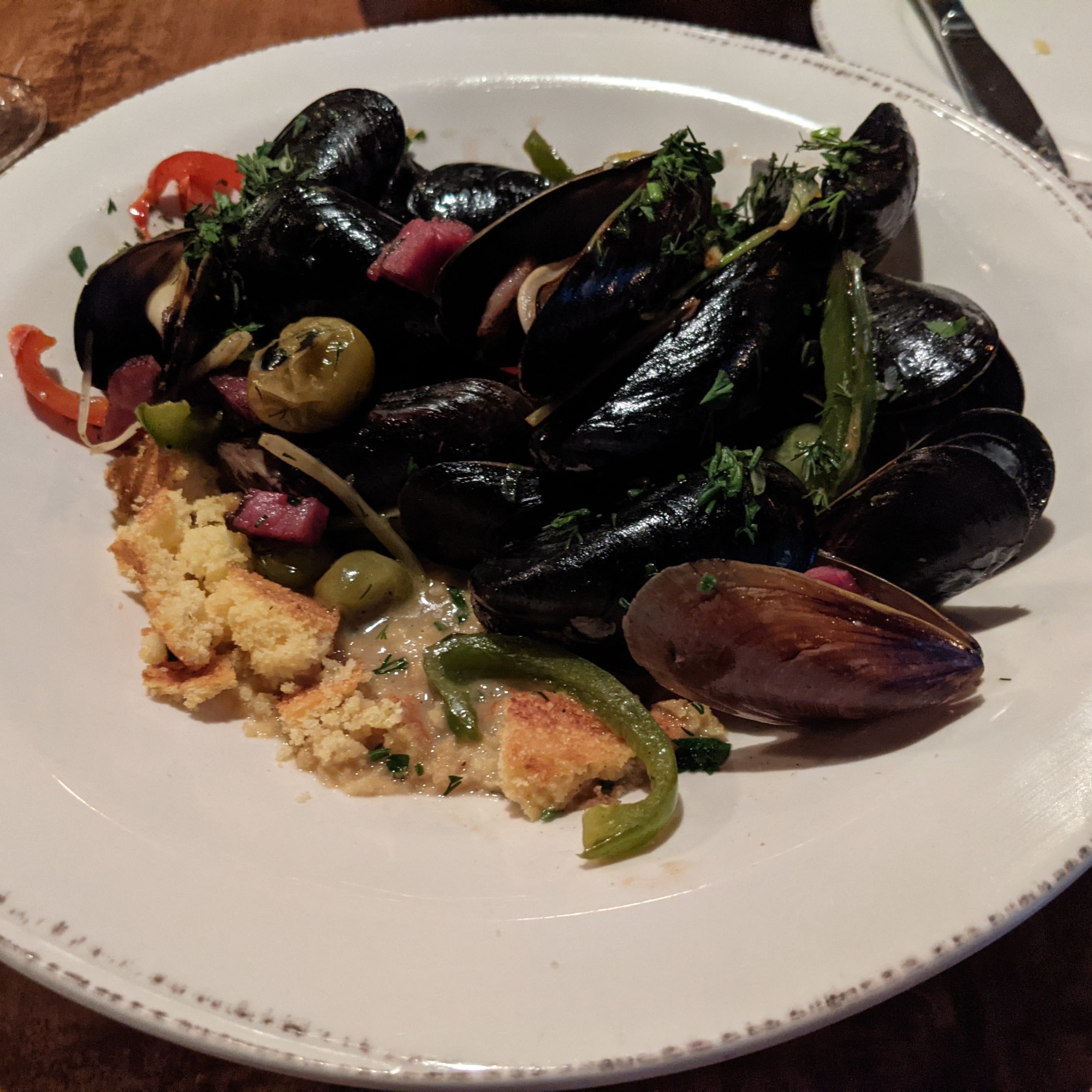
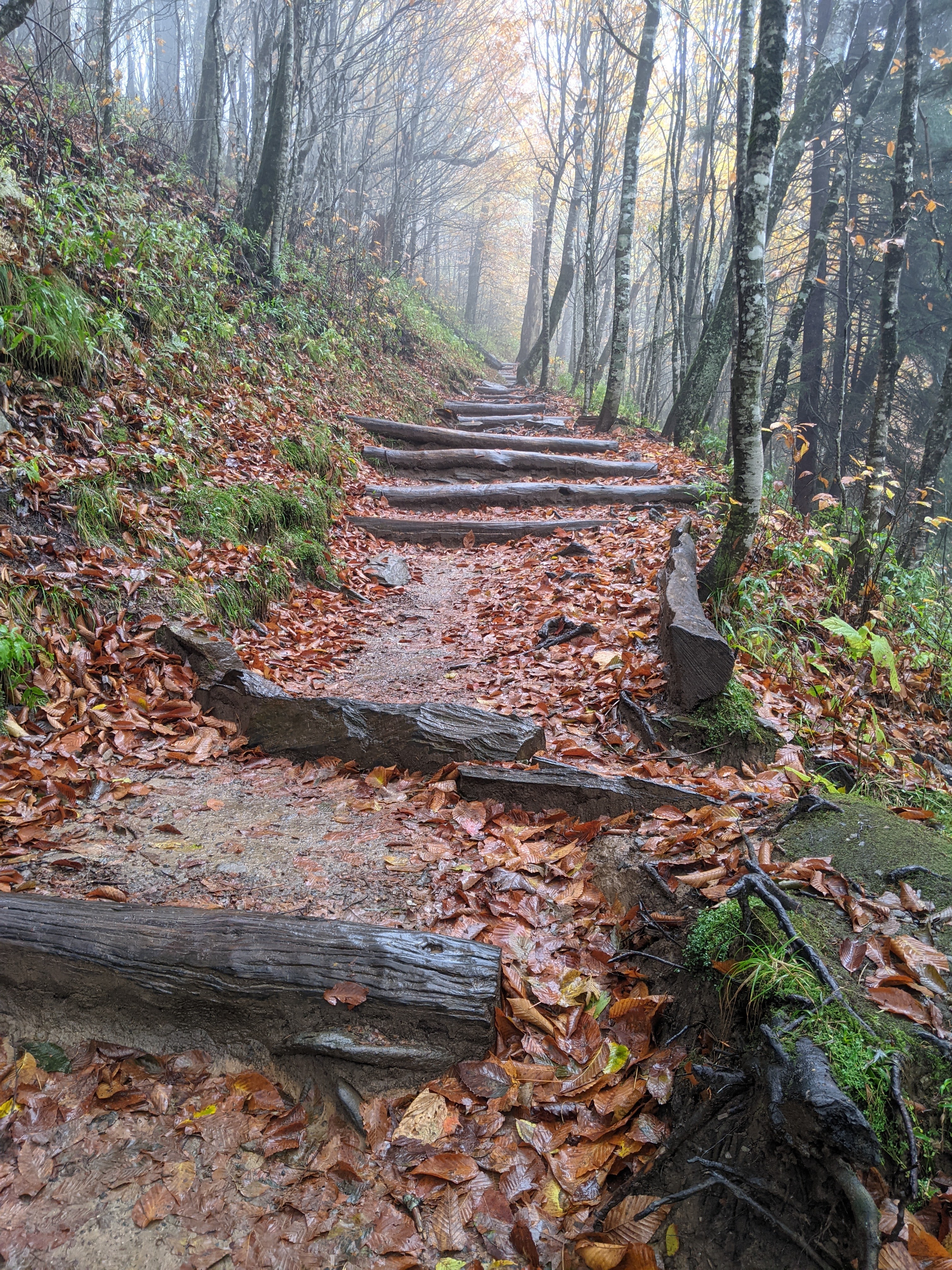
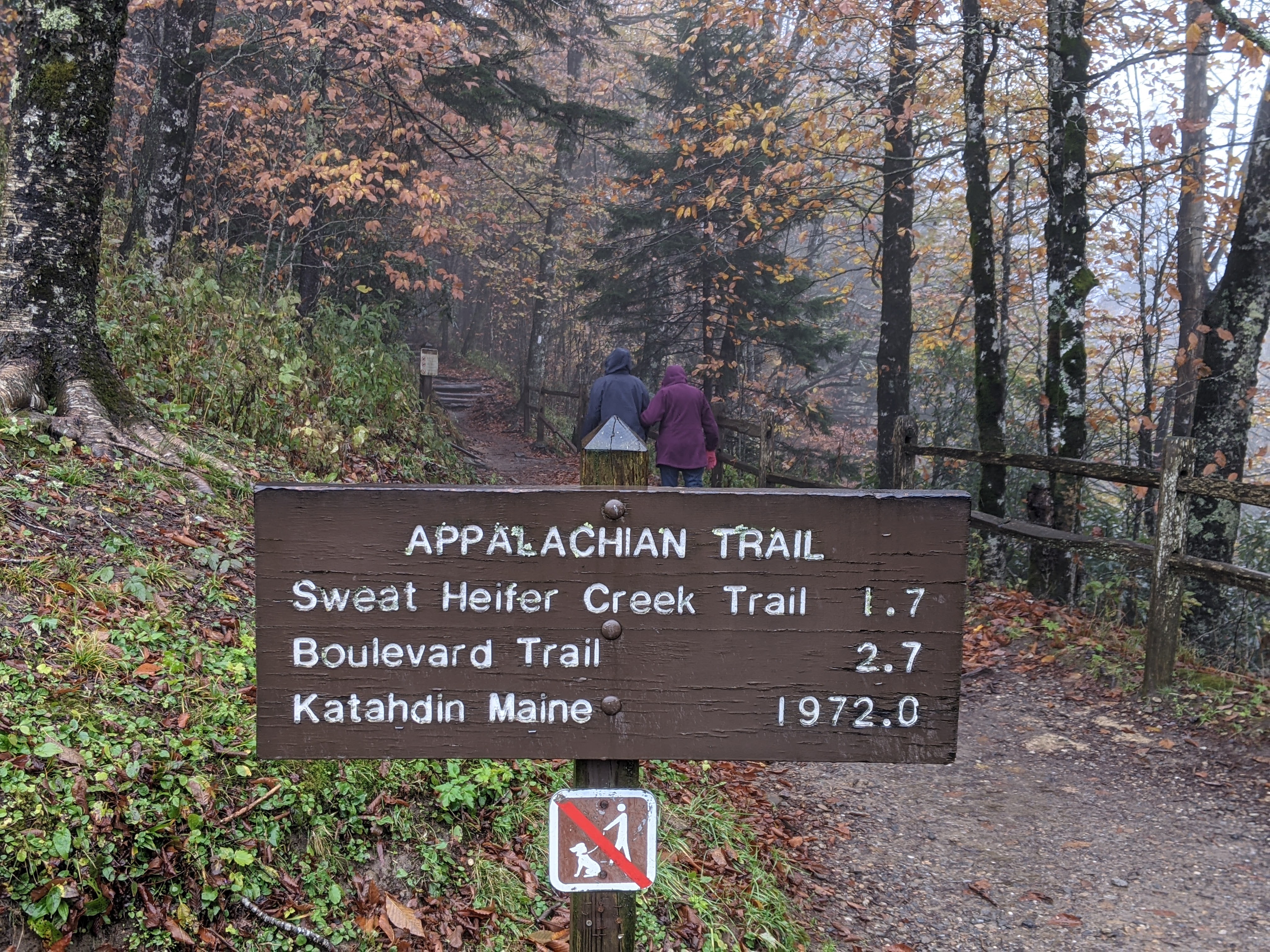
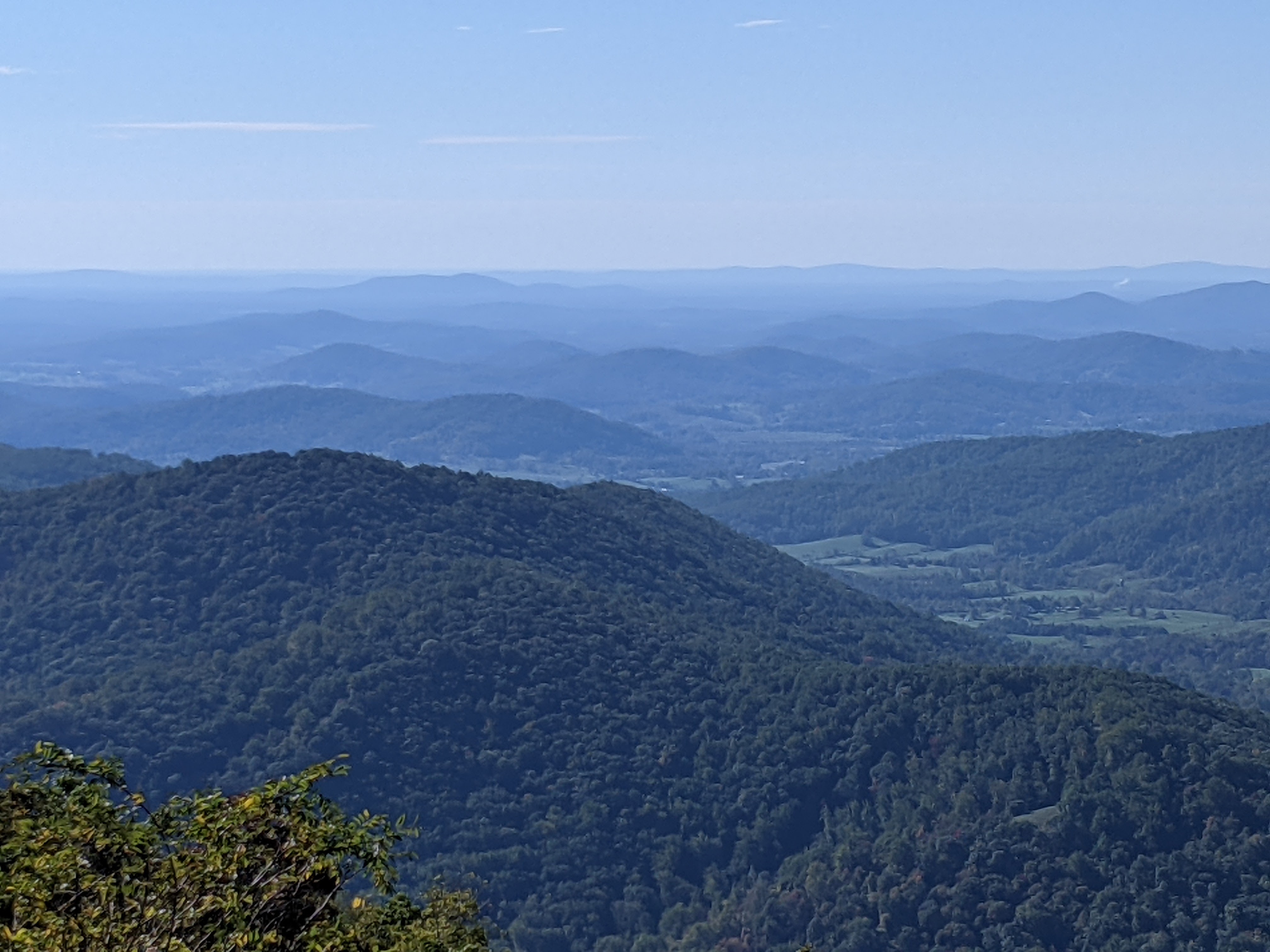
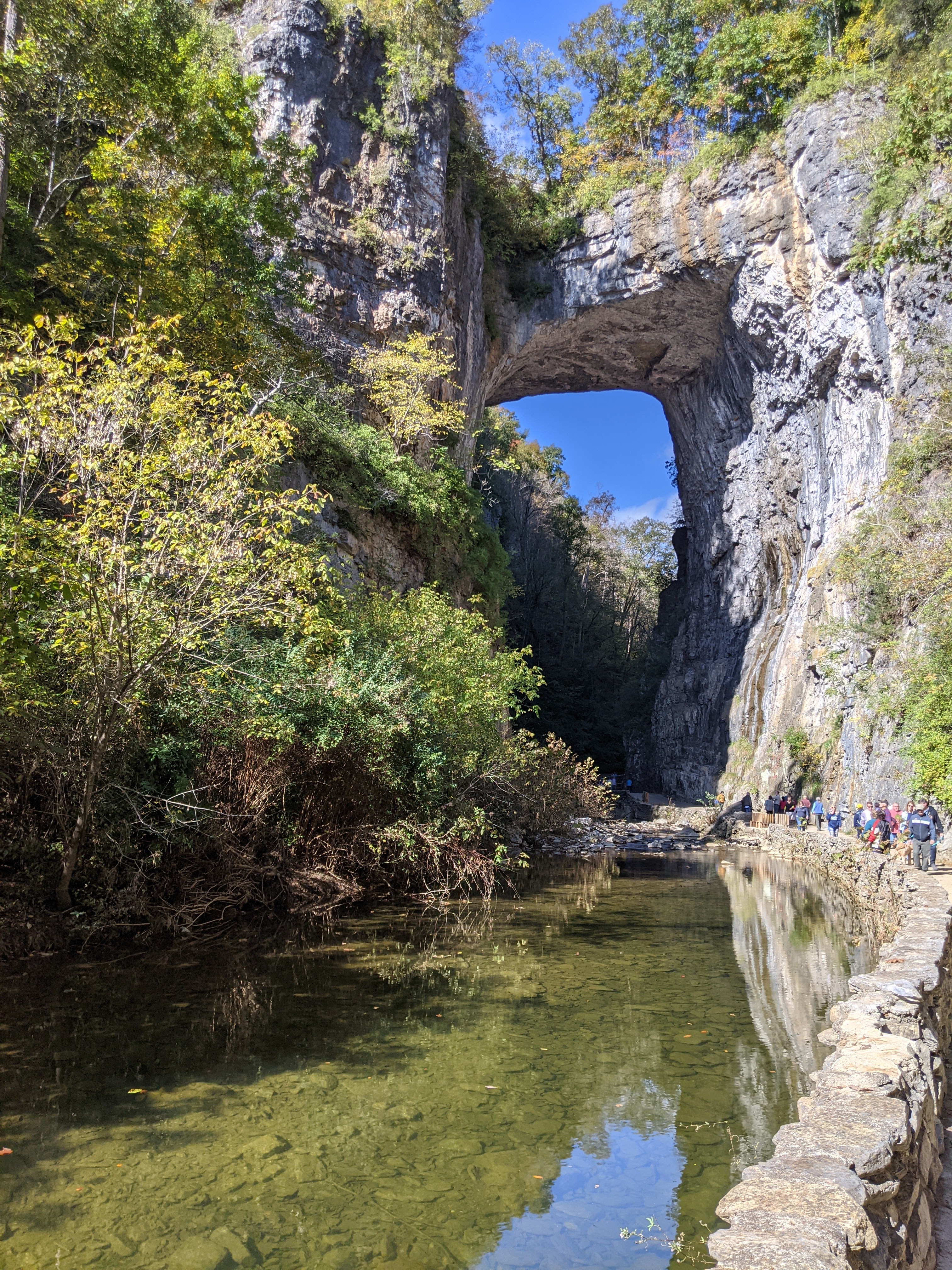
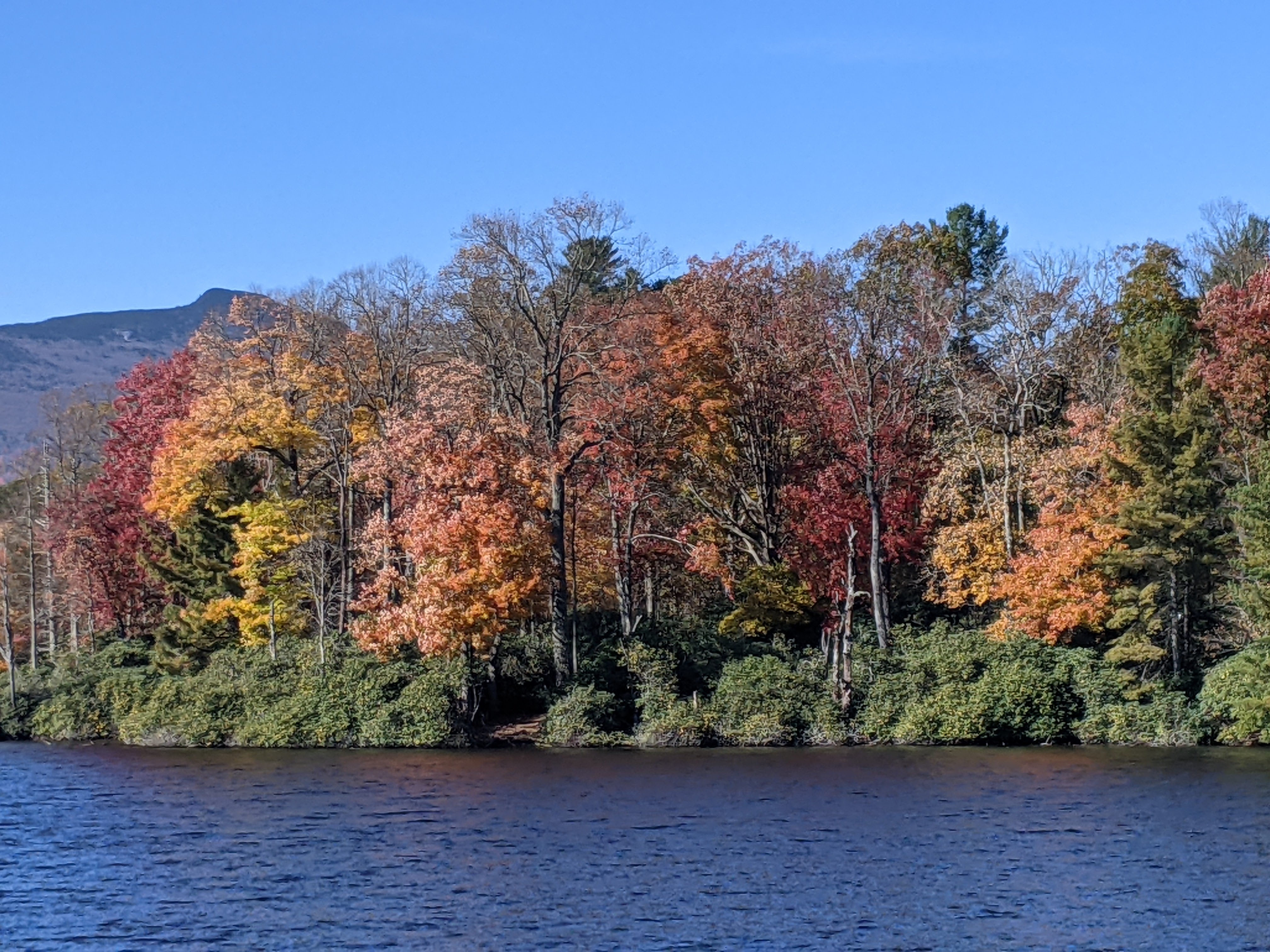
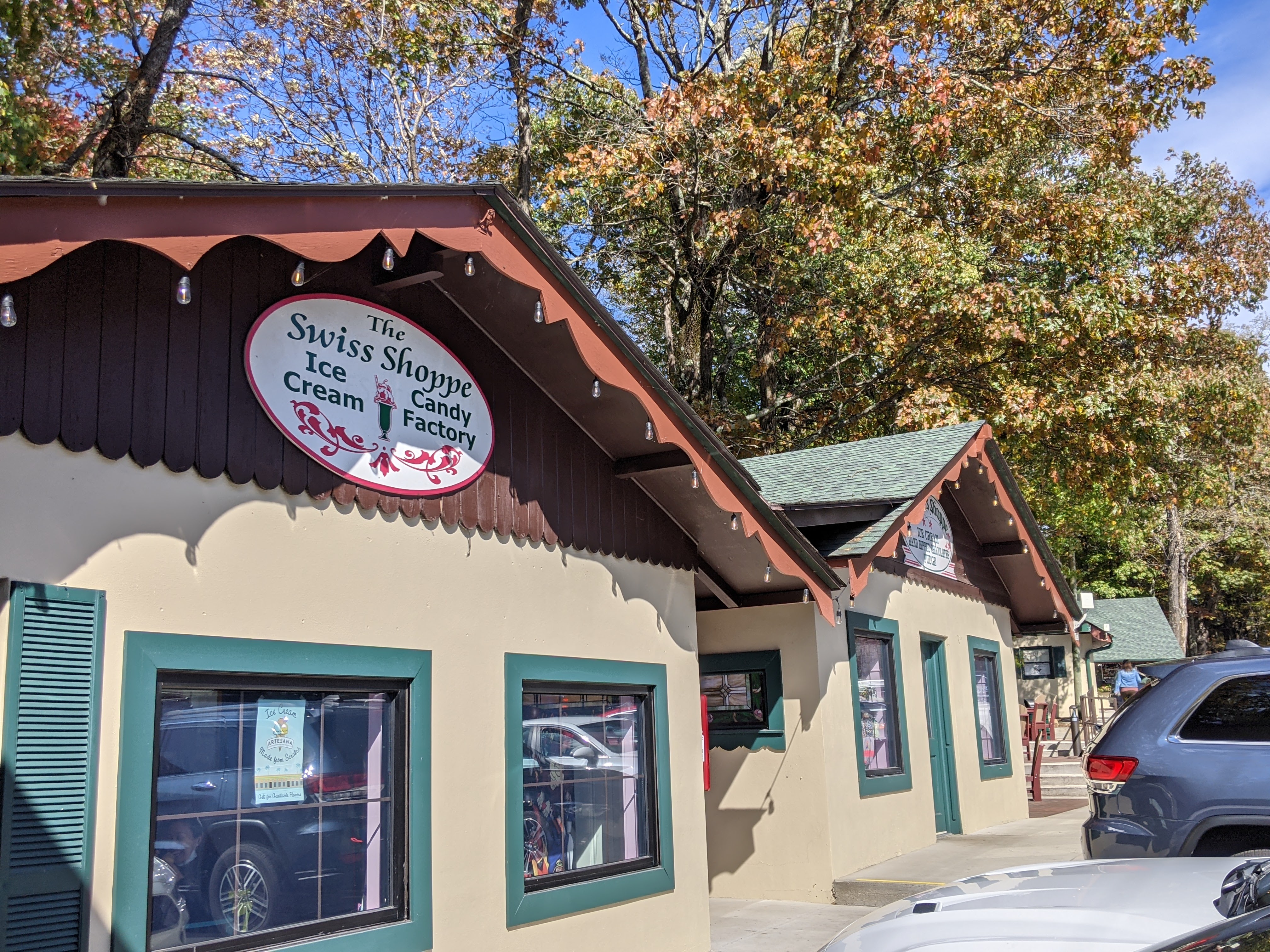
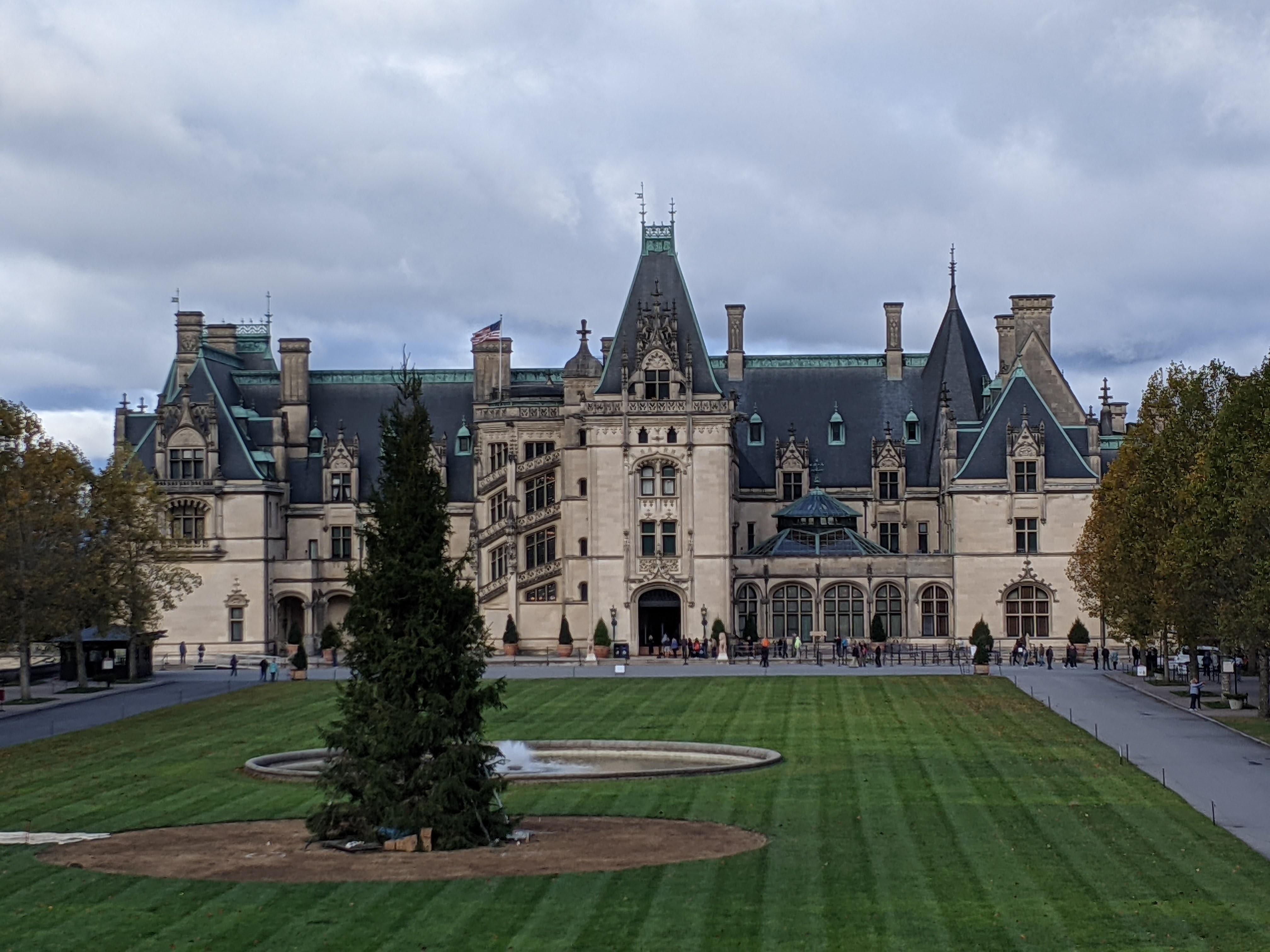
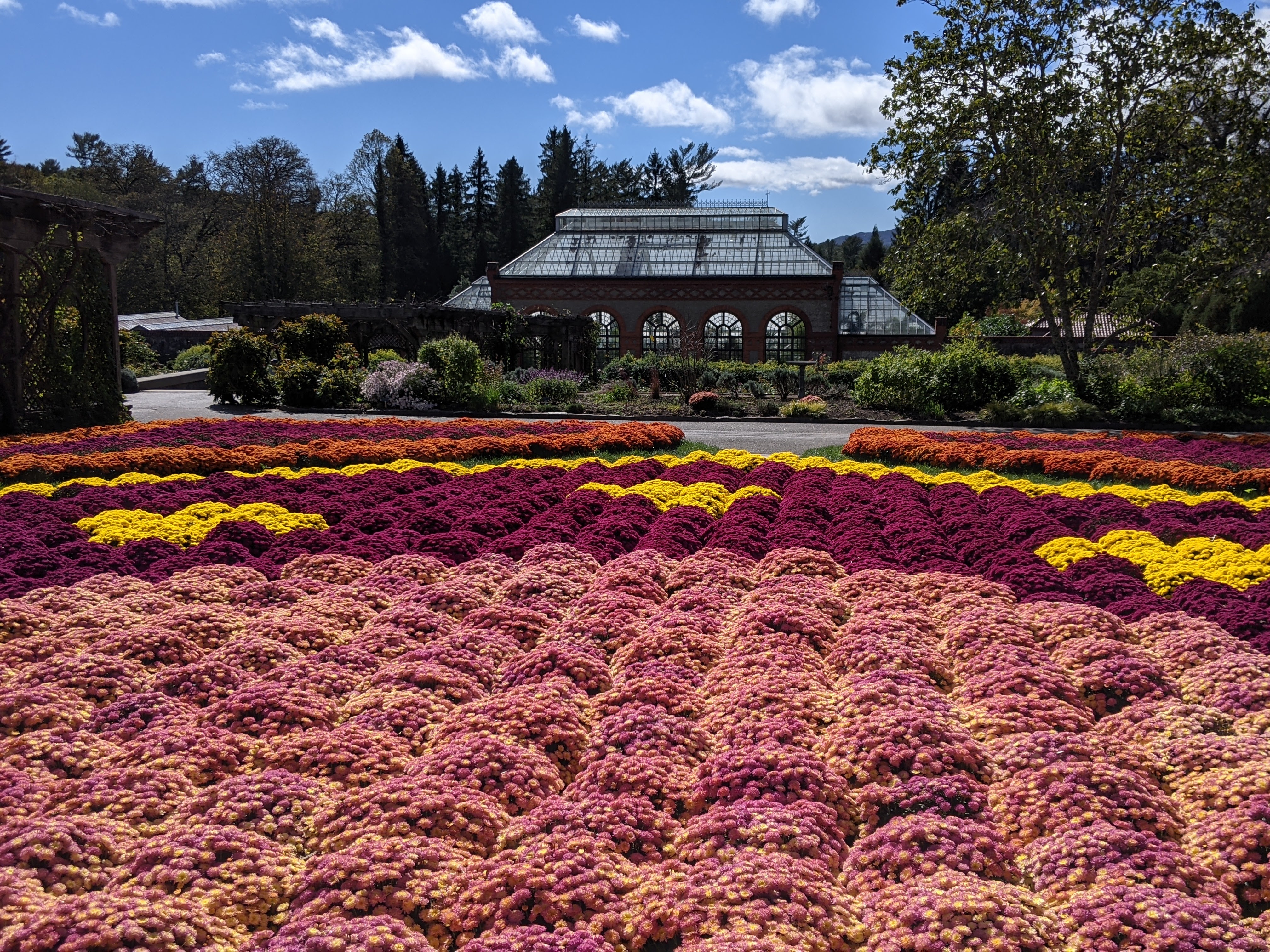
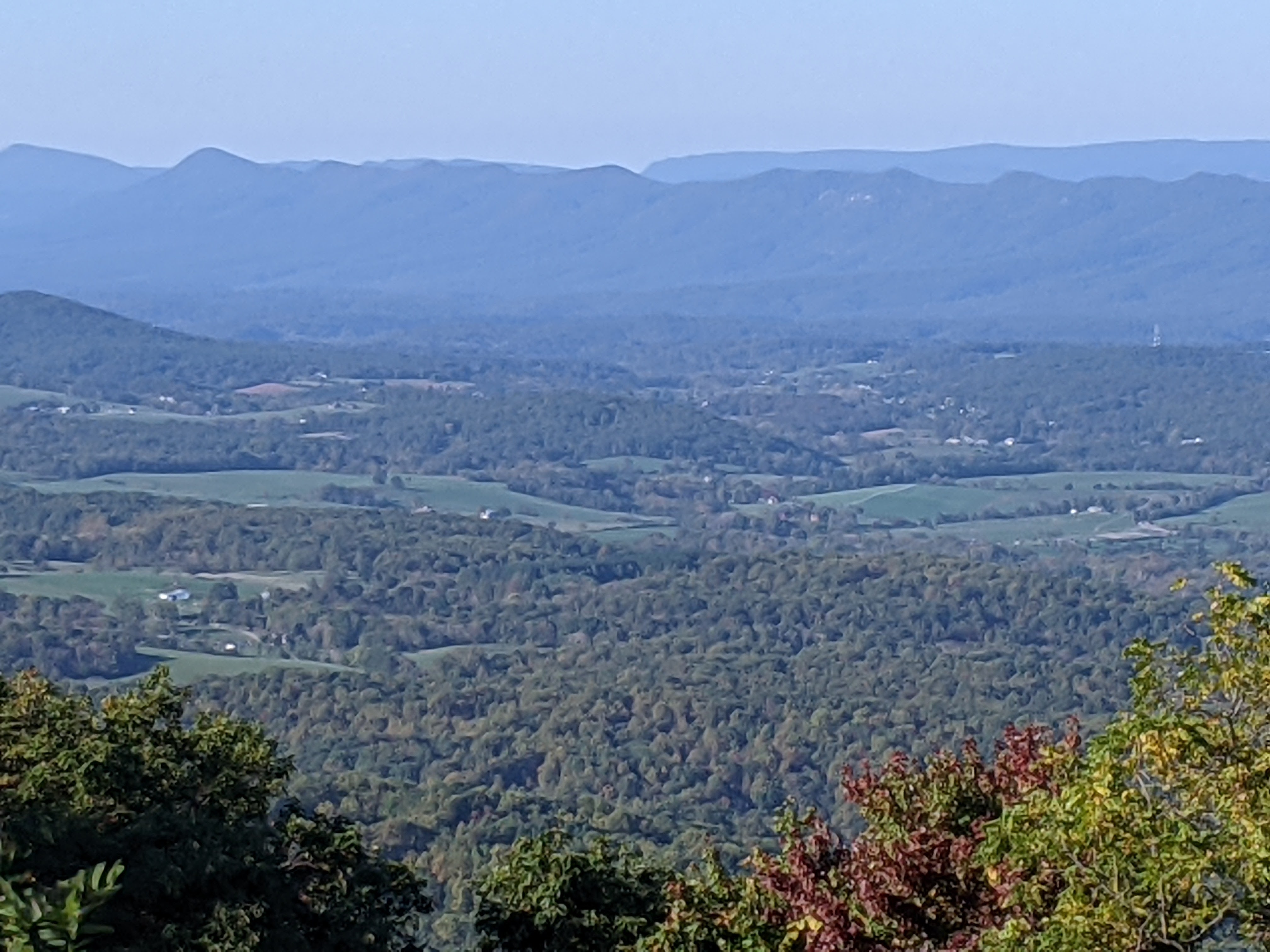
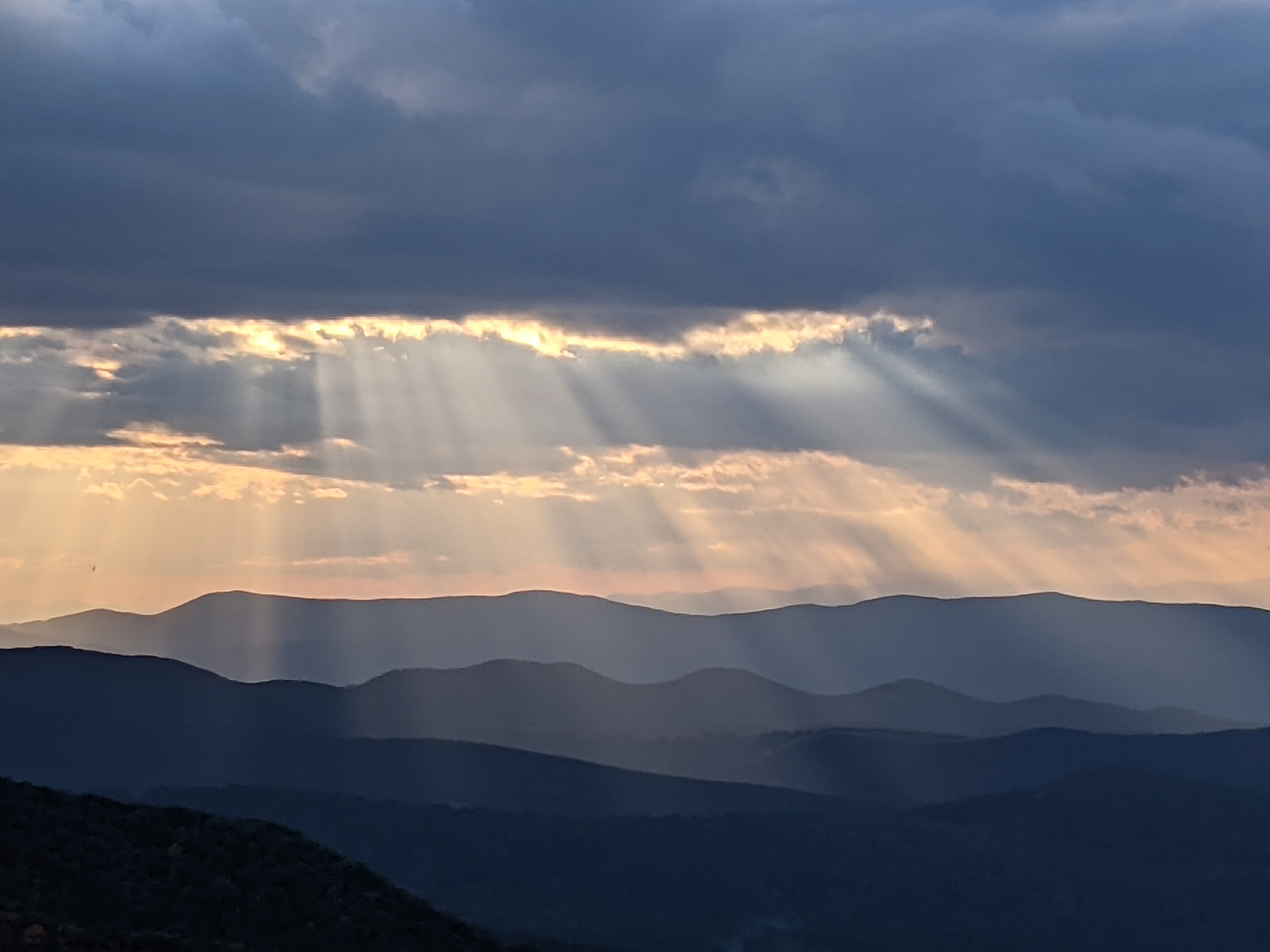
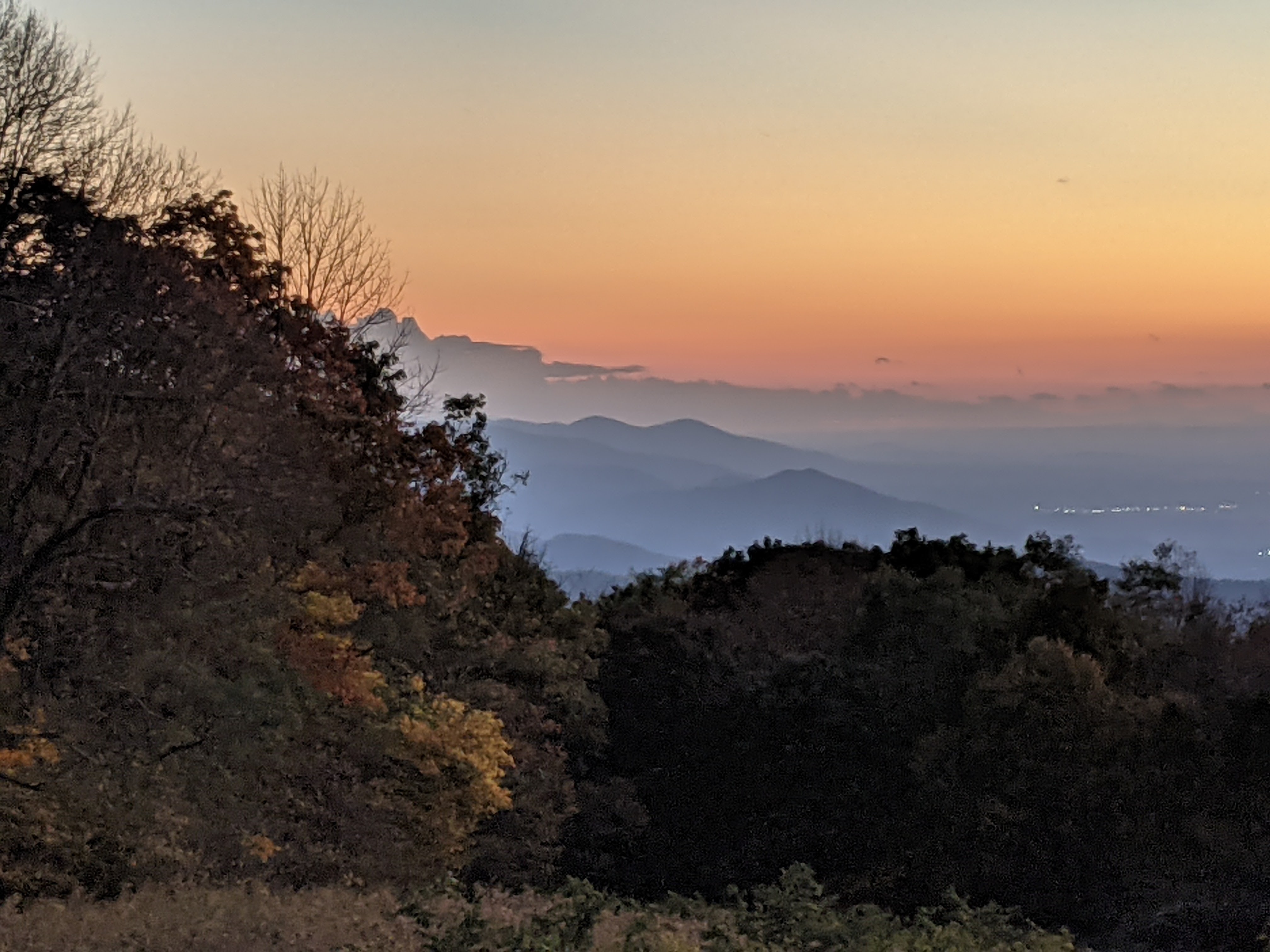
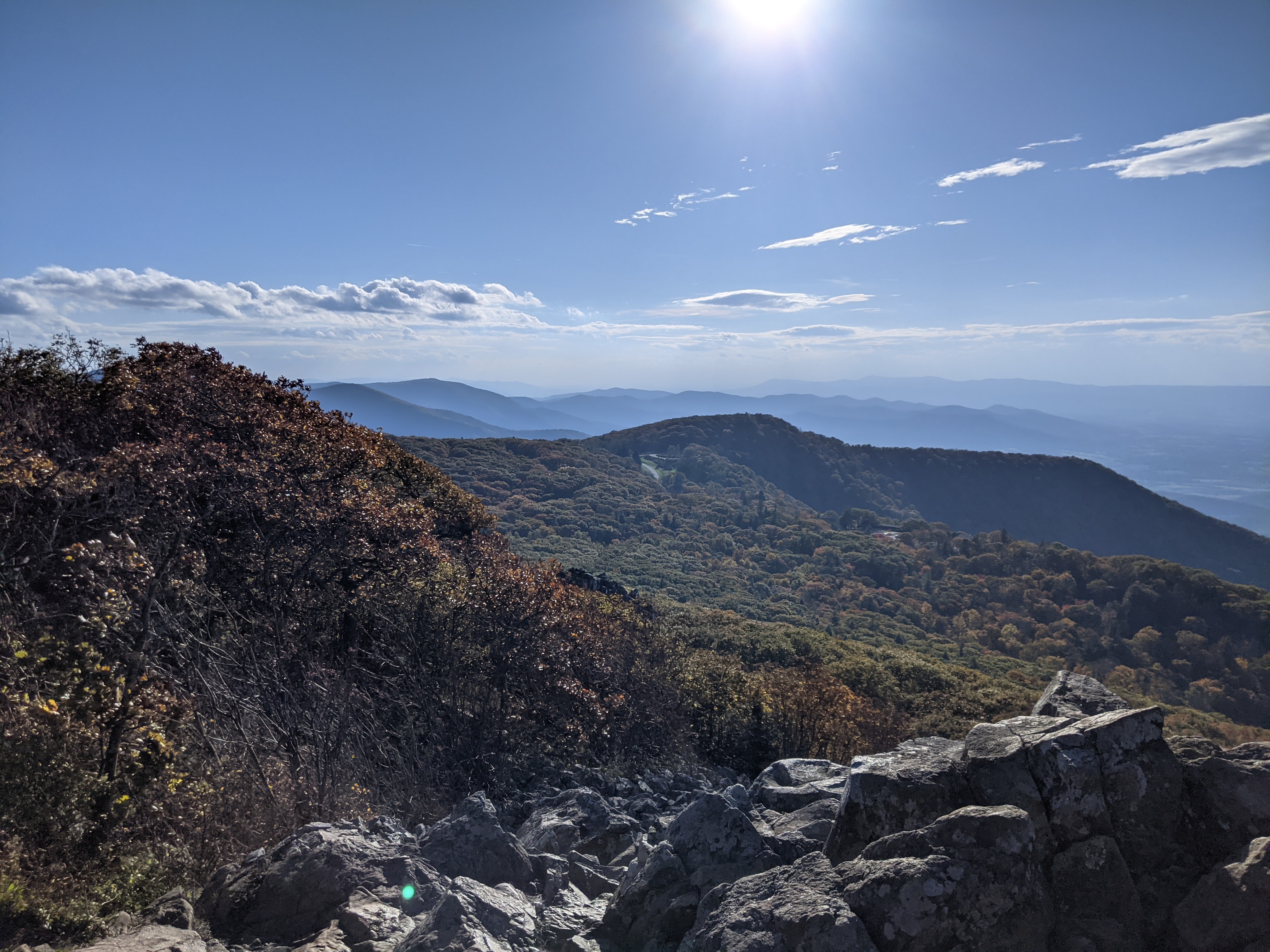
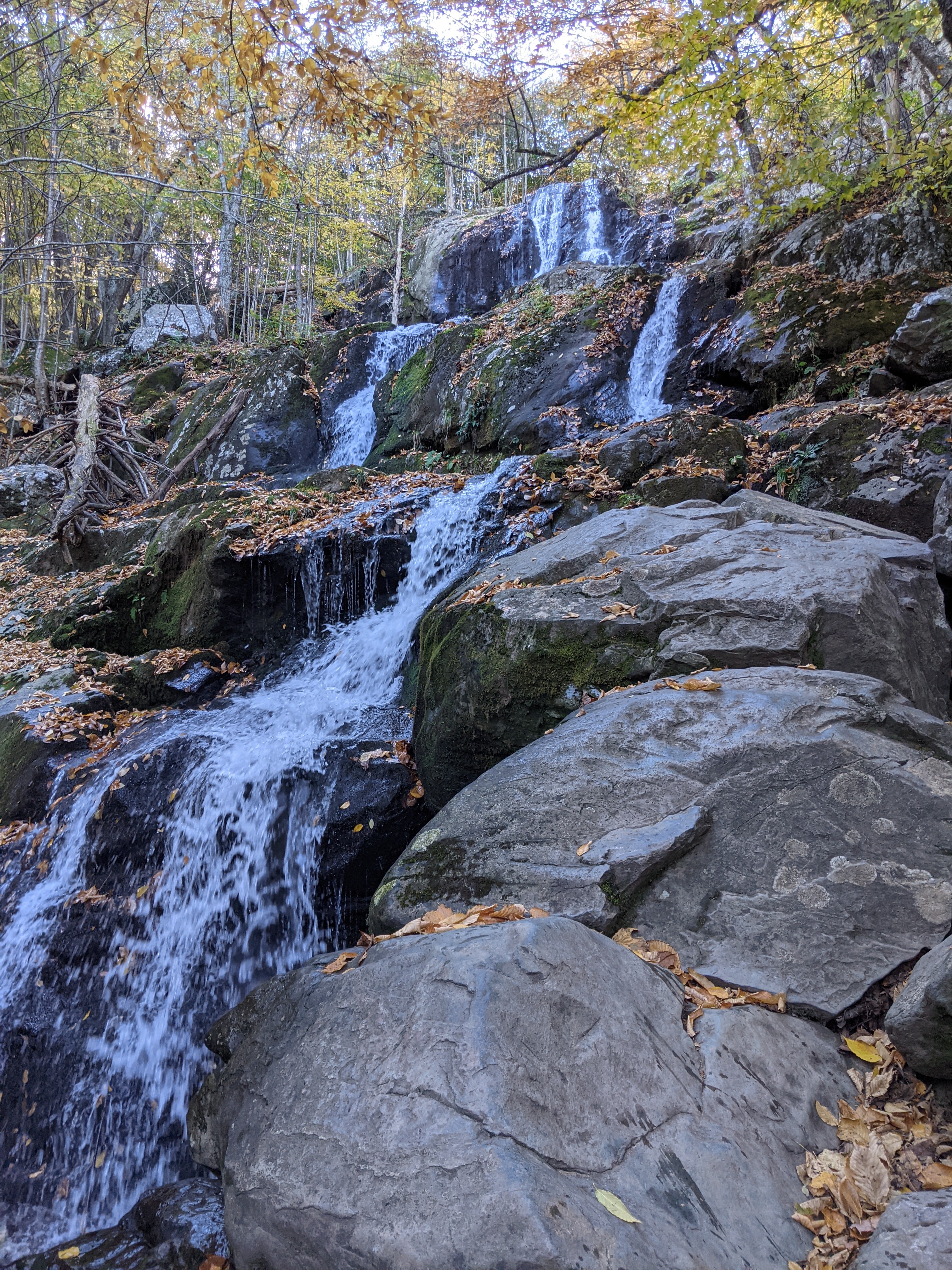
The scenic Skyline drive, the Blue Ridge Parkway and the 441 has taken more than 9 days to drive through three National Parks. On our way back through the freeways, it was only a 6 hour drive before reaching Harrisonburg. Harrisonburg is a town about 2 hours drive from Washington DC. We dined at Jimmy Madidson’s, a popular hang-out area for college students; had a comfortable stay at Harrisonburg before heading to Washington DC on our last day of the road trip.
The White House is blocked by gates and seemingly heavily guarded. We could not get close. Construction work was going on. It came across as a big unimpressive building that did not reflect its political significance.
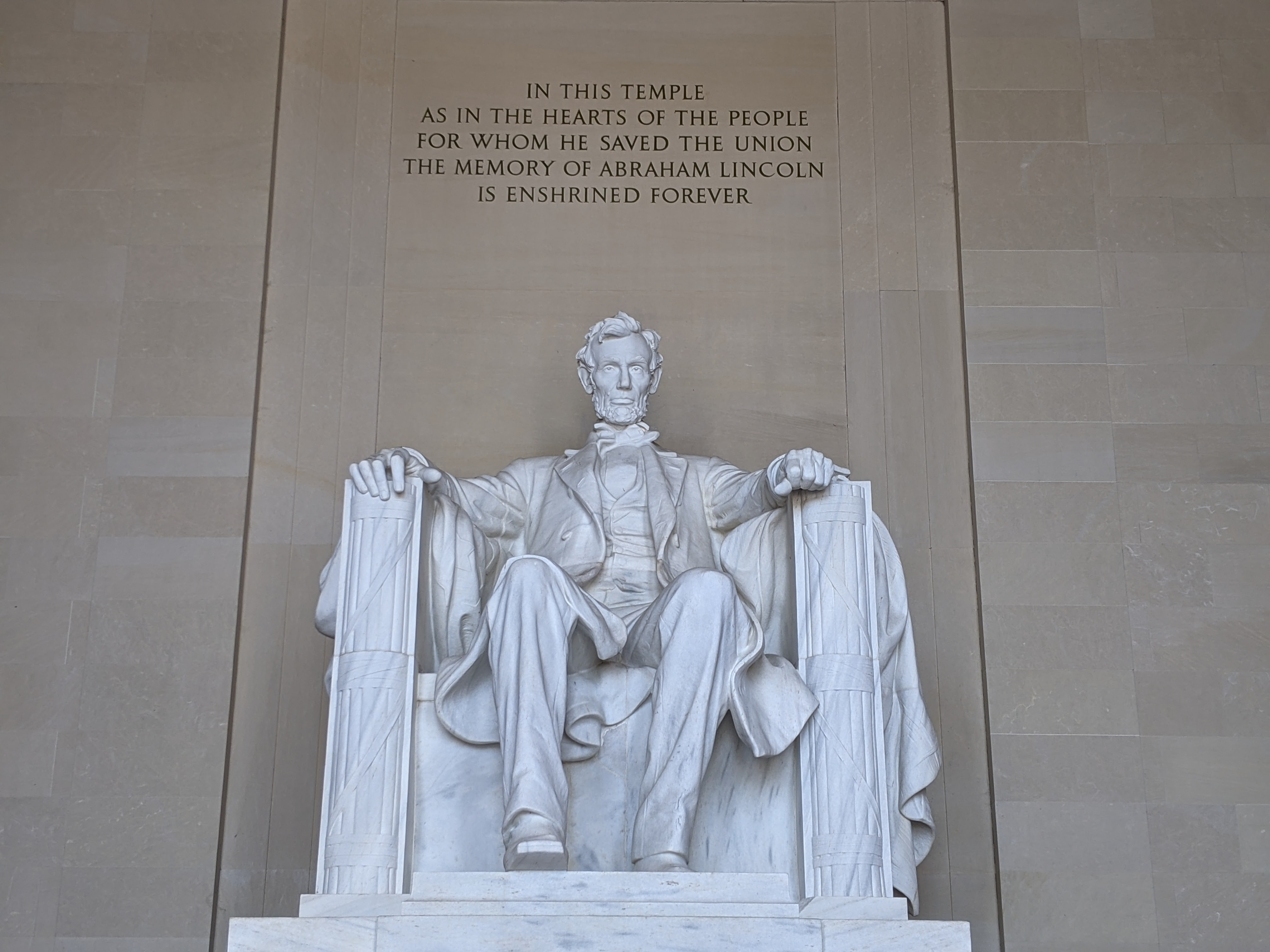
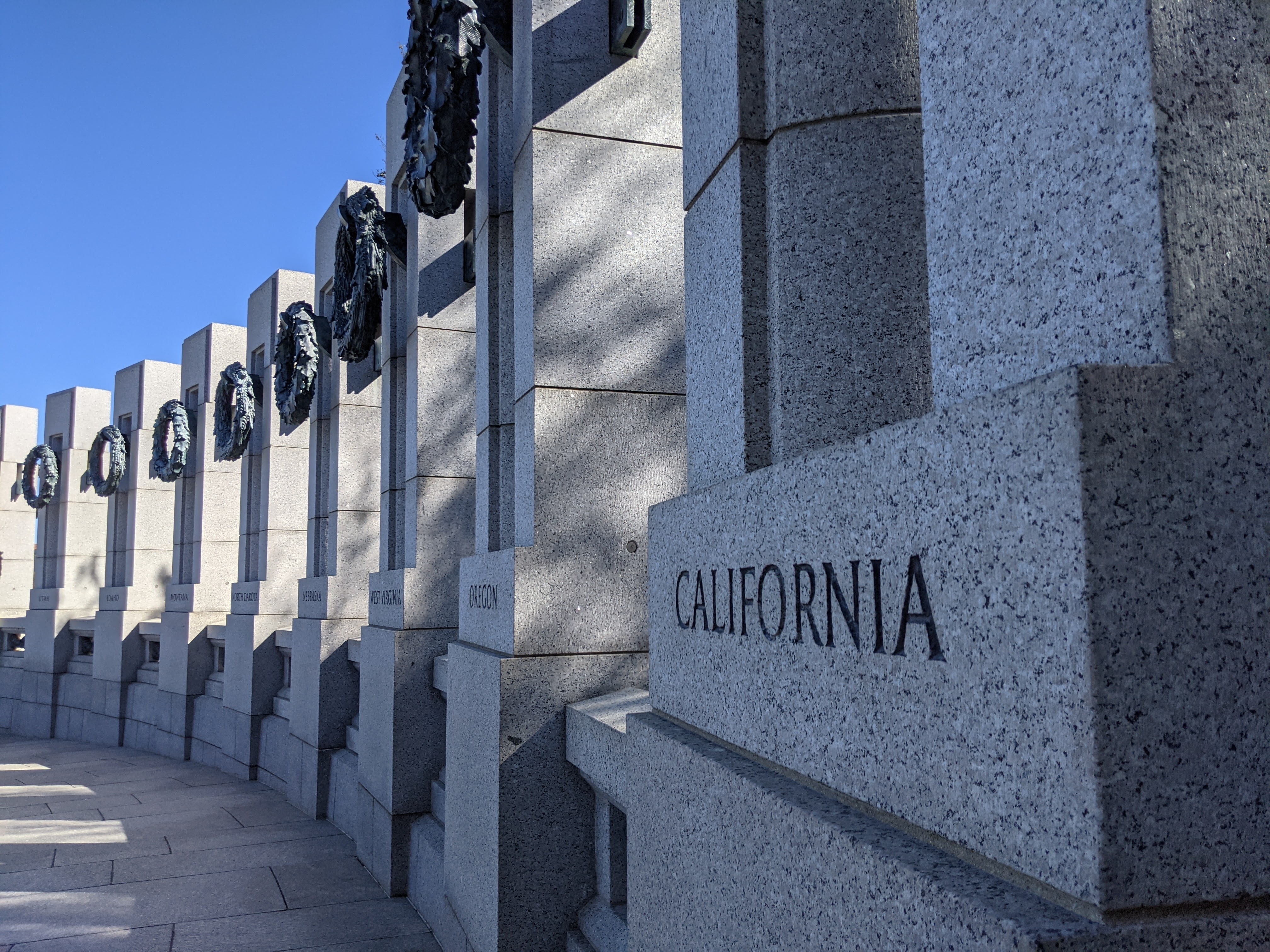
The leisure walk to the Lincoln Memorial along the reflecting pool was enjoyable. The Lincoln Memorial has a sense of grandness and historical significance that makes it stand out. President Lincoln is among the greatest presidents of the United States, and highly respected by everyone for his leadership to unify the country and end the 4-year civil war. He probably earned the most prestige for the emancipation of the slaves. On our walk to the Washington Monument, we stopped by the World War II memorial. The Washington Monument was impressively tall, with the many American flags surrounding it, it made quite an impression. Lunch was a quick one from the food truck parking around the area.
The Lincoln Memorial, the reflection pool, the Washington Monument, the Mall and the Capitol made a decent conclusion to our road trip.
There are still places that we would like to visit in the Great Smoky Mountains National Park and the Washington DC area. As such, we hope to be back!
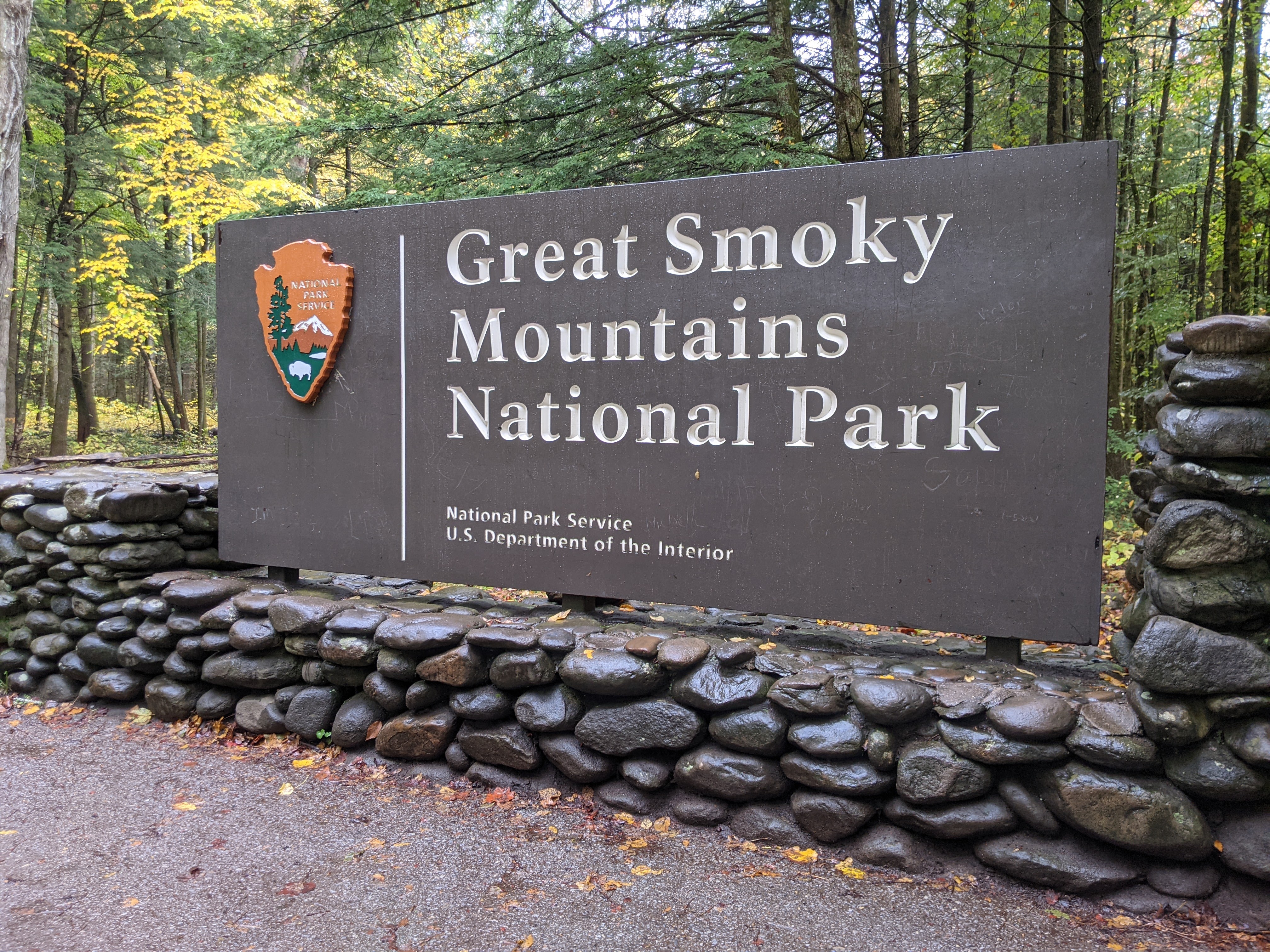
Great Smoky Mountains NP (GSMNP) is arguably the most visited NP in the country, free of admission fee, and located conveniently in proximity of many states.
Driving along the Blue Ridge Parkway to Cherokee has been a treat with the diversity of the foliage colour. We had a buffet lunch at Granny’s kitchen in Cherokee, it was inexpensive and stomach filling. Last time we had a buffet, it was probably over five years ago.
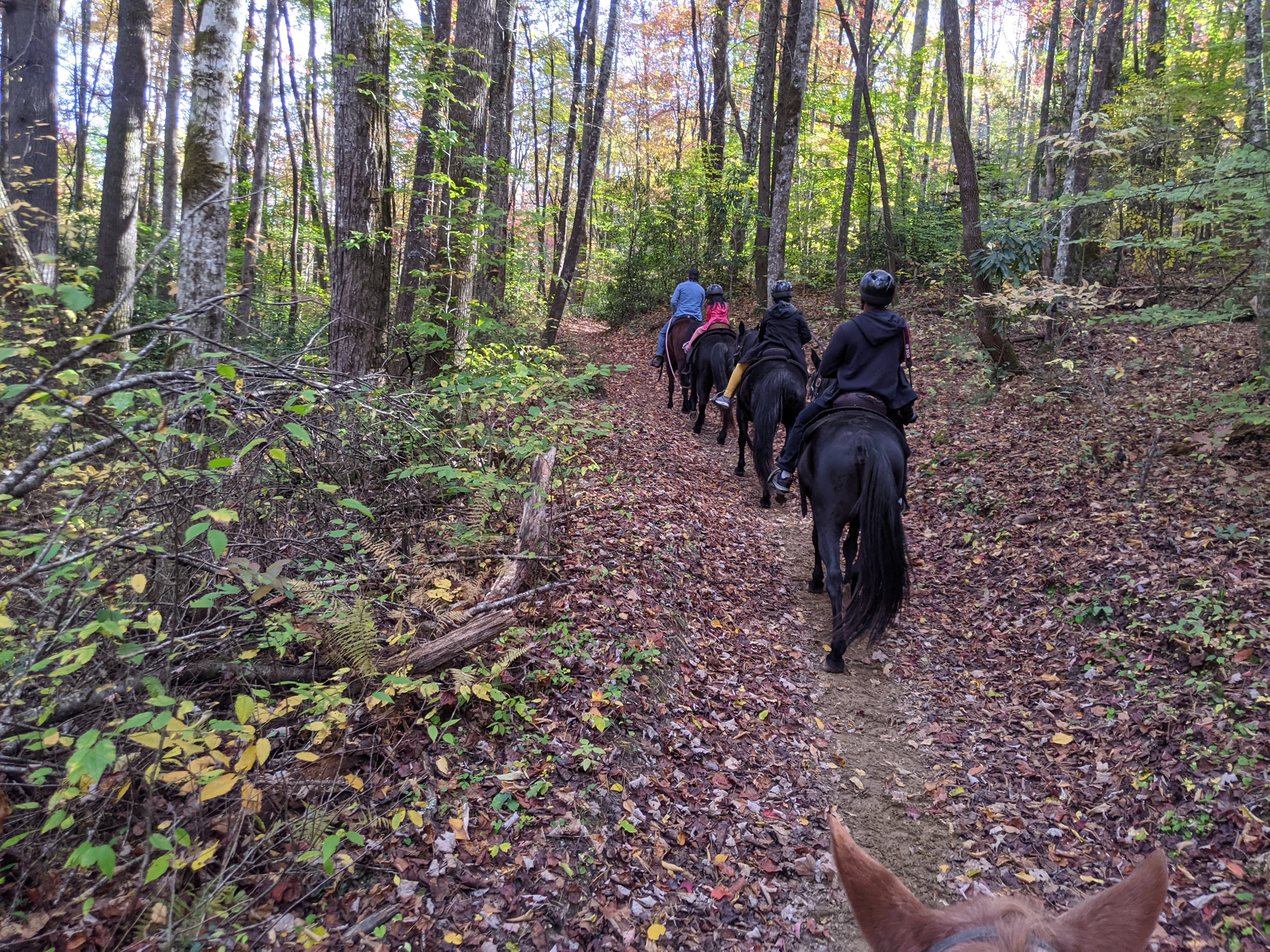
We had reserved an hour of horseback riding at Smokemont Riding Stables. The horse looked small until I got on the saddle and my leg hardly reached the footstep, quite nervous at the beginning and when the horse crossed over a river or walked down a slope. It was an absorbing experience, and certainly among the highlights.
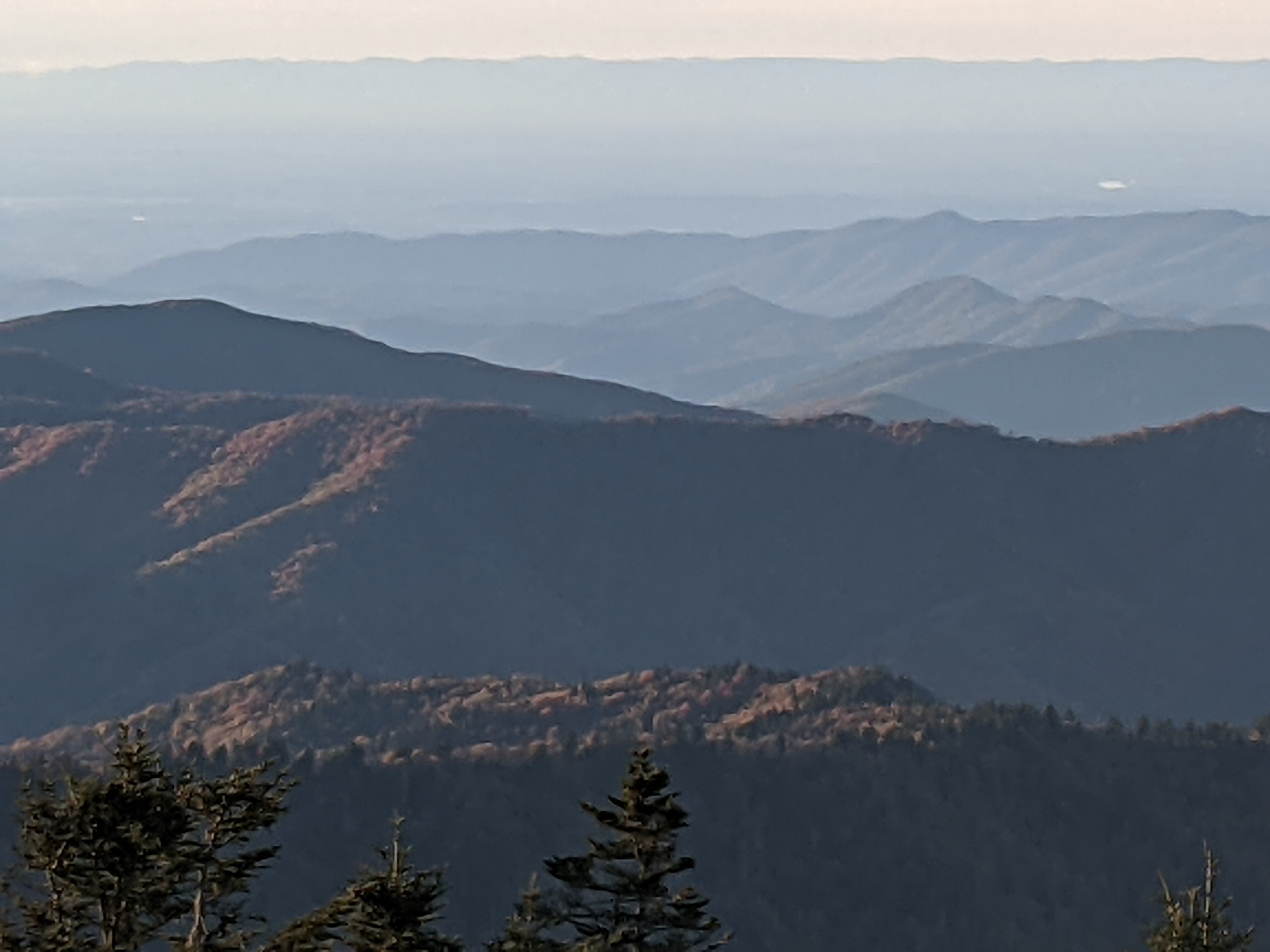
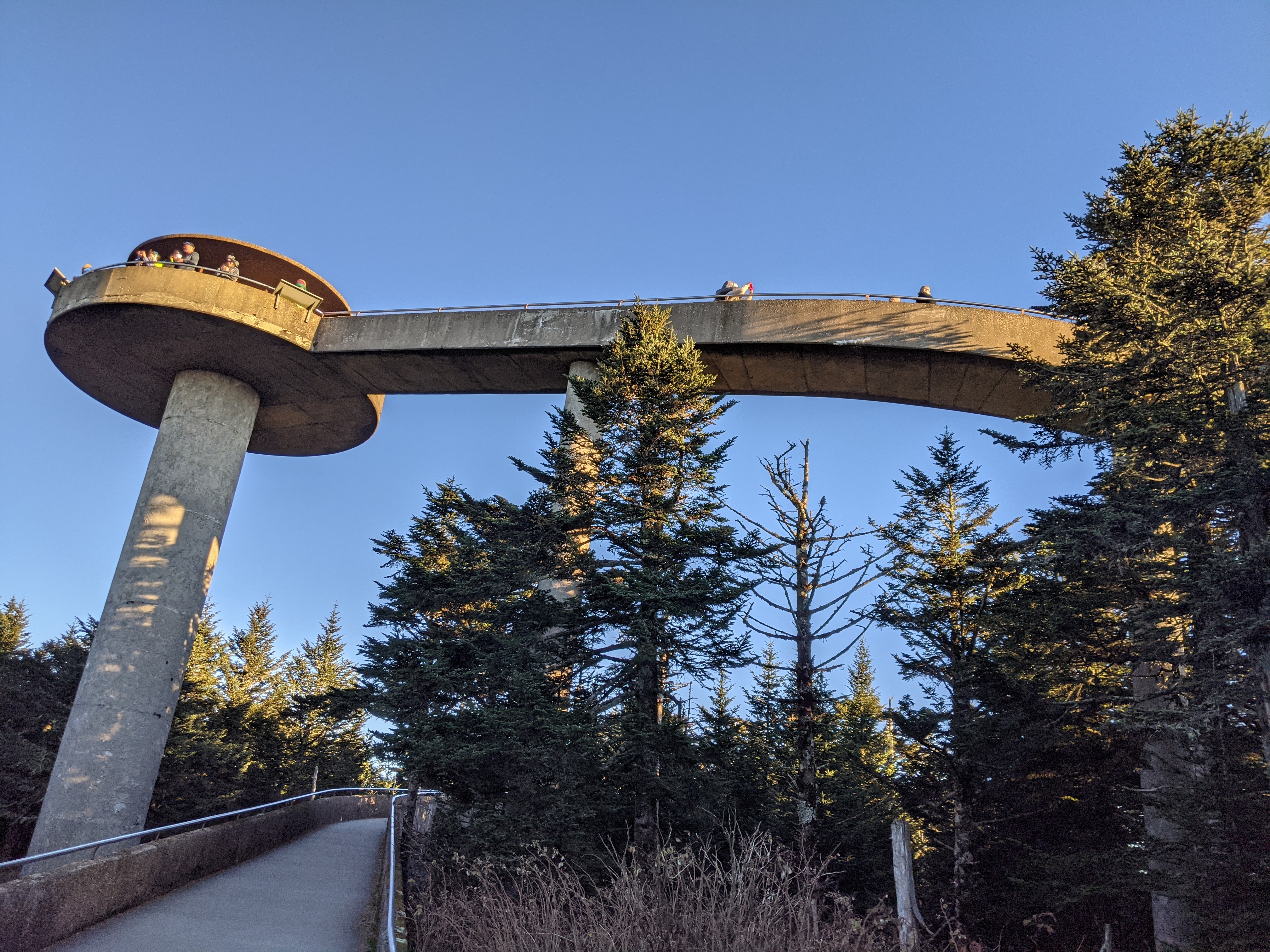
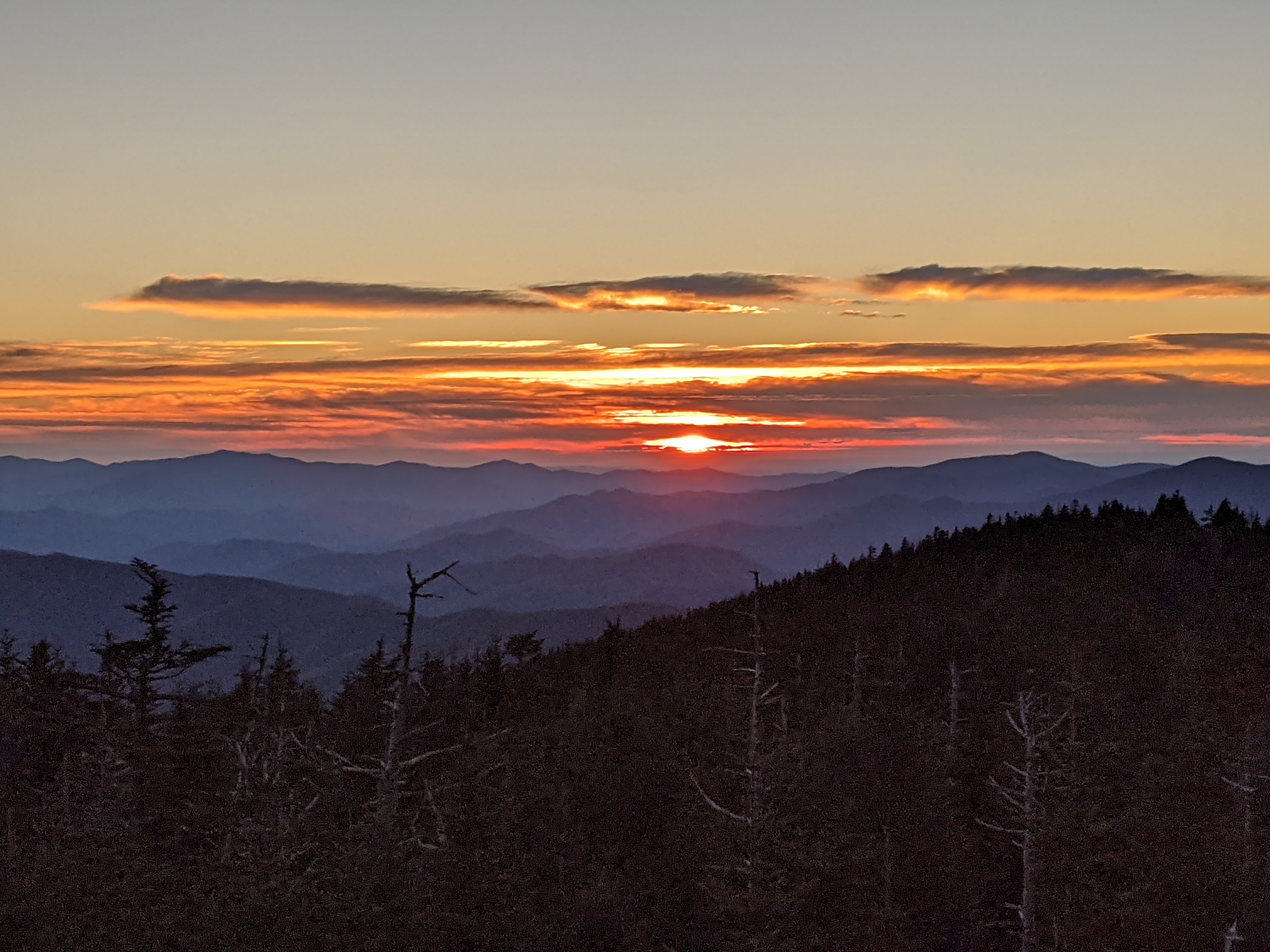
We went up the Clingmans dome tower for the sunset on top of the smoky mountain ranges. It was quite a wait among the cold and windy conditions, but totally worth it.
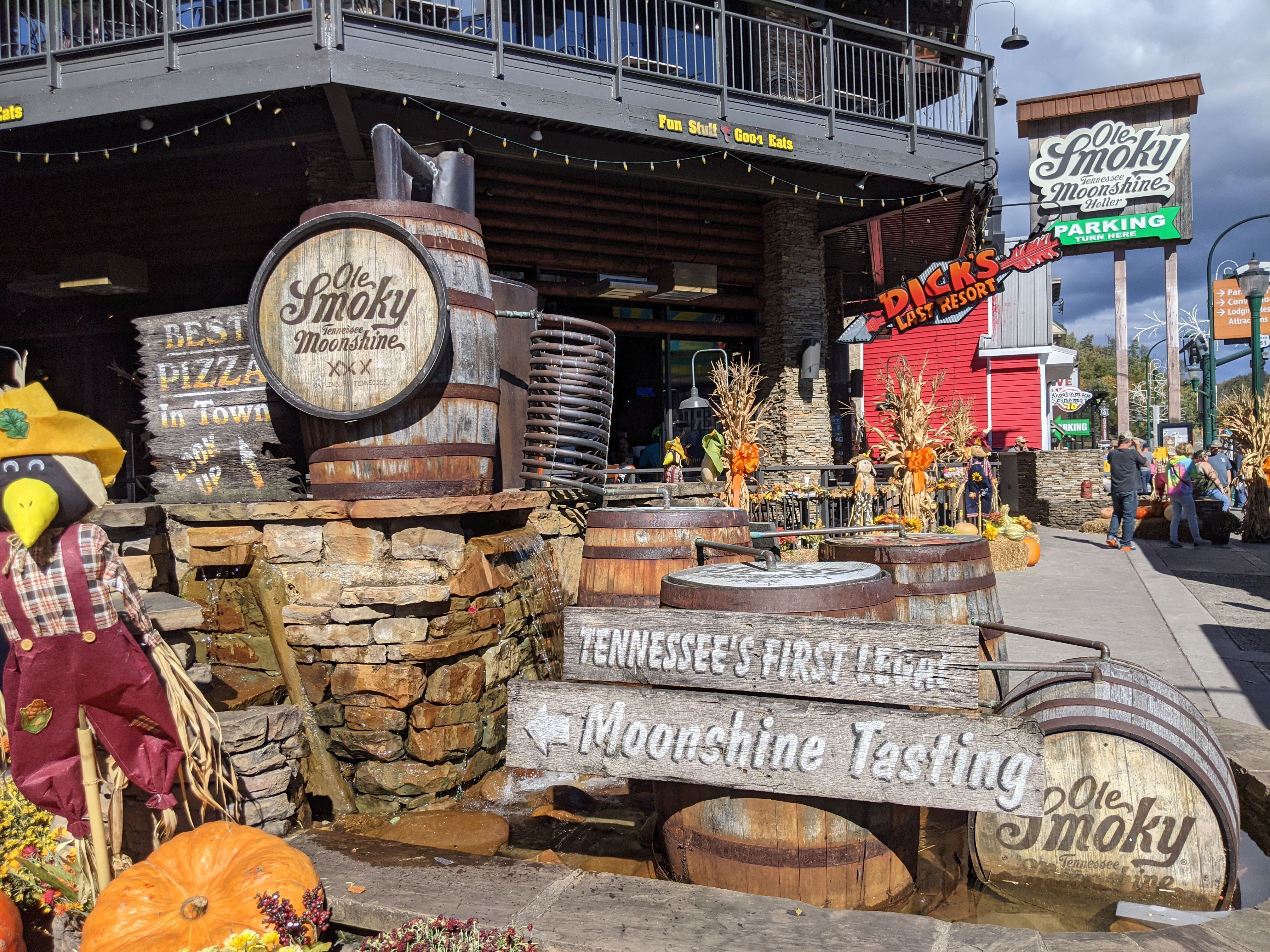
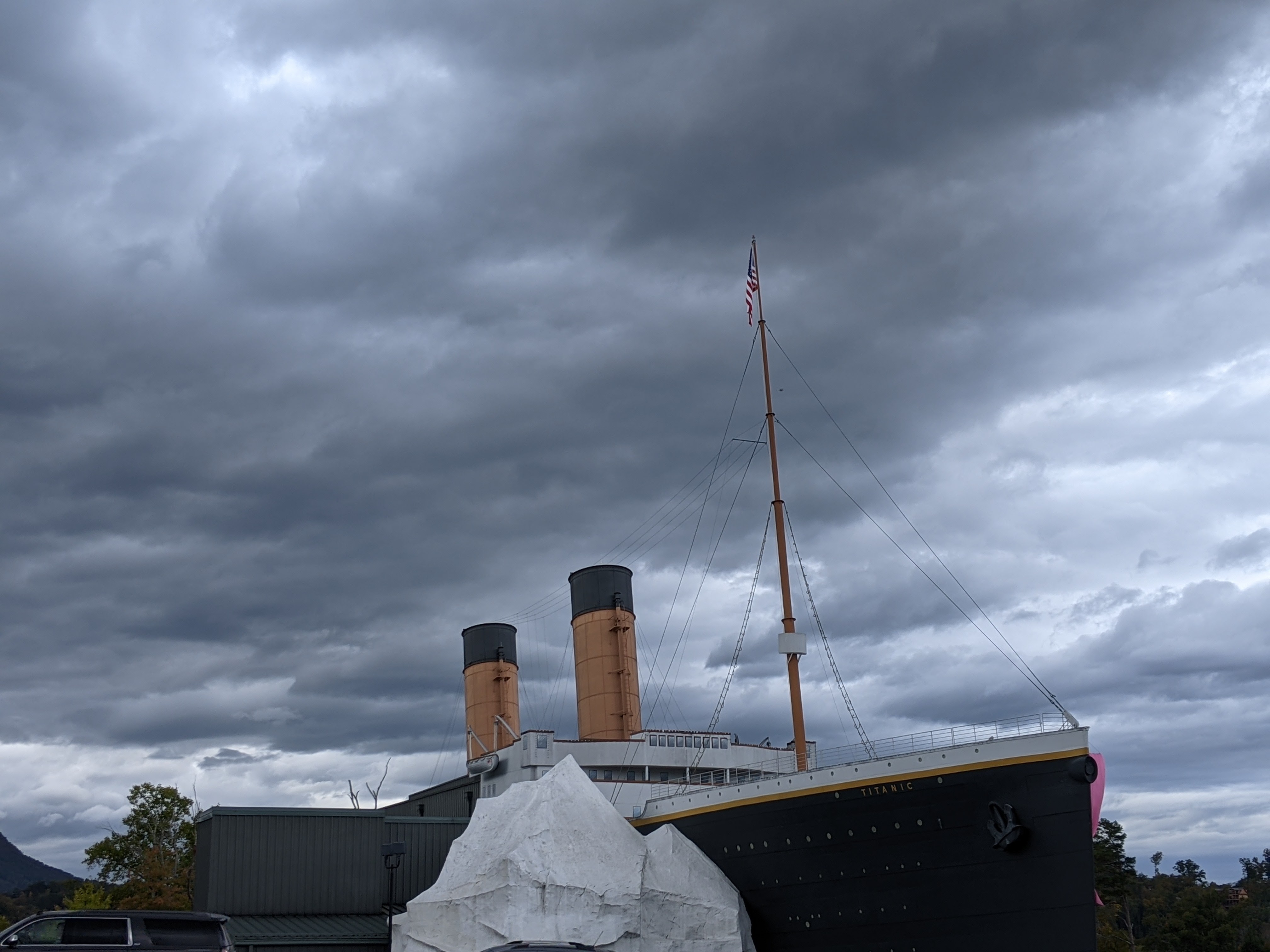
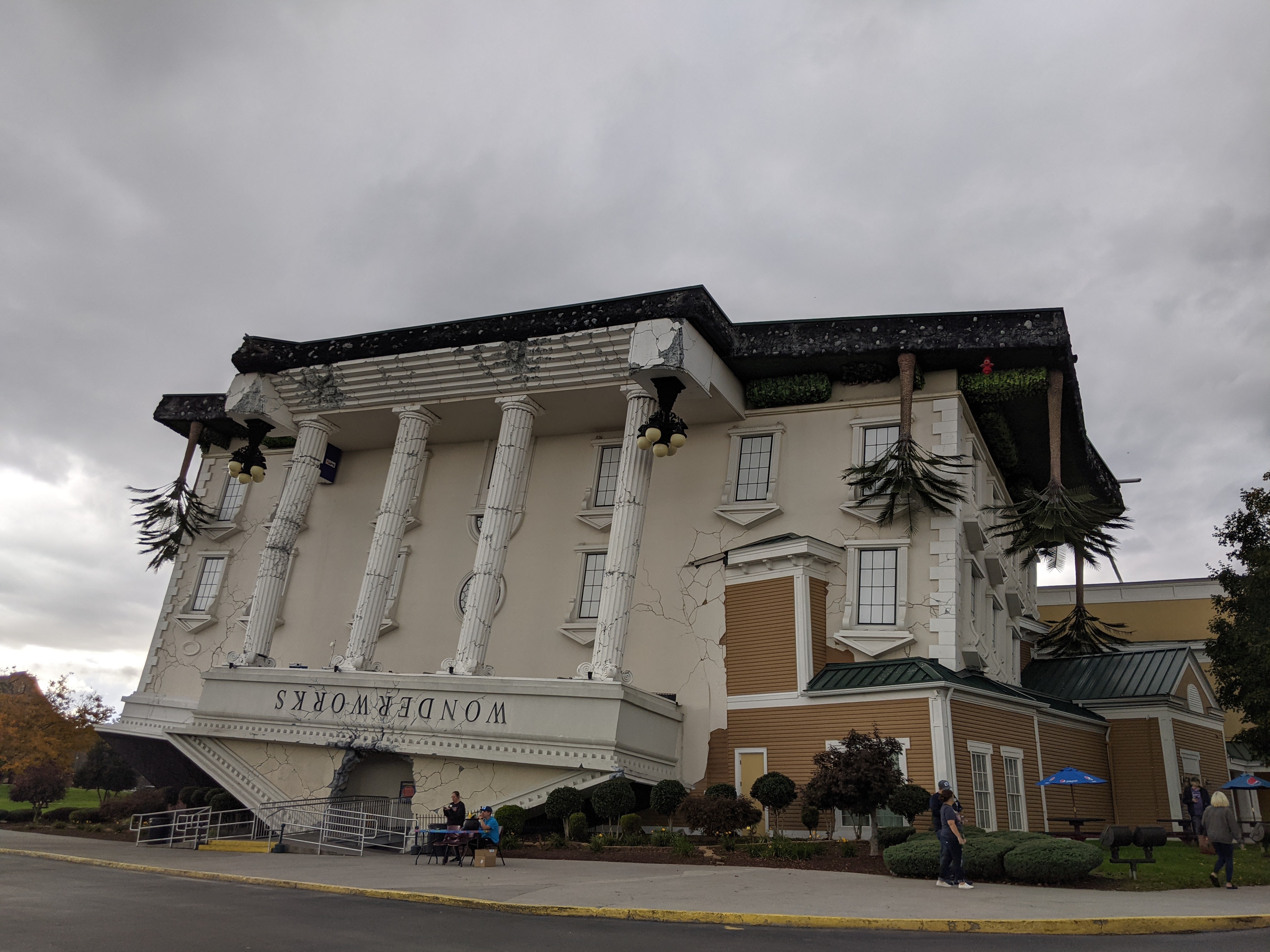
That was the last sunny day on this tour. Due to the storms and mudslides, the highway 441 across the park was closed, which blocked our plan to watch the sunrise inside the park. With closure of other roads inside the park, we detoured to visit Gatlinburg and Pigeon Forge, both very interesting cities. Gatlinburg is a touristy town with lots of restaurants and shops in the main street, seemingly a popular ski area in winter. Pigeon Forge is famous for the Dollywood, named after the famous singer Dolly Parton. The town is fairy tale like. The main street is lined with a remake of Titanic, a King Kong sitting on a building, an upside down building, and all kinds of interesting museums such as crime museum, mirror mazes. It makes a great place to visit for families with young children.
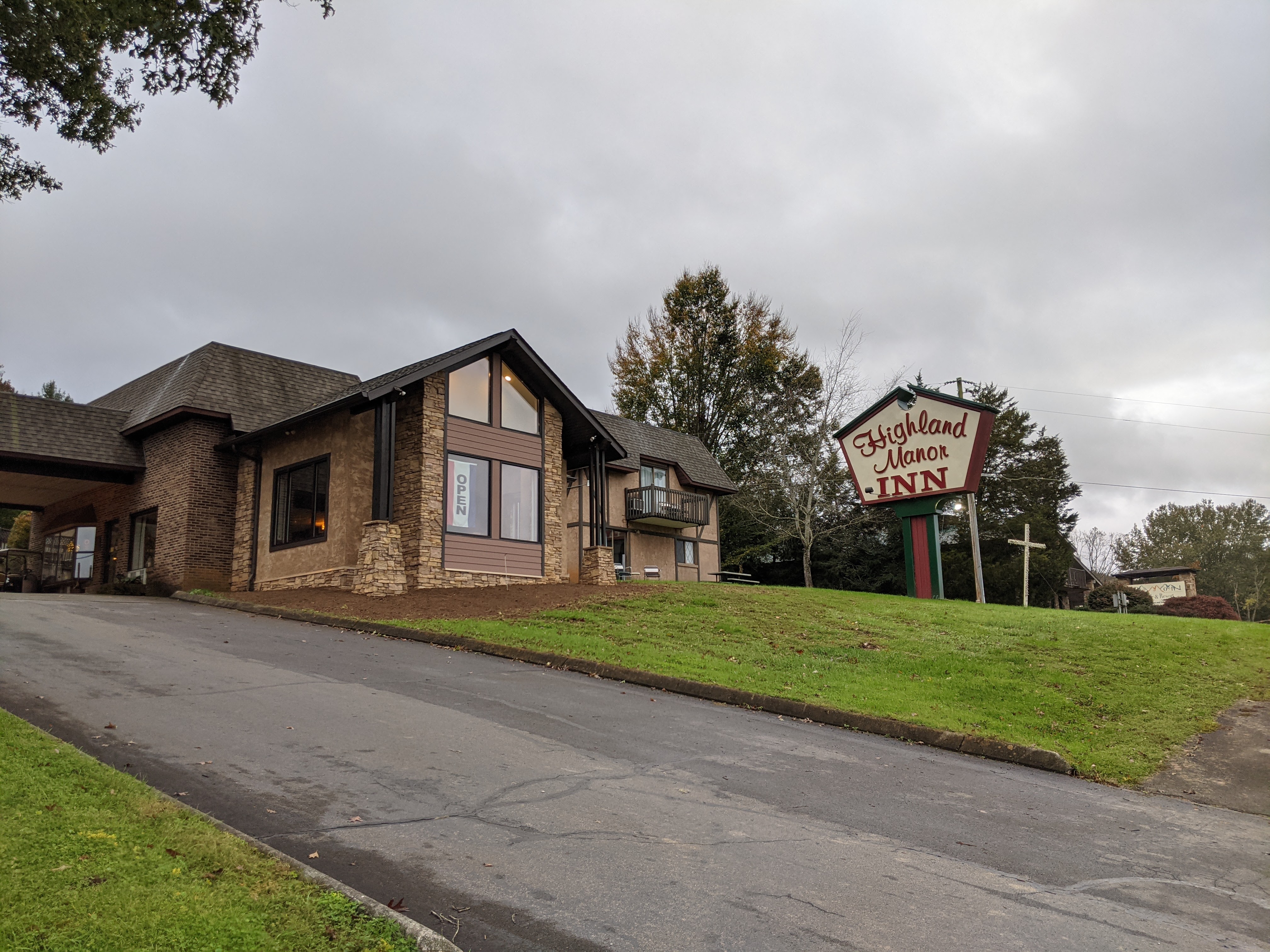
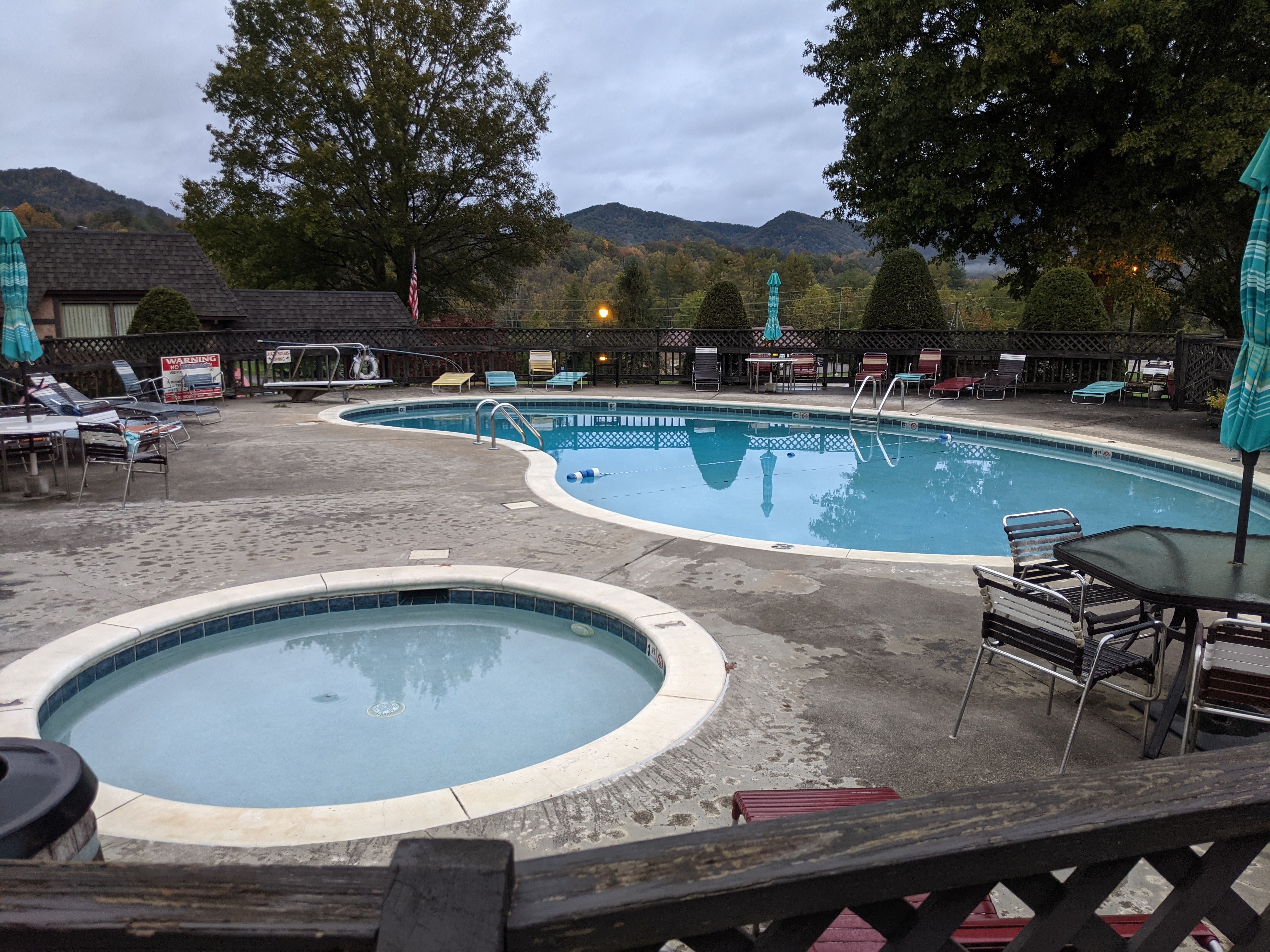
The Highland Manor Inn in Townsend was our accommodation, located very close to the GSMNP. Many like Townsend for its beauty and calm compared to the busier Gatlinburg and Pigeon Forge. A few told us the nearby Maryville was worth a visit, we went there to pick up some groceries, did some stroll but it did not live up to the reputation.
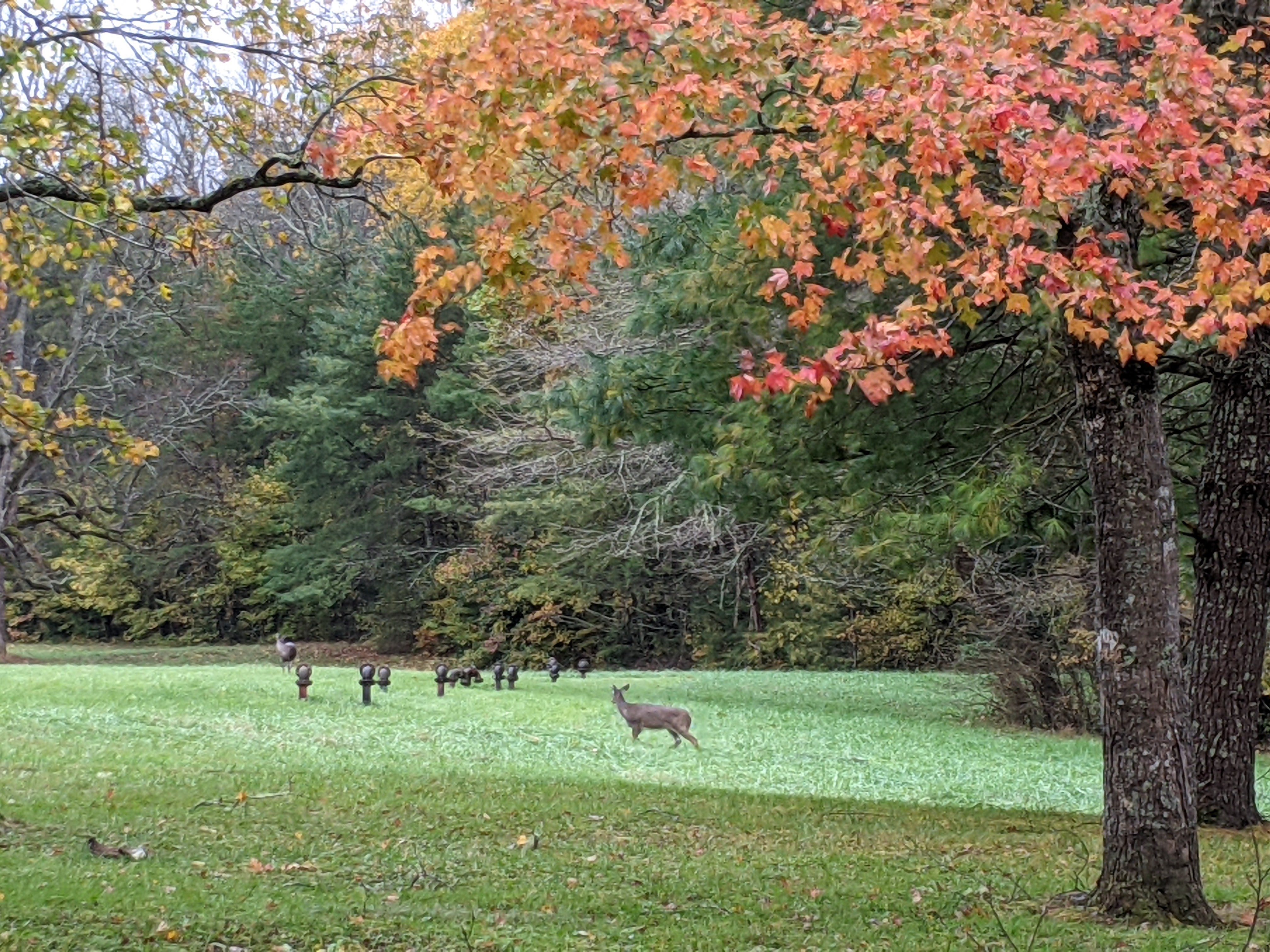
The 11-mile Cades Cove loop was still closed to auto the next day, to clear up the debris from the storm, but hikers and bikers could get in. We hiked 6 hours, and most of the time, we had this most visited national park for the two of us. It was one of the most scenic and peaceful hikes, and we could take all the time we wanted to enjoy the fall colour, the nature, and the exhibits. How many could claim that they had the GSMNP for themselves? We saw a few white-tailed deer, they came quite close. Black bears seldom attack people, their diets are berries and acorns. When we had the park just for the two of us, what if we ran into a family of bears? For good fortune or bad, we did not encounter a black bear, though we ran into a few hikers who saw a mother and three bear cubs on an oak tree. We figured we probably walked right under them without knowing.
We had a great dinner at the Dancing Bear, Townsend to recuperate from the 11-mile hike.
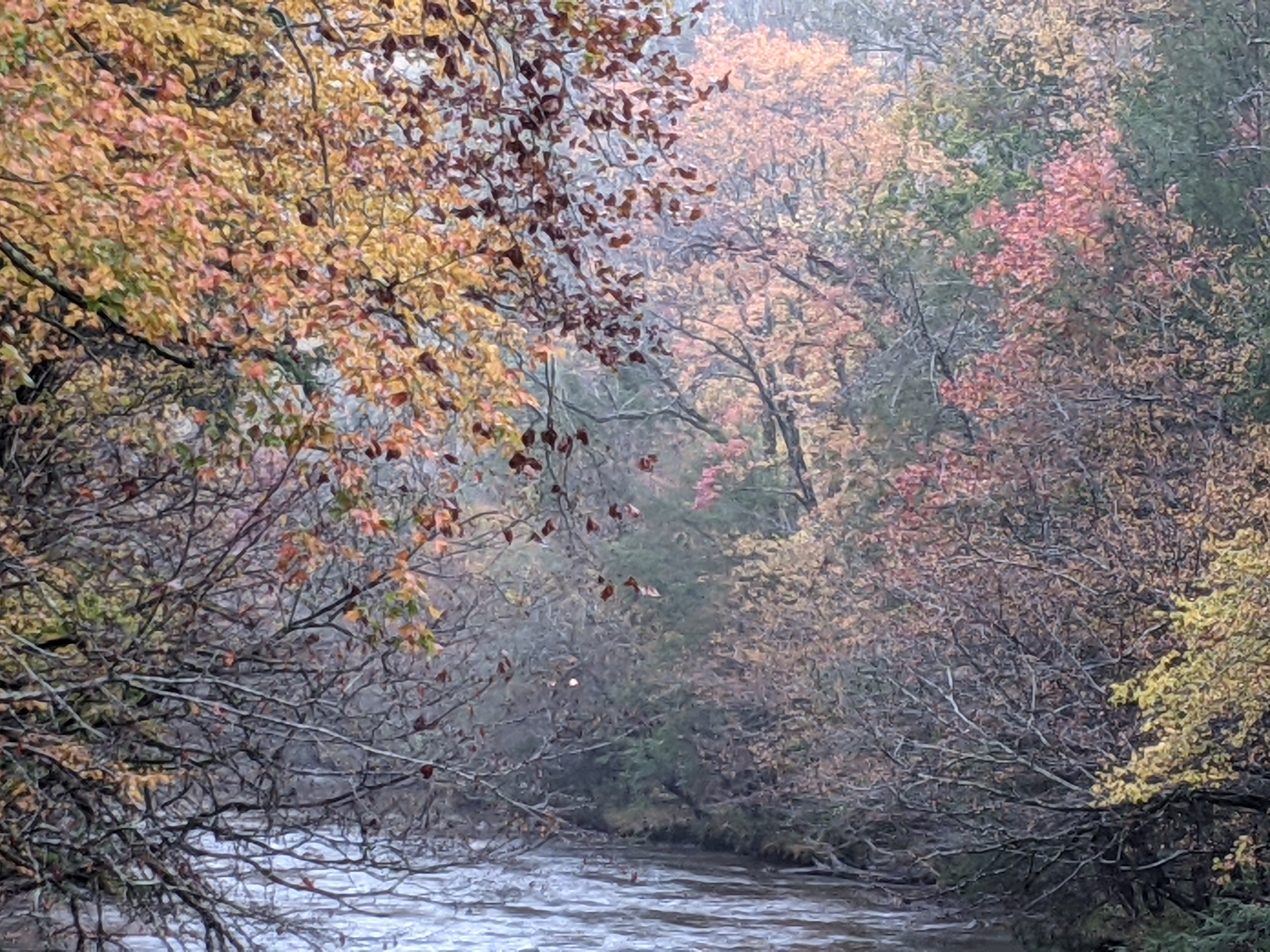
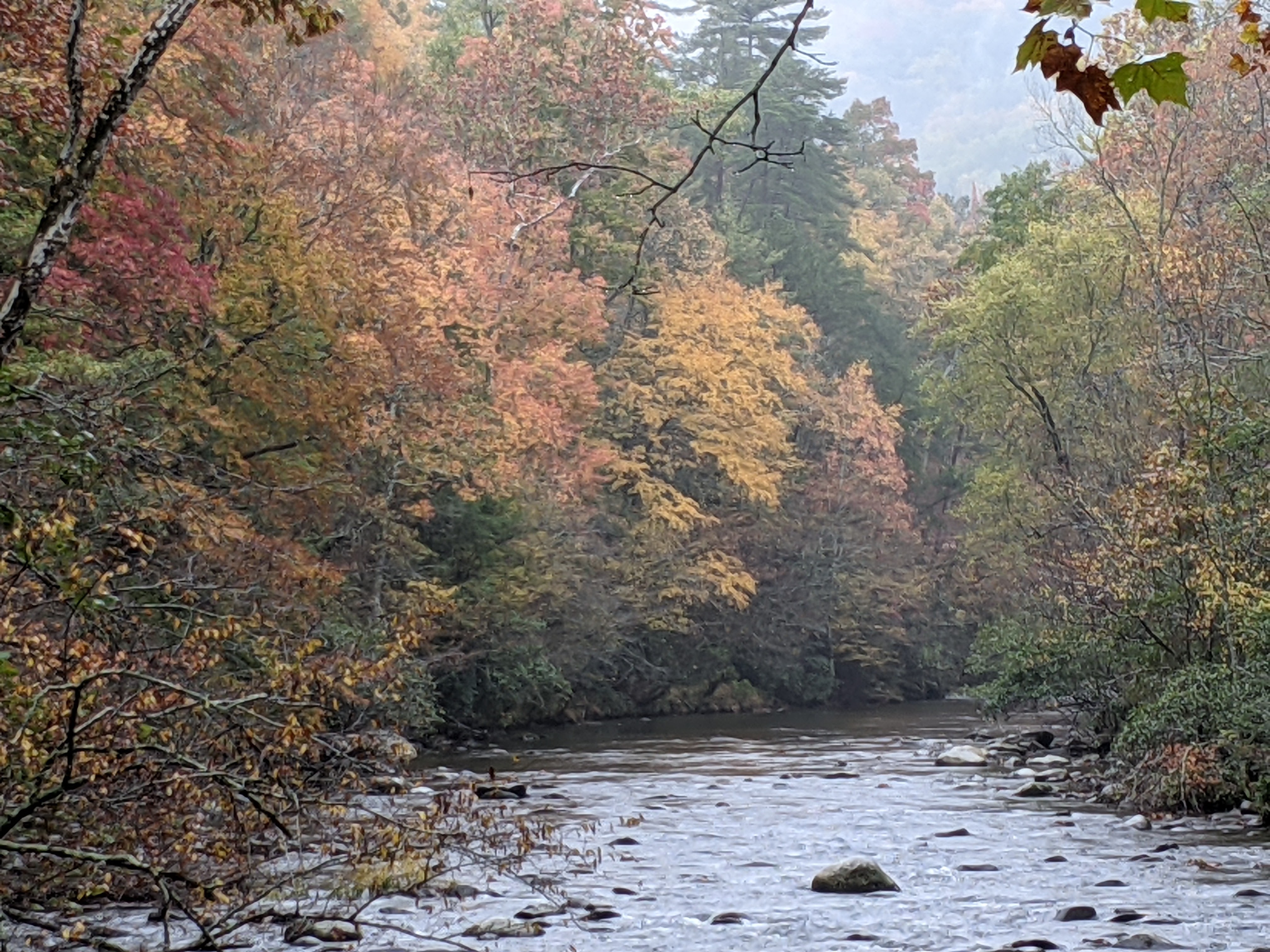
It was still rainy on our third and last day in GSMNP. The grey sky and the rain brought up the fall colour more, at times, it felt like we were in some Monet pictures. By now, we have accepted that the Pixel or phone camera did not do its service to capture the fall colour, and the pictures just came out a bit dull. We continued to be treated to a super scenic drive along the little river road. The roaring fork motor drive was a nice one, and we did the Grotto falls trail with nice colour and a small waterfall at the end, where we could walk to its back.
The locals did not use masks much nor social distancing. People in these states are different from the Bay Area neighbourhood. They are friendly and have the country style, seem to be less occupied with technology and enjoy chatting with travellers, like us.
Blue Ridge Parkway is a scenic drive of over 400 miles. It is longer and mostly wider than the Skyline drive. It begins where the skyline drive ends, and gets us to North Carolina. Similar to the skyline drive, we made different detours from the Blue Ridge Parkway backbone.
The Natural Bridge State Park is an easy detour. The bridge is a real wonder, formed by natural rocks from over 500 millions years ago, and it weighs 36000 tons. Its scale is hard to imagine, it is hard to differentiate millions of years, from the hundred millions of years.
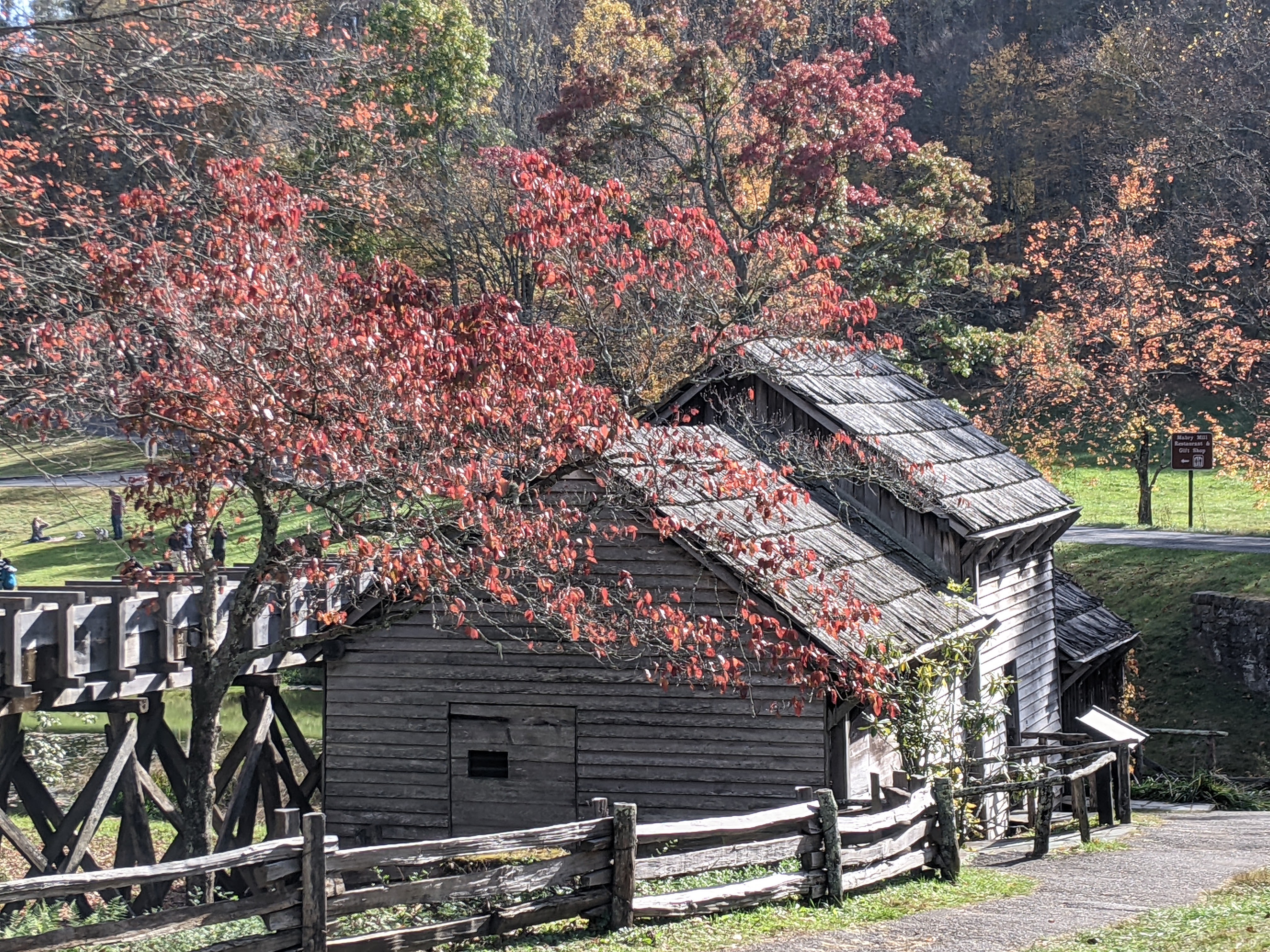
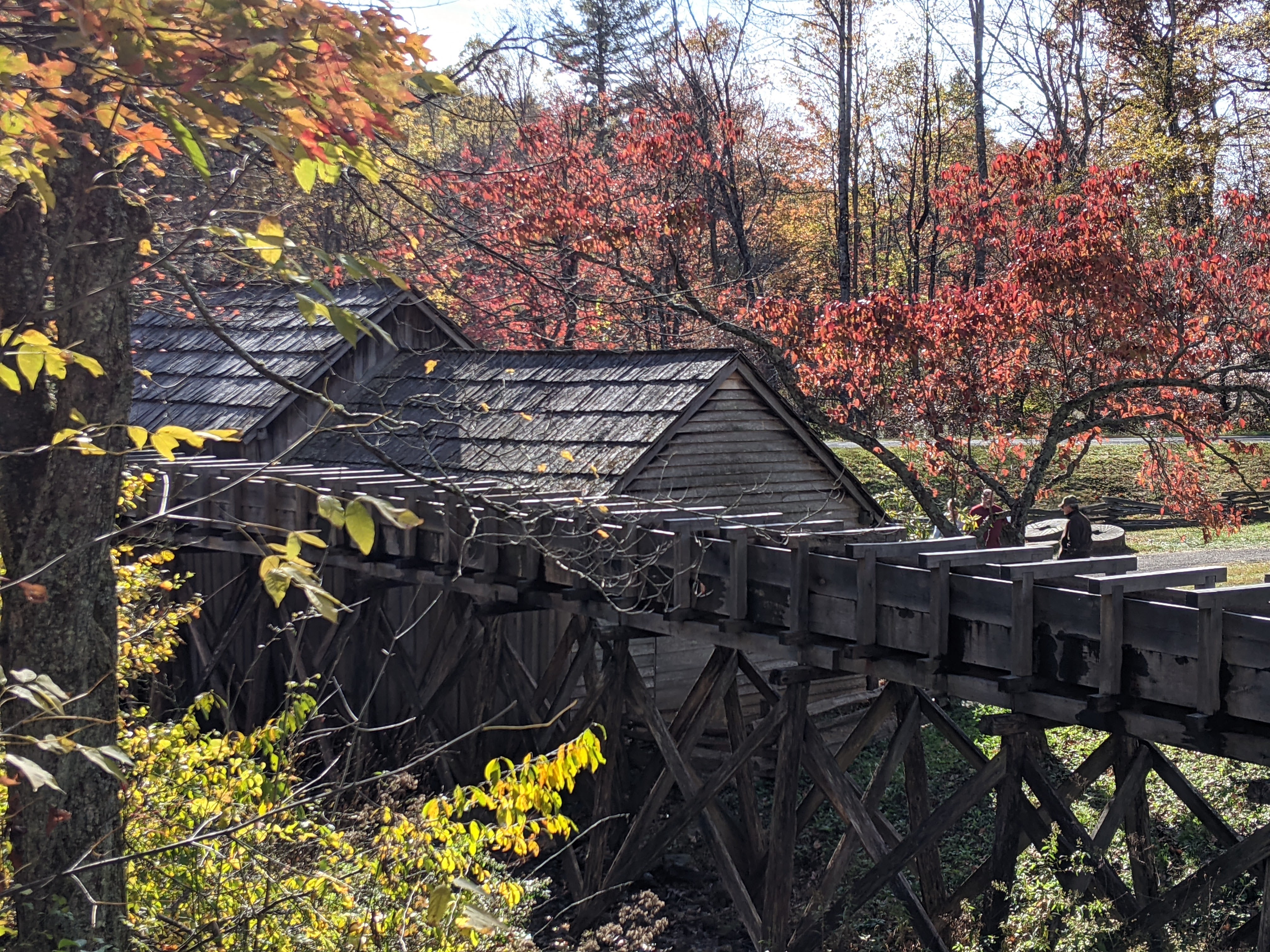
In this trip, we came across a few mills which give a glimpse of early settlement in the area. None is as complete, functional and beautiful as the Mabry Mill. Its setting is scenic with the water reflections, with the fall foliage and with its rustic buildings. It has such a display of the mills, the grinds, the moonshine making tools. It is one of my favourite detours. I wish I could have more time to spare.
Blue ridge music center is a worthy detour, to appreciate the history. At the time we arrived, the live music was over, and we had to leave before the gates closed shortly after 5pm. It is a pity. We were quite selective in our stops along the Parkway, but still felt rushed.
With a population of around 20,000, Boone is a charming place to visit. It is beautiful, lively and has everything needed. We were there for less than 24 hours, and I liked it. I was super-tired after checking in the hotel, and could not bring myself to leave the hotel bed for dinner. That fast food take-out was almost an hour of wait, a combination of the labor shortage and touristy season.
We decided to take it easy the day after, and started the next day with a decent breakfast at the Sunrise Grill. It was simply the best breakfast on this trip (not one of): relaxing, delicious, local and authentic, served by a sweet waitress, and consumed alongside the beautiful view of fall foliage. The breakfast got us back to a full tank of energy and ready for the stretch.
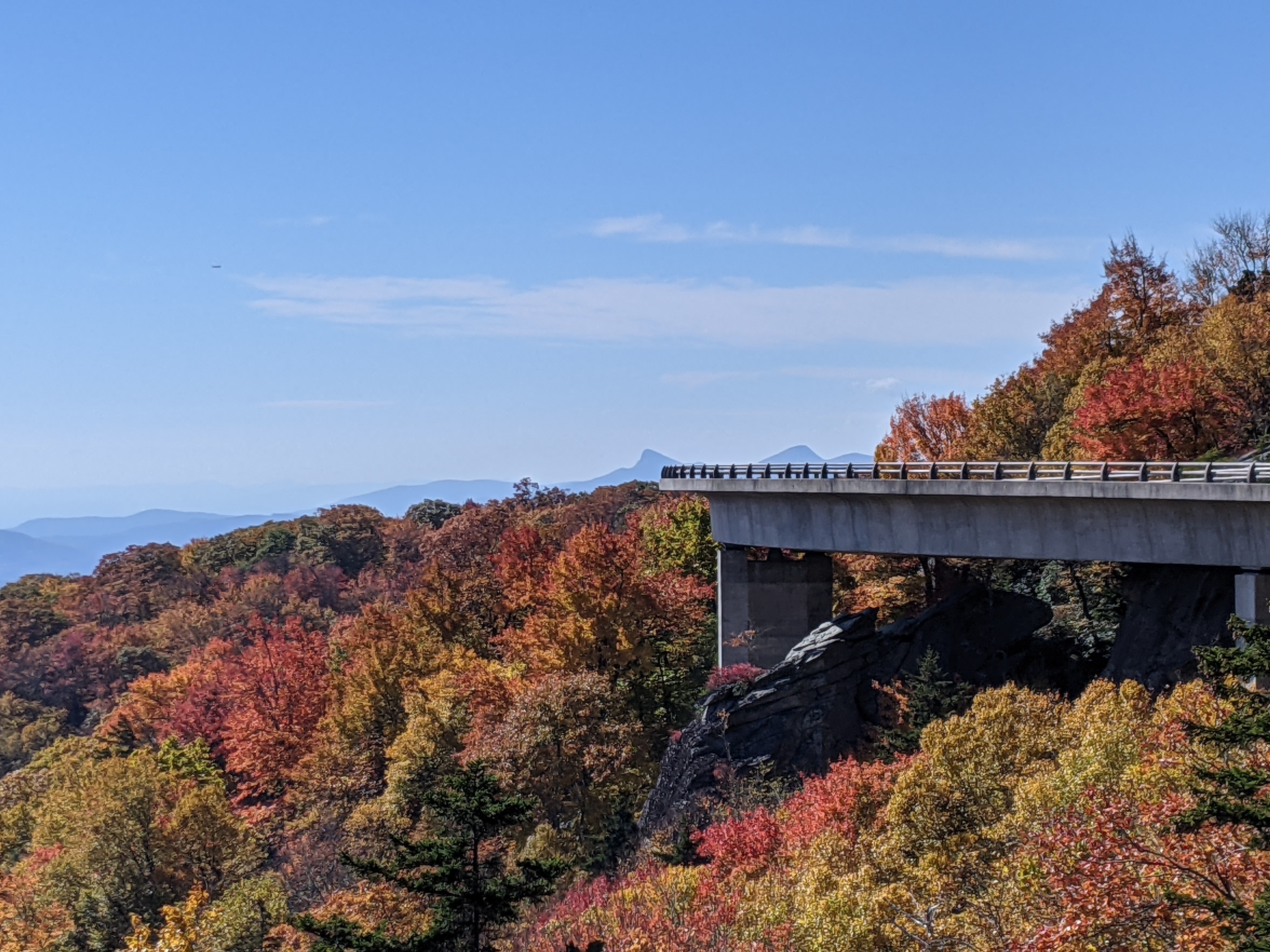
That stretch of Blue Ridge Parkway between Boone and Asheville has been widely considered as the most scenic and it lives up to its reputation. Blowing Rock is a nice charming town in that stretch, and we strolled around and got some sandwiches for a picnic at the scenic Moses H Cone memorial park. The Linn Cove Viaduct area is likely the most famous stretch of the Parkway. Built to protect nature, that part of the Parkway has been made of many S-shape sections connected along the mountains. It is a feat of engineering, stunningly beautiful and magnificent in the fall season. We drove back and forth the viaduct a couple of times and never got tired of the scenery.
Trick question: How do the tourists know that they arrive at the right time for the fall colour? Answer: When we run into tons of locals carrying professional cameras and busy taking pictures along the Linn Cove Viaduct!
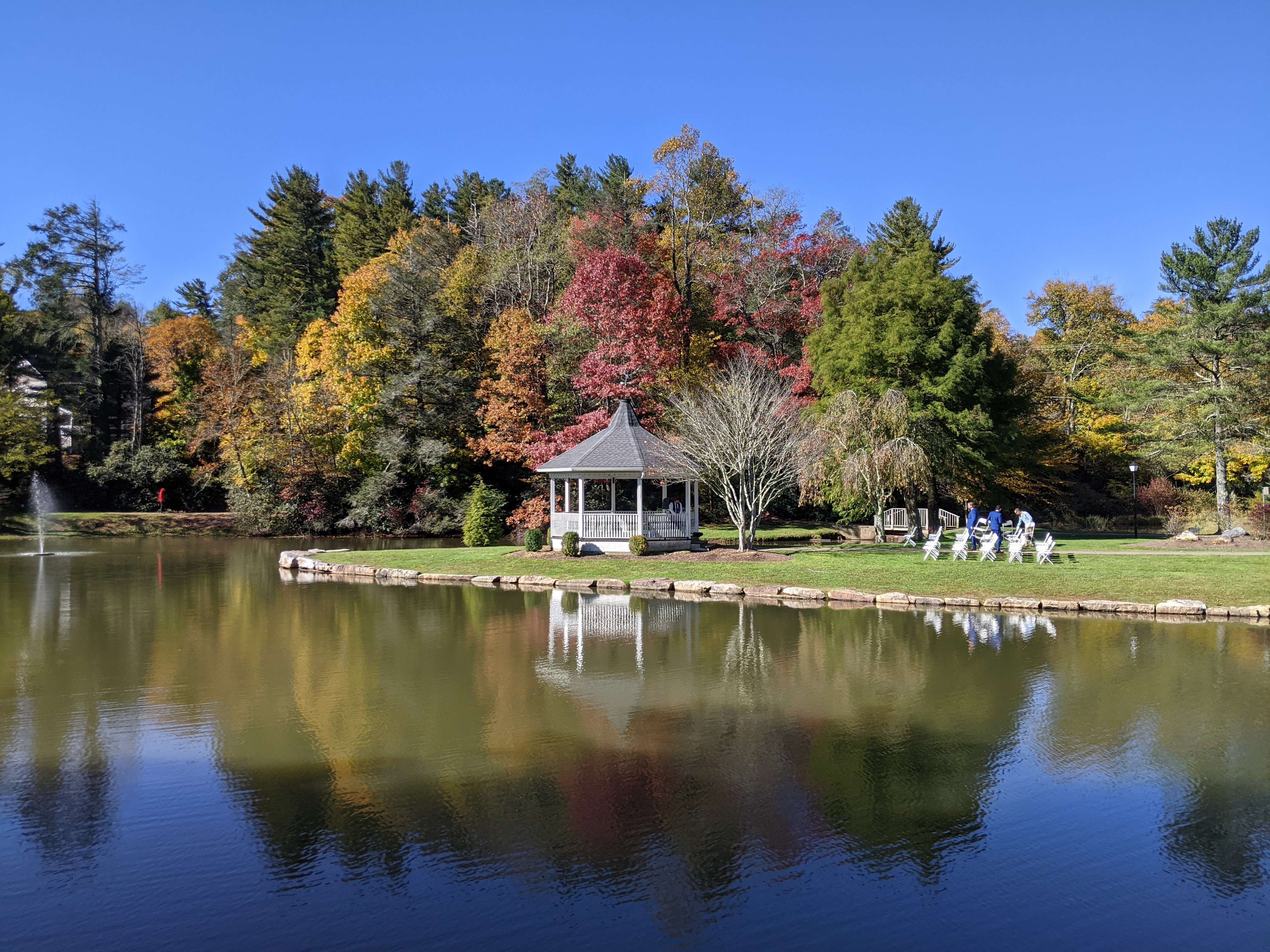
Julian Price Memorial Park, and the Sims pond was like a heavenly scene as the water reflections bring up the fall colour even more. Little Switzerland has been a sweet little stop along the Parkway, the ice cream, the chocolate, the decor just so Swiss.
The sunny weather seemed to come to an end. It was chilly and overcast as when we hiked up the Mt Mitchell observation deck. On our way up the hundreds of steps to the Chimney Rock, the rain poured down on our rain gear. We could hardly see any view from the top, but within fifteen minutes, it cleared up a bit to allow us to take some photos. The Chimney Rock has a cool setup to allow us to either walk up or take an elevator. With the weather, we took the elevator down.
Biltmore Estate is the largest privately owned house in the United States, built for George Washington Vanderbilt II over a hundred of years ago. The internal decor is nice, and the garden outside is quite beautiful with a conservatory full of interesting plants and florals. It does not have the grandness of the Palace of Versailles, though the house gives a sense of warmth and comfort. The house, the garden and the wine tasting took about six hours and made a good visit. The almost $100 admission fee is still overpriced.
The city of Asheville has more than 90,000 inhabitants, and has a famous tourist attraction of Biltmore Estate. On our walk to find our dinner, we had run into at least a few drivers honking and yelling at us, for no good reasons. It seemed not a friendly city and some drivers were simply rude. The food was good though. We had a delightful and delicious Indian dinner at Andaaz, within walking distance of our accommodation.
Asheville is known for a charming downtown area, a variety of historic and architectural interests. The downtown is lined with many good restaurants but a table can be hard to find without reservations. The downtown stroll was interesting, but a bit uncomfortable. For reasons that cannot be explained, it just felt a bit unsafe. It could be that we felt the drivers did not necessarily give way to pedestrians, and that they honked at pedestrians even when we had the right of way. We had a great dinner at Cucina24, an Italian restaurant serving a set menu of 5 courses of carefully crafted dishes.
The scenic Skyline drive forms the backbone of the NP. Its length is just slightly more than 100 miles and has a speed limit around 35 miles per hour. There are so many overlooks, picture moments, hiking opportunities as well as detours we can make along the way. We got in and out of the drive numerous times, and traversed the whole distance.
There are two accommodations inside the park: Skyland resort and Big Meadows resort. We ended up picking Skyland resort. With very limited restaurant choices, we ended up waiting for over an hour to even get a take out dinner. The room has basic amenities, and offers a good mountain view. These inside NP accommodations are simply overpriced, another reminder of the supply-and-demand market force.
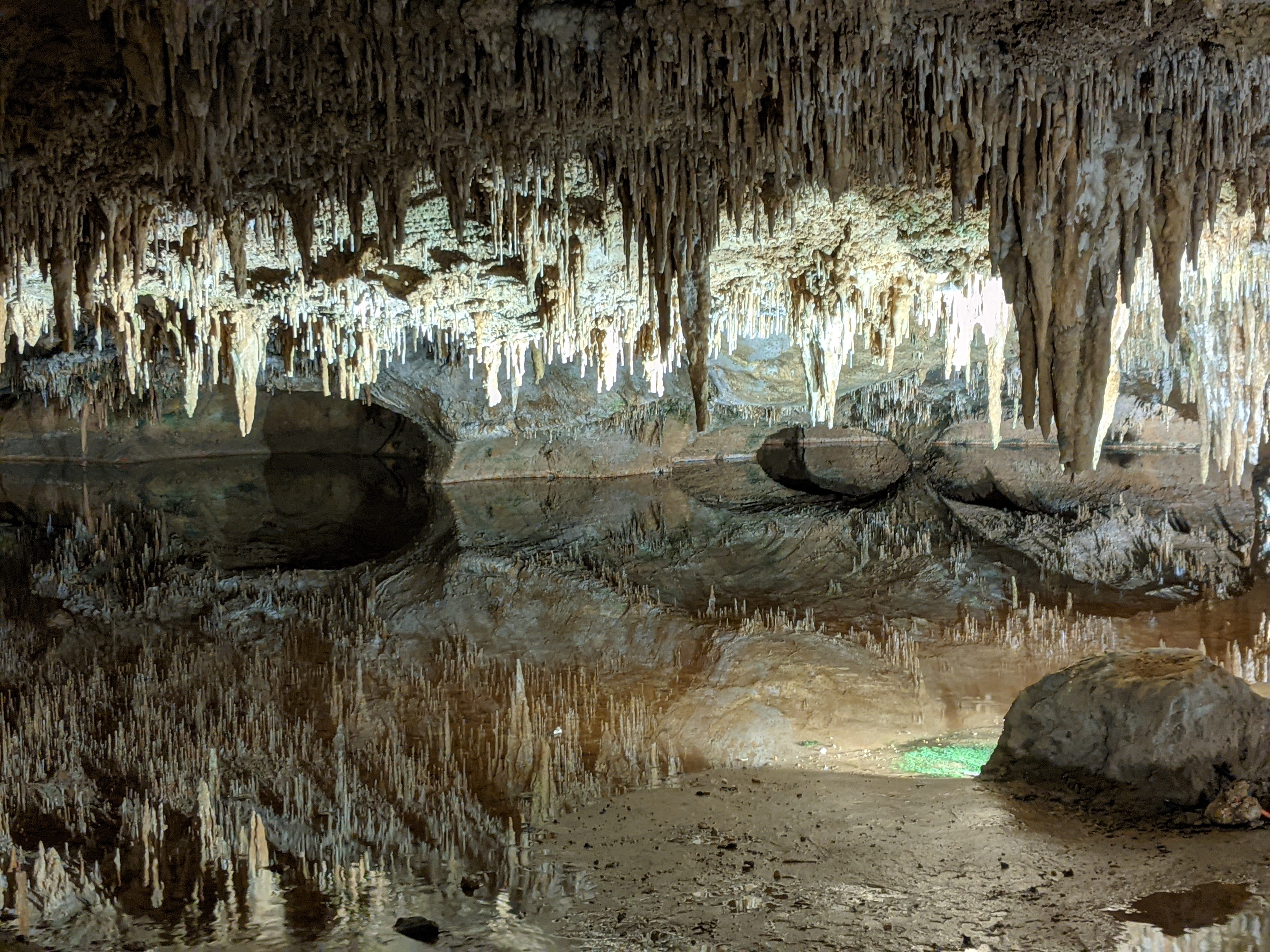
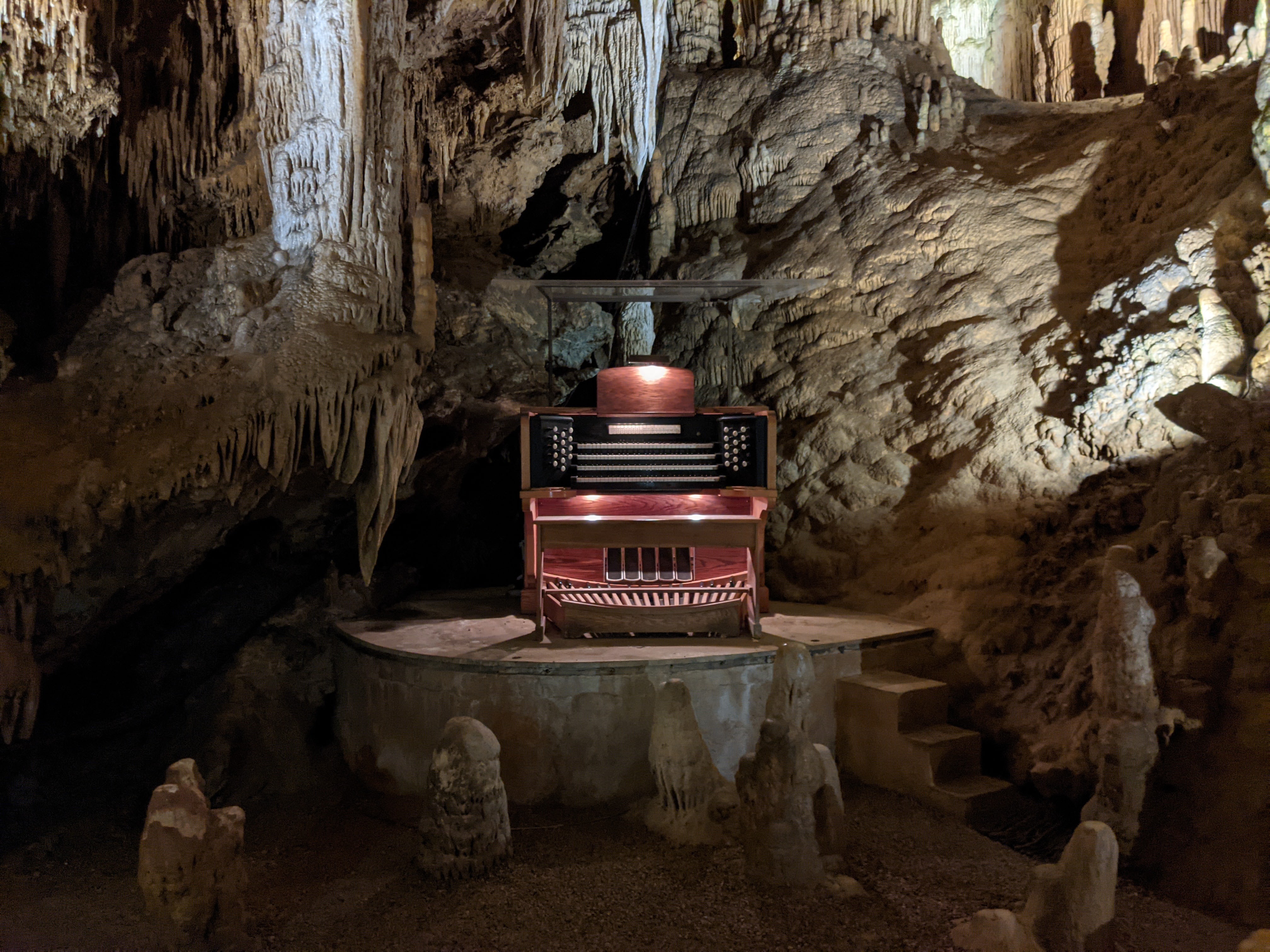
Luray Caverns was a worthy visit, and lived up to the description “there is probably no other cave in the world more completely and profusely decorated with stalactite and stalagmite ornamentation than that of Luray.” What stood out was the Great Stalacpipe Organ. It is hard to think of another cave with a musical instrument.
There are many spots for sunrises and sunsets along the Skyline drive. We stopped at the Point Overlook for the sunset. It was a clear day, a bit cold. I have seen other sunsets, the layers and layers of mountains made this one very special. Watching the sun set over the mountain ranges was simply beautiful.
On two separate days, we did the stony man hike and the dark hollow falls hike. These hikes have been perfect for us, with some elevations, rewarding views and not too challenging. There were not that many hikers along the way.
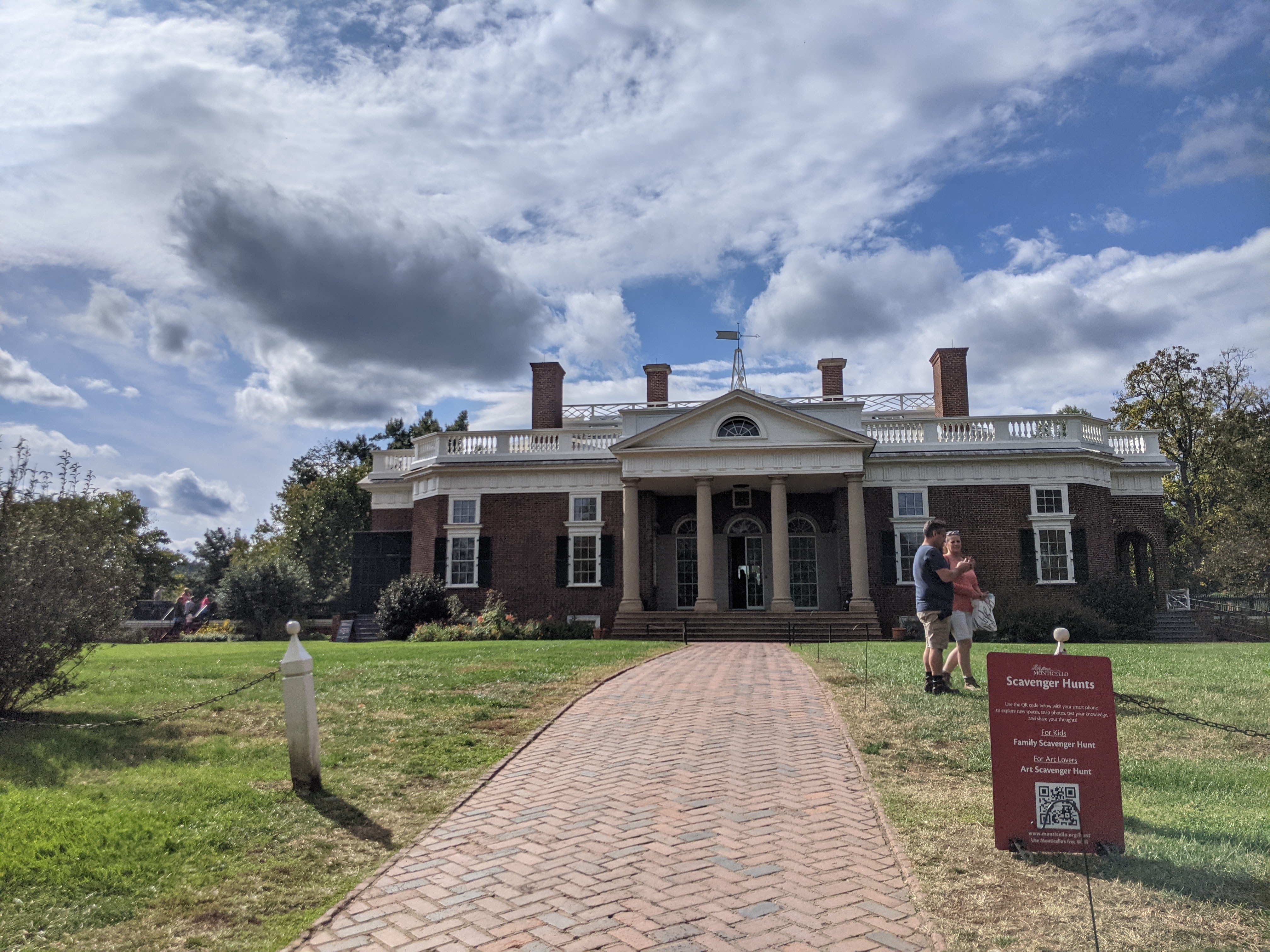
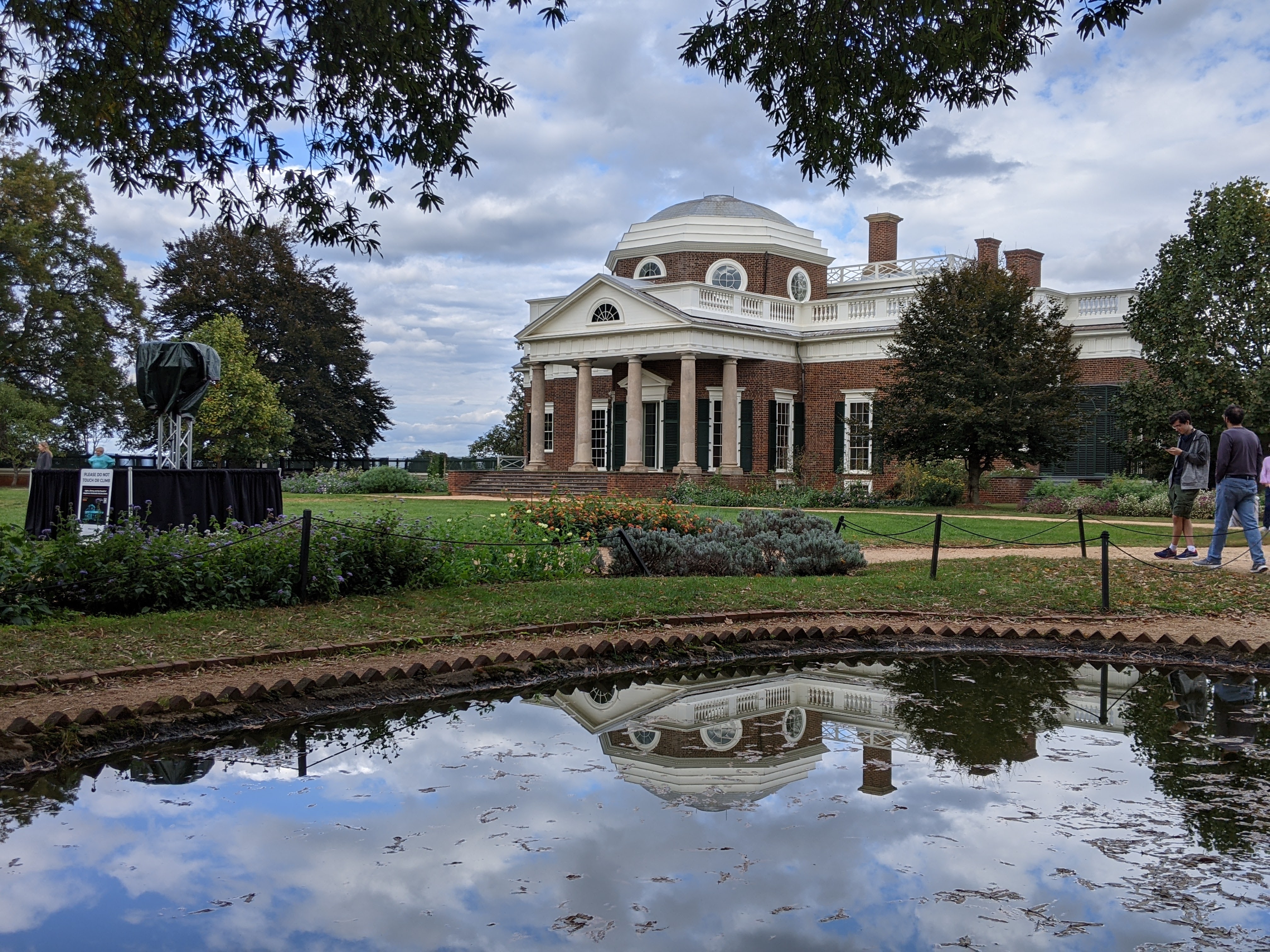
Monticello is the never finished house of Thomas Jefferson, the third president who was known for the Declaration of Independence. Built amidst a vast land served by hundreds of slaves, the house said little about the presidential power. The reputation of Thomas Jefferson seems to have been tarnished in that he wrote “all men are created equal” in the Declaration of Independence, yet he owned so many slaves and did not free most in his lifetime. Mr. Jefferson could be the president that best epitomizes the country – with ideals, with principles, with dreams and yet full of dilemma and conflicts.
Charlottesville has been on the news headlines as a person drove the car into a crowd of counter protestors in the 2017 white nationalist rally in Charlottesville. We went to the downtown mall and had a good dinner at the Whiskey Jar. It was so full of young people and energy, hard to relay the downtown with the car attack terror in 2017.
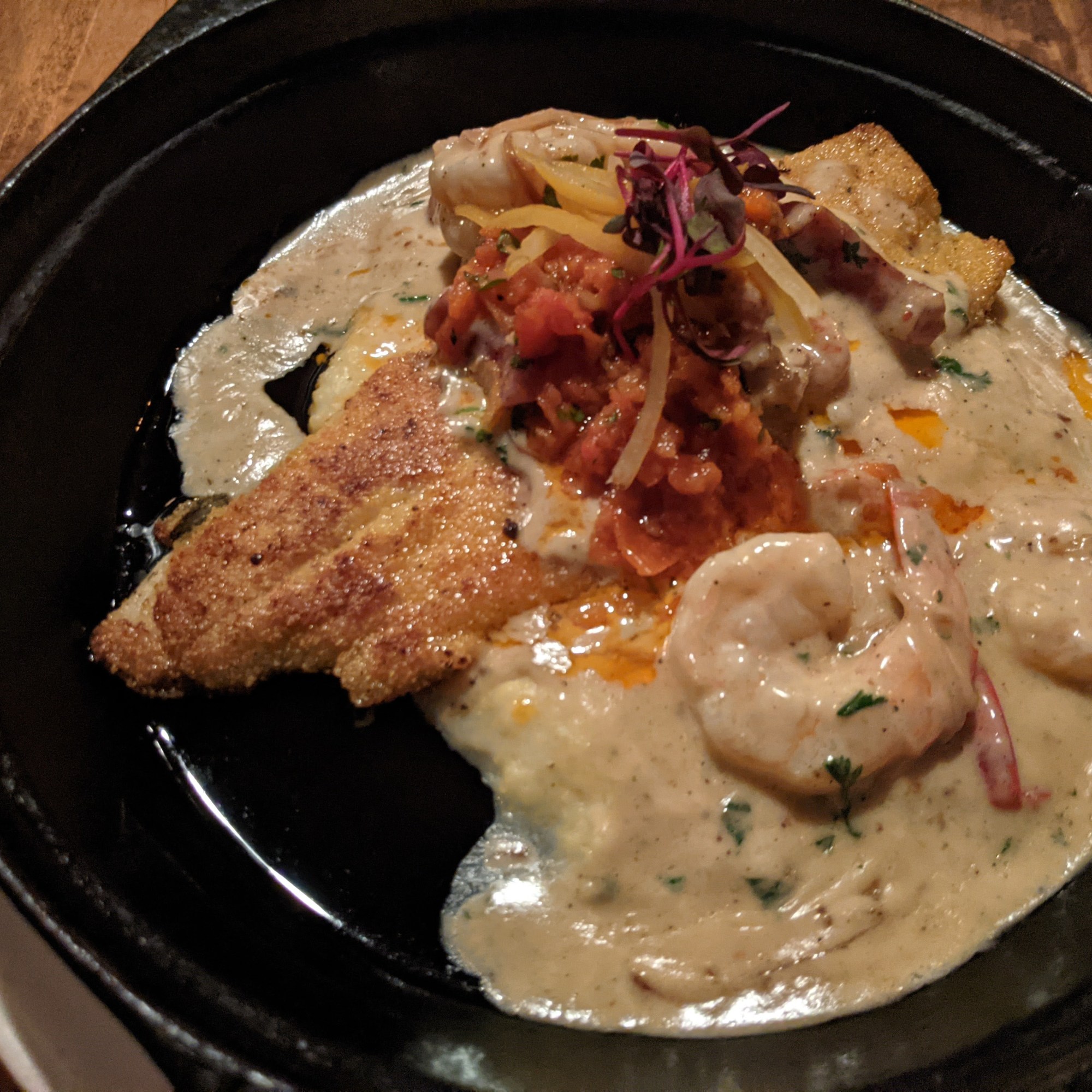
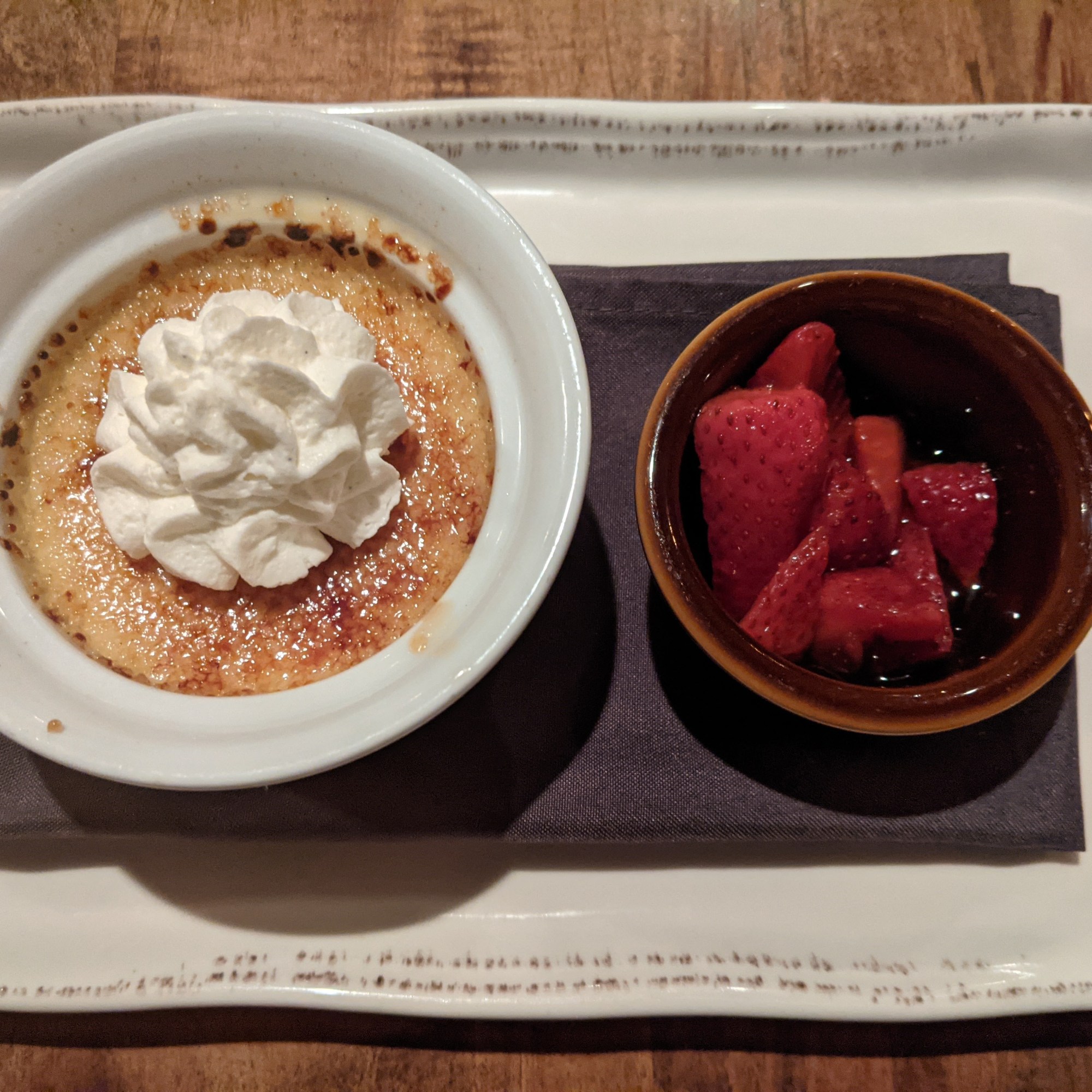
A road trip, focused on National Parks, is hardly the formula of the best culinary experiences. The southern diet, of fried food, salty food and quite a bit of meat, is probably not the most healthy diet. Most days we started with a plain breakfast, had leftovers or a minimal lunch, hopefully a more decent dinner. We enjoyed the local cuisine. We tried the Cracker Barrel restaurant chain, as well as the Whisker Jar at Charlottesville. The beauty of travel includes diet relaxation and interesting dining experiences
I always found hands-on activities, such as hiking and kayaking, are great ways to experience nature. That was what we did in this boat and glacier kayaking trip.
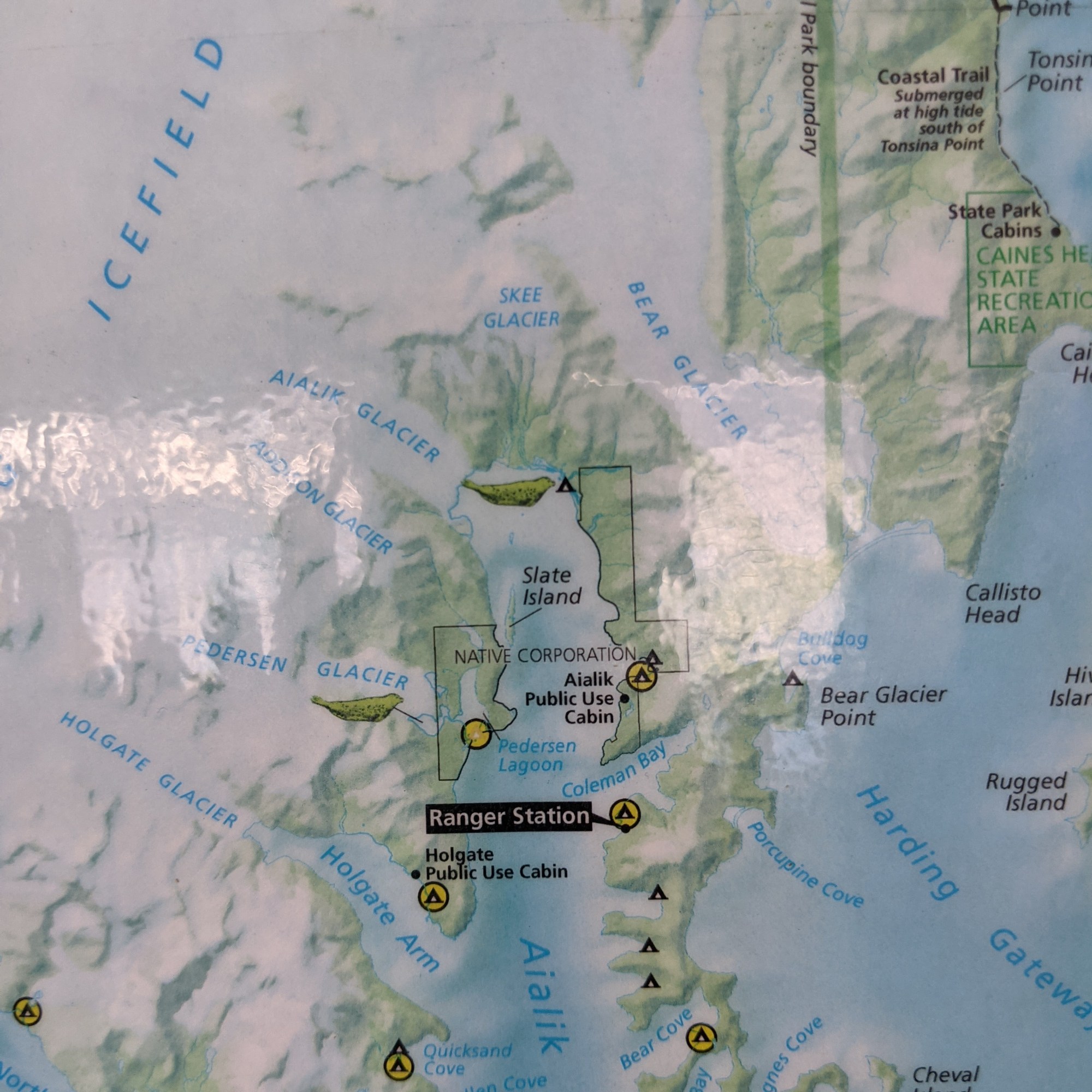
We took a boat trip from Seward to the Resurrection Bay before starting kayaking towards the Aialik glacier. It was a mid-size boat to fit our group of six as well as another group of students. We enjoyed a good long view of Dall’s Porpoises bow riding with us for quite a while, before our boat sped up to leave them behind. It was not a whale watching tour, we felt very lucky to see one. That long time in between their breaths kept us, including the colony of seagulls, waiting for the whale to splash up the fish.
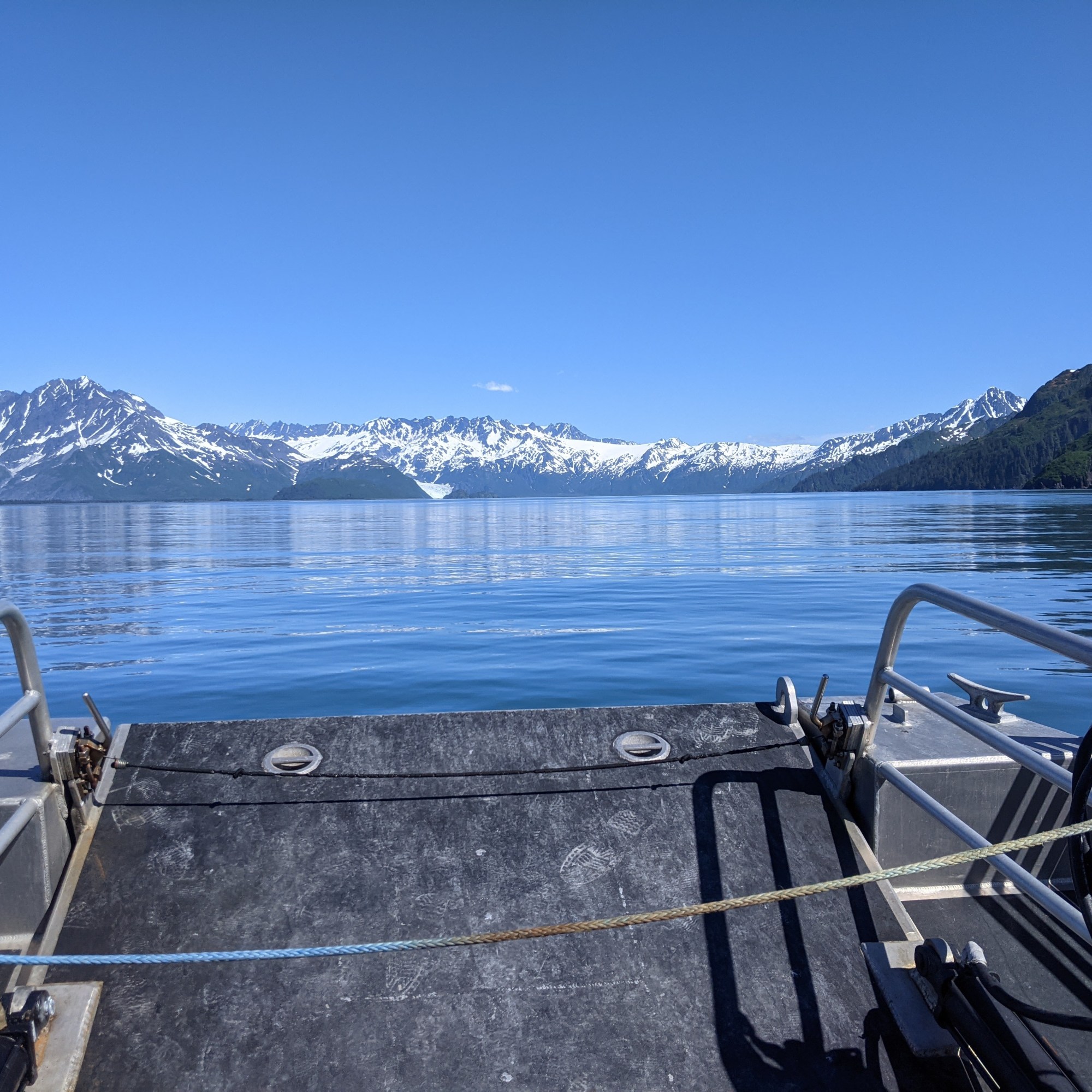
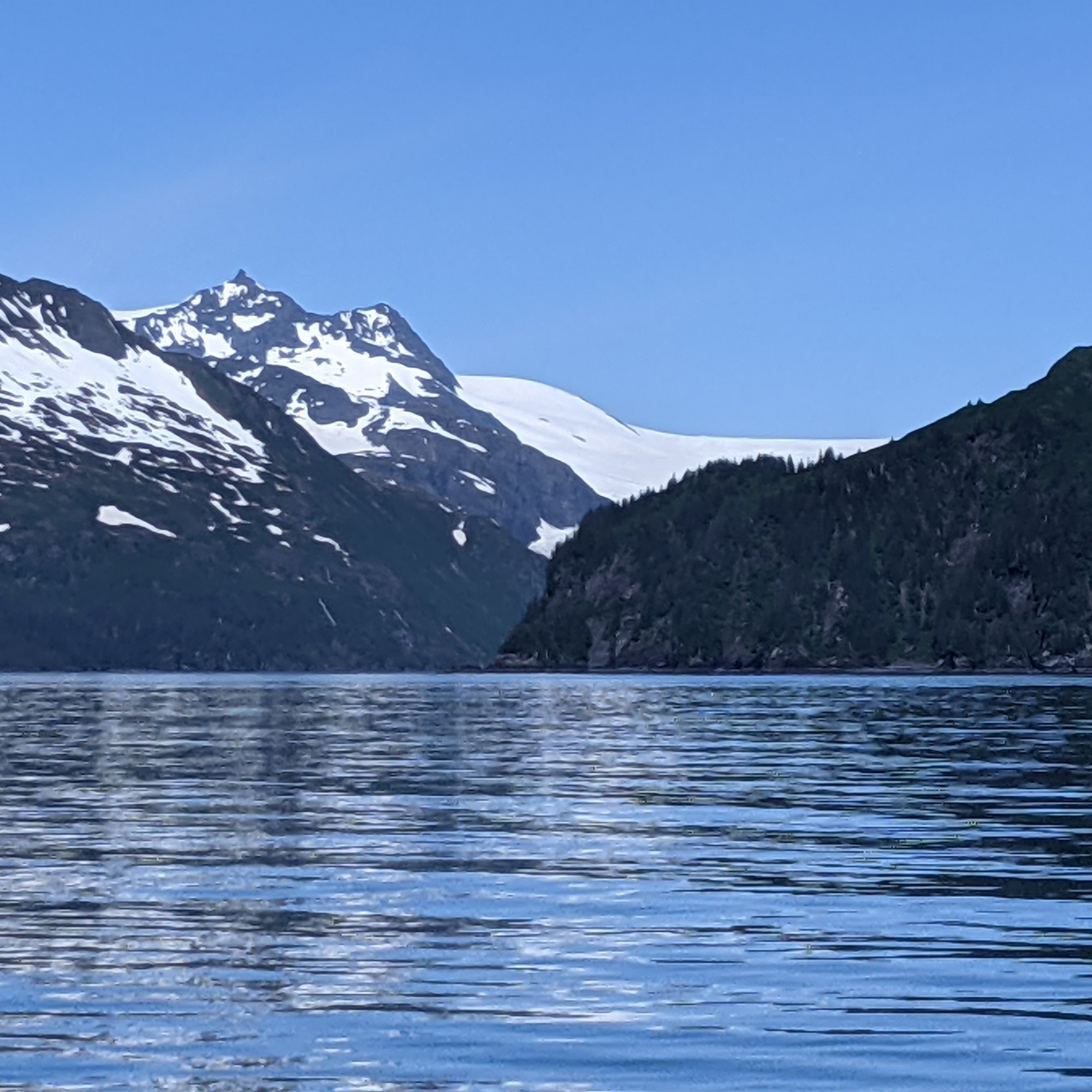
We packed up things in a heavy duty dry sack for kayaking, and the boat dropped us at a shore to pick up our kayak and accessories. It was open water kayaking towards the Aialik glacier. It took some time for us to put on a skirt and a life vest; and our kayaking guide Candice taught us some kayaking basics. It was a beautiful sunny day, and seemed perfect for kayaking. The glacier water was surprisingly warm, warmer than the water in Lake Tahoe in early summer. It was so refreshing to touch those floating icebergs, and to simply enjoy the open waters. The glacier looked quite close, but that distance was deceiving in the open water. After thousands repeats of paddling, our arms felt it, the glacier was not much closer. The ocean currents were building up, and that drained more energy. We tied our kayaks together to enjoy the beauty of the glacier, while having lunch. The three hours of kayaking gave us ample time to appreciate glaciers, explore caves, and see some wildfires including bears, oystercatchers, jellyfish.
The fitness challenges left us pretty tired on our way back to Seward. We had a quick fish-and-chip dinner at Seafood Grill, and headed back to our beautiful bear lake lodge.
There seemed to be a pattern in the weather so far in Alaska – our days started mostly with cloudy sky, and then the sky cleared up in the afternoon. Showers were pretty common throughout the day. Our backpack carried some layers of clothing, rain gear, mosquito repeller, hand sanitizer, some snack bars, and a bottle of tap water.
Denali National Park is a beautiful place of vastness and wilderness.
With only one day to spare, we took the 6-hour Tundra bus tour to get deeper into the park.
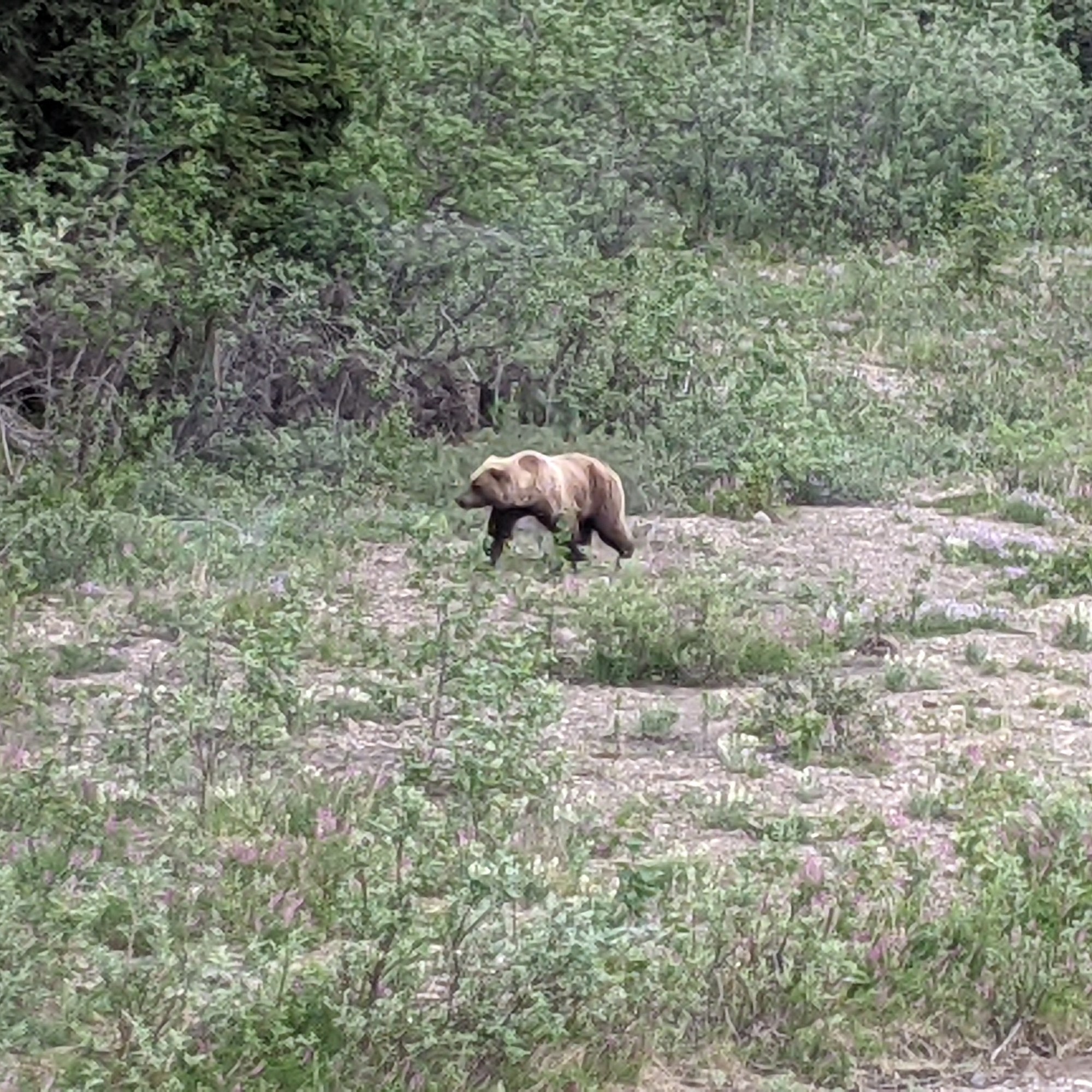
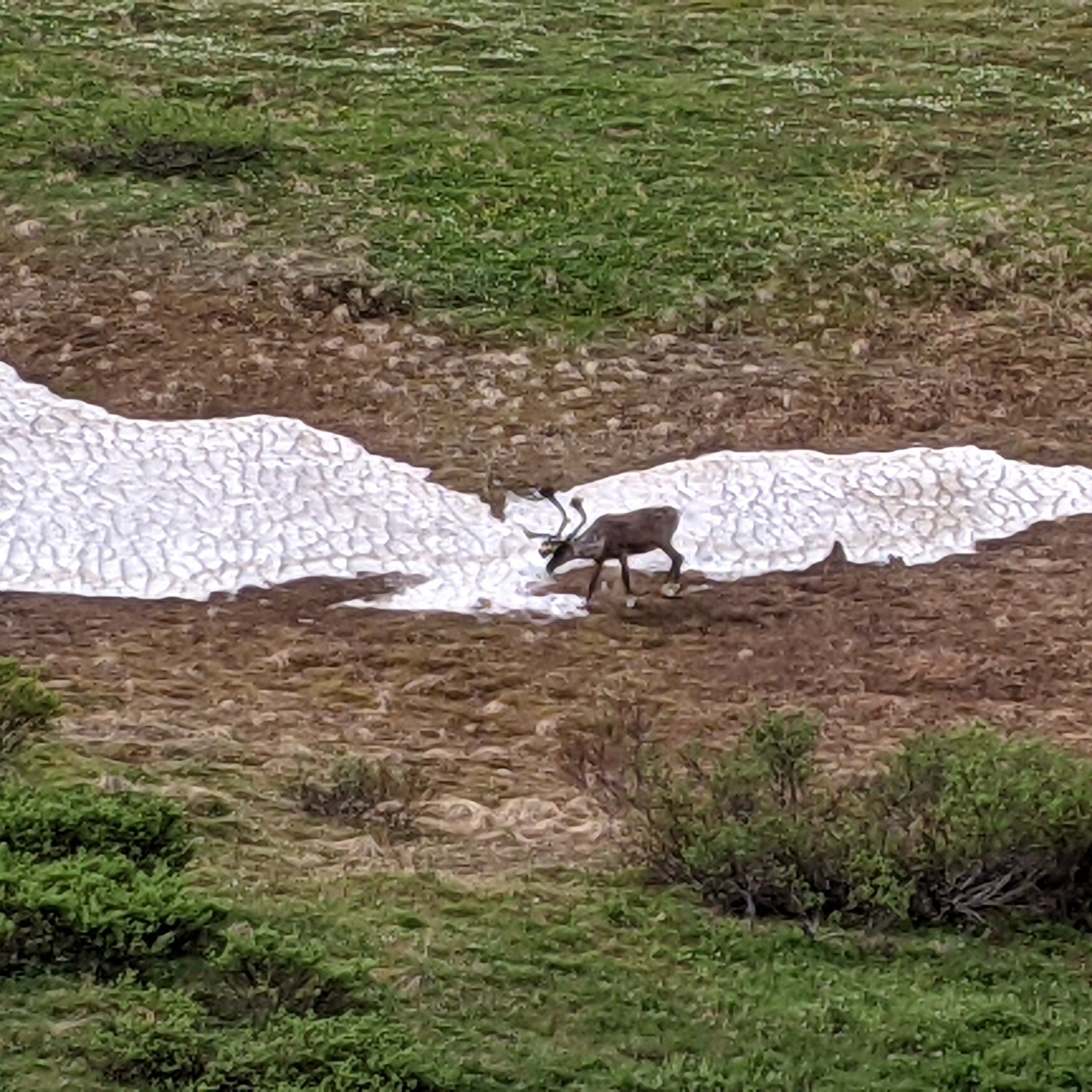
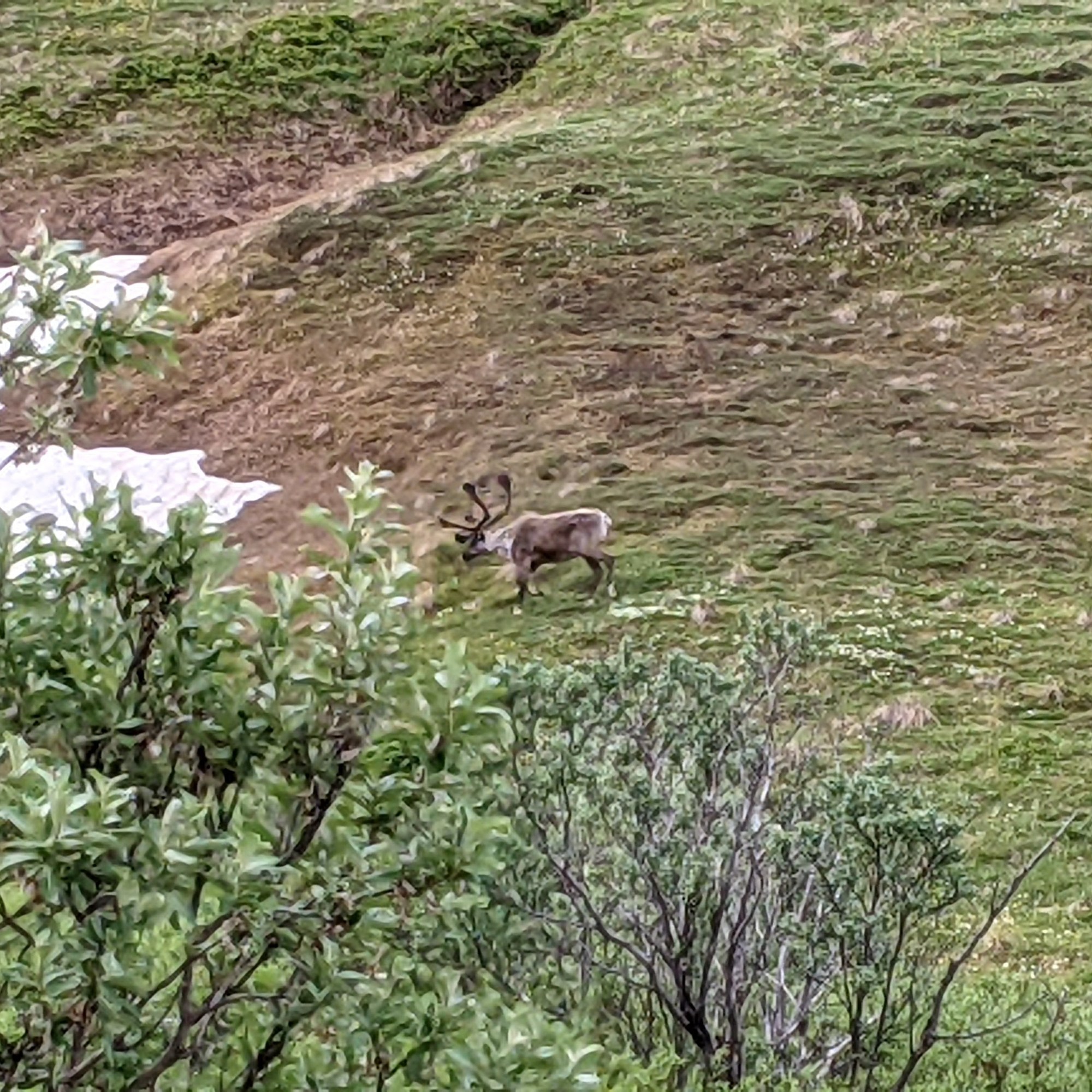
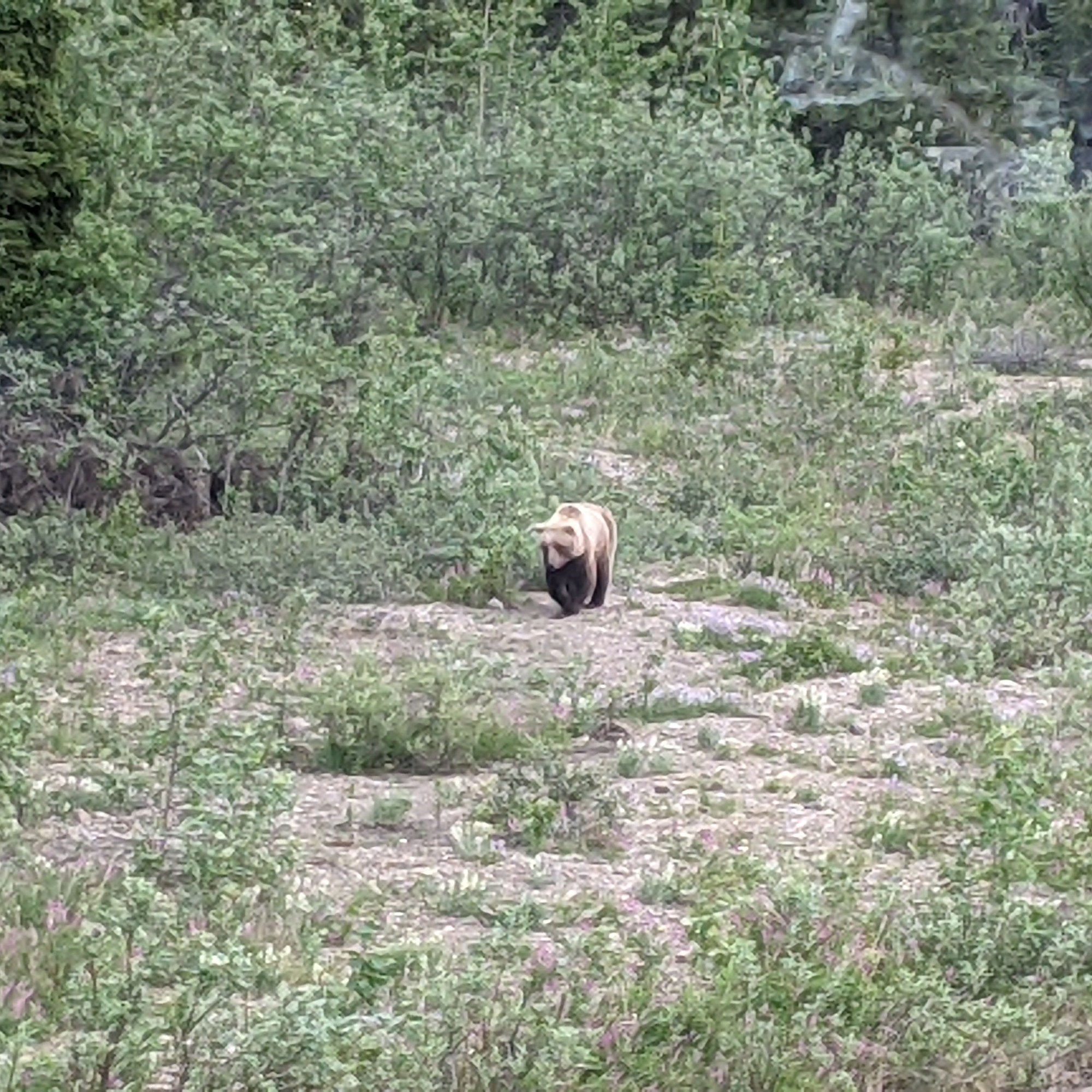
The bus driver gave us an overview of the landscape, as we drove the first few miles into the park. There were wolves, grizzly bears, moose, caribou, dall sheep hidden behind the bushes and the shrubs. In our role as tourists, we got excited every time someone spotted an animal. Spotting animals needed some getting used to – how far were they? Which side to look at? What angle to look? What color to spot? It was exciting to see one, and even more so, to take pictures to earn the bragging rights. It was frustrating when everyone saw the animal but you, and we missed the moose. It still made the day as we spotted a couple of grizzly bears, quite a few caribou and scores of dall sheeps. Our closest encounter was a grizzly bear, which strolled hundreds of feet towards our bus, and sat on the road in front of our bus for quite some time, before the sound of bus engines sent it back to the bushes. It had no fear of the bus nor the passengers in the bus; and gave us enough time to take pictures.
WInnie the Pooh looks to be a grizzly bear. Behind its cute look, Grizzly bears are unpredictable and are often more dangerous and brutal than the black bears.
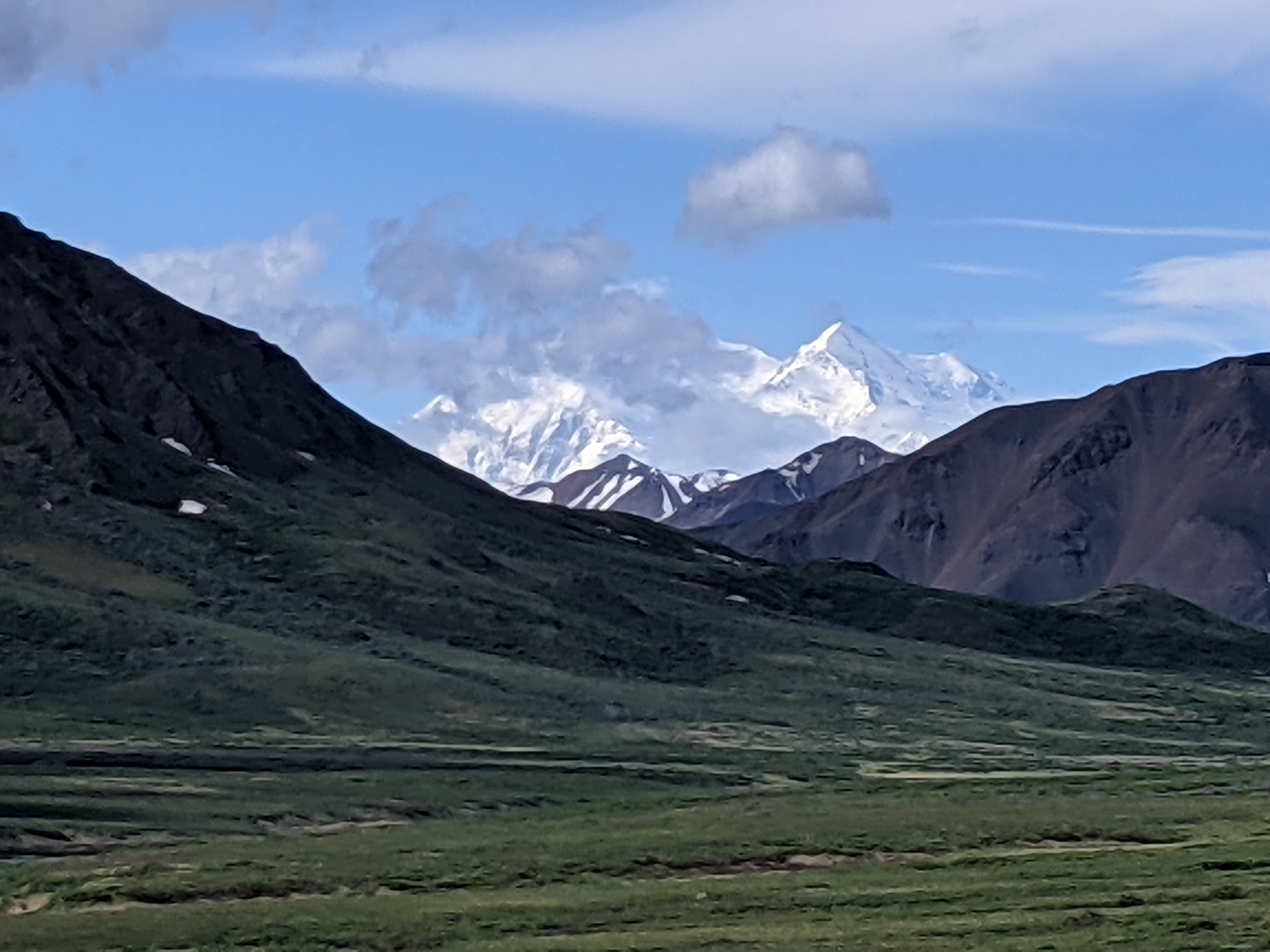
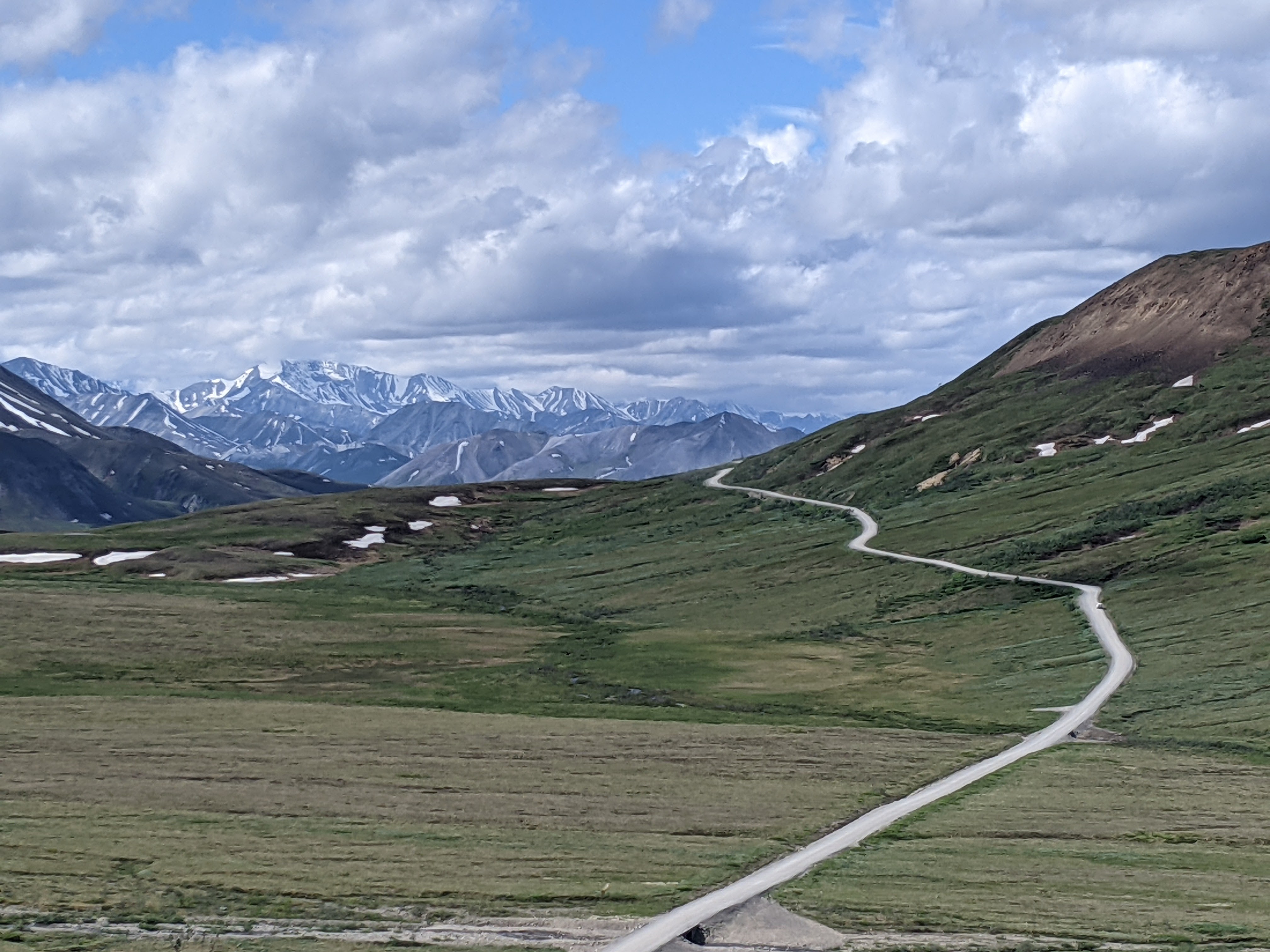
Denali Peak, at an altitude over 20,000 feet, is so high up in the sky that its face often gets hidden in the clouds. We saw its majestic faces a couple of times from afar, as the bus took us deep into the narrower gravel road of the park.
As much as we appreciated the wilderness, the wildlife caught our attention more. For the next few days, I got used to looking around and searching everywhere for wildlife. That was such a contrast from watching the computer monitor all day long.
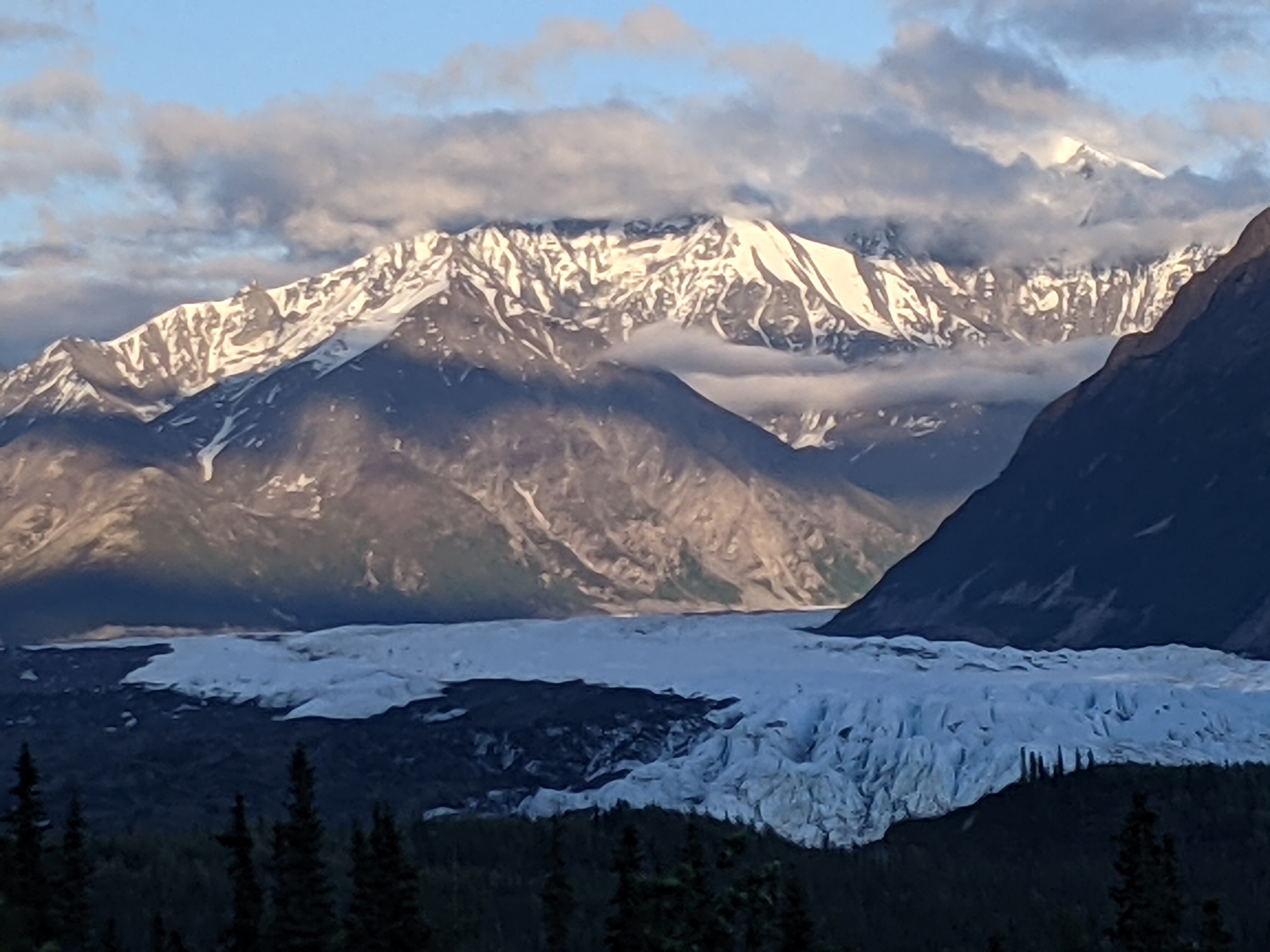
Our next stop was Chickaloon, where the Matanuska Glacier is. We drove through miles and miles of wilderness, as we got hungrier and hungrier, with no restaurants, no fast food to be seen, no gas station nor grocery stores for food. We had to take a detour back to Talkeetna to get food. The restaurants were again busy with an average wait of an hour, we got some halibut tacos from a food truck. For the remainder of the trip, we were more prepared that the next food supply could be more than a couple of hours aways, and made sure that we filled our belly with whatever was available.
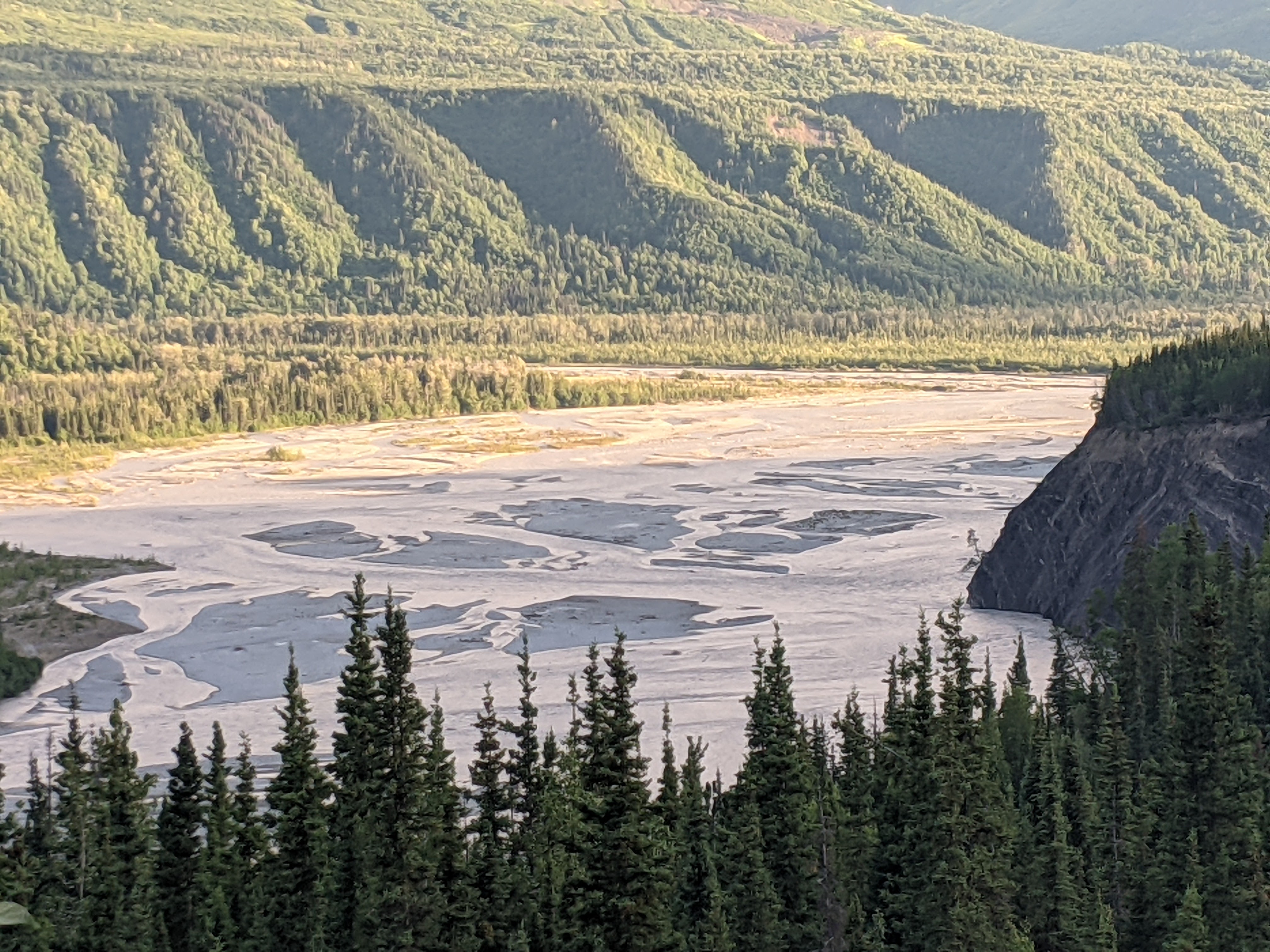
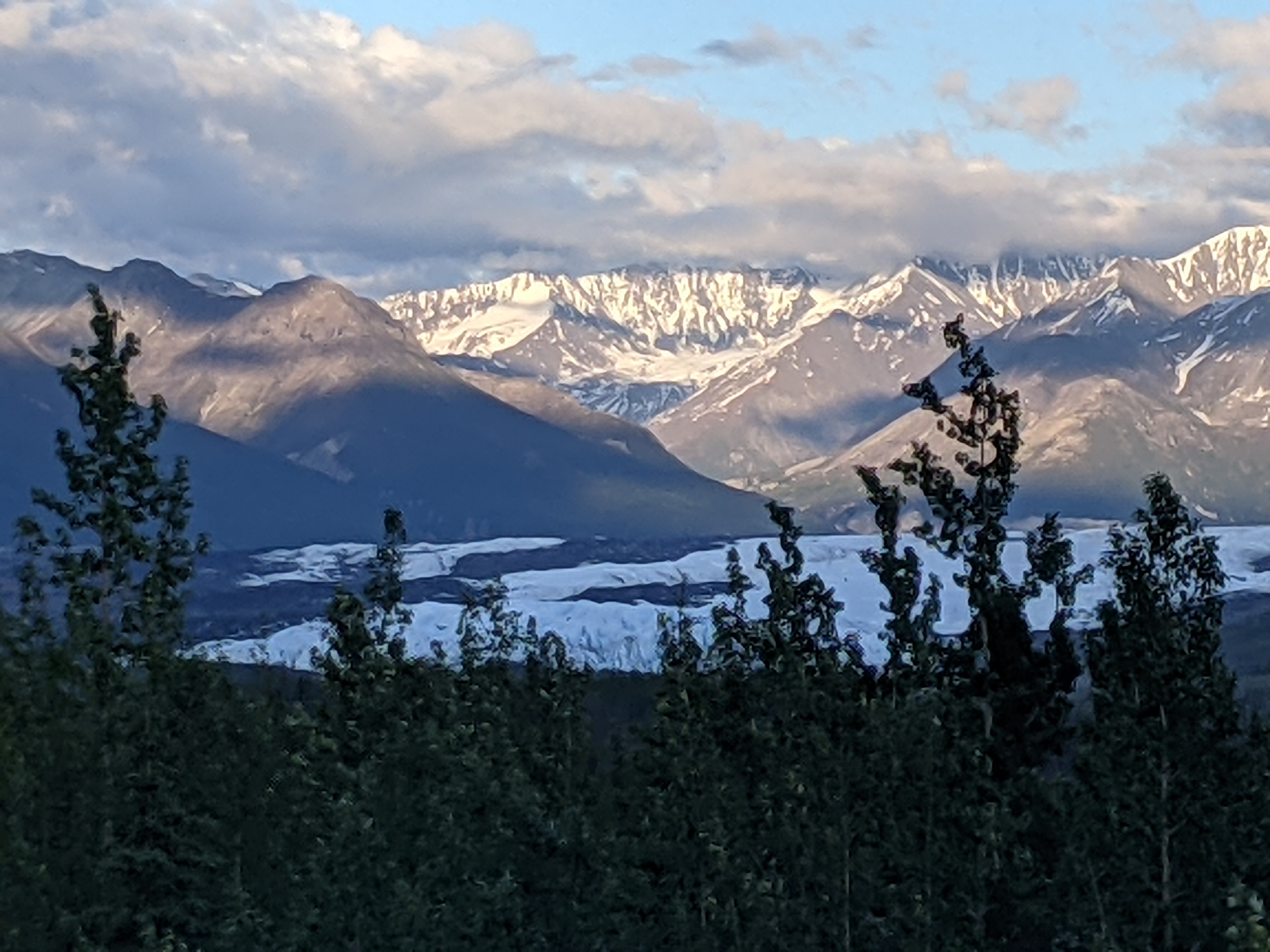
Just as if it made up for not seeing a moose in Denali, we saw a female moose right next to our car along the way. The road to Chickaloon was winding. We were rewarded with beautiful mountainous landscape. The Matanuska Glacier showed up first as a thin strip of ice glacier, then started to expand to show its magnitude. That was where our ice trek tour would be the next day.
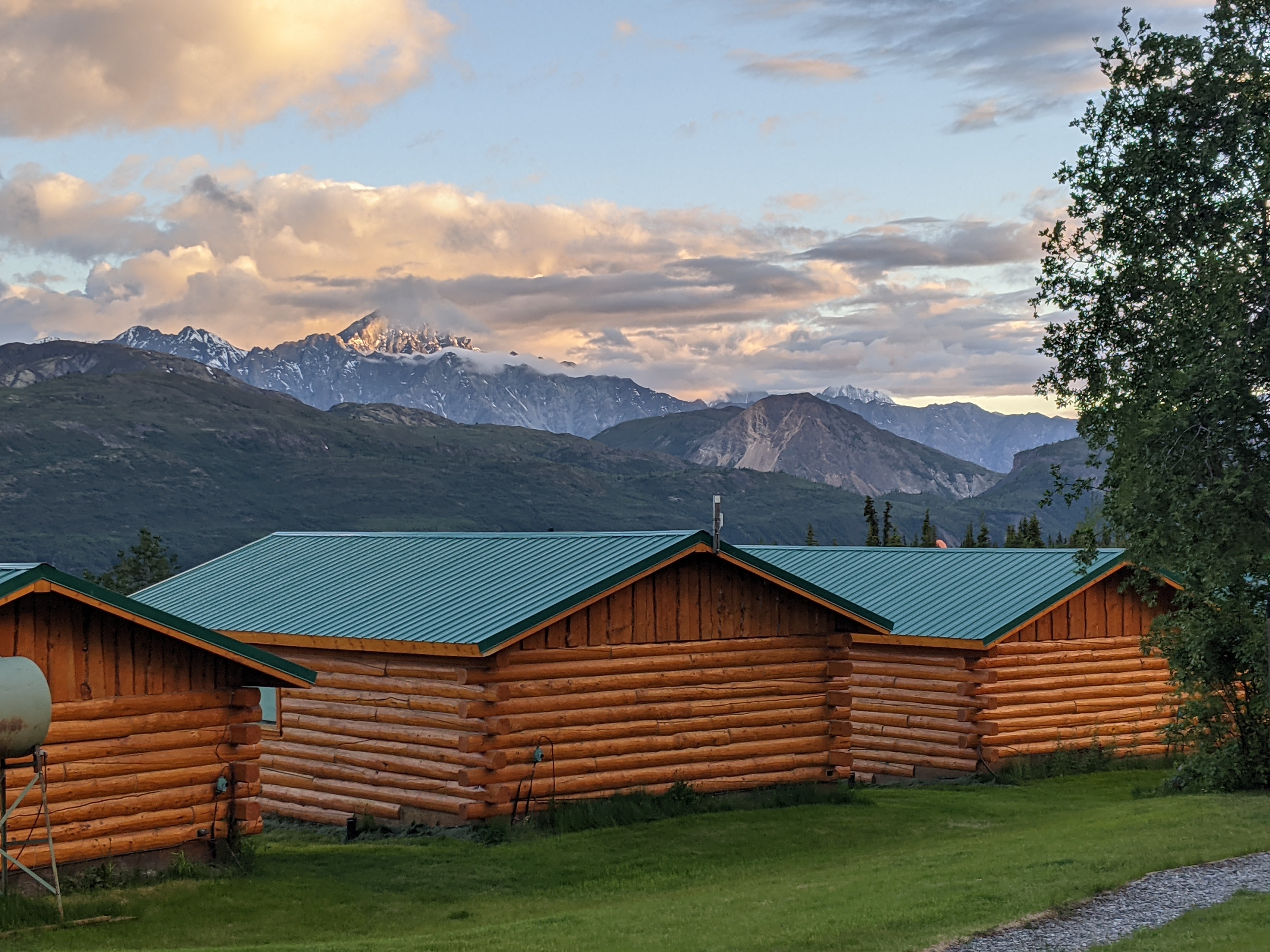
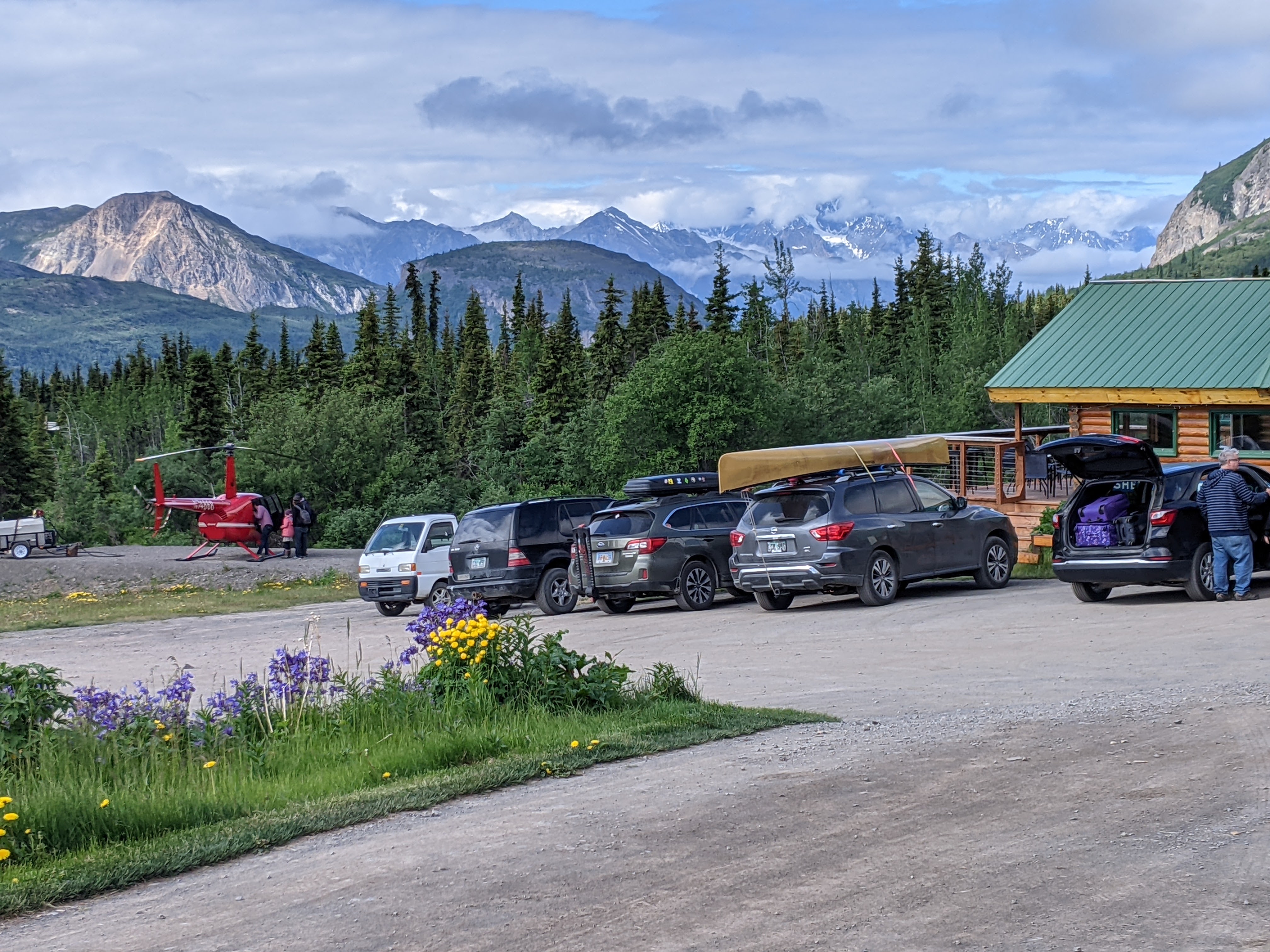
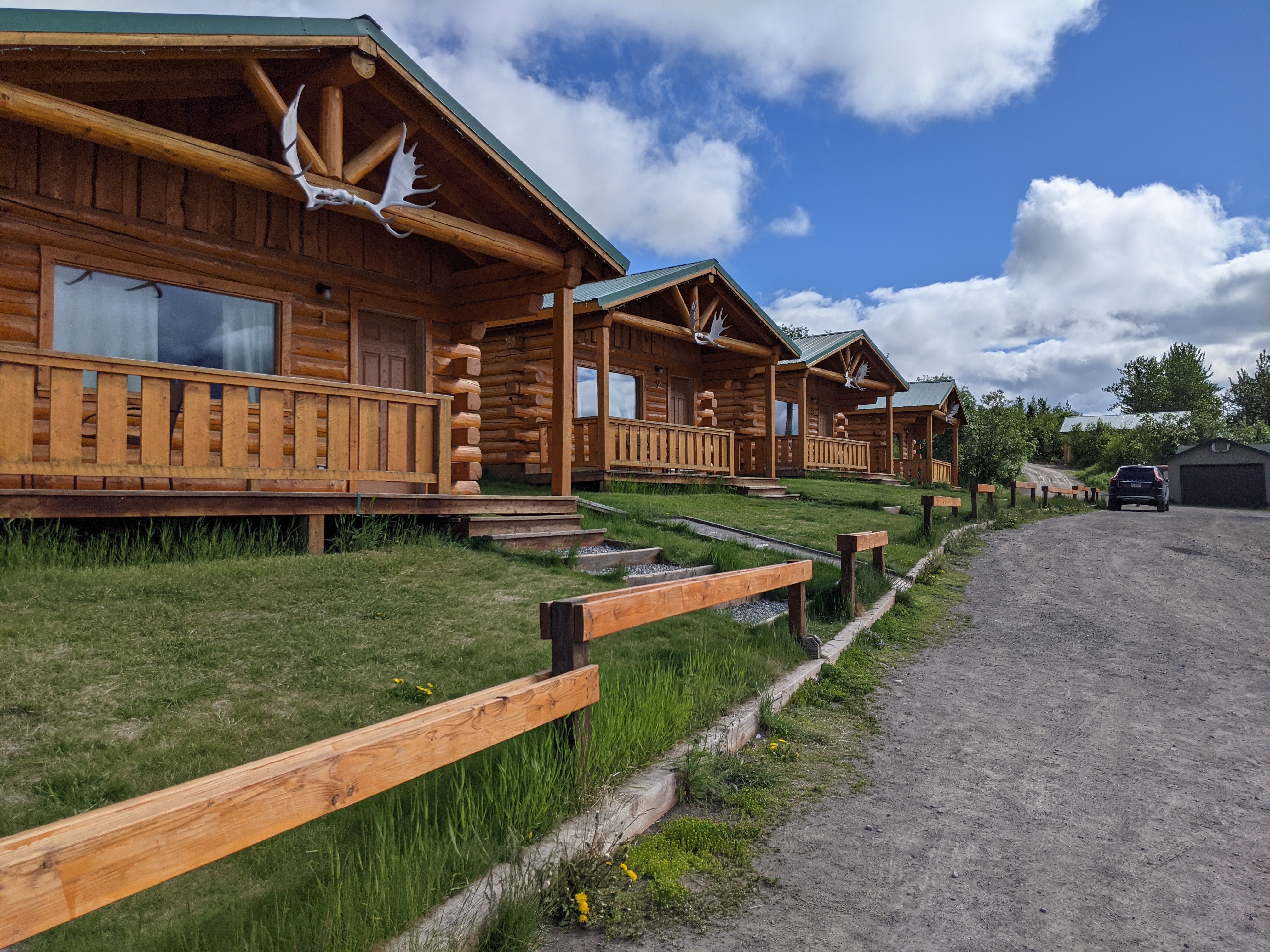
We stayed at a very beautiful cabin in the Sheep Mountain Lodge. which had a good long history in itself. Years ago, the owner was a nurse and the place acted as a medical station for the neighborhood. In this glacier view area, the air was so fresh, the scenery was so inviting. There was a helicopter right at the Lodge, getting ready to take tourists for a helicopter ride. With an award winning restaurant, it was yet another upgrade from Denali Park Village.
We looked forward to breakfast and the chance to walk on the Matanuska glacier the next day.
Alaska is so vast, that flying is a practical means of transportation. A much higher % of the population in Alaska knows how to fly than the lower states. Our flightseeing tour included an air taxi tour of glaciers around Denali National Park, and then a landing on the glaciers. Denali is the highest mountain peak in North America, with a summit elevation of 20,310 feet above sea level. It used to be remembered as Mckinley, now renamed with the indigenous term.
At check-in, we were disappointed that the weather was not good enough to get to Denali ranges nor glacier landing, they offered us a shorter flightseeing, a refund or a rebook. We had a busy itinerary, and picked the shorter flightseeing and fair enough, they refunded half of the tour cost. This was not the only time that the weather affected our flightseeing plan.
The air taxi was a very small plane, to accommodate 8 travellers. Each seat was a window seat, equipped with a heavy head-phone for the pilot to communicate with us in the one hour of flight. The lady in front of me did not seem to quite enjoy it, and her hand was holding tightly onto the window sill throughout. Her husband went ahead to sit next to the pilot, busy talking to the pilot, leaving his wife sitting by herself. Behind us was a family of four, the two kids seemed to enjoy the few bumps during the ride, more so than the unparallelled beauty of nature. The pilot did a good job throughout for a pretty stable ride, so the kids were only excited a few times.
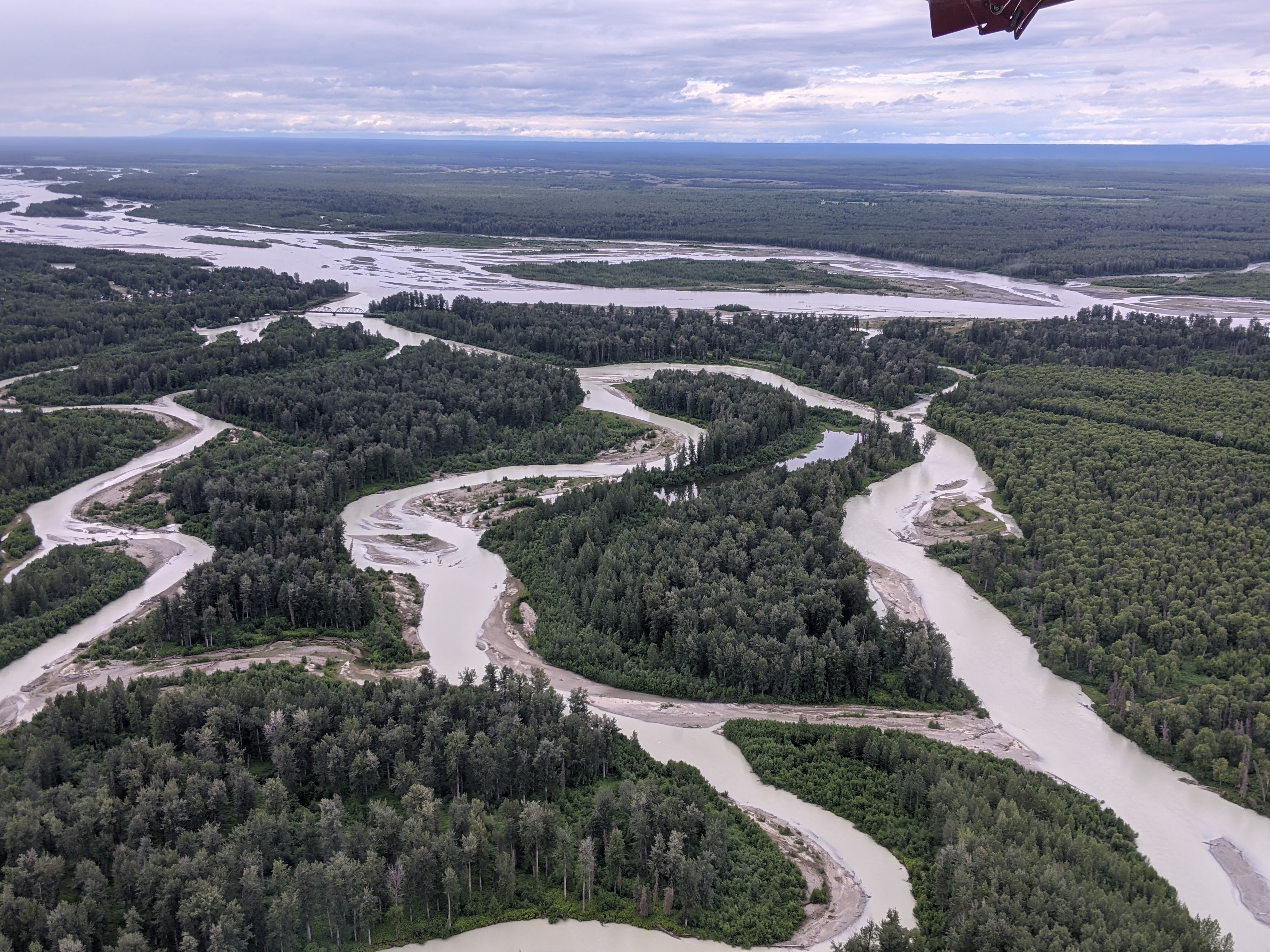
We first saw a myriad of narrow rivers down there, like some picasso impressions. The river is muddy, due to the glacial till, aka the erosion of materials as the ice moved. We saw forests of purple and green spruces, and we came to know later the purple was actually black spruces, killed by spruce beetles.
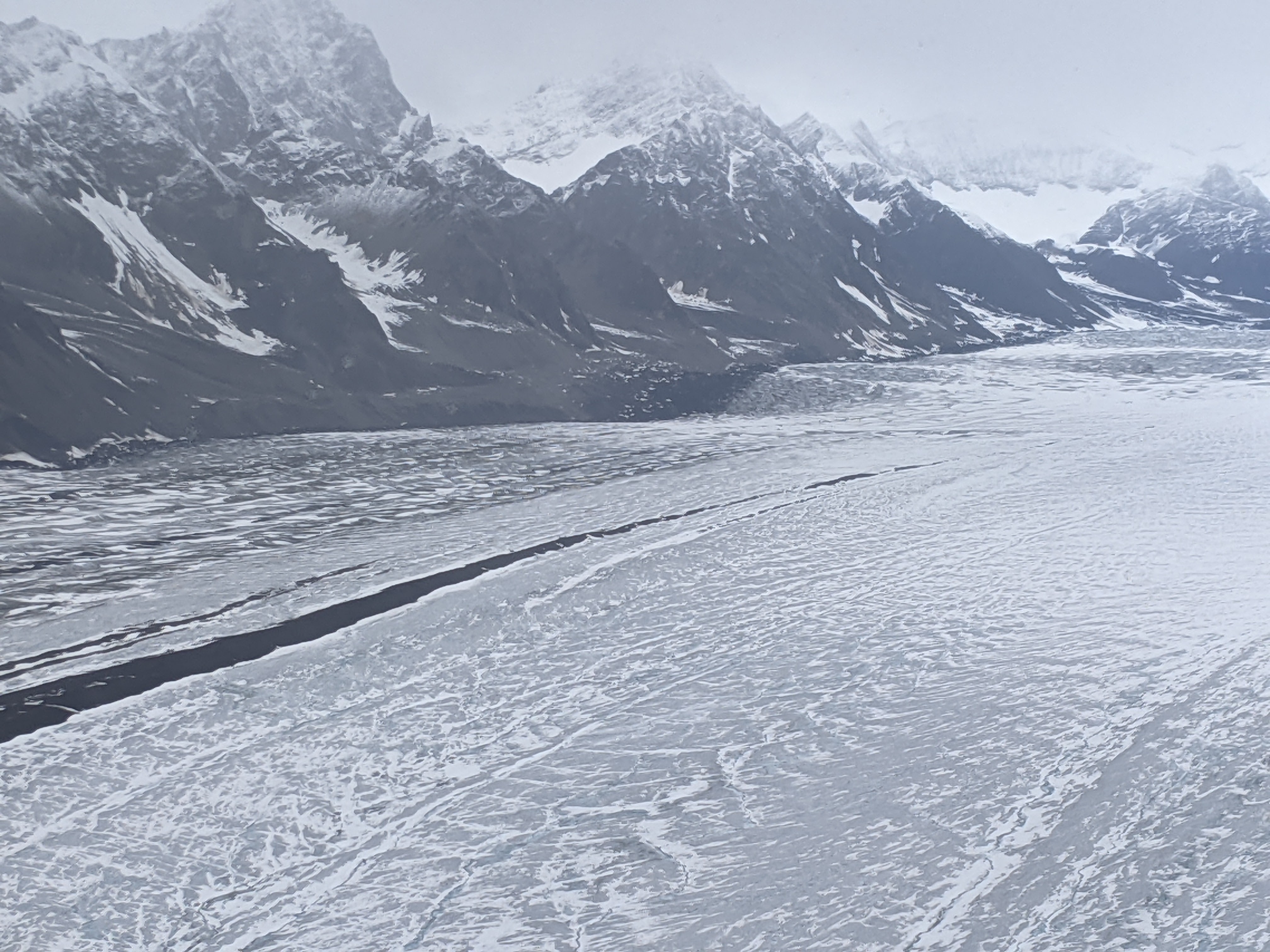
Some 15 minutes into the air, we were surrounded by glaciers and mountains so close to us that we could see the waterfalls, the glacier tracks, the water amidst the glaciers (moving ices) that just looked like bluish crystals among the ices of pure white. We also saw a few tents down there. It felt like we were back to the ice ages. Even though we missed the glacier landing, I ran out of words to describe the beauty and the power of the glaciers. This one-hour flightseeing features the most beautiful scenery and humbling experience I have ever experienced on a plane. If this is the only thing we did in Alaska, it would be a good trip by itself. It is better to let the photos speak about the scenery.
After the flightseeing, we got some delicious Spinach bread from a food truck on the main street, and got some Birch syrup as a souvenir before leaving Talkeetna. From Talkeetna to Denali, it was 2 and a half hours drive on a well-paved highway, with spruces lining the highway, and often a 360 degree view of mountain ranges. It was mostly wilderness, until we got close to Denali. We checked in to the Denali Park village, which was an upgrade from the Talkeetna inn the day before.
Sitting in the Denali Park Village restaurant, enjoying food, chatting with the waitresses coming from afar to do a summer job, and some live music, life felt very good.
The Biden government and the vaccine situation have shown us some light towards the end of the Pandemic tunnel. This month, My husband and I visited the downtown of Mountain View, Sunnyvale, Palo Alto, Los Gatos, San Mateo and Menlo Park to experience the different outdoor dinings in each city.
During the pandemic, I have been able to read a few all-time classics used to be on the reading list during my retirement years.
Anna Karenina by Leo Tolstoy
In my high school years in Hong Kong, the high school had roughly half of students studying science (aka STEM) subjects, and another half studying art subjects. There was, and probably remains, a hierarchy in subjects where science subjects have often been ranked higher in the overall curriculum. Often considered among the greatest literature of all time, the novels by (Leo) Tolstoy were squarely reserved for those studying English literature, a subject for the art students.
Married to a powerful man Alexy, Anna was beautiful, charming, tactful to almost manipulative, and lived a perfect life until she met Vronsky. Vronsky lived his glamorous life until he desperately fell in love with Anna. Levin, an idealist and an intellectual who preferred living a real life in his farms and with the peasants, was devastated when his proposal to Kitty was not accepted. Kitty, the ex-lover of Vronsky, recovered herself in a sanatorium, and re-discovered her love for Levin. The pursuit of love, by these protagonists, changed everything for them; and reflected how the disparity of the society in the treatment of Anna and Vronsky in their affair. The plot acted as a conduit to write about the society and the protagonists. The power of “Anna Karenina” is in how well Tolstoy wrote about their emotions and how well the characters brought you to the society of the time. Reading the book is getting to know these characters – their inner thoughts, their expression of their thoughts which often were contradictory to their inner thoughts, and the doubts in their pursuit of love and purpose of life. It transported the reader to the society and witnessed the lives and the life events of the people from peasants, landlords, soldiers, public servants, and politicians. The pain, anguish and terror of Levin, in enduring the long labor process of Kitty, was arguably the best ever description of father-to-be experience, that dark side has been so seldom told. The visceral tortune in living through the long hours towards the inevitable death of Levin’s brother was powerful, vivid and absorbing. Anna’s heart-wrenching struggle, in her hopeless affair, could only lead to one inevitable outcome in her once perfect life.
The book leaves me wondering if science represents a certain understanding of nature and species, then literature gives us a multidimensional view of our beings from the past to the future.
The Element by Sir Ken Robinson
Often considered as the most watched Ted Talk, Sir Ken Robinson has been a strong advocate of education reform to cultivate curriculum diversity, ignite students’ curiosity and awaken learners’ creativity. His Ted Talk “Do schools kill creativity” is both entertaining and educational, and I could not recommend more.
The element is that intersection of the things(s) we enjoy doing and the thing(s) we naturally do well. Many run through their lives without discovering their elements. In his discourse, Sir Robinson believes finding the elements are both possible and crucial. It is never too late, just like Julia Childs discovered her element in French cooking in her fifties. To discover our element, we need to rethink the possibility, find our zone in things we enjoy doing so much that we lose track of time, meet others with similar passion, and open for help.
Full of examples, ideas and inspirational stories, this is a great book for all parents and educators.
I learn first hand even if we, parents, put in our best effort to help our children to discover their elements in the most personalized setting, there is no guarantee for success.
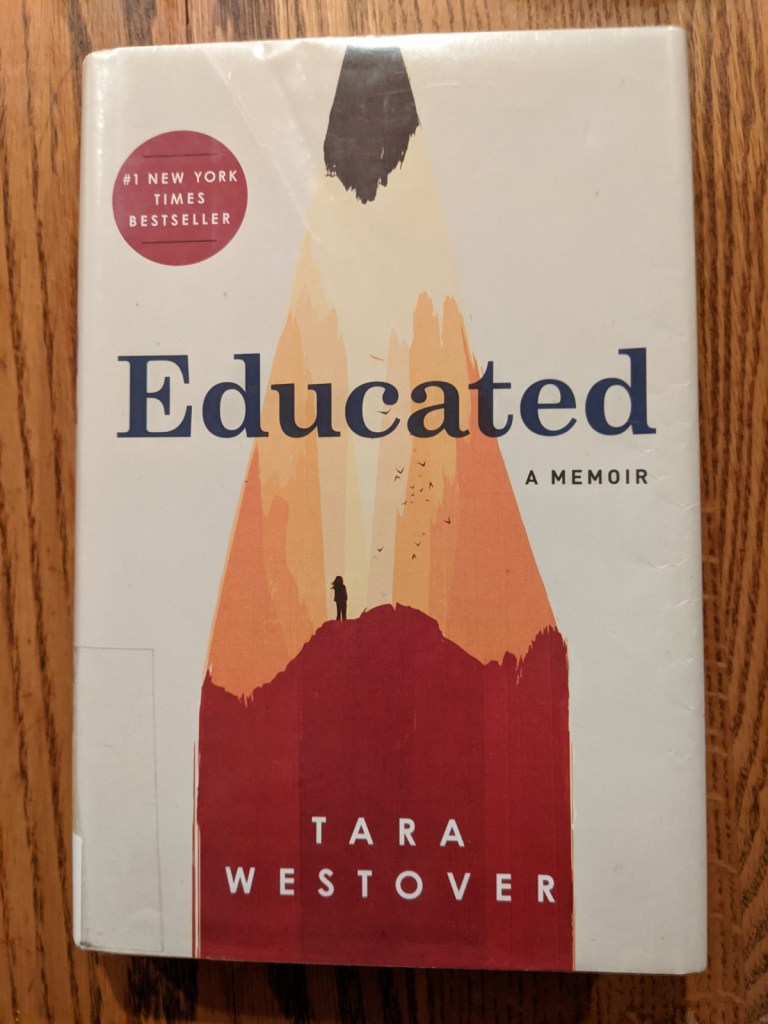
Educated, a memoir by Tara Westover
Born and raised in Idaho in a large family, the author has been isolated from the society. Her parents do not trust the government, do not go to medical facilities, do not allow children to go to school and her father believes himself to be the Mormon prophet and has the strictest code of conduct for his children . He dominates the family with his long lectures, and his religious doctrines to the level of abuse. He loves his children in his own distorted way, and tolerates abusive behavior of his sons. Her family has been the whole world for the author, until she miraculously found her way to attend BYU. Through her hard work, her intelligence and her persistence, she was awarded scholarships to Cambridge and Harvard, and earned her PhD from Cambridge. The more she got into the mainstream society, the more her parents saw her as being possessed and became a disgrace for the family. Would she compromise to remain in the distorted worldview of her father and have a family to go back to? Would she stand up to the values she acquires through education? This is a memoir of her struggle, her courage, and how she makes different choices as she becomes educated.
Education changes who we are and what we would become; so do our family, our upbringing and our culture. It pains to read the struggle the author has to suffer between the evangelical view of her parents and the values that she learned through education.
It is a story of self definition and self belief through the power of education.
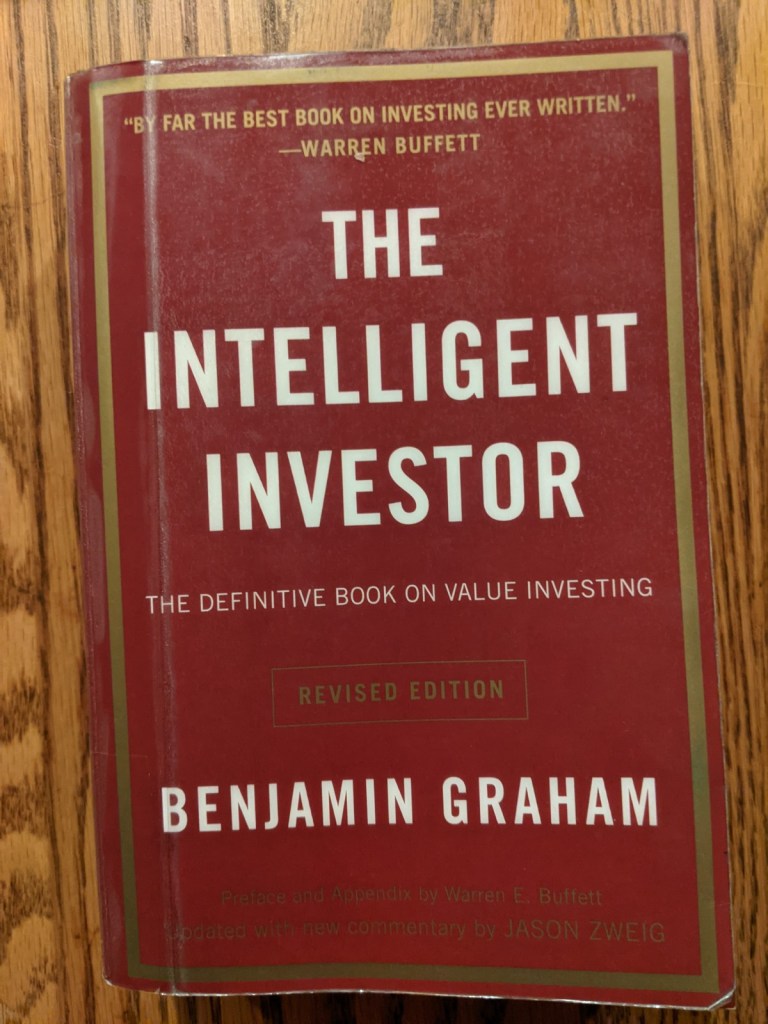
The Intelligent Investor By Benjamin Graham
Warren Buffett, one of the most successful investors, if not the most, said it all: By far the best book on investing ever written.
First published in 1950, the book has been a must read for anyone who cares about making good decisions on their finances. Mr. Graham wrote: “an investment operation is one, which upon thorough analysis promises safety of principal and an adequate return. Operations not meeting these requirements are speculative”; and “The speculative public is incorrigible. In financial terms it cannot count beyond 3. It will buy anything, at any price , if there seems to be some “action” in progress. It will fall for any company identified with “franchising”,computers , electronics, science, technology, or what have you, when the particular fashion is raging. Our readers, sensible investors all, are of course above such foolishness.”.
Reading his investment advice is like reading the answers to the questions that would come up in the final for the subject of “investment”. Yet so many continue to make the same mistakes, and (choose to) behave as speculators than investors.
In the 70s, Hong Kong had a period of times where its citizens queued up on the streets to get water from an open tap to get water. Who can imagine millions of Texans are out of water supply and out of power last week and suffer from frigid weather in a state better known for its stifling heat?
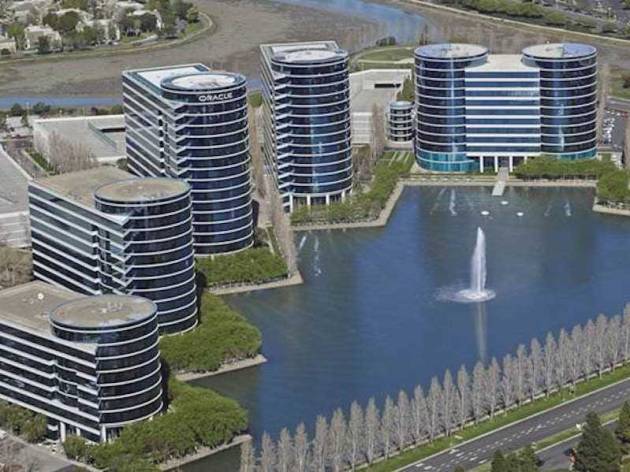
In recent years, there has been quite an exodus of companies from California to Texas. Austin became the headquarters of Oracle, replacing the redwood shore campus where the database stacks are rightfully portrayed as towers visible from highway 101. The move symbolizes the ends of the global days of relational database. Hewlett Packard has been an icon in Silicon Valley, and not that long ago, Houston became the headquarters of Hewlett Packard Enterprise.
The rivalry between California and Texas goes deeper than the headquarters residence. The two states reside at far ends of the US political spectrum, have almost opposite opinions on climate control, renewal energy, and diversity. Texas is probably the closest rivalry of California. Be it the rivalry, be it be that many Californians have relocated to Texans, be it be that the many acquaintances in Texas, the sufferings of Texans feel pretty close to home. I wish the abnormal weather would come to a past, and the hardship could drive the right infrastructure improvements or changes of policy there.
In this era, the climate extremes are no longer rare, the people are more polarized, anti-Asian sentiment is bubbling up to the surface and for whatever strange things one can think of, there will be a social media cohort thinking similar strange thoughts. Are there correlations among all these? We are all part of an epic drama in the making. I just hope the drama will not end the same way as Remembrance of the Earth’s Past Trilogy.
I love the Foundation series by Isaac Asimov. Over the years, I forgot more than half of the plots. The pandemic avails me extra reading time, and I thoroughly enjoyed the Remembrance of the Earth’s Past Sci-Fi Trilogy. The first of the trilogy, “The Three Body Problem” is on the to-read list of Bill Gates, and a few tech celebrities have read and recommended it. Ten years after its debut, the series is still on the best selling Chinese book list. I read the English translation and have been super impressed.
The trilogy is a chronicle of human civilization from the Cultural Revolution to the far far future of the Universe. In the search of extraterrestrial beings, the astrophysicist, a survivor from the Cultural Revolution, uncovers the existence of aliens, and invites its visit to reset the human civilization. Humans have to face the impending annihilation by the other extraterrestrial civilization whose space fleets are well on the way. Our leaders and our species are ill prepared, and the society is split between worshipping the alien of advanced technology and fighting for our survival. Through the matured hibernation technology, these protagonists traverse from one era to the other; and are forced to make decisions that will forever change the course of human civilization. Their unique characters, their strength and weakness shine in the rich, sophisticated and well connected story plot over many centuries. Among the dark forest of civilization, the protagonists are becoming more and more aware human civilization is all but a minute existence in the Universe.
What will human being behave at times of crisis? Will human civilization and our solar system stand a chance? What will the world be like in the countdown of alien arrival? What if our solar system is in the hands of a computer operator out there, who can annihilate the solar system with a swipe? The ending is surprisingly dark yet fitting.
If you like the foundation series of Isaac Asimov, if you like a read that is equally entertaining as thought provoking, if you are looking for something that takes your mind off the pandemic, you are going to enjoy the characters, the unbelievable plot, the unusual writing skills of the author/translator, and the implication of the story.
Big Sur has no Wi-Fi nor internet service providers. It was annoying and the lack of connectivity took some getting used to. I would remember this Big Sur trip as a memorable social media retreat.
Day 1 November 5
Two days after the Presidential election day, many states were still counting votes. I cared about the results and had election stress. Watching the news all the time did not get me the news faster, nor would it change any results. The true winner could well be the media as the election day dragged into the election week.
Carmel-by-the-sea is a 90-minute drive from home, through the highway 85, 17 and 1. It was a Thursday, and the place lacked the usual touristy feel. We had an outdoor lunch at an Italian restaurant. It served a scorching hot wild mushroom risotto that I had to wait some time before I could ingest the Arborio rice. The risotto was super creamy, mixed well with the mushroom, truffle and Parmigiano Reggiano; it was absolutely delicious. The portion was large and heavy with the cream, so we ended up enjoying the leftover in the next couple of days.
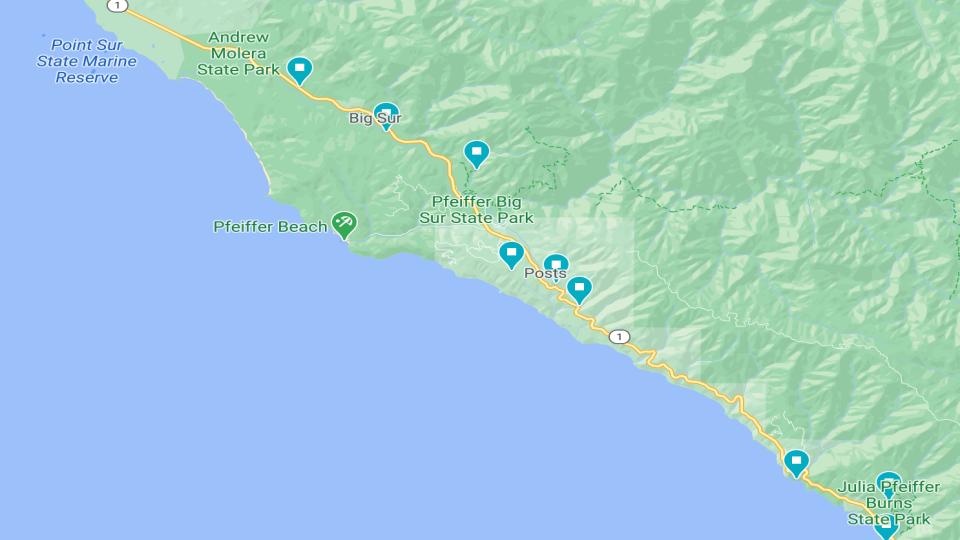
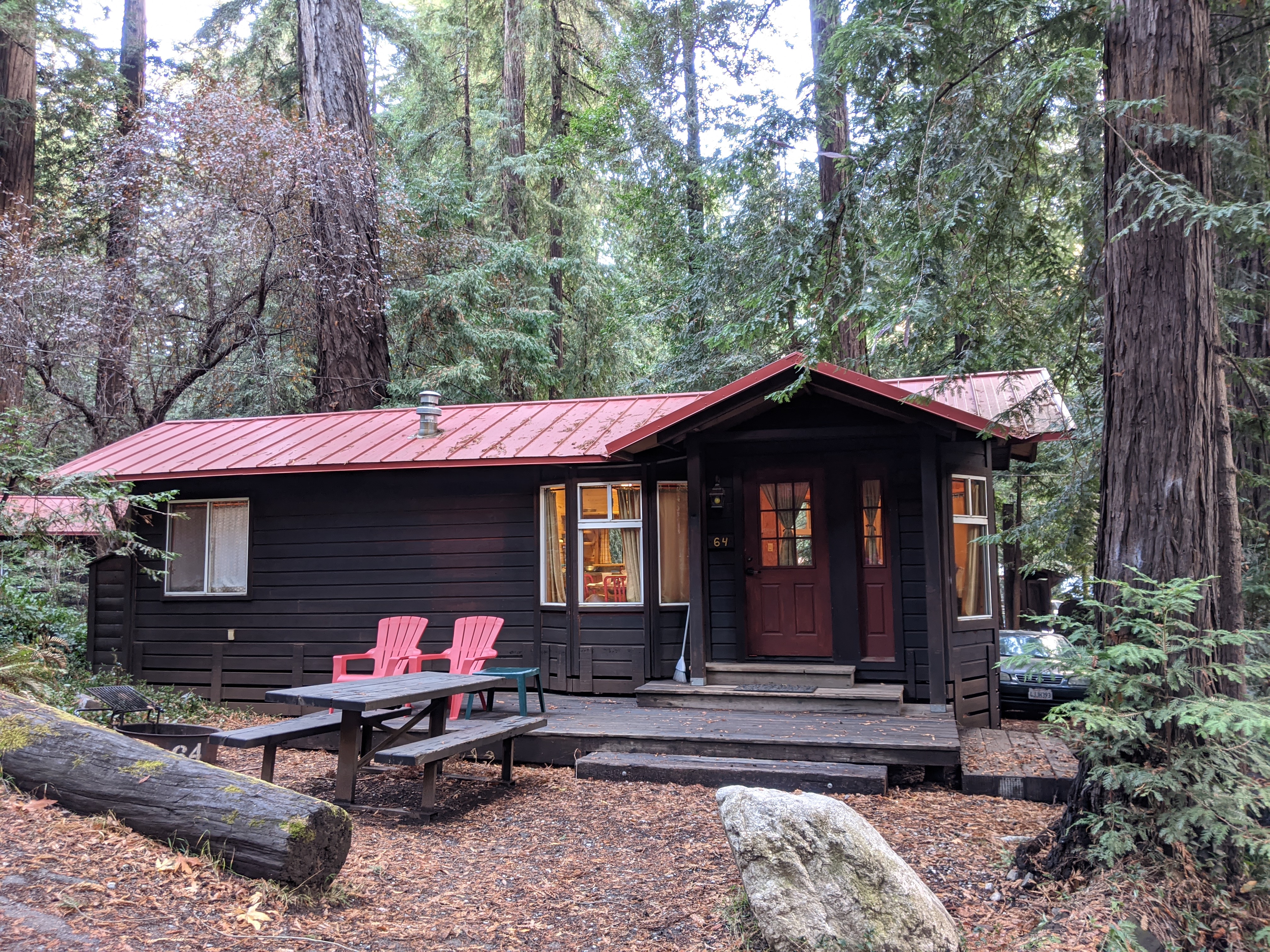
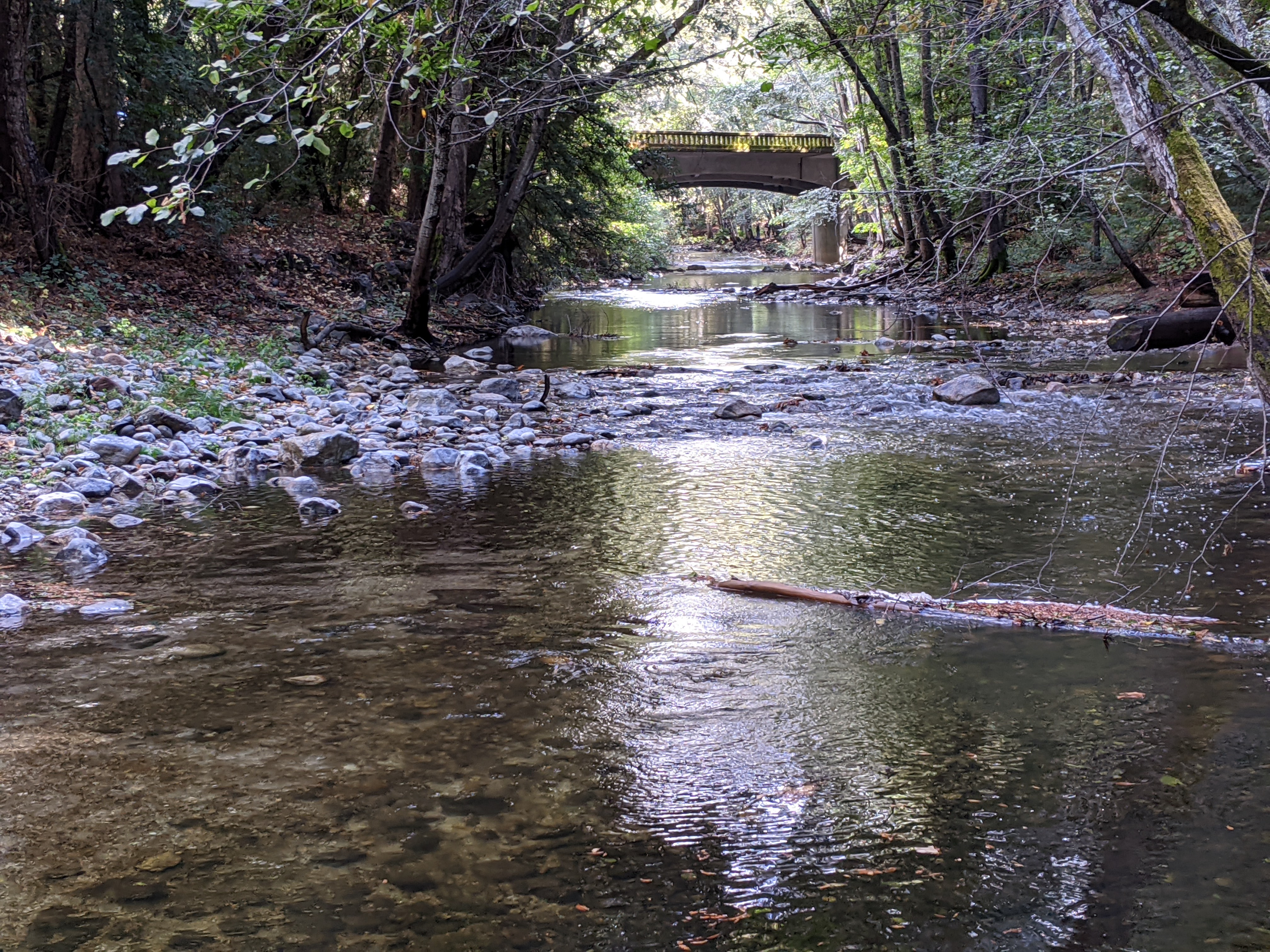
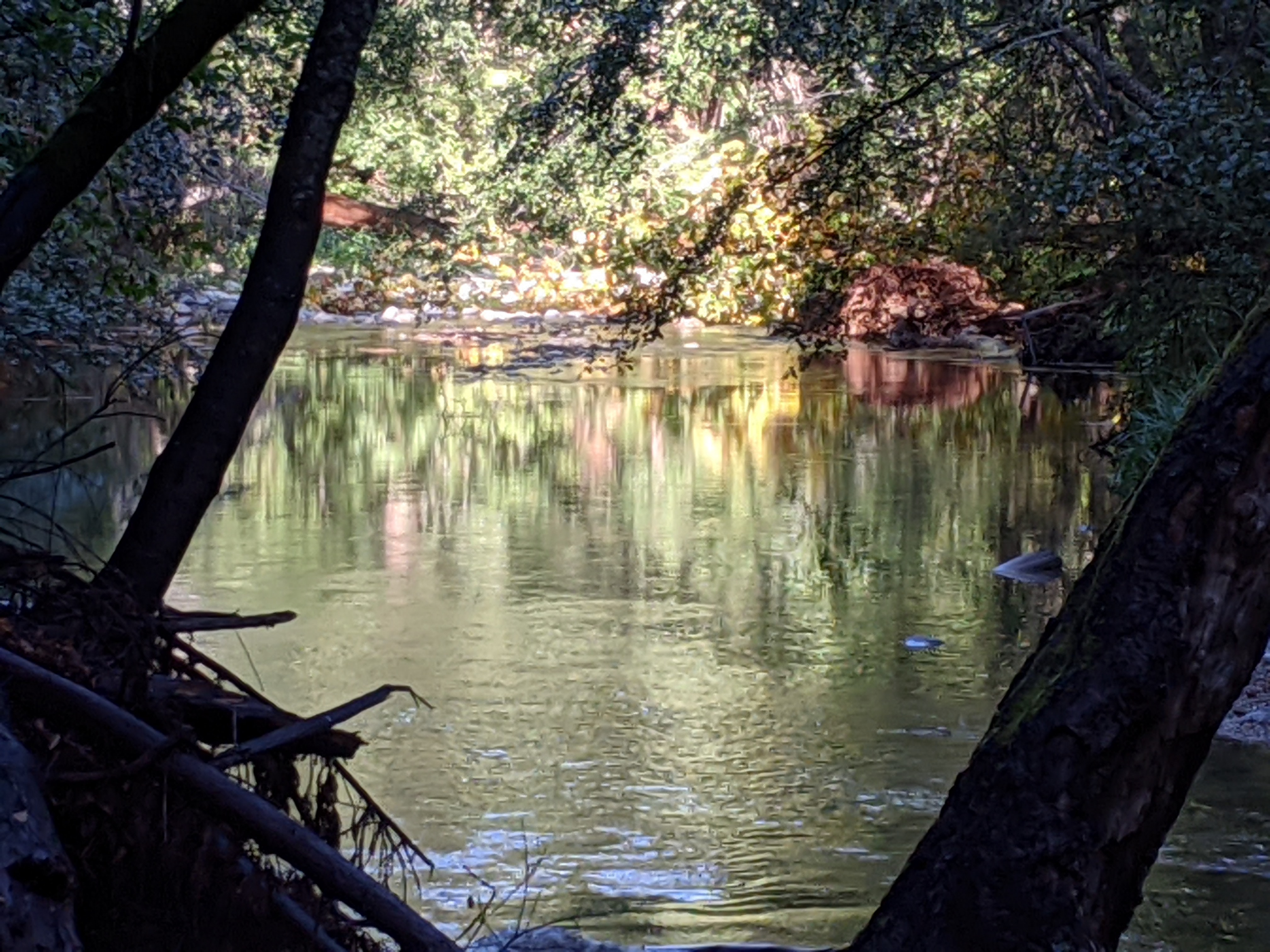
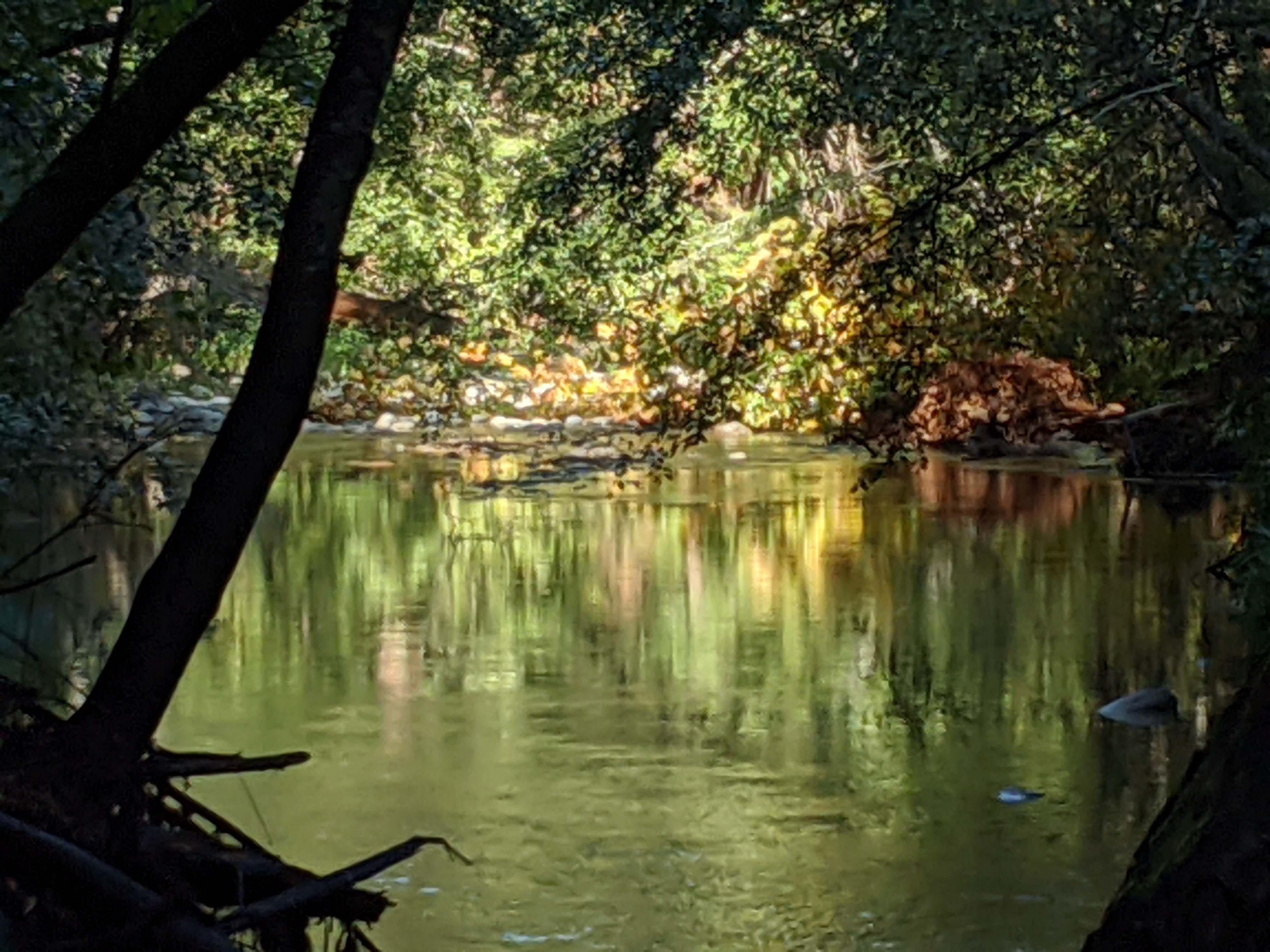
Big Sur is about a 40-minute drive from Carmel-by-the-sea on the winding highway 1. As we entered the Big Sur, we could smell the fresh redwood scent in the humid ocean air. Our cabin was a lovely cottage among the redwoods. It delighted us with its internal decor and made a super comfortable home. We explored a number of grocery stores in the 5-mile radius, there were basic supplies and household items, but little fresh produce nor meat. I used four quarters at a payphone to call our daughter who just got back from a trip in Cuenca, Educador. This was like going back a decade when we called each other by phone, rather than the messaging app.
We lit up some firewood outside of our cabin, had a super early dinner before retiring for the night.
The only thing that gave us updates about the election news was the poorly-received AM radio station on our car. Time has a different rhythm without the attention grabbing internet technology.
Day 2, November 6
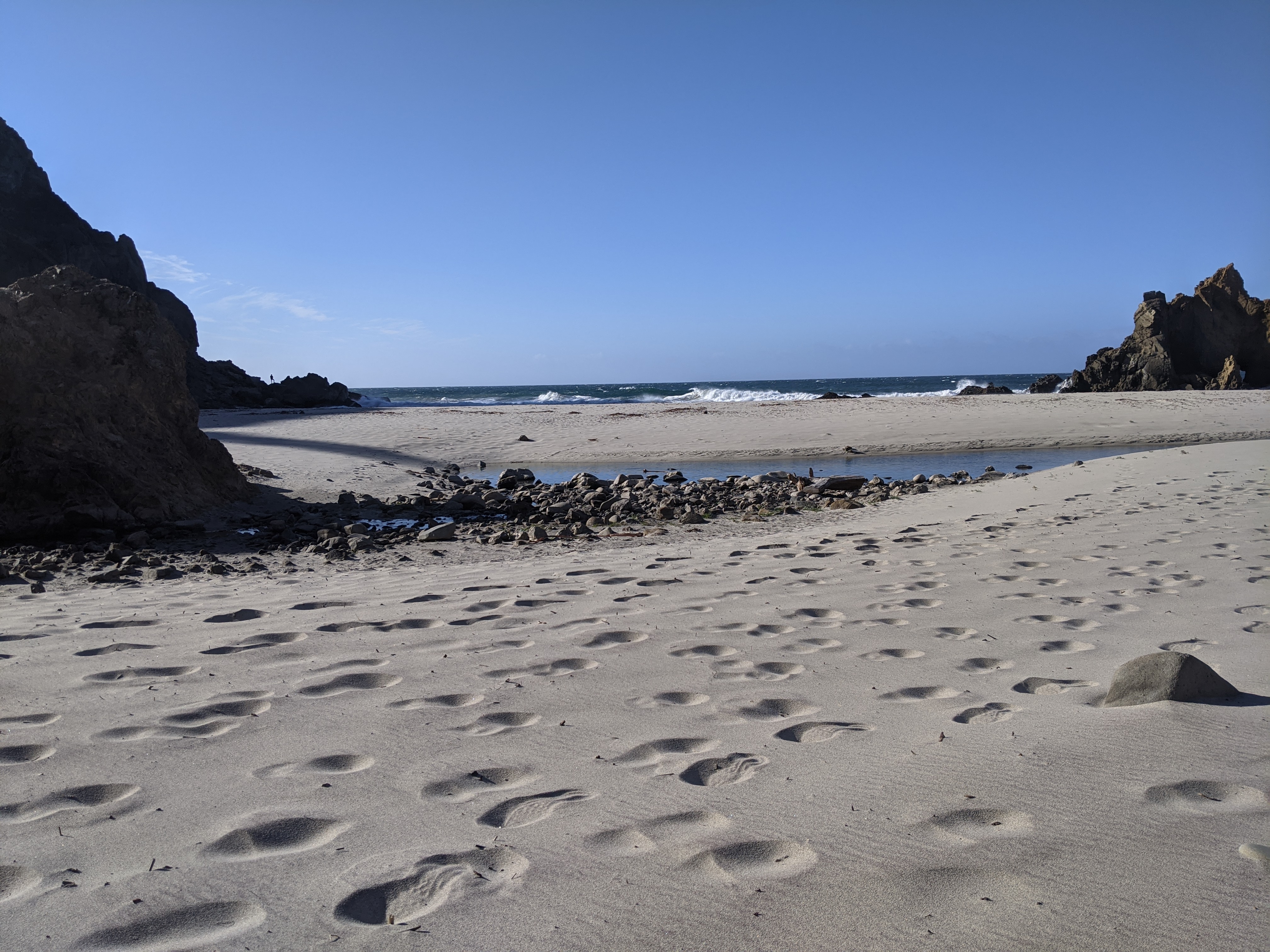
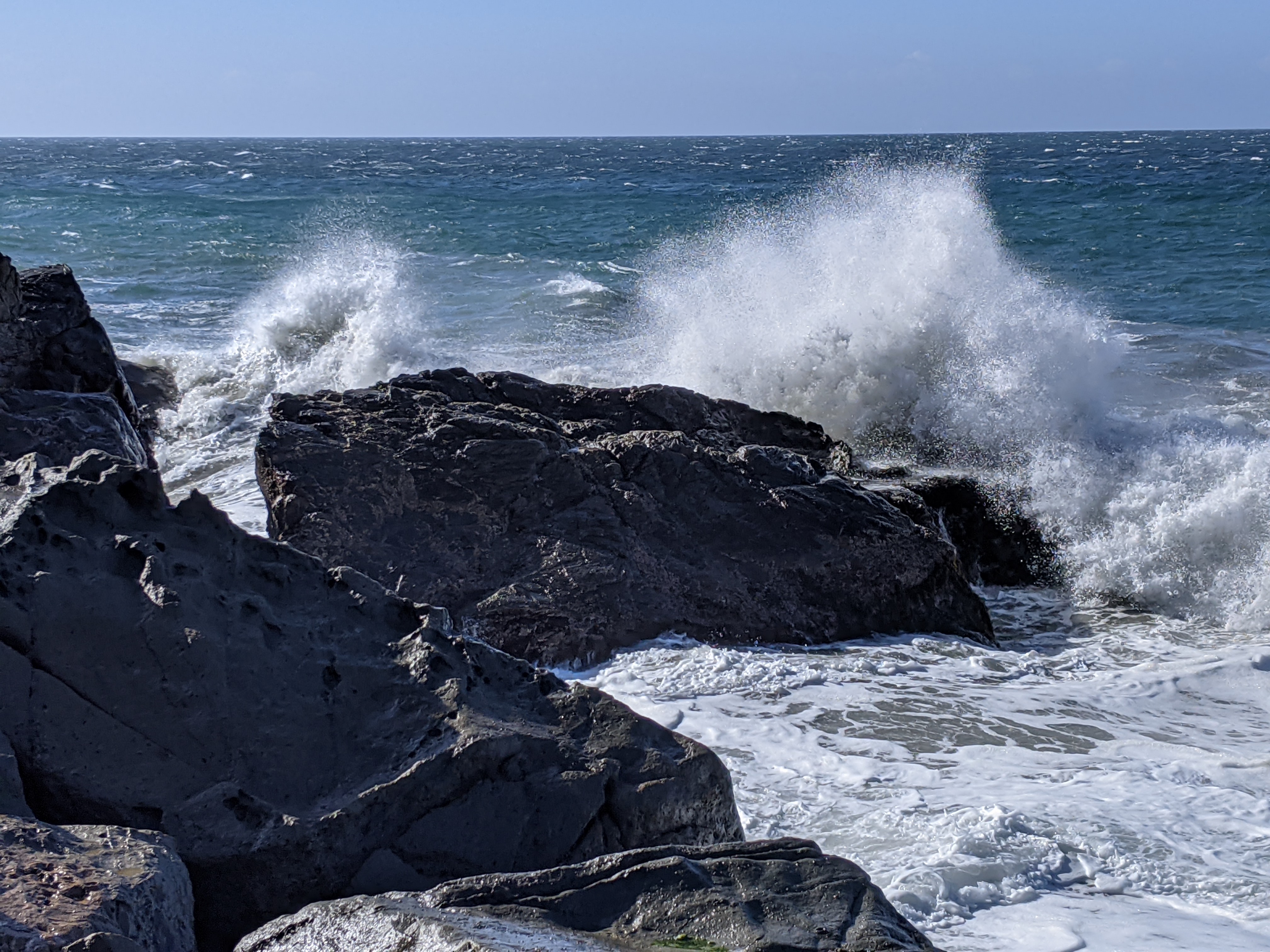
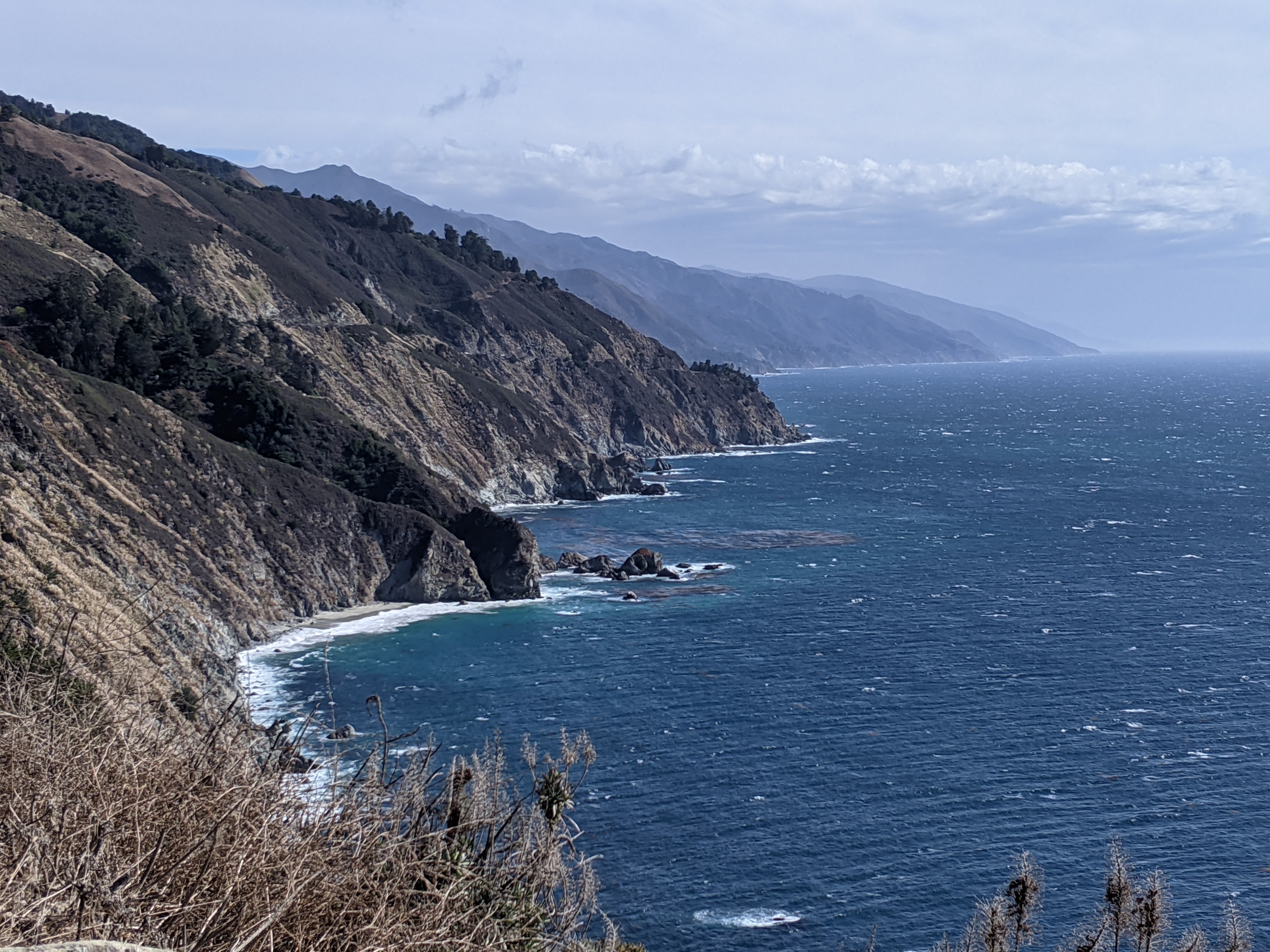
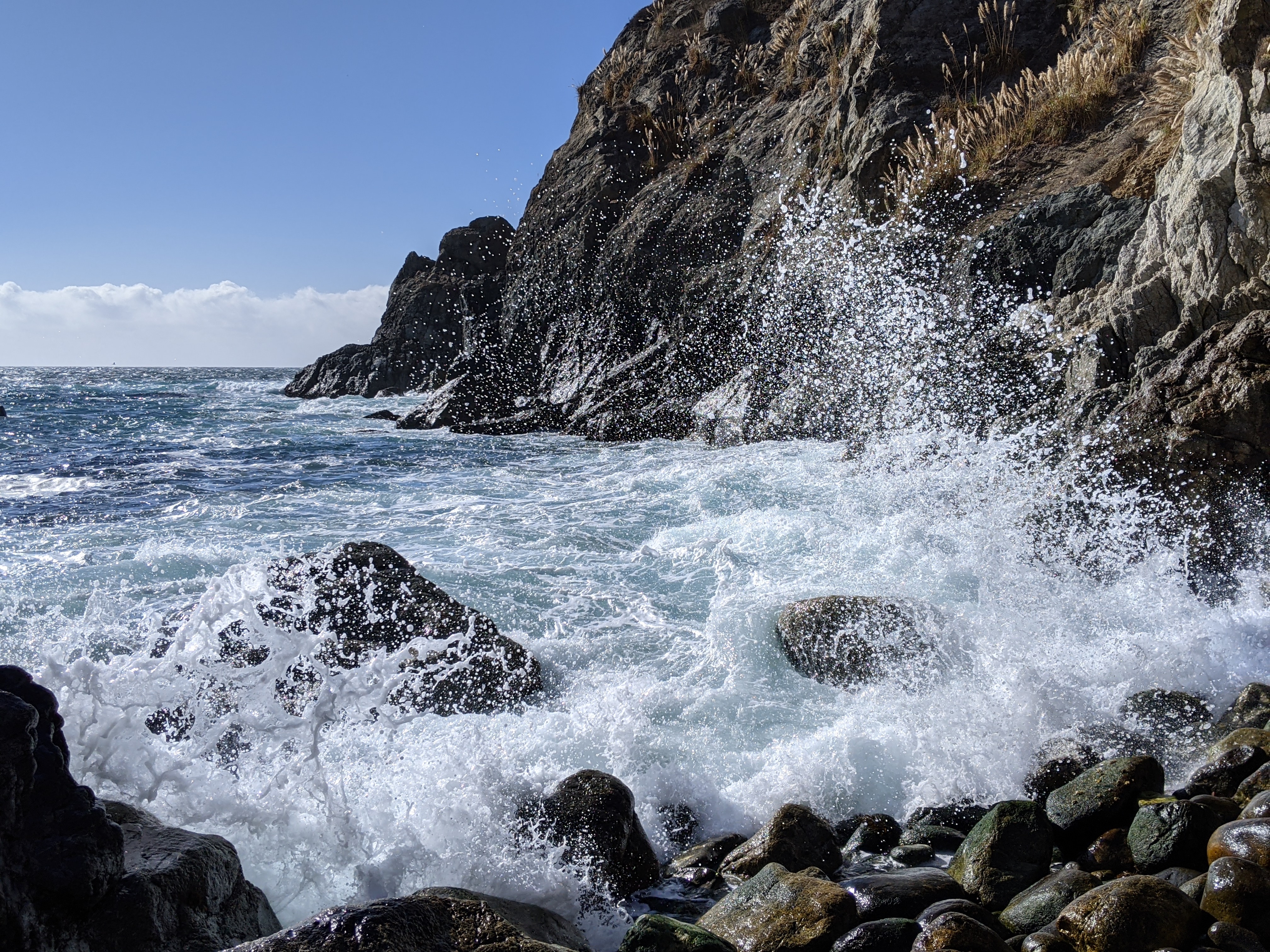
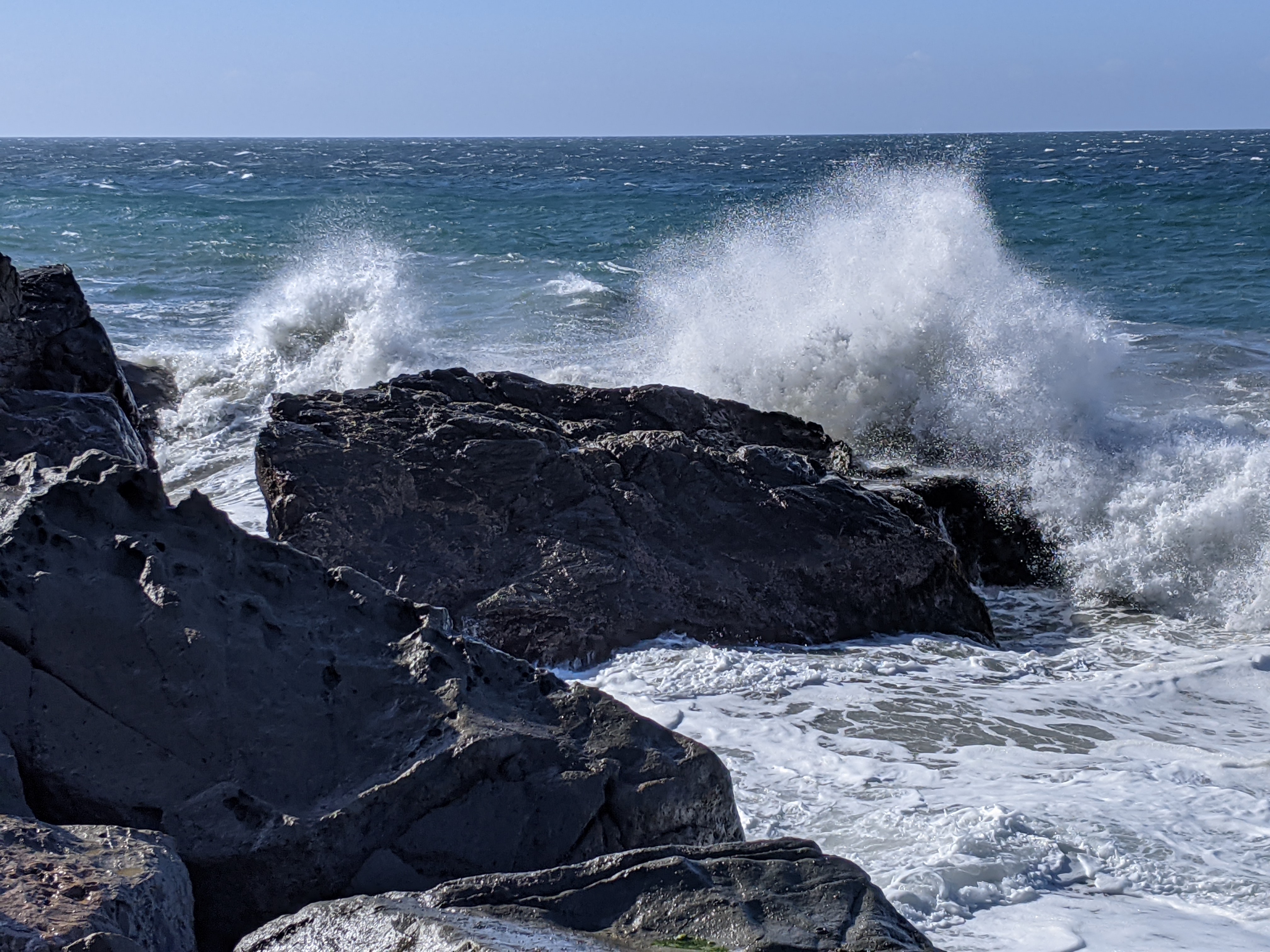
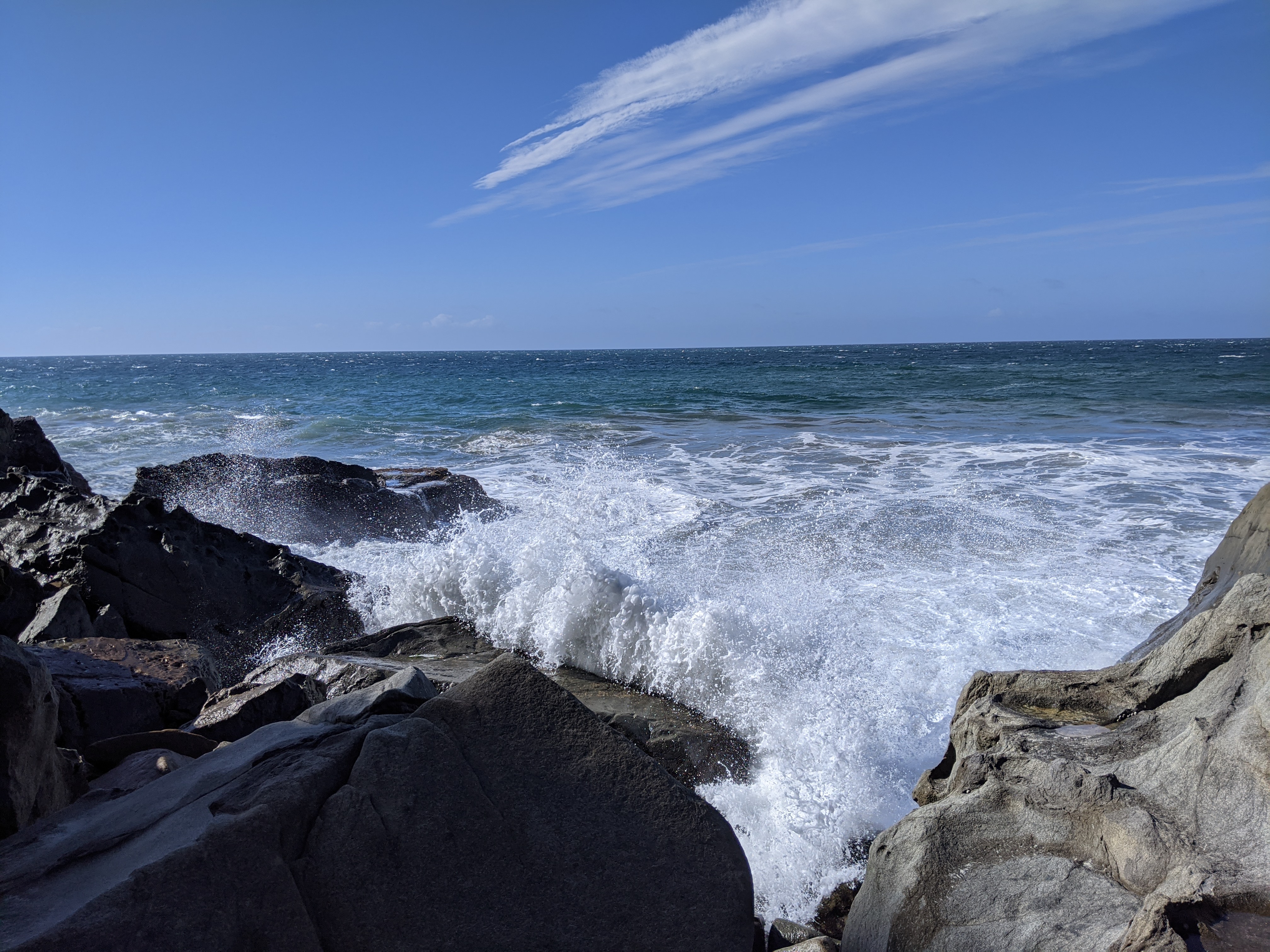
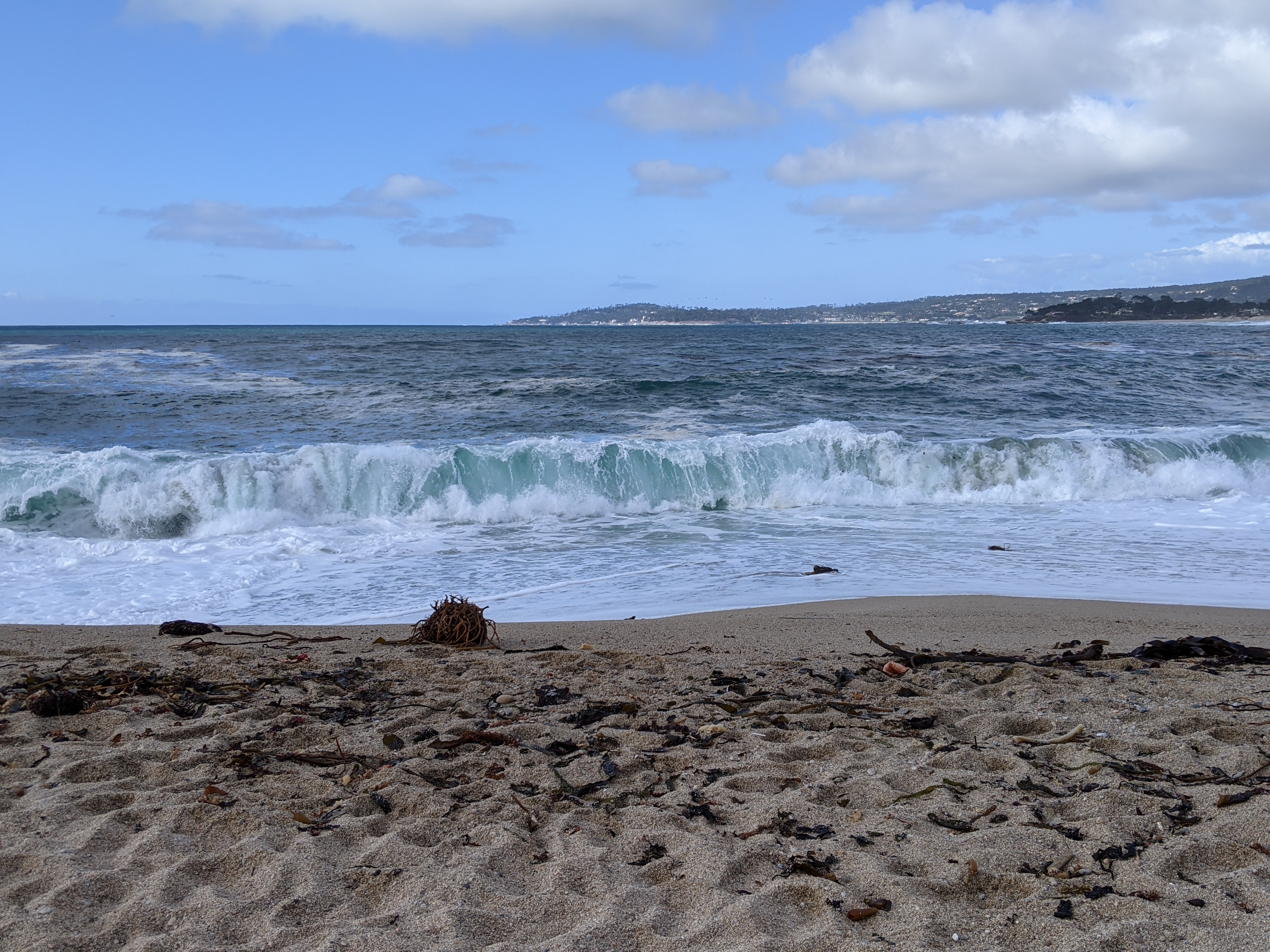
After a home-made breakfast in the well equipped cabin kitchen, we went to the nearby Pfeiffer Beach, for its pacific ocean view and its purple-colored sand. There were few travellers in the early morning, we brought along our own beach chairs and enjoyed the whole Pacific Ocean View. The close-up ocean waves, the rhythmic wave sounds, the splashing attack of the waves to the rocks were such reminders of the power and greatness of the Pacific Ocean, and of the Nature. The strong winds from the Pacific stirred up the sand, it was a rough beach, we enjoyed the ocean with nothing between us and the ocean.
We continued driving south on Highway 1 and arrived at Nepenthe for an early out-door lunch. Sipping a spicy bloody Mary and an after-meal Coffee with Brandy, with a hard-to-beat ocean view, life was good amidst the pandemic.
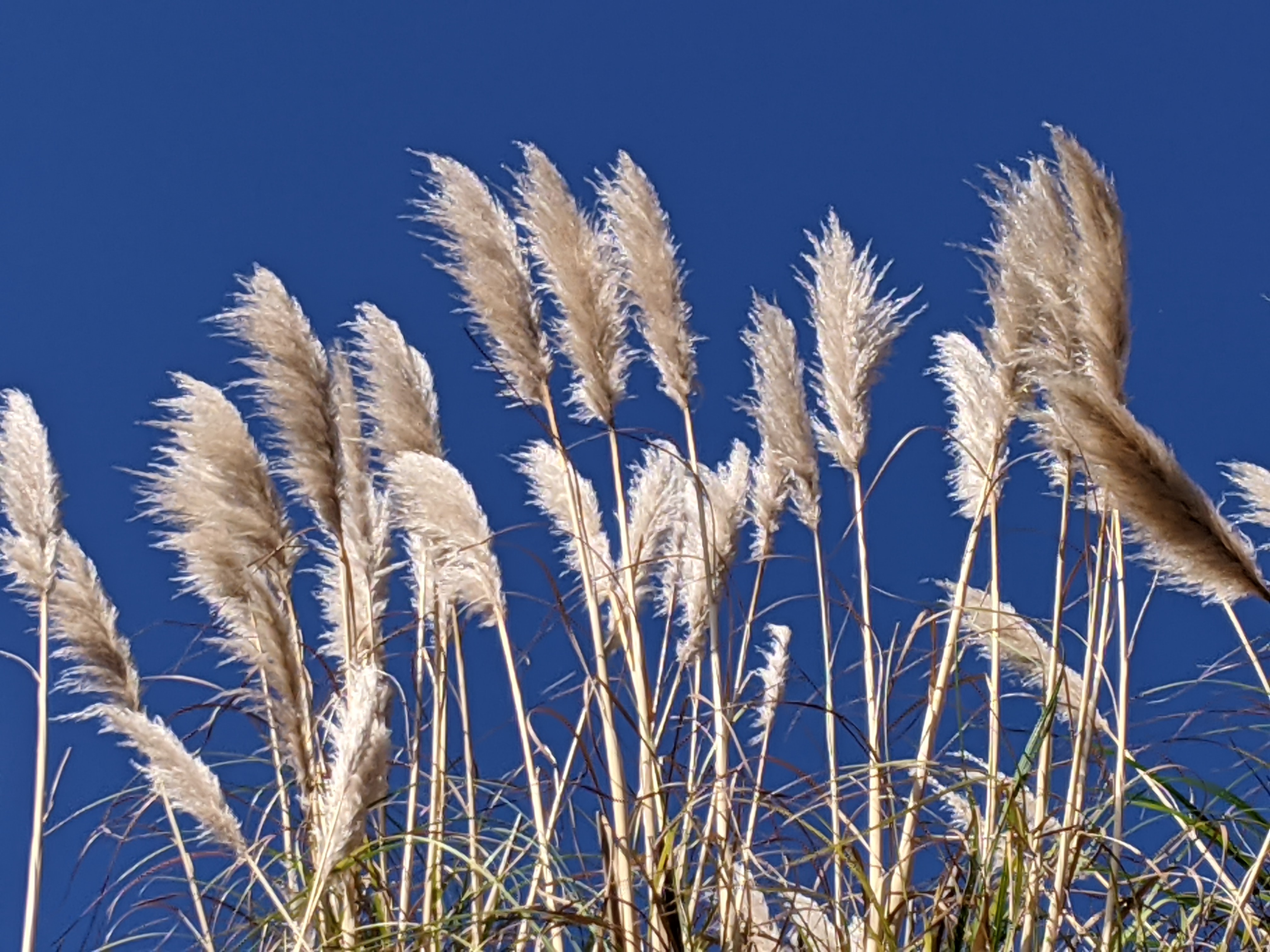
We drove further south only to find the Julia Pfeiffer Burns State Park close to the public due to recent fire. Disappointed, we went for a short hike down to another Oceanfront and were rewarded with the scenic pampas grass blossoming over the hill.
On our way back to the cabin, we stopped by the Henry Miller library, it was an interesting detour.
We continued our early dinner and retired to bed much earlier than usual.
Day 3, November 7
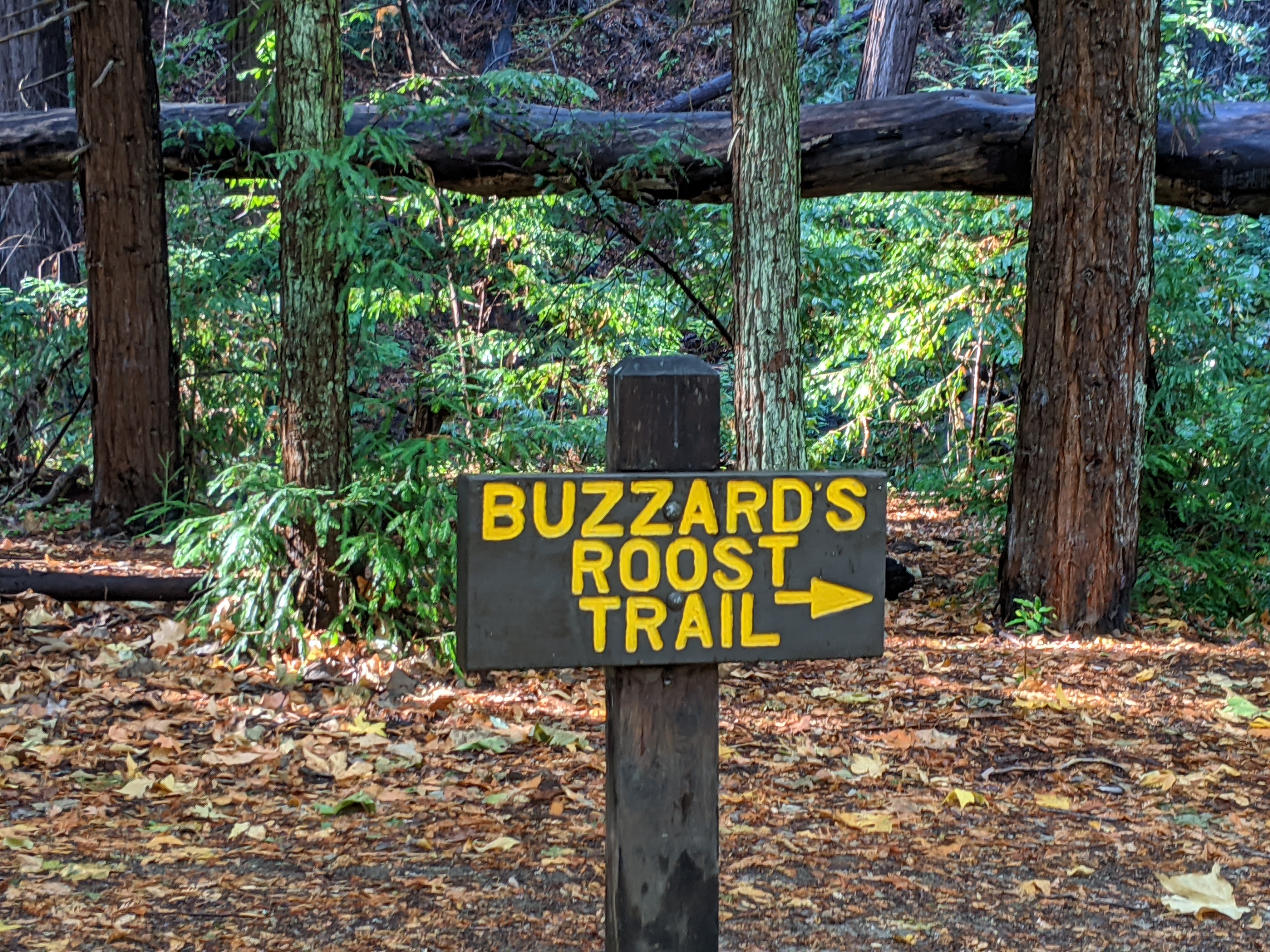
After another home-made breakfast, we went for a hike. Just when we felt that there were less animals and birds chirping among the redwoods, we were lucky to see a deer and a fawn which seemed to be as curious about us as we were about them. We went for a 4-mile moderate hike up the Buzzard Roost Trail, through the redwoods and tackled the gradual elevation up the hill. It ended up with a rather mediocre view of the Pacific Ocean far in the distance. It was a good hike and the hikers were all disciplined about wearing masks and social distancing.
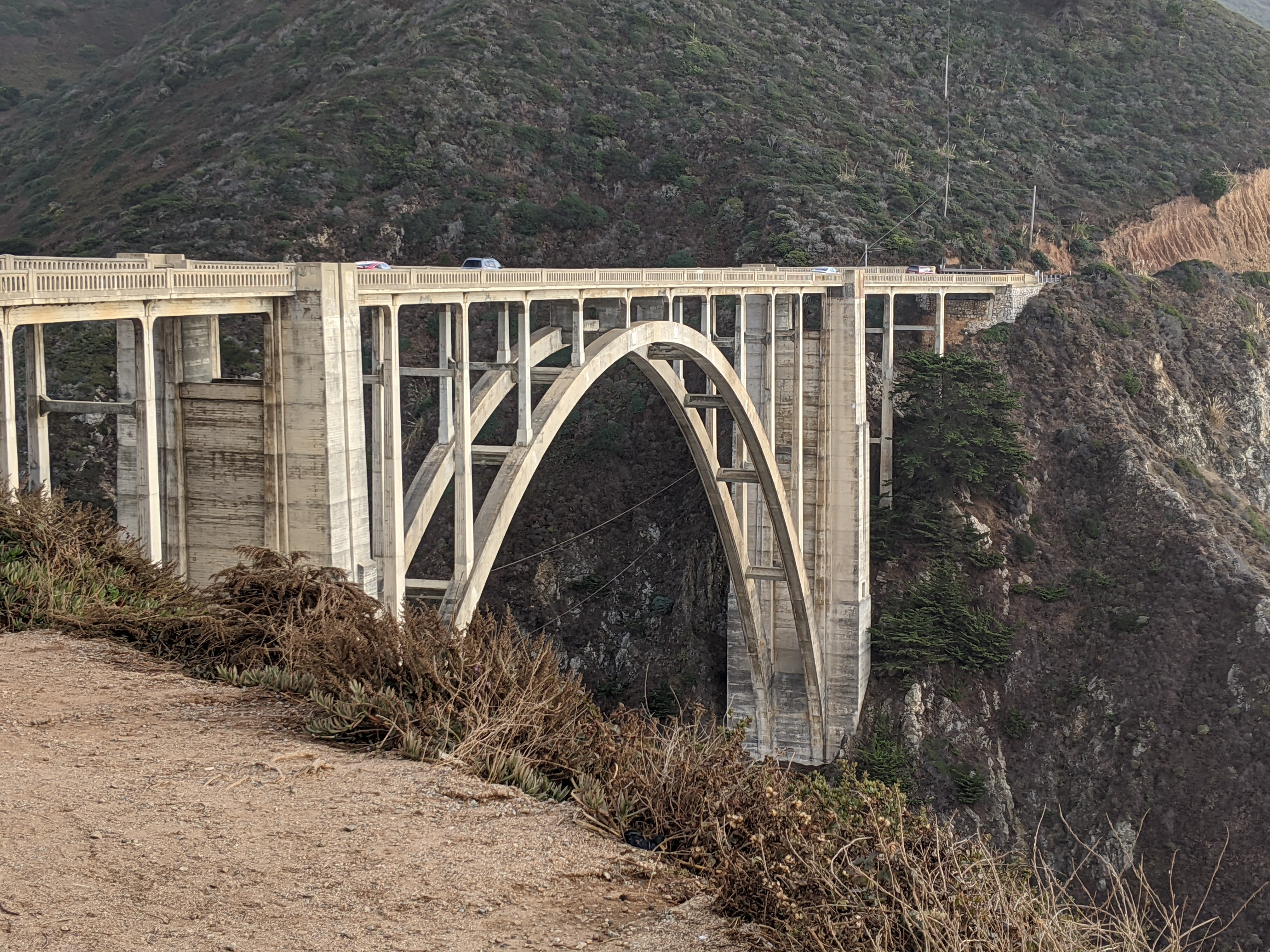
We had lunch at Carmel Crossroads, with an absolutely enjoyable outdoor scallop-fish-and-chip meal, as well as fresh oysters. Our spirits were lifted with the updates on the presidential election. On the way back to the cabin, we stopped to take pictures at the famous Bixby Bridge, we were far enough to see the grand view of the bridge above the rocky Pacific Ocean and the cliff above the water. My acrophobia was getting the better of me and left me in awe.
Back to the campgrounds, we shot some hoops and even had fun climbing the cargo net, only to find that we were no longer the age to get to its top.
We cooked T-bone steak and squash for dinner at the well equipped kitchen.
Day 4, November 8
Another short hike to the Pacific Ocean at the Andrew Molera State Park concluded our Big Sur trip. We stopped by Monterey for lunch, there was no crowd and it reminded us of the cold weather and the impact of the pandemic.
As we headed back to internet civilization, I made a pledge to not let my mobile phone take away that much of my time.
75 hours of Chinese history on Youtube make for great learning. In this 100-episode series, the first episode has attracted 1.4M views, while the last episode only earns 87K views. I highly recommend the series to anyone who wants to know more about the Chinese history. If you do not have time for the whole thing, there may be a few that could interest you.
The 1918 – 1920 Influenza killed tens of millions, and there was panic everywhere when very few were spared from its impact.
The Influenza happened at a time that US doctors were far less respected than their peers in Europe when Europe was consumed with the World War I. John chronicled the Great Influenza; and gave us a great account how some colossal figures transformed the US medical training and profession; and how the political climate profoundly affected the communication and the responses to the Pandemic.
It feels strange the book reads like the current Coronavirus pandemic in 2020. Is history repeating itself? We seem to be not any better in addressing the situation. Just like the Great Influenza, the political climate has overshadowed the medical judgement for a pandemic; just like the Great Influenza, the government cannot be trusted to put our health at the top priority; just like the Great Influenza, the politicians put blame on others regardless of evidence and is lack of.
This book tells you everything to know about the 1918 Pandemic and humbles us that we have yet to learn our lessons from it.
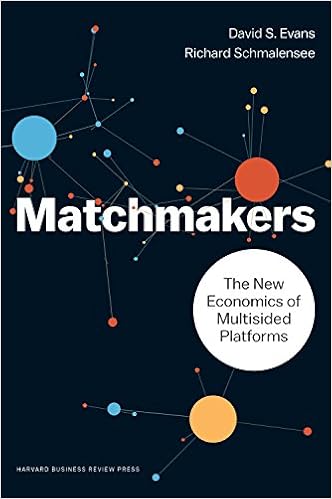
The Matchmakers: The new economics of multisided platforms By David S. Evans
I recently joined a product development group with the goal to build an ecosystem for voice computing platforms. Building a multi-sided platform is among the hardest challenges. The book explains the different considerations for a multi-sided platform from a regular product business and raises good questions to increase the chance of a multi-sided platform.
This book would be useful to those who are in the position to lead the development of a multi-sided platform.
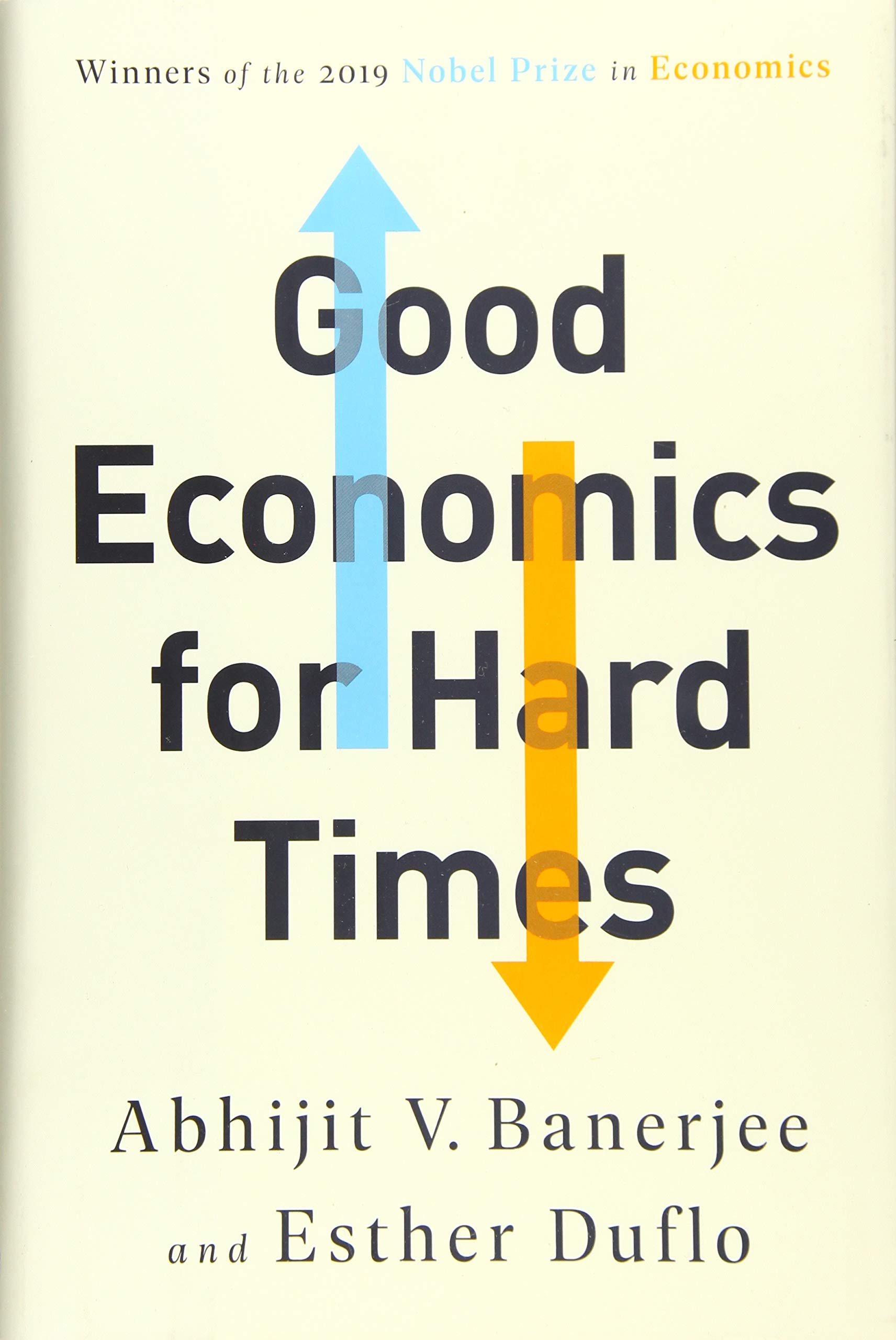
Good economics for hard times By Abhijit v. Banerjee and Esther duflo
Written by the 2019 Nobel prize winners in economics, the book gave an in depth look on a fairly broad set of topics: the social impact of global trade , the inertia of people to move for the better life , the unequal impact of global trade, the appropriateness of government intervention, the bias of society towards economic growth, the challenge of class mobility, the argument for universal basic income, the importance of any social welfare program to keep people’s dignity and respect in mind.
The broad brush on these economics leaves me dazzled with the impression there is just so much to be done to better the society.
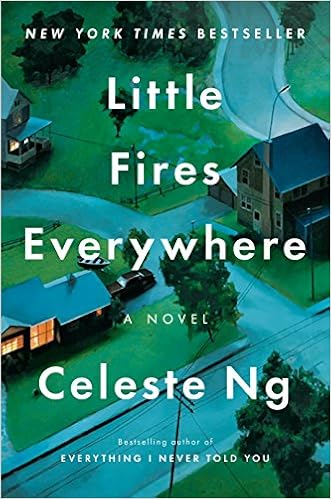
Little Fires everywhere By Celeste Ng
The story portrays distinct characters in two families, with contrasting ways of living & drastic differences in their approaches to lives: the so-called fit-ins and the outcasts. It provokes thoughts on hard choices between choosing a poor biological mother and an adoption promising a better life; the hard choices between a comfortable life and an uncertain life following the passion; the fear of losing someone vs the actual loss of someone. The novel has since been adopted into an American drama TV series. I enjoyed this book.