In this era of internet of things, we “google” for answers, “whatsapp” to be social and “youtube” to express. We have shorter attention span and less patience; and with more information, there are more things to share than more time to listen to others’ sharing.
Thousands of years of Chinese/Eastern teaching talks about developing important character traits such as humbleness, subtlety, persistence and altruism. Fast forward with western culture shaping the world, the character focus has shifted to personality focus.
This book “ Quiet : The Power of Introverts in a World That Can’t Stop Talking”, by Susan Cain, is a refreshing read. Susan quietly writes about the behavior, the thought process and world-changing contribution of that quieter half of the world population. It gives explanation on how introverts and extroverts function; and offers insights to readers of any personalities.
“Quiet” talks about the rise of extroversion as a cultural (personality) ideal, with life examples from Dale Carnegie to the author’s personal experience in Tony Robbins’ events. It attempts to answer questions like “Are personality a result of nature or nurture?” It talks about different biology reaction, thought process and behavior between introverts and extroverts; follow with vivid stories of contrasting personality between Franklin and Eleanor Roosevelt; and the different behaviors leading to Wall Street Crash and the folks who thrive in the Crash. 
There is a chapter on the soft power of “quiet” introvert, and a deeper dive into the cultural values outside of US, including perspective of scholarly students with Asian-heritage in US high schools and their challenges in fitting into college where speaking-up, social interaction and group thinking are “demanded”.
Just as extroverts make charismatic leaders and make many contributions, introverts are making great contributions to the society from Van Gogh and his paintings to Wozniak and the invention of personal computer.
The book finishes with case studies on how to love and work with/within your and others’ personalities.
If you are among those who are curious about different personalities (including your own); or simply to learn to work and love one of them, you would enjoy reading the research, the analysis and the stories of “Quiet”. I am surprised this book has not made more noise, but maybe it is not a surprise when many prizes extrovert just a little bit more.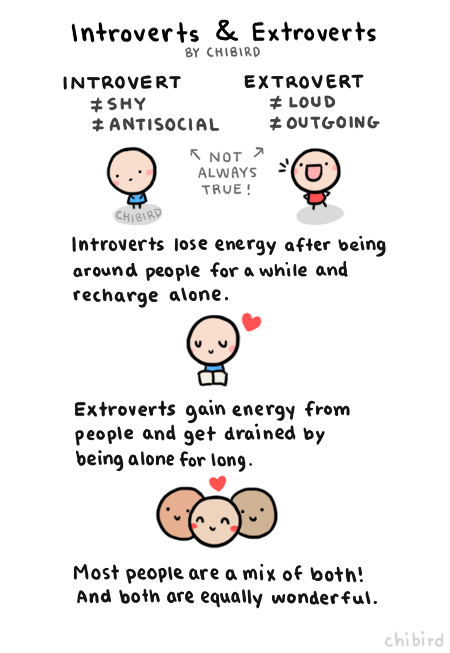
 I contribute to some non-profit organizations, and have been a World Vision child sponsor for many years. More recently, I realize the responsibility to go from easy act of giving to more thoughtful consideration to give where it creates impact I care about.
 ople stop donating to a non-profit organization as they consider the CEO got a high pay (when it was pretty low compared to the business world). There is expectation that people associated with non-profit initiatives should be sacrificial. Such undermines abilities to attract best talent and create pressure to cut corners in the administration of non-profit organizations. Should we judge instead the impacts the organization make or not make?
 ta and information”, taught by Mr. Edward Tufte. Mr. Tufte is a professor emeritus of political science, statistics, and computer science at Yale University. He is a pioneer in data visualization. With hundreds of “adult students” in attendance, he brought his unique perspective on data and gave us highlights of the rich content of his four books on data visualization. It was back to classroom lecture and had reading material that took more of the brain bandwidth and really needed focus. Over the years, we build the habit of the right “messaging” in our presentation with data filtering; we worry about complexity to our audience, and cherry pick “easy” and relevant information to our target audience; our challenge becomes less of a mental and content but more of a political and presentation. It is a day of reminder that rich content is superior to beautiful slides; a reminder to not distort data; and the expectation that communication could be clear, precise and efficient at the same time.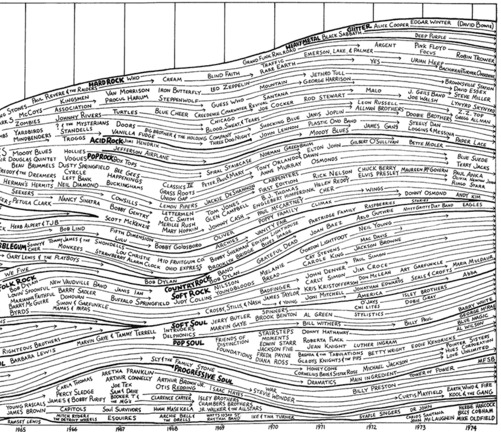
 ng a hundred times will give a deeper understanding than the first attempt. After writing 100 blogs, I have learned or “relearned” a few things.
 not there, nor do I want to be there. They may just make it look easy.
 dset brings more inspiration. Three years have gone by between the 1st and the 100th. There are changes every day, let alone three years – mindset, parents, children, friends, career, workload and health. When we are relaxed and happy, the same thing looks more interesting and the world looks wonderful; no wonder the tennis players p
 he summer reading list of President Obama, it raises enough curiosity to pick up this book on a foreign topic – the history of species evolution and extinction.
 cks a species that is emblematic – the American mastodian, the great auk, an ammonite talks about extinct species; the increasingly fragmented Amazon rainforest, the ocean acidification and the endangered corals at Great Barrier Reef talk about the present landscape; plus many more around mammals and human. If any of these is new to you, the author will carry you to these new territories.
 n theory of mega fauna extinction, it is mind boggling on how human arrival may correlate the closest the species extinction when human predators unintentionally disrupts their long reproductive cycle; and the species reduction triggers forest overgrowth, then climate change. And how modern human species drive to extinction o
 am Malala” covers her fifteen years of life in Pakistan, her families, her childhood, her schools and the global terrorism before she was almost shot to death.
 she relentlessly advocates for education through her blog, her speech and her bravery. When her family became internally displaced,
  the thing she missed the most was her books. When she recovered in the hospital, she wanted her books, and she missed the school examinations. Malala’s love of learning and school is a lesson for all the kids in many countries, where education is taken for granted.
 re time, it was impossible to avoid extra persons in the background. Many desserts were on display at the refreshment tables, from brownies, macaroons, cupcakes, banana bread to different types of cookies. The sugary booster was fitting for the graduate students as they got ready for a night-out. The school bus would take them to a secret place and they would not be home until next morning. Is this also an experience for families to be ready for the many more nights ahead without the child sleeping under the same roof?
 be a stressful month for college-bound students and their parents – a month to choose which college to spend the next four years. Such a decision is weighty for a teenager and more so for the parents. College is expensive in US, the four years of education involve hundreds of thousands dollars even for public school. We don’t make such decision often in our life.
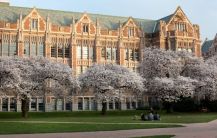 f the ‘site’ visit, there is the financial planning. College in US is outrageously expensive with 5-digits spending annually to cover tuition and boarding. If the parents do not provide, the students will be in a six-digit debt the day they graduate from a 4-year public college education. The more economic way to get a degree would be attending a 2-year community college, then transfer to a state college. Or they can crawl through thousands of scholarship opportunities, and that requires a level of motivation and hard work not often found in the teenagers of this generation. For parents who can afford to provide the 4-year, the debt-free students may not empathize the many years of parents’ hardwork to just afford their education.
 decision making in the same way as their parents who are thirty more years older. The beauty of a youth is that they can afford some costly decision. In between supporting a teen’s decision vs dictating a decision, a final decision will be made by May 1st.
 this “Wellness Panel for Parents (of the teens)” with high school principal, assistant principal, a doctor and a psychologist on the panel, they share their thoughts on the many challenges facing parents and their teens. Many teenagers sleep far less than the recommended 8 to 9 hours. The pattern starts with a lack of enthusiasm in school (subjects), the stress to have to do well in grades, the mountains of homework and reading, puberty effect and the transition towards adulthood. These difficulties breed avoidance – when the school hours are over, the teens d
 ecompress through games, internet, napping or other things but school work. As they start on homework in the late night, they finish by early morning, and in 5 hours or so, they are on the way to school again, totally sleep deprived and often without a decent breakfast. In the intertwining relationship between physical and mental state, an unhealthy youth is more prone to an unstable mental state; and vice versa. Aren’t parents helpless in getting our loved ones out of the blues and maybe at times, be part of giving them stress?
 ework.
 to a new company is no easy task, yet the experience is often among the memorable moments in our career. It feels like an exciting traveler to a foreign country of different culture and a different language. Like a traveler, there are many things that the initial impression could define the remaining journey. It may be uncomfortable, it may be surprising; yet, it is rejuvenating.

