oliviatamccue

about everything, anything or something

Cover her face by P.D. James

Sometimes the passing of an author triggers our first read to her novels.  I read “Cover her face’ by P.D. James who lived her last day in November this year, at age 94.   She was an English crime writer and was well known for her series of detective novels starring police commander and poet Adam Dalgliesh.  P.D. James has three books on the top 100 crime novels of all time.

‘Cover her face’ is the debut of her crime novel and its character Adam Dalgliesh in 1962.  It details the investigations by detective ACover her facedam Dalgliesh into the death of a young, sly and secretive maid, surrounded by a family which has reasons to want her gone.   Sally Jupp is an unmarried mother, recently accepted into Eleanor Maxie’s household as a maid. She used her ways to seduce a romantic relationship with Eleanor’s son Stephen, and has earned herself haters more than friends.  In the morning after she announced that Stephen has proposed to her, she was discovered dead on her bed with bruises from a strangler’s fingers forever on her throat.  It is up to chief inspector Adam Dalgliesh to uncover the life of Sally Jupp, and who that murderer is.

Some crime novels have intertwined and sophisticated plot which invites the intelligent readersto join the detective work, such as the novel ‘Devotion of Suspect X’.   Some are more like the plot follows the characters, such as ‘The cuckoo’s calling by Robert Galbraith’.  ‘Cover her face’ belongs more to the latter category, it has a good plot, though the murderer could also be anybody’s guess and it is up to the author, or the detective Adam, to walk us through, at the end, how it plays out.

D. James, bring alive the characters, and offers a vivid landscape of the crime scene. There is so much to like about the writing style of P.D. James and its characters.

The story started with this poetic introduction

“Exactly three months before the killing at Martingale Mrs. Maxie gave a dinner party.  Years later, when the trial was a half-forgotten scandal and the headlines were yellowing on the newspaper lining of cupboard drawers, Eleanor Maxie looked back on that spring evening as the opening scene of tragedy.’  And what follows is her skillful portrait of her family, their friends and the community around.  The crime surfaces at the end of chapter 3, after much anticipation, followed by the debut of Chief Inspector Adam from Scotland Yard. P.D. James
Adam started the investigation with 1-on-1 meetings with each character.  His intelligence and experience is beyond doubts, there is little coverage on Adam as a person, yet when his thought ‘I have no son. My own child and his mother died three hours after he was born’ tells a lot when he was posed the question ‘Would you wish for such a marriage for your son?’ by Eleanor Maxie.  And as the story ends, ‘he knew with sudden and heart-lifting certainty that they (Eleanor’s daughter and him) would meet again. And when that happened, the right words would be found’.   It leaves a lot to uncover about the character in the novels to follow.

Leave a comment »

Are you lucky enough to have a passion?

If we only live once, it seems simple to spare maximum time on things we like to do.  People, with a passion, are lucky; even luckier if the passion is inexpensive, universal and healthy.

Writing, about something we love to do, turns out to be pretty challenging.  There is just a lot of sentiments, and so hard to organize things from the heart.  And is it a passion?  Is it a hobby?  It seems more than something to do when there is time, so it feels more as a passion.  There are often times that passion needs to give way to other responsibilities; there are times that it simply hibernates.   Nevertheless, when it is a passion, there is always the joy of getting back to it.?????????????????????

I love tennis since high school. My relationship with it has ups and downs. It gave a good first impression as a decent sport. There were some of the biggest matches broadcasted on the television, including Wimbledon and the other 3 majors.  Watching matches was actually quite boring at the beginning but I hang on to know the result firsthand. After getting used to, the full matches are as enjoyable as movies. Then I started to play and found it pretty challenging to get good at, maybe that is how I get hooked up. After a while, the top professional players became familiar names, and there were some favorite players to root for.  Playing the game is about me and whoever is on the other side of the net.  Most coaches would ask to play 3 times a week to maiist2_5885851-tennis-girl-cartoon-characterntain; and more often to improve. Easier to say than declaring a pure lack of talent, I have never got close to that time commitment, and expectedly, my skills are very far from where I want it to be. Human could be strange species, sometimes, we just want to keep pounding on things that we are not very good at.

My time spent on watching tennis varies over the years.  These days, I can spare a bit more time to play and even follow some full matches of tournament.  Most folks are satisfied with the few minutes of highlights to know the results, and stay up-to-date; well as a passion, it is not just the final score line, it is also  about how the match develops into the win/loss results.  A full match shows the improvisation of the players, the match-up, and the dynamics.  I enjoy the most to see the very top player works its ways to seize the important points.  It parallels the life dynamic, in which not every second means the same. There are potentials of turning points, and the distance created by how those few moments, are being played out, propel a person towards very different destinies.   roger federer french

From Ivan Lendl to Pete Sampras to now Roger Federer, they are all my favorite players and represent different era.  there is charm in Stefan Edberg as well, but did not watch enough of his matches to develop a following.  Roger Federer is my vote for the GOAT (Greatest Player of all Times) if there is such a thing. The “Most Favorite Player of all Times” can probably be more objectively  measured in terms the support of the spectators, peers roger federerand fans around the world for all the tournaments.  Peers support him to win the “Stefan Edberg Sportsmanship Award” for a record 10 years; Fans support him to win the “Fans’ favorite Award” for a record and consecutive 12 years; and many places he plays, he receives “home court advantage” through the support and cheering of the spectators.   There are often so much things to learn from– how he plays, how he faces adversities, how he faces the press, how he manages losses and wins.  All can give inspirations to other facets of lives, if we so choose.

It is hard to stop writing something about our favorite player, next time.

Leave a comment »

Another chapter

Transitioningpage-turning to a new company is no easy task, yet the experience is often among the memorable moments in our career.  It feels like an exciting traveler to a foreign country of different culture and a different language. Like a traveler, there are many things that the initial impression could define the remaining journey.   It may be uncomfortable, it may be surprising; yet, it is rejuvenating.

First, what is the language of the company?  Every company has its own language, glossary and intriguing acronyms.  Is it a different dialect, or a totally different language from what you know? The former is easier to understand, the latter is a test of both the intelligence and confidence.  Intelligence, as it is, to try to make sense for every single in a few words understood; and confidence to have the courage to ask questions.  Like many other things, we become more adaptive with more experience of similar kind.  Knowing a place takes time and effort.  As difficult as it sounds, the learning slope is amazing – just like an infant discovering new things every day. That speed of learning would not last long, so it is worthwhile to savor the moments.  if_you_can_dream_it_you_can_do_it_mug-p1682003925297081092otmb_400

What about the leaders and the countrymen?  Are they friendly or hostile?  Are they helpful?  Are they down to earth or full of BS?  We should consider lucky if the new environment is one of the friendly and supportive environments, yet better to take nothing for granted.  Even if it is not, it may be a good healthy ambition to think about how to make the environment better.  In many ways, the instinct could be developed pretty quickly on your love, like or dislike of the new environment; and that could stay with you for a long time.

Then, how do you feel the job relevance versus your personal value?  Whether it is a big company or small company, it is ideal to get that relationship between the job objective and the personal ‘mission’.

I talked about having an entrance and exit criteria for a new position a few months ago. Maybe the thought of having exit criteria is a telling sign that the last job has been a transitional one.  This time, there would be no exit criteria but to experience both feet in for a bit.

Leave a comment »

Colorless Tsukuru Tazaki and his years of pilgrimage

Aside from aColorless Tsukuru few classics, I prefer reading original novel to translated novel.  Why would one want to depend on the quality of translation?  Sometimes, the translated version feels like something amiss.   This book “Colorless Tsukuru Tazaki and his years of pilgrimage” by Haruki Murakami (村上春樹) recounts a remarkable story of Tsukuru, that shines from the original Japanese version to the English translation.  And how often is a book related to such a beautiful musical piece of the “Years of Pilgrimage” by Franz Liszt?

The main character Tsukuru had 4 of his closest friends (2 girls, 2 boys) in his high school at Nagoya. Just like their last names, his friends have a color and character of their own.  Tsukuru, as its name in Japanese implied, enjoys doing things and he loves (building) train station.  This group of 3 boys and 2 girls knitted such a tight friendship that transcended romantic possibilities common for youth of that age. As they graduated from high school, Tsukuru moved to Tokyo and his 4 friends staying in Nagoya for colleges; they relished their reunions whenever Tsukuru showed up in Nagoya.  One summer as he visited Nagoya, his friends did not return his calls, and when finally reached one of them, he was told that none would see him again.  He was disowned by the group and had no friends.   For the next few months, he gave up living and thought about death all the time.

Years later, he made a living in building train stations, had a few relationship, but none worked out.   In his mid thirties, he met someone who made him contemplate his (still) bleeding heart; and started on his journey to the past and to thColorless Tsukuru and musice far.

It is a story of discovering the past to mend the present.  It is a story of friendship, love, heartbreak and love again.  Just like many of his books, it goes beyond the storyline and is sprinkled with equally captivating expressions of deep feelings towards the relationships, towards the dreams and towards the life of the main characters.  As Tsukuru finds his group years later, he not only discovers why he has been disowned, but also many more, that the readers can resonate with.

Leave a comment »

Real Diversity

The United States federal laws protect against employment discrimination based on race, sex, religion, national originworkforcephysical disability, and age.  Setting that aside, most (large) companies work diligently to comply with the non-discrimination.  Yet, there is often the perception of the workforce and culture for any company.  Great companies not only follow the law, indeed, they actively embrace a diverse workforce; see a correlation to ideas, innovation, better solutions and better products.

How could we tell that a company is taking a non-discrimination requirement into (better) diverse workforce?  The diversity starts with the feeders (hiring) rigor.  For a glimpse,

  • How clear is the job description?  Ambiguous job description breeds interpretation, preference or bias.
  • How rigorous is the interviewing process?  How well are the interviewers trained? How prepared are they in meeting the candidates? Lack of objective assessment cultivates subjective opinion within our comfort zone.
  • Who makes the hiring decision? Much perception could be built in the first encounter base d on race, gender and, no lesser extent, age. Is the hiring decision made by a committee who has not met the candidates or by the interviewers?
  • How is the background check done?  When it comes to a diverse workforce, there could be people from all different backgrounds.  Does the background check cover not just the qualifications in US, but also worldwide.

Starting with job description, some postings look more like a copy-and-paste of a template.  Well, there could be benefits to have a general description. Let’s say the application lands on a phone interview.  In the first few minutes on the phone, it is guessable the interviewer has reviewed your resume and prepared the questions.  There are phone interviews that convince you of solid assessment.  There are those that leave you intrigued what the interviewer could get out of the conversation.  When there is ambiguity, there is more room for bias if not unconscious discrimination.

If an unprepared phone interviewer passes you, there is more to see from on-site age differenceinterviewers.  If again you run into unprepared interviewers or ask so general the questions, it is hard not to question that they are likely to recommend candidates with similar profiles as themselves. Unprepared interviewers are either overloaded or hiring is not their priority.  Neither seems to represent the position well.  And how likely would these companies embrace diversity in their core values?

For companies that take the effort to have a separate hiring committee to make hiring decisions, they often put high priority on hiring; already have better job posting, content-rich phone interviews, penetrating on-site interviews; predictably end up with a more diverse and high performing workforce.

Leave a comment »

Can the health (care) challenge be solved?

A round trip career journey from high tech to health care locale is rewarding and revealing.   The experienced in health care give the advice “if you have been to 10 hospitals, you have been to 10 hospitals”, meaning that generalization is not wise, nor should we expect standard best practice much among medical facilities.  With this wisdom, my brief trip to one position at one company in the health care locale lands me absolutely nowhere close to understanding the industry.   On the other hand, it is a poorly performed area against many other countries, in both the quality and the cost of the care.   The first time we run into a problem, it is someone else’s problem; the second time on the same problem, it is becoming our problem.   The challenging state of health care industry creates a harsh reality that the problem is for anyone and everyon586420-rubiks-cubee to solve.

A few high-tech giants are getting into the challenges in an appropriate way, leveraging their strength.  “Search” company looks for correlation between longevity and people attributes, that is brilliant and disruptive in the sense that if we know how to live long and well, would we rather have that, than spending our late years relying on increasing level of medication; “smart device” companies are getting into Apps on biometric data, also great in the sense to create health awareness; “computer technology” companies are providing computer capacity to expedite genomes analysis.  Not to mention other big ideas.   Where there are opportunities, where the bright minds go.

Do we see that the existing health care challenges could be solved with existing knowledge, experience and relationship; or do we see the need of fundamentally different approach and mindset to address?  How could the high tech industry possibility help to improve the current state in health care?

  • Engineers thrive in solving problems.
  • High tech. industry generally relies on abilities, automation and skills more. Experience is where the wisdom, the knowledge and common sense are mingled with status-quo and inertia to change.  Experience alone may not create solution for an area that needs dramatic changes.
  • They bring in fresher perspective.
  • They are more adapt to dramatic evolution and constant changes, and generally excited about new ideas.CelebratingLife

The difference between what we do and what we are capable of doing may be sufficient to solve most problems.  It gives hope to see the crossover from high tech to tackle the big health (care) challenge.   Let’s hope for a sincere collaboration for the well being of tens of millions.

Leave a comment »

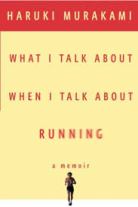
What I talk about when I talk about running

It has been a while – this is a book that gives the urge to do a review (or a recommendation).

“What I talk about when I talk about running” by Haruki Murakami (村上春樹) is a memoir of the author about his marathons; it is the casual twhat I talk abouthoughts of the author along with what he thinks and feels for running It is a book where the author wants to share what running means for him as a person.

This book covers his 4-month preparation for the 2005 New York Marathon, at the time when he is around 55 years old.  At times, he goes back to his first-ever experience in Athens, or at Tokyo’s Jingu Gaien Gardens, or the 62-mile run in a day or the Boston Marathon.

As Mr. Murakami closes his Jazz bar, and takes up writing full-time, he gives up smoking and turns to running to keep himself fit.  In 1983, he had his first –ever experience running (nearly) 26 miles in Athens gruelingly under extreme hot condition.  He was able to run the whole course by himself.  His immediate reaction was not one of pride, but one of relief that “I don’t have to run another step. Whew – I don’t have to run anymore”.   Since then, he has run a marathon every year.

Running for Mr. Murakami goes way beyond keeping him physical fit, most of what he knows about writing fiction he learns by running every day.  It helps him to crystallize the important quality of a novelist : talent, focus, endurance and patience to rerun marathonspeat the process again and again to train willpower.

What makes this book special is not just in the training and the story of his various marathons, but also in his writing style, and the parallel that the author is able to draw among running, writing and living.  He brings a refreshingly vivid account of his thoughts, as he experiences in his marathons.   If you are in middle-age, there is that additional appreciation on the bit of his struggle, when he has to accept below-his-expectation result, or being passed by other runners in some last stretch of a run.

Whether you are a runner, a to-be runner, or not a runner, you would enjoy this book.

I not only got inspired to run, it makes the bike work (to get rid of knee pain)  in a gym very enjoyable while reading the book.

Leave a comment »

Transition out

How often are we in situations with a current job and another job waiting? I call it luck.

Come to think of resignation, I have only done it once before.   Back then, it was different outlook towards life – leaving a reasonable job in a big company and figuring out what the next job would be, after three years of working.  As the years go by, we have more responsibilities and more need for security, than in the younger days where the (perceived) opportunities were abundant. transition

Some says it is better to do resignation on a Monday than a Friday, so as not to upset other’s weekend.  That is thoughtful.   As simple as “I have taken another offer”, it is a delicate situation to do it without hurting feeling, and exit with a decent sentiment on both sides that may cross path again.   Whatever one feels about the company, the reason for departure, if asked, is better expressed by the excitement in the new opportunity.

As to the question “Are there something I can do?” –  If a person informs the supervisor about a job offer before accepting, there is a fair probability in the department of retention.  In situations that the offer has been accepted, it would be less chance the person would change mind.

When the resignatSelf-Confidence-GSalam.Net_ion is accepted, the discussion of last day would be the final piece of puzzle.   How do we settle any gaps?  Guiding the discussion towards “what needs to be done?” would be a lot easier than answering “when would you leave?”  It is simply a matter of writing up the areas of responsibilities and how long the transition could take if a warm body is available.

How do we break the news to others?  For the few close contacts, a personal update would be nice; otherwise, better to leave it to the boss.  The news network is powerful.  No-one is indispensable after all.

Leave a comment »

So what is after interviews

The imminent possibility of a job offer, after rounds of interviews, is weird territory.  It is exciting, it is huge boost to self-belief; it is also tantalizing.

It is a road much less traveled.  Many go through phone interviews and never heard from the recruiter agdream-job-nowain.  A small number of phone interviews, ends up with onsite interviews, and even that often end up not going anywhere, other than another experience. In an even smaller subset, there is a call from the recruiter informing “you get it”.    Like a tennis tournament, there is only one person getting the trophy; the early rounds are resumes, cover letters, email, maybe phone interviews; and the latter rounds are equated to on-site interviews.  Disappointing as it may be, losing in early rounds is less damaging than losing a close final. .

How would one live the days, when the recruiter tells “you get it” and “you would be presented an offer a few days later”

The first moment of knowing is huge and is among the moments of life, not much different from receiving an admission letter from the csmiley faceollege of the top choice. The heart would beat at a rate in par with where the position and the company rank among the wish list.  The excitement is followed by a challenge to focus on the present.  The mind, wonder towards the new world, presents an uneasy barrier to stay in the present.  Not just that, it draws a different orbit for all future meetings and future due dates at work, with many of those futures you would no longer make happen.  Along the way, there are questions and doubts too – “would there be change in the decision?”; “what would the terms of offer be?”; “what is the decision criteria to accept, negotiate or deny?”; “would the new position warrant a change”; “what are the adjustment and adaptations required?”. Until the final decision is needed, it is not always obvious on how much we fear or embrace a change in landscape.

The more excited the opportunity, the tougher this transitional period could be.  It is stressful but a positive kind of stress.

Leave a comment »

Another year

Yesterday marked the 2nd anniversary since I left the company of more than twenty years.  There are different types of relationship, not just with aCupcake with Two Candlesnother human being. There is relationship with a country, with a company or with an organization.   Whatever it is, it takes some courage to get out of a long-term one.

The first year often feels more dramatic.  That drama dims a bit when new experience starts to take its root.  Time is the mother of forgetfulness.  As things move further in their rear mirror, it establishes more clarity on how those past experiences have become part of the journey, which shapes our values, practices, and perspective more than we think.

Back working a full-time job provides some routine. It is quite an attractive experience, to work in a company hundred times less in number of people and hundreds times less in revenue, in a different industry. I am lucky in the transition from high tech to health care industry, with some real successes while not getting into long hours or commute nightmare.  Alooking for sunshine half dream comes true may turn out to be different from the imagination.   There is something missing in reality, a different reason on different days.  It is like a bird in a tree-hopping mode, before sensing the right place worth to settle down again. I receive a good advice to write a new description of a dream job, which I believe applies to all job seekers.

For many job seekers, finding a job is a full-time job.  For those with a full-time job and looking for a change, itis like working one and a half job, probably cannot afford as much time on cover letter, company research or interview preparation.  It is a distraction to existing position; on the other hand, a person, desiring better opportunities, is often more proactive, in better mentality and has higher standard in their output.

The MOOC (Massive Online Open Courses) continues to be the gold mine to find new learning and it seems surprising that it has not gone to the mainstream education yet, especially college cost is so formidable.  Among the courses, the “United States Health Policy” offered by Harvard converts a seemingly laborious topic into rich content and enjoyable sets of lectures.

Among the few books read, this is the one that I would read again – “Man’s search for Meaning”, a 1946 book by Viktor Franki chronicling his experiences as a concentration camp inmate during World War II, and his psychotherapeutic method.

The highlight of the second year has rightfully been the almost month-long summer trip to Hong Kong; and all the gatherings with family and friends.  It takes another adjustment to get back into the work groove as it ends.


Leave a comment »