oliviatamccue

about everything, anything or something

More on Free Online Courses

Like anything good, soon some issue may be reported.   Is it human nature?

I am referring to the Massive Open Online Courses where a number of prestigious Universities (Harvard, Berkeley, MIT…) are putting up college courses to the Internet for FREE and for the WORLD audience –  WORLD is the many countries on earth not the WORLD in the world series of North American baseball league.

It paints the vision that when the model matures, the potential to dramatically reduce the cost of education and make it available to many more folks of different backgrounds and cultures.

NOT SO QUICKLY.online learning

Recent reports start to reveal reservations from professors of other universities on the model.  What exactly is the concern?  It mentions the implication to professors, effect on face-to-face education, student honor code, etc… Maybe the real concern is about the CHANGES for those in traditional education.

So for now, the free online courses work well to satisfy those who want to learn; it could be a long road, before it can offer college degree and be considered as a rival to the traditional form of education.  BUT technology tends to have the side effect of causing changes to happen fast, we would see in a few years.

Talking about SIDE EFFECTS…. There are also positive side effects from the online courses.

I completed the “Software-as-a-Service” via EdX.org and am in the last week of “Introduction to Data Science” via coursera.org.   These courses have unofficial enrollment figures in the scale of tens of thousands.

To enable the student to do and submit our finished work, we were given tools like Heroku (for web application deployment); like Tableau (for data analysis), and MapReduce etc…

These tools are free to be used, and honestly, they don’t scale up with a sudden increase of 40,000+ students.

What is the win for the tool providers?

Without any paifree_online_courses-292x300d professional testers, these companies get many free testers, working hard on the tools, and reporting issues.

Even better – their customer base grows by leaps and bounds through the collaboration with universities and the free online courses; and the students become their advocate if the tool works!

There is something to gain to offer something for FREE!

Leave a comment »

Byakuyako(白夜行) by Keigo Higashino(東野圭吾)

How difficult is it to transgress boundaries of cultures and languages?

Popular Japanese author, bestselling book series, award winning, TV series produced with high ratings and sold overseas, movies made and remade in US; yet none of his books has an English translation.

This is a book review on his debut to become a vastly popular author of many books.  I read the Chinese translation of the novel.

This is a novel of many twists, depicting mind-boggling series of criminal events and the dark sides of the human minds.  It starts with a mysterious murder of a pawn shop owner at a desolate building where kids take the vent area as playground.

The boy of the pawn shop ow41MFpKHi5HLner, Ryoji, 10-year old, is detached, and has maturity beyond his age.  He lives under the same roof to witness the affair of his mother and the pawn shop assistant.  Soon, the murder was followed by another death of its suspect.

The girl of the suspect, Yukiho, another 10-year old, lives with her single mom who betrays her daughter for money. Yukiho has beauty and grace not matching her poor upbringing, was taken in custody by her aunt who teachers tea ceremony and flower arrangement.

Ryoli struggles in his life – been a pimp, a producer of illegal ATM card, did pirate software, a computer shop owner.  In the whole book, there may be only two times that he reveals himself, once to his partner on their last conversation that “his life is like walking in the white night”.

Yukiho grows up to be a classy beauty, popular in schools, married to a well-off white-collared man, became a self-made boutique owner, remarried to an even richer family.  She has money, fame, beauty and her charm works on everyone with the exception of one man (Kazunari).  Her life is smooth; yet she is surrounded by mysteries and evil happenings to people who are in her way; and she does not reveal her real nature. “She does not live under the sun and she relies on other types of light to live.”

The detective, Junzo, could not let go of the first murder case at the desolate building.  He is convinced the crime has not ended which drive his relentless effort in the next 20 years to stop it.  Yet, for each of the criminal events, it unfolds the dark side of both the criminals and victims, alike.

The second half of the novel folds the many seemingly unrelated events together. While Ryoli and Yukiho never have a direct dialog in the whole novel, they seem to be borne to mutually dependent on each other.  The criminal events, delicately plotted by Ryoli, are all for the benefits of Yukiho.

As detective Junzo unties the knots of each criminal event, in Ryoli’s escape from the pursuit, he accidentally kills himself during the opening ceremony of another boutique of Yukiho.   And facing the dead body, Yukiho replies to the detective that “she does not know this man”.   That goes her last bit of hope, genuineness and warmth.

The story was made into popular TV series in Japan and movie in Korea.  While in the drama, the relationship of Ryoli and Yukiho is described as lovers.   In the book, their relationship is one of the “symbiosis”, as “shrimp gobies” and “pistol shrimp”, where they live different lives, and yet dependent on each other for survival.

Why would both Yukiho and Ryoli not able to walk under the sun?  Why would Ryoli do so many things for Yukiho?  What is Ryoli’s redemption?  Who is the real love of Yukiho?

These questions are not directly answered in the book, yet, the book would leave you plenty of food for thought.

This book has received a number of literary awards.   I hope you would enjoy it as much as I do.

Leave a comment »

Surviving a New Job

istockphoto_11036314-new-job-next-exit1

Transition to a job in a new company is at times analogical to a migration to a new city or even a new country if it is in a different industry.   It is expected that each company speaks its own language, has its own set of acronyms, and not the least, its own set of culture, and attributes of top performers.   There could be tons of commonality, just like each spoken language has its vocabularies for “thank you”, “please”, “can do”, one just needs to find the mapping.

Here are some thoughts on surviving the transition:

–  Say “Yes”.  There are many situations that can start with a Yes, but with a different answer at the end.

– Develop questions to ask.  “Asking the right questions” is half way getting the right answers.   Good questions are those that can help others to think through and come up with answers.

– Don’t be bogged down by unfamiliarity of acronyms – we don’t understand every word either in our native lI love new jobanguage.

– Add values whenever opportunities arise.   This is where credibility starts.

– Find common grounds and/or objectives.  This helps teamwork and unity.

– When things do not make sense, the new company has the benefit of doubt that there is different way of doing things.

– Avoid criticizing people and process.  It does not make you an effective player.

– Convince yourself people are smarter than the problems you see (if nothing else, they know the company and environment better).  It can be done with an open mind.

Leave a comment »

Istanbul – Memories and The City

A wonderful book and yet I am a bit reserved to recommend to my friends.

The book “Istanbul – Memories and the City”, by Orhan Pamuk, is a sophisticated story of the author and the city of Istanbul with deeply weaved content of how the author seeks his own identity.   Blending reminiscence with history; personal story with portraits of poets and pashas (rulers), parallel self journey with the melancholy of the city in its poverty, ruins  & the ever gone glory of the Ottoman Empire;   it takes effort to read and appreciate the masterful unfolding of the reminiscence.

The book presents a unique portrait of the city Istanbul, and yet it is not for tourists looking for pleasing sceneries.  It starts with the author’s memory of his childhood in a communal apartment building, the subtle relationship of the families in a rapidly fading bourgeois family in Istanbul and the failing relationship of his parents.   Central to the theme are the ruins and the melancholy of the city, since its fall from glory, from the Ottoman Empire era.  It persistently describes hüzün (melancholy) in the many Istanbul residents’ character.

The chapters on the Turkish poets and writers are hard and drilling; it parallels the author’s own struggle in all his school years, the inferiority to his brother’s success; and how painting has been his source of success; and his loss of identify when the passion of painting deserts him.  The breakdown of his family: death of elders, separation of the parents with his long journey in finding his way parallels the ever decline of the city, the city’s melancholy.

The chapters on the author’s childhood, the relationship with his brother, the relationship with his father and the fight with his mother are meticulously constructed with depth and touching detail; revealing the breadth and depth of the storytelling talent of the author.

I particularly enjoy the finishing touch of the book in the last sentence with a confirmation in finding his own way.  It drives home the memories and the melancholy with a high note of positivity; and leaves an interesting temptation for a re-read of the book.

Leave a comment »

Employee Engagement (I don’t mind going to work if not for the long wait to get home)

For those who have worked in big fortune 500 companies, employee surveys are no new terms.   Are surveys the best way to gauge employee sentiment?  And for companies not doing annual survey, how can we tell?

While it is hard to see the overall employee engagement, it is more straight forward to figure out the employee morale of the immediate organization.  There are a few indicators that could be telling.Monday blues

  • Do employees show interest, pretend to show interest, or not pay attention in Staff Meeting?
  • Do the employees bring new ideas outside of their area, new ideas within their area, or no idea whatsoever?
  • Do they show enthusiasm or boredom in topics?
  • Do employees share good tips, best practices with each other without being asked?
  • Is there a sharp increase in Work-from-Home time and Early Dismissal when their bosses are away?i-love-my-job
  • Do the employees own company stock?  (This is probably harder to find out).

What kinds of organization would you join when the market is hot?  And when the economy is tough?

And what is the best fit organization for you?

Leave a comment »

seeing company scale in small matters

There is skepticism and probably a valid one on people moving across companies of very different scales in their career.    If moving across companies of similar size is like a move from a city to a city within same country, moving across companies of dramatically different size may be more like immigration to a new country speaking a new language with a different culture.

A generalization of differences based on company size is an invitation to different opinions at best.   How about these?

– Most companies using email, and often MS outlook email.  What would you say of the company size if outlook is using “first name” to locate people versus “last name”?

– Companies have news travelling so fast, that whatever news you share upstairs, it would be known downstairs before you finish walking downstairs.   Does this sound more like small company or a fortune 500?

– Is Gossip more common in small companies or big ones?

– Pace of work – many would say pace of work is faster in small company, I think a fast pace in a big company is like running fast with tons more consideration and a few pounds of weight on your feet.  If one can achieve things in a fortune 500 companies, probably the person can handle the pace in smaller companies.

– Big Minds, Small Minds.  Where do you find more people with bigger picture?

*******************

Sometimes, small companies hire folks with experience in big companies.  The idea could be that new folks, with big companies’ experience, could add scale, structure and process to facilitate growth.  Unless there is critical mass of new hire in senior enough positions, such a hiring strategy could backfire.   The new folks could find themselves going backwards because things in small companies tend to be achieved with varying qualities, through relationship in lieu of process; and change control process or change management process may not be easy to pull off.

1 Comment »

This is Clever!

First a disclaimer that it is not a book review, but an idea review.  It is CLEVER!

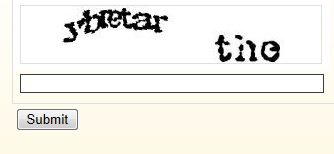
Have you heard of “CAPTCHA”?  How about “reCAPTCHA”?

If these new words do not ring a bell, how about “distorted text” which you have to echo to sign-in or register in a web site?

CAPTCHA sampleA CAPTCHA is a program to differentiate between a human and a computer.   It shows images with hard-to-read and/or distorted text in some sort of sign-in or registration pages.   One needs to recognize the text and then type the same, for the web sites (computer) to know that a human is in front of the screen.  Computer cannot read distorted text as well as human.  It is a kind of program used by many web sites for security, and to prevent abuse or hacking.

reCAPTCHA is a service to digitize books, newspaper and stuff.  Many articles have distorted text that is not recognizable by the computer.  Human being is better in interpreting ambiguity.  Through the use of CAPTCHA, many people have been helping to solve millions of unrecognized words everyday!

Here is the idea – the distorted text from CAPTCHA typically has two words.  Some part of the text, the computer knows what they are; and some part of the text, computer cannot solve the distorted text.  Guess what; if a user could type the recognized portion correctly, then the computer can collect what a human being thinks of the unrecognized portion.  Since many web sites have CAPTCHA, many people are helping with the recognition of these “unrecognized distorted text”.  The collective user input creates a consistent pattern.   The computer uses the pattern to solve the “distorted text” from books, newspaper or old articles.

If you would like to know more, do a search on “CAPTCHA” or “reCAPTCHA”;  and I wish you the Eureka moments of delight.

Leave a comment »

If you can face your job the same as your resume

Hobby helps to discover many more things.

I came across this beautiful poem “If” by Rudyard Kipling when watching Wimbledon many years go.   There are days I remember more of it, days I hardly remember; beautiful things do not get erased from our memory all together, or at least I hope.

In Wimbledon, when tennis players are waiting to come out to the Center Court to play (at times) the most important match in their life, how would they feel as they read this verse above the doorway –  “If you can meet with Triumph and Disaster and treat those two impostors just the same”?

This is a poem from a father to son with many “If” in life.    It is a beautiful poem to read regardless.

Anyone, with job seeking experience, probably  knows well to put accomplishments on resume;  and the persuasive power of PSR (Problem – Solution – Result) to use in interview.  Outside of networking, a good resume is still an important entry point to further a job application.

Here are my IFs for those returning to work…

“If you can do the job and keep in mind your resume, and treat those with the same rigor …”

“If you can face a problem, and pursue the solution, and come out with the result …”

And you’ll be a better seeker; or being sought after.

Leave a comment »

An English review of a Chinese Book – 李娜的“独自上场”

The autobiography 李娜的“独自上场”  took me trips to a few bookstores in Hong Kong before I finally got a copy, published in Simplified Chinese.  It was published in 2012, and I bought it in 2013.

This is the story of Li Na (李娜) –  “Alone on the Court”.

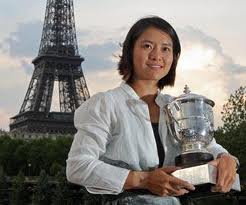
In Tennis, there are four prestigious Major tournaments every year – Australian Open, French Open, Wimbledon and US Open.   The dream of most, if not all, tennis player, is to win these tournaments!  Anyone, who wins one, could retire and conclude that he/she has a wonderful career.  Michael Chang won the French open in the year of 1989 at the age of 17!   Li Na has become a household name, after she won French open in the year of 2011, at the age of 29.  She became the first ever Chinese female to win a Tennis Major.  Tennis is an individual game, super-competitive, super-challenging to stay at the top and the player is his/her own boss.

Li Na has told a good story of herself in this book, and is as enjoyable as watching her game on the Court.

The book started with the big glory Li Na French openday after she won the French Open, and how the world has changed over-night.  Then stepped backward to her childhood, her early years in tennis, her family relationship, her retirement from the game, and coming out of the retirement, won the French open, and her changed perspective in life through lessons learned on a tennis court.

The chapters about the relationship with her father were touching and such reflective of family values for many Chinese.  Her father brought her to the game of tennis, and wished that she could become the Champion in the country.  He passed away when Li Na was only 14, and to not distract her from the game, she was not fully informed of his illness until too late.  For the first many years of her career, her father could well be the most motivating factor for Li Na in her tennis career.   This is such a reflection of many Chinese family where the children are typically not too clear on what they want, and the parents work awfully hard to lay a good path for their children;  And a contrast to the Western way where the kids seemingly know what they want at a young age.

Li Na’s early retirement from the game reflects a mid-way consideration of her own career – and she decided to quit the game and go back to University, with her boyfriend (soon husband).   She enjoys school and has been doing well!   While there were many influential persuaders, her return to tennis reflects more her own genuine confirmation of her career path.   And she plays more for herself, than a fulfillment of someone else’ wish.

Like many players, Li Na has to fight over injuries, which included 3 knee surgeries and recoveries.  Her chapterLi Na won French opens on her relationship with her husband is everything sweet.  It shows how much support he has given to her over the years; and how much Li Na leans on him.  In Tennis, a player is not only challenged with injuries, the up-and-down, the competition but how to stay motivated and stay hungry to win more!  It is a lonely and self-centered journey – a player is all lucky to have family members close-by, supportive and understanding.   Her husband is not only a loving husband, he was once a player, knows the game, has the role of a coach, a councilor, and an emotional outlet.

Li Na concludes the book with dosage of motivation and passion.  She still has her heart in the game, and carries the passion in her life journey.  Lucky for us, tennis fan, to be able to enjoy her matches for a few more years!

My Thumb up for the book!  And I hope that it would become available in other languages soon!

Leave a comment »

Leadership Gold – Book Review in less than 2 minutes

My Book Review of “Leadership Gold” in 1 minute 45 seconds.   Thumbs up for the book.

http://www.youtube.com/watch?v=ZaasnK6r_q4

3 Comments »