oliviatamccue

about everything, anything or something

Company Language


A couple of decades’ in a fortune-500 global company create an experience of what happens as a company grows; and how to work with people speaking different languages. It injects subtle insight to predict the growth potential of companies of much smaller size.    

There are many factors to decide if a company makes it to a giant such as the industry, the products, the innovation and the people.   Zooming in the people factor, a lot could be told from observing the culture, the leadership style, the performance review system. I find it reflecting when observing the language. Just like country has its language, company has its language as well.

  • Name-based language or what I would call “Peter, Paul and Mary”.
    • How does name-based sound like? “I have Peter working with Mary on this stuff, with Paul”. A quick clarification – It is not name-dropping of mentioning important people in conversations. Peter, Paul and Mary could be anyone and at times even the folks working for the vendors or customers.
    • What is the implication? Individual first, tasks/objectives to follow. (This is something that people in very large company miss, after a while, individual does not matter.   It could show only those individuals know the stuff, especially if the stuff is not very clear.   It is more about “who is involved” more so than “what gets done”.
    • Imagine there are multiple Peter, many Paul and hundreds of Mary as the company grows, it becomes as cryptic as listening to a language that one has never heard of.    As company grows, the “who” may need to be refined if not replaced by “who plus a clear what”.
  • Acronyms-based language.
    • Most companies have this. Neither Google nor Yahoo can help. Those acronyms are often unique to the company and have totally different meaning from what Google reveals.
    • Well, acronyms are like new vocabularies. If the context of communication is clear, then acronyms sound more like learning new word or a new accent of a language that one speaks.   This seems an easier portion to pick up than “Peter, Paul and Mary” and continues to exist no matter the size of the company.
  • Scientific or ambiguous language.
    • Is the language consistent in saying the same thing with the same words? Or is there a lot of thesaurus that creates a total different ways of saying? Too much variety could be an obstacle in massive and global communication.
  • Communication Style, whatever the language, how is it used?
    • Do people communicate (directly)? What is the distance that a message has to travel before reaching the target audience? The more direct, the shorter the distance.
    • Do they even communicate and do it consistently? Do the leaders take initiative to talk not just the earning results, but also the objectives and directions?

Each company has its own language. If one listens to the company language carefully, it helps to predict how far the language could go, how clear the communication is, and how much the people need to adjust the language if the company grows.

Is it worth to research on the correlation between company language and its growth trajectory?

 

Leave a comment »

Are you stressed? Positive or Negative

Just that I have got stomach issue, for the last few months, gets me this question a lot: “are you stressed?” stomach_ache

So what is stress?  In the dictionary, the definition goes from “importance attached to a thing”, “phonetics, accent or emphasis on syllables”, “emphasis in melody” to “physical pressure, pull or other things”.

It feels that it is something natural that would happen, yet many prefer stress-free life these day.  Is stress bad?   It depends on how you look at stress and whether you are looking for positive or negative.

What could be positive stress?

When we are nervous, tightened up, could not sleep well just before an important presentation, recital, competition and the like, that we just want to do everything to be at our very best.

  • Tennis players playing in Wimbledon final or athletes competing in the Olympic games
  • Job seekers attending interviews of a dream company or a dream job.
  • Or presentation on topics that are important to you or the audience is important to you.

I think the physical body can take in the stress a bit, and earn the satisfaction of achievement after.

What could be the negative stress? Well, think of the stress in the following situationsLosing-it-Stress

  • In a (company or country) culture that you don’t understand nor appreciate
  • Tiring people dynamics that are in the way of your goals.
  • Overwork on something that you don’t care about yet with unrealistic objective.

How to manage stress then?  Simply increase the positive and reduce the negative.

Assuming the stomach issue is related to stress, I am thankful that my stomach is offering real-time response to the state of my mind.  This is how the body and mind connect, isn’t it?

Leave a comment »

Daniel Suarez novels and news in Cyber Security

Wall Street titles “Daniel Suarez sees into the future” in the reviews of thriller/scientific novels written by the author.  “His books have a lot of readers with important jobs” and “… 2006 novel ‘Daemon’ describes lethal driverless cars and assassins outfitted with Google Glass-type goggles that help them track down victims”.   Both his debut “Daemon” and the sequel “Freedom” turn out to be very enjoyable read, especially for readers with interest in computer technology.

Thdaemone story stFreedomTMCoverMediumarts with the death of Matthew Sobol, the legendary computer game designer, and the homicide of two computer professionals working in the same company.  When Matthew’s obituary is posted online, a previous dormant daemon (computer programs running in the background detecting events and takes actions) activates his intricate plans.  The daemon recruits smart people through a popular computer game and form a Dark net community with a different way or organizing the society.  As new layers of his daemon are unleashed, the Dark net takes control of things including corporations through hacking of its data.  The fight between the security officers of the government and Dark net begins to reflect the malfunctions of the governments and underlying issues of current world order.  The detective Peter Sebeck, the IT professional Jon Ross and the national security agent Natalie Philips have to face the choice of fighting the daemon or joining it for the new world order.  And it leaves the readers to ponder whether this plan is evil or be the catalyst of a better and new world order

It is an aggressive attempt of the author to tell a very sophisticated story with the bold concept on how the around-the-corner computer technology can change the world and redraw the order.

Certain chapters get pretty descriptive on the computer security and hacking, the computer games, the driver-less killer autos, the Google-glass like goggles and the fictional data-curse ability; in spite of the technicality, readers could follow along the story plot.  There are moments that the Cyber world and the real world look two of the same; and there are parts that mirror what is happening in real world.

The message is clear on the very possibility of Cyber Attack that no longer only happens in fictional stories of Daniel Suarez.

Do you know how the internet security works when you see this “https:” vs. “http:”? Are they secured enough?  The vulnerability of our data in the computer world is becoming apparent, and it seems inevitable that needs to be a priority for many.

University of Maryland Records Hackedcybersecurity-abstract

Target struggles to contain Cyber theft

Google bolstered encryption to prevent snooping

Google interest in the authentication technology

Leave a comment »

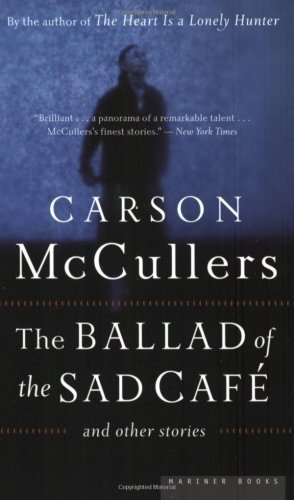
The Ballad of the Sad Café – Longing, Love and Loneliness

The Ballad of the Sad Café and other stories, by Carson McCullers, is one of those books on the 2013 Christmas shopping list of President Obama.  First published in 1951, it is a classic work for generations, with a number of different stories.

The sadcafeBallad of the Sad Café is the longest story among a human triangle in an isolated Georgia town.  The human triangle surrounds the rising and the closing of a café owned by Miss Amelia. Miss Amelia is a formidable and rich southern woman who has lived her life alone, except for a marriage that lasted 10 days.   All things that could be made by hands Miss Amelia prospers, including people who are very sick.   She could not be at ease with most people, other than the very sick, as people could not be taken into her hands and changed overnight to something more worthwhile.   With the appearance of her cousin Lymon, a sick hunchback, her store changes overnight to become a café and a gathering place for the town.  Miss Amelia and cousin Lymon falls into a lover-and-being-loved relationship until the return of her ex-husband Marvin, and then the triangle relationship evolves to the demise of Miss Amelia, the café and the town.

There are other shorter stories in the book.  “Madame Zilensky and the King of Finland” is about an intriguing discovery of the head of the music department regarding a new faculty member Madame Zilensky.  Zilensky owns an impressive reputation as composer and pedagogue; and yet live her life in lies.  “A Domestic Dilemma” is about the relationship of Martin Meadows and his staying-home wife who is becoming an alcoholic.  And then there is the “Sojourner” that tells the longings for love and belongings.

Carson McCullers use stories to share her acute observation of individuals, their relationship and their emotion towards love, being loved, lonelinlongingess, longing and other irrational sentiment; these sentiment may be missed but was plainly to be seen in the real world.   This is what she writes about love in “the Ballad of the sad café” – “love is a joint experience between two persons – but the fact that it is a joint experience does not mean that it is a similar experience to the two people involved.  There are the lover and the beloved, but the two come from different countries”.

These stories leave a lingering flavor and remind the relationship subtlety we often miss in our busy daily life.  If you enjoy reading intriguing stories with delicate and in-depth portrait of relationship and emotions, this one would be for you.

Miss McCullers is the author of “The Heart is a Lonely Hunter”, published in 1940 when she was 23; the book was later adapted into play and film.

Leave a comment »

Which way to go? Online Courses or Classroom

Recently, I have experienced the intriguing challenge of courses selection for the high school kids.  With increasing competition to the best possible colleges, high school kids tend to go for as many advanced classes as possible, often leaving fundamental classes like Physical Education, Civics and the like as second citizens.  Ironically, high school graduation requirement is not about the advanced classes, but the fundamental classes.   To achieve graduations and have an impressive transcript, some turns to summer courses, or online offerings.online-learning

How effective are the summer courses or online offerings?  Well, it depends on the objectives, which are not necessarily aligned among the students, parents and teachers.

If the goal is to checkmark the completion of something, online courses are probably the most effective. Fortunate or unfortunate, it is often what the students want for classes that are required but not what their interests lie.   The benefits of online courses are obvious, just to name a few, it allows different paces, it can be done quicker, it allows multi-tasking, it can accept a lot of students, and it is not bound by the physical location of the students.    A recent online class offered by Harvard related to Clinical Trials has over 20,000 enrollments, and from 175 countries; no classroom can cover so many grounds, not even close.

Yet, are the students learning as effectively?  This is where the teachers and parents are not as stoked.  Common doubts arise – “are the students paying attention?” or “is it even that the students taking the classes?”   After my completion of many online courses, these are not the only valid concerns either.  In online courses, it is also possible “the urgency of completion takes over the time and effort required to learn about the subjects”, leading to students paging through material rapidly, with “retrying quiz until correct” syndrome.     Some subjects just need the time and hands-on practice drill to get to that “eureka” moment.   Speedy completion is like building a house on sand.    So we cannot challenge the skepticism of some educators on the online courses.

The trend is likely to continue with more students opting for clchoice buttonasses online whenever possible, especially for those they do not enjoy.   There is a long way to go for the maturity of online courses to address the concerns.   And questions remain how traditional schools fulfill basic educational needs, like good citizen ship, good health and living habits, effectively.

Whatever it is, there are going to be more and more choices in education.  And that is a good thing.

2 Comments »

Reading “One Year Off” instead of taking “One Year Off”

Having gone through a career break some months ago, this book comes as a fitting read.  In a way, a career break puts things in perspective, and helps with a deeper understanding of our own self.

If you one year off coverlong for a break, but do not have the conditions to do it, how about reading this book “One Year Off” by David Cohen?

The “One Year Off” of David Cohen is more than a career break.  It is a break from his job as a successful editor, his home and his friends.  It starts with how he feels about life at forty years old – “Shortly after my fortieth birthday, I began to experience vague twinges of spiritual uneasiness. I suppose you could call it a mid-life crisis”.  He quietly starts to dislike his home, his belongings and dissatisfies with his own production of books; he longed for a big adventure travel.

This is the book that describes how he actions this uneasiness into selling his home, breaking from his publishing job, and taking a year off travelling around the world visiting over fifteen countries.  If this does not sound easy, he adds to the challenge as he does it with his wife, his three children at age 9, 8 and 2 years old.

For readers who expect something of a life changing spiritual experience, they could be disappointed.   Even though the author “leaving it all behind for a Round-the-World Journey with Our Children”, he and his family returns home with rich memories and experience of the family travelling together for a year.  It feels more like that he comes home to pick things where he leaves off with subtle life style adjustment, than a total life transformation.     around_the_world_80days

He chronicles his year of “freedom” as he visits countries in Africa, Europe, Asia and Australia.  His travel log is light, engaging and entertaining. There are dramatic moments too, like how he almost loses his daughter as they go surfing in Australia; or their hospital experience as his children encounter injuries.  The book has a bit of everything, from humor to romance, from petty family life to drama, from typical travel to adventures and dangers.   His good sense of humor is in good display with the flight from Johannesburg to Port Elizabeth, where after six flights, twelve hours later, and multiple failed attempts to land at Port Elizabeth, they are back to where they start.   There is also romantic moments as they tour through Istanbul of Turkey; there is moment of danger in the wild of Africa with the Hippo Attack; and his thoughts about life in the Buddha caves in Laos.

In as much as the book is enjoyable to read,  my biggest impression remains with how David and his wife pull this “stunt” off, with three young children; and enjoys so much their adventure.  What a travelling family!

Leave a comment »

2013 Online Courses (all for free) Transcript

Further to the College Tiers in Online Classes, here is a summary of the Online Courses travelled in 2013 when the year is still visible in the rear mirror:

  • Software as a Service, BerkeleyX (www.edx.org), 6-week
    • What better to get first-hand experience of the Online Course Idea than taking a class, so this being the first one.  There is also intent to refresh knowledge in technology and more interestingly, discover what is taught in Computer Science Major between now and then (then is a 20+ years or so ago).  Most of the course material is the video-taping of the campus lectures.  It is enlightening to see how things become easier and more fun over time, in writing codes to achieve something.   The professors are passionate, engaging; material first class, and homework quite a challenge.   This requires time and effort on textbook and homework (coding and troubleshooting).  As everything else, we learn proportional to the effort, rated this as A.SaaS
  • Advanced Software as a Service, BerkeleyX (www.edx.org), 6-week
    • The 2nd semester of the above class.   I  particularly like the lecture of the last week where it covers career advice; a bit of the “from the class to life” perspective of Professional David Patterson.  Rated the same, with the teaching team A+.
  • Introduction to Data Science, University of Washington (www.coursera.org), 12-week
    • Big Data Analytics is another growing buzz.  What better to go beyond day-to-day articles than taking a formal training and for free.  It is not an easy one, covering the data manipulation, analytics anbig data analyticsd presentation.   Some statistics can bring you to knees and needs a take-2 of the video viewing.  The homework is challenging and interesting (e.g. data mining of social media to see what States have happiest folks; or predicting the survivors of “Titanic”).  I learn a lot in this class.  Rated this as A, and the teaching team deserves A+ with their effort to connect willing students with industry projects.
  • Inter Professional Healthcare Informatics, University of Minnesota (www.coursera.org), 10-week
    • Going from High Tech IT to Health Care related areas, I sign up a few health care related courses, this being one of the first, with an intriguing course title.   It covers good overview but not much depth; it also provides quite a number of references to where additional information can be found.   Rated this as B-.
  • Take Your Medicine – the Impact of Drug Development, UTAustinX (www.edx.org), 8-week
    • Continue the path to take more healthcare related course.  This is one easy course, learn some good concepts, yet, not much of an impression.  Rated this as B.
  • The Science of Safety in Healthcare, Johns Hopkins University (www.coursera.org), 5-week
    • Sign up to get a better understanding of patient safety.  Impressive teaching team, decent course material, homework was overdue by the time of my late enrollment.  If it is offered again, would consider a retake to complete the case study and participate in online discussion.  Rated this as B+.
  • Fundamentals of Clinical Trials, HarvardX (www.edx.org), 12-week
    • Intend to further the understanding the drug development process in Health Care.  Just Harvhealthcareard’s name creates sort of a higher expectation going into the class.  This is one serious class on the scientific, statistical, policy, and ethical aspects of clinical trials research.  It provides a comprehensive overview of the design and analysis of clinical trials, including first-in-human studies (dose-finding, safety, proof of concept, Phase 1), Phase II, Phase III, and Phase IV studies.   For the case study, it is easy to see many students putting in a fair amount of effort in it.  This is a 12-week course, with some more weeks to go.  No rating for now.
  • Think again, how to reason and argue, Duke University (www.coursera.org), 12-week
    • This is one of the few classes that I did not finish.  I sign-up not for myself, but more from a school-aged child.  The first couple of classes are basic introduction to valid argument, sound argument and deduction;  as it goes further, it goes deeper into reasoning and argument, and then it really gets the head spinning to figure out the validity and soundness of complex argument.  This is serious class, and helps one to develop a sound mind to assess the arguments of politicians, salesmen, and more.  Solid class material and pretty difficult quizzes.  This feels like a pretty good class for those interested in the field.
Leave a comment »

College Tiers in Online Classes


college-clip-art-4

In my hiring experience, there is little correlation between the performance at work and the college the employees graduate from; my experience in meeting graduates from Ivy League schools is more often on how quick they

With MOOC (Massive Open Online Courses), many colleges are offering online courses, lasting from 4 to 12 weeks; some have the same syllabus as the campus offering and provide first-hand experience about the colleges too.  Most online courses are well planned, well online learningexecuted, and the willing students would learn the subject in proportion to the effort put in.  From the idea to the implementation, the MOOC is just an amazingly good deal with exceptional quality and wonderful staffing team behind each course. let you know their school.  Yet, when it comes to searching for colleges, most of us chase the highly ranked colleges for ourselves, for our kids.

Maybe it should not come as surprise that online classes vary in quality.  And maybe it should not even be surprise that the Ivy League Colleges offer classes with higher standard.

  • There is correlation between quality and the ranking of the colleges in the professionalism, the homework challenges, the case study, and the level of difficulty of the course.  I particularly like those courses that have homework challenges like the Software as a Service course offered by Berkeley and the Data Science course by University of Washington; at the completion of homework, the satisfaction from that realization how the homework experience has guided the understanding of what is covered in the online videos.
  • Higher ranked colleges are stricter in their passing grades and have firm deadlines.
  • The more difficult courses have more active student participation in online forum, either asking each other for advice, or general feedback.
  • This is not necessarily obvious, but judged by the responsiveness of the teaching staff to student feedback and hiccups; I suspect the higher-ranked colleges have a far stronger supporting staff and deeper resources.

In spite of whatever cause-and-effect on how well the college graduates fare in the workplace, there is evidence that higher-ranked colleges offer better quality education with more resources; and well maybe better quality of students to begin with.

1 Comment »

Wild – from lost to found on the Pacific Crest Trail

I have recently enjoyed two books, both from remarkable women, in their memoir on how they find a new purpose after personal catastrophe.   Not that they are the kinds of book I seek after, but more that they sell pretty well,  and take up good positions in libraries and book stores.

The first one “Gift of Hope” by Danielle Steel with an earlier book review in October. If “Gift of Hope” is about courage, empathy, love and a voice for the homeless; this book    is a personal journey full of adventures, physical and mental challenges, at times crazy but more often  inspiring how a solo hike in the nature helps the author from lost to found.

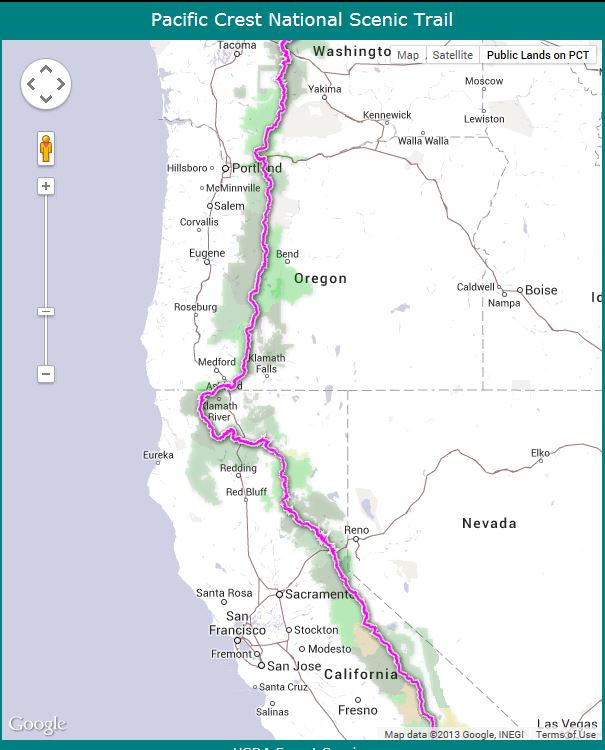
“Wild”, publishpacific crest trailed in 2012, is an honest memoir of the author’s eleven-hundred miles solo hike of the Pacific Crest Trail in the mid 90s. The solo hike took place after her mother’s death, her divorce from a caring husband, her drop-out from college, and that she ends up with heroine and an addictive boy friend, when she was only twenty two years old.  She has nothing more to lose and has made the most impulsive, yet life changing decision to hike the Pacific Crest Trail along the west coast of US, with no experience as a long-distance hiker.

Strayed faces almost insurmountable physical and mental challenges in the first few weeks; from the monster backpack to carry, the over-tight hiking shoes, the blisters and pain, to the pitiful money she has at each ppacific crest 2lanned stop, where she would receive a supply box and twenty dollars to last till next stop on the trail.  Yet she survives those weeks by herself, and often warmed by brief encounters of fellow hikers.  As nature is, Strayed and the hikers are occasionally forced to bypass snow laden path of the trail and adjust their journey – there is this metaphor how Strayed count her toe nails lost to the trail, at the end of the journey, the nature has claimed 6 and she keeps 4.

The first few chapters talk in length about the physical and mental demand; while subsequent chapters are more of a storied reflection of her own personal childhood, her relationship with mother, ex-husband and friends, and what she would like to become.  Her personal experience is captivating – at times heart- warming as she runpacific crest 3s into kind-hearted fellow hikers; at times dramatic as she loses her hiking shoe and walks miles on sandals; at times horrifying as she faces bears, rattlesnake and not the least, intimidating man with questionable intent; at times as she reflects her own past failures; yet, she forges ahead against all odds on this seemingly crazy journey of herself.  As Strayed gets further and further in her solo hike, things start to change.  She finds the courage to connect back to past; and she heals herself by facing her past while living her present and finding her future.

This is an inspirational memoir of an incredible journey of the author, both inward and outward.

Leave a comment »

Small town, big city, small and big company

Some movies describe life in small town as everyone knows everyone else; how gossip goes quicker than laser, the power of personal relationship and then come the plot.  My upbringing in city does not lend familiarity to life in small town.   In a city, it is more like people do not know their neighbor, or after saying “good morning” to each other, we are busy with our doings of the day.  After years, it is a comfortable habit in such detached interactions.

This small company gives me the experience of townsman.  At meal-time conversations, they talkSmallTown about individual co-workers and their years of history in the company – a bit like reading the People magazine.  And when things happen, they cite examples of “similar things happening in the past” and could get emotional. Behavior is not sophisticated and people could have open disagreements, yet there is a fair amount of intimacy, a bit like relatives who argue one day and reconcile later.  The decision making process may not be scientific nor result oriented, rather people oriented.  For people around in the company for a while and have the knowledge in the products, they could be pretty safe in the position no matter how ill-fitted they maybe for the current assignment.

If working in large cohongkongmpany is like living in a big international city like New York, Hong Kong or Tokyo, working in smaller company echo living in a town.  If folks in big companies talk about organizations, folks in smaller companies talk about people.  And if big companies make decision based on data and process and too much, smaller companies make subjective decision based on people they trust.  If big companies make each employee feel completely dispensable, does smaller company give employees more sense of importance?  If employees are used to constant reorganization in big companies, employees in this company still talks about re-organization of the company more than a year ago.

Such contrast creates the subtlety and the adjustment required to traverse from a large company to smaller company.

Leave a comment »