 Have you been an interviewer? As you prepare the questions, have you thought about how you would answer the questions as much as what you expect them to be answered? Sometimes, pondering the questions could be refreshing.
For me, interview is about communicating (positively) about the company and job to the candidates, getting the candidate to the natural zone, and conducting an assessment whether he/she will be successful in the position and future ones in the company.
If the company is big enough, the candidate may end up spending  more time doing other jobs than his/her first position. With that, listening skills, communication skills, self-management, versatility and ability to learn become as important as the current job fit. Among these skills, listening skills seem the most under-appreciated. It is a skill that seems to disappear over time; it takes lots of practice to keep the curiosity and humility. We don’t learn things by saying what we already know; we know new things by asking questions and seeking a new answer.
For the interviewees, there could be translations for some questions.
“How do you deal with difficult people?” Are you telling that there are difficult people waiting? It would be interesting to see the interviewer’s response to “how would you describe your coworkers?”
“How do you work with younger people?” Seriously, the question alone is on the borderline for age discrimination. It shows an inexperienced interviewer and the existence of young guns around the company.
“How do you deal with ambiguity?” You just tell that there is ambiguity or there could be more changes ahead.
“How do you handle conflict?” This is a difficult one, it is hard to think of a job that does not involve conflict, but maybe there is a bit more here.
“What gets you up in the morning?” “my alarm clock”? This says something that th e motivation is valued and needed.
“What is your passion?” This is really about what you like the most in the job?
How about these questions that I got from a friend? Worth to ponder.
- Am I making a difference?
- Am I being stimulated intellectually?
- Am I growing professionally?
 g nature that goes well with peanut butter, or ice cream or fruits or other companions. There are fries or pastries that are presented in the shape of a mini-waffle, which alone, improve their appeal. My best and worst waffles were both at a hotel near university campus. My best experience happened nearby the Harvard campus at Cambridge. The hotel was upscale where the ingredients were organic and carefully selected; the restaurant was filled with Harvard students with their families. It could be the ambiance, it could be the vacation appetite – the waffle breakfast was absolutely delicious. Fast forward a couple of years, I arrived at Ann Arbor near University of Michigan, just off a red-eye flight. Tired with little appetite and much time to kill, I was at this buffet-style breakfast served at the hotel. It could be the sleep deprivation, it could be the lack of diners, and it could be the waffles have been waiting for a diner for days, the waffle tasted so poorly that it was hard to reproduce. Waffle continues to be my favorite choice, though its carbohydrates make it a challenge now.
 nforgettable. The best, in my book, is served in this modest and absolutely cramped
 the highest priorities at some stages of our lives. If we can earn money, can we earn happiness? There was a song about “happiness” by the Canto pop superstar Sam Hui in Hong Kong years ago. Many of the lyrics still hold true to this day. The lyrics translate into:
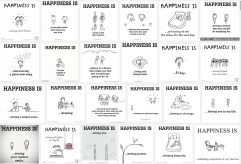 “Happiness is driving a car with a full tank”
 re time, it was impossible to avoid extra persons in the background. Many desserts were on display at the refreshment tables, from brownies, macaroons, cupcakes, banana bread to different types of cookies. The sugary booster was fitting for the graduate students as they got ready for a night-out. The school bus would take them to a secret place and they would not be home until next morning. Is this also an experience for families to be ready for the many more nights ahead without the child sleeping under the same roof?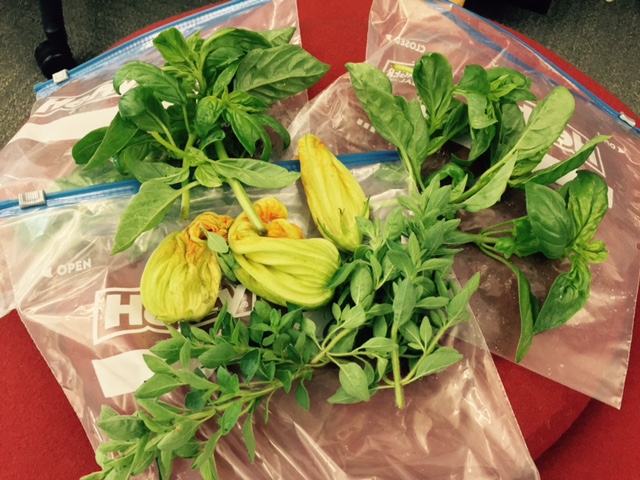
 There is no lack of encouragement to ask many questions. That sometimes translates into effort to overcome a self-inflicted intimidation factor as people around are smart and young. The laissez faire culture nurtures self motivation and some never-enough sentiment though freedom also breeds insecurity and alignment issue. In comparison, the status report and weekly progress report, adopted in traditional companies, give more gravity, even it becomes counter-creative over time. A majority of hard-core engineers in a house don’t make much of a social environment, nor business-savvy organizations.
 The longing of a dream is gone at the same time when the dream is realized. Friendly co workers warned, with certainty, a plateau would be ahead, and likely a sense of disorientation for a period of six to twenty four months (or forever). It is a new cycle to start from somewhere again. And one tends to morph into similar species of the surrounding. It reminds me of the beginning in another high-tech company many years ago.
 be a stressful month for college-bound students and their parents – a month to choose which college to spend the next four years. Such a decision is weighty for a teenager and more so for the parents. College is expensive in US, the four years of education involve hundreds of thousands dollars even for public school. We don’t make such decision often in our life.
 f the ‘site’ visit, there is the financial planning. College in US is outrageously expensive with 5-digits spending annually to cover tuition and boarding. If the parents do not provide, the students will be in a six-digit debt the day they graduate from a 4-year public college education. The more economic way to get a degree would be attending a 2-year community college, then transfer to a state college. Or they can crawl through thousands of scholarship opportunities, and that requires a level of motivation and hard work not often found in the teenagers of this generation. For parents who can afford to provide the 4-year, the debt-free students may not empathize the many years of parents’ hardwork to just afford their education.
 decision making in the same way as their parents who are thirty more years older. The beauty of a youth is that they can afford some costly decision. In between supporting a teen’s decision vs dictating a decision, a final decision will be made by May 1st.
 ne of my life to-do lists was checked-off. After many years of talking, we finally went to Indian Wells, California to watch the tennis master and to watch Roger Federer while he is still playing. Indian Wells are sometimes considered as the fifth slam in tennis, though not as well-known as the four major. The crowd was no less and this year more audience than that of French Open in Paris. It felt like Disneyland theme parks just two hours away from Indian Wells. There were lines to the food booths, lines to the stadium, lines for water refill; and things were pretty expensive. The whole atmosphere has been festive.
 for his win and sad if he loses. This was unusual when we are used to root for underdogs in sports. The weather was in the 90s, so it took some physical strength to be an audience, as matches went from 11am to beyond 9pm. We were able to watch Federer both days, plus many other stars Williams, Djokovic, Nadal, Nishikori…. We are looking forward to a return trip next year and yet to decide whether we go for the early rounds or finals.
 that the virus back then was more to take you down totally for a day or two days, then we were good again; now the virus seems to be more causing you discomfort
 re, not lack of confidence, just more devices; we look ‘forward’ often to our computer. We look around less. And even less to stop and smell the roses.
 this “Wellness Panel for Parents (of the teens)” with high school principal, assistant principal, a doctor and a psychologist on the panel, they share their thoughts on the many challenges facing parents and their teens. Many teenagers sleep far less than the recommended 8 to 9 hours. The pattern starts with a lack of enthusiasm in school (subjects), the stress to have to do well in grades, the mountains of homework and reading, puberty effect and the transition towards adulthood. These difficulties breed avoidance – when the school hours are over, the teens d
 ecompress through games, internet, napping or other things but school work. As they start on homework in the late night, they finish by early morning, and in 5 hours or so, they are on the way to school again, totally sleep deprived and often without a decent breakfast. In the intertwining relationship between physical and mental state, an unhealthy youth is more prone to an unstable mental state; and vice versa. Aren’t parents helpless in getting our loved ones out of the blues and maybe at times, be part of giving them stress?
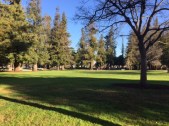 ework.
 years. Many people talk about peak at some years, and from then onwards, it is all downhill. There is that gradual loss of abilities, physical or mental or both; there is that reduction of learning; there is that reaching quota on things that used to grasp our interests. For those who remember the green monitor about thirty years ago, the computer aging process feels different. It becomes slower, left alone, and then is being replaced. Its deterioration is not as unpleasant as human aging amidst illness or suffering or the burden of loved ones.
 would think about it in future is most likely different from how I think about it now. Someone in Switzerland said of facilities to trade all the money with the life-long service to take care of you. When the day comes, the physical body and the financial asset go together.
 oliviatamccue