oliviatamccue

about everything, anything or something

February: Health

February is a short month with two festivals : Chinese New Year and Valentine’s Day.

Chinese New Year Eve, we had a lot of dishes for the two of us with leftover enough for the remaining week.  New Year Day, we drove to ChinaTown and served ourselves vegetarian dish. This tradition is hard to keep up in America, but we tried as much as possible.   Near Valentine’s day, we did a date-night cooking class with a 3-course meal and a creme brulee dessert.

IMG_20190228_102252

Many days in this month I suffered from stomach bloating.  My gastroenterologist suggests the low-fodmap diet (FODMAP = Fermentable Oligo-Di-Monosaccharides and Polyols).  In simple terms, this diet contains a long list of common foods suitable, such as rice, banana, lactose-free milk products, a variety of vegetables and fruit), and also a long list of common foods that need to be eliminated.

Over the years, my stomach complains once in a while.  There was a period when I was a teenager that my mom cooked “bird-nest” congee which was considered very good for stomach. Believe it or not, it was cured and did not come back for years.  This stomach issue came back a few years ago, and was cured after some months of controlled diet. When I shared my health issue, the most frequent reactions from others have been “are you stressed?”  In my experience, the causation effect between stomach issue and stress has not been as obvious, though the health issue creates stress when the bloating pain can come anytime and is sometimes limiting the day-to-day activities.

My theory is that when the stomach is at a sick state, even if it is the same food that uses to cause no problem, the stomach  would randomly complain about. I have this personal challenge to put the stomach back to a healthy state, so that it is not as sensitive to what gets in it.    Coincidentally, I read the “miracle of mindfulness” for inspiration of mindfulness, just in case some relaxation can help along the way.

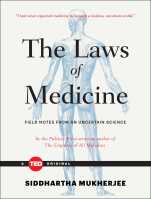
The laws of medicine

The Laws of Medicine: Field Notes from an Uncertain Science
by Siddhartha Mukherjee

I read this after the award winning book “The Emperor of Maladies” by the same author.  A small book, written years earlier, when Siddhartha was a young, exhausted and isolated medical resident.   In this book, he identified the three key principles that govern medicines.

  • A strong intuition is much more powerful than a weak test.
  • Outliers teach us laws
  • For every perfect medical experiment, there is a perfect human bias.

I am not giving the book away.  Siddhartha has the talent of telling stories and explaining principles that makes his book memorable.  This book is a must read, whether you are in the medical field or not.

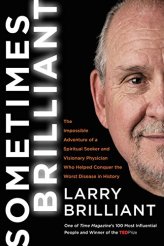
Sometimes BrilliantSometimes Brilliant by Larry Brilliant

Larry has been selected as one of TIME magazine’s 100 Most Influential People.   He was the  inaugural Executive Director of Google.org,[1] the charitable arm of Google established in 2005.  He became a co-founder and chairman of Seva Foundation, an international, non-profit, health foundation which has given back sight to more than 3 million blind people through surgery.

Decades ago, he went to India as a spiritual seeker.  His guru Maharaji called him “Doctor America” by his Maharaji, urged him to join WHO and prophesied the eradication of smallpox.   With an unwavering belief in the prophecy, Larry started this impossible adventure, which took him to WHO.   In this book, he chronicled how the team overcame the relentless social/political/business challenges to finally eradicate smallpox.   It is not only a victory of medicine but also the discovery of himself along the journey.

Leave a comment »

January: Happy New Year

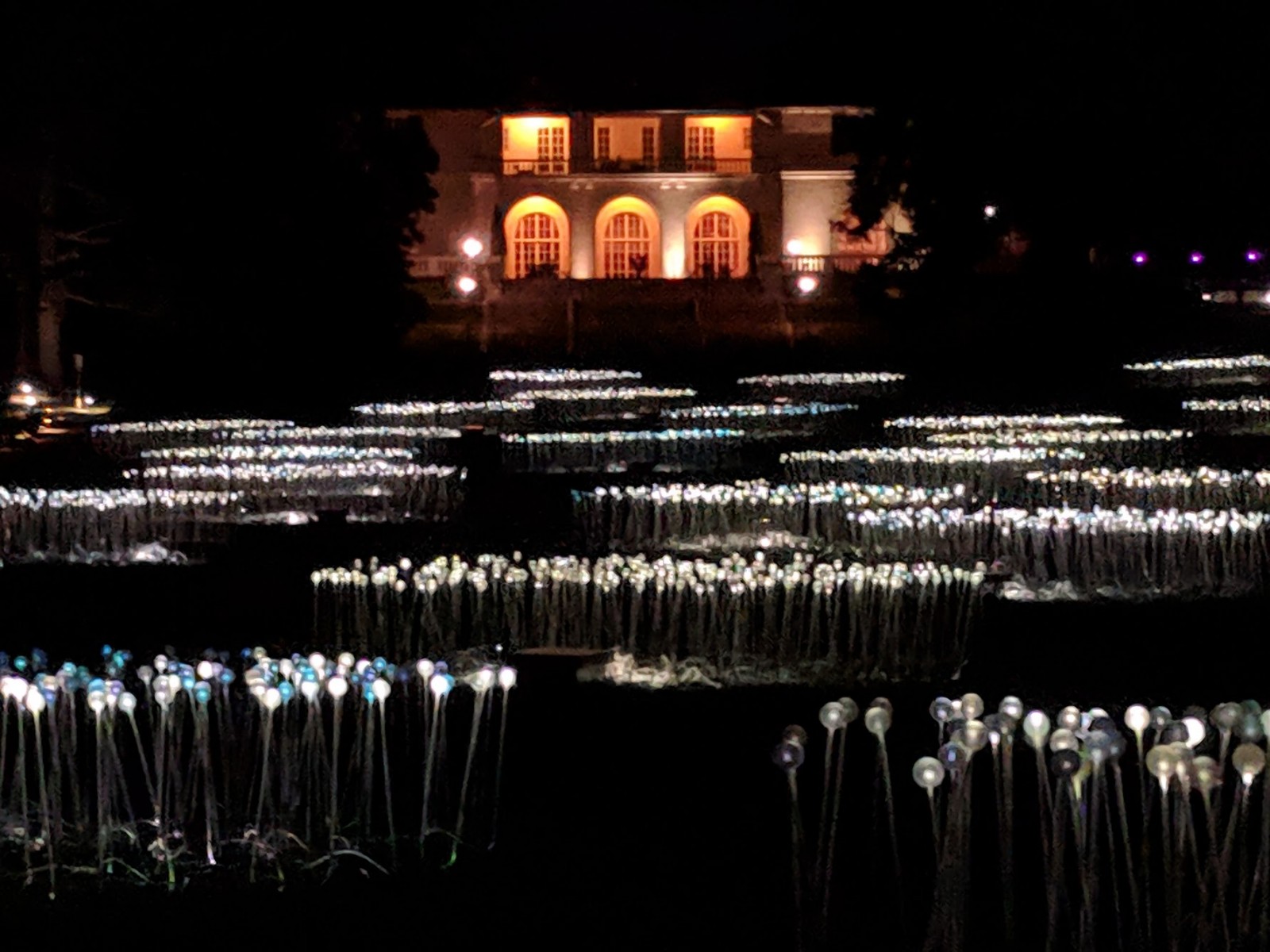
First week of the month, my daughter and I went to watch a beautiful lights show by the artist Bruce Monro. 

As the children went back to college, my spouse and I slid back to empty nester.  Australian Open came and gone, the miraculous 2017 and the slightly less but still spectacular 2018 did not repeat.  Towards the end of the month, we set up a raised garden bed which has been a gift sitting in the garage for years.  We planted the lovely herbs Rosemary, Thyme, Parsley, Cilantro, some Kale and some pepper seeds. The money spent on the garden soil, seeds and the plants could easily afford us a month or two of expenses in vegetables, not to mention the labor, the water and later the fertilizers.   This again reminds how little farmers earn, and yet play such an important a role in our society.

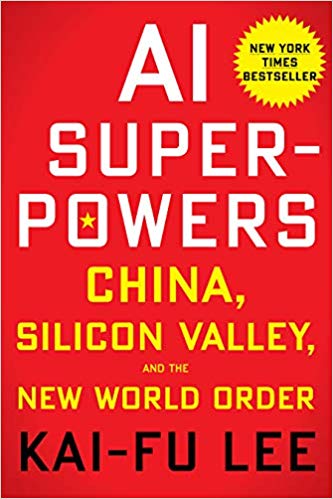
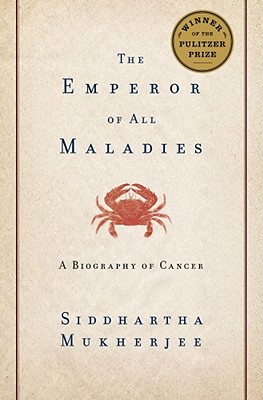
I finished reading two non-fictions.  The first book, written by ex-GM of Google China, covers and analyzes Artificial Intelligence (AI), a topic that everyone is curious about.  The other book, written by a physician and claimed the Pulitzer prize, covers a topic that people rather whisper about.


AI Superpowers: China, Silicon Valley, and the New World Order
by Kai-Fu Lee

The book has both the Chinese and English version.  I read the Chinese version.

Many of us are curious about “who would win the AI race?”, “how would AI affect the world?”, “how many jobs would be eliminated?”, and even further, “is human, as a species, going to become extinct?”  This book provides a comprehensive coverage of AI technology impact to the world, to the superpowers, and to each of us.

Once the GM of Google China, he decomposes the four success factors for AI: Data, Entrepreneur, Talents/Technicians, and Government; and provides a structural comparison how the two superpowers, China and United States, would compete with each other.   On a broader scheme of things, it provides a thought provoking analysis how AI would affect the society and its wealth distribution; and ends with a hypothesis how AI can play a role to enrich human life.

From his near death encounter with a deadly illness, the author reckons human future lies in our spirit of humanity and most importantly, our ability to love.

The Emperor of all maladies : A biography of cancer
by Siddhartha Mukherjee

How would a book on such a dire illness, win the Pulitzer Award?

The book is among the most engaging,  educational, and absorbing read of all the books I have read.   I can’t help but admiring how the author weaves narratives of the scary radical surgery, the poisonous chemo trials, the difficult battles against the tobacco industry and the serendipitous “invention” of mammogram and pap smear.

Far from brutally fearsome, this eloquent chronicle of cancer is full of humane spirit and surprisingly heartwarming, with its first documented appearances thousands of years ago, through the decades of battles to prevent and cure, to the latest gene mutation research of the illness.

Through the experience of Carla, a patient who survived, we cannot but realize the potential immortality of cancer with its prowess originated from the exact human capacity to grow, adapt spread and thrive.   It leaves us the question not if we will encounter cancer in our lives but when.

It ends with the author’s final meeting with another cancer patient, Germaine, who spent six years fighting, and finally found herself stare into an empty vault of resourcefulness and resilience.  Such is the chilly reality for the four-thousand-year-old war against the disease.

Rather than a defeatist, it leaves us with a profound insight into, and a deeper connection to the millions who has or will have an encounter with this emperor of all maladies – cancer.

Leave a comment »

October: Maui

Many use paper planner or e-calendar to manage their daily schedule.    These planners or calendars show every day with the same height and width.   For the past few years, January feels longer than December; even the short month of February seems longer than November.   A year feels more like a downhill slope, as the year progresses, it progresses faster. Such is my sentiment as I realize it is already November and people start talking about year-end already.  As we mature, we think of time differently.

We think of many things differently over the years.  Recently, I watched the live concert of Richard Clayderman.  I love his “Ballade pour adeline” which has been the opening theme of a few of my favorite radio programs in my childhood.   I relish the opportunity to watch him live and fulfill one of the bucket lists. But seeing him,  as an old man with skills far from his peak, cracks my childhood memory of his perfect image of a handsome, quiet and talented pianist.

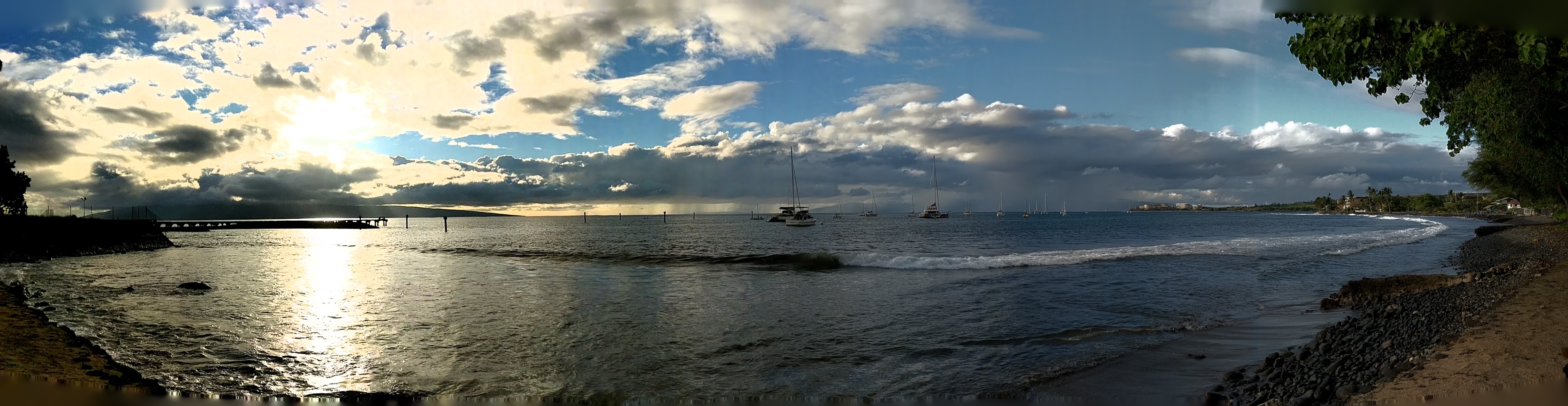
Some empty nesters ditch their home to travel around the world.  We are not there yet, instead, we spent a few days in Maui. The resort gave the two of us a two-suite bedroom with a full kitchen, a bathtub, a shower, and a freestanding tub.  Our initial reaction was to call our friends and our children; that of course did not happen. We had a great time in beach hopping, in snorkelling, in shopping and in meals.

The sunrise at Haleakala summit was otherworldly beautiful.   We were there an hour before sunrise, when the sky was dark and full of stars. It was cold; and was much colder with the windchill. The crater and an ocean of clouds stood between us and the horizon. We could not quite make them out as it was so dark.  On the horizon, there was that strange combination of greenish, reddish, orange and yellow color, not dissimilar to Aurora. At that moment of sunrise, it was surreal and it was beautiful as the native started singing Hawaiian songs, then we gradually saw the crater and the cloud in between us and the sunrise.

******************
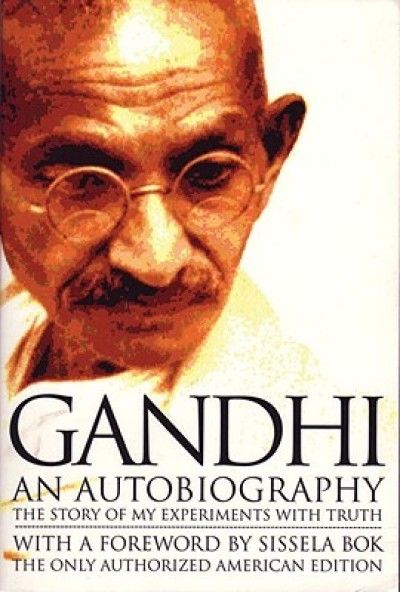
Gandhi
An Autobiography: The story of my experiments with Truth

I found this book in a used book sale.  Autobiography is not among my favorite genre.   Gandhi was on the headline often in my childhood, I don’tquite remember the headlines, but it was quite miraculous how he led India to be independent from the then British Empire without a bloody battle.

Many remember his Satyagraha (active nonviolent resistance) .   This autobiography does not cover much his political journey. He recounts his younger days, his family, his early marriage, his relationship with his wife, his study in London, his experiment with his diet,  his experience with different religions, his experience in South Africa fighting against discrimination and fighting for the indentured Indians.

Albert Einstein said of Mahatma Gandhi “Generations to come will scarce believe that such a one as this ever in flesh and blood walked up on this earth”.  How true!

In as much as I admire his achievement, I am even more inspired by his persistence to the goodness, his experiment with truth,  his respect and love of all the people around him, his uncompromised level of ethics and integrity as he fought for the justice of the poor,

It has been such a treat to read a few pages every night, and see the world in his eyes.  It is absolutely humbling and inspiring.

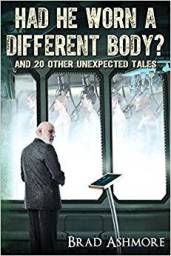
Had he worn a different body?
By Brad Ashmore

I am so happy that my ex-worker published his first book.   He used to live within walking distance and we ran into each other in the neighborhood, including one time we ran into each other at Stanford Shopping Mall busy shopping on Christmas Eve.  He retired early and we met up one time, he had a lot of ideas and projects.

His first book made up of  21 tales, each of healthy themes.  He wrote with creativity and originality; and the tale often has unexpected endings.  I enjoyed reading each story.

Leave a comment »

My Reading List in August

August has been a month of travelling for the family, I was in New York for a couple of days. With flight cancellation and delay,  I ended up spending more time in the airport than in the office. Later in the month, my family took a trip to Los Angeles and it was very enjoyable to stroll in Little Tokyo, Universal Studio and UCLA.


A Terrible Splendor: Three Extraordinary Men, a World Poised for War, and the Greatest Tennis Match Ever Played
By Marshall Jon Fisher

Whether you are a tennis fan, I highly recommend this book.  

‘A Terrible Splendor’ serves as a history literature as much as a book on the greatest tennis match played in 1937 Davis Cup, on the hallowed grounds of Wimbledon.  It was not only a match between world no. 1 Don Budge and no. 2 von Cramm. It was a match of America against Germany, democracy against fascism, on the brink of the World War II.   The humble hard-working Don Budge played for the pride of America while the aristocratic Gottfried von Cramm played for his life that a loss could descend him behind barbed wire back home.   And there was another tennis all-time great Bill Tilden in that era, an American surprisingly support the German team instead of the American team.

‘A Terrible Splendor’ feels like a prequel of “Strokes of Genius” on the Wimbledon 2008 final between Nadal and Federer as the greatest match ever played.  Just that it is hard to compare two great matches, it is hard to compare two books both on the “Greatest Tennis Match Ever Played”.  

‘A Terrible Splendor’ has more depth as the 1937 match had the historical significance that went way beyond sports; and the characters had the social struggle of the aristocracy, the working class, the gay community, and the economic crisis in that era of Berlin.   

The book absorbs the social and historical happenings in the athletic spectacle as the tennis matches played to its full five setters, and keeps us in suspense until the very end.  It is ultimately a tribute to the strength of the human spirit.


A Short History of Tractors in Ukrainian
By Marina Lewycka

It is about tractors, and it is not.  The novel is about a first generation from Ukraine to England, and the family dynamics through their journey from Ukraine to England.  When the recently widowed father announced his plan to remarry a Ukraine gold digger fifty years his junior, his two daughters need to set aside a lifetime of bitter rivalry to save him.   It turns out to be no easy feat as this Ukraine beauty leaves behind her husband and son in Ukraine, and will stop at nothing to pursue the luxurious western lifestyle that she dreams of. As the new marriage unfold, it unveils the never-talked-about family taboos, and the two sisters start to reconcile their differences.

I read not only about a novel, but how life has been in Ukraine for the last few decades.


Political Tribes – Group Instinct and the fate of nations
By Amy Chua

An insightful analysis how blindness of American foreign policy to tribal dynamics has caused us many mis-steps in Vietnam, Afghanistan, Iraq, Venezuela.    Alone among the powers, America is what the author will call a super-group, a group open to individuals from all different backgrounds while not needing its members to shed or suppress their subgroup identities.   As the 2016 presidential election result shows, there is a chasm between the tribal identities, the left and the right, and inequality between the country’s haves and have-nots. Could America be immune from the same tribal politics that have torn other regions apart?   Are we doing enough to approach each other to heal the deep rifts that divide the country?

An eminently readable book on the topic of tribalism and its influence not only on the international fronts, but everywhere of the world.

Leave a comment »

My Reading List in June

I read almost all kinds of books (well, still trying to finish a book by Nora Roberts who wrote over 200 romantic novels).  Reading a good book before bed-time is something that I look forward to.

Istanbul – City of Majesty at the crossroads of the world
By Thomas F. Madden

A compelling narrative of the colorful history of the City, as a historical center over a thousand years, as a capital to multiple empires, as a focal point of Christianity and Islam.  The author skillfully unpack the sophisticated history into an absorbing read. It is a perfect read for anyone who plans to visit Istanbul; it is as much a book about history as a delightful read.


The Four – Hidden DNA of Amazon, Apple, Facebook and Google
By Scotty Galloway

This book starts with a summary how these four companies become not only dominant, but also omnipresent.  The author scrutinizes these companies, and asks deeper questions on how their successes affect the society, affect the economy, affect the job market and affect each one of us; some of the effects can be disturbing – would there be much less jobs?  would the middle class be squeezed out, leaving only the very rich and the poor? It explores potential companies that may compete with these four; and lists the personal success factors that would get you to the cream of the digital age. This book gives a provocative look at these companies whether you agree with the author’s point of view.

Even if you are not interested in these four companies, it would be worth to check out the “Personal Success Factors” to assess how to make a decent living in the digital age.


Everything happens for a reason
By Kate Bowler

Life is going on well for the author, then at thirty five, she was diagnosed with stage IV colon cancer, facing imminent death.    This is her account of important people and events in her life, her religion, her family and her illness. In her darkest hours, the author keeps her humor, her bravery and her love of life; and continues to live courageously and to the maximum.

In the appendix, there is a short list  of “Absolutely never say this to people experiencing terrible times”

  • “Well, at least …”, “In my long life, I’ve learned that …”,”It’s going to get better, I promise.”, “God needed angel”, “Everything happens for a reason”, “I’ve done some research and … “, “When my aunt had cancer …”, “So how are the treatments going? How are you really?”;  

then a short list to try

  • “Can I give you a hug”, “Silence”, “I’d love to bring you a meal this week”,”I am so grateful to hear about how you’re doing and just know that I’m on your team”, “Oh, my friend, that sounds so hard.”

This book will lift you up if you or your close ones are going through terrible times.

Leave a comment »

Cover her face by P.D. James

Sometimes the passing of an author triggers our first read to her novels.  I read “Cover her face’ by P.D. James who lived her last day in November this year, at age 94.   She was an English crime writer and was well known for her series of detective novels starring police commander and poet Adam Dalgliesh.  P.D. James has three books on the top 100 crime novels of all time.

‘Cover her face’ is the debut of her crime novel and its character Adam Dalgliesh in 1962.  It details the investigations by detective ACover her facedam Dalgliesh into the death of a young, sly and secretive maid, surrounded by a family which has reasons to want her gone.   Sally Jupp is an unmarried mother, recently accepted into Eleanor Maxie’s household as a maid. She used her ways to seduce a romantic relationship with Eleanor’s son Stephen, and has earned herself haters more than friends.  In the morning after she announced that Stephen has proposed to her, she was discovered dead on her bed with bruises from a strangler’s fingers forever on her throat.  It is up to chief inspector Adam Dalgliesh to uncover the life of Sally Jupp, and who that murderer is.

Some crime novels have intertwined and sophisticated plot which invites the intelligent readersto join the detective work, such as the novel ‘Devotion of Suspect X’.   Some are more like the plot follows the characters, such as ‘The cuckoo’s calling by Robert Galbraith’.  ‘Cover her face’ belongs more to the latter category, it has a good plot, though the murderer could also be anybody’s guess and it is up to the author, or the detective Adam, to walk us through, at the end, how it plays out.

D. James, bring alive the characters, and offers a vivid landscape of the crime scene. There is so much to like about the writing style of P.D. James and its characters.

The story started with this poetic introduction

“Exactly three months before the killing at Martingale Mrs. Maxie gave a dinner party.  Years later, when the trial was a half-forgotten scandal and the headlines were yellowing on the newspaper lining of cupboard drawers, Eleanor Maxie looked back on that spring evening as the opening scene of tragedy.’  And what follows is her skillful portrait of her family, their friends and the community around.  The crime surfaces at the end of chapter 3, after much anticipation, followed by the debut of Chief Inspector Adam from Scotland Yard. P.D. James

Adam started the investigation with 1-on-1 meetings with each character.  His intelligence and experience is beyond doubts, there is little coverage on Adam as a person, yet when his thought ‘I have no son. My own child and his mother died three hours after he was born’ tells a lot when he was posed the question ‘Would you wish for such a marriage for your son?’ by Eleanor Maxie.  And as the story ends, ‘he knew with sudden and heart-lifting certainty that they (Eleanor’s daughter and him) would meet again. And when that happened, the right words would be found’.   It leaves a lot to uncover about the character in the novels to follow.

Leave a comment »

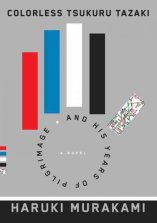
Colorless Tsukuru Tazaki and his years of pilgrimage

Aside from aColorless Tsukuru few classics, I prefer reading original novel to translated novel.  Why would one want to depend on the quality of translation?  Sometimes, the translated version feels like something amiss.   This book “Colorless Tsukuru Tazaki and his years of pilgrimage” by Haruki Murakami (村上春樹) recounts a remarkable story of Tsukuru, that shines from the original Japanese version to the English translation.  And how often is a book related to such a beautiful musical piece of the “Years of Pilgrimage” by Franz Liszt?

The main character Tsukuru had 4 of his closest friends (2 girls, 2 boys) in his high school at Nagoya. Just like their last names, his friends have a color and character of their own.  Tsukuru, as its name in Japanese implied, enjoys doing things and he loves (building) train station.  This group of 3 boys and 2 girls knitted such a tight friendship that transcended romantic possibilities common for youth of that age. As they graduated from high school, Tsukuru moved to Tokyo and his 4 friends staying in Nagoya for colleges; they relished their reunions whenever Tsukuru showed up in Nagoya.  One summer as he visited Nagoya, his friends did not return his calls, and when finally reached one of them, he was told that none would see him again.  He was disowned by the group and had no friends.   For the next few months, he gave up living and thought about death all the time.

Years later, he made a living in building train stations, had a few relationship, but none worked out.   In his mid thirties, he met someone who made him contemplate his (still) bleeding heart; and started on his journey to the past and to thColorless Tsukuru and musice far.

It is a story of discovering the past to mend the present.  It is a story of friendship, love, heartbreak and love again.  Just like many of his books, it goes beyond the storyline and is sprinkled with equally captivating expressions of deep feelings towards the relationships, towards the dreams and towards the life of the main characters.  As Tsukuru finds his group years later, he not only discovers why he has been disowned, but also many more, that the readers can resonate with.

Leave a comment »