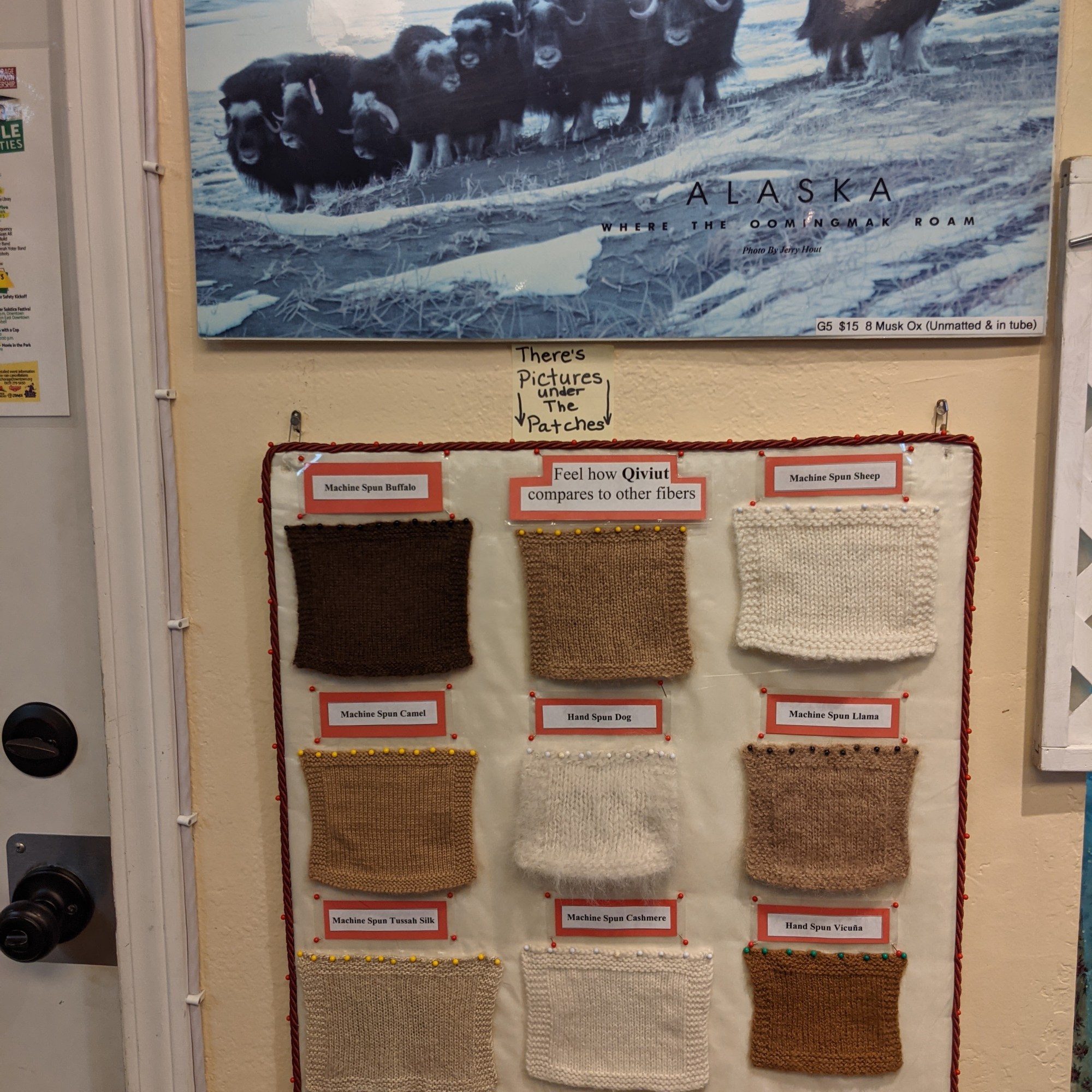
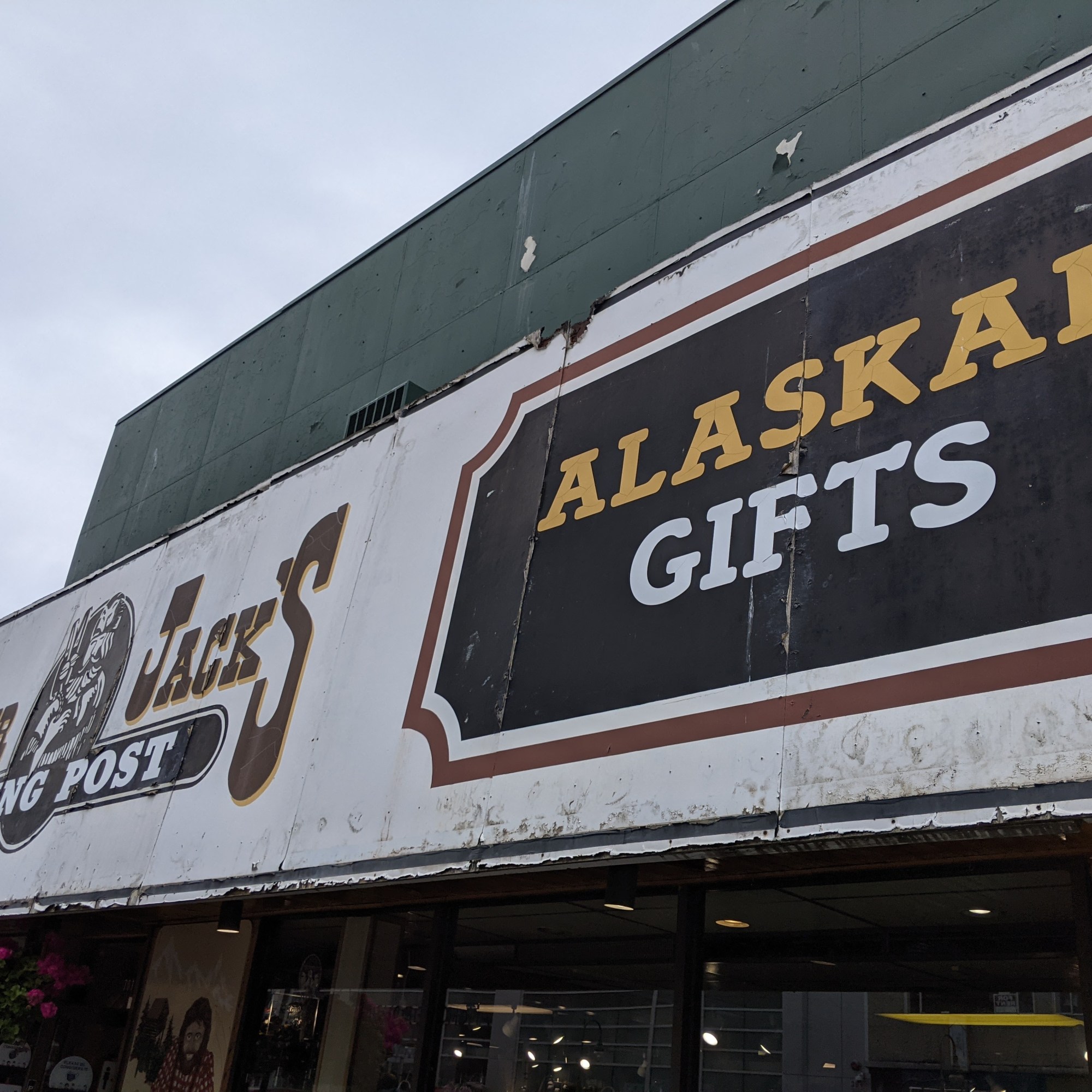
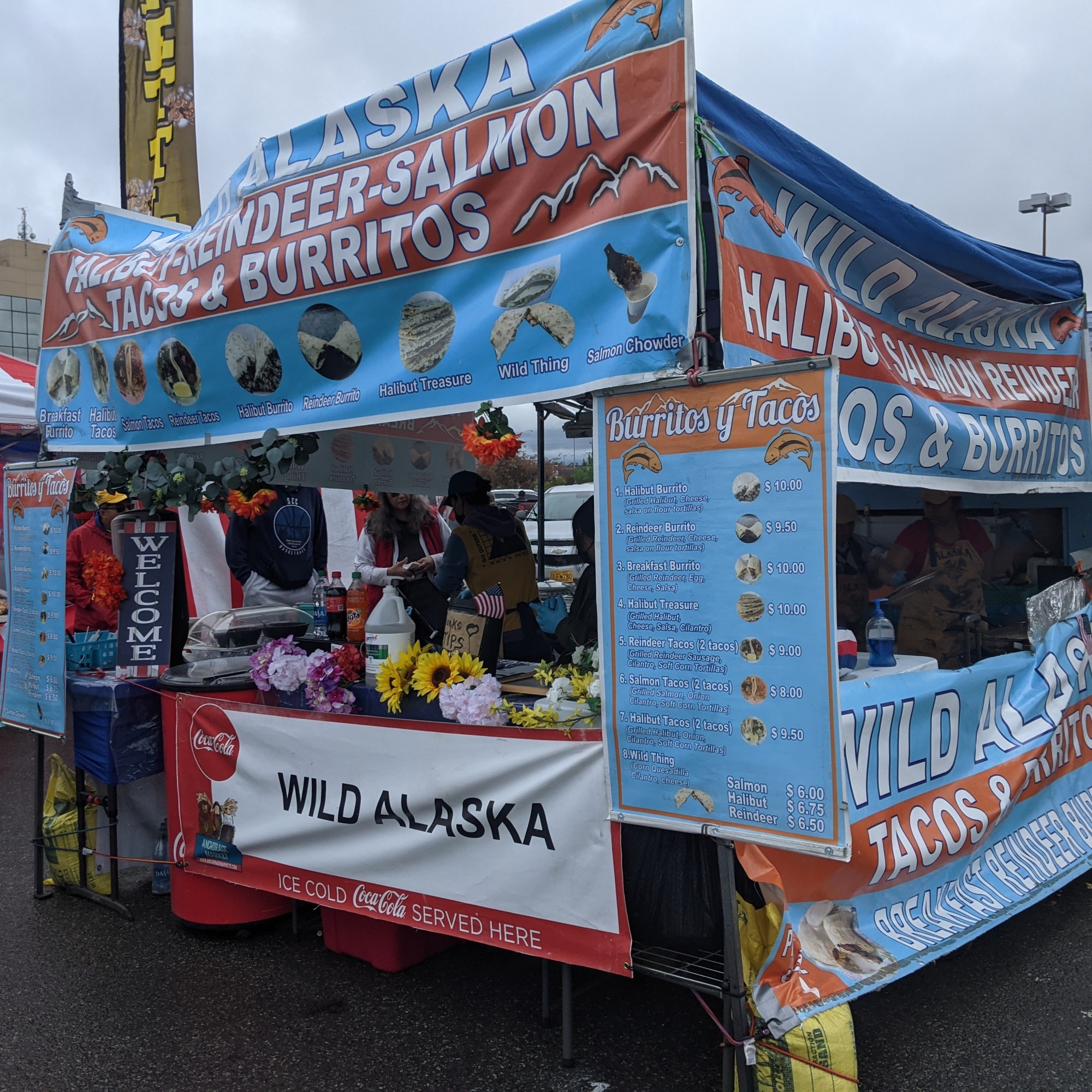
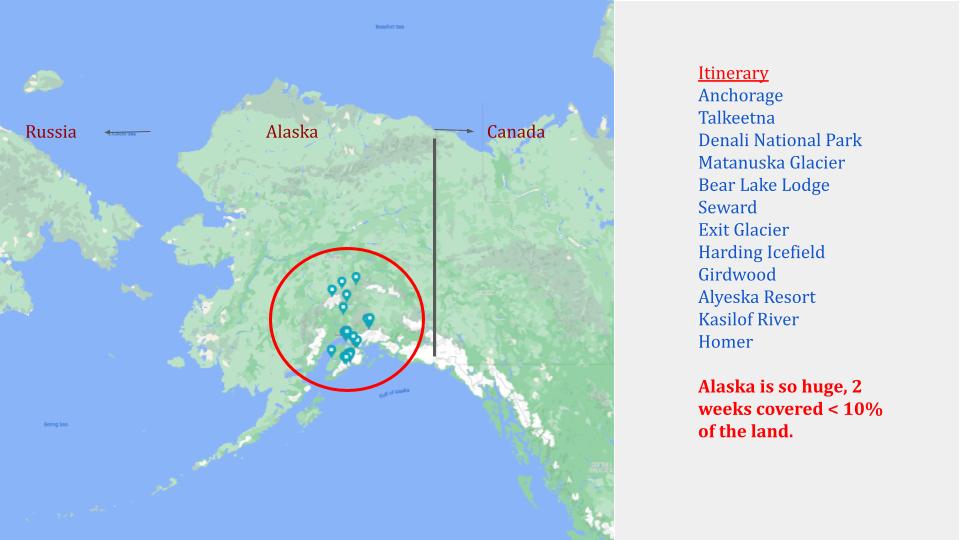
It was a morning of shopping activities, from the shops near the Anchorage port to the open markets over the weekend. The suspension of cruise business has taken its toll on the local shops, the streets were pretty quiet and most shops did not have much going on. From very expensive musk ox yarn, to eating reindeer tacos, to checking out the local artswork, it was an easy and enjoyable stroll, perfectly setting us up for a more relaxing tempo at our next resort at Girdwood.
Girdwood is less than an hour of drive from Anchorage. We have been up and down this highway a few times. It was such a scenic drive and at different times of the day, it shows a different version of beauty. We often stopped for picture moments.
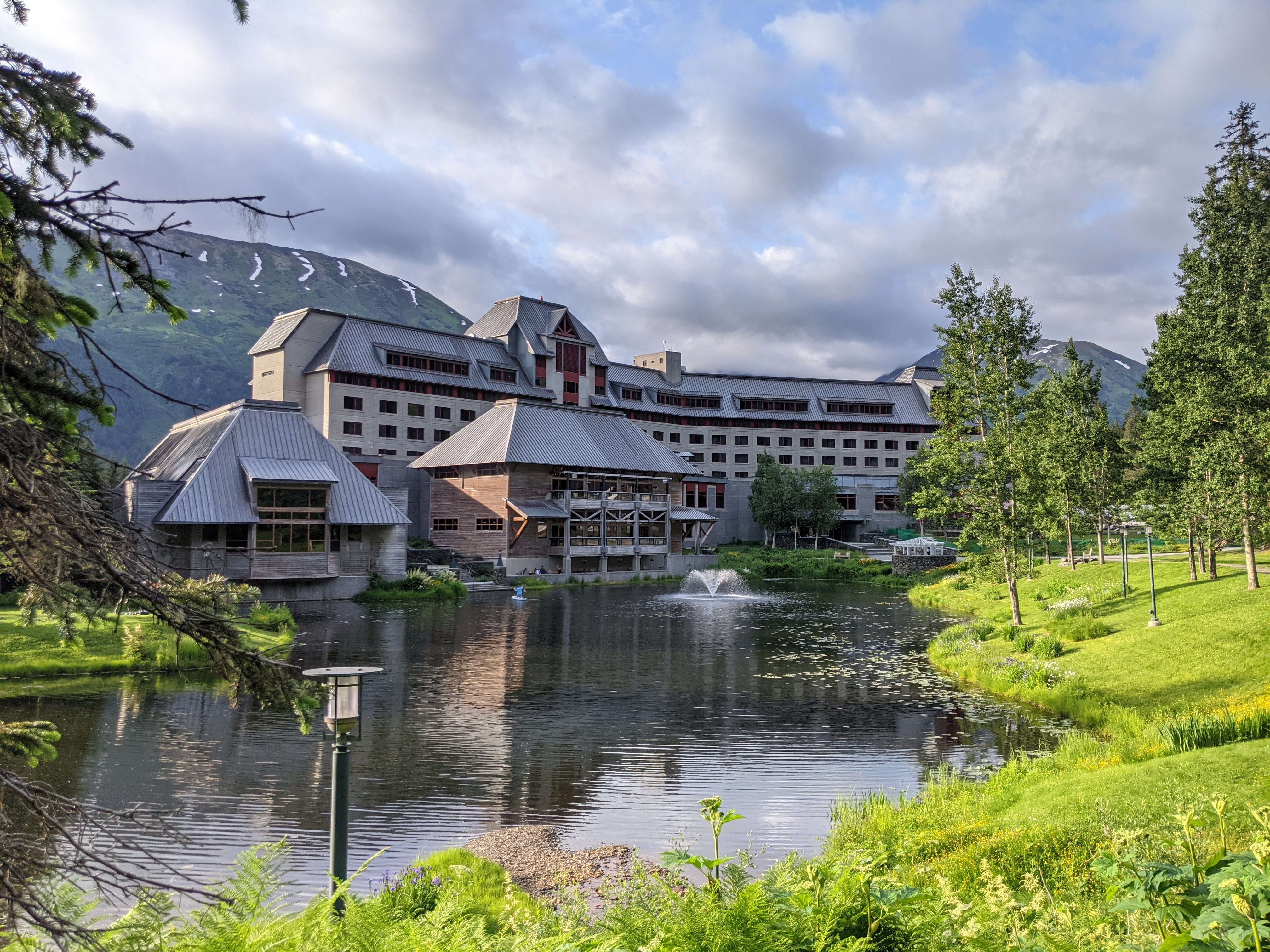
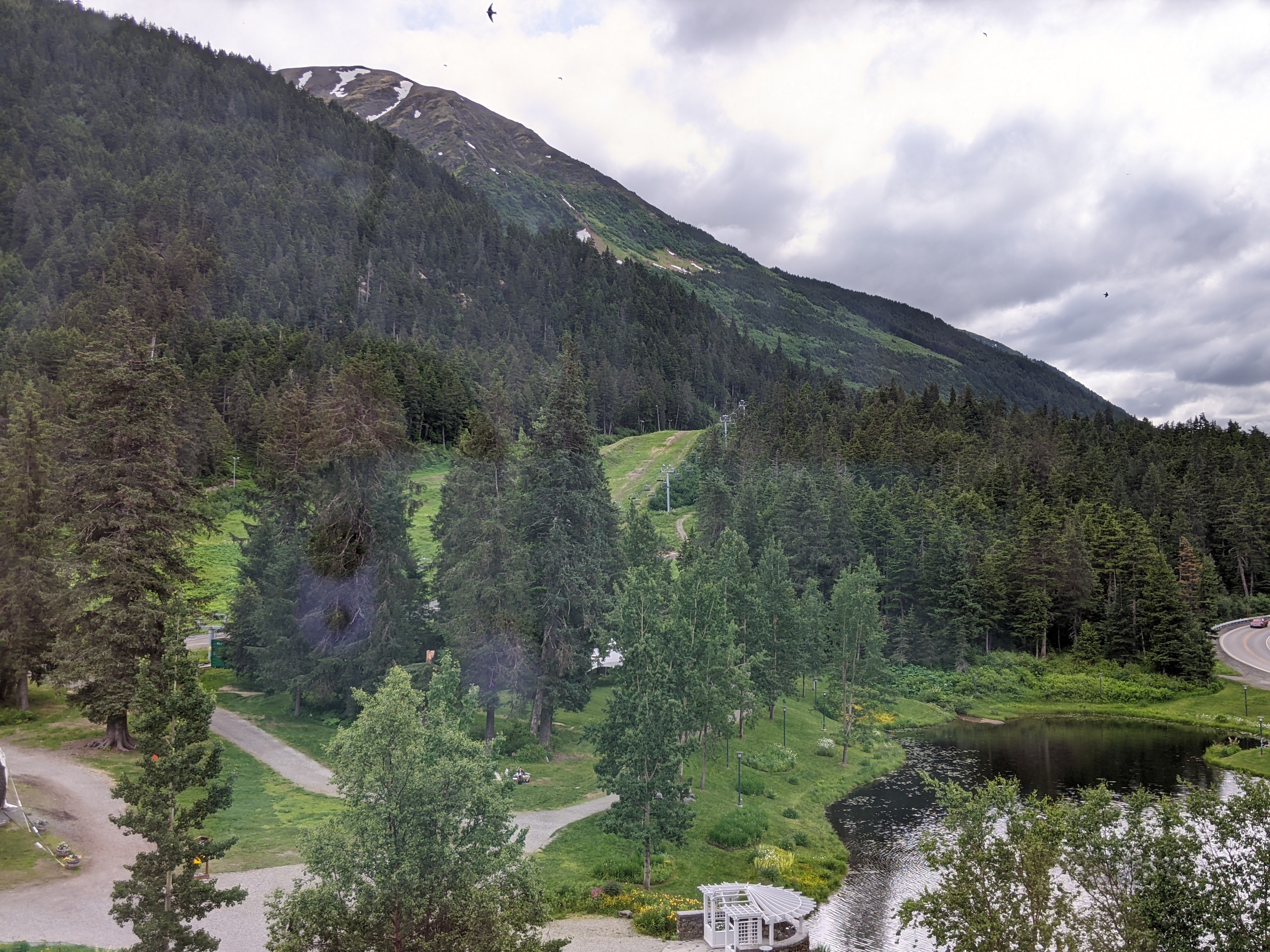
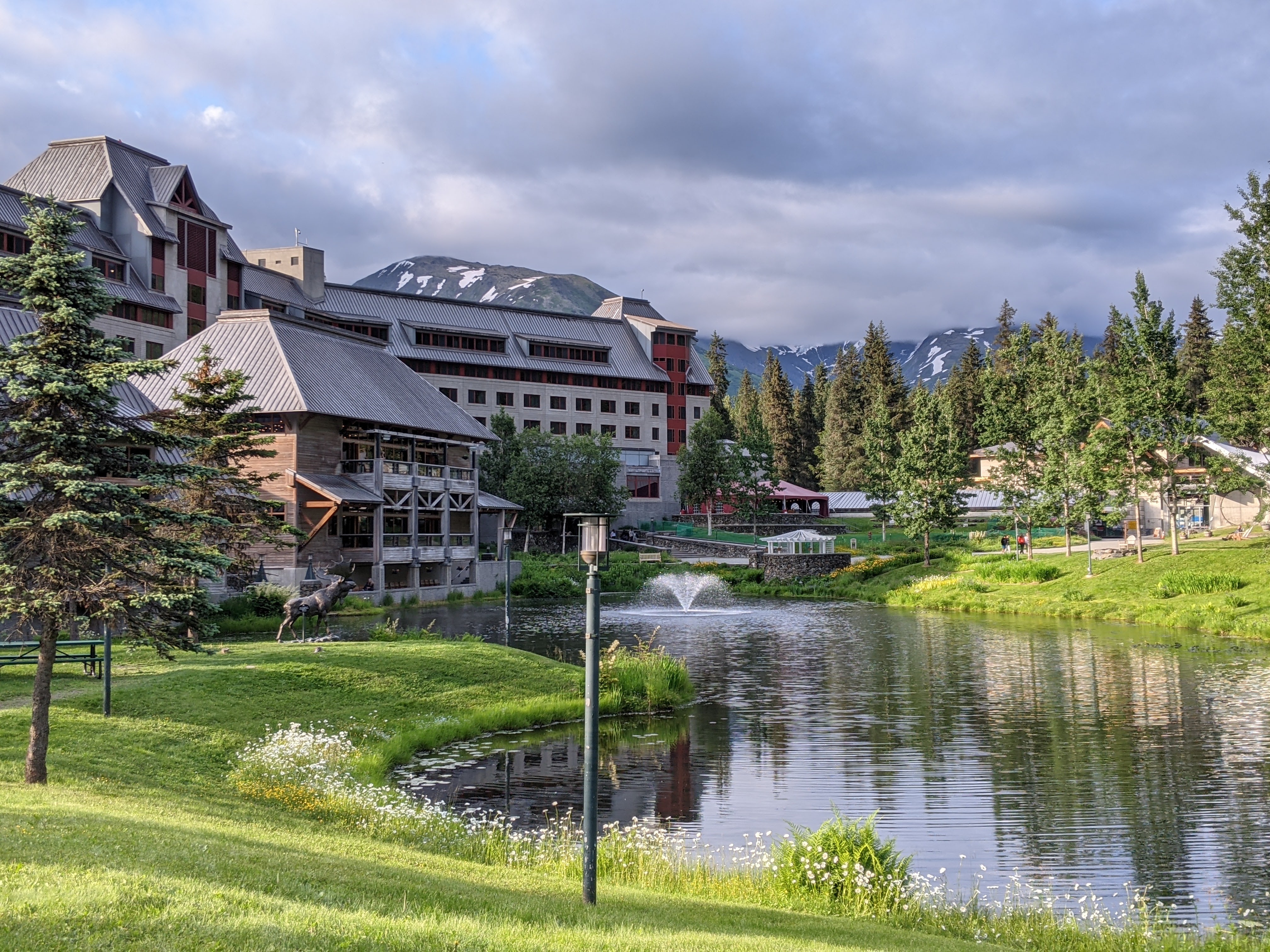
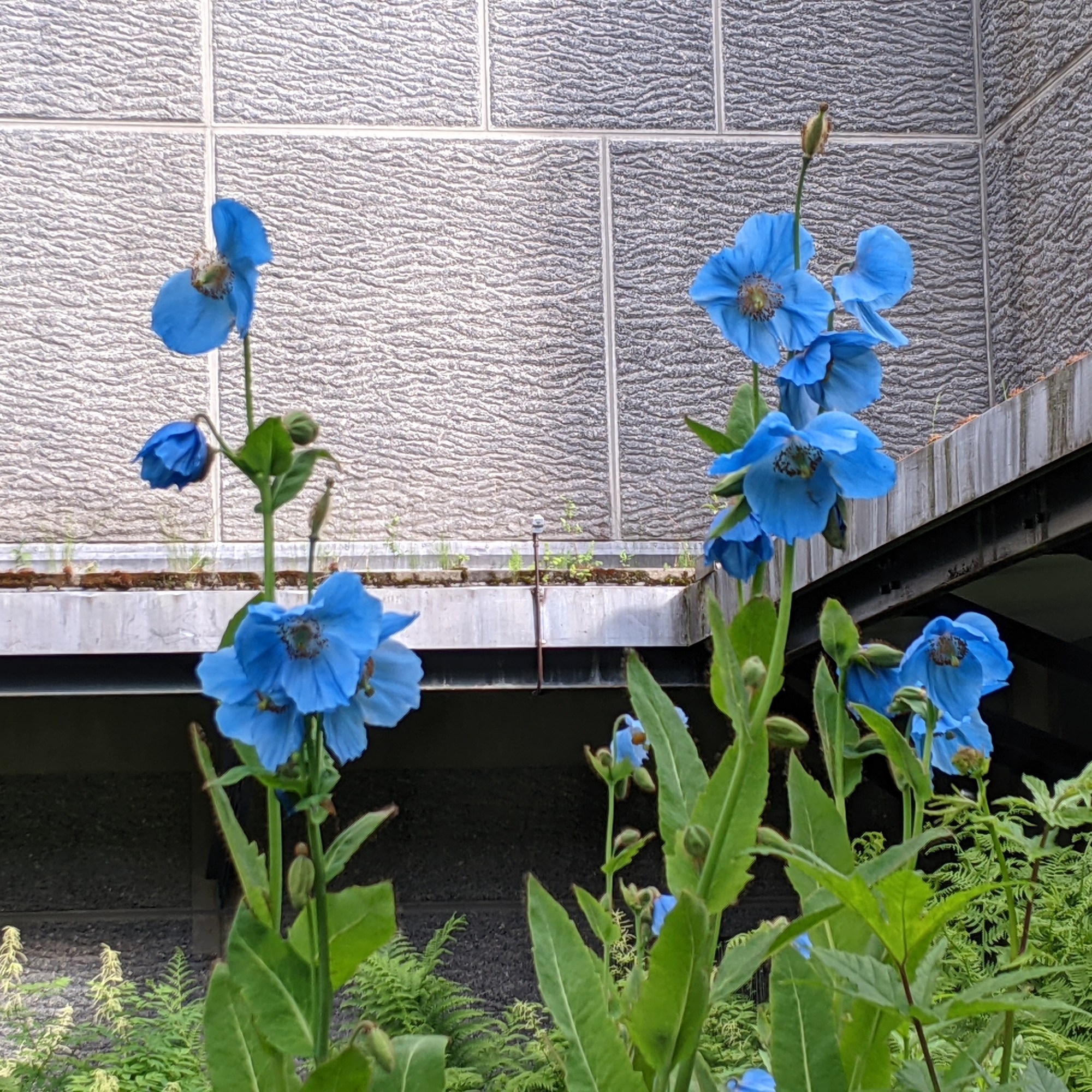
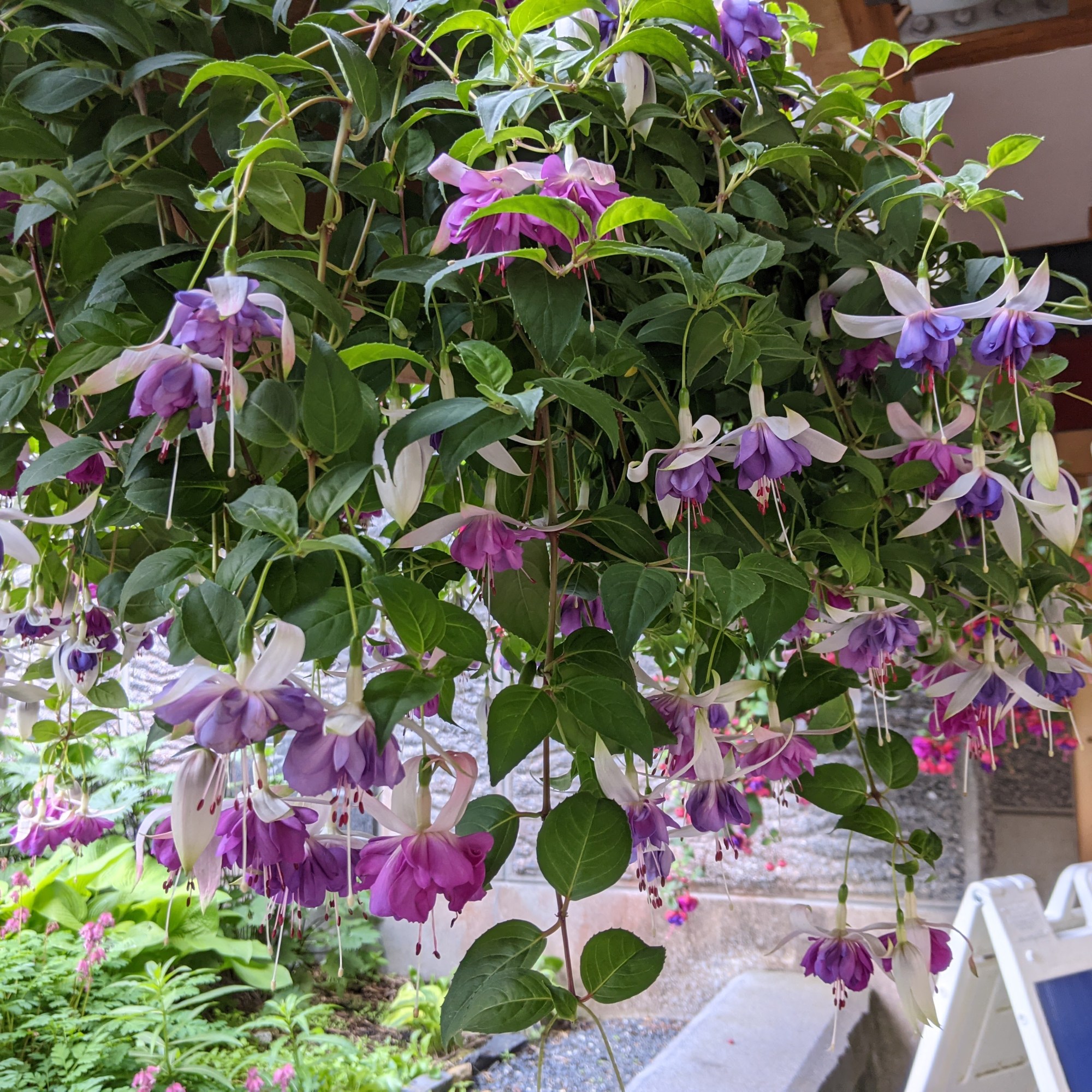
Alyeska Resort, at Girdwood, is among the best resorts we have been to. Its daily rate matches its beauty. At the entrance, a pair of totem poles reminded us of the indigneous history, a polar bear statue overlooked the lobby area from the second floor and the leather sofa at the lobby added further the sense of luxury. During these summer months, the Gondola ski lift and winter activities were mostly replaced with other outdoor activities. We tried to check out the bike rental, only to be told that it was sold out. Our hotel room gave a view of meticulously manicured gardens, stretches of the refreshingly green forests, as well as the quiet gondola stations.
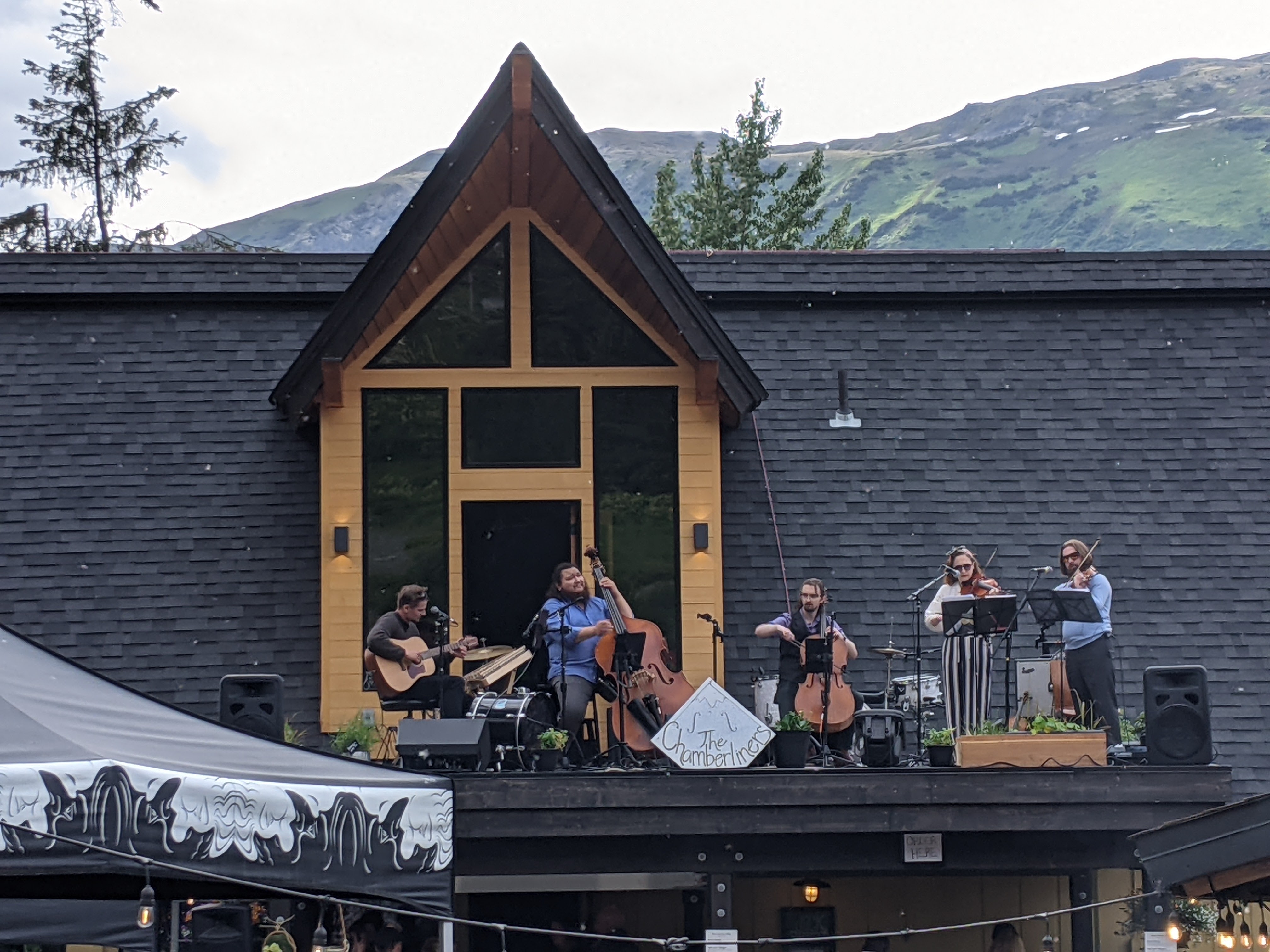
We went to enjoy the indoor rustic swimming pool, where a few families were having a good time. Good restaurants in Alaska equal more than an hour of waiting time. The nearby Jack Sprat restaurant is a hip place. When we arrived, it had a live band playing music at the rooftop and gathered an audience who was enjoying the music while waiting. The restaurant could no longer take any more diners, nor take-out. The other restaurants also had tons of diners waiting – another evidence of more tourists this summer than usual. We ended up getting chicken nuggets, pistachio muffins and other comfort food from a local grocery store and consumed our meal on a bench enjoying the beautiful garden at our resort.
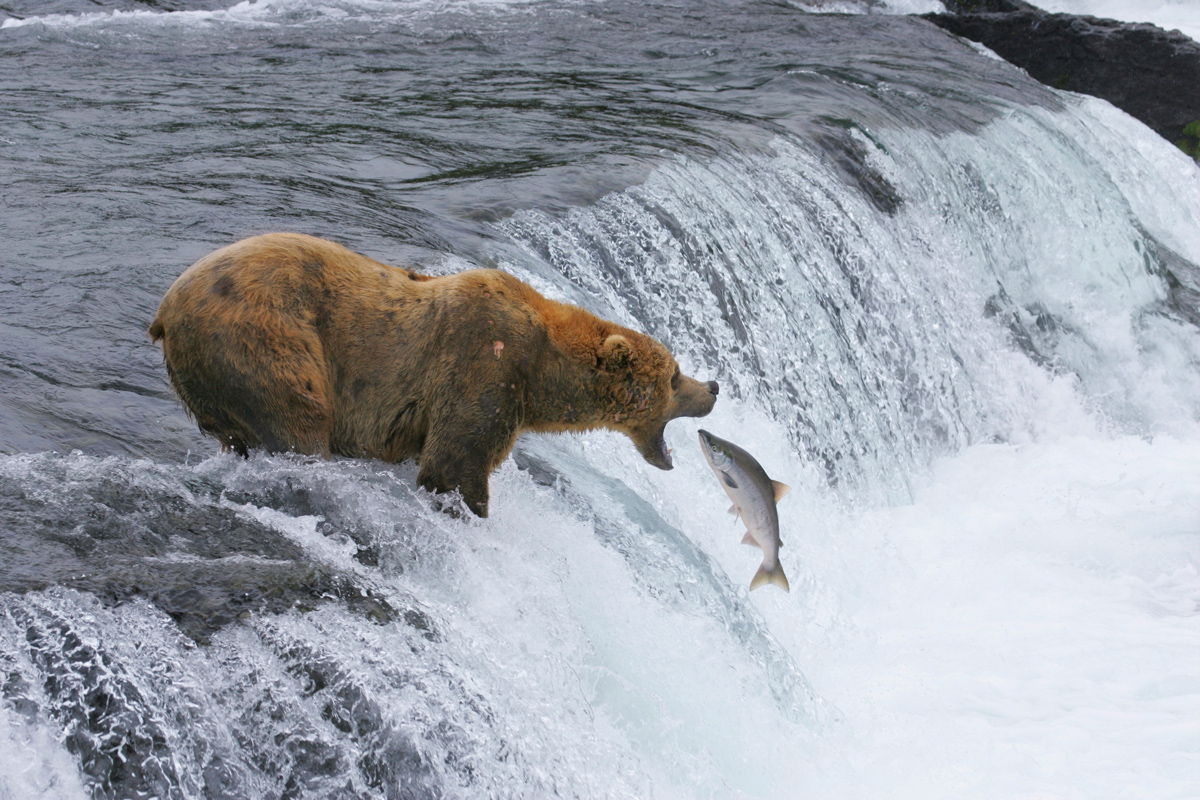
We had the most expensive and most expected tour coming up. On the itinerary, we were to fly a couple of hours to the world famous Katmai National Park to watch grizzly bears catching salmon jumping up the waterfall to spawn.
The day started with some light showers and the sky was cloudy. The young driver, picking us up from the hotel, gave us no indicator of what was about to come. After everyone checked in, we were informed that the flight to Katmai needed to be cancelled due to unstable weather. That dashed our hope of watching grizzly bears feeding themselves salmon over the waterfall. No-one complained much as safety is millions times more important. We were disappointed and wondered when we could come back in future years to try again.
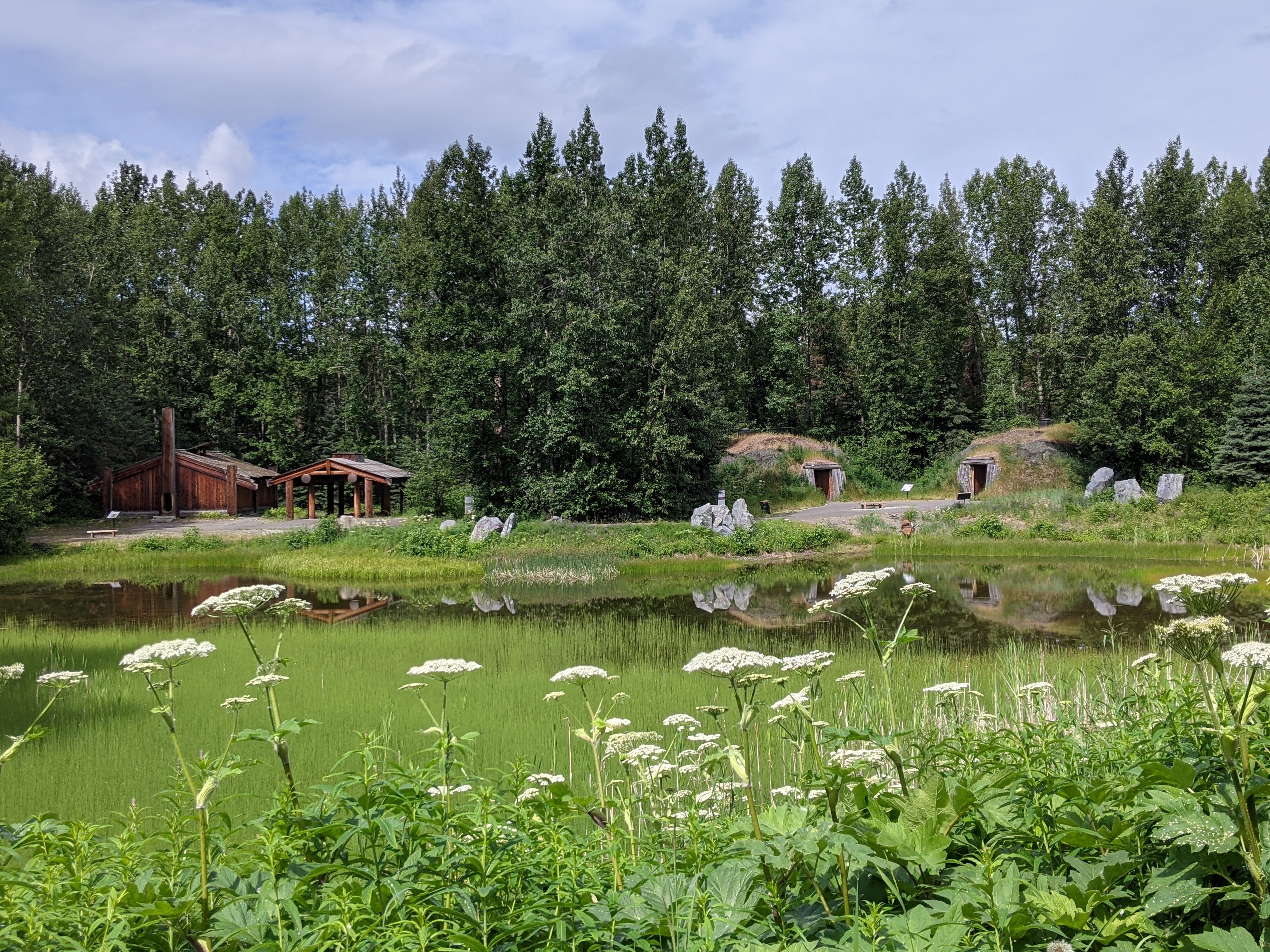
Instead, we spent the day visiting Alaska Heritage Center and gained a new level of respect for the indigenous tribes, their dwelling, their respects, their culture and their way of living. We learned that they had the habit of backing in a homestead to show their friendliness; we learned that they used the soft squirrel skins as diapers for babies and that many of their homesteads were underground. We enjoyed the performance of their games to spare the winter, and to train the children’s fitness. It was not hard to see that much has been taken away from them from the caucacians. It was both their land, their culture and their abode. Natives have been given free medical service within Alaska and probably other benefits, yet this gives little comfort compared to what has been taken away from them.
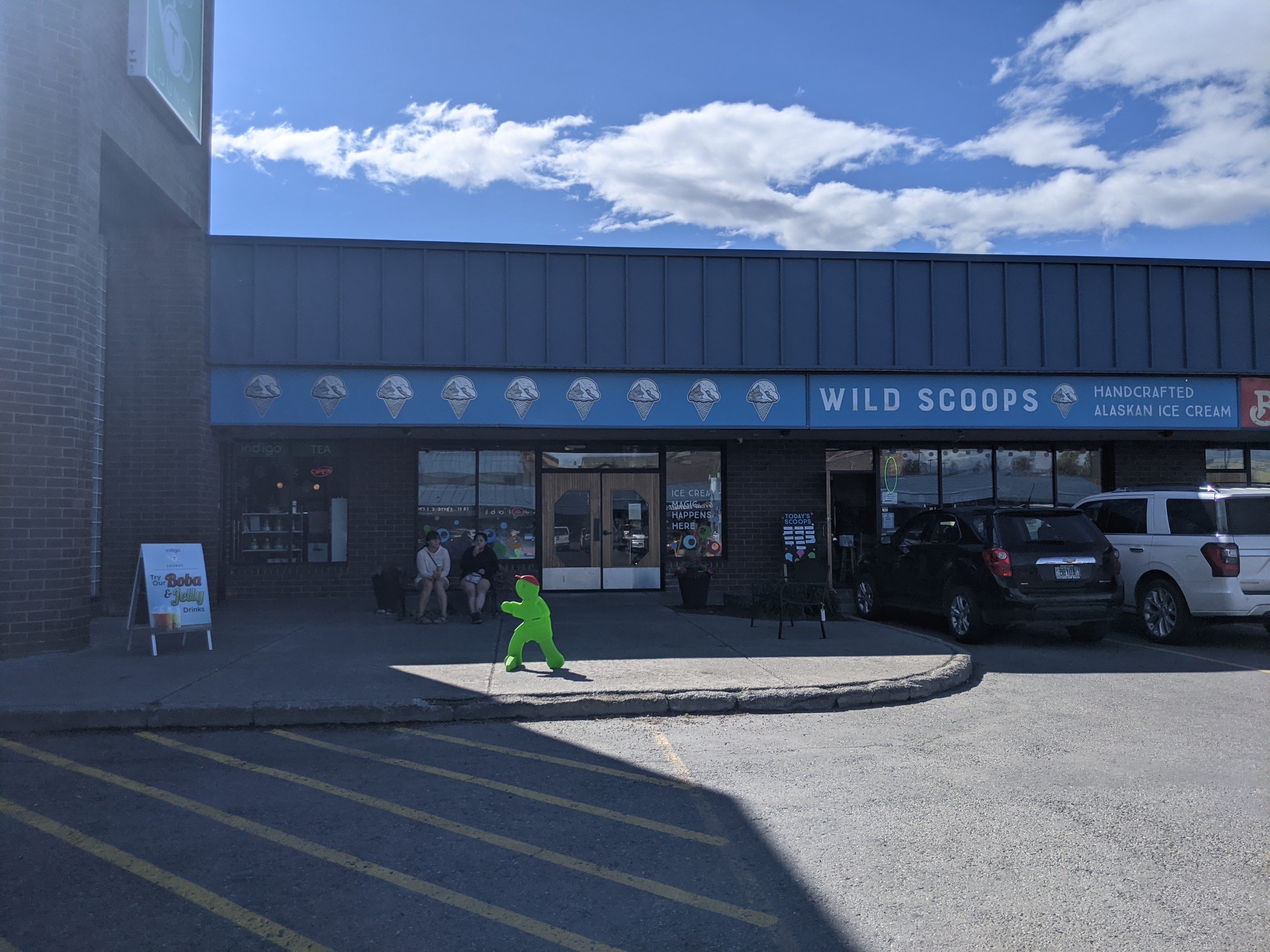
The heritage center was a place to remember in Anchorage, and that sense of resentment, from the native of having their land taken from them, was a strong reminder of the many exploitations of colonization. The Wild scoop ice cream was a more pleasant place to remember. I tried the Spruce Tip flavor. That tree fragrance, along with the tint of bitterness at the end, was among the most special ice cream I have ever tried. If you ever plan to visit Anchorage, don’t miss your chance of trying the ice cream.
Anchorage, as a city, did not give much of an impression. It has been our travel hub, and we have been back and forth of the city quite a few times. The road to Anchorage could well be more impressive than the city. As we drove up from Seward, the Turnagain Arm was quite a spectacular view.
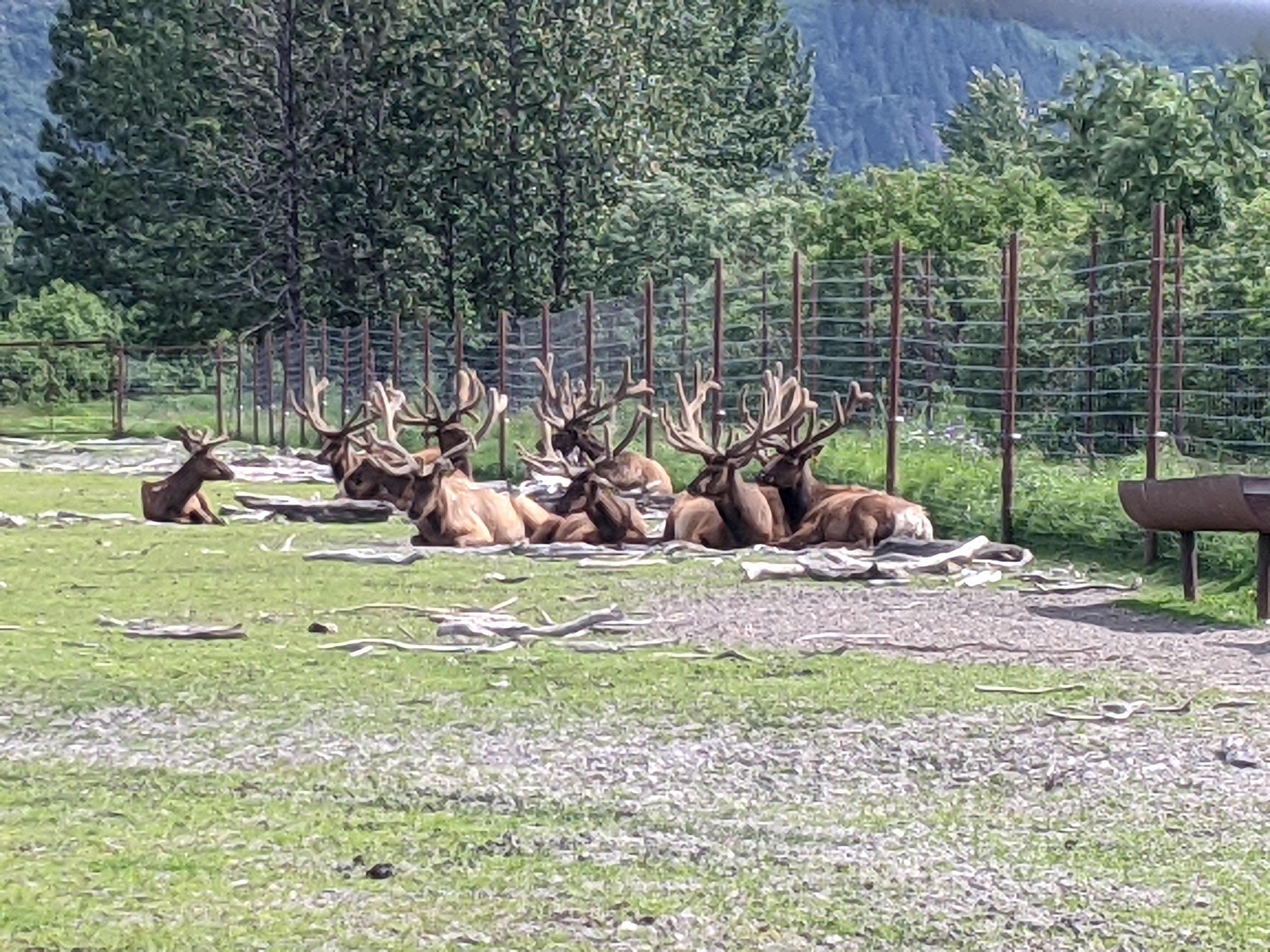
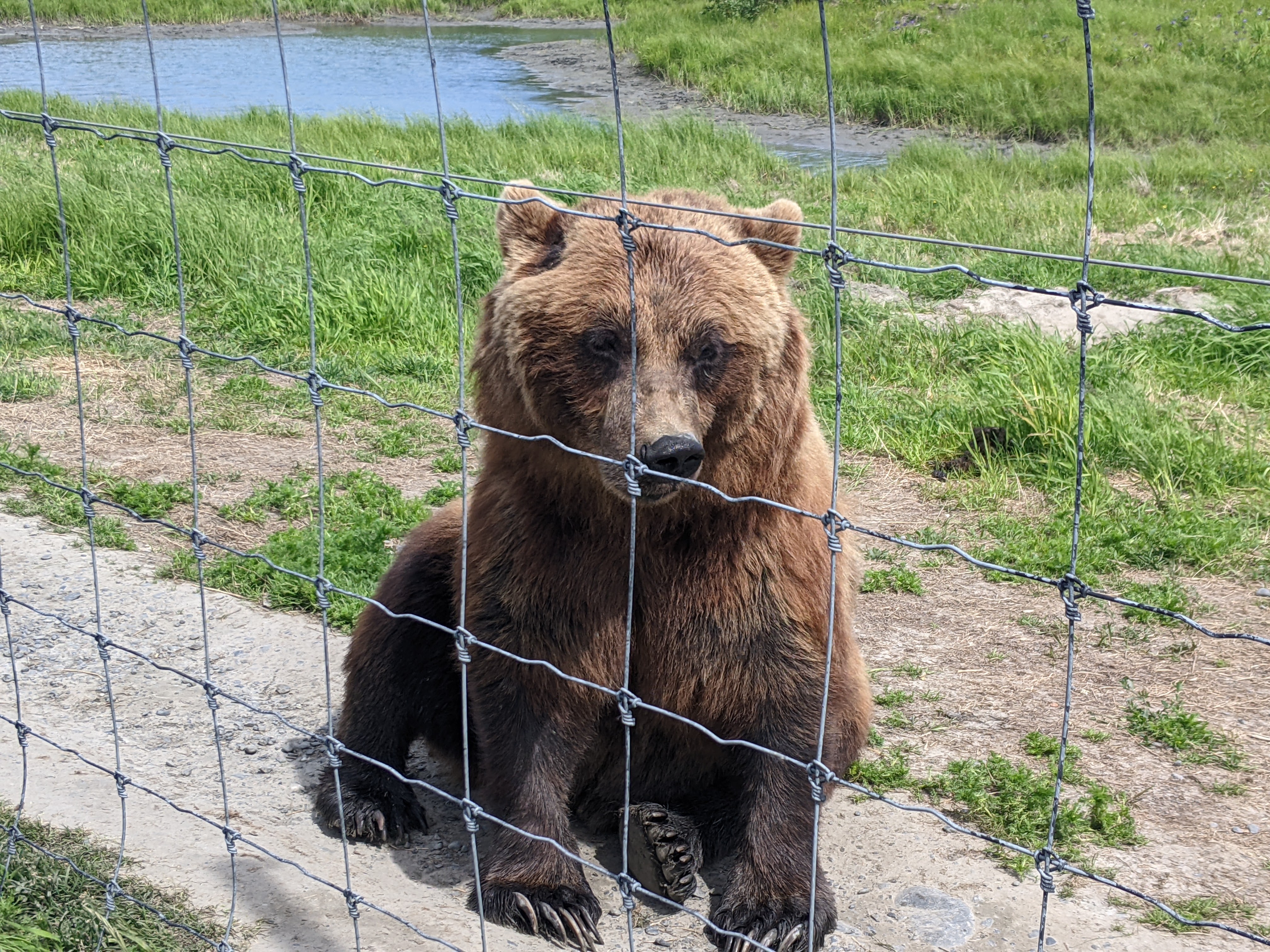
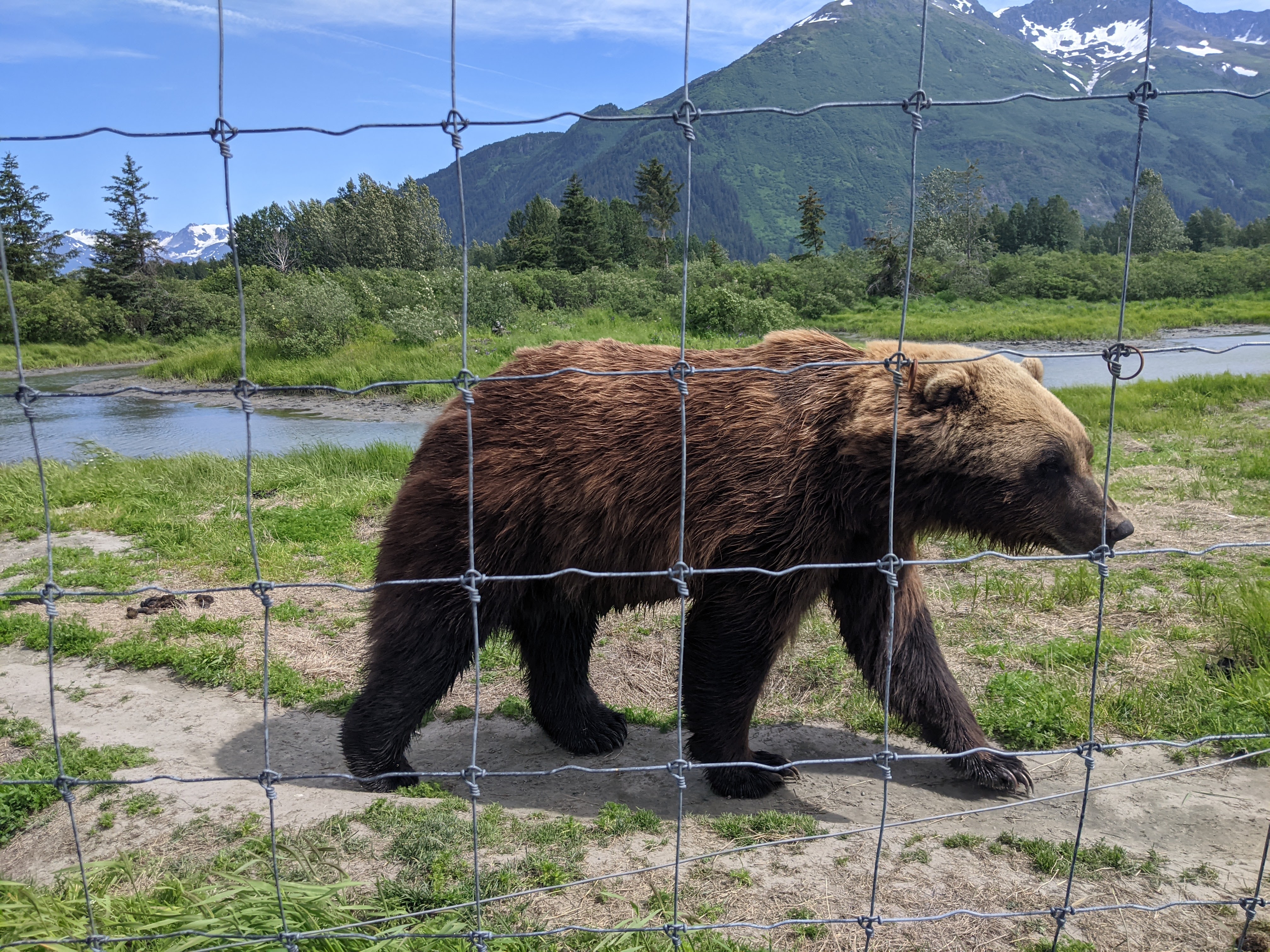
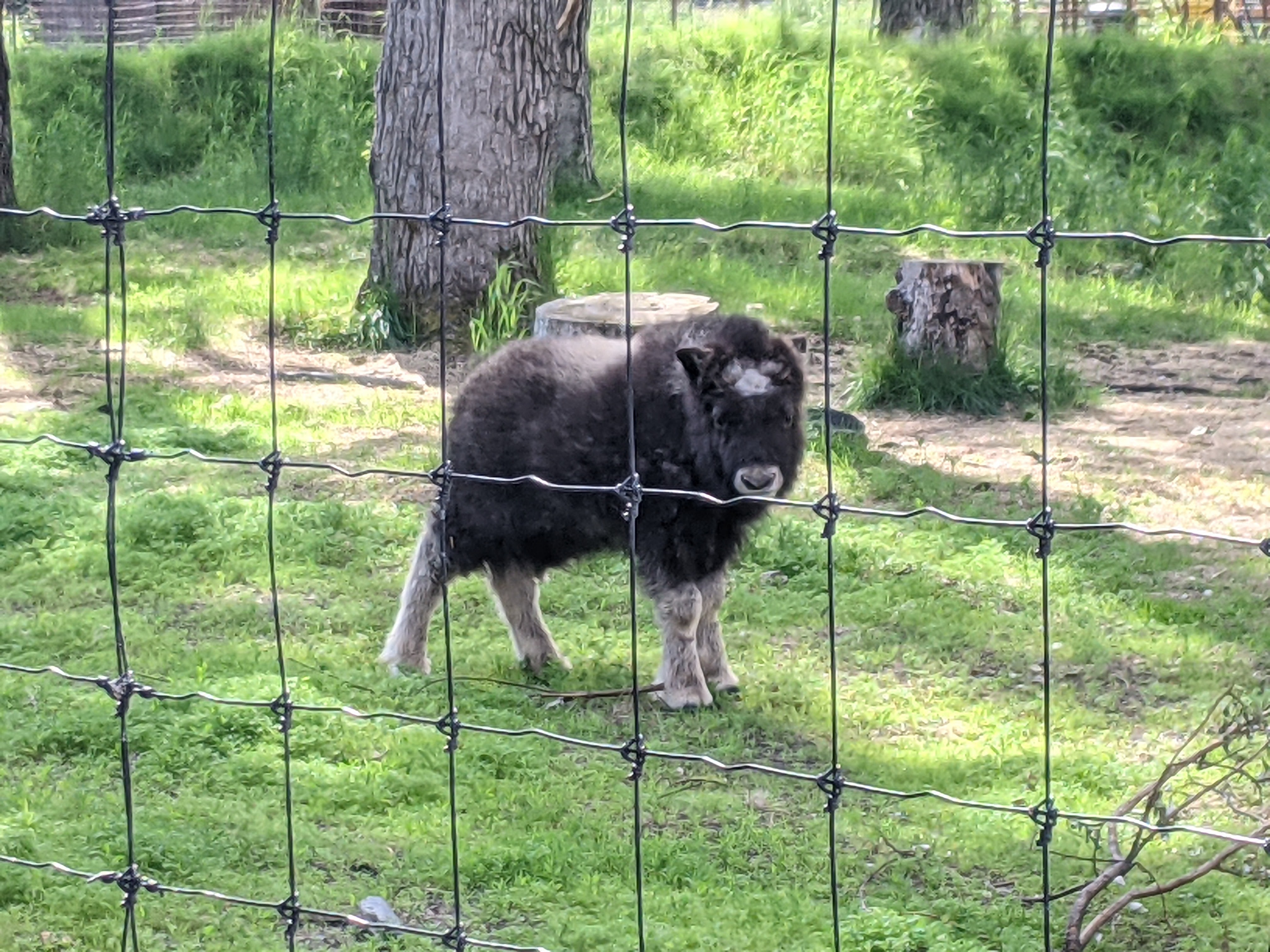
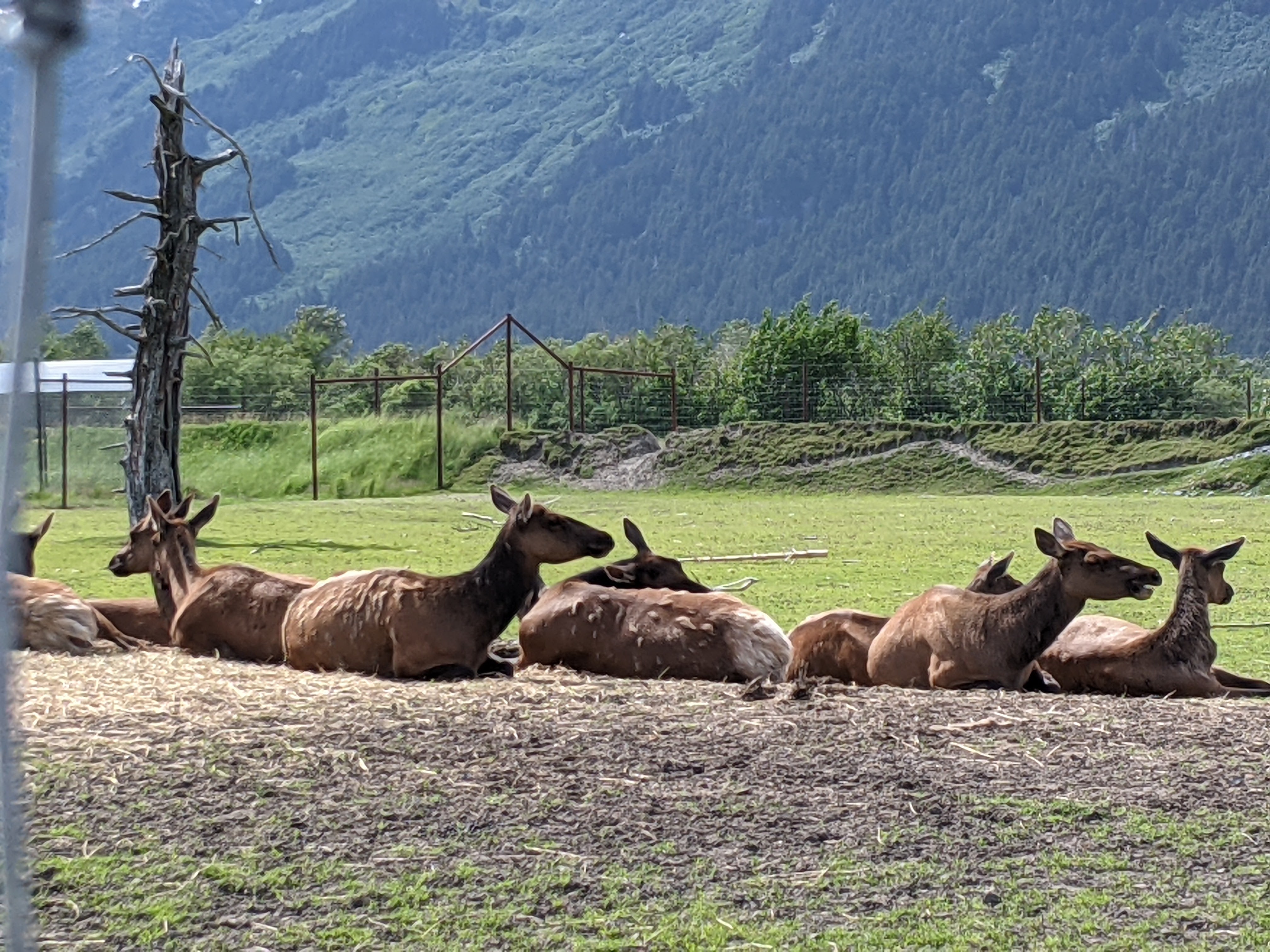
We made a stop at the Alaska Wildlife Conservation Center (AWCC) to watch a variety of wildlife up close and get to know them better. We spent a few hours, on our tired legs, watching the moose, musk ox, caribou, reindeer, grizzly bears, black bears, bald eagle, owl, porcupine and more.
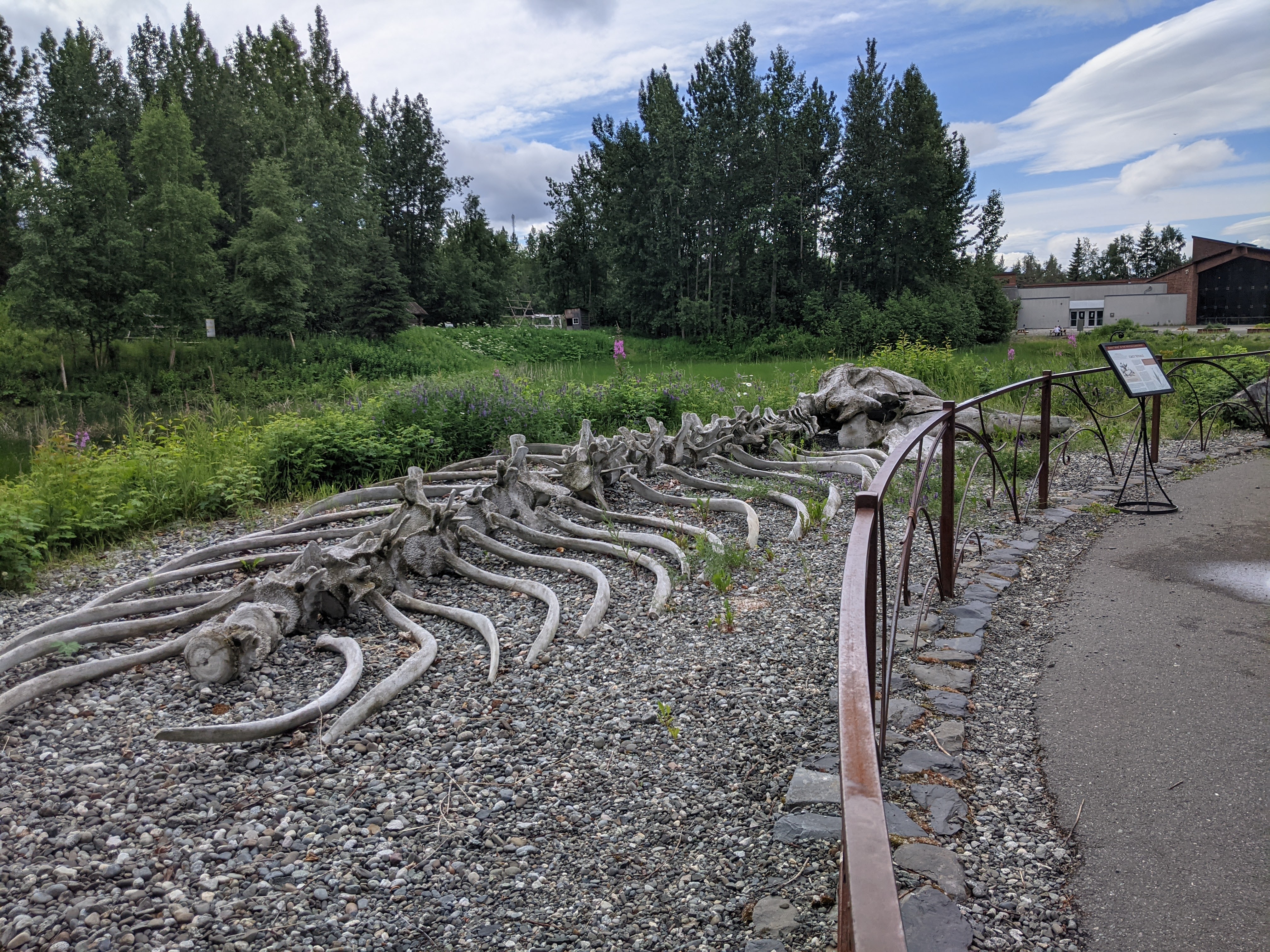
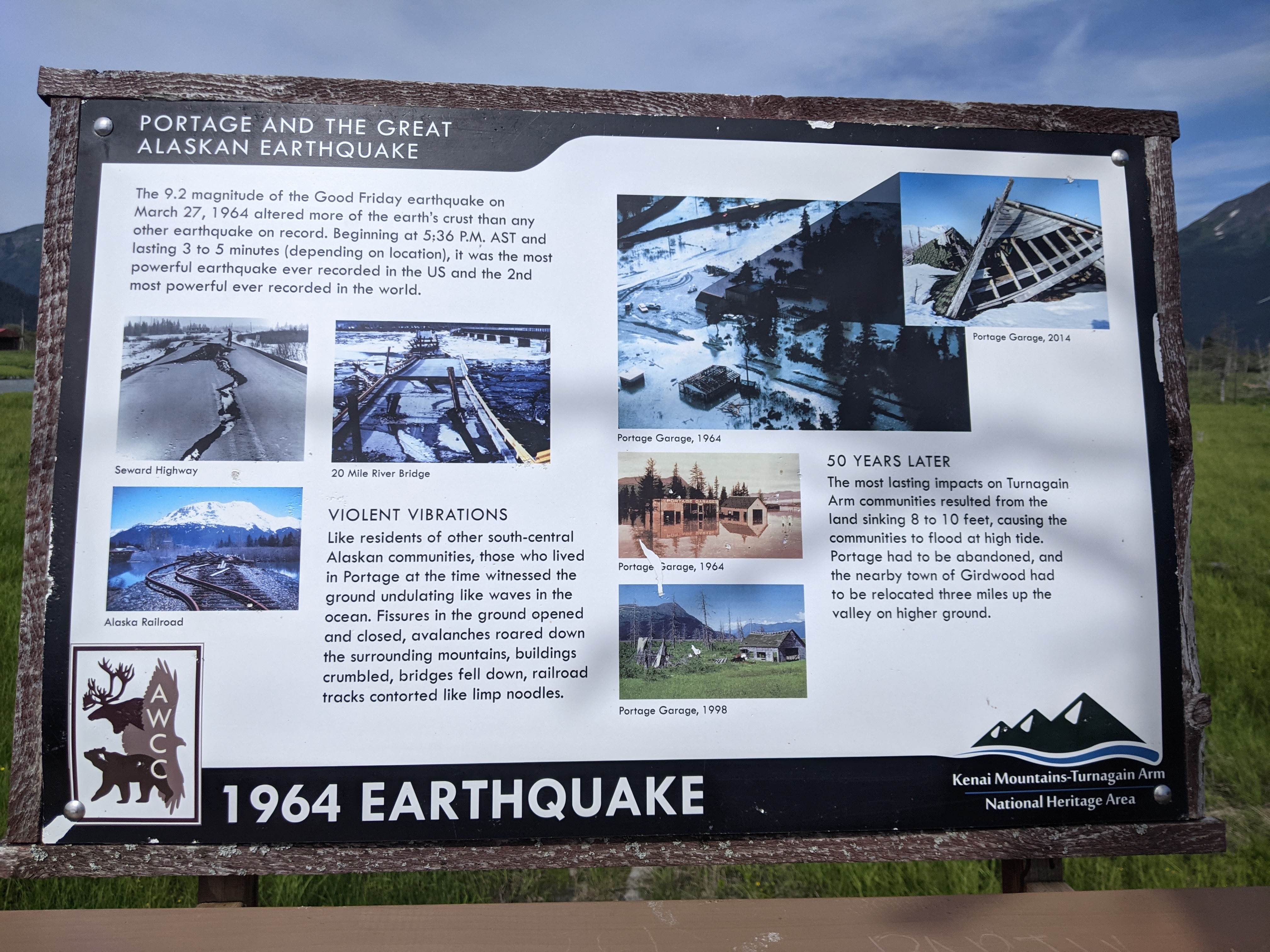
The ghost trees in AWCC were a good reminder of the great 1964 earthquake, one with a magnitude of 9.2 and lasted over 4 minutes. It was scary to read about it happening. It also left me wonder how these disastrous happening (or the 1918 pandemic) could often be called the “great” earthquake (or the “great” pandemic)
The Springhill Suites was located near the Alaska Native Medical Center with a lake view. Natives made up quite a proportion of its occupants, and some were staying in the hotel to wait for surgery at the Medical Center. The hotel felt like an outpost of the Medical Center more so than a hotel. It was not totally welcoming, and was quite a downgrade from the Bear Lake Lodge in Seward.
No complaint as a travel hub, esp. We were finally able to take care of our dirty laundry. Also, our dinner at Simon & Seafort’s downtown was arguably the best meal so far.
It was our third morning at the beautiful Bear Lake Lodge. Every morning, we met up and chatted with other travellers while enjoying the breakfast freshly made by our innkeeper. We met retired couples, young couples, and other travellers, all in good spirits, looking forward to exploring Alaska. Alaska is so vast that we hardly have the same itineraries with each other. It felt like we were living our lives in a novel in this wonderland.
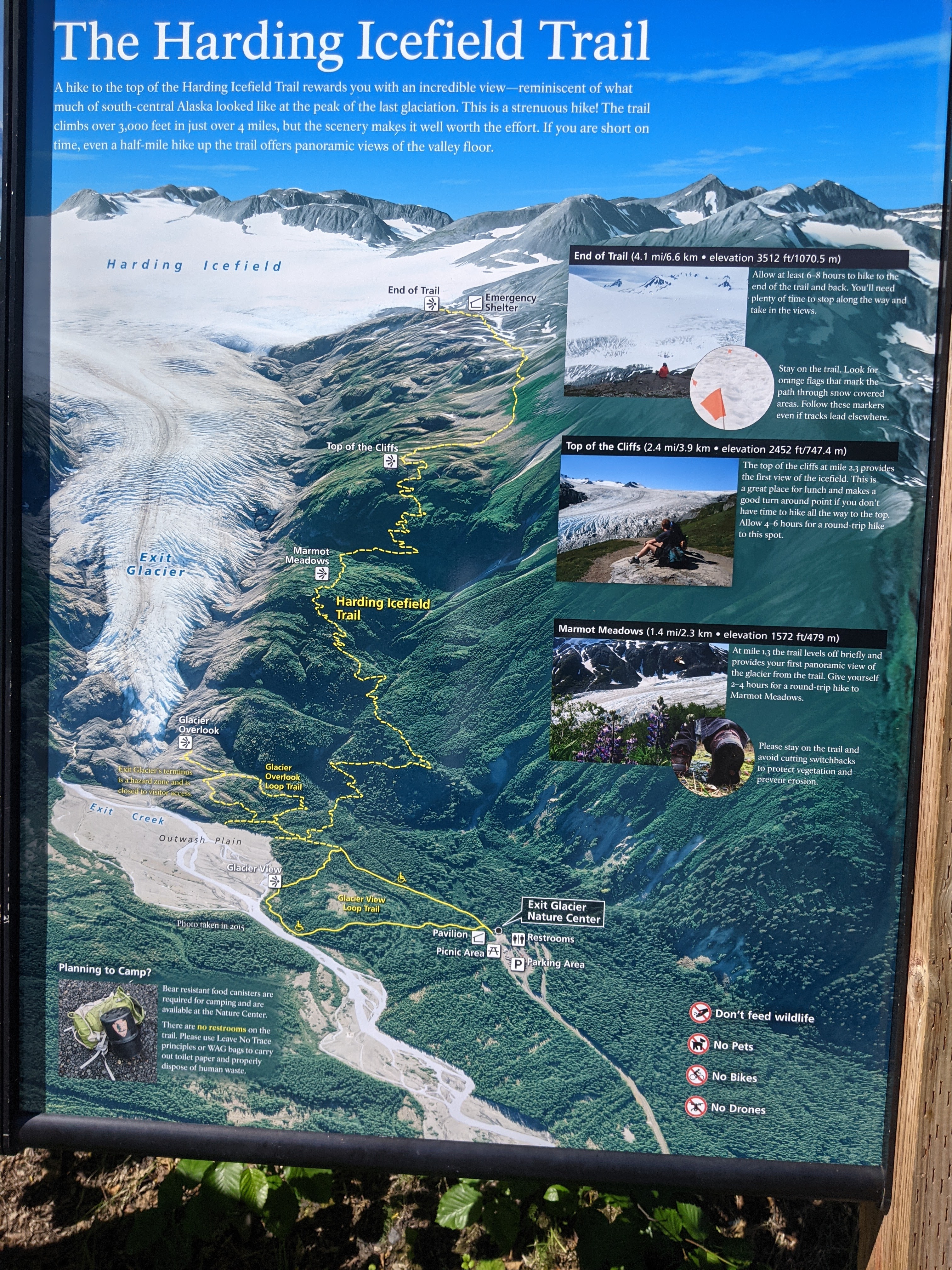
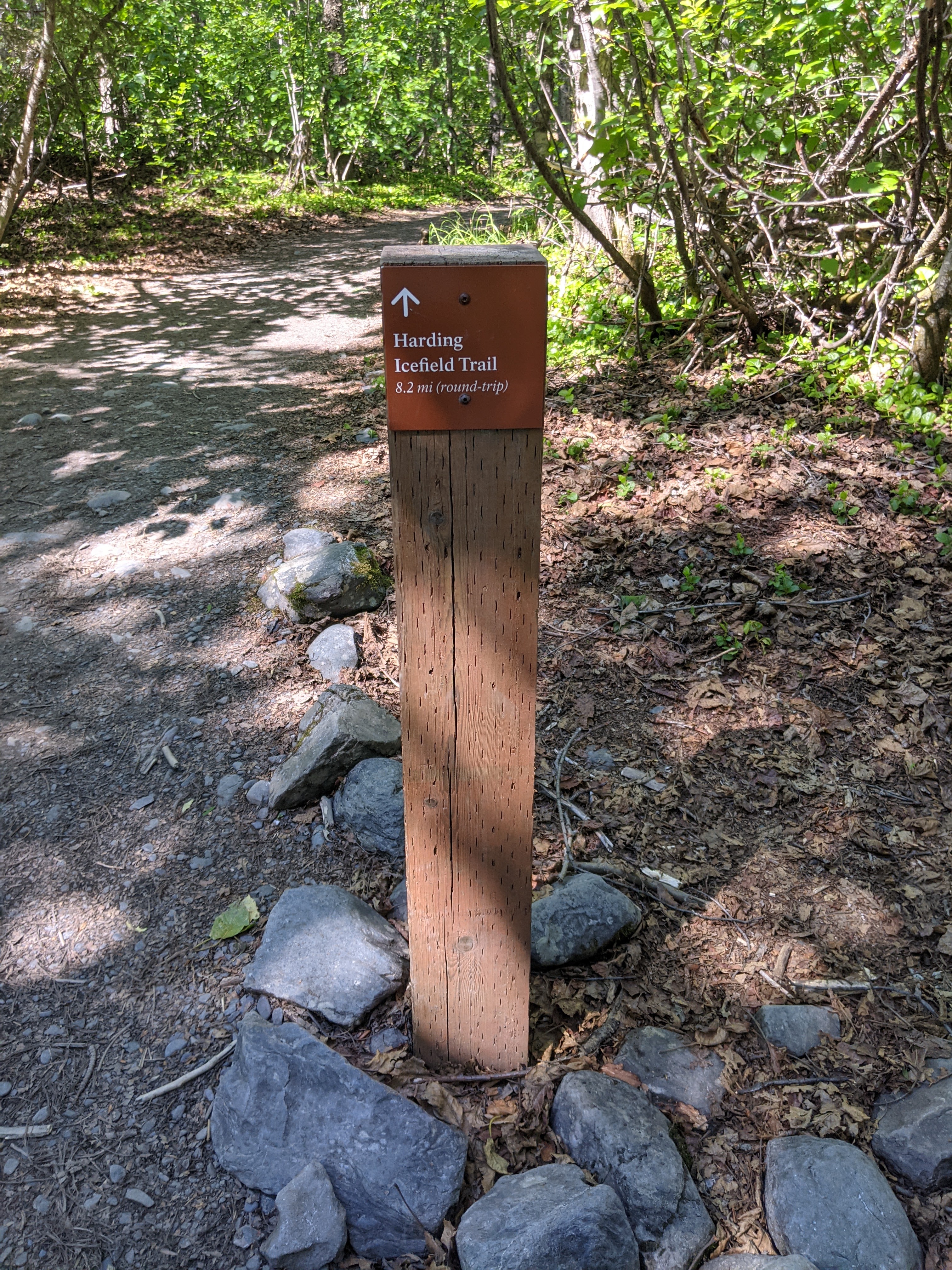
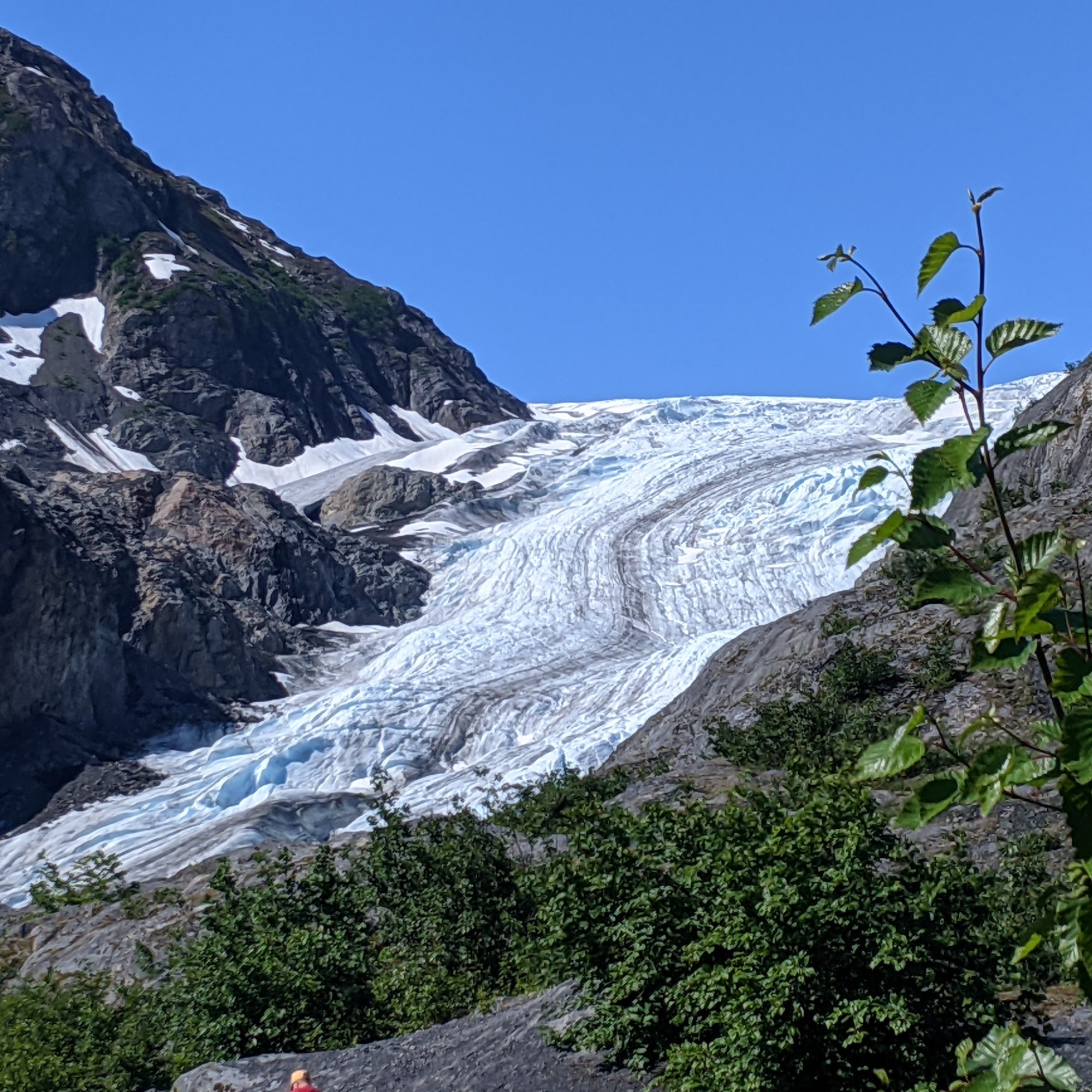
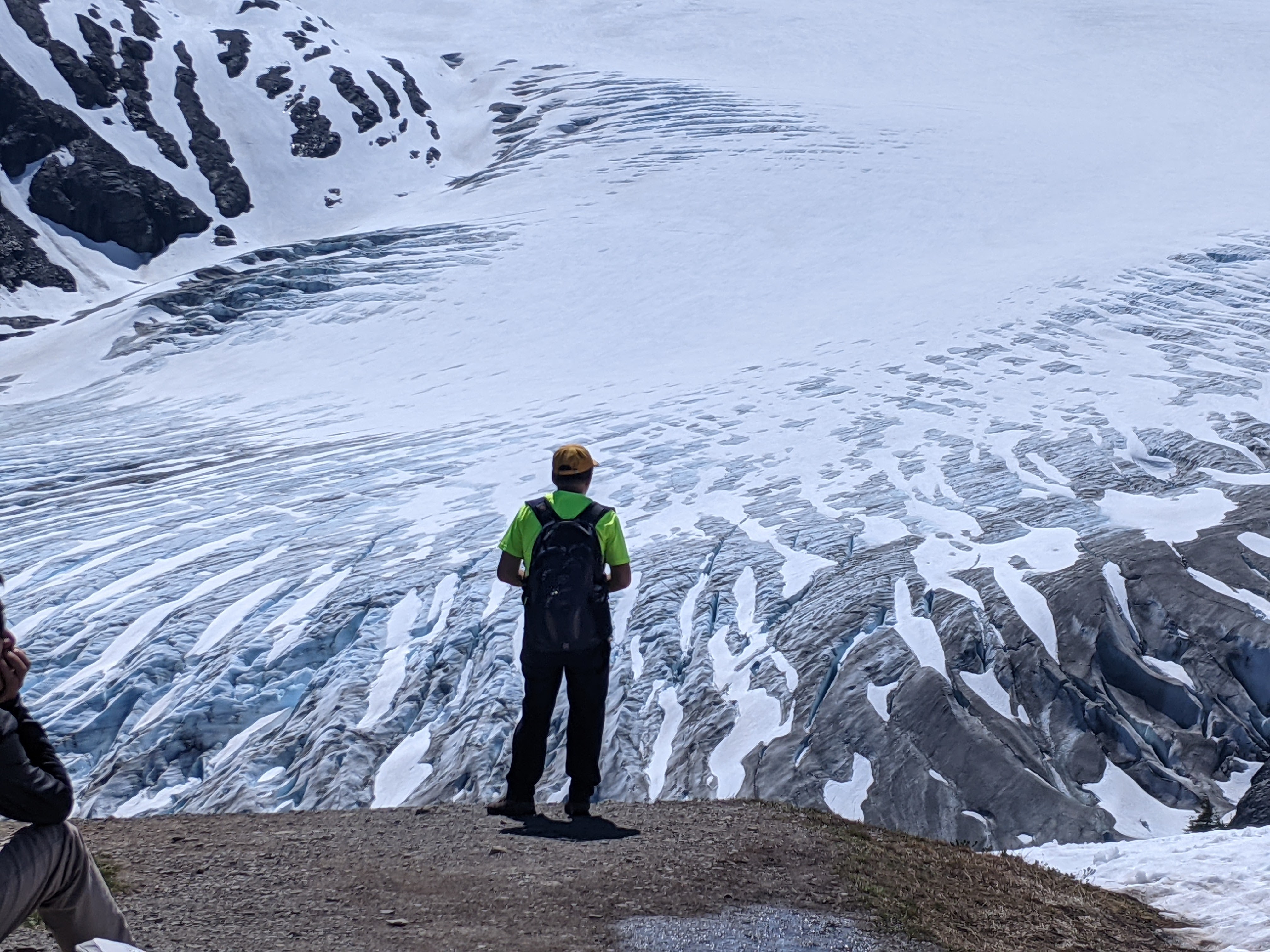
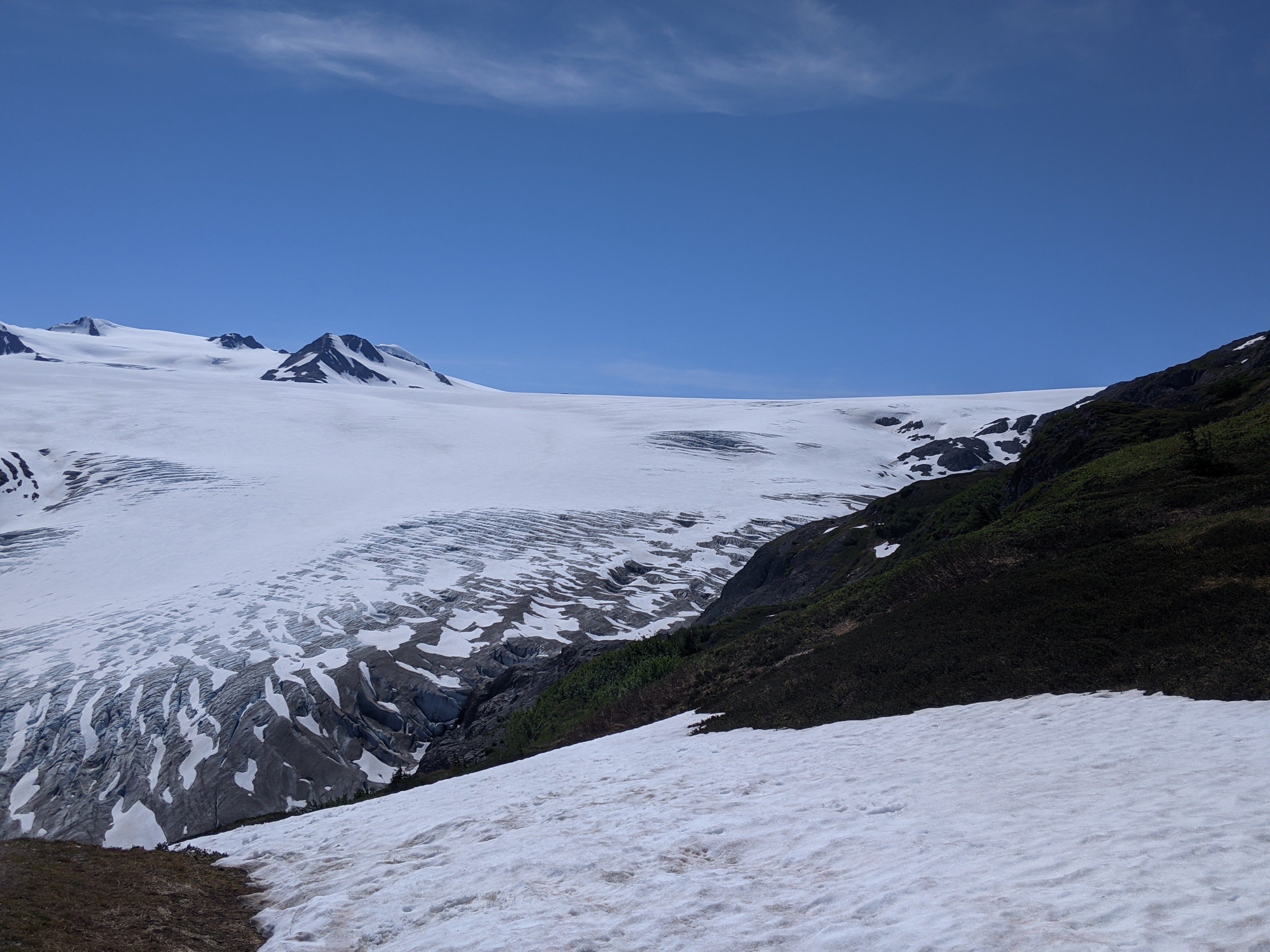
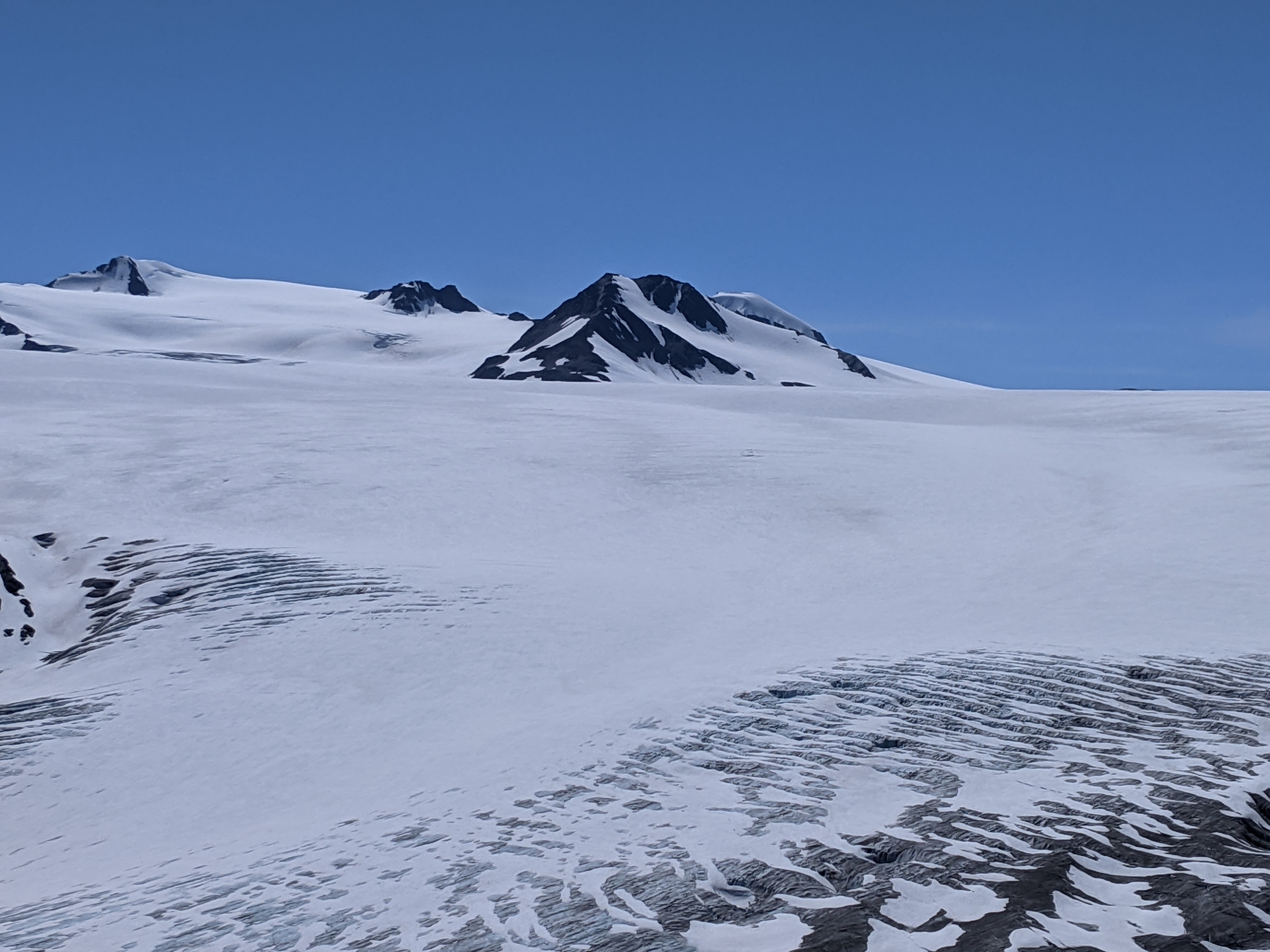
The Aialik glacier kayaking, the day before, gave my arms the biggest fatigue of the last decade. Our legs were still strong. We saw the huge Harding Icefield from the boat trip the day before. We were ready for a hiking day up the exit glacier. The Harding Icefield offered a spectacular but strenuous day hike from the exit glacier area to the top of the cliff. We were casual hikers and had no particular destination for the day, and were hoping to be back in time to get to a good seafood restaurant for dinner. (Finally we got to Wednesday when the restaurants reopened after closing on Monday and Tuesday).
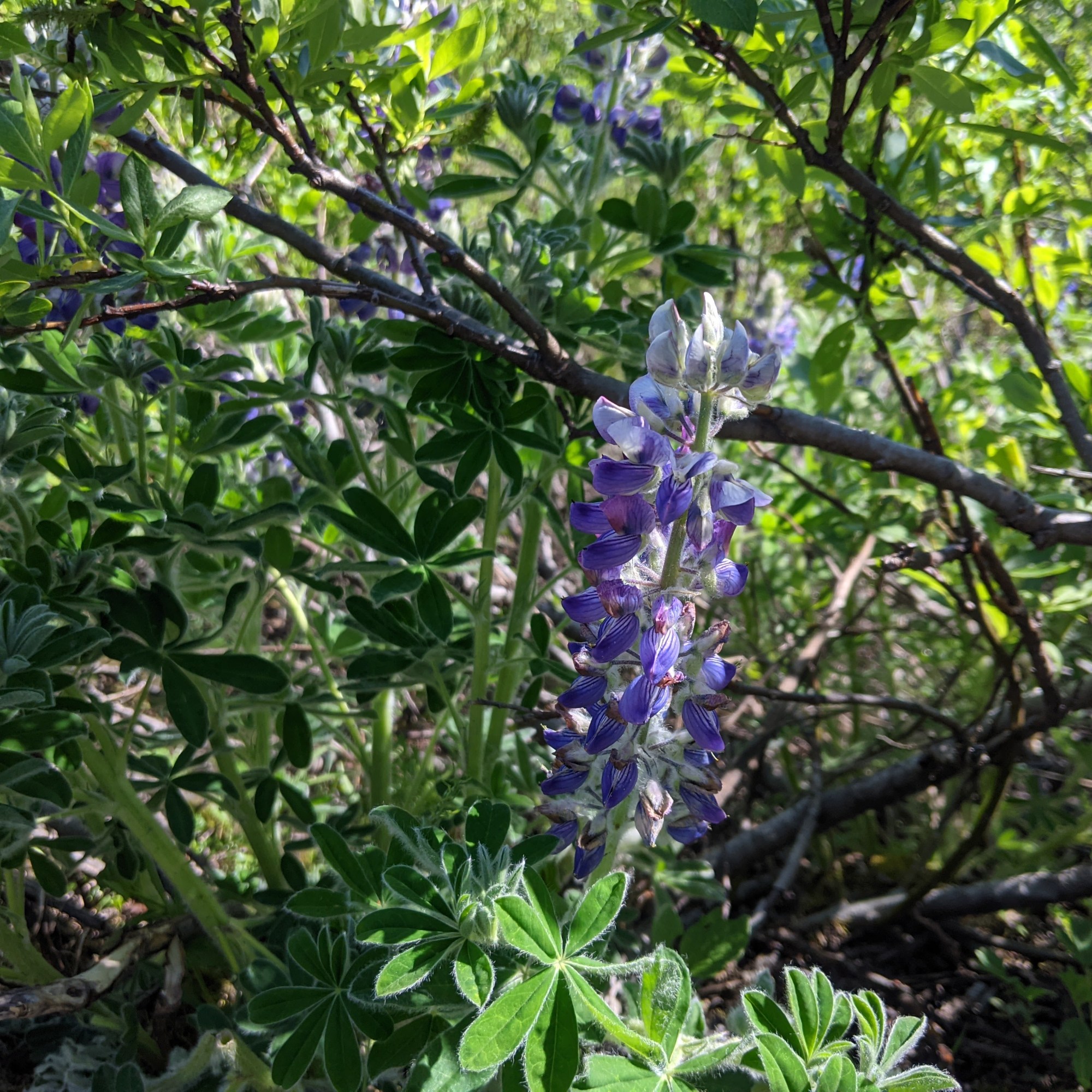
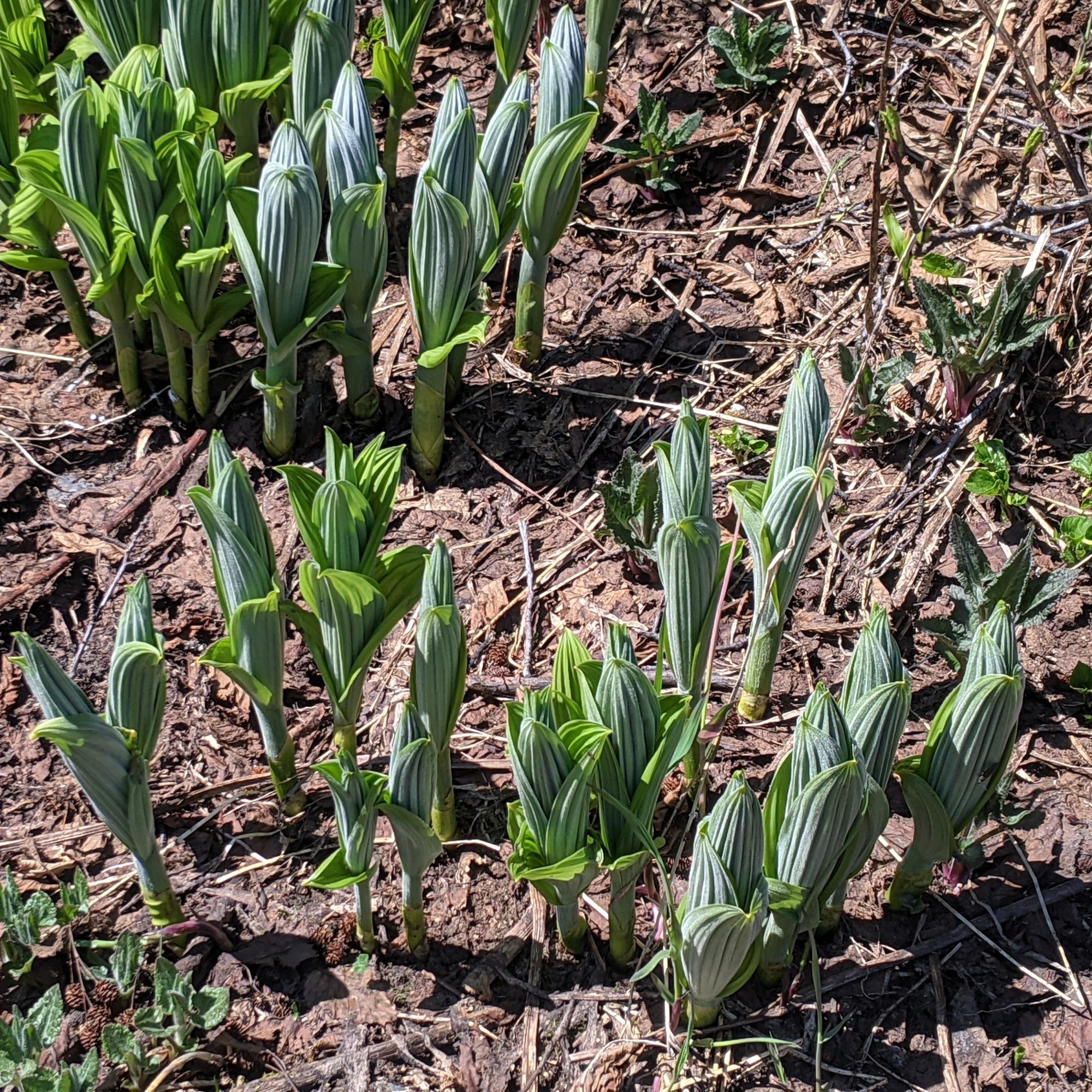
At the trailhead, the icefield was far up; and we hiked a relatively easy glacier overlook loop trail as the Icefield started to come up closer. After a few hours up, we were at the Marmot Meadow with a better view. The fellow hikers told us it was within reach to get to the top of the cliff to look down on the glacier. Mid-way up, there were more floral varieties as well as plenty of poisonous indian pokes along the way, and more mosquitos too.
The young hikers walking down from the top often encouraged us, so we continued to journey on. It took us more than an hour of strenuous hike to cover a distance of 0.8 miles to the top of the cliff, overcoming icy paths and a few slipperies. There were a few fellow hikers up there taking pictures. It was so beautiful up there. We felt rejuvenated and grateful that our knees were still with us after over five hours of hiking, at times pretty strenuous.
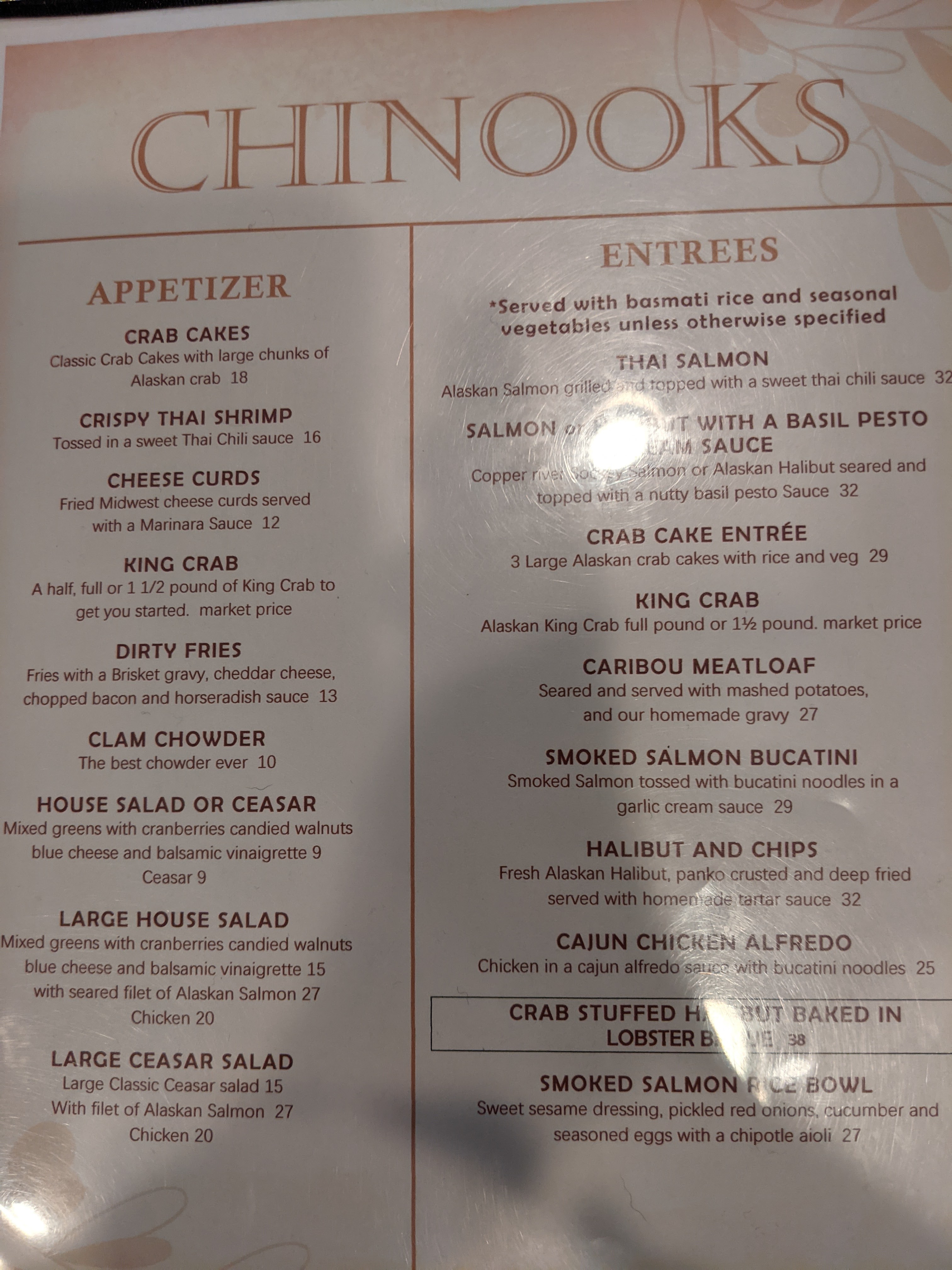
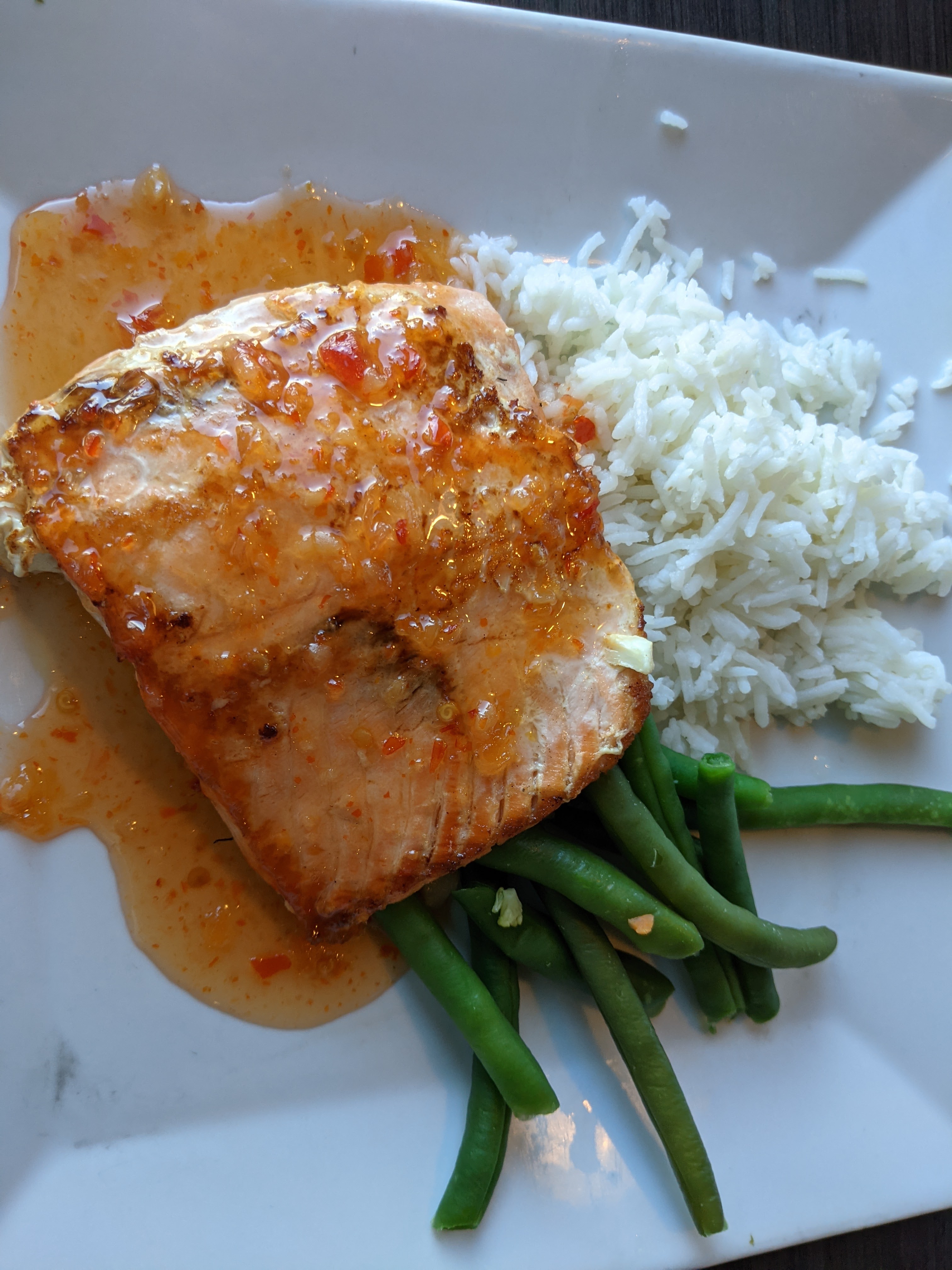
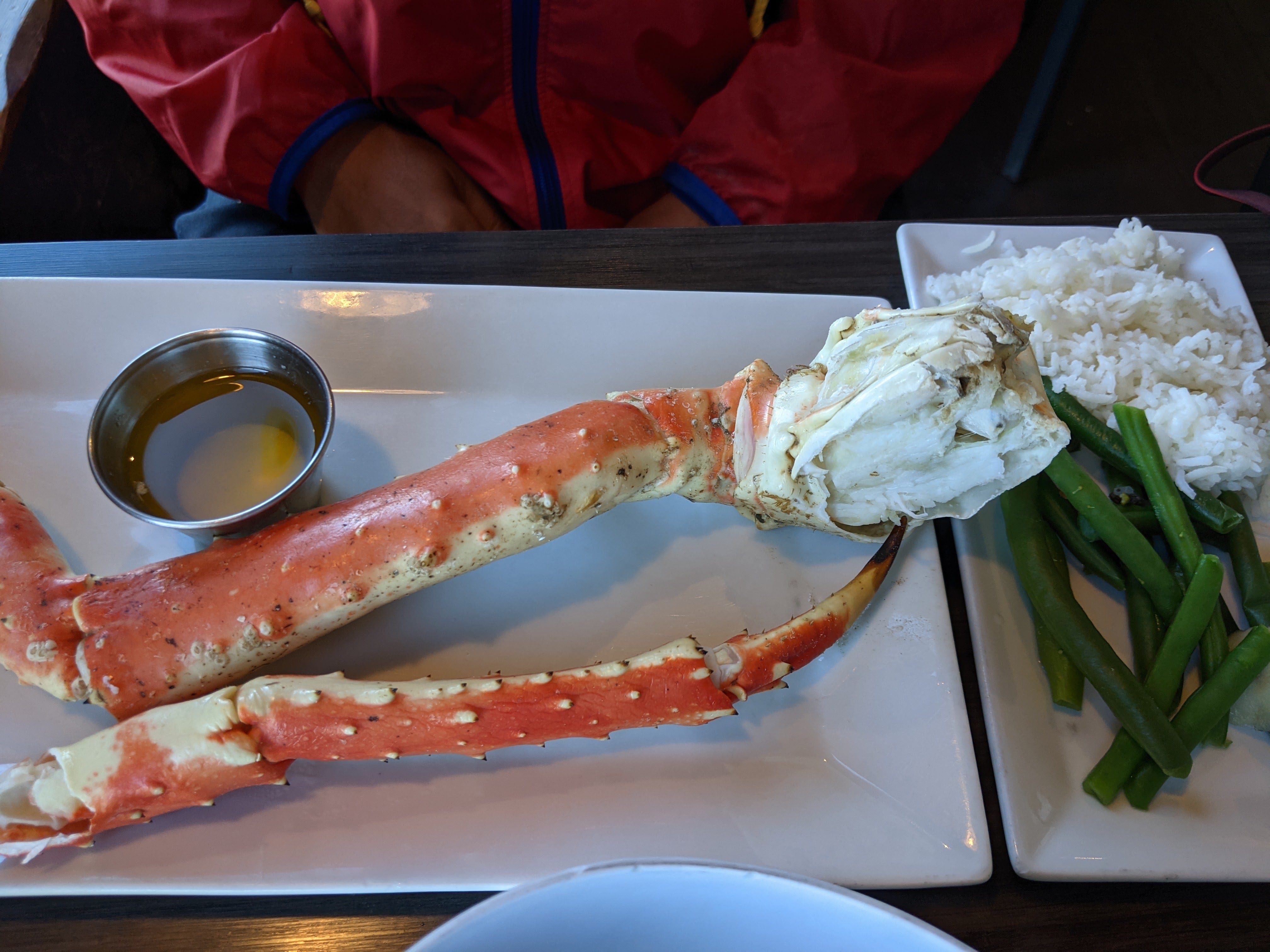
It was Wednesday, all restaurants were back in business. We treated ourselves to a nice dinner of Thai Salmon and Alaska crab leg at the Chinook seafood restaurant. After dinner, we strolled over to the nearby fish cleaning station, and had a good chat with a local couple who were cleaning tons of salmon. The lady told us that her huskies love the frozen salmon head as a popsicle snack, and how she and her son loved the winter in Alaska. In the few Alaskans we ran into, they all seem to be so grounded and have so much energy in their lives.
We had a blast at Seward and the Bear Lake Resort. We consider the possibility of finding a summer job here in future years!
We woke up in the morning. Wimbledon was happening, and we caught some match play. Margie, the innkeeper, was busy preparing breakfast in the kitchen upstairs and the fragrance of food made the best alarm clock ever . During our stay, we had fresh-oven baked bread pudding, waffle, and egg pudding as our breakfast.
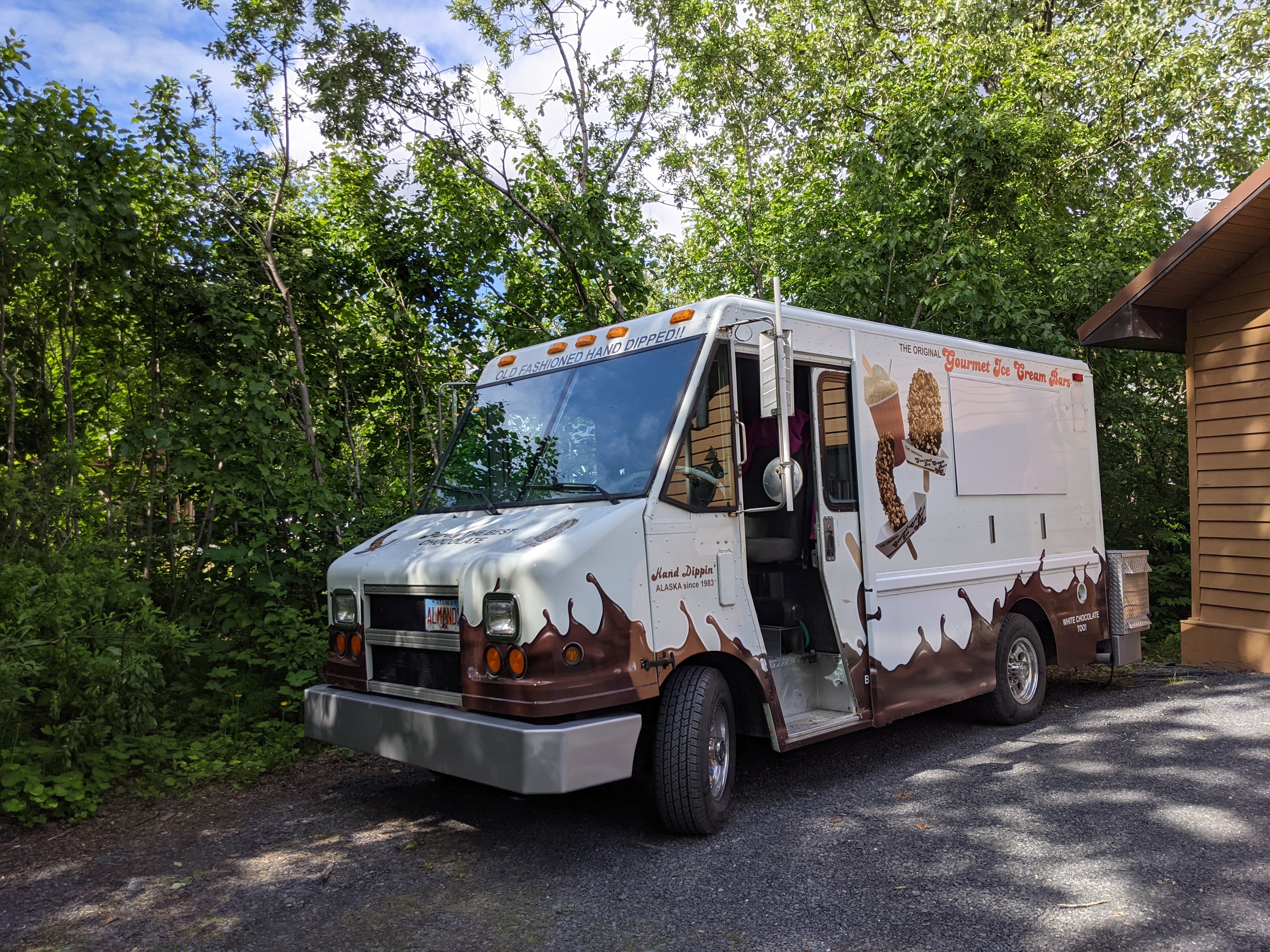
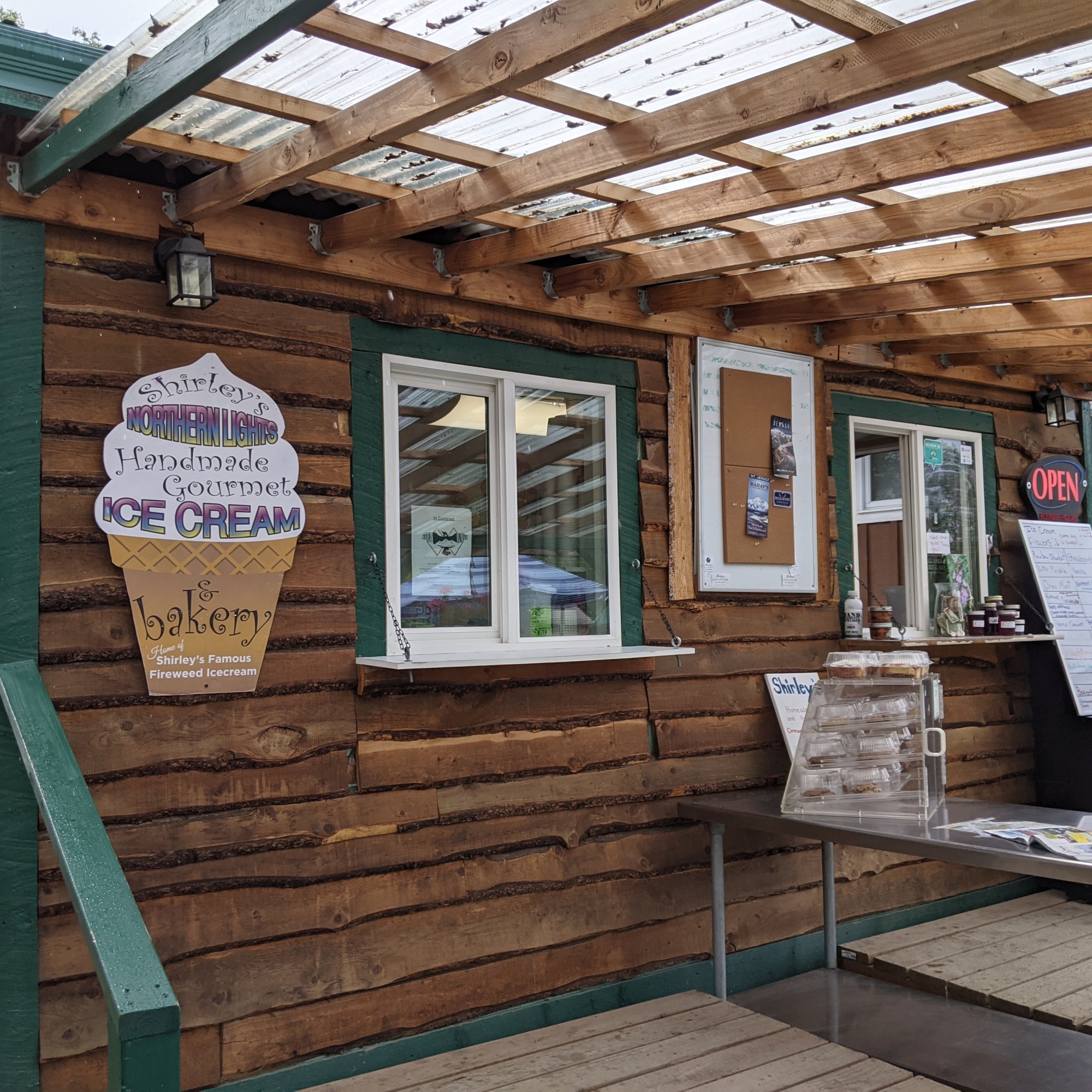
After the MICA-led glacier tracking the day before and a long drive, we took it easy for the day. We had time to socialize with the host, Pat, about her ice cream truck business. Pat showed us the inside of the ice cream truck, and I was so intrigued with the meticulous design, with the cleanness, subtlety and complexity that demonstrated the kind of effort required to run a business.
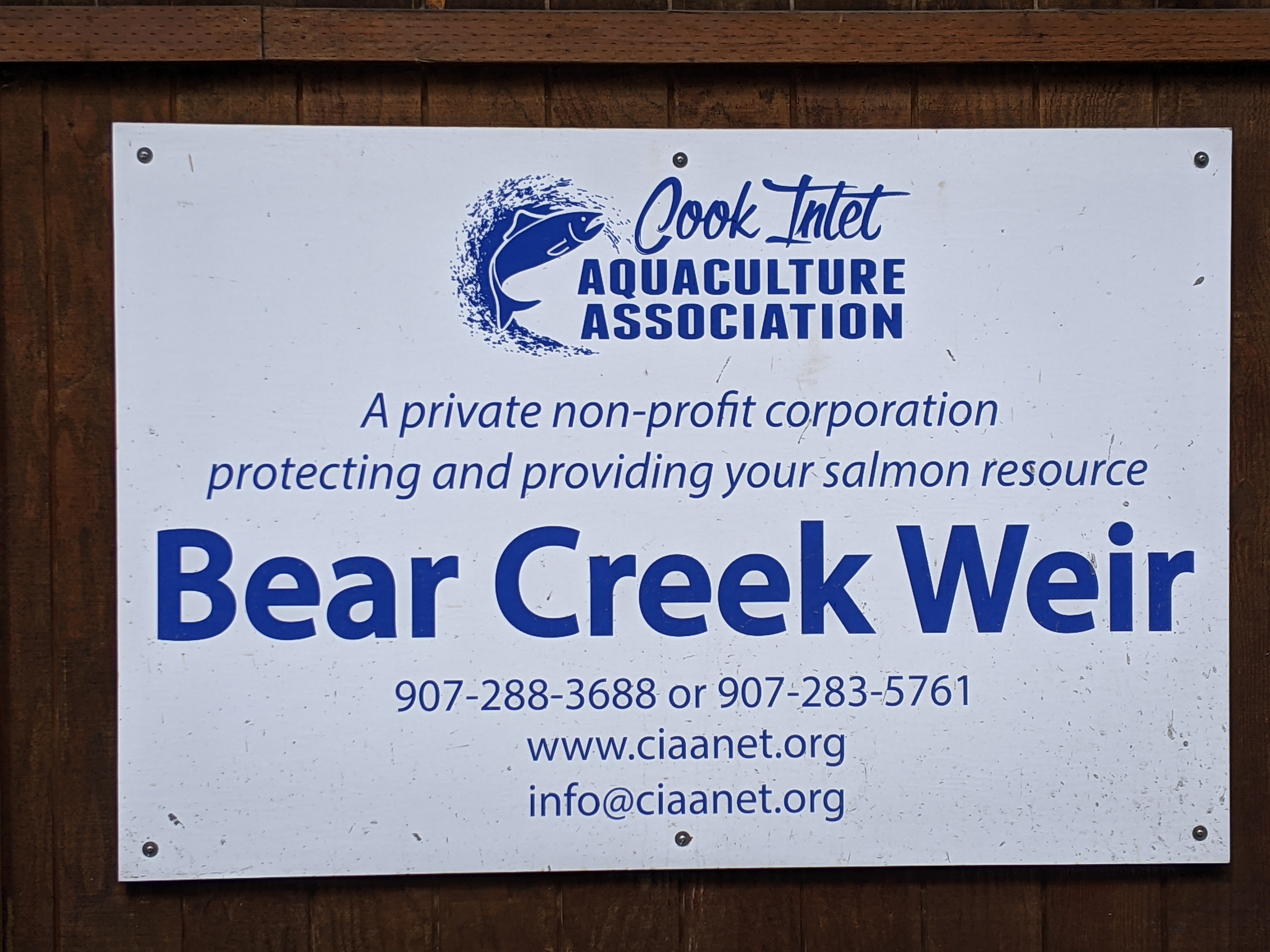
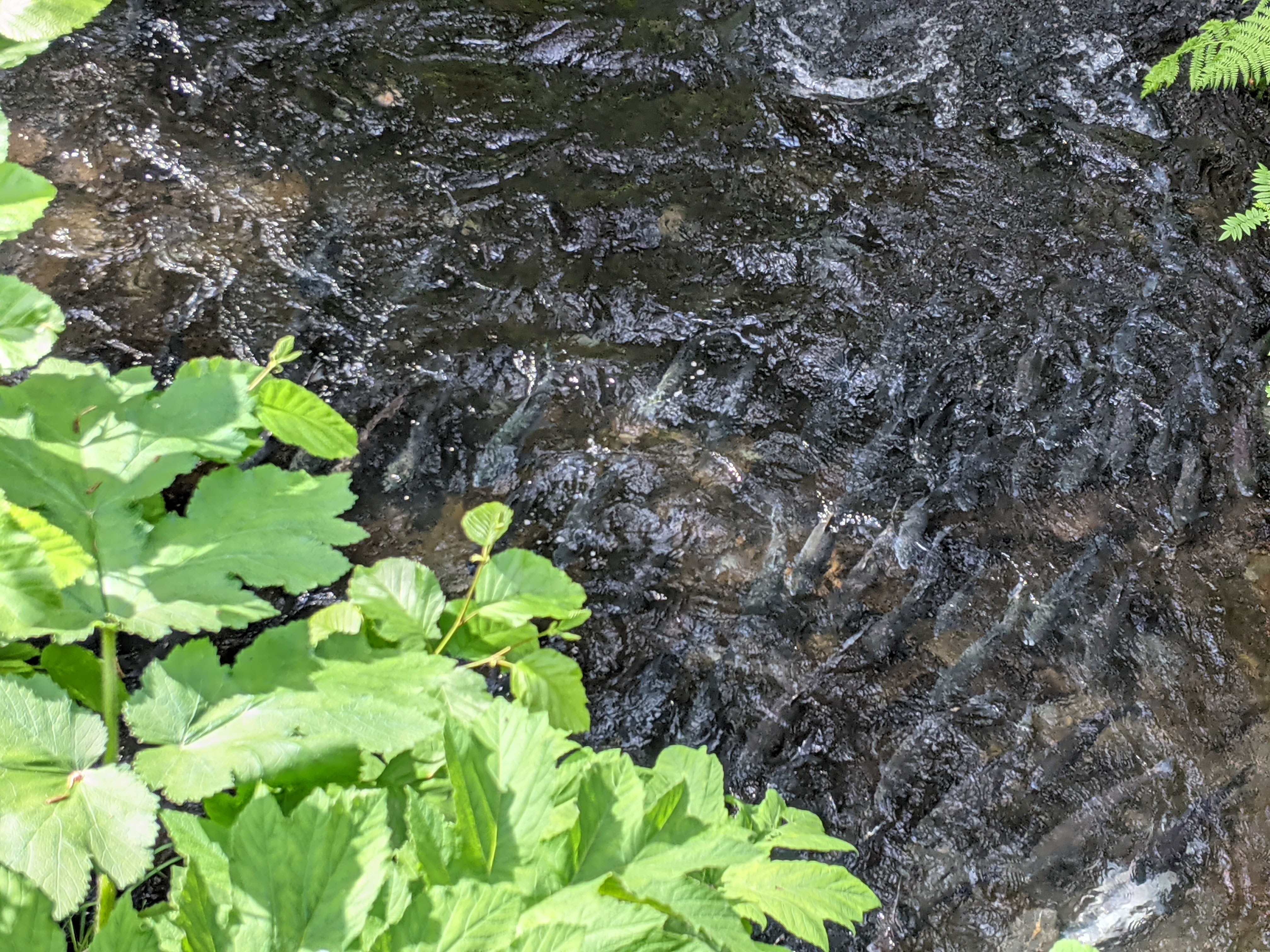
There was a salmon weir, where the salmon spawned before its end of life, on the same street as our lodge.
So many salmon were swimming upstream, that at the beginning, it was not easy to spot. When our eyes got used to their colors and patterns, it was quite a scene, to see the salmon lining up, and swimming against each other side by side upstream towards the weir. There were some that did not make it and there were some that clearly had wounds over its body. A local alaskan warned us to also watch out for bears and said that she ran into bears almost everyday. That gave us a good scare. Bears eating salmon were something on our itinerary later, but we definitely did not want bears to be within striking distance.
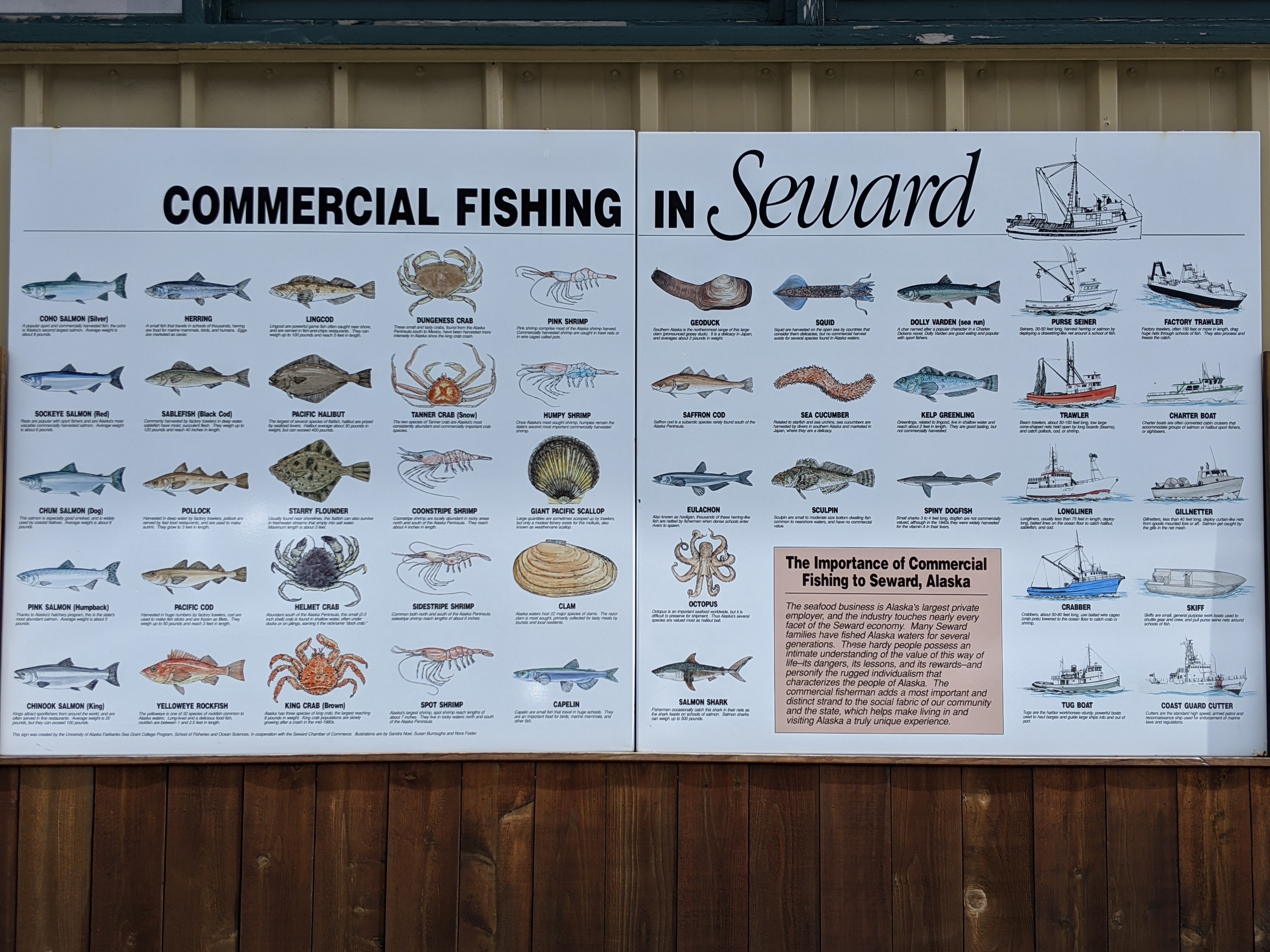
The weir was across the road, so we walked across to see the salmon spawning. Many salmon did not make it up the first trials, some made it only to be pushed back down by the strong current, a few hit the poles heads-on. Their perseverance and hardwork was simply humbling to watch. Up the weir, two volunteers caught a portion of the salmon from the weir to sell them to recover the cost of the research. Can you believe that there are roughly 5 millions of sockeye salmon around the area? That was like tens of millions of pounds of meat supply for the world every year. Simply amazing.
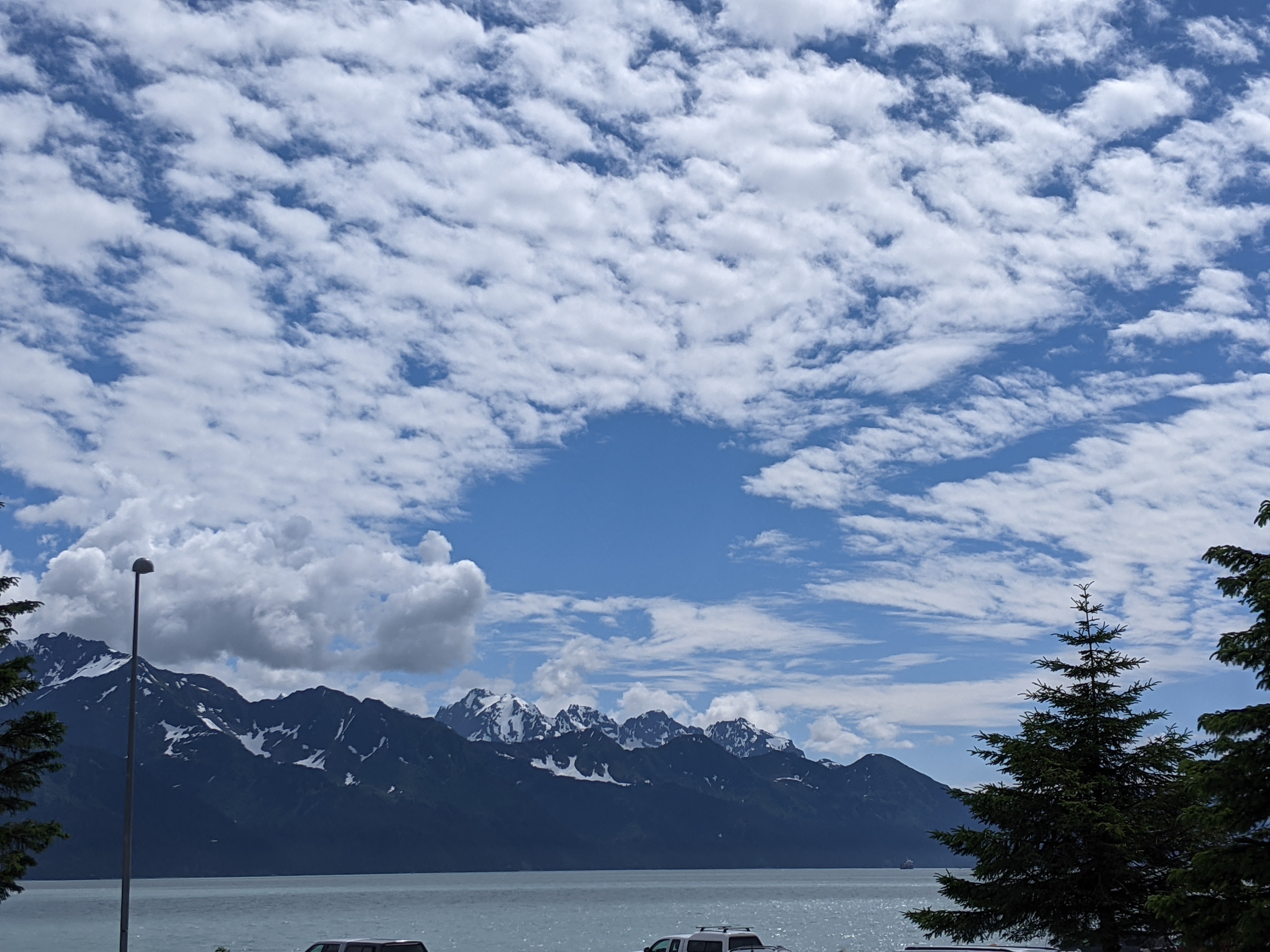
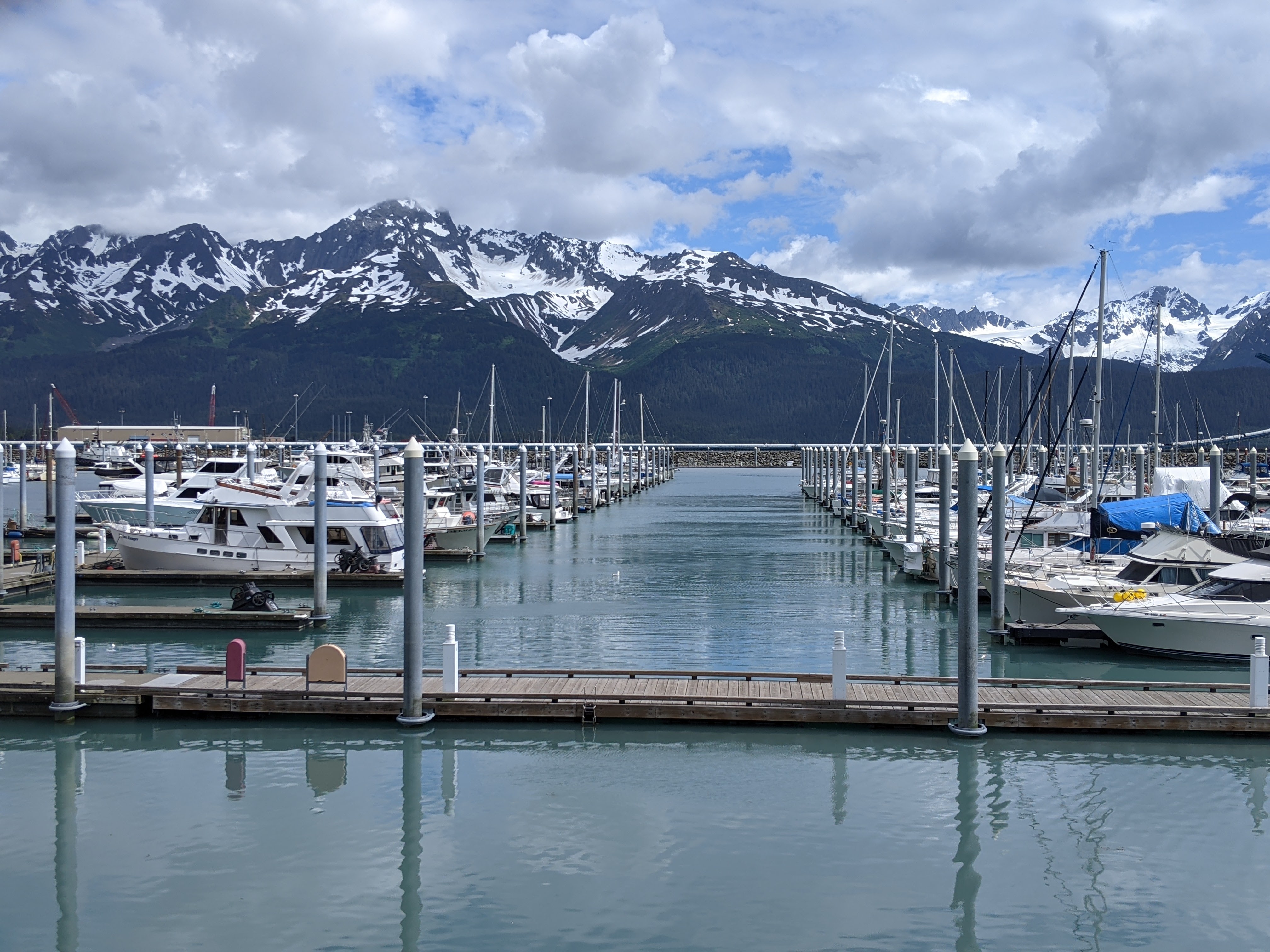
Seward, located in the south end of Alaska, is the south terminus of the Alaskan railways. It was an important military port during world war II, and was damaged by the great 1964 earthquake. It is now a beautiful marina with a range of boat cruises. Its downtown is lined with restaurants and shops, only that most restaurants are closed on Monday and Tuesday. For a foodie, Monday and Tuesday are days to avoid in the Kenai peninsula.
The Tokyo Olympics have been delayed for almost a year, and are about to take place in a month’s time. The poster of Lydia Jacoby, the home-grown Olympian, was seen everywhere. Our host went to the only indoor swimming pool in the city to swim and it was not even an olympic-sized pool. When Lydia won the gold medal in the weeks to follow, we shared that happiness. That jumping up and down celebration of the Alaskans was just so telling (check out this short video that went viral on social media).
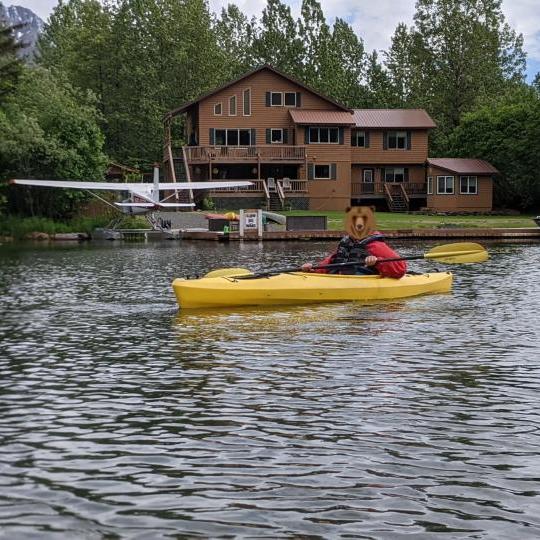
We headed back to our beautiful lodging earlier, and did an hour of kayaking in Bear Lake. It felt so good on the calm lake water, enjoying the forests and the mountains surrounding the lake, appreciating more and more the beauty of living in this place. And our host Dennis told us tons of stories about fishing salmon, hunting and flying.
We took advantage of the fully equipped kitchen and had a simple dinner of instant noodles and chicken nuggets to finish the day.
It was a beautiful day. We woke up ready for breakfast in the award winning restaurant. This was the best breakfast so far. The cabin had a binocular, to help us to find animals, we found none, but it was so comfy to be sitting at the porch of the cabin, breathing the fresh air, and watching the mountains afar. It felt so good!
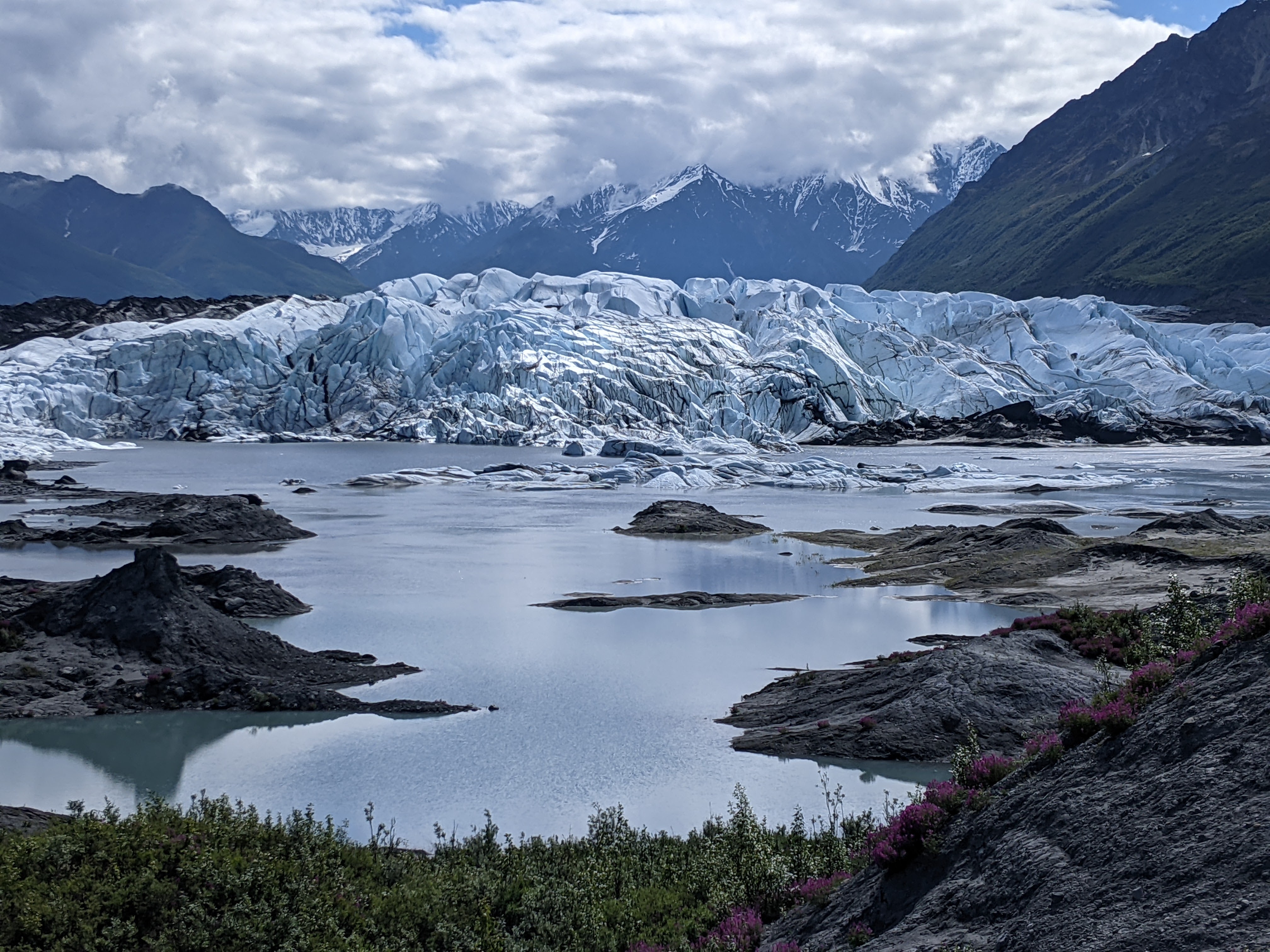
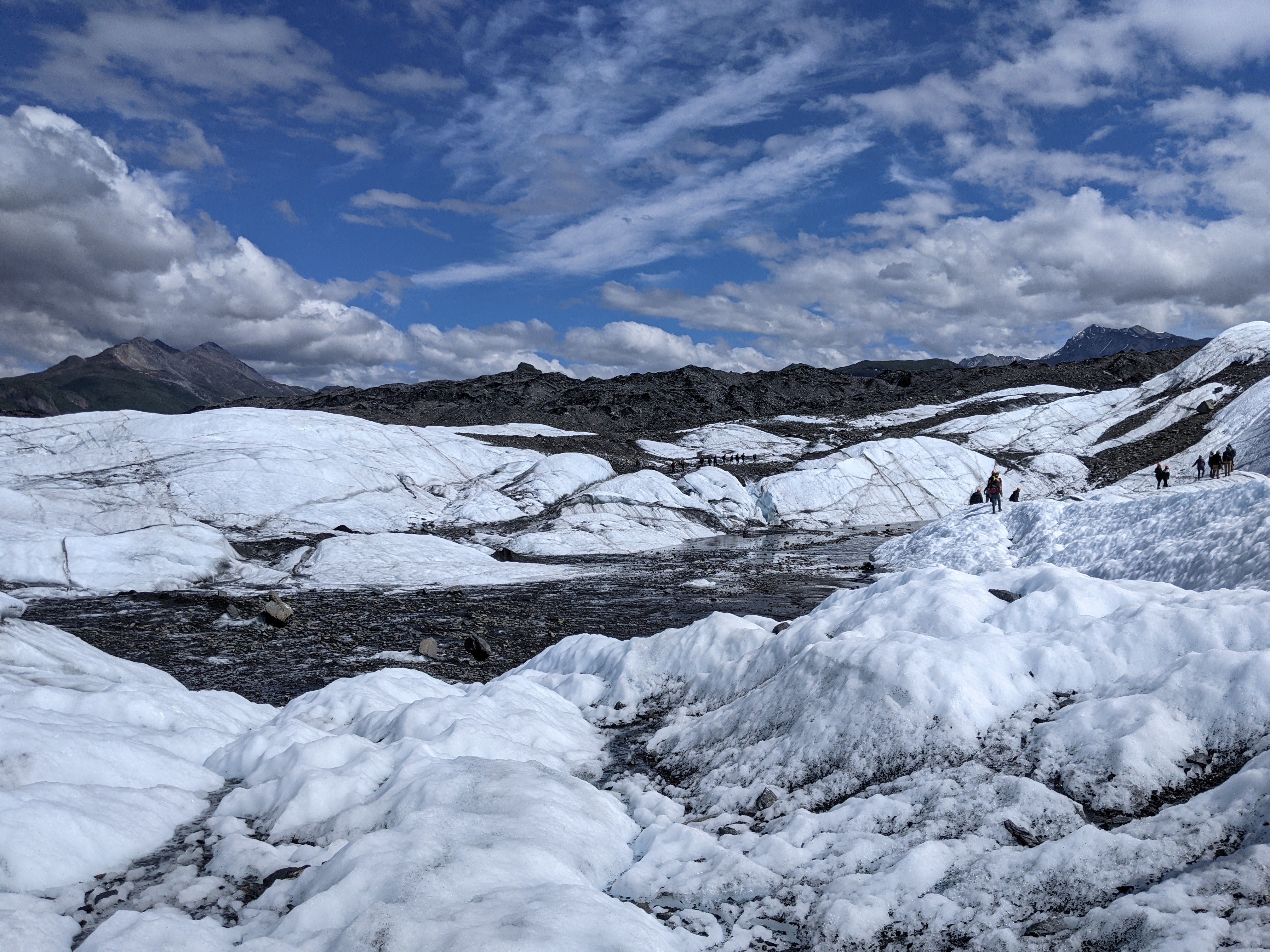
The ice trek tour took us into the Matanuska glacier. Matanuska is a glacier estimated to be 27 miles long, 4 miles wide and 4 miles deep.
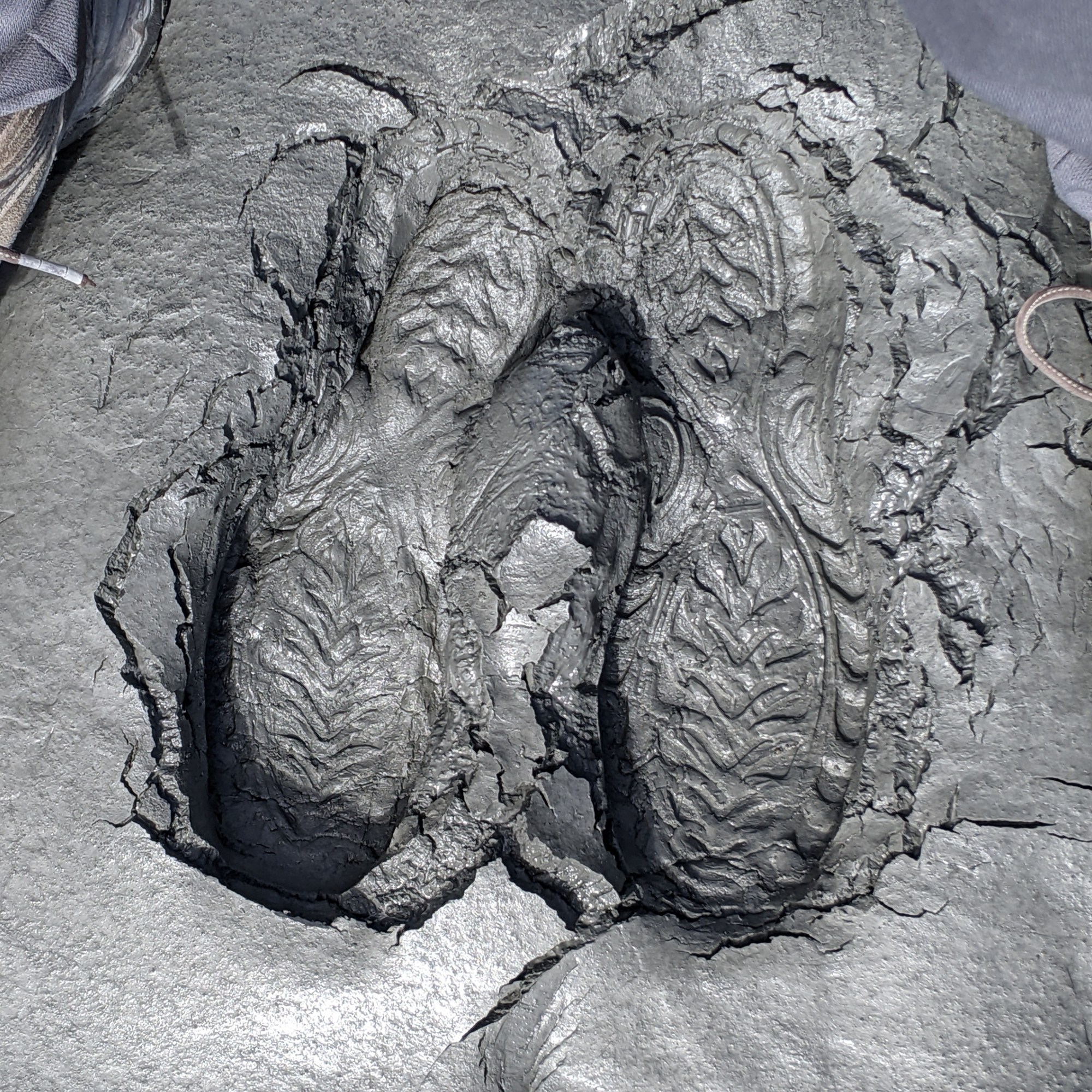
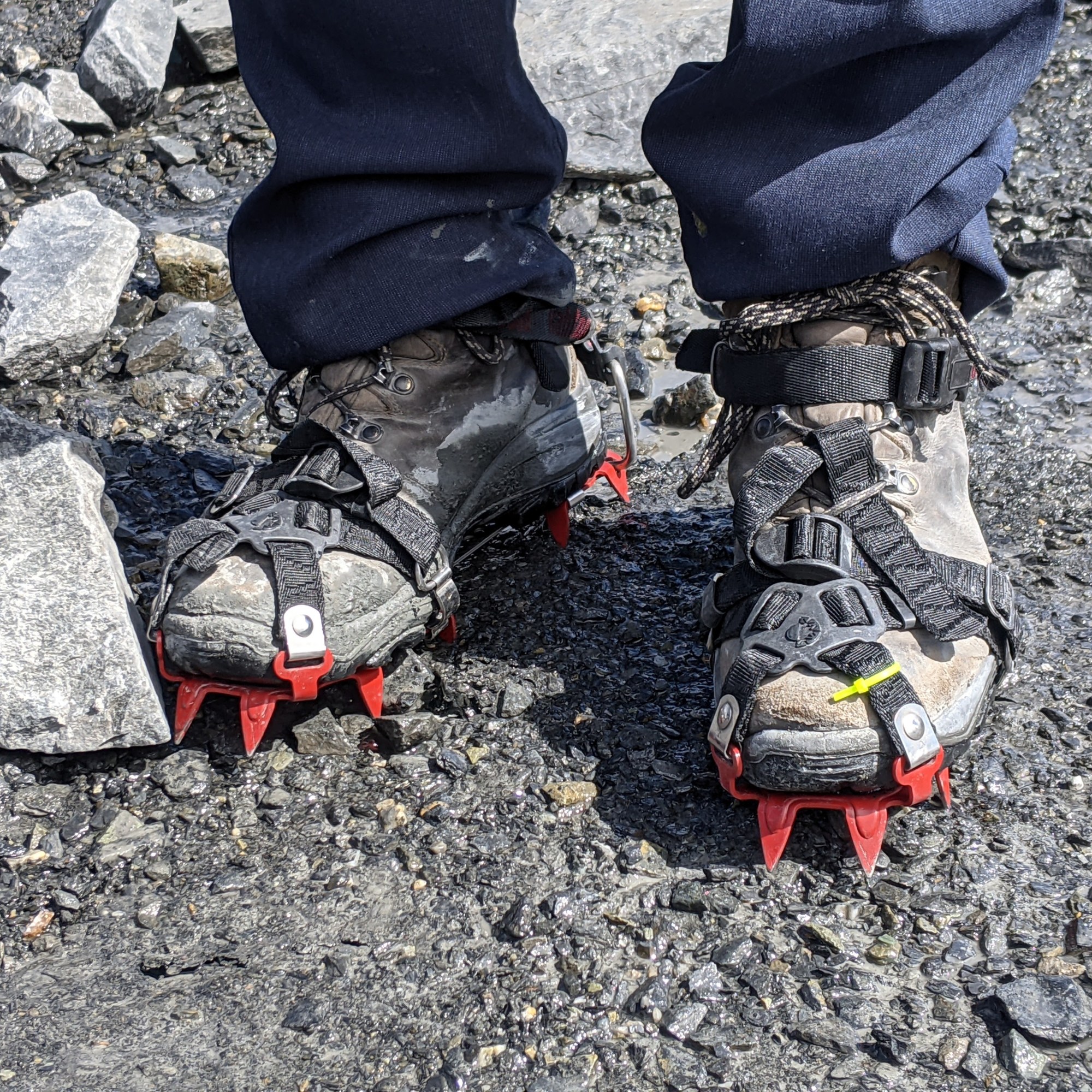
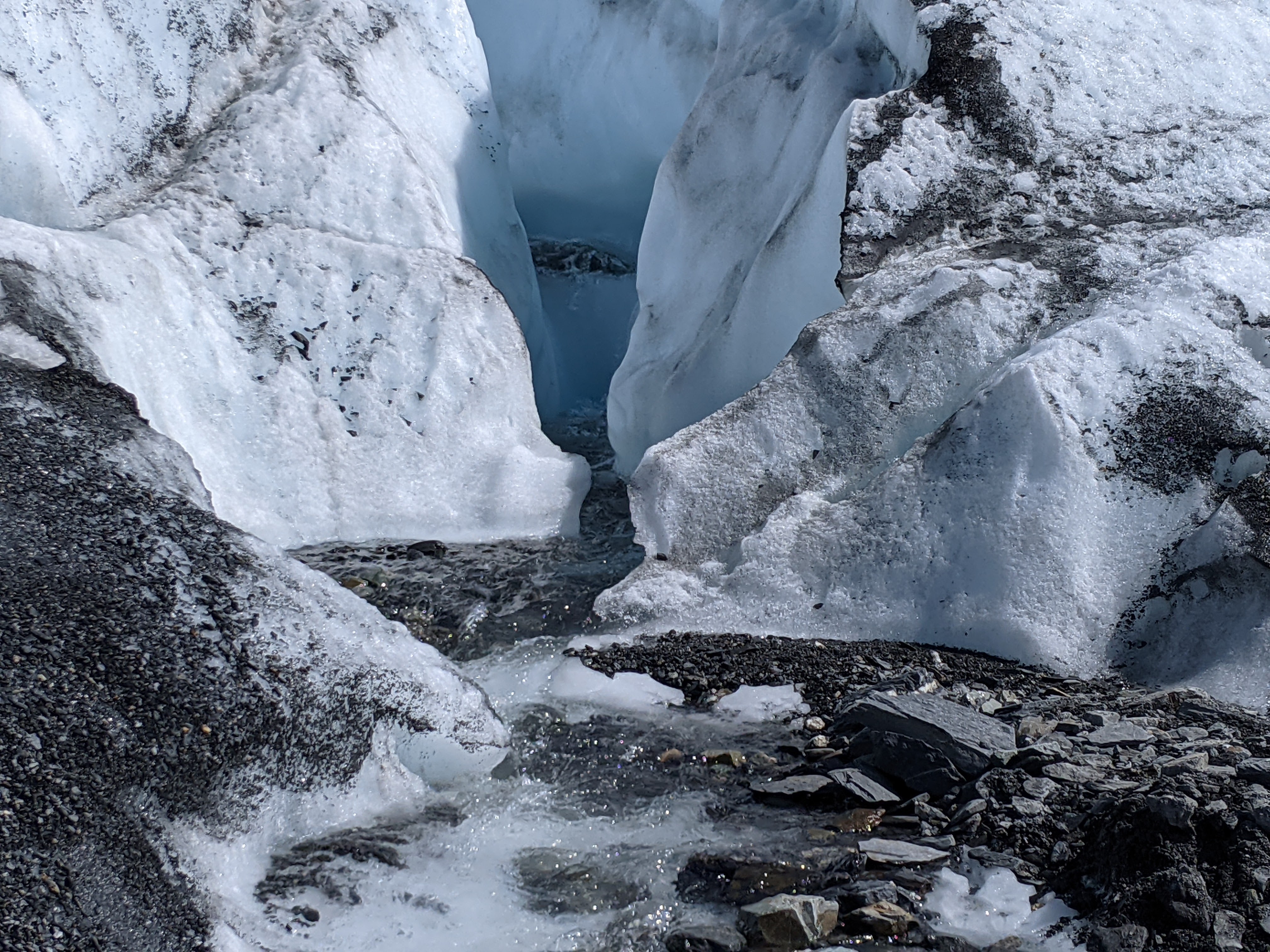
We put on full gear including a hard hat, a well-worn hiking boot from the tour company, and carried a pair of clamping shoes. The tour guides were two young women, both flying in to work during the summer months. They told us that the glacier has been receding very quickly. What surprised us more though was that the glacier started with the “muddy” soil that we stood on; when one of them threw a rock into a narrow muddy poodle, we did not hear the rock landing, that was enough for us not to dip our hiking boots into any of the poodles or crevices through the tour. This was not a good idea to bring small kids who walked to dip into every poodle they saw. We did our own facial mask with the muddy glacier soil, it was very cooling and we took a bag of it home at the end ;).
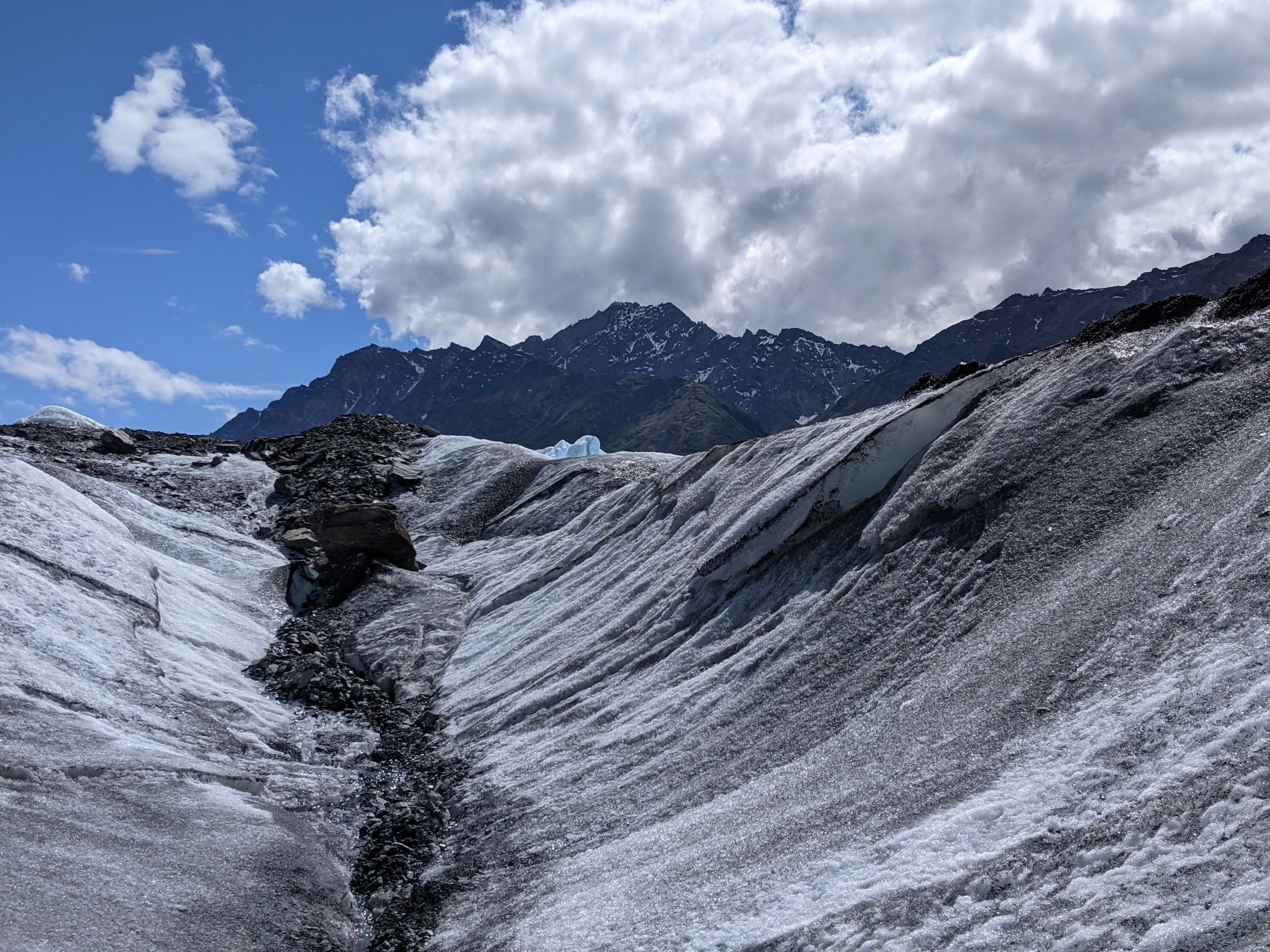
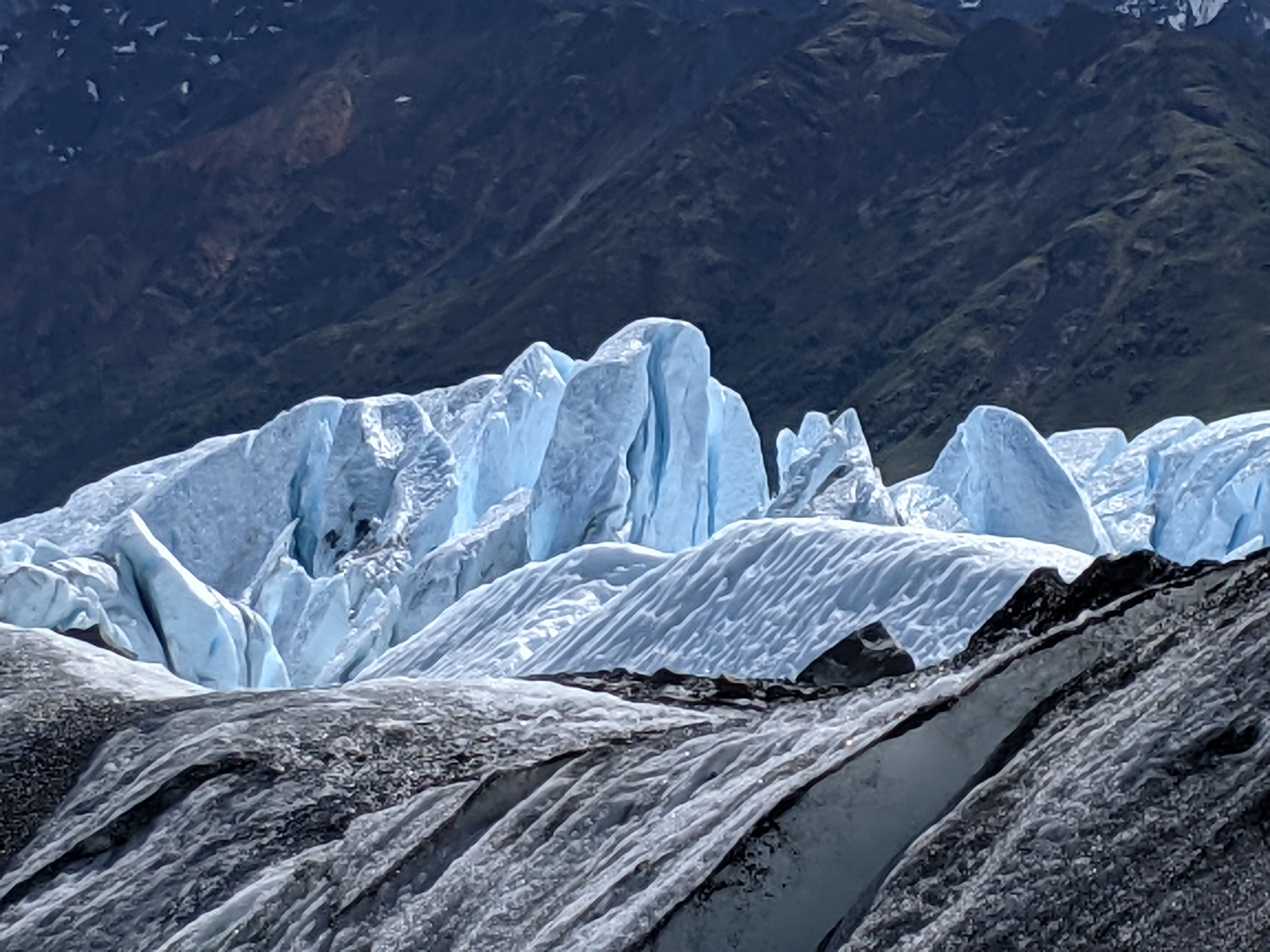
As we trespassed from the muddy glacier to the icy glacier, we changed to our clamping gear and learned how to walk across, up and down with the clamping shoes. It was not strenuous but still tiring with the 3-hour non-stop hike on clamping shoes. There was no resting place once we were on the glacier, we kept walking, only stopping to observe crevices, observe new formations, refill our water bottles with glacier water, or to take pictures. The landscape changed so rapidly, on our return, we could no longer backrack on the same route. Along the way, we could see a few other tours.
Does the constant human footprint threaten the ice glacier more? Does our walking on the glacier accelerate its receding?
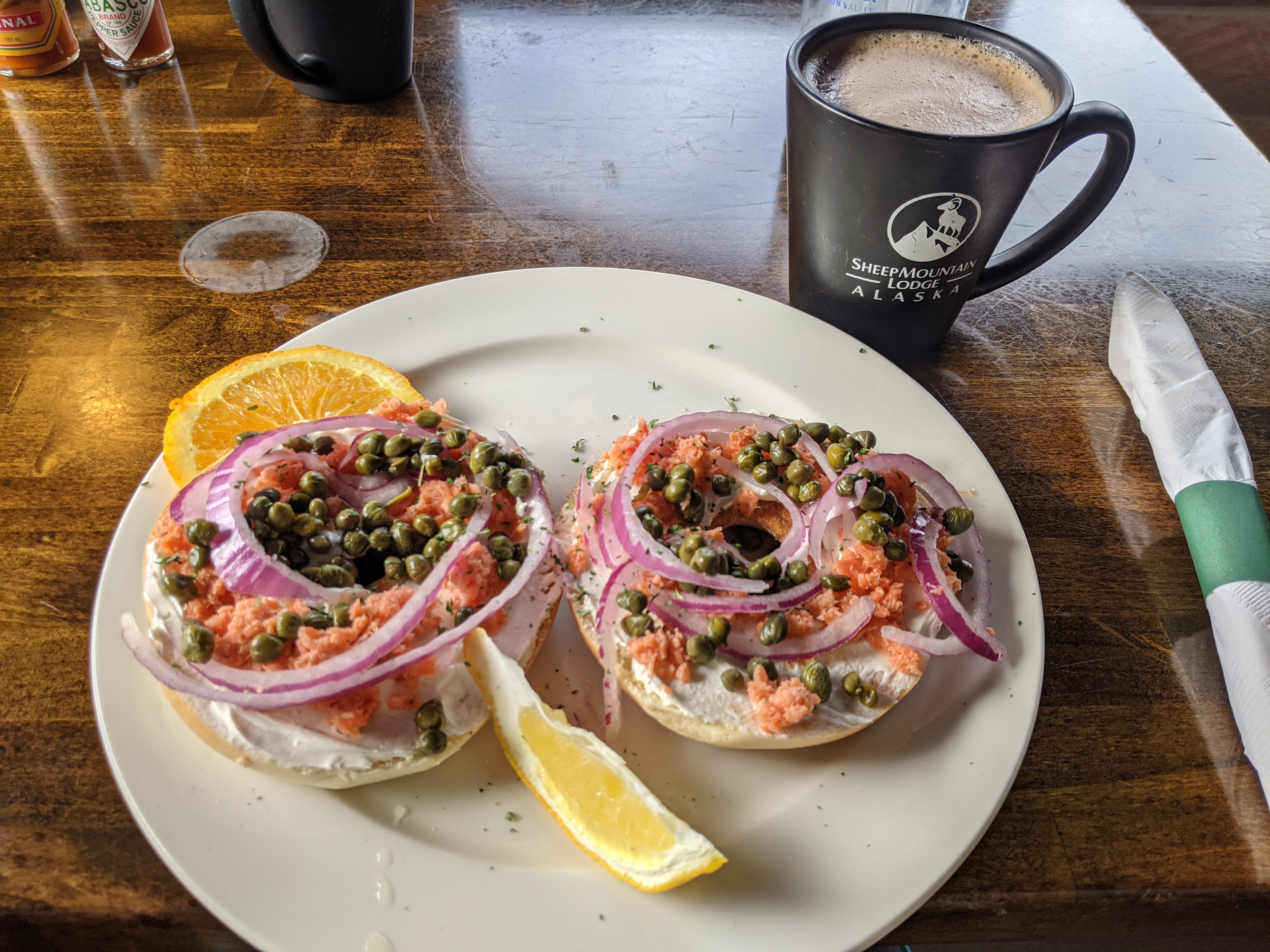
We learned to have a full stomach before any long drive in Alaska, and caught a late lunch back at the beautiful Sheep Mountain Lodge.
We headed south, and Seward was our next place to be.
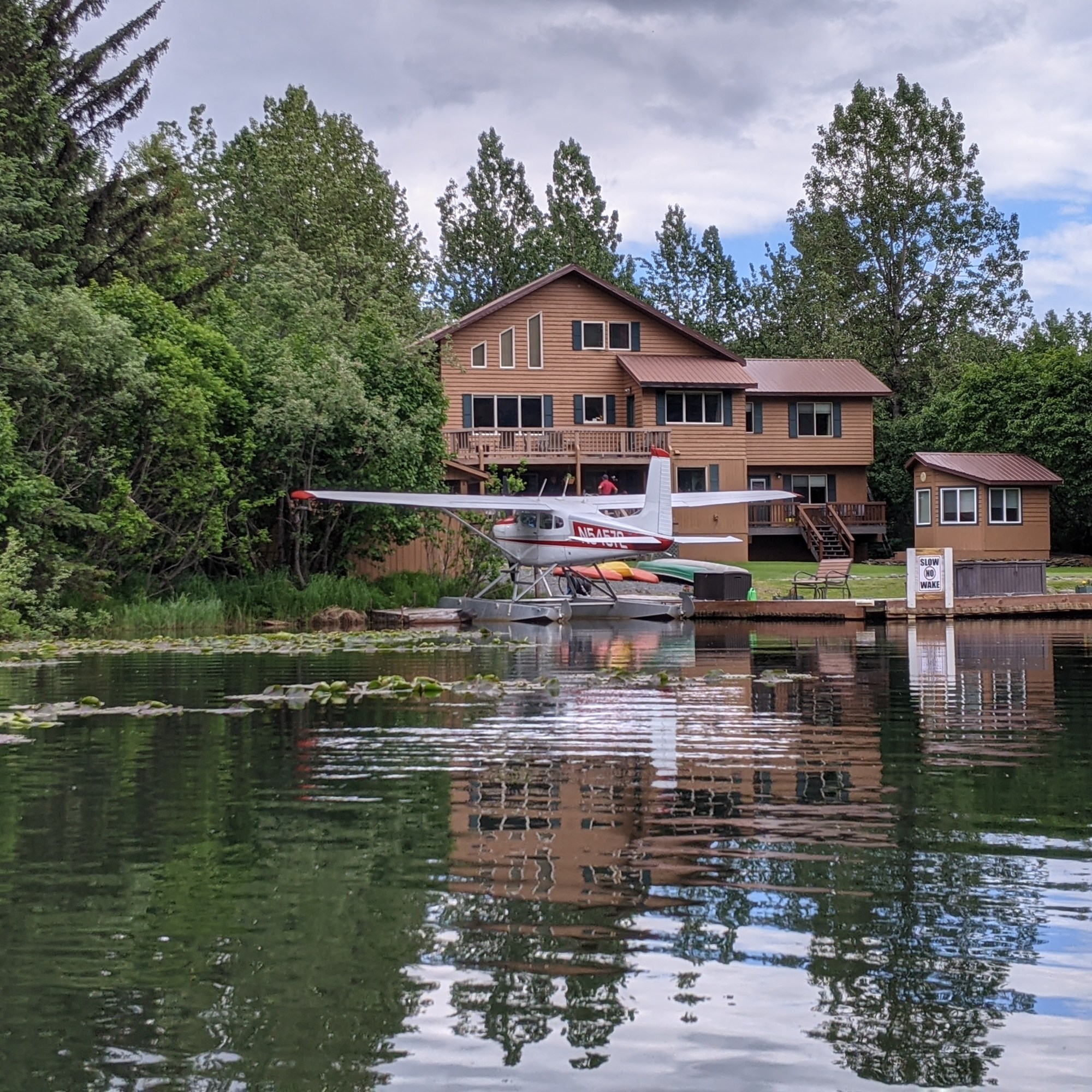
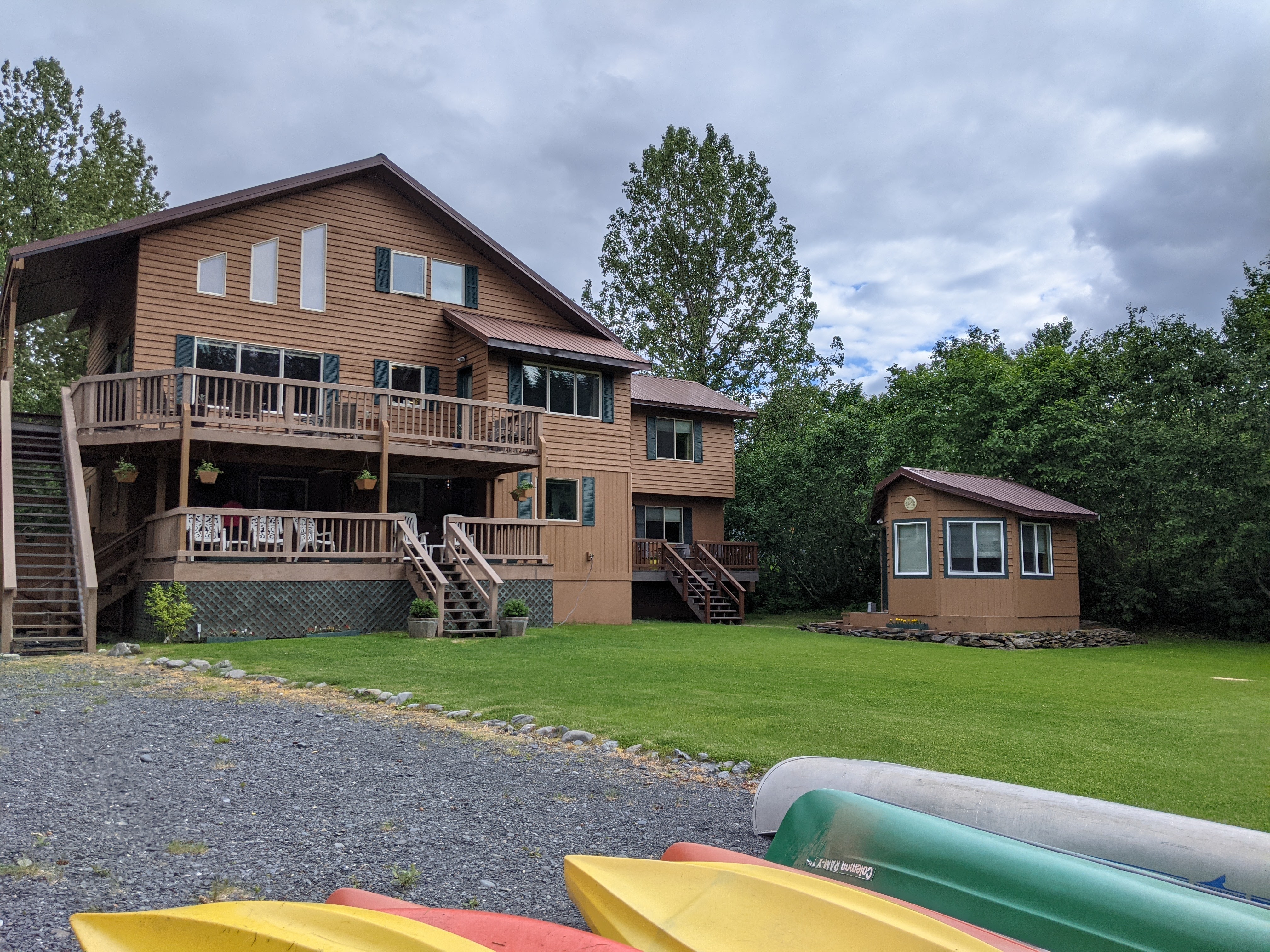
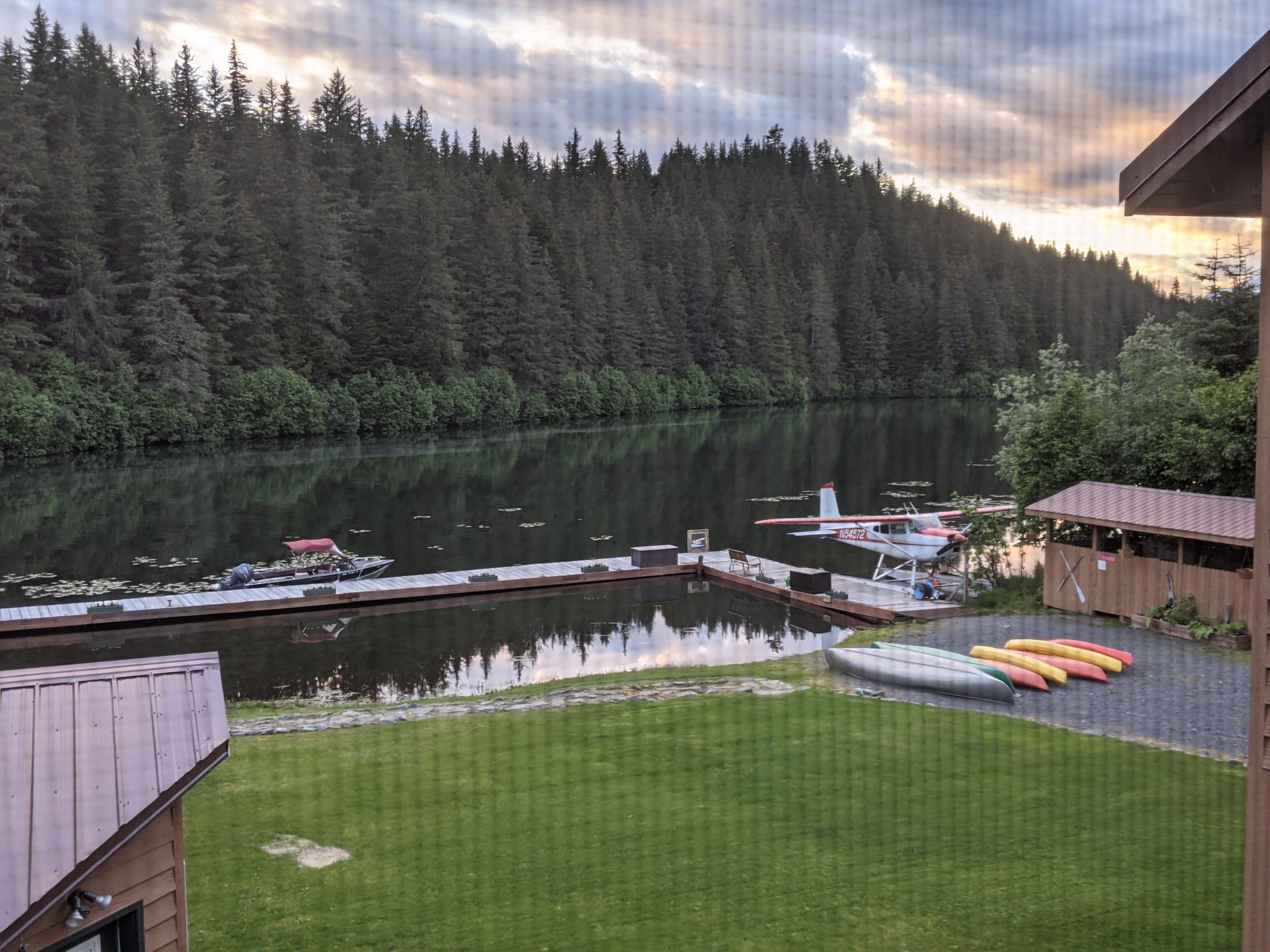
The Bear Lake Lodging inn keeper greeted us as we arrived at the Bear Lake Lodging in the late hours. The innkeeper was a black woman, and we were a bit surprised. In our mind, Alaskans are mostly caucasians. We later found out that she was from Virginia and she took good care of us with her friendly demeanor, her delicious breakfast, and her thoughtfulness to cater for special diet needs. We were tired after the Matanuska glacier hike and the long drive, we wanted a quick check in and a simple room to rest, yet the lodge seemed to be a place in the middle of nowhere. We were thrilled to discover a spacious 2-floor suite, a fully equipped kitchen, a full bathroom, a half bathroom and 2 TVs at our discretion. On top of all these, we had a gorgeous view of Bear Lake with a dense forest in the background, a launch dock with scores of kayaks and canoes ready for use, and an airplane for our admiration. The Bear Lake Lodge became one of the best, if not the best, accommodation in this trip. We would stay here for 4 nights with the innkeeper serving us fresh-made breakfast every morning and the opportunities to meet with fellow travellers.
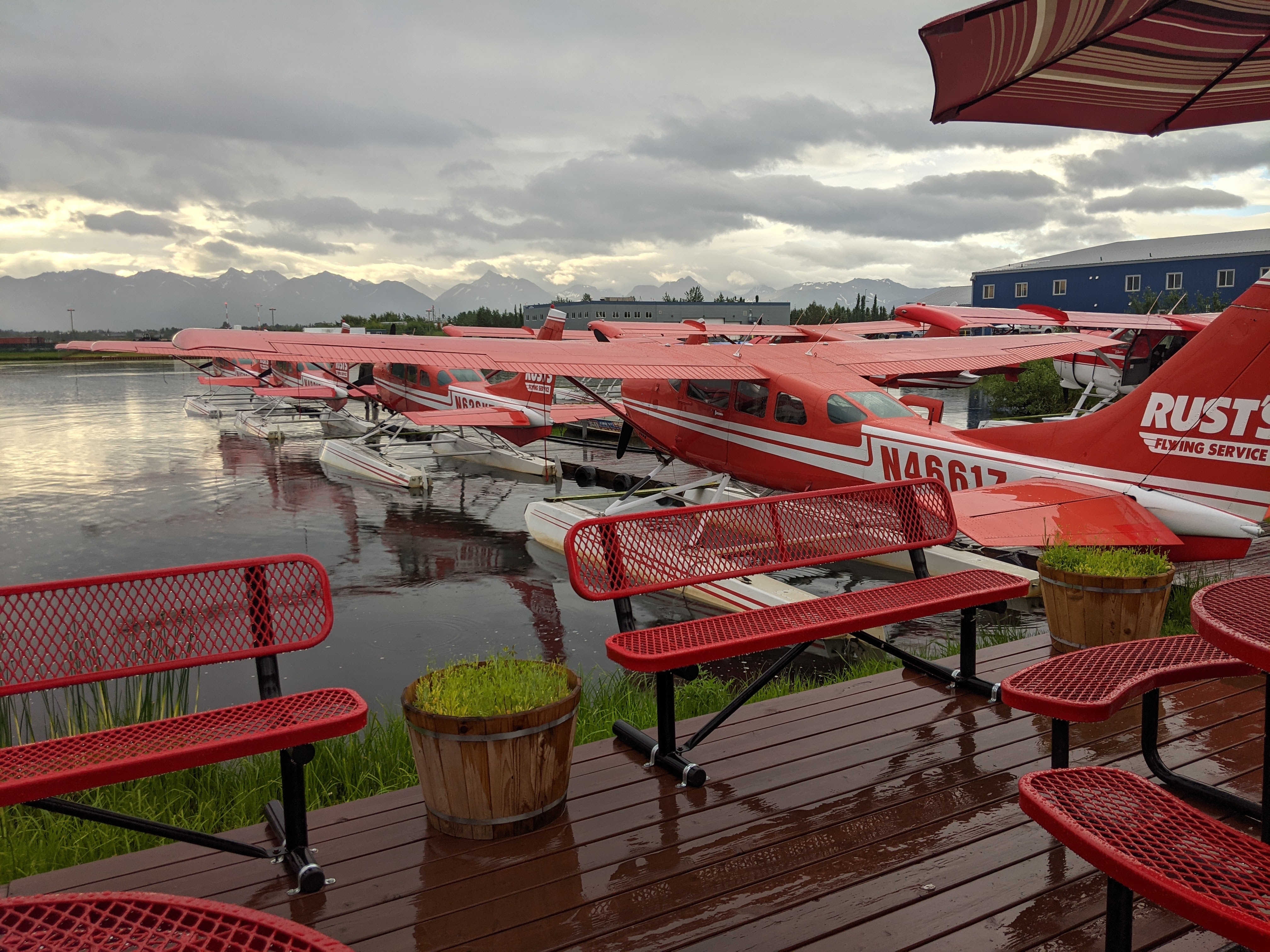
Alaska is so vast, that flying is a practical means of transportation. A much higher % of the population in Alaska knows how to fly than the lower states. Our flightseeing tour included an air taxi tour of glaciers around Denali National Park, and then a landing on the glaciers. Denali is the highest mountain peak in North America, with a summit elevation of 20,310 feet above sea level. It used to be remembered as Mckinley, now renamed with the indigenous term.
At check-in, we were disappointed that the weather was not good enough to get to Denali ranges nor glacier landing, they offered us a shorter flightseeing, a refund or a rebook. We had a busy itinerary, and picked the shorter flightseeing and fair enough, they refunded half of the tour cost. This was not the only time that the weather affected our flightseeing plan.
The air taxi was a very small plane, to accommodate 8 travellers. Each seat was a window seat, equipped with a heavy head-phone for the pilot to communicate with us in the one hour of flight. The lady in front of me did not seem to quite enjoy it, and her hand was holding tightly onto the window sill throughout. Her husband went ahead to sit next to the pilot, busy talking to the pilot, leaving his wife sitting by herself. Behind us was a family of four, the two kids seemed to enjoy the few bumps during the ride, more so than the unparallelled beauty of nature. The pilot did a good job throughout for a pretty stable ride, so the kids were only excited a few times.
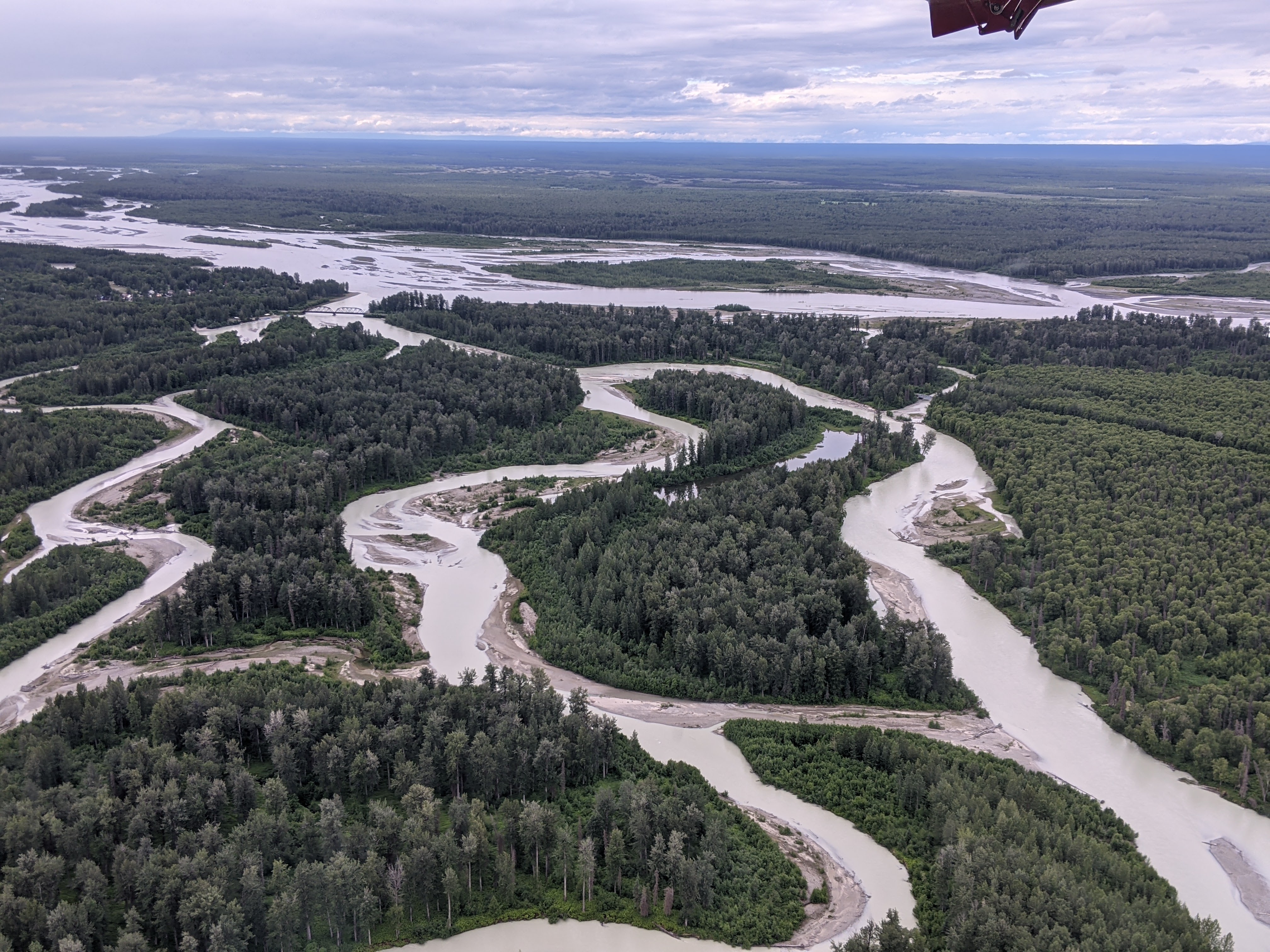
We first saw a myriad of narrow rivers down there, like some picasso impressions. The river is muddy, due to the glacial till, aka the erosion of materials as the ice moved. We saw forests of purple and green spruces, and we came to know later the purple was actually black spruces, killed by spruce beetles.
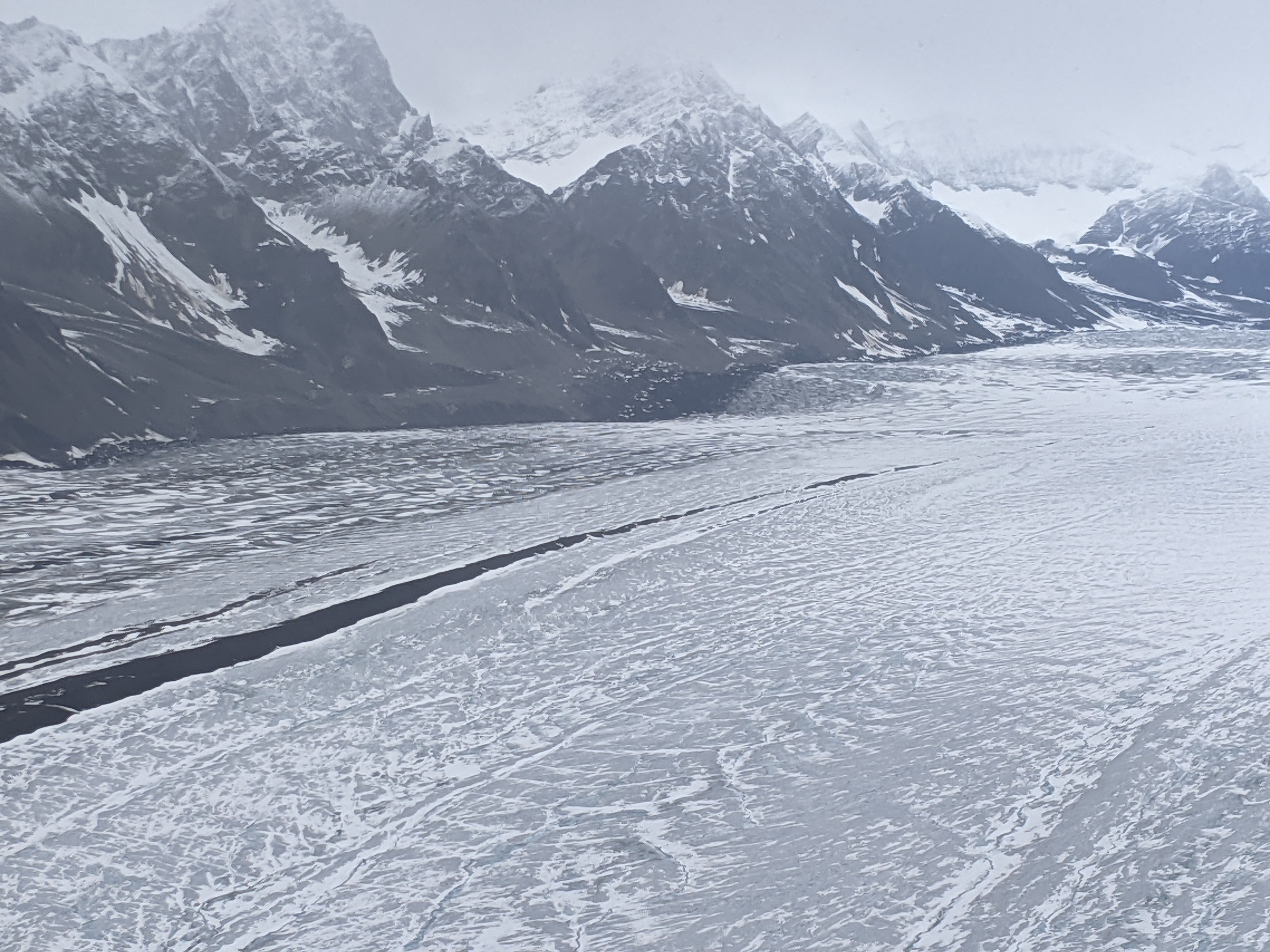
Some 15 minutes into the air, we were surrounded by glaciers and mountains so close to us that we could see the waterfalls, the glacier tracks, the water amidst the glaciers (moving ices) that just looked like bluish crystals among the ices of pure white. We also saw a few tents down there. It felt like we were back to the ice ages. Even though we missed the glacier landing, I ran out of words to describe the beauty and the power of the glaciers. This one-hour flightseeing features the most beautiful scenery and humbling experience I have ever experienced on a plane. If this is the only thing we did in Alaska, it would be a good trip by itself. It is better to let the photos speak about the scenery.
After the flightseeing, we got some delicious Spinach bread from a food truck on the main street, and got some Birch syrup as a souvenir before leaving Talkeetna. From Talkeetna to Denali, it was 2 and a half hours drive on a well-paved highway, with spruces lining the highway, and often a 360 degree view of mountain ranges. It was mostly wilderness, until we got close to Denali. We checked in to the Denali Park village, which was an upgrade from the Talkeetna inn the day before.
Sitting in the Denali Park Village restaurant, enjoying food, chatting with the waitresses coming from afar to do a summer job, and some live music, life felt very good.
It has been a month since coming back from Alaska. My pixel phone was damaged during the salmon catching at the Kasilof river, and stayed in the Alaska time zone for another few weeks until it finally recovered itself.
Writing about Alaska travel is a luxury when the covid-19 pandemic is still rampaging a good part of the world. In Alaska, social distancing means that the Alaskans get out of their homes. Such is the vastness and the wilderness of land in Alaska; and at the time of our travelling, most people hardly wear masks in restaurants.
This trip has been made special not only because this made our first flight since the onset of the pandemic, but also the unusual effort put in to make it happen. We can forgive Alaska being so much more expensive than the lower states, given its tourism is squeezed in mere three summer months. Little did we know that many other Americans were thinking of travelling to Alaska at the same time as us; little did we understand the airline and rental challenges to resume the operations; little did we know about so many other things.
Day 1 Arriving Anchorage
It was a direct flight between San Francisco and Anchorage, with less than 5 hours flight time. Since we booked the air ticket, there were various types of changes by the airline. We ended up with a 5:30am flight via Denver, and by the time we arrived in Anchorage, it was 10 hours later. Denver was a busy and lively airport, everyone was wearing masks and business seemed to have resumed, there were long lines to get coffee, to get food, most restaurant tables were taken.
The car rental business has been so hard hit by the pandemic, they have been forced to sell most of the fleet, and the resumption has been hindered by major shortages of chips that affect cars, computers, phones. It was so bad that I even got a rental quote as $5000 dollars per day. That was as crazy as it could get. After thousands of clicks on the computer, and after seeing the message “sold out in all locations” hundreds of times, we finally found a car rental from Dollar, which seemed to have merged with Hertz. The rental was at a hefty price of over $300 per day. With the reservation, we still worried about our rental – would the car show up? There were lots of scary stories that renters had to wait for hours. Fortunately, we were not among the scary stories. The rental pick up was smooth, we took the smart move to join the express club to cut short our queuing time. We got a Nissan Versa 2018 model, quite some miles on it already; the wear and tear was easy to see. The car came with a CD player, it did not read our USB device, nor did it come with any smart auto setup. In other times, it would be considered as a total rip-off; this time, we were happy to get going.
The Internet has become as essential as electricity. Our mobile plan works for 48 lower states, but not in Alaska, so we had to swing by a GCI store for a SIM card. At dinner time, we learned good restaurants in Anchorage mean either a reservation or an hour of waiting. We fell back to minimizing our spend and filled our belly with KFC chickens. That Nashville style KFC chicken was still pretty bad.
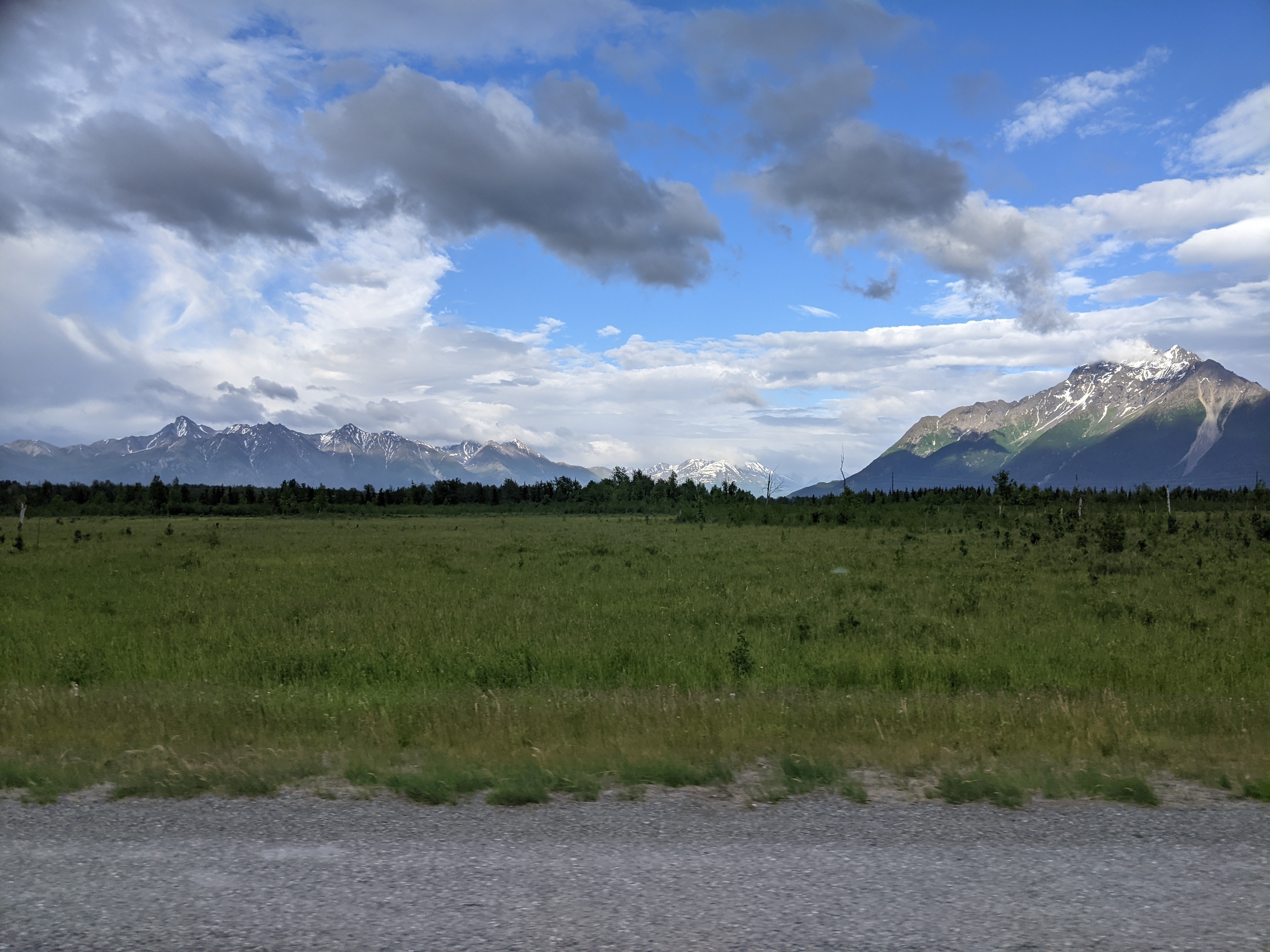
Anchorage is a modest city beautifully surrounded by mountain ranges. The mountains were no longer snow-capped, the unmelted snow painted interesting patterns over the mountains, which added variations to the ranges. In our drive from Anchorage to Talkeetna, we were treated with the grandeur of the mountain ranges through and through.
Talkeetna is a nice little town and has been a popular stop for climbers to the Denali range. The main street is lined with restaurants, gift shops and galleries. In Alaska standard, the main street can be considered as a busy place. We stayed in the Talkeetna Inn. The inn has an unbeatable location, and a nice view of a flowing river. The room was new, but quite costly in terms of what it offered.
Flightseeing awaited us the next day. We went to bed at usual bedtime, when the sky was still very bright.
In this second year of the pandemic, I resign to the fact that staring at our computer screen for many hours is going to kill the eyes. No matter how the new normal becomes, the pandemic has taken a toll. It takes a break to realize we need a break, there you go for a break at South Lake Tahoe.
South Tahoe is about a 4-hour drive and made a perfect destination for our first Tesla 3 “road trip”.
Day 1
We resume our subscription to Tesla entertainment which gives hundreds of radio stations plus many other things. We found all the Indian radio stations not working and half of the Taiwan stations not working, but there are still enough to keep us entertained and we get used to the modern day standard of product testing in the high tech world. We charged our Tesla 3 to 100% for the first time but still need to fit in a charging stop. The 4-hour trip became a 5-hour trip. Along the way, we could see more traffic along the way compared to the year 2020.
We arrived at Marriott Timber Lodge. The resort area was unexpectedly crowded and it was touristy; we were also surprised that the outdoor swimming pool was open. Located just a block from the Nevada stateline, the whole area felt a bit like the Las Vegas Casino Strip: touristy and busy. It was a cool thing to go back and forth between California and Nevada many times over the next few days – a reminiscence of the Istanbul ferry ride that went between Asia and Europe all day long.
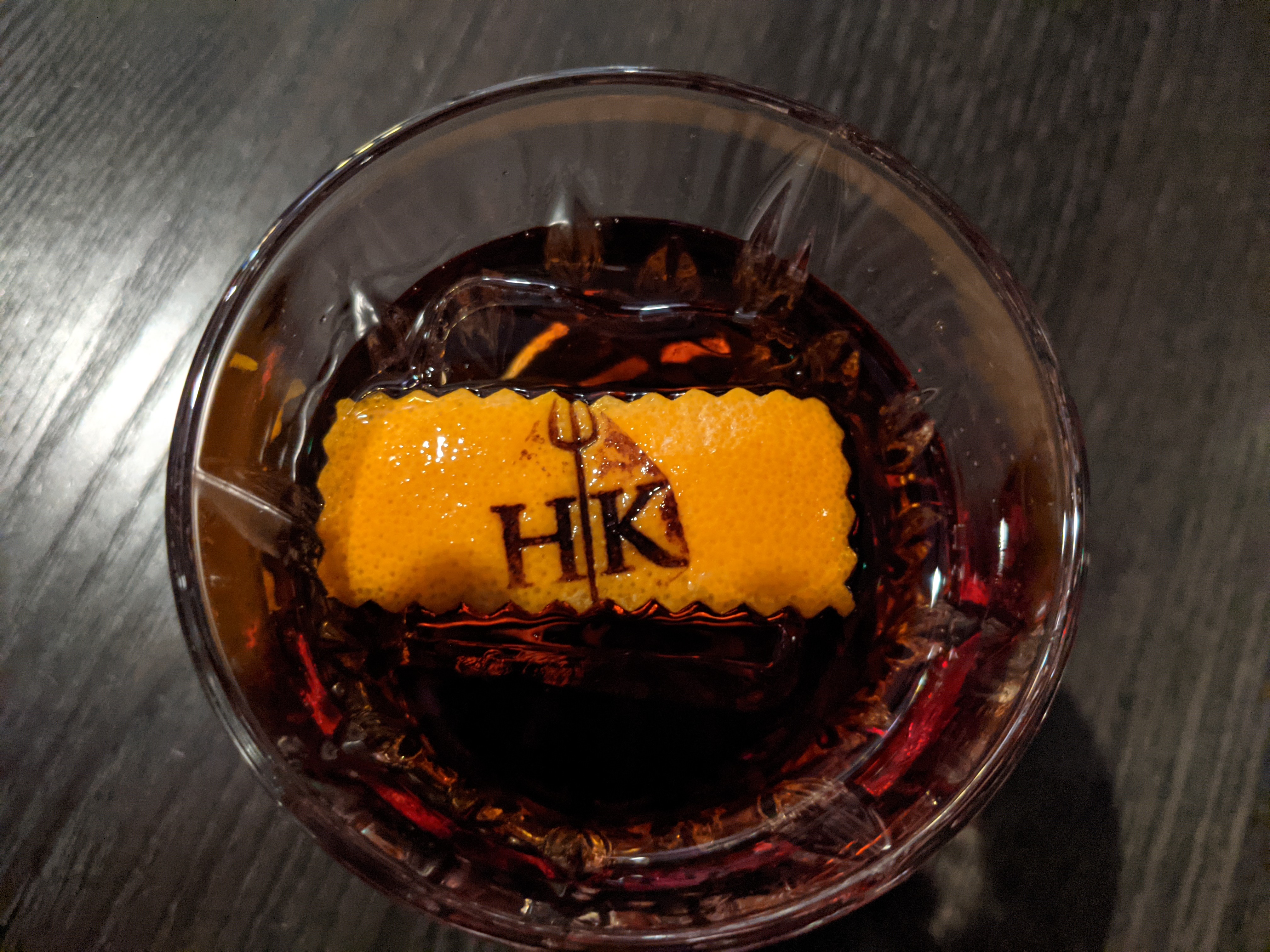
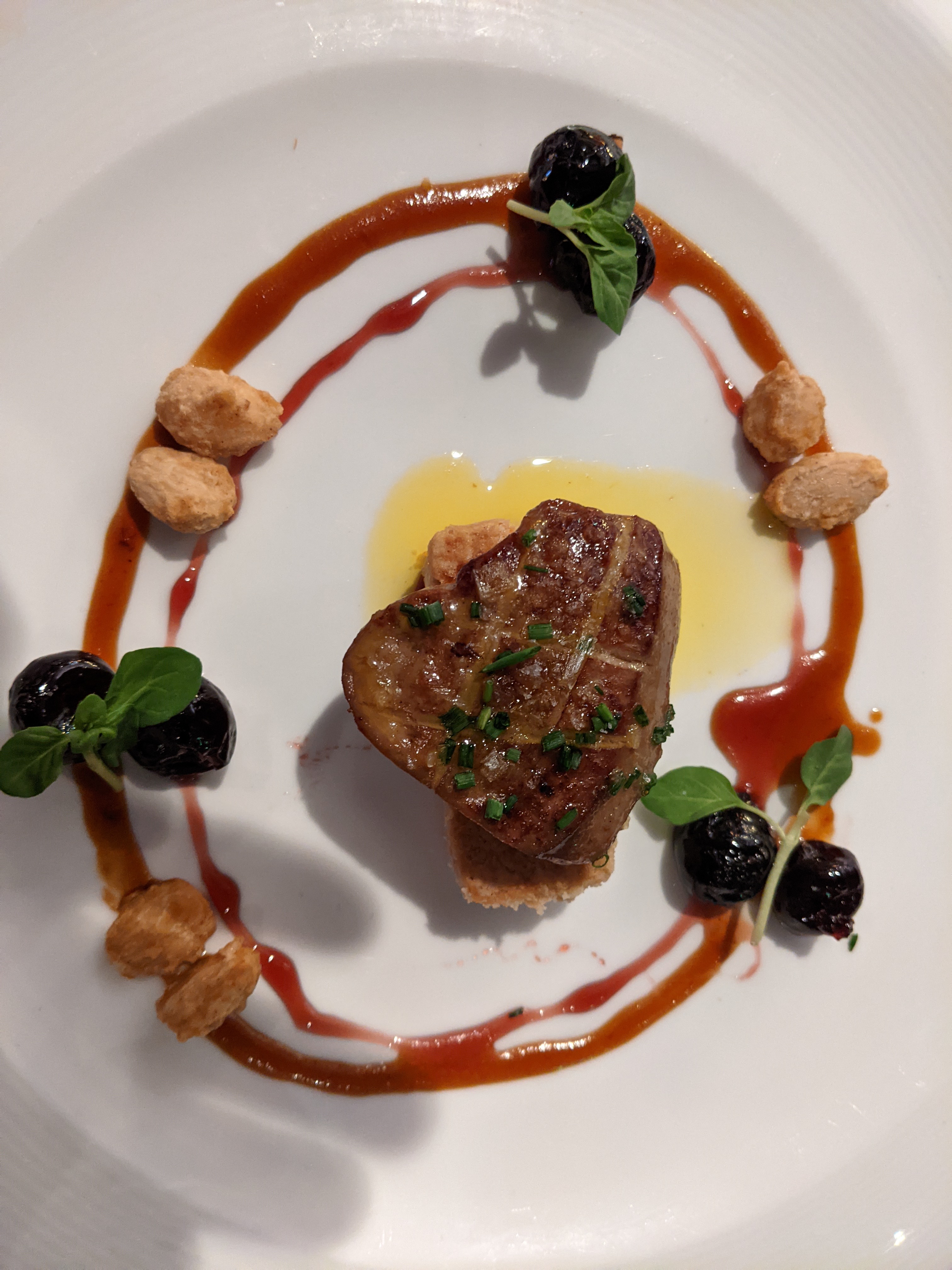
We checked out the Gordon RamsayHell’s Kitchen, a restaurant with the same name as the TV show located inside a casino, about 10 minutes walk from the Lodge. We were fortunate to get a table without reservation and there were about 90% of diner occupancy. Even inside a casino, Gordon Ramsay name brand supports its premium pricing. We ordered a few appetizers including scallops, lobster risotto and the foie gras on shortbread followed by the main course of Beef Wellington. It came with a dessert which tasted like a pumpkin sponge cake with a bit too much sugar. These dishes do not seem to be designed to complement, so it left me with a lot of different tastes but no single dish stood out that I would come back again for. My husband enjoyed the beef wellington the most. Overall it has been a worthy one-time experience but was overpriced in the casino ambience.
Day 2
The very friendly concierge told us that most water activities are not yet open: the water is cold and the weather is cool, kayaking is out of the question.
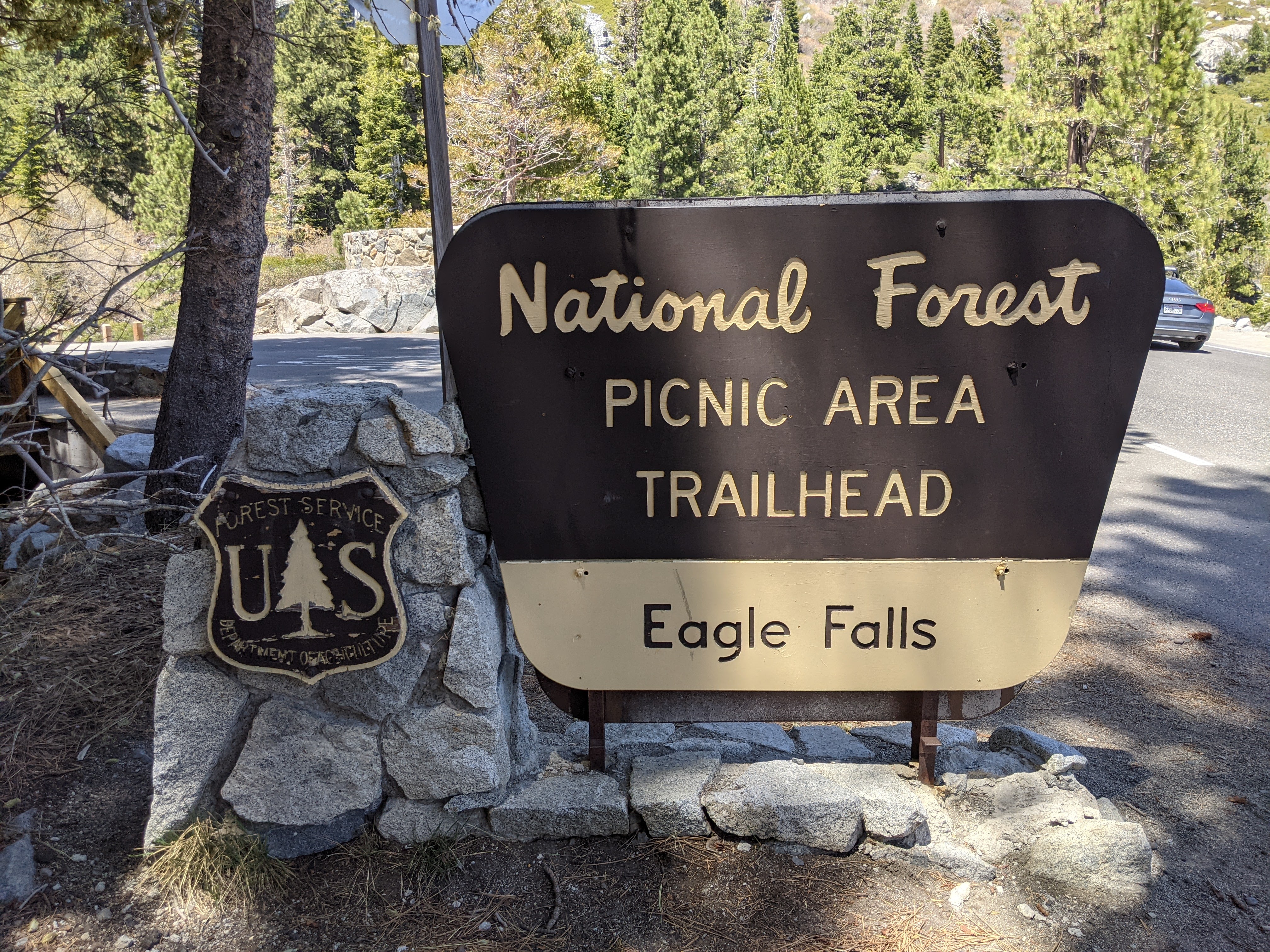
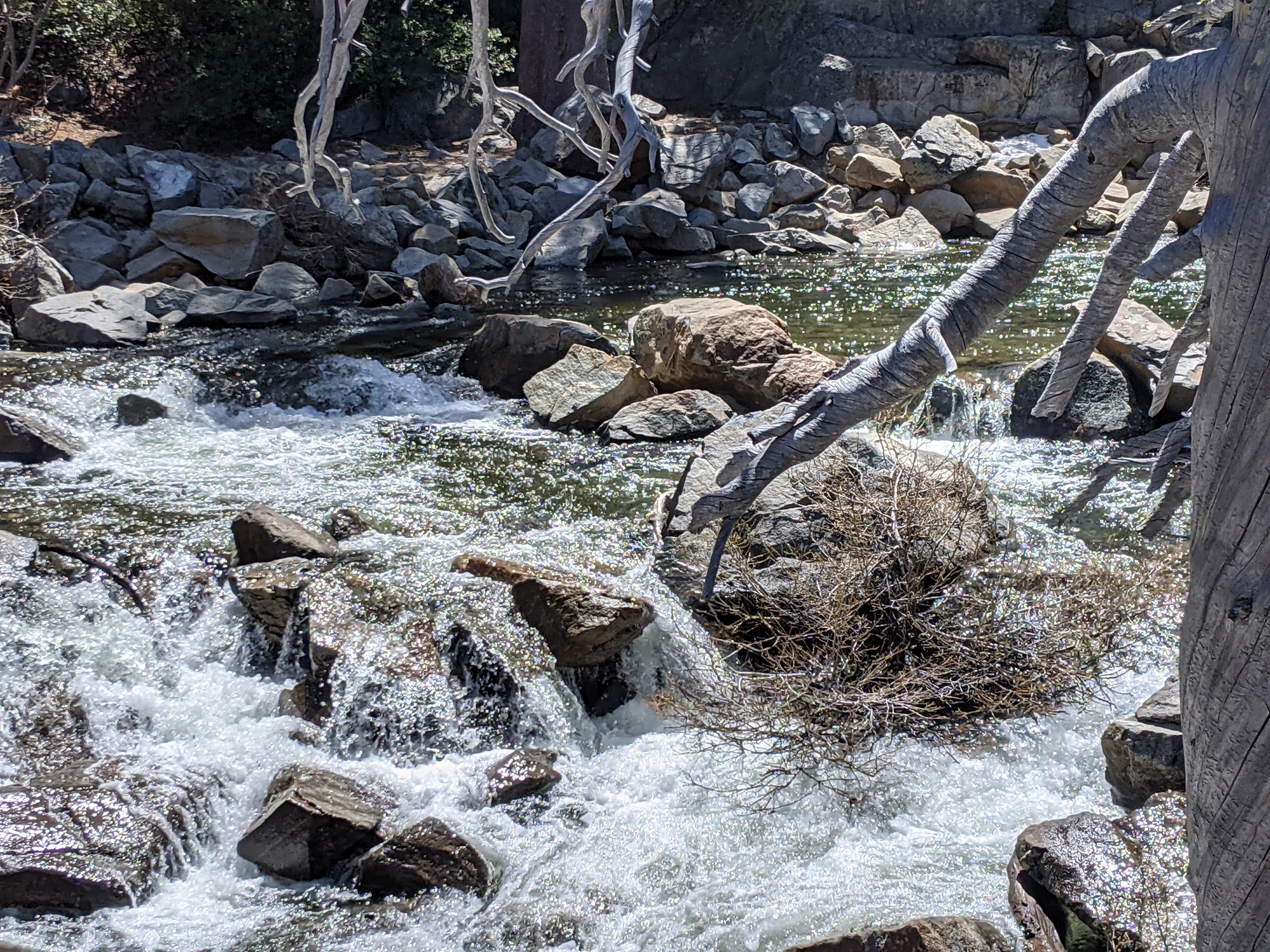
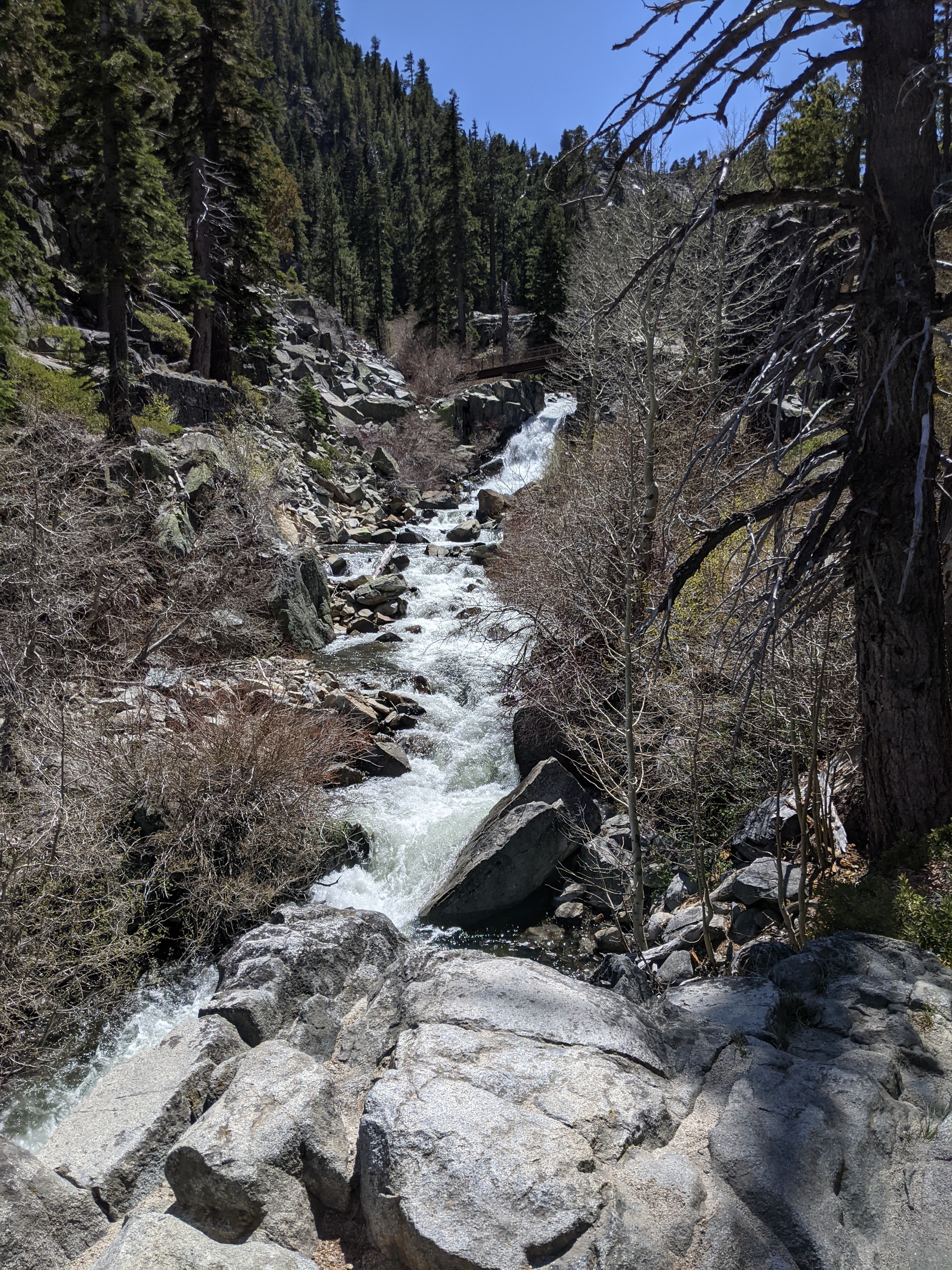
We spent the day hiking the Eagle fall trail and the Cascade fall trail. The Cascade fall trail is quite rocky, which makes it challenging for the knee and the ankle. After hiking about 5 miles, we rewarded ourselves with a super late lunch at the Himmel Haus German restaurant. The restaurant has both the outdoor setting as well as the indoor setting. The indoor was sparsely filled at this odd hour for lunch and we felt comfortable to sit on a bench table far away from the other diners. We followed the waiter’s recommendation and had no regret. The German beer came in no time, and the food followed quickly. The pretzel together with the dips made one of the most delicious pretzels I’ve ever had in my life. I would definitely go back just for the pretzel. The sausage and the pork shank were really good too. The pork shank was tenderly cooked and super yummy together with the potato paste and cabbage gravy.
Day 3
Our Tesla 3 has been telling us that our tire pressure was not totally balanced. Fixing the tire pressure was a tedious trial-and-error effort. Fortunately, we were not in a rush. After the nth time at the air station, the tires were balanced with the right amount of air pressure.
We rented a surrey at the bike shop, at 35 dollars per hour. We enjoyed nice scenery along the lakefront and some beaches. Riding surrey was more strenuous than riding a bike to go uphill and it made a good 2-hour exercise. What better than having a good meal after the exercise? We settled in Macduff’s Pub which has an outdoor booth that was like a tiny greenhouse with a table inside; and the servers were super friendly. We had an authentic Scottish meal, with Scottish beer together with shepherd pie plus fish and chips.
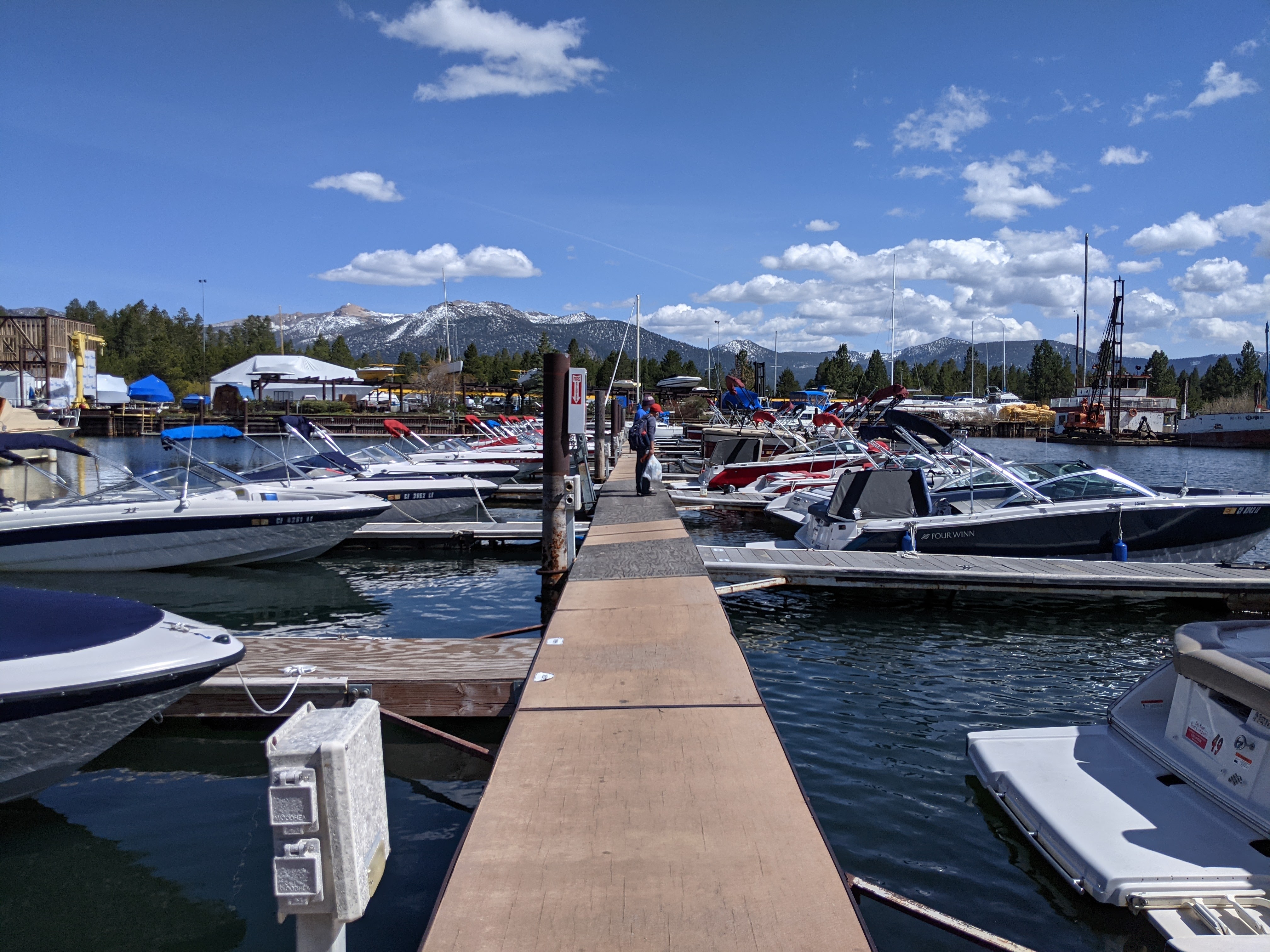
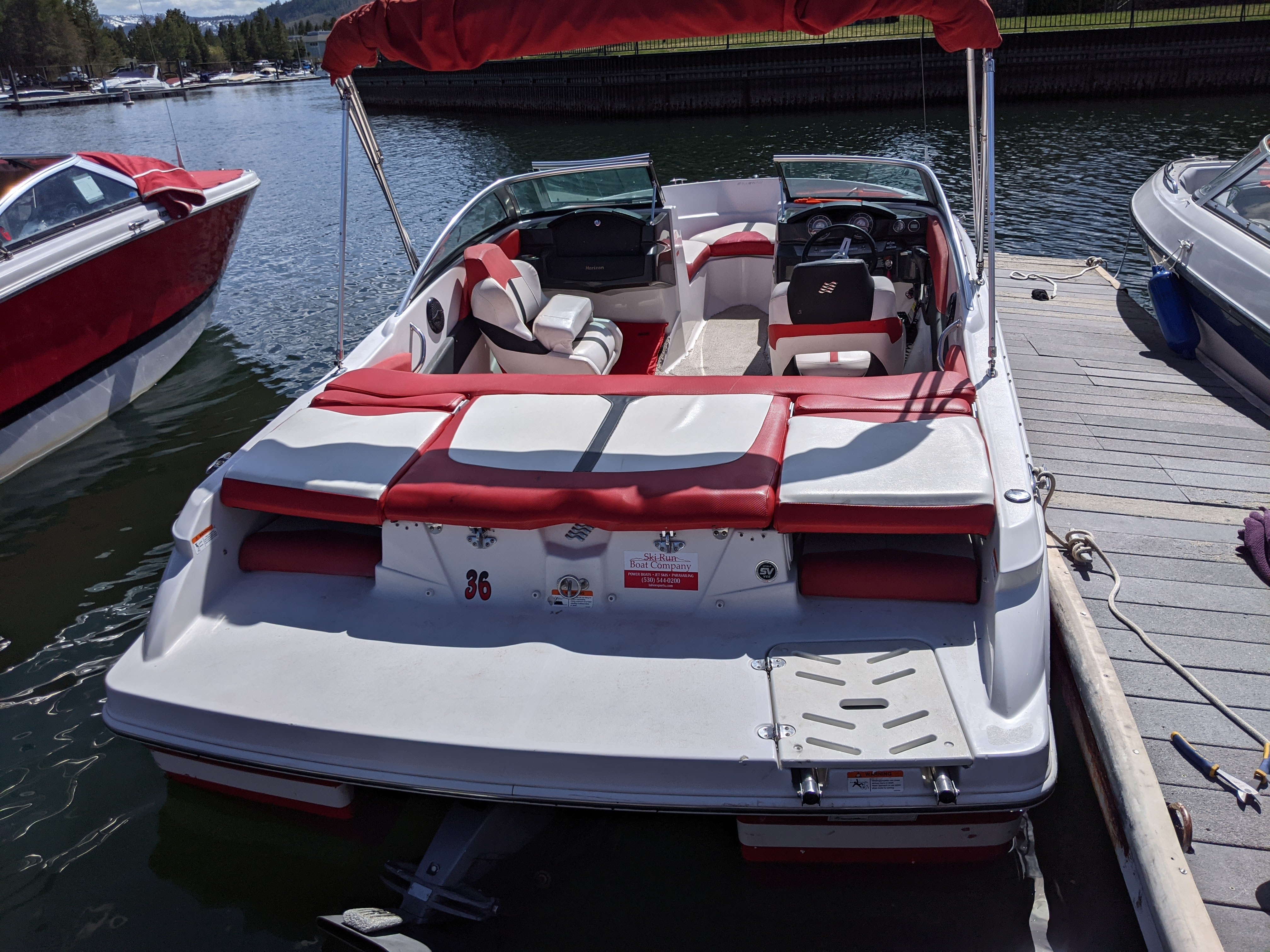
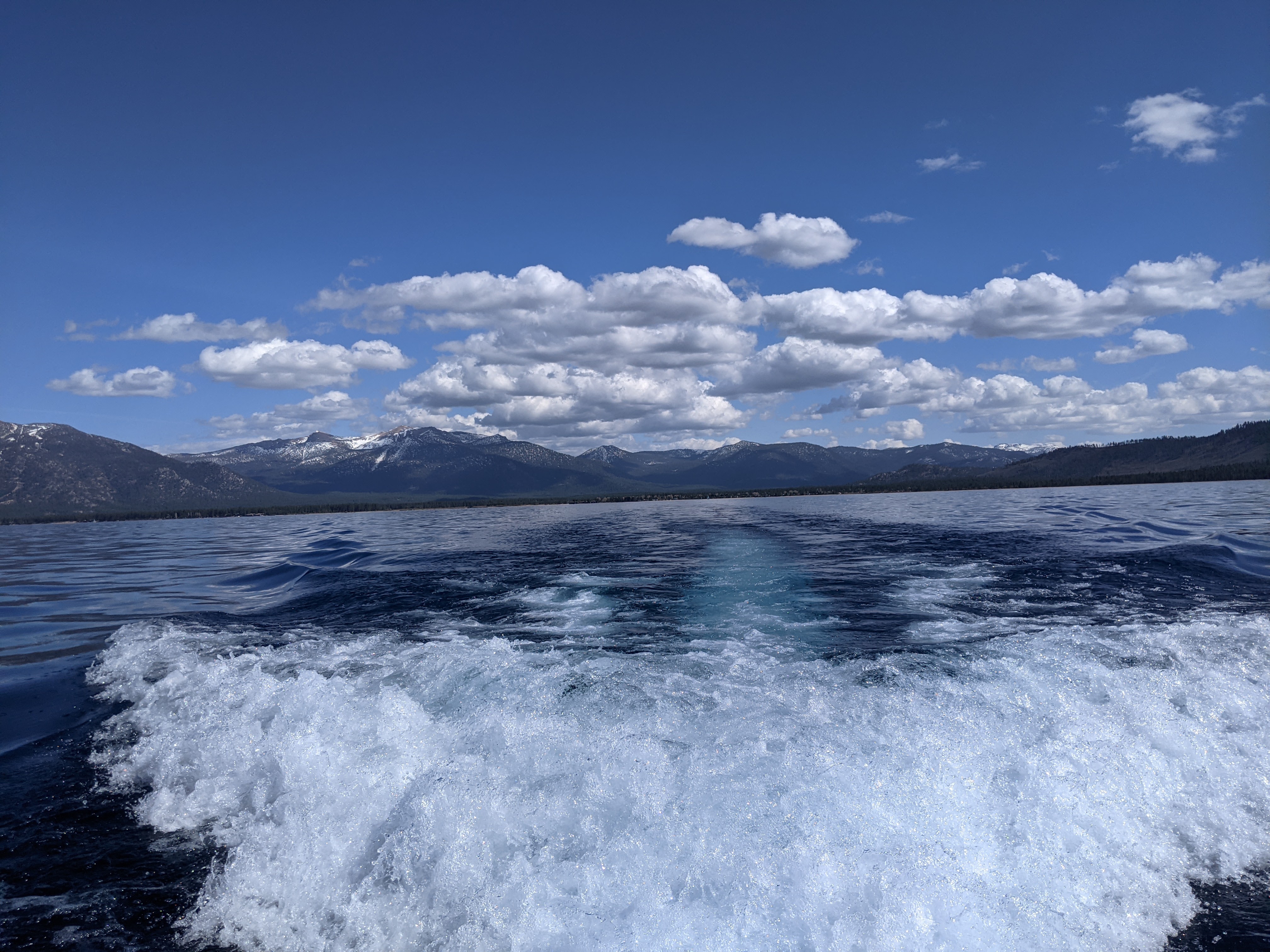
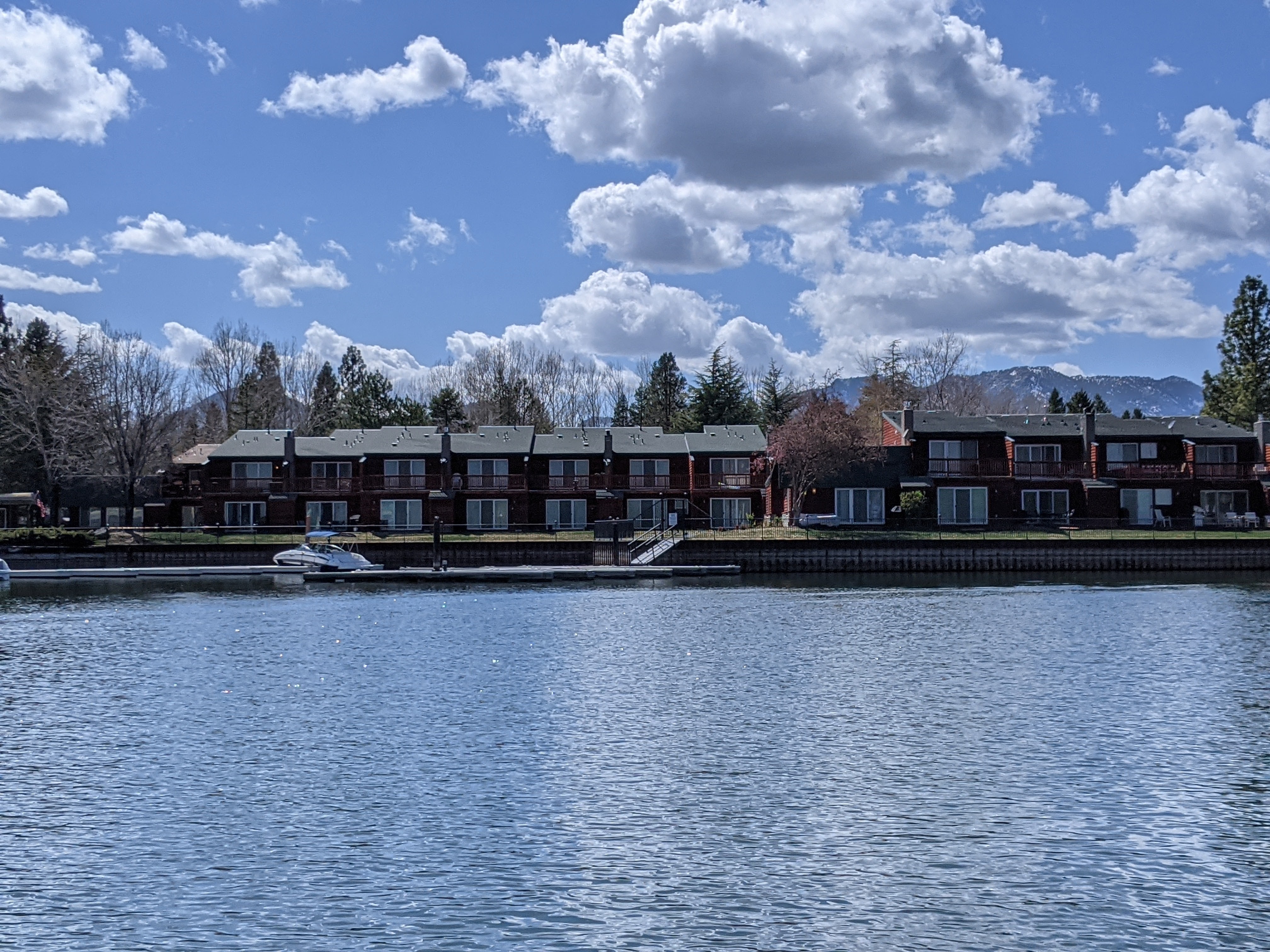
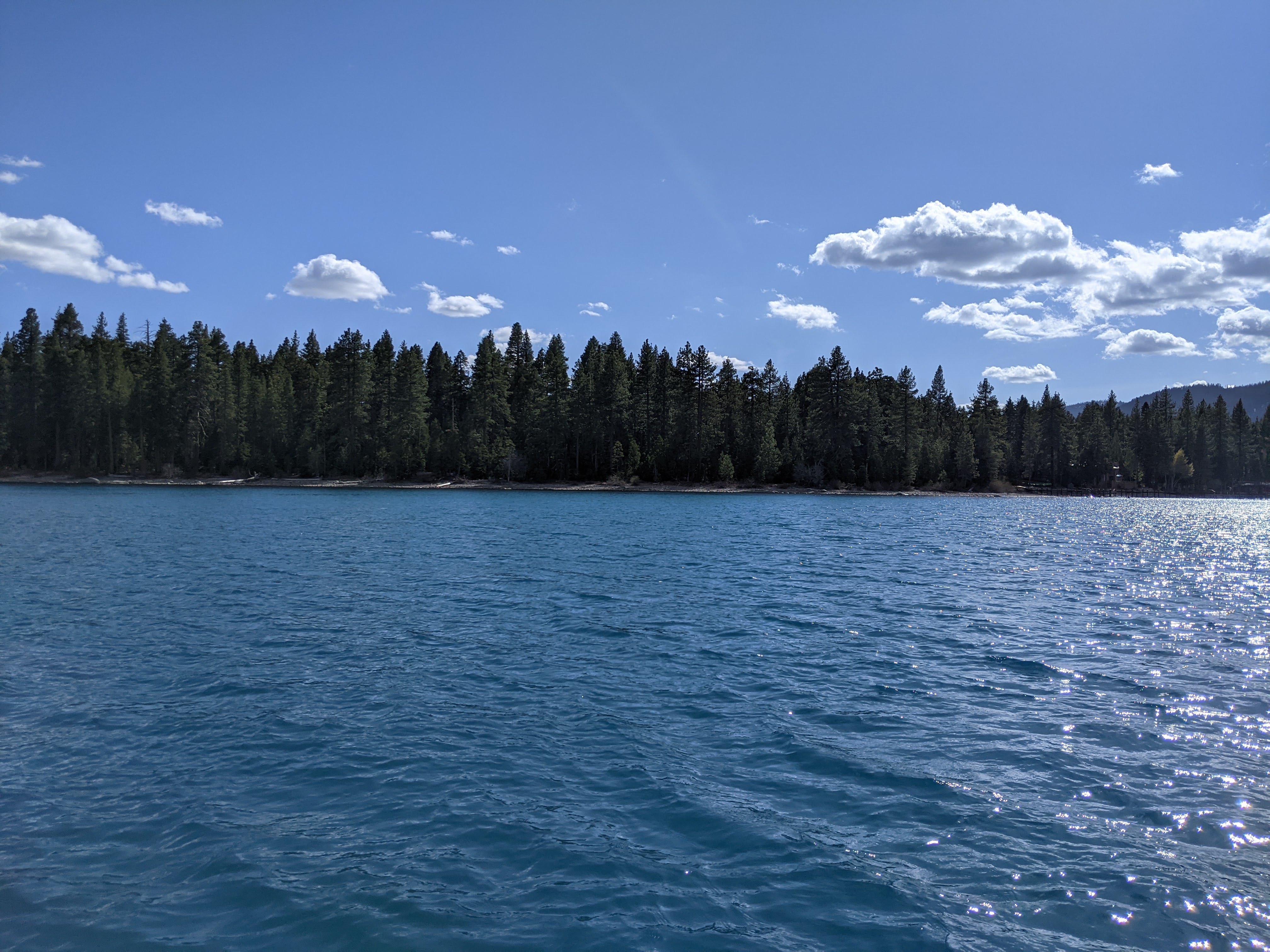
We decided to check out the Tahoe Keys Marina. To our surprise, we could rent a boat, at a hefty rate of $200+ per hour to go out to the lake, without a boat license. It made an adventure on Mother’s Day. We got a 10 minutes orientation on how to drive a boat and were reminded of the costly penalty should we damage any part of the boat. The orientation did its trick to intimidate; and to add to that, it could be life threatening if either got overboard into the cold Lake Tahoe water. We started the boat at a super slow speed of 5 mph. Once we got out of the marina, there was absolutely no traffic, and most of the time, we could not even see any other moving bodies. I love screaming in the wide open where nobody hears nor cares. We had no clue how long it would take to get to the Emerald Bay within our eyesight, and ended up taking a very long time. We barely arrived, and had to immediately head back. We worried that we could miss our marina closing hours, so we doubled down on the speed and took only half of the time on the way back. The boat trip was a lot of fun mixed with excitement and a tiny bit anxiety in the middle of the lake, worrying about getting lost and getting late. If driving a boat is comfortable and relaxing at low speed, driving a boat at a higher speed is uncomfortable, tiring and stressed. I would love to do it again, but maybe when the weather is warmer and with a bigger party.
Day 4
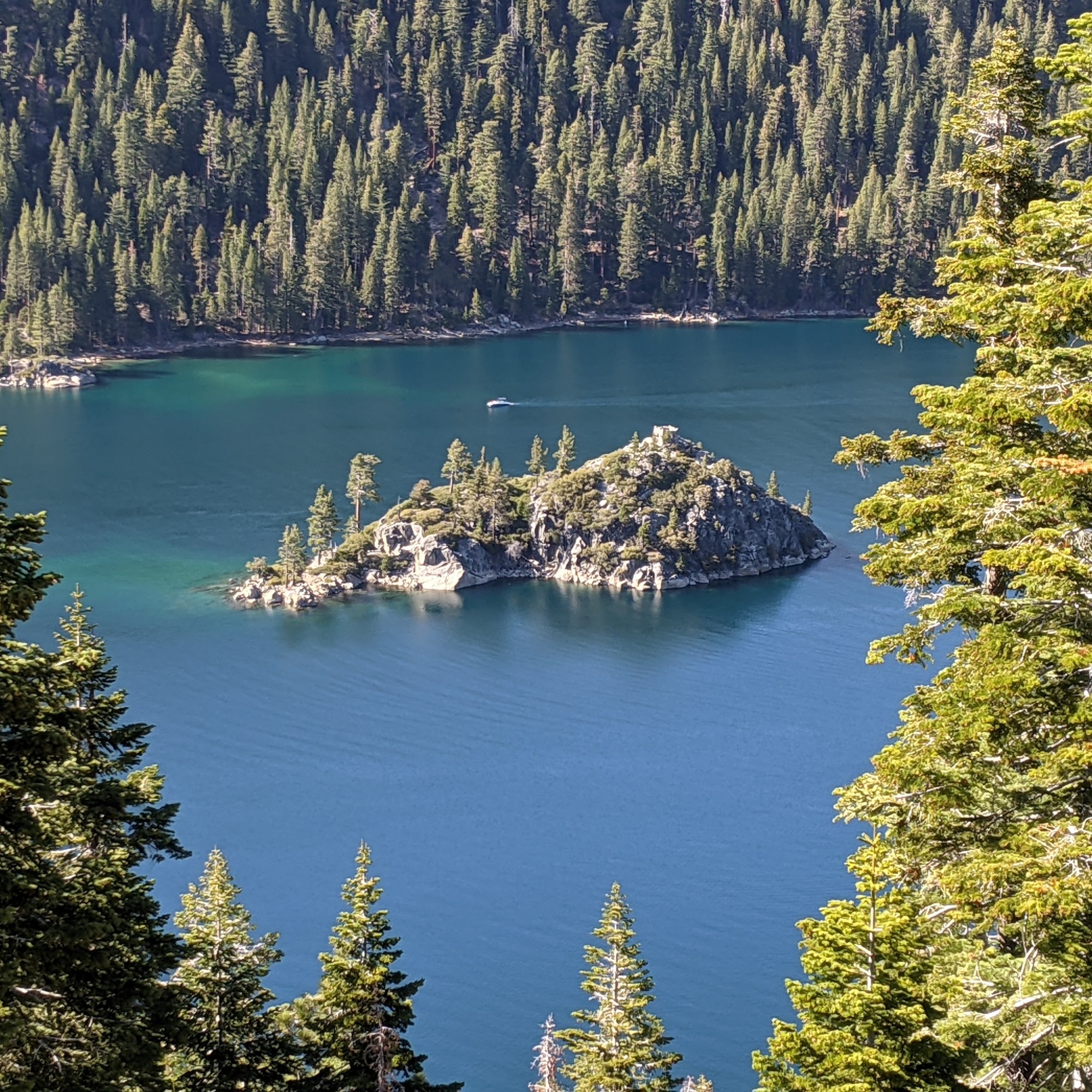
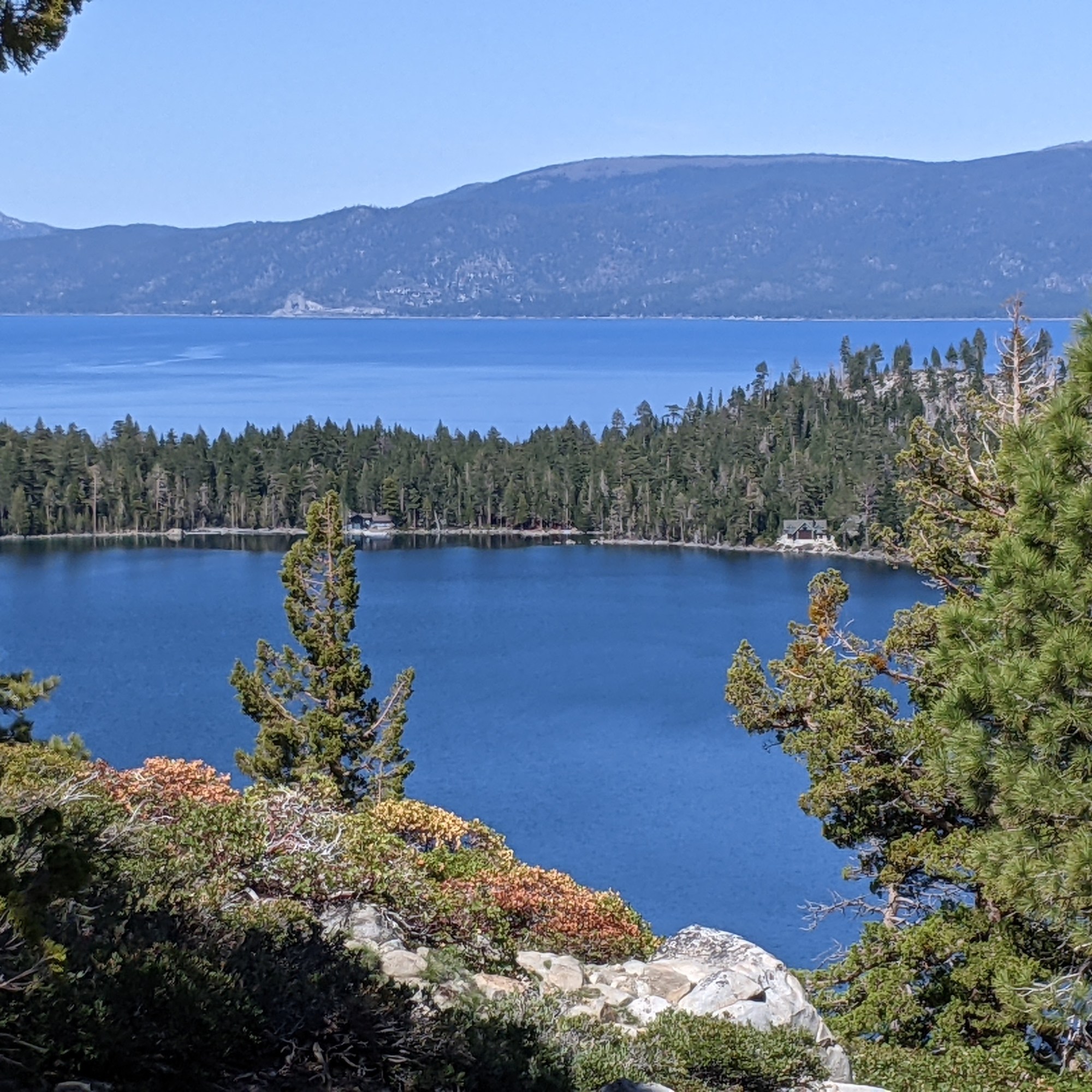
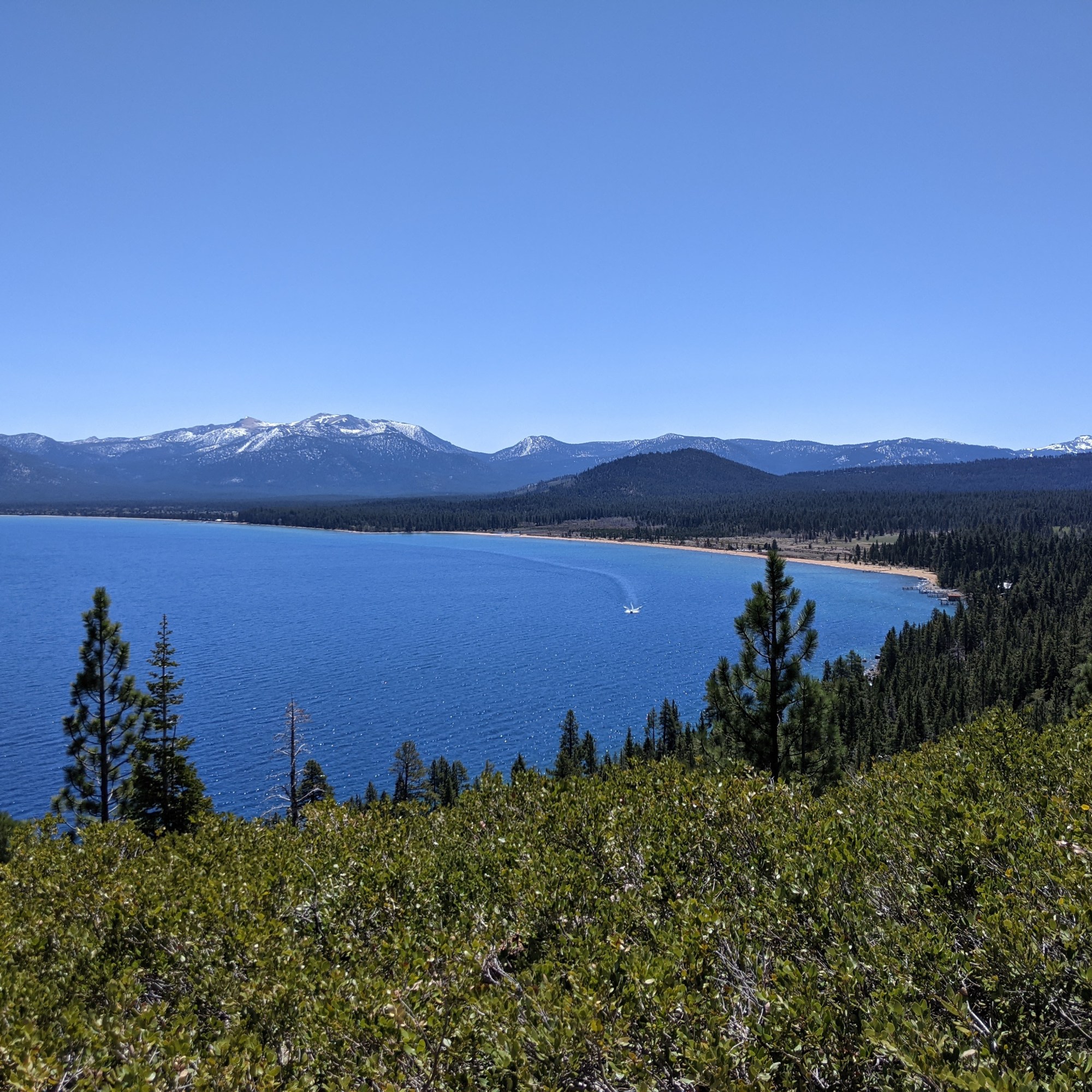
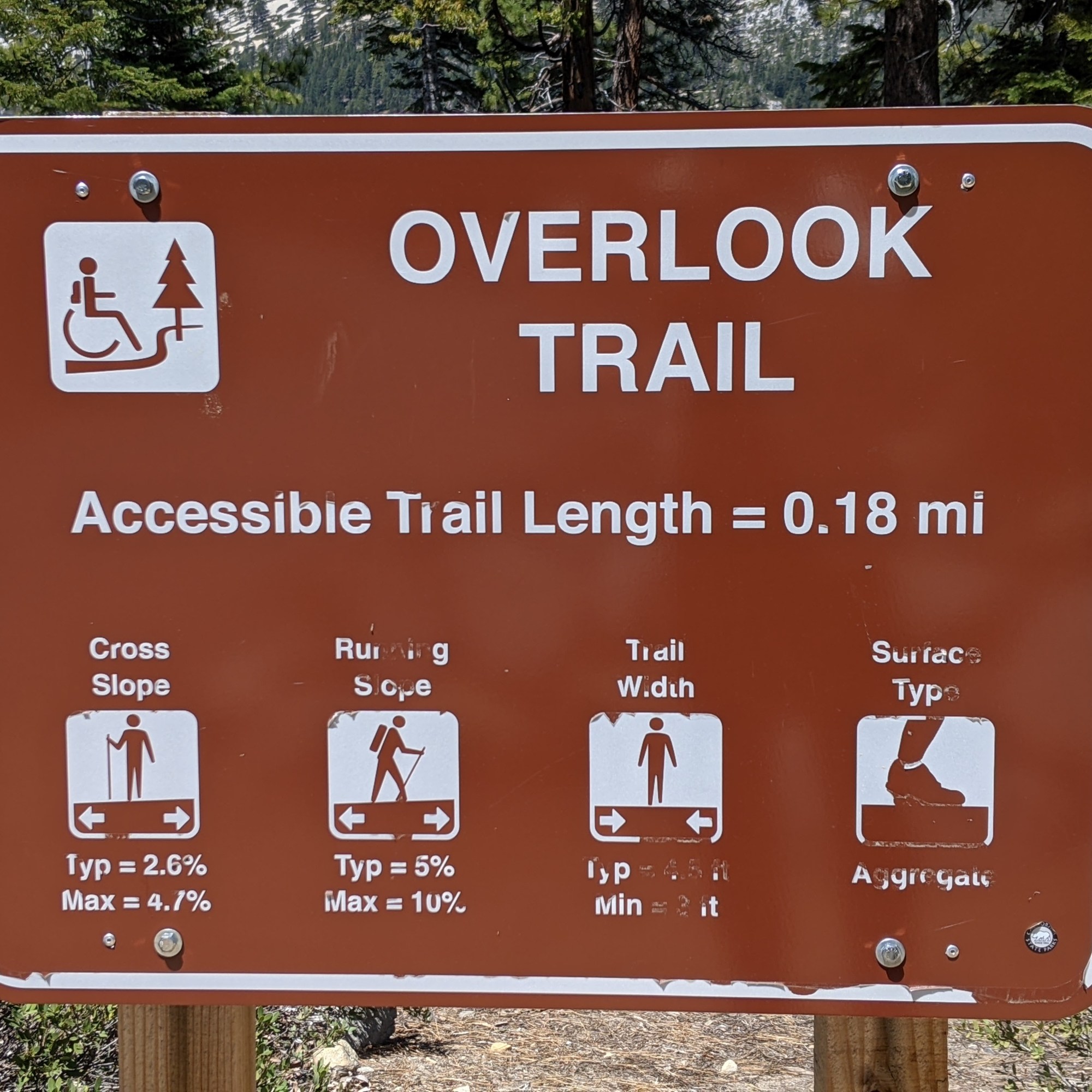
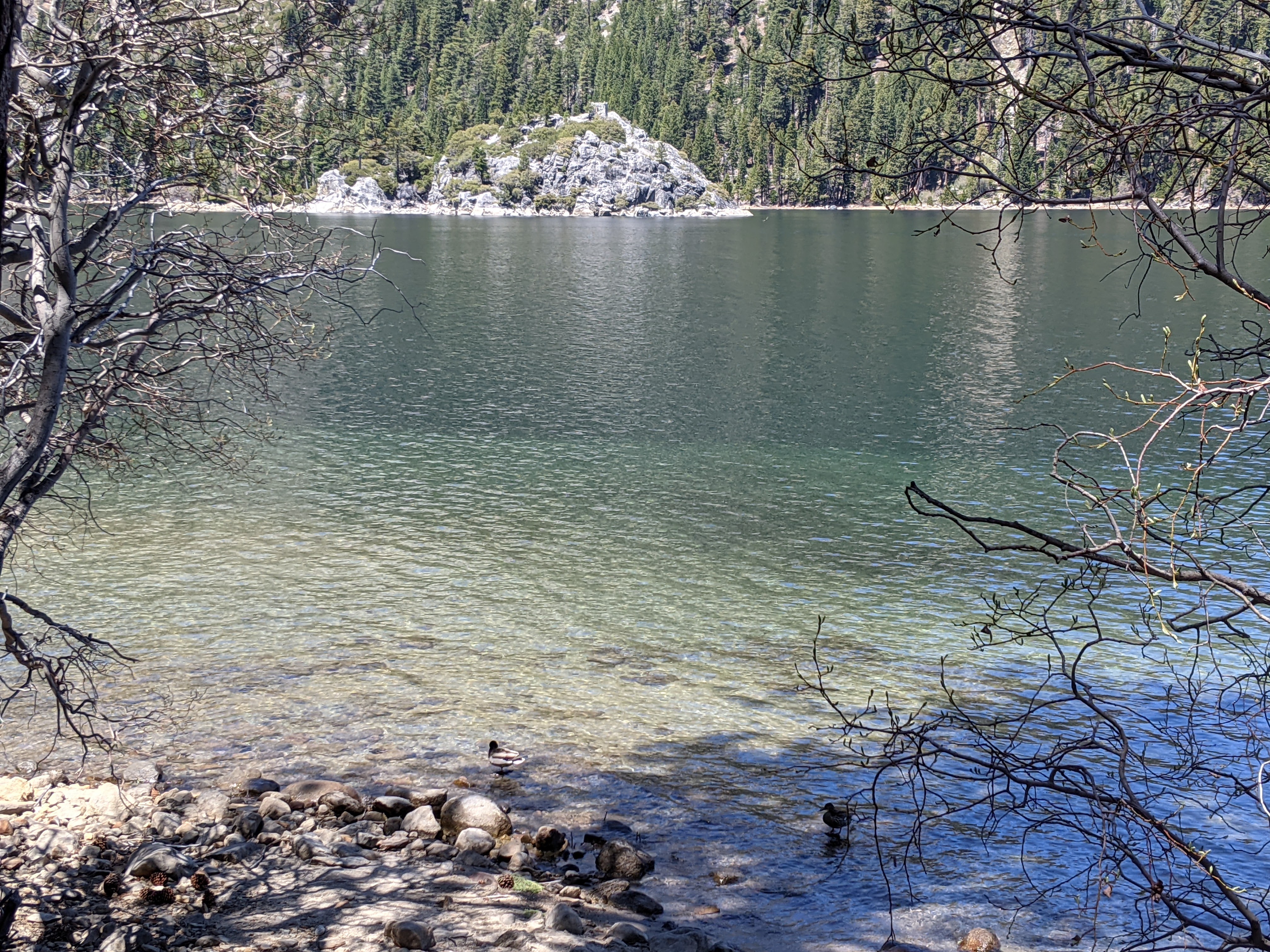
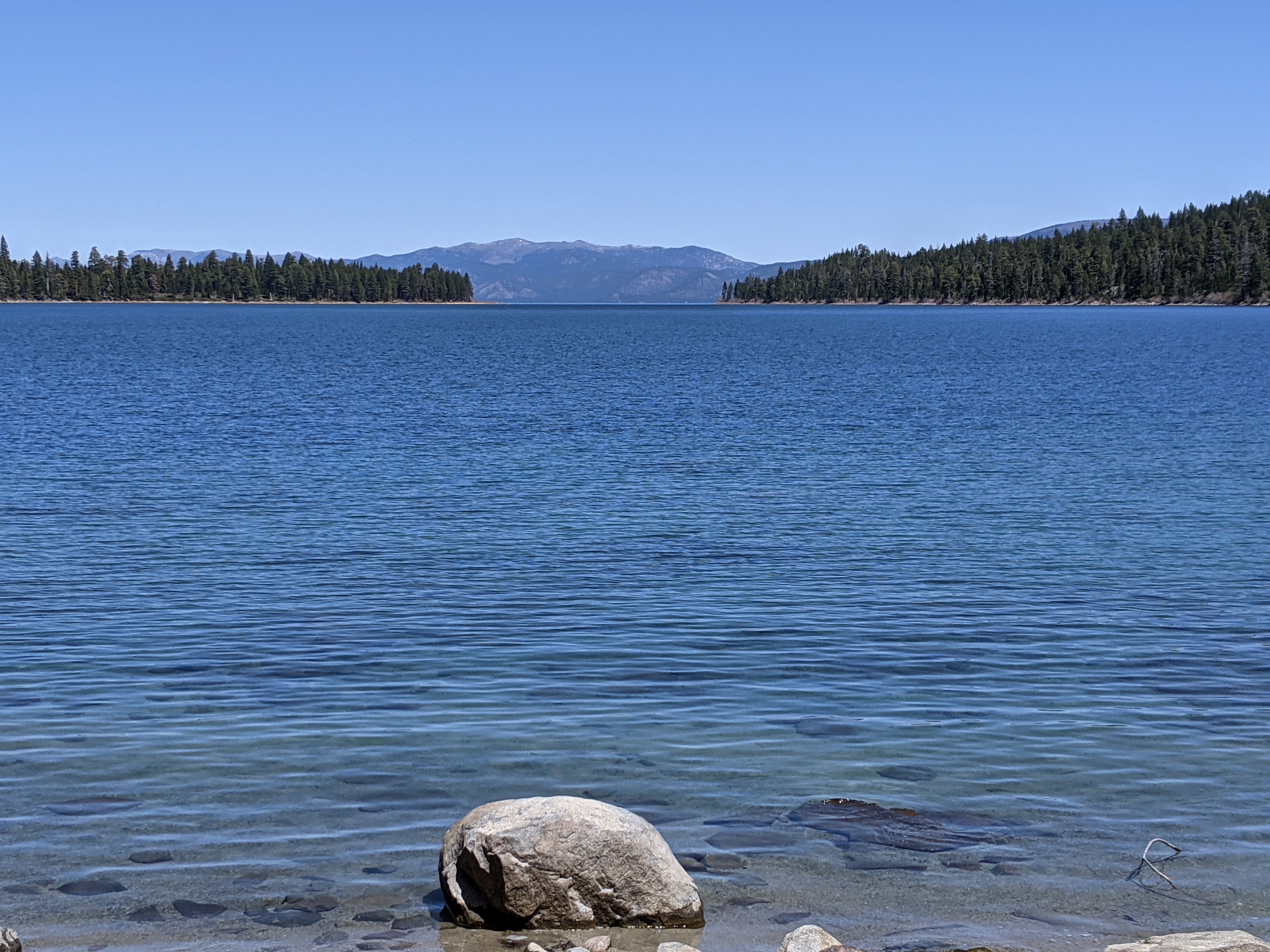
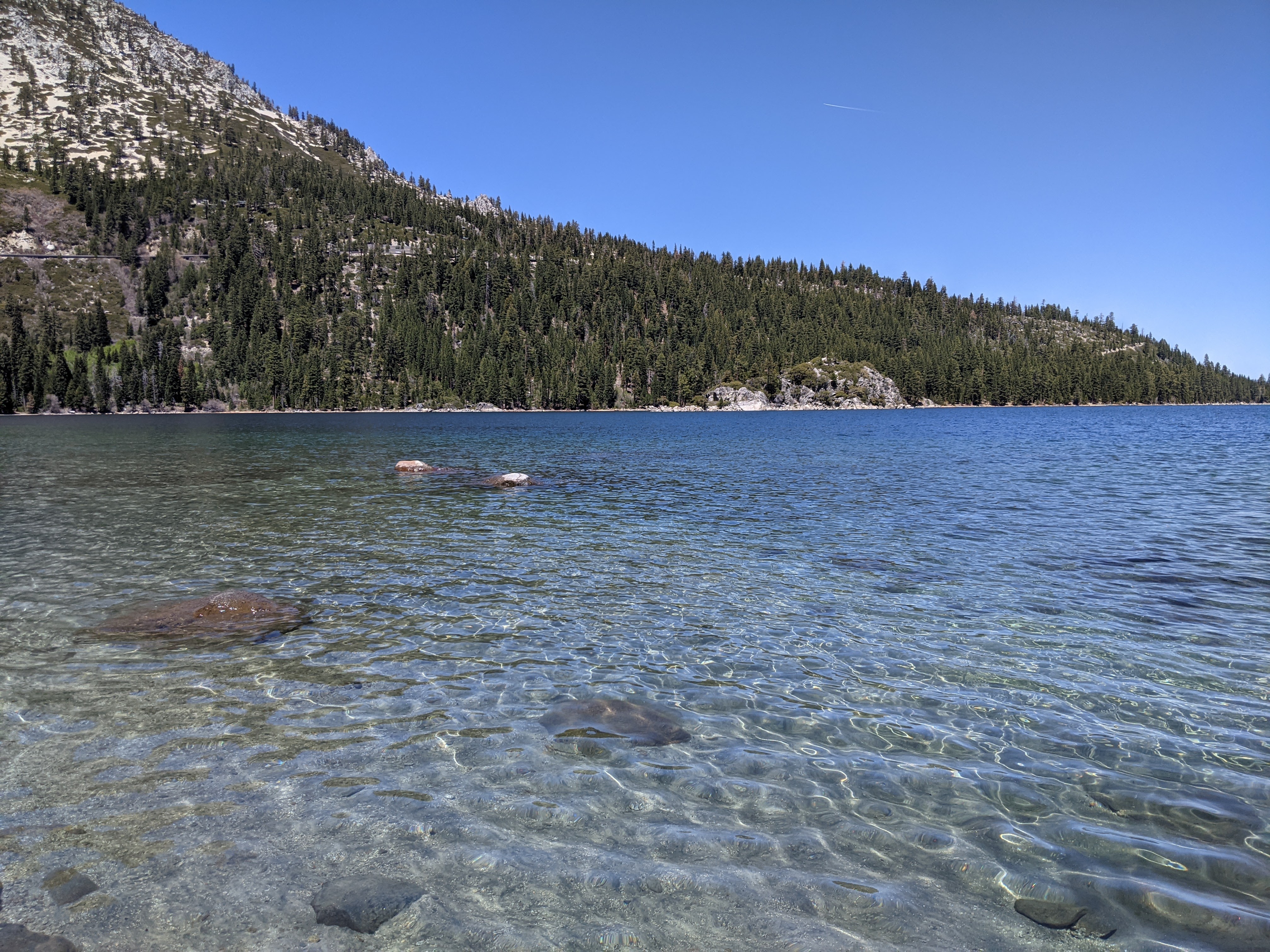
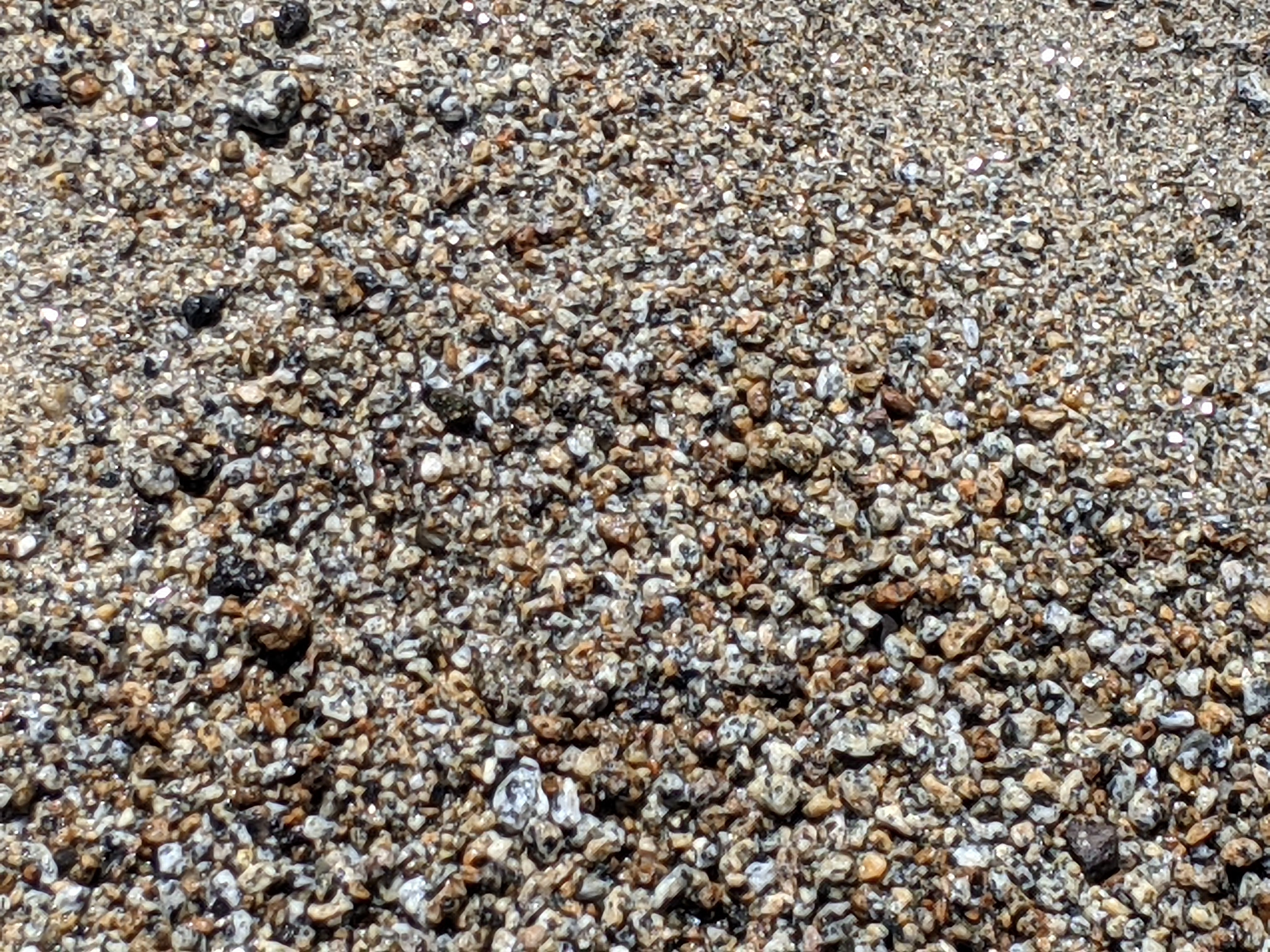
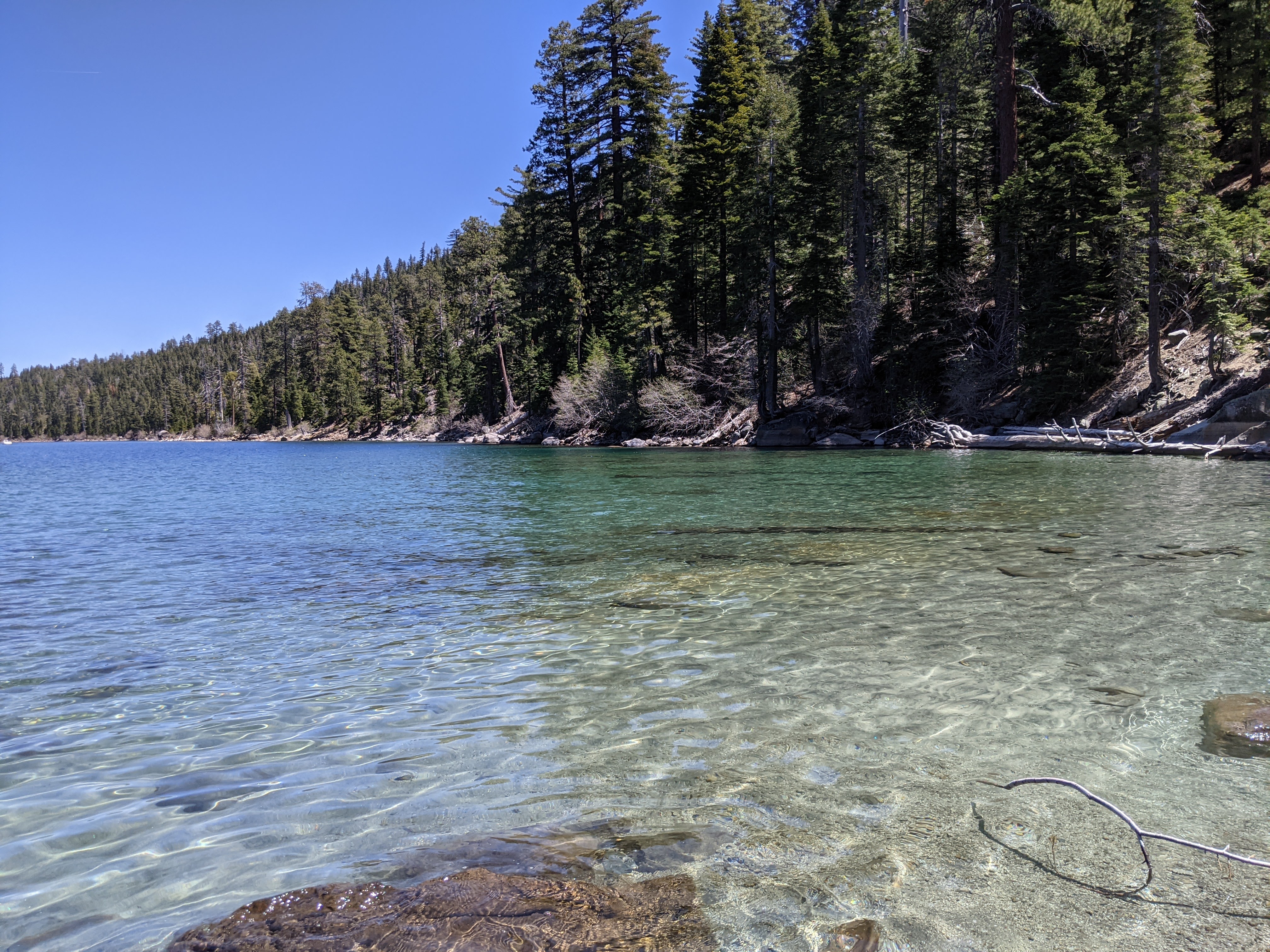
We checked out Camp Richardson, a nice resort for families and our neighbor went there often when their kids were young. We hiked on the Rubicon trail, a 16 Mile hike round trip around the Emerald Bay. It was one of the most beautiful hiking trails I remember, very well paved. The Rubicon overlook area gave a fantastic panoramic view of the Emerald Bay and Lake Tahoe. After the overlook, the trail led us all the way down to the lake and we were able to dip into the water. The sand was colorful, the rocks were shining like granite. The weather was warmer and so was the water. It was nice and quiet in this desolate area. We did a good hike of ~5 miles. On our way back we stopped at the Riva Grill for another late lunch. The outdoor swimming pool at our hotel was open, and we could not miss the chance to use it.
Day 5
It has been a lovely trip and we enjoyed all the outdoor activities much needed for both our mind and our body.
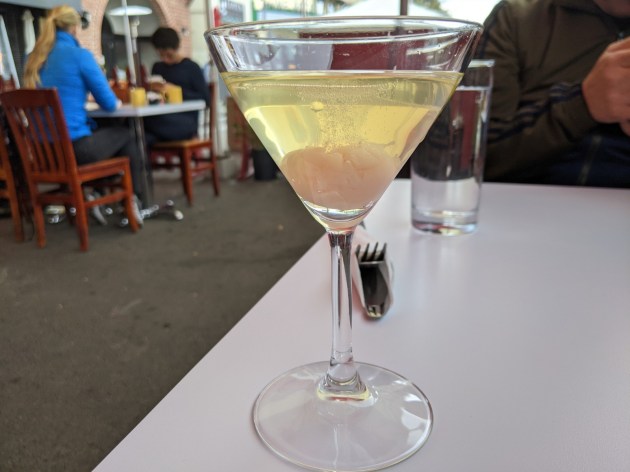
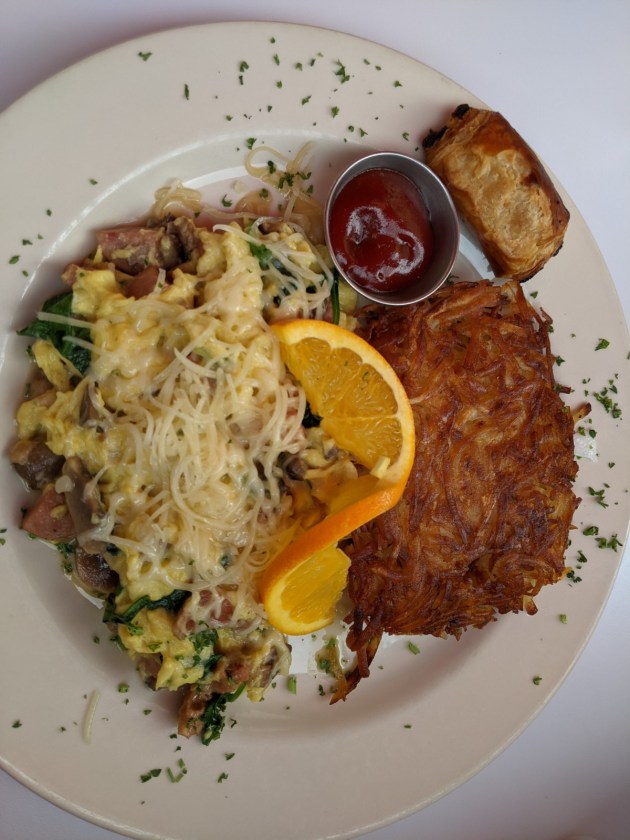
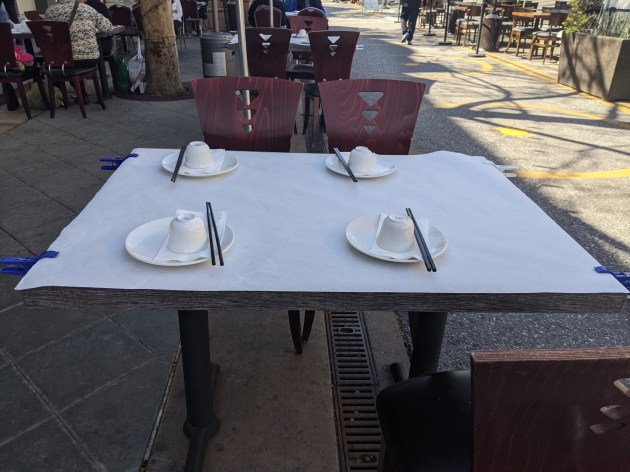
The Biden government and the vaccine situation have shown us some light towards the end of the Pandemic tunnel. This month, My husband and I visited the downtown of Mountain View, Sunnyvale, Palo Alto, Los Gatos, San Mateo and Menlo Park to experience the different outdoor dinings in each city.
During the pandemic, I have been able to read a few all-time classics used to be on the reading list during my retirement years.
Anna Karenina by Leo Tolstoy
In my high school years in Hong Kong, the high school had roughly half of students studying science (aka STEM) subjects, and another half studying art subjects. There was, and probably remains, a hierarchy in subjects where science subjects have often been ranked higher in the overall curriculum. Often considered among the greatest literature of all time, the novels by (Leo) Tolstoy were squarely reserved for those studying English literature, a subject for the art students.
Married to a powerful man Alexy, Anna was beautiful, charming, tactful to almost manipulative, and lived a perfect life until she met Vronsky. Vronsky lived his glamorous life until he desperately fell in love with Anna. Levin, an idealist and an intellectual who preferred living a real life in his farms and with the peasants, was devastated when his proposal to Kitty was not accepted. Kitty, the ex-lover of Vronsky, recovered herself in a sanatorium, and re-discovered her love for Levin. The pursuit of love, by these protagonists, changed everything for them; and reflected how the disparity of the society in the treatment of Anna and Vronsky in their affair. The plot acted as a conduit to write about the society and the protagonists. The power of “Anna Karenina” is in how well Tolstoy wrote about their emotions and how well the characters brought you to the society of the time. Reading the book is getting to know these characters – their inner thoughts, their expression of their thoughts which often were contradictory to their inner thoughts, and the doubts in their pursuit of love and purpose of life. It transported the reader to the society and witnessed the lives and the life events of the people from peasants, landlords, soldiers, public servants, and politicians. The pain, anguish and terror of Levin, in enduring the long labor process of Kitty, was arguably the best ever description of father-to-be experience, that dark side has been so seldom told. The visceral tortune in living through the long hours towards the inevitable death of Levin’s brother was powerful, vivid and absorbing. Anna’s heart-wrenching struggle, in her hopeless affair, could only lead to one inevitable outcome in her once perfect life.
The book leaves me wondering if science represents a certain understanding of nature and species, then literature gives us a multidimensional view of our beings from the past to the future.
The Element by Sir Ken Robinson
Often considered as the most watched Ted Talk, Sir Ken Robinson has been a strong advocate of education reform to cultivate curriculum diversity, ignite students’ curiosity and awaken learners’ creativity. His Ted Talk “Do schools kill creativity” is both entertaining and educational, and I could not recommend more.
The element is that intersection of the things(s) we enjoy doing and the thing(s) we naturally do well. Many run through their lives without discovering their elements. In his discourse, Sir Robinson believes finding the elements are both possible and crucial. It is never too late, just like Julia Childs discovered her element in French cooking in her fifties. To discover our element, we need to rethink the possibility, find our zone in things we enjoy doing so much that we lose track of time, meet others with similar passion, and open for help.
Full of examples, ideas and inspirational stories, this is a great book for all parents and educators.
I learn first hand even if we, parents, put in our best effort to help our children to discover their elements in the most personalized setting, there is no guarantee for success.
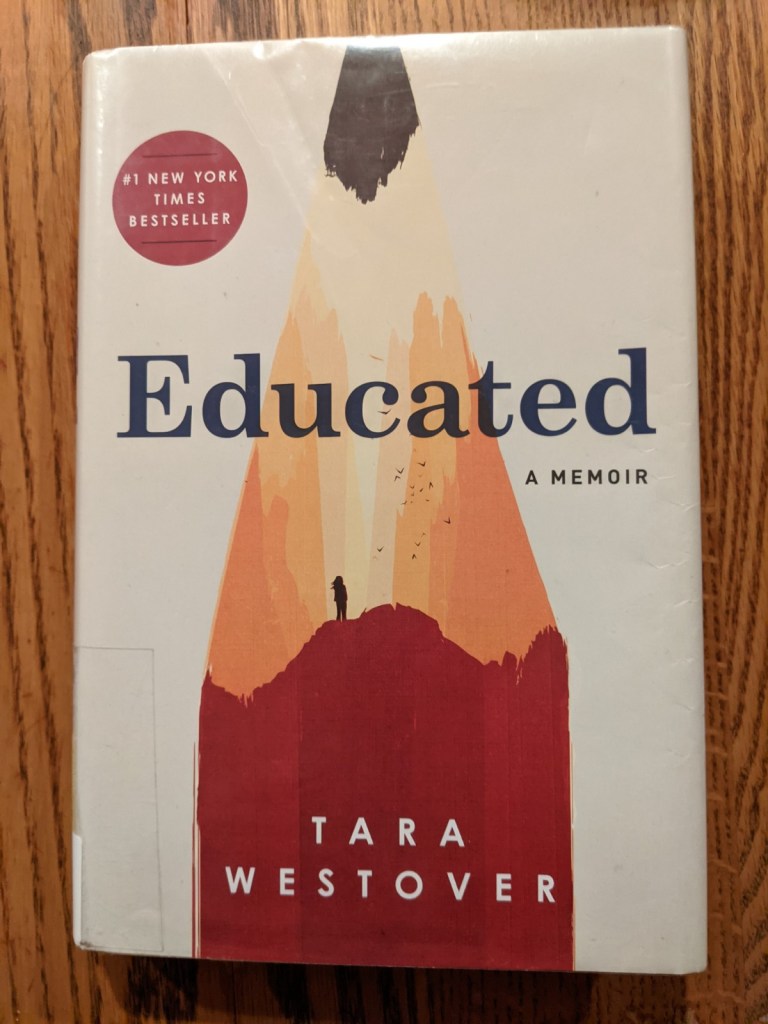
Educated, a memoir by Tara Westover
Born and raised in Idaho in a large family, the author has been isolated from the society. Her parents do not trust the government, do not go to medical facilities, do not allow children to go to school and her father believes himself to be the Mormon prophet and has the strictest code of conduct for his children . He dominates the family with his long lectures, and his religious doctrines to the level of abuse. He loves his children in his own distorted way, and tolerates abusive behavior of his sons. Her family has been the whole world for the author, until she miraculously found her way to attend BYU. Through her hard work, her intelligence and her persistence, she was awarded scholarships to Cambridge and Harvard, and earned her PhD from Cambridge. The more she got into the mainstream society, the more her parents saw her as being possessed and became a disgrace for the family. Would she compromise to remain in the distorted worldview of her father and have a family to go back to? Would she stand up to the values she acquires through education? This is a memoir of her struggle, her courage, and how she makes different choices as she becomes educated.
Education changes who we are and what we would become; so do our family, our upbringing and our culture. It pains to read the struggle the author has to suffer between the evangelical view of her parents and the values that she learned through education.
It is a story of self definition and self belief through the power of education.
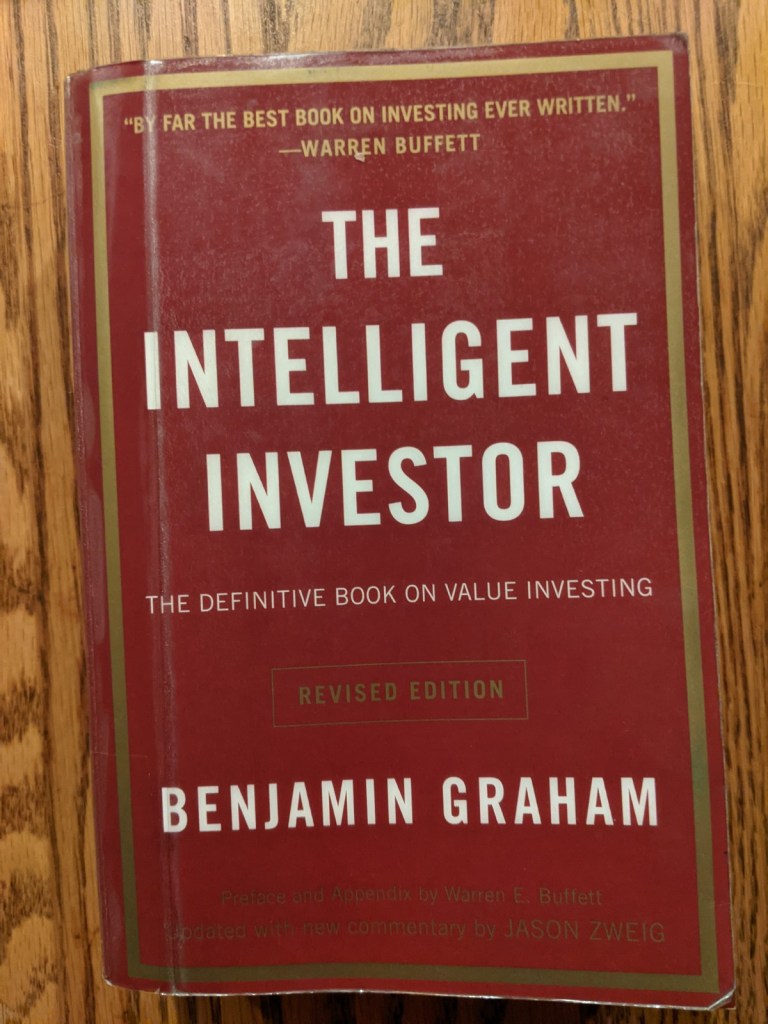
The Intelligent Investor By Benjamin Graham
Warren Buffett, one of the most successful investors, if not the most, said it all: By far the best book on investing ever written.
First published in 1950, the book has been a must read for anyone who cares about making good decisions on their finances. Mr. Graham wrote: “an investment operation is one, which upon thorough analysis promises safety of principal and an adequate return. Operations not meeting these requirements are speculative”; and “The speculative public is incorrigible. In financial terms it cannot count beyond 3. It will buy anything, at any price , if there seems to be some “action” in progress. It will fall for any company identified with “franchising”,computers , electronics, science, technology, or what have you, when the particular fashion is raging. Our readers, sensible investors all, are of course above such foolishness.”.
Reading his investment advice is like reading the answers to the questions that would come up in the final for the subject of “investment”. Yet so many continue to make the same mistakes, and (choose to) behave as speculators than investors.
























 oliviatamccue