oliviatamccue

about everything, anything or something

Miracles are Everywhere

Lately AI has amazed us what is possible with technology. It reminds constantly how much technology can evolve in a human lifetime. Technology products, like the internet, cell phone Apps, whatsApp, Facebook, YouTube, TikTok were not around five decades ago. At that time, we were living on a slow network, computer memory was in units of megabytes, and CPU was a million times slower, and the turn around time of email would be at least a day if not a few days. Computers were big and scarcely available.

Now it is very hard to imagine life without the internet, cell phone, social media, and videos. 

We sometimes overlook these as miracles that have made our lives much better. Some may feel that our technology is poised in taking us further to making life even more enriching. It is up to us how we use technology for more miracles. 

The miracles are not limited to the progress we made in technology, there are bigger miracles around us that we also overlook. Here are just a few examples:

  1. Every time I get on a highway, I am amazed at how orderly the drivers are. That often gives me a chill that the overwhelming majority of humans, around us, is intrinsically good and safe.
  2. Most of us have a poor understanding of so many things in the world. Our human brains, after all the years of evolution, are nothing compared to the AI models in terms of our ability to handle the zillions of information around us. With the little we know, we function pretty well as an individual and in society. Many of us may not even know where Ukraine, Gaza, Syria are on the map. These are all sad places where human suffering is happening. Many are ignorant about the histories of the world at the times of the Mesopotamia civilization, the Persian civilization, the Roman Empire times, the Ottoman Empire Times, the Tang Dynasty, the Sung Dynasty, the Europe colonization and more. Still we develop strong opinions of the rights and wrongs of the current happenings based on our modern and limited knowledge.  For all the limitations and ignorances, we generally live better and definitely more comfortably than hundreds of years ago. If that is not a miracle, I don’t know what can be considered as miraculous. 
  3. Not only do we have poor understanding of many things, we actually can be quite off, and have a lot of misunderstanding. We may think everyone on earth has access to the internet, yet the global internet penetration is about 71%. For all the negative press about the Uyghurs in Xinjiang, China, the population there has grown from 4 millions to over 11 millions in the last five decades. Our minds are just so easily influenced by a few news coverage. 

Above all, Nature is the biggest miracle. It has stored in itself billions of years of stories on this planet.  It stores the short history of human evolution but also the histories before humans. If you truly love Nature, you will find both miracles and beauties everywhere.

Leave a comment »

Book Reviews of AI and diverse reads

Artificial Intelligence has arrived. 

In the AI-powered world, the Large Language models, Gemini, ChatGPT and the like, can summarize a book, give a nutshell of things, answer questions, and even analyze a book together with you. It is impressively powerful. It meets the ever raising expectations of what it can do. AI writes book reviews well too. I am sure that AI can do a better writing job after it digests trillions of words which I never would be able to. 

Let AI have the better ability in reading and writing. There is no existential crisis about it. I am pleased to keep the enjoyment of reading a book at the speed of a snail. I have the choice of my own interpretation of a book, the intent of its author and writing the book reviews.


You look like a thing and I love you
By Janelle Shane

It is a book about how Artificial Intelligence works and why it’s making the world a weirder place. With the hype of generative Artificial Intelligence (GenAI), it feels like eras have passed since this book was published in 2019. The ChatGPT / Generative AI debut is however not a baby born out of nowhere. The breakthroughs in computing, memory and storage power, the leap in machine learning and the focus in data science are all important notes leading to the Generative AI crescendo in November 2022. Many of the “how it works” are as relevant now as in 2019. 

This is a highly engaging and informative book. AI has already arrived. The best way to go forward with AI is to understand it – understand what problems AI can solve, what issues AI can create, and what can we do to manage the situations.

This book will endear you to AI, and why there’s every reason to be cautiously optimistic.


Never let me go 
By Kazuo Ishiguro

In a dehumanized world of dystopia, what would the experience of growing up, falling in love, making friends and the sense of mortality be like? The novel starts with a mystery that the protagonist is a carer unlike any carers we are familiar with. She takes care of different donor patients who need to recover from donations, and at times multiple donations. As the protagonist recalls her school lifes, her friends, her guardians and her years as carers of her closest friends, the readers discover a dystopia, unlike anything we have seen. In that world, their growing up, their relationship and mortality still resonate. 


Song of the Cell : an exploration of medicine and the new human
By Siddhartha Mukherjee 

Mr. Mukherjee is among my favorite authors. His book is always well researched and is a joy to read. Cells make up everything in our body. There are step jumps in our knowledge of the cells and there are still more to be discovered. Mr. Mukherjee perfectly combines the technicality of the deep complex topics and the poetic touch of his personal experience. Through his writing, the scientists, the doctors and the patients each come alive with their own unique characters. It is a book that requires focus to read, pause, and resume. As I finish the last page of the book, I feel there is so much in it that I would like to start all over again. 

Reading his book not only gives you a good set of knowledge of the topic. Reading his book  gives ideas on how to write a technical topic filled with beautiful personal stories, each with a human touch. It is these human touches and their stories that endears us to the doctors, the scientist and the new scientific discoveries about the cell. 


Determined. A science of life without free will
By Robert M. Sapolsky

The initial chapters of the book are pretty dense as the author introduced the framework among the free will, deterministic, nondeterministic, predictable, unpredictable together with different terminologies and how our brain works in neuro-science terms.

Halfway into the book, I got the gist of the author’s position and his argument. There is no freewill or there is much less freewill than what we think we have. Our behaviors, decision-making, failures, and successes are results of our nature (genes) and nurture (environment, family, friends and societies). 

So what? Why did the author, professor of  biology, neurology, neurological sciences, and neurosurgery at Stanford University suspend his teaching commitments, and spend time to write about the topic?

The second half of the book would provide the answer.

Do you believe that illness is a punishment of evil acts of our doing? Do you believe that schizophrenia is caused by bad parenting? Do you agree that people committing crimes deserve  the most severe tortures so justice is served?  Society has changed a lot in many things.  Depending on whether it is a “Yes” or “No” to these questions, we see the world with different degrees of empathy and compassion with one another. 

If more people agree to no free will or limited free will, there will be more support to change the education system, the justice system, and the moral system. The author conveys that we don’t need to be heartless, and judgmental to others with less fortune. There can be better systems and societies. 

This book has been named one of the best books by the Washington Post and the Wall Street Journal.

I suggest reading it with patience, taking breaks and taking as much time as needed. I get a lot a lot out of the book, and it gives a new perspective of many things around us.

Leave a comment »

2023 good reads

Reading is an alternate form of travel around the world and across the time horizon.  Below are some good reads and I hope you find one that you like.


They both die at the end by Adam Silvera

What will the world be like if death is predictable and we have 24 hours to live after being notified? This is a book about two boys living out their life in their last 24 hours. It is a touching story of loss, of love, of friendship and of living not just existing.  Nice storyline!


The memory man by David Baldacci

David is among the most widely read storytellers with over 110 millions of his novels in print. His plots are good movie storylines. The story started with the brutal scenes of the murders of the protagonist’s families, that forever changed the detective’s lives in his pursuit of the murderers and the untangling of the murder motives.  


Kochland by Christopher Leonard
The book is a well researched documentary of the secret history of Koch Industries and Corporate Power in America. Charles Koch, a zealous believer in power and capitalism, has propelled the Koch company into arguably the most influential company in the energy policy making of the US government. In chasing the unparalleled business successes, the company has invented Market-based Management, has taken full advantage of the information asymmetric in its trading business, and established a frightening network of influence to American policies.  Through its four elements in the political campaign (education, media outreach, litigation and political influence), Koch has done arguably as much damage to the climate agenda and carbon reduction as one could possibly imagine.  Koch’s products are used by everyone. Political influence is everywhere.  

If you admire capitalism and the American dreams, this is a must read to portray both sides of the coin.  If you are concerned about the corrosive effects of success at all cost and the inequity created, this book offers the formula for success for you to feast on.  If you know little about the dynamics of American politicians, and the corporation owners in the shaping of American policies, this book is a must read to gain that perspective.


Mendeleyev’s Dream “The Quest for the Elements” by Paul Strathern
Not the kind of book you would pick up, it is an intriguing and absolutely enjoyable read about the history of Chemistry.  Whether you like Chemistry or hate the experiments, “Periodic Table” is the thing we all remember from our high school.  

When Mendeleyev organized the patterns of the elements into the “Periodic Table” in 1869, it was the culmination of a two thousand and a half years epic and a wayward parable of human aspiration. Let’s not forget the hardship of Copernicus and Galileo in their advocacy of heliocentrism as we hold contempt for flat earthers.   Alchemy may be more remembered as hoax and deception, yet, it is that human aspiration to create the precious metal that allows discovery of how things work, through experiments.  From the onset of scientific thought by the founders of philosophy (Thales 624, to Socrates, Plato, and Aristotles), through the ages of alchemy to the industrial revolution, the story of Chemistry witnesses cultural, social and scientific evolution.  It is humbling how trivial our belief is, as we read about how human society has changed over the last two thousand years, and that two thousand years are still all but a wink in the chronology of the universe.


Chip War: The Fight for the World’s Most Critical Technology by Chris Miller
This is the book to read to understand the semiconductor industry. The pandemic years remind us the critical role played by these semiconductor chips when we have taken for granted its critical roles in automobiles, in cell phones, in planes, in military weapons and pretty much in every facet of our lives. The author does a great job to chronicle the evolution of the industry, and unpack the myriad of interdependencies among the chip design software, the lithography and the fabrication. In the chip war, the current powers reside squarely in the America and a limited number of countries, together with a handful of companies evolved to dominate different parts of the overall chips ecosystem. The book will give you a deeper understanding in why the America government has sought to form alliances to restrict the advanced chip export to China. It will be a destructive play to both slow down the technology advancement of China, and at the same time, hurt the business of many global chip companies.

1 Comment »

Silicon Valley latest buzz – ChatGPT / Bard

The ups and downs are a pattern in Silicon Valley. In the downs, the layoff shakes people to the core. In the downs, many middle managers face both mid-life crisis and financial crisis at the same time. In the downs, the genZ realizes, a corporation is a corporation no matter the vision, the mission or the propaganda on the company web page. We are in the downs.

Ups and downs, Silicon Valley continues to be the center of many technology innovations. Some change the world, many do not; it’s just hard to differentiate between the two.

During the internet boom in the 90s, many folks resigned from big corporations and dreamed of their startup making it to IPO.  They worked super long hours because of the hope that they would not need to work anymore after the IPO. It was those glory days that we asked each other whether we made it yet, and who has become millionaires overnight. Restaurants were full, highways were busy.  Everyone was upbeat. It was like living in the Great Gatsy era. It has been a golden era. 

Year 2K has been another buzz where the whole world was watching and maybe worrying how the 20th century transitioned to the 21 century. It is not so much of a Ponzi scheme. In hindsight, its crisis assessment has definitely been overblown. Yet it created so many IT job opportunities. The COBOL programmers, long considered as dinosaurs, came back alive and became hotly sought after. It was a mini-miracle there. Y2K came and went without much drama. It was a win-win.  

After the Y2K, there was the Cloud Buzz. It was advertised as if Cloud would solve all the problems of all corporations.  Every CIO put it as a priority and talked about getting on the wagon.  It was so overblown for a few years, then went quiet.  The same pitch deck can be used for so long before people ask for actual deliverables and results. After some more years of working out the kinks, it started to deliver.  Cloud is just a thing that once you are on its platform, it is pretty hard to get out.  This Cloud business would keep many busy for many future years.  

Then came the voice assistant. No one seems to figure out how to make money with these hardware devices or voice assistants. The most popular use cases for these devices remain to be “set a timer”, “play me a song”, “tell me a joke”, “tell me the news”. It is ahead of its time and technology. It needs a few more years before natural language technology is ready.

Machine Learning has been quite a breakthrough, benefiting from the data explosion and the abundance of computing power. It would probably be another few more years to discover the full commercial value. 

Generative AI is taking the world by storm.  

Having AI to write news articles is not something new. A few websites have been using AI to write poems or write news, only that they were not professional and some had pretty poor quality overall. With the ChatGPT (Generative pre-trained transformer) or BARD, their trained language model provides the professional touch and is impressive so far. Chatting with these generative AIs, I can stop admiring how fast it learns and how much it improves each day, not unlike the first year of a baby.

Silicon Valley techies can test these generative AI with the real problems to solve. The generative AI, ChatGPT or BARD alike, has such a powerful language model that it summarizes better than some high-income professionals.

  • Ask it “how to manage changes in a big corporation”, its advice is as good as,  if not better, than someone in my company who has worked as a change advisor for years.
  • Ask it to summarize lengthy articles, it gives a clean summary which is surprisingly logical and easy to follow.
  • Ask it to explain “technical jargon”, it explains in English terms and helps you learn more than talking to a pro.
  • Ask it to plan a trip itinerary, it gives a great start, and open to refine it along the way.

What impressed me the most is the language model, I feel that suddenly I have a “communication” person for anything I write to create more punchy and readable content. Disclaimer: I have not asked for the service of generative AI in this blog, and the blog continues to have the flaw of a human being.

Their limitations are quite obvious too. It is a language model. It cannot be extended, without a high price tag, to support images, urls, and other object types.  It has no shame to make up urls or information as it sees fit. That quality of making things up is among the most humane parts of generative AI.

If you worry about generative AI can replace humans in many jobs. Worry not. It is going to take away some jobs, and will create more jobs. If you worry about generative AI means that you cannot stay relevant with the same skills, it may be time to keep learning new skills. I am ready to attend the Generative AI conference this weekend.

Leave a comment »

Is Data-ism becoming a religion?

I came across the idea of Data-ism as the new religion in the book “A Brief History of Tomorrow”.  The novelty of the idea is intriguing, then a bit unsettling, just like we find out our pet has become our master.

Screenshot_20170604-100630The smart device (aka the “Computer”) is getting smarter. It may know you, more than any other human being, as it “effortlessly” read and remember your email content, your calendar, your whereabout, and all your online activities.    It can remember all your password too, which I highly suggest that you deny every time it asks for your permission.

Just a few years ago, at a Japanese restaurant, a worker bragged about a new App that could recommend the sashimi of the day.  Over the last couple of years, the Computer has served us even more personally.

For example, the “Computer” knows from my gmail that my daughter is flying in from Japan, and without asking, it gives the latest arrival time.  Oh, her flight is going to land ahead of schedule.   Around her new arrival time,  the Computer reminds it is time to pick her up based on the latest traffic condition.  In the car, the Computer guides with a map.  Not that long ago, missing a turn is very bad, not anymore, the Computer gives the new route effortlessly.  If an accident just happens, no problem, the Computer gives a new route and I trust it to be the fastest path.   I search for a flight to Alaska, the Computer picks up my need, and alerts me a cheaper airfare.  I mean, if I am searching for a flight to Alaska, it is logical that in that moment, I am thinking of a visit.  The Computer is so thoughtful that it starts to show Ads (Advertisement) about vacation in Alaska and all the other travel ideas.   This is transformational that it turns the life-long negative perception towards Ads to a positive experience by showing relevant Ads.   Ads is no longer an interruption from what we are watching, it is becoming relevant and more interesting than what we have been watching.
auto reply
Did you notice that Gmail could suggest responses to incoming email?  Like many new features, I was impressed and was itched to use it and tell people about it.   As I accept or ignore the suggested responses, the Computer learns about it and next time, it would come up with a response that is even more thoughtful.

Because the Computer is so helpful in organizing our life, we love it, and willingly empower it.  If we pride ourselves in our ability to connect, think and learn, the Computer is superior in every way.  It is omnipresent and will soon be all-knowing.  Our judgement is giving ways to decisions largely influenced if not made by the Computer.

IMG_20170506_143818Next time, when you install an App, and it asks for permission access, what would you do? We could struggle to yield until we believe.  Just like how we turn a non-believer into a believer.

I still enjoy my senses and the beauty of our nature; and am humbled by my limitation.

Leave a comment »

Good Reads

The Undoing Project by Michael Lewis, A friendship that changed our minds
By Michael Lewis
(How a Nobel Prize-winning theory of the mind altered our perception of reality)
Two remarkable academic figures Daniel Kahneman and Amos Tversky, two contrasting personalities, and as they came together, they worked as a non-separable single mind and brought us a series of breathtakingly original studies undoing our assumptions of how people think.  Their discoveries of systematic bias in human thinking fundamentally change not only the field of psychology but also economics, corporate hiring and medical studies.   Michael knit such a beautiful story of their research and friendship over the years, as the two went through dramatic life experiences from Israel to United States, from universities to wars.  A very enjoyable and memorable read.

Evicted by Matthew Desmond
This is one of those books that take you face-to-face to very poor people and conditions way outside of your comfort zone.  “Evicted”  describes vividly the poverty in the American City of Milwaukee and the stories of eight families on the edge; and at the same time the profit of landlords in these inner cities.  Poor families, being on the move, not only lose their basic needs of shelter; they also lose jobs, friends and securities and have to overcome the physical and mental scar from the evictions.  Without a home, everything falls apart.  As the author wrote at the end, “Each one reminds me how gracefully they refuse to be reduced to their hardships.  Poverty has not prevailed against their deep humanity”.    

These people would soon be forgotten and out of my and many readers’ minds. Until then, I would like to spread the words,  remember their stories and take the time to think about how everyone can meet their very basic needs for a shelter.  You can learn more about their stories:  www.justshelter.org.

Homo Deus – A brief history of tomorrow by Yuval Noah Harari.
In the last few hundred years, humankind has turned the forces of nature – namely, famine, plague, into manageable challenges.  What will be on the human agenda?  What destinies will we set for ourselves?  

Would computer technology and genetic engineering push us towards more prowess or the downfall of our species?   Is data-ism becoming the religion of our times?  And would our relationship with animals model the future relationship between computer and humankind?  Would the humankind be at the discretion of the new computer-human hybrids?

The book covers such a breadth and depth of many topics relevant to our life.  It entertains, captivates and creates new perspective in our everyday activities.  Regardless what your belief is for the history, the technology and the future; or simply your interaction with the smartphones, this book will have something for you to contemplate!   

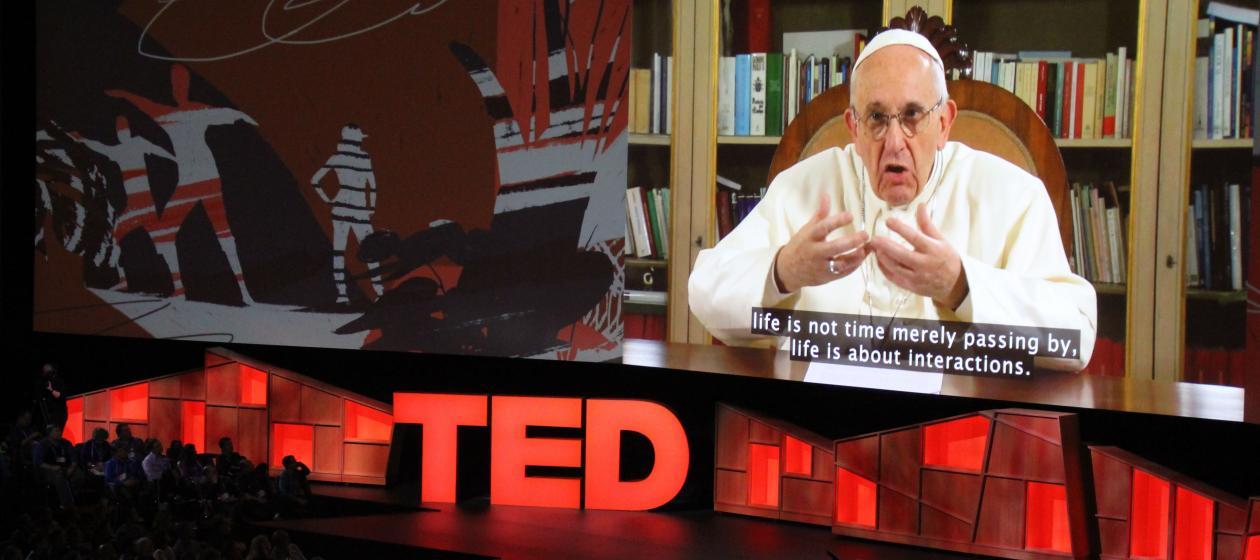
pope francisPope Francis Ted Talk
It is a Ted Talk, and totally worth the few minutes of every one.
“Why the only future worth building includes everyone?”
“Why them, not me?”.


Leave a comment »

The victory of online shopping

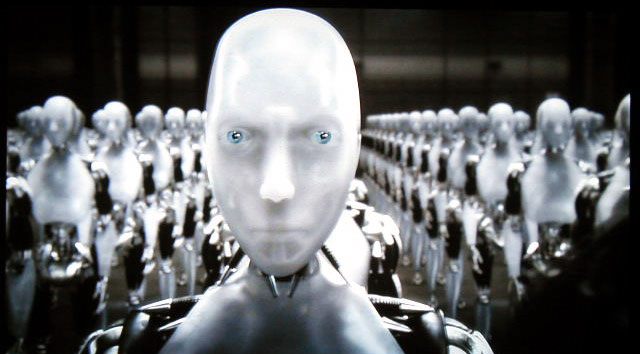
I recently re-watch the movie “I, Robot” and enjoy that twist about robots revolting against human beings to best protect us.  Since the invention of computers, we are heading towards the realization of far-fetched sci-fi scenes.

Technology makes mi robotany things convenient, efficient and improves the well-beings of many lives; and it is winning the race with non-technology alternatives.  Yet, it is hard to wholeheartedly embrace a complete victory of technology.

Take on-line shopping as an example, during the black Friday weekend this year, people buy more on-line than from the retail store; this feels like retail stores will soon face challenges to survive.   Online shopping saves valuable time and effort; it is a comfortable experience; and the customer services are amazing – if the product misses a part, it will send you the whole product again and quick.  It probably contributes to less pollution as the computer power to support some online activities is lbook storesikely way lower than the gasoline consumed in getting to shopping malls.   It is as great a thing as free Wi-Fi.
If online shopping wipes out local retail stores, I will miss the experience of doing shopping with friends, the joy of agreeing and disagreeing with each other on the items at display.   I will miss the ambience of a people-filled shopping mall.

Online shopping makes buying things such an efficient process.  When I shop for a gift, I have the receiver in mind.   The more efficient it becomes, the less time that receiver is on the mind before moving on to buy for another person.   Is it better to save much time, just to spend more time on the internet rather than more human interaction? GiftsofBooks

A few years ago, I went to book stores to discover new books. Instead of buying books, I registered the book titles and went online to buy them.   Recently, I start an effort to buy some books from the retail stores with the worry that it could soon become extremely difficult to find any retail book stores.

As online stores are up and running twenty four hours every day, it also takes away the need to plan a shopping trip.  And whatever we are looking for, it can be discovered in a few clicks.  I miss the deeper sense of demand and the delayed gratification on what we are looking for.

Maybe soon, I will find something online, and make a trip to the shopping mall to buy the items.

Leave a comment »