My desolate year of 2016 was rounded off with ten quiet days of resting, eating, watching TV, good reads and fine dinners (by the way, I like the Village Pub at the Woodside, CA).


With three of his books already made movies, Michael Lewis’ “The Undoing Project” had 46 holds in the library. I read “The Big Short”, published back in 2011 instead. “The Big Short” was a refreshing, character-driven narrative about the crash in the bond and real estate derivative (subprime mortgage) markets in 2008. (Subprime) mortgage was made to borrowers who were almost expected to default when the interest rates went up or the housing market stopped appreciating enough for any refinance. Layers of investment vehicles were manufactured out of these subprime mortgages as they were bundled and repackaged “recursively” in sophisticated ways that few in Wall Street understood. As the story developed, it bred more and more the injustice why in the end people involved still left the table well and rich when US government had to bailout the financial industry using taxpayers’ money. The author displayed exceptional talent and insight in untangling the little understood market meltdown into attention-grabbing stories around the crash which had repercussions to almost everyone. His other “business” books are added to my “to-read list”.
 Henry Kissinger is well-known in his pivotal role in the normalization of relations between US and China. I had the fortune to listen to his dialogue with Eric Schmidt around the time when his book “World Order” was just published. “World Order” gave a shrewd summary of the varieties of World Order, its legitimacy and power, the role of United States, in their past, present and their development in the uncertain future. As it repeatedly mention, there is information, knowledge and wisdom. Reading this book injects knowledge and wisdom to better understand the world views of China, Middle-East, Europe and US. This is on my “re-read” list. This book is so content rich that it should be read as a textbook. I am humbled and know that I will learn new things in each read.
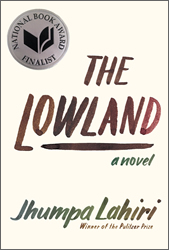 My son took the American Literature AP class in his class and he chose the novels of Jhumba Lahiri to write a thesis. Lahiri won the Pulitzer Prize with her debut short story collection “Interpreter of Maladies”. I ended up reading “The Lowland” and “The Namesake” by her. “The Lowland” tells the modest but content-rich story of two brothers and one common wife, a posthumous daughter living their years in Calcutta and Rhode Island, through the Naxalite-Maoist insurgency in India, a short marriage, a death, a remarriage and more. The author uses plain English to articulate the emotional dynamics as the characters progress from youth to their declining years. She kneads numerous life tidbits into a coherent storyline that vividly portrays what life has been in that era and the events around the first generation of Indian immigrants to America. Her novels may need more maturity in the readers and maybe too ambitious for high school kids in Silicon Valley.
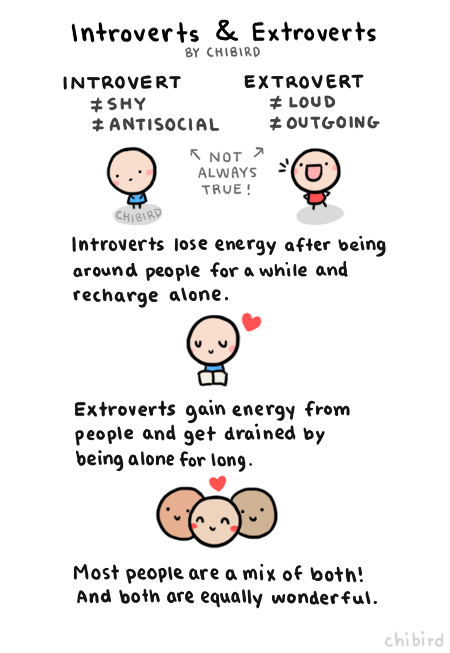
 Quiet : The Power of Introverts in a World That Can’t Stop Talking”, by Susan Cain, is a refreshing read. Susan quietly writes about the behavior, the thought process and world-changing contribution of that quieter half of the world population. It gives explanation on how introverts and extroverts function; and offers insights to readers of any personalities.
 I contribute to some non-profit organizations, and have been a World Vision child sponsor for many years. More recently, I realize the responsibility to go from easy act of giving to more thoughtful consideration to give where it creates impact I care about.
 ople stop donating to a non-profit organization as they consider the CEO got a high pay (when it was pretty low compared to the business world). There is expectation that people associated with non-profit initiatives should be sacrificial. Such undermines abilities to attract best talent and create pressure to cut corners in the administration of non-profit organizations. Should we judge instead the impacts the organization make or not make?
 he summer reading list of President Obama, it raises enough curiosity to pick up this book on a foreign topic – the history of species evolution and extinction.
 cks a species that is emblematic – the American mastodian, the great auk, an ammonite talks about extinct species; the increasingly fragmented Amazon rainforest, the ocean acidification and the endangered corals at Great Barrier Reef talk about the present landscape; plus many more around mammals and human. If any of these is new to you, the author will carry you to these new territories.
 n theory of mega fauna extinction, it is mind boggling on how human arrival may correlate the closest the species extinction when human predators unintentionally disrupts their long reproductive cycle; and the species reduction triggers forest overgrowth, then climate change. And how modern human species drive to extinction o
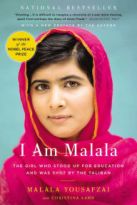 am Malala” covers her fifteen years of life in Pakistan, her families, her childhood, her schools and the global terrorism before she was almost shot to death.
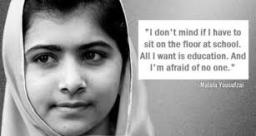 she relentlessly advocates for education through her blog, her speech and her bravery. When her family became internally displaced,
  the thing she missed the most was her books. When she recovered in the hospital, she wanted her books, and she missed the school examinations. Malala’s love of learning and school is a lesson for all the kids in many countries, where education is taken for granted.
 g nature that goes well with peanut butter, or ice cream or fruits or other companions. There are fries or pastries that are presented in the shape of a mini-waffle, which alone, improve their appeal. My best and worst waffles were both at a hotel near university campus. My best experience happened nearby the Harvard campus at Cambridge. The hotel was upscale where the ingredients were organic and carefully selected; the restaurant was filled with Harvard students with their families. It could be the ambiance, it could be the vacation appetite – the waffle breakfast was absolutely delicious. Fast forward a couple of years, I arrived at Ann Arbor near University of Michigan, just off a red-eye flight. Tired with little appetite and much time to kill, I was at this buffet-style breakfast served at the hotel. It could be the sleep deprivation, it could be the lack of diners, and it could be the waffles have been waiting for a diner for days, the waffle tasted so poorly that it was hard to reproduce. Waffle continues to be my favorite choice, though its carbohydrates make it a challenge now.
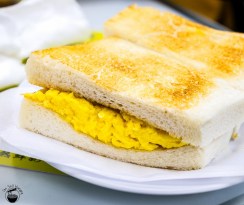 nforgettable. The best, in my book, is served in this modest and absolutely cramped
 dam Dalgliesh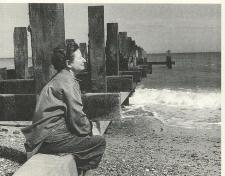
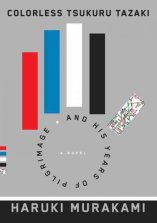 few classics, I prefer reading original novel to translated novel. Why would one want to depend on the quality of translation? Sometimes, the translated version feels like something amiss. This book “Colorless Tsukuru Tazaki and his years of pilgrimage” by Haruki Murakami (村上春樹) recounts a remarkable story of Tsukuru, that shines from the original Japanese version to the English translation. And how often is a book related to such a beautiful musical piece of the “Years of Pilgrimage” by Franz Liszt?
 e far.
 oliviatamccue