oliviatamccue

about everything, anything or something

Is Data-ism becoming a religion?

I came across the idea of Data-ism as the new religion in the book “A Brief History of Tomorrow”.  The novelty of the idea is intriguing, then a bit unsettling, just like we find out our pet has become our master.

Screenshot_20170604-100630The smart device (aka the “Computer”) is getting smarter. It may know you, more than any other human being, as it “effortlessly” read and remember your email content, your calendar, your whereabout, and all your online activities.    It can remember all your password too, which I highly suggest that you deny every time it asks for your permission.

Just a few years ago, at a Japanese restaurant, a worker bragged about a new App that could recommend the sashimi of the day.  Over the last couple of years, the Computer has served us even more personally.

For example, the “Computer” knows from my gmail that my daughter is flying in from Japan, and without asking, it gives the latest arrival time.  Oh, her flight is going to land ahead of schedule.   Around her new arrival time,  the Computer reminds it is time to pick her up based on the latest traffic condition.  In the car, the Computer guides with a map.  Not that long ago, missing a turn is very bad, not anymore, the Computer gives the new route effortlessly.  If an accident just happens, no problem, the Computer gives a new route and I trust it to be the fastest path.   I search for a flight to Alaska, the Computer picks up my need, and alerts me a cheaper airfare.  I mean, if I am searching for a flight to Alaska, it is logical that in that moment, I am thinking of a visit.  The Computer is so thoughtful that it starts to show Ads (Advertisement) about vacation in Alaska and all the other travel ideas.   This is transformational that it turns the life-long negative perception towards Ads to a positive experience by showing relevant Ads.   Ads is no longer an interruption from what we are watching, it is becoming relevant and more interesting than what we have been watching.
auto reply
Did you notice that Gmail could suggest responses to incoming email?  Like many new features, I was impressed and was itched to use it and tell people about it.   As I accept or ignore the suggested responses, the Computer learns about it and next time, it would come up with a response that is even more thoughtful.

Because the Computer is so helpful in organizing our life, we love it, and willingly empower it.  If we pride ourselves in our ability to connect, think and learn, the Computer is superior in every way.  It is omnipresent and will soon be all-knowing.  Our judgement is giving ways to decisions largely influenced if not made by the Computer.

IMG_20170506_143818Next time, when you install an App, and it asks for permission access, what would you do? We could struggle to yield until we believe.  Just like how we turn a non-believer into a believer.

I still enjoy my senses and the beauty of our nature; and am humbled by my limitation.

Leave a comment »

Good bye 2016

My desolate year of 2016 was rounded off with ten quiet days of resting, eating, watching TV, good reads and fine dinners (by the way, I like the Village Pub at the Woodside, CA).

With three of his books already made movies, Michael Lewis’ “The Undoing Project” had 46 holds in the library.  I read “The Big Short”, published back in 2011 instead.  “The Big Short” was a refreshing, character-driven narrative about the crash in the bond and real estate derivative (subprime mortgage) markets in 2008.  (Subprime) mortgage was made to borrowers who were almost expected to default when the interest rates went up or the housing market stopped appreciating enough for any refinance.  Layers of investment vehicles were manufactured out of these subprime mortgages as they were bundled and repackaged “recursively” in sophisticated ways that few in Wall Street understood.  As the story developed, it bred more and more the injustice why in the end people involved still left the table well and rich when US government had to bailout the financial industry using taxpayers’ money.  The author displayed exceptional talent and insight in untangling the little understood market meltdown into attention-grabbing stories around the crash which had repercussions to almost everyone.  His other “business” books are added to my “to-read list”.

happy-new-year-2017-1-1024x768Henry Kissinger is well-known in his pivotal role in the normalization of relations between US and China.  I had the fortune to listen to his dialogue with Eric Schmidt around the time when his book “World Order” was just published. “World Order” gave a shrewd summary of the varieties of World Order, its legitimacy and power, the role of United States, in their past, present and their development in the uncertain future.  As it repeatedly mention, there is information, knowledge and wisdom. Reading this book injects knowledge and wisdom to better understand the world views of China, Middle-East, Europe and US.  This is on my “re-read” list.  This book is so content rich that it should be read as a textbook.  I am humbled and know that I will learn new things in each read.

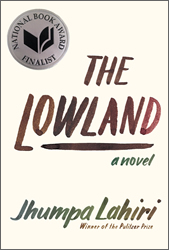
lahiri_lowlandMy son took the American Literature AP class in his class and he chose the novels of Jhumba Lahiri to write a thesis.  Lahiri won the Pulitzer Prize with her debut short story collection “Interpreter of Maladies”.  I ended up reading “The Lowland” and “The Namesake” by her. “The Lowland” tells the modest but content-rich story of two brothers and one common wife, a posthumous daughter living their years in Calcutta and Rhode Island, through the Naxalite-Maoist insurgency in India, a short marriage, a death, a remarriage and more. The author uses plain English to articulate the emotional dynamics as the characters progress from youth to their declining years.  She kneads numerous life tidbits into a coherent storyline that vividly portrays what life has been in that era and the events around the first generation of Indian immigrants to America.  Her novels may need more maturity in the readers and maybe too ambitious for high school kids in Silicon Valley.

Leave a comment »

A refreshing read : “Quiet” by Susan Cain

In this era of internet of things, we “google” for answers, “whatsapp” to be social and “youtube” to express. We have shorter attention span and less patience; and with more information, there are more things to share than more time to listen to others’ sharing.

Thousands of years of Chinese/Eastern teaching talks about developing important character traits such as humbleness, subtlety, persistence and altruism. Fast forward with western culture shaping the world, the character focus has shifted to personality focus.

This book “QuietQuiet : The Power of Introverts in a World That Can’t Stop Talking”, by Susan Cain, is a refreshing read. Susan quietly writes about the behavior, the thought process and world-changing contribution of that quieter half of the world population.  It gives explanation on how introverts and extroverts function; and offers insights to readers of any personalities.


“Quiet” talks about the rise of extroversion as a cultural (personality) ideal, with life examples from Dale Carnegie to the author’s personal experience in Tony Robbins’ events.  It attempts to answer questions like “Are personality a result of nature or nurture?”  It talks about different biology reaction, thought process and behavior between introverts and extroverts; follow with vivid stories of contrasting personality between Franklin and Eleanor Roosevelt; and the different behaviors leading to Wall Street Crash and the folks who thrive in the Crash. boldshy

There is a chapter on the soft power of “quiet” introvert, and a deeper dive into the cultural values outside of US, including perspective of scholarly students with Asian-heritage in US high schools and their challenges in fitting into college where speaking-up, social interaction and group thinking are “demanded”.

Just as extroverts make charismatic leaders and make many contributions, introverts are making great contributions to the society from Van Gogh and his paintings to Wozniak and the invention of personal computer.

The book finishes with case studies on how to love and work with/within your and others’ personalities.

If you are among those who are curious about different personalities (including your own); or simply to learn to work and love one of them, you would enjoy reading the research, the analysis and the stories of “Quiet”.  I am surprised this book has not made more noise, but maybe it is not a surprise when many prizes extrovert just a little bit more.ambivert


Leave a comment »

Cover her face by P.D. James

Sometimes the passing of an author triggers our first read to her novels.  I read “Cover her face’ by P.D. James who lived her last day in November this year, at age 94.   She was an English crime writer and was well known for her series of detective novels starring police commander and poet Adam Dalgliesh.  P.D. James has three books on the top 100 crime novels of all time.

‘Cover her face’ is the debut of her crime novel and its character Adam Dalgliesh in 1962.  It details the investigations by detective ACover her facedam Dalgliesh into the death of a young, sly and secretive maid, surrounded by a family which has reasons to want her gone.   Sally Jupp is an unmarried mother, recently accepted into Eleanor Maxie’s household as a maid. She used her ways to seduce a romantic relationship with Eleanor’s son Stephen, and has earned herself haters more than friends.  In the morning after she announced that Stephen has proposed to her, she was discovered dead on her bed with bruises from a strangler’s fingers forever on her throat.  It is up to chief inspector Adam Dalgliesh to uncover the life of Sally Jupp, and who that murderer is.

Some crime novels have intertwined and sophisticated plot which invites the intelligent readersto join the detective work, such as the novel ‘Devotion of Suspect X’.   Some are more like the plot follows the characters, such as ‘The cuckoo’s calling by Robert Galbraith’.  ‘Cover her face’ belongs more to the latter category, it has a good plot, though the murderer could also be anybody’s guess and it is up to the author, or the detective Adam, to walk us through, at the end, how it plays out.

D. James, bring alive the characters, and offers a vivid landscape of the crime scene. There is so much to like about the writing style of P.D. James and its characters.

The story started with this poetic introduction

“Exactly three months before the killing at Martingale Mrs. Maxie gave a dinner party.  Years later, when the trial was a half-forgotten scandal and the headlines were yellowing on the newspaper lining of cupboard drawers, Eleanor Maxie looked back on that spring evening as the opening scene of tragedy.’  And what follows is her skillful portrait of her family, their friends and the community around.  The crime surfaces at the end of chapter 3, after much anticipation, followed by the debut of Chief Inspector Adam from Scotland Yard. P.D. James

Adam started the investigation with 1-on-1 meetings with each character.  His intelligence and experience is beyond doubts, there is little coverage on Adam as a person, yet when his thought ‘I have no son. My own child and his mother died three hours after he was born’ tells a lot when he was posed the question ‘Would you wish for such a marriage for your son?’ by Eleanor Maxie.  And as the story ends, ‘he knew with sudden and heart-lifting certainty that they (Eleanor’s daughter and him) would meet again. And when that happened, the right words would be found’.   It leaves a lot to uncover about the character in the novels to follow.

Leave a comment »

Colorless Tsukuru Tazaki and his years of pilgrimage

Aside from aColorless Tsukuru few classics, I prefer reading original novel to translated novel.  Why would one want to depend on the quality of translation?  Sometimes, the translated version feels like something amiss.   This book “Colorless Tsukuru Tazaki and his years of pilgrimage” by Haruki Murakami (村上春樹) recounts a remarkable story of Tsukuru, that shines from the original Japanese version to the English translation.  And how often is a book related to such a beautiful musical piece of the “Years of Pilgrimage” by Franz Liszt?

The main character Tsukuru had 4 of his closest friends (2 girls, 2 boys) in his high school at Nagoya. Just like their last names, his friends have a color and character of their own.  Tsukuru, as its name in Japanese implied, enjoys doing things and he loves (building) train station.  This group of 3 boys and 2 girls knitted such a tight friendship that transcended romantic possibilities common for youth of that age. As they graduated from high school, Tsukuru moved to Tokyo and his 4 friends staying in Nagoya for colleges; they relished their reunions whenever Tsukuru showed up in Nagoya.  One summer as he visited Nagoya, his friends did not return his calls, and when finally reached one of them, he was told that none would see him again.  He was disowned by the group and had no friends.   For the next few months, he gave up living and thought about death all the time.

Years later, he made a living in building train stations, had a few relationship, but none worked out.   In his mid thirties, he met someone who made him contemplate his (still) bleeding heart; and started on his journey to the past and to thColorless Tsukuru and musice far.

It is a story of discovering the past to mend the present.  It is a story of friendship, love, heartbreak and love again.  Just like many of his books, it goes beyond the storyline and is sprinkled with equally captivating expressions of deep feelings towards the relationships, towards the dreams and towards the life of the main characters.  As Tsukuru finds his group years later, he not only discovers why he has been disowned, but also many more, that the readers can resonate with.

Leave a comment »

What I talk about when I talk about running

It has been a while – this is a book that gives the urge to do a review (or a recommendation).

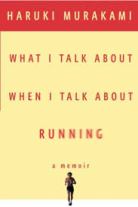
“What I talk about when I talk about running” by Haruki Murakami (村上春樹) is a memoir of the author about his marathons; it is the casual twhat I talk abouthoughts of the author along with what he thinks and feels for running It is a book where the author wants to share what running means for him as a person.

This book covers his 4-month preparation for the 2005 New York Marathon, at the time when he is around 55 years old.  At times, he goes back to his first-ever experience in Athens, or at Tokyo’s Jingu Gaien Gardens, or the 62-mile run in a day or the Boston Marathon.

As Mr. Murakami closes his Jazz bar, and takes up writing full-time, he gives up smoking and turns to running to keep himself fit.  In 1983, he had his first –ever experience running (nearly) 26 miles in Athens gruelingly under extreme hot condition.  He was able to run the whole course by himself.  His immediate reaction was not one of pride, but one of relief that “I don’t have to run another step. Whew – I don’t have to run anymore”.   Since then, he has run a marathon every year.

Running for Mr. Murakami goes way beyond keeping him physical fit, most of what he knows about writing fiction he learns by running every day.  It helps him to crystallize the important quality of a novelist : talent, focus, endurance and patience to rerun marathonspeat the process again and again to train willpower.


What makes this book special is not just in the training and the story of his various marathons, but also in his writing style, and the parallel that the author is able to draw among running, writing and living.  He brings a refreshingly vivid account of his thoughts, as he experiences in his marathons.   If you are in middle-age, there is that additional appreciation on the bit of his struggle, when he has to accept below-his-expectation result, or being passed by other runners in some last stretch of a run.

Whether you are a runner, a to-be runner, or not a runner, you would enjoy this book.

I not only got inspired to run, it makes the bike work (to get rid of knee pain)  in a gym very enjoyable while reading the book.

Leave a comment »

Daniel Suarez novels and news in Cyber Security

Wall Street titles “Daniel Suarez sees into the future” in the reviews of thriller/scientific novels written by the author.  “His books have a lot of readers with important jobs” and “… 2006 novel ‘Daemon’ describes lethal driverless cars and assassins outfitted with Google Glass-type goggles that help them track down victims”.   Both his debut “Daemon” and the sequel “Freedom” turn out to be very enjoyable read, especially for readers with interest in computer technology.

Thdaemone story stFreedomTMCoverMediumarts with the death of Matthew Sobol, the legendary computer game designer, and the homicide of two computer professionals working in the same company.  When Matthew’s obituary is posted online, a previous dormant daemon (computer programs running in the background detecting events and takes actions) activates his intricate plans.  The daemon recruits smart people through a popular computer game and form a Dark net community with a different way or organizing the society.  As new layers of his daemon are unleashed, the Dark net takes control of things including corporations through hacking of its data.  The fight between the security officers of the government and Dark net begins to reflect the malfunctions of the governments and underlying issues of current world order.  The detective Peter Sebeck, the IT professional Jon Ross and the national security agent Natalie Philips have to face the choice of fighting the daemon or joining it for the new world order.  And it leaves the readers to ponder whether this plan is evil or be the catalyst of a better and new world order

It is an aggressive attempt of the author to tell a very sophisticated story with the bold concept on how the around-the-corner computer technology can change the world and redraw the order.

Certain chapters get pretty descriptive on the computer security and hacking, the computer games, the driver-less killer autos, the Google-glass like goggles and the fictional data-curse ability; in spite of the technicality, readers could follow along the story plot.  There are moments that the Cyber world and the real world look two of the same; and there are parts that mirror what is happening in real world.

The message is clear on the very possibility of Cyber Attack that no longer only happens in fictional stories of Daniel Suarez.

Do you know how the internet security works when you see this “https:” vs. “http:”? Are they secured enough?  The vulnerability of our data in the computer world is becoming apparent, and it seems inevitable that needs to be a priority for many.

University of Maryland Records Hackedcybersecurity-abstract

Target struggles to contain Cyber theft

Google bolstered encryption to prevent snooping

Google interest in the authentication technology

Leave a comment »

The Ballad of the Sad Café – Longing, Love and Loneliness

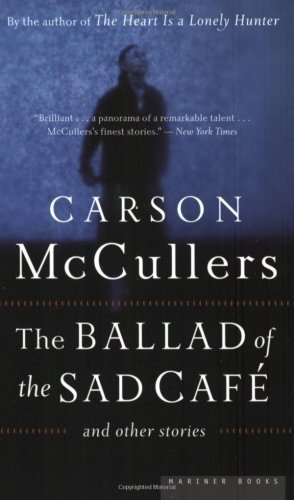
The Ballad of the Sad Café and other stories, by Carson McCullers, is one of those books on the 2013 Christmas shopping list of President Obama.  First published in 1951, it is a classic work for generations, with a number of different stories.

The sadcafeBallad of the Sad Café is the longest story among a human triangle in an isolated Georgia town.  The human triangle surrounds the rising and the closing of a café owned by Miss Amelia. Miss Amelia is a formidable and rich southern woman who has lived her life alone, except for a marriage that lasted 10 days.   All things that could be made by hands Miss Amelia prospers, including people who are very sick.   She could not be at ease with most people, other than the very sick, as people could not be taken into her hands and changed overnight to something more worthwhile.   With the appearance of her cousin Lymon, a sick hunchback, her store changes overnight to become a café and a gathering place for the town.  Miss Amelia and cousin Lymon falls into a lover-and-being-loved relationship until the return of her ex-husband Marvin, and then the triangle relationship evolves to the demise of Miss Amelia, the café and the town.

There are other shorter stories in the book.  “Madame Zilensky and the King of Finland” is about an intriguing discovery of the head of the music department regarding a new faculty member Madame Zilensky.  Zilensky owns an impressive reputation as composer and pedagogue; and yet live her life in lies.  “A Domestic Dilemma” is about the relationship of Martin Meadows and his staying-home wife who is becoming an alcoholic.  And then there is the “Sojourner” that tells the longings for love and belongings.

Carson McCullers use stories to share her acute observation of individuals, their relationship and their emotion towards love, being loved, lonelinlongingess, longing and other irrational sentiment; these sentiment may be missed but was plainly to be seen in the real world.   This is what she writes about love in “the Ballad of the sad café” – “love is a joint experience between two persons – but the fact that it is a joint experience does not mean that it is a similar experience to the two people involved.  There are the lover and the beloved, but the two come from different countries”.

These stories leave a lingering flavor and remind the relationship subtlety we often miss in our busy daily life.  If you enjoy reading intriguing stories with delicate and in-depth portrait of relationship and emotions, this one would be for you.

Miss McCullers is the author of “The Heart is a Lonely Hunter”, published in 1940 when she was 23; the book was later adapted into play and film.

Leave a comment »

Reading “One Year Off” instead of taking “One Year Off”

Having gone through a career break some months ago, this book comes as a fitting read.  In a way, a career break puts things in perspective, and helps with a deeper understanding of our own self.

If you one year off coverlong for a break, but do not have the conditions to do it, how about reading this book “One Year Off” by David Cohen?

The “One Year Off” of David Cohen is more than a career break.  It is a break from his job as a successful editor, his home and his friends.  It starts with how he feels about life at forty years old – “Shortly after my fortieth birthday, I began to experience vague twinges of spiritual uneasiness. I suppose you could call it a mid-life crisis”.  He quietly starts to dislike his home, his belongings and dissatisfies with his own production of books; he longed for a big adventure travel.

This is the book that describes how he actions this uneasiness into selling his home, breaking from his publishing job, and taking a year off travelling around the world visiting over fifteen countries.  If this does not sound easy, he adds to the challenge as he does it with his wife, his three children at age 9, 8 and 2 years old.

For readers who expect something of a life changing spiritual experience, they could be disappointed.   Even though the author “leaving it all behind for a Round-the-World Journey with Our Children”, he and his family returns home with rich memories and experience of the family travelling together for a year.  It feels more like that he comes home to pick things where he leaves off with subtle life style adjustment, than a total life transformation.     around_the_world_80days

He chronicles his year of “freedom” as he visits countries in Africa, Europe, Asia and Australia.  His travel log is light, engaging and entertaining. There are dramatic moments too, like how he almost loses his daughter as they go surfing in Australia; or their hospital experience as his children encounter injuries.  The book has a bit of everything, from humor to romance, from petty family life to drama, from typical travel to adventures and dangers.   His good sense of humor is in good display with the flight from Johannesburg to Port Elizabeth, where after six flights, twelve hours later, and multiple failed attempts to land at Port Elizabeth, they are back to where they start.   There is also romantic moments as they tour through Istanbul of Turkey; there is moment of danger in the wild of Africa with the Hippo Attack; and his thoughts about life in the Buddha caves in Laos.

In as much as the book is enjoyable to read,  my biggest impression remains with how David and his wife pull this “stunt” off, with three young children; and enjoys so much their adventure.  What a travelling family!

Leave a comment »

Wild – from lost to found on the Pacific Crest Trail

I have recently enjoyed two books, both from remarkable women, in their memoir on how they find a new purpose after personal catastrophe.   Not that they are the kinds of book I seek after, but more that they sell pretty well,  and take up good positions in libraries and book stores.

The first one “Gift of Hope” by Danielle Steel with an earlier book review in October. If “Gift of Hope” is about courage, empathy, love and a voice for the homeless; this book    is a personal journey full of adventures, physical and mental challenges, at times crazy but more often  inspiring how a solo hike in the nature helps the author from lost to found.

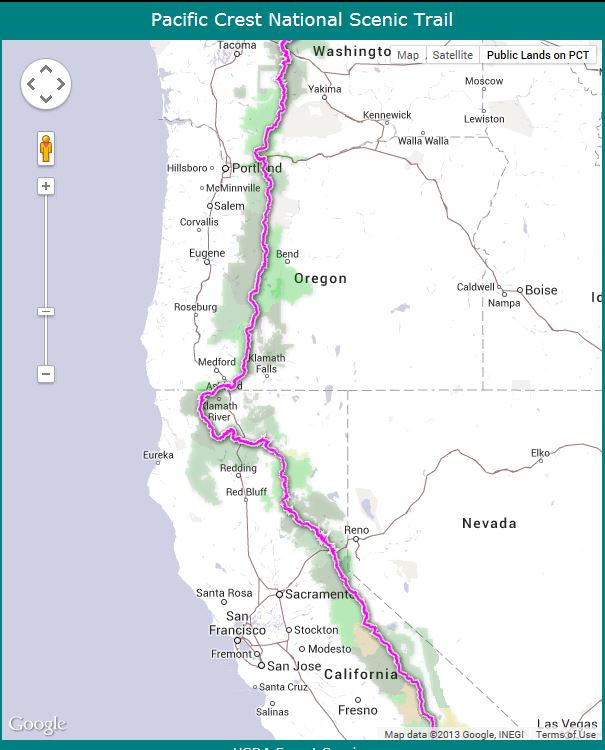
“Wild”, publishpacific crest trailed in 2012, is an honest memoir of the author’s eleven-hundred miles solo hike of the Pacific Crest Trail in the mid 90s. The solo hike took place after her mother’s death, her divorce from a caring husband, her drop-out from college, and that she ends up with heroine and an addictive boy friend, when she was only twenty two years old.  She has nothing more to lose and has made the most impulsive, yet life changing decision to hike the Pacific Crest Trail along the west coast of US, with no experience as a long-distance hiker.

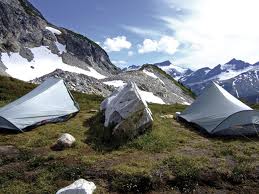
Strayed faces almost insurmountable physical and mental challenges in the first few weeks; from the monster backpack to carry, the over-tight hiking shoes, the blisters and pain, to the pitiful money she has at each ppacific crest 2lanned stop, where she would receive a supply box and twenty dollars to last till next stop on the trail.  Yet she survives those weeks by herself, and often warmed by brief encounters of fellow hikers.  As nature is, Strayed and the hikers are occasionally forced to bypass snow laden path of the trail and adjust their journey – there is this metaphor how Strayed count her toe nails lost to the trail, at the end of the journey, the nature has claimed 6 and she keeps 4.

The first few chapters talk in length about the physical and mental demand; while subsequent chapters are more of a storied reflection of her own personal childhood, her relationship with mother, ex-husband and friends, and what she would like to become.  Her personal experience is captivating – at times heart- warming as she runpacific crest 3s into kind-hearted fellow hikers; at times dramatic as she loses her hiking shoe and walks miles on sandals; at times horrifying as she faces bears, rattlesnake and not the least, intimidating man with questionable intent; at times as she reflects her own past failures; yet, she forges ahead against all odds on this seemingly crazy journey of herself.  As Strayed gets further and further in her solo hike, things start to change.  She finds the courage to connect back to past; and she heals herself by facing her past while living her present and finding her future.

This is an inspirational memoir of an incredible journey of the author, both inward and outward.

Leave a comment »