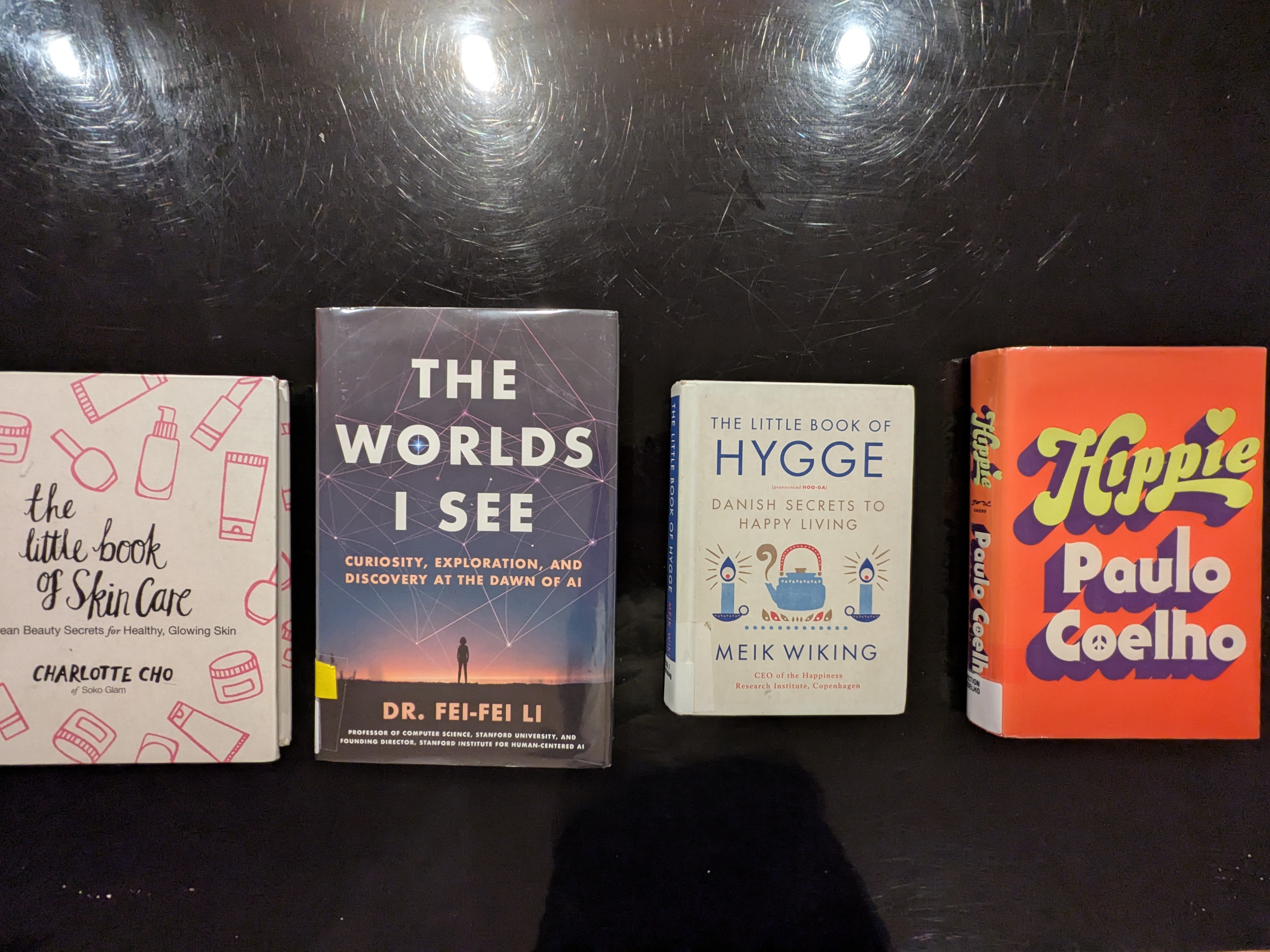
The books I read during the holiday, transported me to new places, and new experiences. The Worlds I See had been on my to-read list for ages, and I finally checked it off. It’s a memoir, an immigrant story, a personal journey, and an AI journey all wrapped into one. It doesn’t get better than this. The other books were serendipitous finds, with The Little Books offering delightful reads for everyone.
The worlds I see By Dr. Fei-Fei Li
If you search “Godmother of AI”, Google search results will list “Dr. Fei-Fei Li” at the top.
Dr.Fei-Fei Li is a through-and-through trailblazer. In the tech world, Dr. Fei-Fei Li has chased after Data, when algorithms and complex logic have been the unparalleled kings and queens in the computer kingdom. The resulting ImageNet has contributed to AlexNet and Neural Network. In the world where technology is the hype, Dr. Fei-Fei Li established the human-centered AI institute (HAI) in Stanford.
Her research and accomplishments are numerous. Her resilience, her commitment, her passion and her value stands out more in this world where the rich and the powerful get it all. It is touching to read about how she achieves, while caring deeply for her family, her parents, her spouse and her children, her students and the people around.
Her personal journey from China to America, New Jersey to Palo Alto will inspire you. The world will be better, if more of us see it through her lens.
Please add this to your to-read list.
The Little Book of Hygge: Danish secrets to happy living By Meik Wiking
I love these little books. The first chapter of light, about candles and lamps, is almost a bore. That is the whole point that many found all the normal things around us become a bore.
If you can pass through the first chapter of very normal things around us, you will be rewarded with a real sense of Hyggeligt. If you get through the last page, you don’t need to be in Denmark to discover the secrets of Happy Living.
The whole point of Hygge (contentment, comfort, coziness, and so much more) is about making the most of what we have in abundance : the everyday.
I love this little book. I am deeply grateful to the author Meik Wiking, CEOof Happiness Research Institute, Copenhagen. The world will be a better place if more people see and enjoy the common things around them.
Hippie By Paulo Coelho
I love his book “The Alchemist”. This is an autobiography of the author, travelling with a newly known Dutch woman from Amsterdam to Kathmandu. It has a bit of everything in life, the spectrum of people (real characters) they met and their experiences, the personal discoveries as they journeyed together from Amsterdam to Kathmandu. Just like many things in life, when we are seeing it as it is, there is some weirdness that cannot be comprehended or making sense of it. That weirdness stays with me long after reading the book.
The Little Book of Skin Care: Korean beauty secrets for Healthy, Glowing Skin By Charlotte Cho
This book transforms how I think of the skin care routine from a chore to really enjoying it. It has real good tips if you want to have a dewy look. I recommend the book to readers of all ages.
There are many book lovers in the world. I am one. I am not enthused about book clubs that need us to read the same book at the same time. Why? There are just so many genres to read about, each book reading pattern is as unique as the readers’ fingerprints. Just like friends, if you pay attention and don’t transport your memory of their younger days to their present days, the friends change subtly over time too. Those changes are often reflected by the kinds of books they are reading.
Just like good friends, good books don’t go away. May you find one or two, from the following reviews, that you are interested in reading right away. For all the others, I hope it is not whether you will read them, but when you will read them.
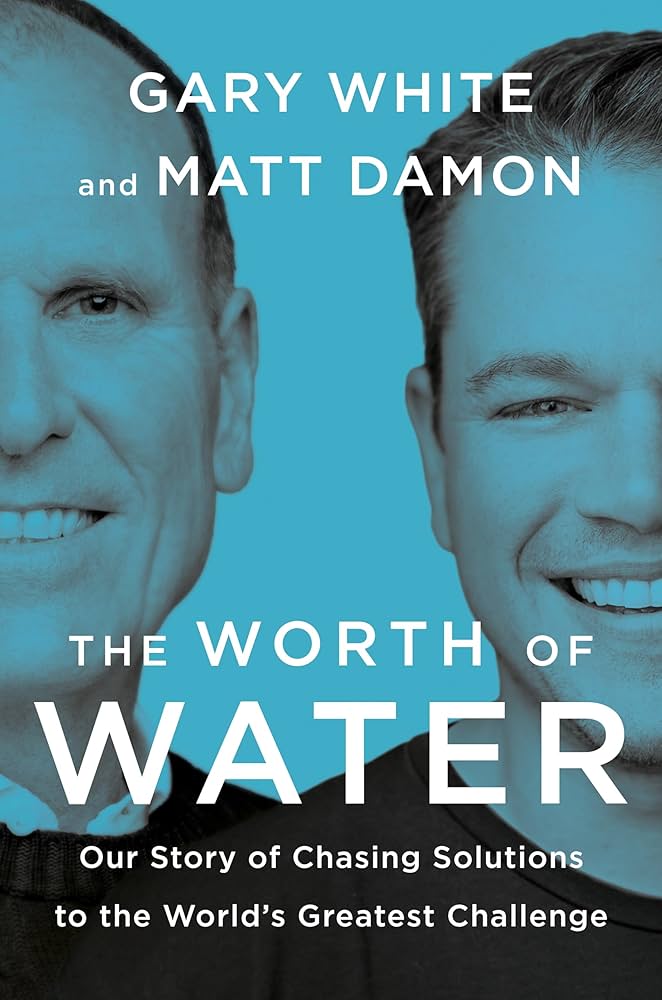
We are in a world with abundance that is so unevenly distributed. We can all relate to what life is like to spend hours every morning to get buckets of murky water to survive.
This is a book that gives concrete paths to solve the water and sanitation problem.
Supporting microloans, a sustainable market-based approach, can help hundreds of millions to tap into existing water infrastructure to give them water, and allow them to use the time to go to school or to earn more income.
Supporting resourceful teams to help utilities improve operations and find more paying customers to keep investing in better infrastructures in urban areas.
Supporting Governments, wealthy nations and NGOs can reach the poorest , most rural regions.
Check out the book or the water.org. It feels immoral to do nothing for the billions who happen to be born somewhere without water and sanitation.
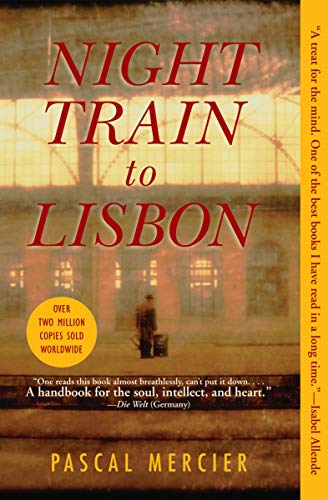
Raimund Gregorious teaches classical languages at a Swiss school. Everyday is the same routine, down to the minute until one day. On his way to school, he saved a beautiful woman, who was about to jump off a bridge. This one day, he questions his life and leads him to an extraordinary book about an extraordinary person, Amadeu De Prado, in Portugal. He boards the last train to Lisbon. His adventure turns into unbelievable discoveries of deep human connections as he retraces the life of Amadeu, his families, his loved ones, and his comrades.
Life is not what we live, but what we imagine living. At times dreamlike, at times unreal, this is a book that stirs your mind to reveal something new to yourself.
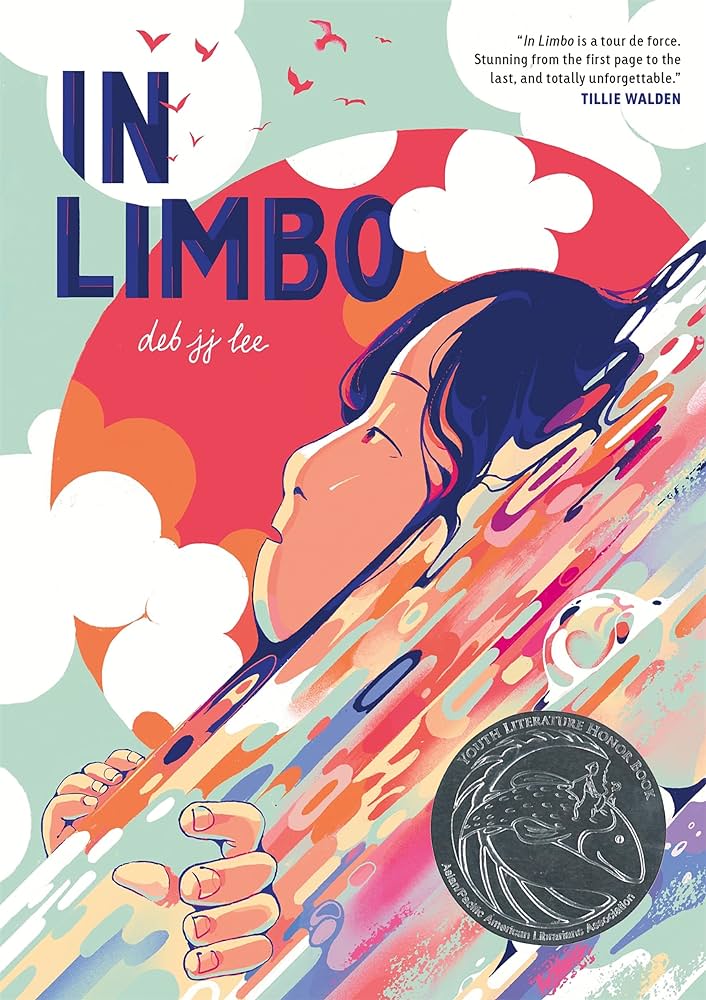
For those who have immigration experience, over time, they recognize that immigration is a multi-generational journey not an event. It is an experience that sends a person, the families and future generations to an alternate universe where the new universe offers contrasts in family values, morals and cultures.
Beautifully narrated and illustrated, this book shares the journey of a first generation Korean American how she copes with the challenges of family relationship, identity uncertainty, loneliness and friendship.
Many first generation Asian American will resonate with the growing up of the protagonist Deb. It is a good read for both their parents and them to appreciate the multi-generational implications of the migration.
Charlie Munger is almost 100. He died a few months ago. His wisdom, humor and fatherly advice have lived on in his speech and his book. He said “acquisition of wisdom is a moral duty”.
His commencement speech to the USC Law Graduates, to advise them on a good life, particularly resonated. His speech is full of gold and offers values for anyone. Here are some of his worldly wisdom.
The safest way to get what you want is to try to deserve what you want. You want to deliver to the world what you want to buy if you were on the other side. It is a golden rule.
Be a learning machine. Develop a multi-disciplinary knowledge in important domains: business, psychology, math and history.
Hard work and strong work ethics are essential. As obvious as it is, we often forget it when things are not going well.
Mr. Munger continues to advise us in this universe even though he has moved on to another universe. Hope you will not miss the advice.
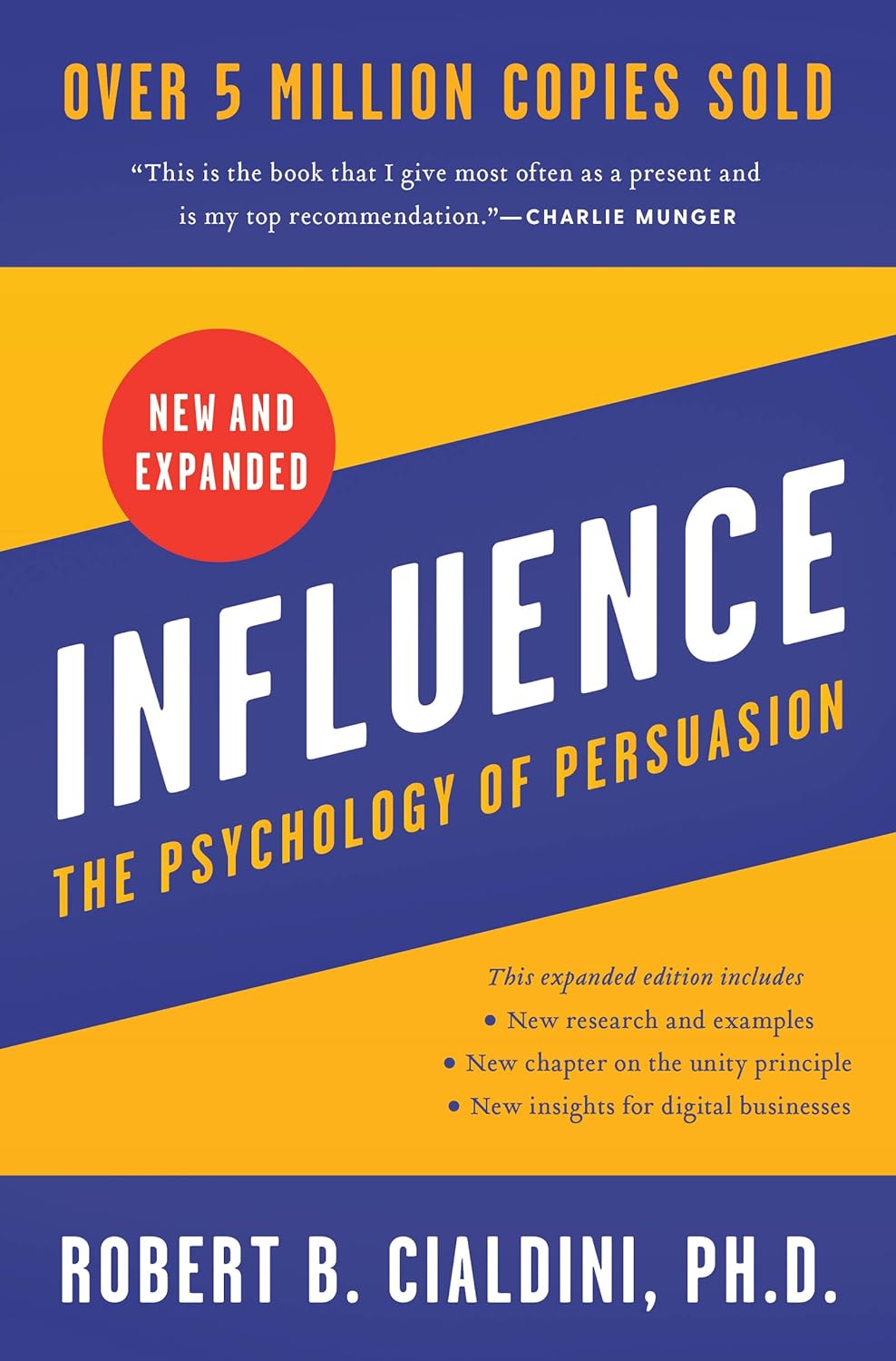
The abundance of knowledge and information overload overwhelm the smartest of all. This is an era of short cuts to influence decision making. It is a world where relationship building could get you further than the traditional intellectual and emotional intelligence. First published in 1984, the latest edition in 2021 continues to capture the psychology of persuasion.
If you are a compliance professional to influence others or you are someone who doesn’t want to be tricked by these psychological shortcuts, this book makes an important book to read.
For shortcuts to the book, the seven shortcuts include “reciprocation”, “liking”, “social proof”, “authority”, “scarcity”, “commitment and consistency”, “unity”. Or you can ask the large language model, chatGPT, Gemini and the like, to give you a summary to decide where to deep dive into.
You may also be intrigued by the author on the importance of preventing the abuses or misuses of these shortcuts, so as to keep the shortcuts working effectively for the majority.
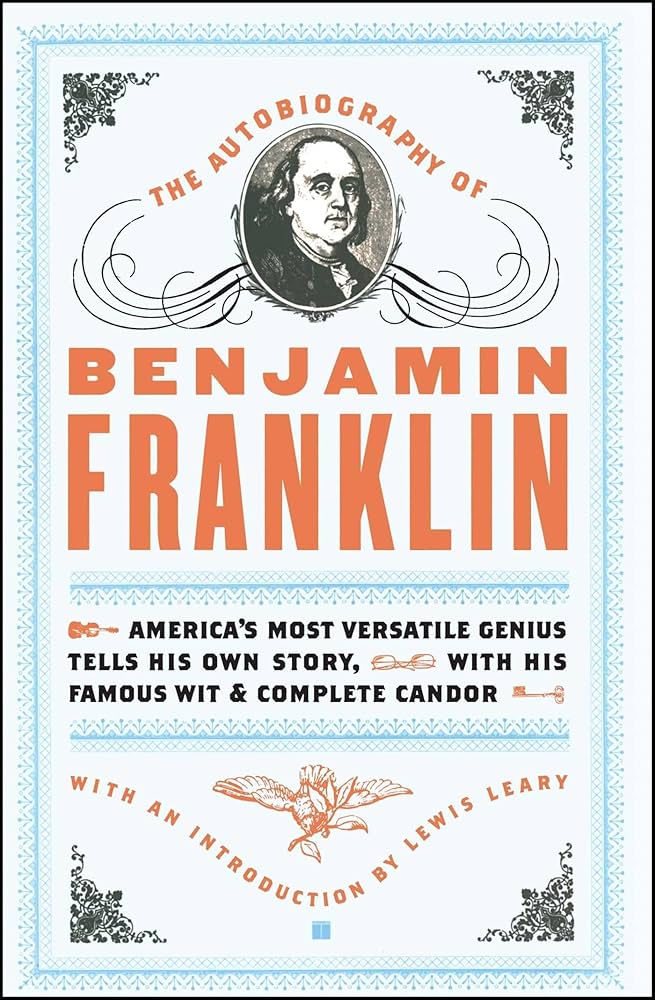
You may be familiar with Mr. Benjamin Franklin as one of the Founding Fathers of the United States, a drafter and signer of the Declaration of Independence. I discovered so much more of his impact on my daily lives after reading his autobiography.
Written by Mr. Benjamin Franklin from 1771 to 1790, this unfinished account of his own life remained relevant if not more relevant with the US state of affairs.
The first set of notes is a letter that started with “Dear Son”, where Mr. Franklin talked about his lifes, his younger days, the lessons learned, the business and the errors he has made. The discourse is candid and particularly touching to share life lessons from father to son.
The second set of notes was written a few years later. It listed out the 12 moral virtues + humility. Mr. Franklin created a “spreadsheet” to practice the virtues and tracked his progress. He had expected to acquire the habit of one virtue each week, and ended up taking a year to cycle through the 13 virtues. His design and rigorous progress tracking on virtues are amazing to read and to practice.
The last set of notes illustrated his printer business and his public services. His setup of public libraries, his establishment around the concepts of firefighting and military has impacted all of us living in the United States. His kite experiment, to demonstrate the connection of lightning and electricity, once again reminded us the importance of multidisciplinary knowledge to better understand the world.
It is a book to read, also a book to read multiple times.
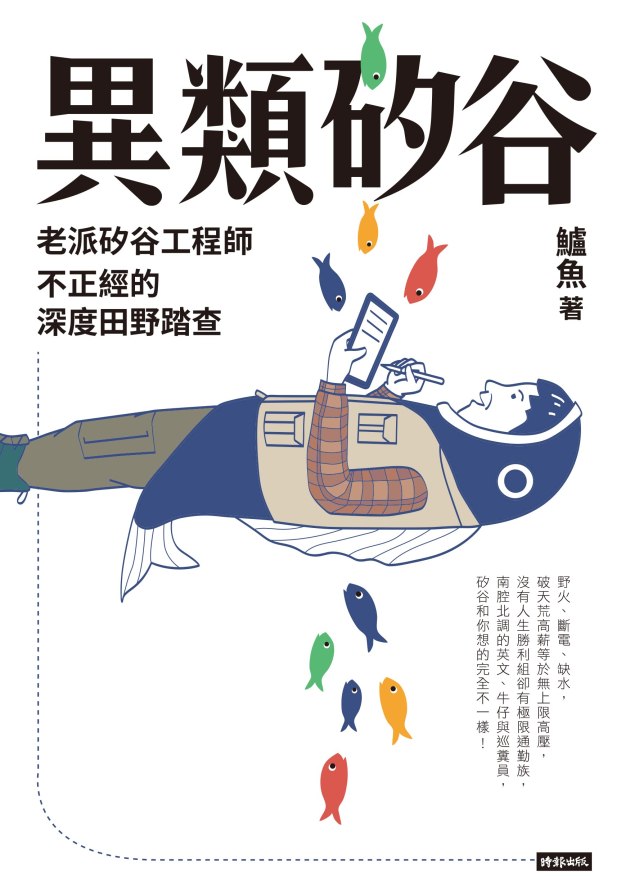
Every single day we are missing the people, the places and the events around us. Being in Silicon Valley for decades, I have the illusion I know about the area, until it becomes obvious that there are so many new discoveries waiting. In his unique lens, the author 鱸魚 shares absolutely delightful anecdotes that transport me to a more beautiful, more diverse, more humane Silicon Valley beyond the technology, the tech start-up, the magnificent seven and the venture capitalists.
His message will stay with me for a long time – Silicon Valley is a colorful puzzle that provides spaces for everyone to participate and there is such a broad spectrum of possibilities for everyone to have a role in it. Such contrasts make up a beautiful landscape.
This is a book for everyone to relate to Silicon Valley, including those who are too busy to notice the stories, and those who live far away.
I am enchanted by the author and his Silicon Valley stories. I subscribe to his blog and can’t wait to read his new book 我失敗的美式生活 (I fail in living the American life).
I recently joined an exciting AI-themed toastmaster club. This week, I gave an impromptu speech on “how AI would affect how we consume information?”. I seized the opportunity to talk about how humans, not technology, can keep their say in the era of internet, social media and AI.
Many are uncomfortable with new technology or simply changes. Surprisingly, the same “many” often give technology even more say on what they think and how they think. For those who are uncomfortable with AI or new technology, the following are written for you to keep your say when you consume information on the internet, on social media, or in the future from AI.
Is it fact or opinion? If you are not sure, take it as the opinion of the writer.
Is it news or entertainment? If you are not sure, categorize it as entertainment, and you don’t want to interpret most things as news on YouTube videos, Facebook live streams.
Is it confirmation bias, or a discovery of new perspectives? You can better tame confirmation bias when you are open to discovering what you don’t know. It is my opinion that humans are flawed and that we cannot be right all the time.
Do supermen and villains ever switch roles? If your information channels constantly portray the same country/party/persons are righteous, and the others are evil, it is time to read the other side of the story from other channels? There is no rush to take sides.
Does your current stand influence you the most to decide the sides to take in new event(s)? Be mindful if you let your existing stand make the decisions for you in new events. With the tsunami of information out there, you are likely going to find information supporting your current stand, even when the information is fake or opinionated. It is my opinion that it is beneficial to read different sides of the same stories. There is no rush to take sides.
Is your emotion ahead of your head to decide? We all have our emotional moments. When the emotion subsides, you have the right to change after going through the emotional reactions.
Are you ready to learn about history, cultures, and religions in the world? If this is a NO, it is my opinion that you are in no place to have a bad take on other countries, cultures or religions.
How much, with or without AI, have you enabled technology (internet, social media, online videos) to take over how you think, how you live, and what you do?
Reading is among the best ways to keep your heart and mind healthy. I feel quite sad to see books are becoming so cheap, and e-books even cheaper in the era of inflation and information overflow. You can help the authors and, even more so, yourself to find good books to read.
Radical Candor by Kim Scott I would not trade the fun of reading books, to a productivity play. Still, I tested the productivity hype about AI’s large language models. ChatGPT happily returned a clear summary to my prompt: ‘What is the book “Radical candor” by Kim Scott in a nutshell?’. I shortened its summary to this within minutes: “Radical Candor” is a practical guide for leaders and managers to foster better communication and relationships within their teams. It’s about delivering honest feedback with empathy and respect. The book provides numerous real-life examples and actionable advice on how to implement these principles of radical candor in the workplace to create a more effective and harmonious working environment.
The Demon-Haunted World: Science as a Candle in the Dark by Ann Druyan and Carl Sagan I wish this book was on the K-12 reading list. Filtering the information overload is like finding the straw of truth in a great ocean of confusion and conundrum.The baloney detection kits in this book are tools that can help you and the future generation in the much-needed critical thinking.
The things you can see only when you slow down by Haemin Sunim If you are looking for insights to “Why am I so busy?”, “When you are feeling low?”, “Being right isn’t important; Being Happy Together is”, “When you look for your calling”. My favorite chapter is “Three liberating insights” – people are not as interested in me as I had always believed; not everyone has to like me; and most things we do for others are in fact for ourselves. I keep coming back to some chapters in the book.
Message in a Matchbox – Memories of a Childhood Tehran by Sara Fashandi The title said it all. The stories of her brother from the author’s memories grow on me as I read on. Born poor, the characters have to overcome life obstacles to improve conditions for the family. At times tragic and emotional, this is a storied portrait of his brother’s childhood in Tehran. I recommend this book to see that part of the world.
The Tale of the Unknown Island by Jose Saramago I love this book and have read the 51-page twice. It is not a children’s book, though the children can enjoy it. This charming story shares how we all are isolated in our own island, and we all are on our own island until we find connections with purpose and love. I enjoyed both this book as well as “Seeing” by the same author.
* José de Sousa Saramago is a Portuguese author and the recipient of the 1998 Nobel Prize in Literature. His parables, sustained by imagination, compassion and irony, [with which he] continually enables us once again to apprehend an elusory reality.
Seeing by Jose Saramago A sequel from the book ‘Blindness’, which was made into movies. It starts with the majority of voters throwing blank ballots in the election. As the government reacts to it as a crisis, conspiracy and sedition, the story ends with the death of arguably the two best characters. It paints a vivid picture of how the world has become, how much we accept blindness to many things around us, and how much we still choose to see. It is a gem that is waiting for your discovery. It is a book that I would like to read again.
Dopamine nation : finding balance in the age of indulgence by Anna Lembke Through the lived experience of the patients and her first hand experience of guilt pleasure turning into addiction, the author highlights the delicate balance between pain and pleasure. Self discipline becomes a thing of the past when immediate pleasure is within reach in so many ways and modern day comfort gives rise to more indulgence and addiction . Maintaining the pain-pleasure balance is essential for our health and well being. A quick read recommended to those who want to overcome addiction or bad habits.
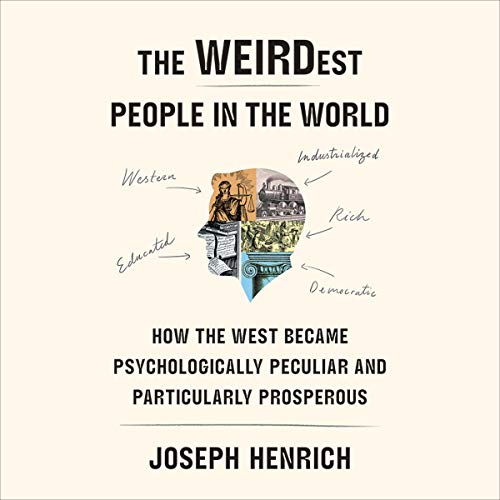
The WEIRDest people in the world by Joseph Henrich A weird book, until you realize that WEIRD refers to West, Educated, Rich, Industrialized, Democratic. How could the minority people make all the big decisions for the world? There are so many decisions made by very few people and we all live in the aftermath of those decisions. This book attempts to give an answer. Agree or not, there is some interesting stuff in it, such as why we moved away from marriage within families, or why some cultures worked better with strangers than others, how the spread of Christianity triggered the need to create contracts with strangers. This book can help kill some time.
Trust by Hernan Diaz Andrew Bevel was the protagonist who evolved into a mystical legend through a series of well-timed investments in the 1920s. The book has three versions of Andrew and his wife Mildred. This clever plot has a little bit of the 1950 classic “Rashomon” or the 2022 Netflix drama “Inventing Anna”. The story lost some momentum halfway in, and in the end, it has left the readers some open questions. Overall a good story.
Reading is an alternate form of travel around the world and across the time horizon. Below are some good reads and I hope you find one that you like.
They both die at the end by Adam Silvera
What will the world be like if death is predictable and we have 24 hours to live after being notified? This is a book about two boys living out their life in their last 24 hours. It is a touching story of loss, of love, of friendship and of living not just existing. Nice storyline!
The memory man by David Baldacci
David is among the most widely read storytellers with over 110 millions of his novels in print. His plots are good movie storylines. The story started with the brutal scenes of the murders of the protagonist’s families, that forever changed the detective’s lives in his pursuit of the murderers and the untangling of the murder motives.
Kochland by Christopher Leonard The book is a well researched documentary of the secret history of Koch Industries and Corporate Power in America. Charles Koch, a zealous believer in power and capitalism, has propelled the Koch company into arguably the most influential company in the energy policy making of the US government. In chasing the unparalleled business successes, the company has invented Market-based Management, has taken full advantage of the information asymmetric in its trading business, and established a frightening network of influence to American policies. Through its four elements in the political campaign (education, media outreach, litigation and political influence), Koch has done arguably as much damage to the climate agenda and carbon reduction as one could possibly imagine. Koch’s products are used by everyone. Political influence is everywhere.
If you admire capitalism and the American dreams, this is a must read to portray both sides of the coin. If you are concerned about the corrosive effects of success at all cost and the inequity created, this book offers the formula for success for you to feast on. If you know little about the dynamics of American politicians, and the corporation owners in the shaping of American policies, this book is a must read to gain that perspective.
Mendeleyev’s Dream “The Quest for the Elements” by Paul Strathern Not the kind of book you would pick up, it is an intriguing and absolutely enjoyable read about the history of Chemistry. Whether you like Chemistry or hate the experiments, “Periodic Table” is the thing we all remember from our high school.
When Mendeleyev organized the patterns of the elements into the “Periodic Table” in 1869, it was the culmination of a two thousand and a half years epic and a wayward parable of human aspiration. Let’s not forget the hardship of Copernicus and Galileo in their advocacy of heliocentrism as we hold contempt for flat earthers. Alchemy may be more remembered as hoax and deception, yet, it is that human aspiration to create the precious metal that allows discovery of how things work, through experiments. From the onset of scientific thought by the founders of philosophy (Thales 624, to Socrates, Plato, and Aristotles), through the ages of alchemy to the industrial revolution, the story of Chemistry witnesses cultural, social and scientific evolution. It is humbling how trivial our belief is, as we read about how human society has changed over the last two thousand years, and that two thousand years are still all but a wink in the chronology of the universe.
Chip War: The Fight for the World’s Most Critical Technology by Chris Miller This is the book to read to understand the semiconductor industry. The pandemic years remind us the critical role played by these semiconductor chips when we have taken for granted its critical roles in automobiles, in cell phones, in planes, in military weapons and pretty much in every facet of our lives. The author does a great job to chronicle the evolution of the industry, and unpack the myriad of interdependencies among the chip design software, the lithography and the fabrication. In the chip war, the current powers reside squarely in the America and a limited number of countries, together with a handful of companies evolved to dominate different parts of the overall chips ecosystem. The book will give you a deeper understanding in why the America government has sought to form alliances to restrict the advanced chip export to China. It will be a destructive play to both slow down the technology advancement of China, and at the same time, hurt the business of many global chip companies.
The pandemic outbreak in Hong Kong and Ukraine/Russia war are sources of anxiety. It is a luxury to share a few books. Until things look better, these books are hopefully sources of relief allowing you to experience different eras and perspectives. Some have plots that help us to reflect the current happenings, while a few others are sources of inspirations. Enjoy!
China in the 20th century (Swan)
French Revolution (Black Count)
The love and terror alongside the rise of Hitler (In the garden of beasts)
The life of an existential philosopher Søren Kierkegaard (Philosopher of the heart)
The foreign exploitation of an African village (How beautiful we were)
The inspirations from two women with drastically different origin and life journey (My life in full and 鏡前鏡後).
Swan by Jung Chang
Through three generations of women, the author told the story of their lives through the turbulent times in China. The 20th century has been a hundred years of dramatic changes where China has gone from Qing dynasty to the Republic of China, endured many humiliations from foreign countries, survived a world war, fought a civil war, and struggled in the many movements of the Communist party. It was an engaging read with a rich plot, tragic at times and humbling to see how China has prospered after the hard times.
Black Count By Tom Reiss
Based on the memoir of the famous author Alexandre Dumas and the archives of the French revolution era, Tom Reiss weaved an attention-grabbing biography of Alex Dumas. Alex Dumas, the father of the famous author Alexandre Dumas, has been an important influence to the author who has incorporated his father’s prison experiences into the world-renowned classic “Count of Monte Cristo” and “The three musketeers”.
Alex Dumas, born as a mulatto, rose to be the most feared generals and became the commander-in-chief in Napoleon’s unsuccessful ambition in Egypt, only to be fallen as Napoleon rose to full power in France.
More than a biography, the author gave a new perspective of the years before and after the French revolution, the racial equity progress and regress, the pursuit of ideals and the failing, the terror and the personal ambitions of Napoleon. The French revolution could be summed up as the era of ideals, terrors, and wars.
This is a great book for readers to see the bright and dark sides of the French revolution (or any revolution); and the evolution of racial equity in that era.
The author has impressive storytelling power making such a complex topic an engaging read.
In the Garden of Beasts – Love, Terror and an American family in Hitler’s Berlin By Erik Larson
A portray of the love and terror in Hitler’s Berlin in the lens of an American Diplomat. A professor was appointed to be the American Diplomat to Berlin, a few years before Hitler rose to full power in Germany. Through the experiences of the diplomat and his flamboyant daughter, the author brought to life the unique and intriguing landscape on how Berlin and Germany, in the wink of 2 years, had fallen to Hitler.
There is so much to discover through the questionable love stories, the parties, the political power play in the United States as well as in Germany.
If you are interested in seeing another angle of what life was like in Berlin in the late 1930s, you would enjoy this book.
How beautiful we were By Imbolo Mbue
This is a vivid and sad story of an African village being exploited by an American oil company and a corrupt government, written from the perspective of the children, the elder, the mother, the grandmother, the protestors, the fighters. The villagers are powerless and are left with environmental degradation, livelihood degradation, death sentence of leaders, premature death of children and a massacre. The remaining are forced to accept the changes and often have to leave behind many things they have valued for generations: their homes, their heritage, their culture.
Philosopher of the heart : the restless life of Søren Kierkegaard By Clare Carlisle
Soren Kierkegarrd was a Danish theologian, philosopher, poet, social critic, and religious author who has been widely considered to be the first existentialist philosopher. This is a biography of his restless life.
Rather than living a comfortable worldly life, he picked the less traveled journey to find meaning, to search deep in his heart, to answer what it is to be a human being and what it is to be a Christian.
He struggled in his ethical sphere in his relationship with Regine whom he disengaged with as he found the calling. He challenged the Christendom and the Church how much the believers have deviated from the living of Abraham, Mary, Jesus and their followers. He constantly lived with irony and ambivalence and suffered as he lived out a non traditional life as a pastor, an author.
If you are looking for deep and deeper thinking, this is the book.
My life in full By Indra Nooyi
Indra gave a genuine account of how she, born and raised in a traditional Indian family in Madras, rose to become the CEO of the PepsiCo.
Through education, unconditional family support, powerful mentors, unbelievable energy and unparalleled hard work, she was able to make an amazing career journey while raising her children.
In her role as PepsiCo CEO, she has transformed the company to performance and purposes. She has the front seat view of the challenges and has committed to make the world better for those after her.
Her vision of how to make the world better is an inspiration.
The famous actress of Taiwan wrote about her acquaintances, her friends, her thoughts and the characters that she admired over the years. It was unbelievably reflective of how she discovered the passion in reading and writing, made new friends and learned new perspectives.
This is the book to read for climate control. Mr. Gates translated the complex topic into concrete causes and impact analysis. He walked through a comprehensive course of action, to be done, in a scale never done before for the government, the market and the technology to work together to prevent the climate disaster. The last part of the book called for actions for individuals.
With a combined effort of government intervention, technology innovation and market forces, there exists a narrow path to go from 51 billion of carbon dioxide emission to zero.
In his last days, Hans Rosling put all his heart into finishing this book. His passion in life shows so much in his worldliness and his global perspective.
Would you believe most people, experts included, have significant gaps in knowing the present state of the globe? How would their distorted world view affect the decision making of individuals, of companies and of governments?
Are you among those who think the Scandinavian countries have always been rich? Do you know the difference in living for people earning $2, $8, $32 or more dollars a day? GapMinder of the income levels is simply mind boggling.
This book is a great read especially for the young generations who need a lift and an awareness of the possibilities.
“The secret of a good old age is simply an honorable pact with solitude”.
Through the lives and struggles of the multi-generations of Buendia’s families, the book covers pretty much everything in the world.
In the imaginary plot of the insomnia plague, the book told of the desperation felt when one was deprived of sleep.
In the old age of Colonel Colonel Buendia, he questioned the purpose of the twenty-years war that he had led his compatriots fighting the revolutionary war against the government. He chose to live his final years in simple solitude after tasting the pride, the power, the liberation.
In the strike of the banana farm workers, the government hid the massacre so well that no-one believed in the witness who escaped. The banana farm was such a vivid demonstration of colonial exploitation.
Through the deluge that continued over several years, there was the humbling reality that nature and many other species were to win over human beings.
”Races condemned to one hundred years of solitude did not have a second opportunity on earth”.
I finished the book, feeling like just touching the first layer of the onion, with so much more remains to be discovered.
Taking the stress out of homework by Abby Frerich and Brian Platzer
Through the challenges facing the students while doing homework, these two experienced teachers drilled into the challenges in skill gaps, knowledge gaps and growth gaps; and offered practical advice for both the learners and the teachers. A good read for learners of all ages.
Feel the fear and do it anyway by Susan Jeffers, Ph. D.
A good read for those seeking encouragement to overcome life hardship and take opportunities
A good read for parents who want their children to be unique, confident, and rich; as well as adults who want to better understand the culture of Jewish to inquire, to debate, and to do something different.
Nine essential things I’ve learned about life by Harold S. Kushner
Covering with wisdom and clarity, the author offers a powerful narrative of “God sends us the strength to deal with the problem”, “Religion is what we do not what you believe” and that “It is ok to have doubt and anger”.
The 100 best stocks to buy in 2020 by Peter sander and Scott mobile
Not a classic, but an easy-to-read, if you are searching for a list of companies to research more.
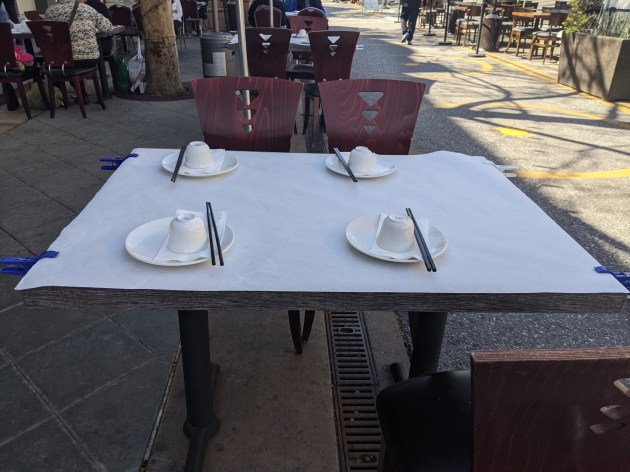
The Biden government and the vaccine situation have shown us some light towards the end of the Pandemic tunnel. This month, My husband and I visited the downtown of Mountain View, Sunnyvale, Palo Alto, Los Gatos, San Mateo and Menlo Park to experience the different outdoor dinings in each city.
During the pandemic, I have been able to read a few all-time classics used to be on the reading list during my retirement years.
Anna Karenina by Leo Tolstoy
In my high school years in Hong Kong, the high school had roughly half of students studying science (aka STEM) subjects, and another half studying art subjects. There was, and probably remains, a hierarchy in subjects where science subjects have often been ranked higher in the overall curriculum. Often considered among the greatest literature of all time, the novels by (Leo) Tolstoy were squarely reserved for those studying English literature, a subject for the art students.
Married to a powerful man Alexy, Anna was beautiful, charming, tactful to almost manipulative, and lived a perfect life until she met Vronsky. Vronsky lived his glamorous life until he desperately fell in love with Anna. Levin, an idealist and an intellectual who preferred living a real life in his farms and with the peasants, was devastated when his proposal to Kitty was not accepted. Kitty, the ex-lover of Vronsky, recovered herself in a sanatorium, and re-discovered her love for Levin. The pursuit of love, by these protagonists, changed everything for them; and reflected how the disparity of the society in the treatment of Anna and Vronsky in their affair. The plot acted as a conduit to write about the society and the protagonists. The power of “Anna Karenina” is in how well Tolstoy wrote about their emotions and how well the characters brought you to the society of the time. Reading the book is getting to know these characters – their inner thoughts, their expression of their thoughts which often were contradictory to their inner thoughts, and the doubts in their pursuit of love and purpose of life. It transported the reader to the society and witnessed the lives and the life events of the people from peasants, landlords, soldiers, public servants, and politicians. The pain, anguish and terror of Levin, in enduring the long labor process of Kitty, was arguably the best ever description of father-to-be experience, that dark side has been so seldom told. The visceral tortune in living through the long hours towards the inevitable death of Levin’s brother was powerful, vivid and absorbing. Anna’s heart-wrenching struggle, in her hopeless affair, could only lead to one inevitable outcome in her once perfect life.
The book leaves me wondering if science represents a certain understanding of nature and species, then literature gives us a multidimensional view of our beings from the past to the future.
The Element by Sir Ken Robinson
Often considered as the most watched Ted Talk, Sir Ken Robinson has been a strong advocate of education reform to cultivate curriculum diversity, ignite students’ curiosity and awaken learners’ creativity. His Ted Talk “Do schools kill creativity” is both entertaining and educational, and I could not recommend more.
The element is that intersection of the things(s) we enjoy doing and the thing(s) we naturally do well. Many run through their lives without discovering their elements. In his discourse, Sir Robinson believes finding the elements are both possible and crucial. It is never too late, just like Julia Childs discovered her element in French cooking in her fifties. To discover our element, we need to rethink the possibility, find our zone in things we enjoy doing so much that we lose track of time, meet others with similar passion, and open for help.
Full of examples, ideas and inspirational stories, this is a great book for all parents and educators.
I learn first hand even if we, parents, put in our best effort to help our children to discover their elements in the most personalized setting, there is no guarantee for success.
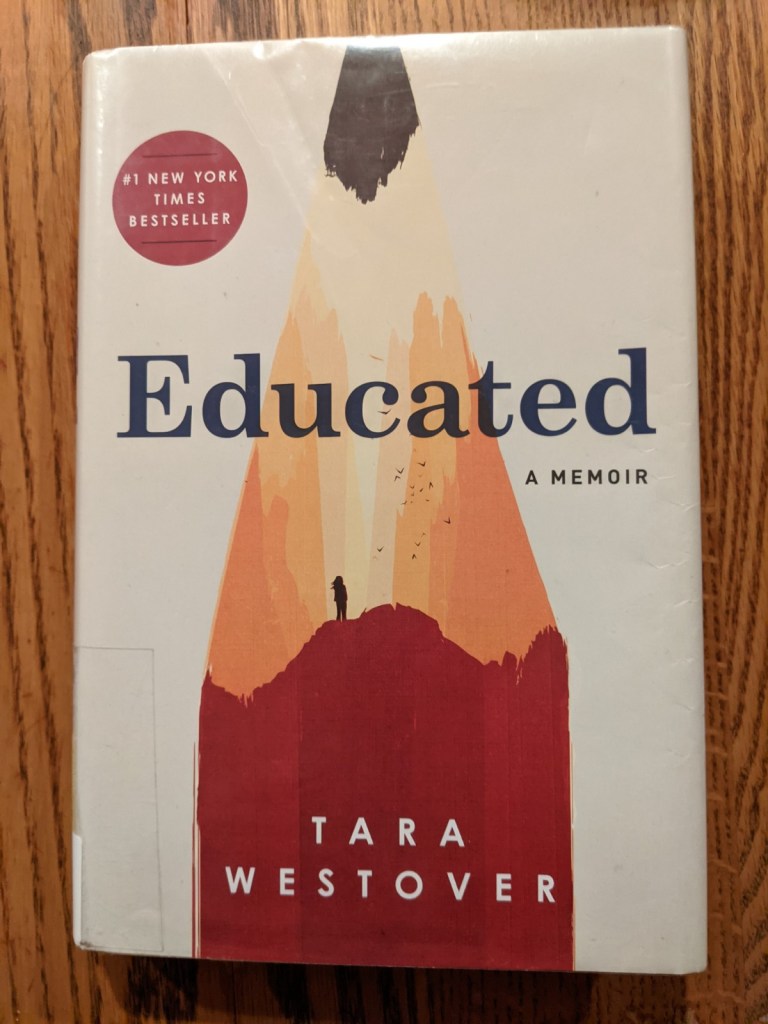
Educated, a memoir by Tara Westover
Born and raised in Idaho in a large family, the author has been isolated from the society. Her parents do not trust the government, do not go to medical facilities, do not allow children to go to school and her father believes himself to be the Mormon prophet and has the strictest code of conduct for his children . He dominates the family with his long lectures, and his religious doctrines to the level of abuse. He loves his children in his own distorted way, and tolerates abusive behavior of his sons. Her family has been the whole world for the author, until she miraculously found her way to attend BYU. Through her hard work, her intelligence and her persistence, she was awarded scholarships to Cambridge and Harvard, and earned her PhD from Cambridge. The more she got into the mainstream society, the more her parents saw her as being possessed and became a disgrace for the family. Would she compromise to remain in the distorted worldview of her father and have a family to go back to? Would she stand up to the values she acquires through education? This is a memoir of her struggle, her courage, and how she makes different choices as she becomes educated.
Education changes who we are and what we would become; so do our family, our upbringing and our culture. It pains to read the struggle the author has to suffer between the evangelical view of her parents and the values that she learned through education.
It is a story of self definition and self belief through the power of education.
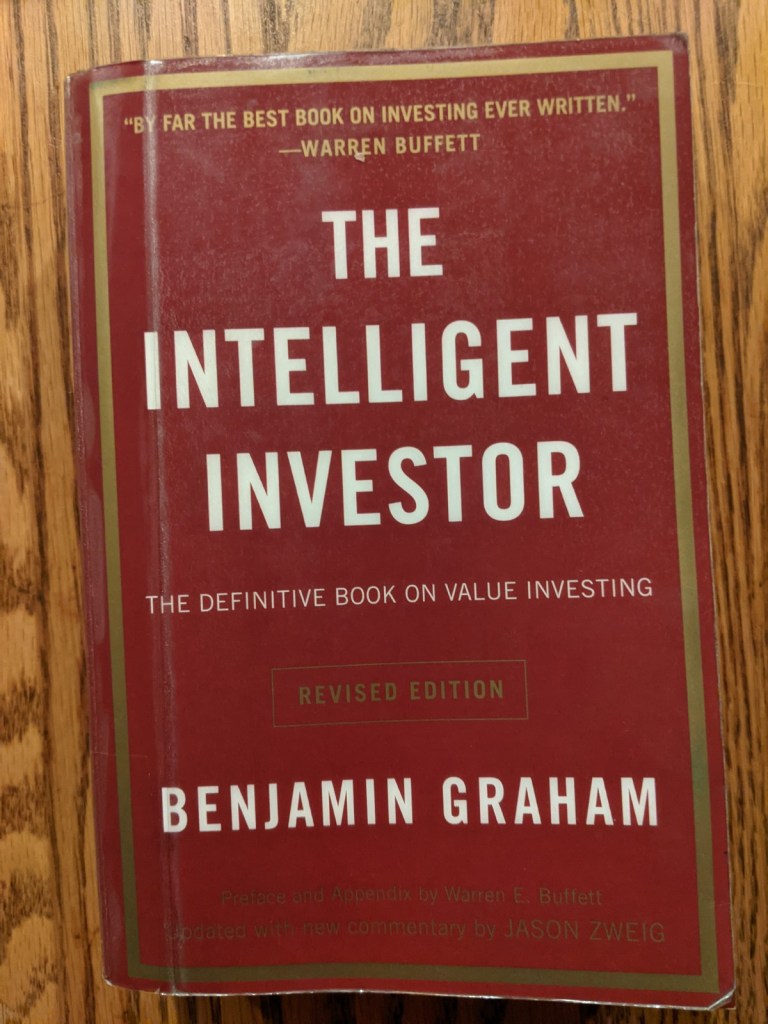
The Intelligent Investor By Benjamin Graham
Warren Buffett, one of the most successful investors, if not the most, said it all: By far the best book on investing ever written.
First published in 1950, the book has been a must read for anyone who cares about making good decisions on their finances. Mr. Graham wrote: “an investment operation is one, which upon thorough analysis promises safety of principal and an adequate return. Operations not meeting these requirements are speculative”; and “The speculative public is incorrigible. In financial terms it cannot count beyond 3. It will buy anything, at any price , if there seems to be some “action” in progress. It will fall for any company identified with “franchising”,computers , electronics, science, technology, or what have you, when the particular fashion is raging. Our readers, sensible investors all, are of course above such foolishness.”.
Reading his investment advice is like reading the answers to the questions that would come up in the final for the subject of “investment”. Yet so many continue to make the same mistakes, and (choose to) behave as speculators than investors.
Xmas 2020 has come and gone. 3.8 millions people passed through US airports from December 23 to 26, down from 9.5 millions in 2019 for the same days. Doing what we can, my daughter decided not to come home.
Thank you to the technology of online meeting . We managed some zoom meetings with friends. We did a Marathon family chat on Christmas Day. On Boxing Day, we got together online to unwrap our gifts together. “Santa” would normally have gifts for children; and this year, that “Santa” donated the gifts to the needy.
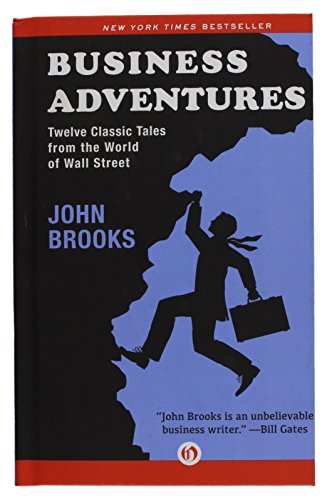
Business Adventures By John Brooks
The book has twelve classic tales from the world of wall street. Published in 1969, John has this gift to turn all kinds of complex happenings into engaging narratives with interesting characters and sustained implication to modern worlds. In doing so, each tale is memorable. The tales of “Xerox” and “the fate of (Ford) Edsel” are insightful for anyone developing a new product. The tale of taxation is super educational for taxpayers esp. how few of us ponder how we get into this mess of complexity. As an amateur investor, I thoroughly enjoyed the tale on insider trading and the devaluation of British pounds. The judicial ruling in the “One Free Bite” tale in 1963 on intellectual property and employment change is still relevant for the millions who are working in technology, innovation and research.
This book is among the best reads for the year. Bill Gates once said, “Business Adventures remains the best business book I’ve ever read.”
Creativity, Inc. By Ed Catmull
My senior leader(s) at work is reading this book, so am I. Creativity is important in new product development, it is difficult to cultivate and possibly harder to sustain. Steve Jobs acquired Lucasfilms in 1986 and created Pixar, and the journey of Pixar is one of sustained creativity and excellence.
Picking from his presidency at Pixar and later also Disney Animation, Ed Catmull is no doubt a savant in the world of creativity. Drawn from decades of learning and experience, he shared an abundance of wisdom towards sustained creativity and excellence.
Unleashing creativity requires leaders to loosen control, accept some risk, trust colleagues to own/solve problems, to clear path, to discover hidden items, and to pay attention to anything that creates fear.
Sustained creativity is a very complex, active and ongoing process. This book does not offer short-cut or ten set steps to get there. The last chapter “starting points” offers some prompts. As the author said, “the trick is to think of each as a starting point, as a prompt toward deeper inquiry, and not as a conclusion”. I benefit and would like to experiment some ideas, and you would too.
The book would not be complete without this chapter “the Steve we knew” whose vision and sponsorship is arguably the single most important factor for the success of Pixar.
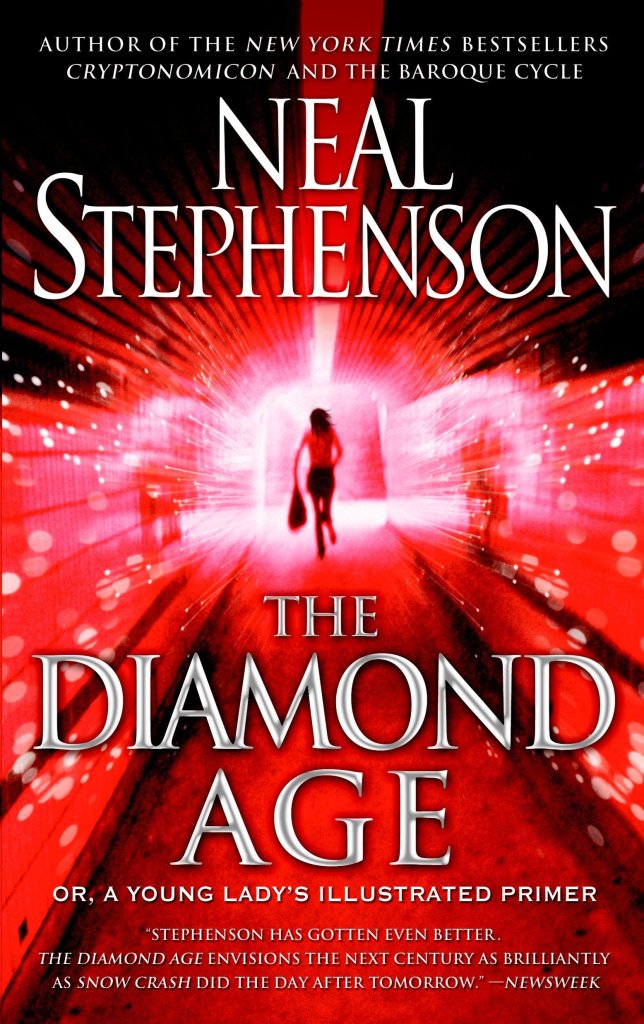
The Diamond Age By Neal Stephenson
I recently joined a product group to democratize education and inspire learners.
This book has an interesting spin on personalized learning through a super intelligent device based on the environment and experience of the device owner. Through the device, the main character acquired a tremendous level of knowledge on her own, and has become a “heroine” to change the world. That part is interesting and promising.
There are quite a few futurist speculations such as nanodevices for everyday life, material replicators that could fulfil our daily needs, the floating skyscrapers, the exchange of minds and the world organization around like-culture, like-minded “tribes” more so than countries. There could have been potential to develop an amazing story. Yet the plot is rather a mixed pot of many things going on, but not neatly tied together. Together with weak character formation, it is hard to relate to the story nor the characters. Then the plot carries an undertone of tribes stereotypes , such as tribes similar to “high class british”; and some undertone of disrespect to tribes which are more like “the Chinese in the early twenty century”.
All these have left me a dose of bad taste for the book.
Big Sur has no Wi-Fi nor internet service providers. It was annoying and the lack of connectivity took some getting used to. I would remember this Big Sur trip as a memorable social media retreat.
Day 1 November 5
Two days after the Presidential election day, many states were still counting votes. I cared about the results and had election stress. Watching the news all the time did not get me the news faster, nor would it change any results. The true winner could well be the media as the election day dragged into the election week.
Carmel-by-the-sea is a 90-minute drive from home, through the highway 85, 17 and 1. It was a Thursday, and the place lacked the usual touristy feel. We had an outdoor lunch at an Italian restaurant. It served a scorching hot wild mushroom risotto that I had to wait some time before I could ingest the Arborio rice. The risotto was super creamy, mixed well with the mushroom, truffle and Parmigiano Reggiano; it was absolutely delicious. The portion was large and heavy with the cream, so we ended up enjoying the leftover in the next couple of days.
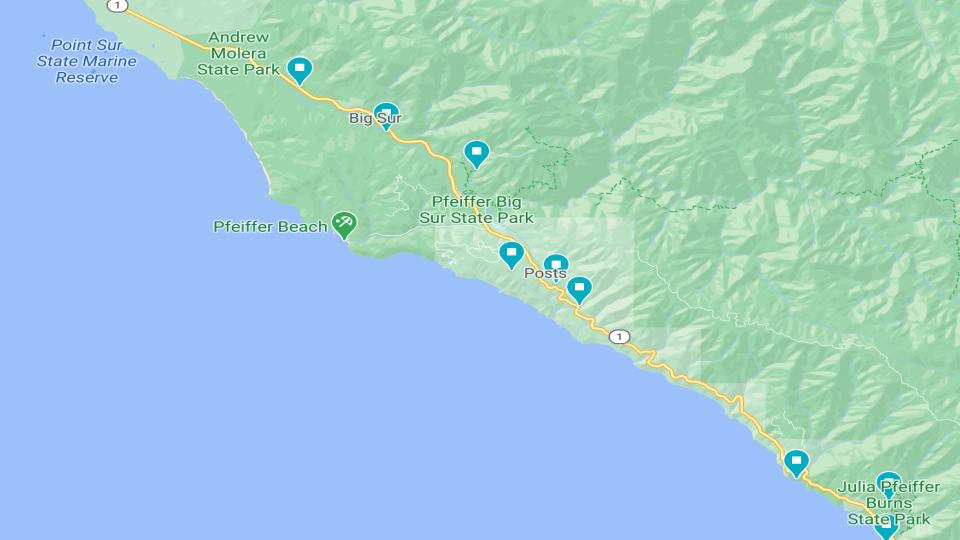
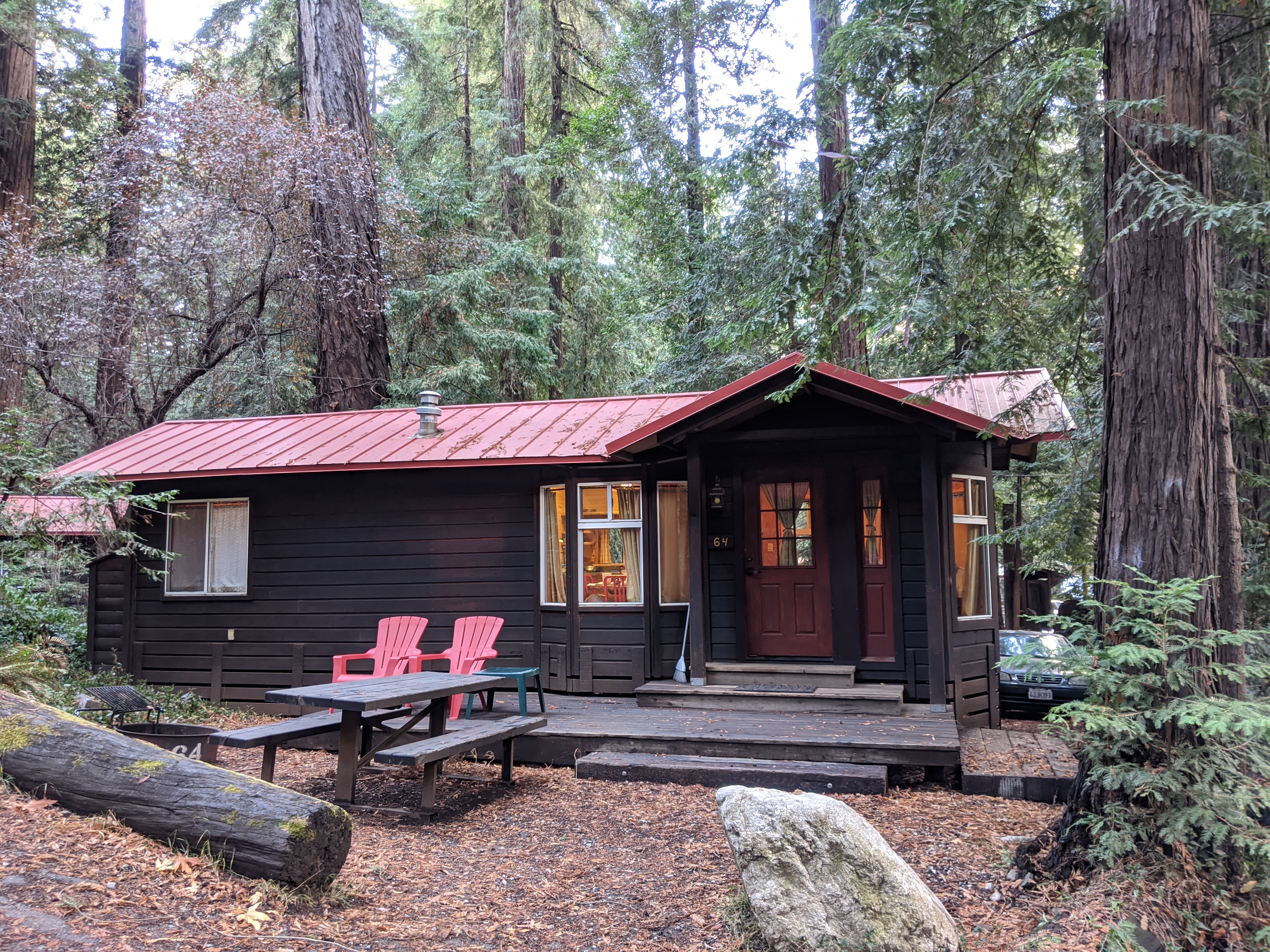
Big Sur is about a 40-minute drive from Carmel-by-the-sea on the winding highway 1. As we entered the Big Sur, we could smell the fresh redwood scent in the humid ocean air. Our cabin was a lovely cottage among the redwoods. It delighted us with its internal decor and made a super comfortable home. We explored a number of grocery stores in the 5-mile radius, there were basic supplies and household items, but little fresh produce nor meat. I used four quarters at a payphone to call our daughter who just got back from a trip in Cuenca, Educador. This was like going back a decade when we called each other by phone, rather than the messaging app.
We lit up some firewood outside of our cabin, had a super early dinner before retiring for the night.
The only thing that gave us updates about the election news was the poorly-received AM radio station on our car. Time has a different rhythm without the attention grabbing internet technology.
Day 2, November 6
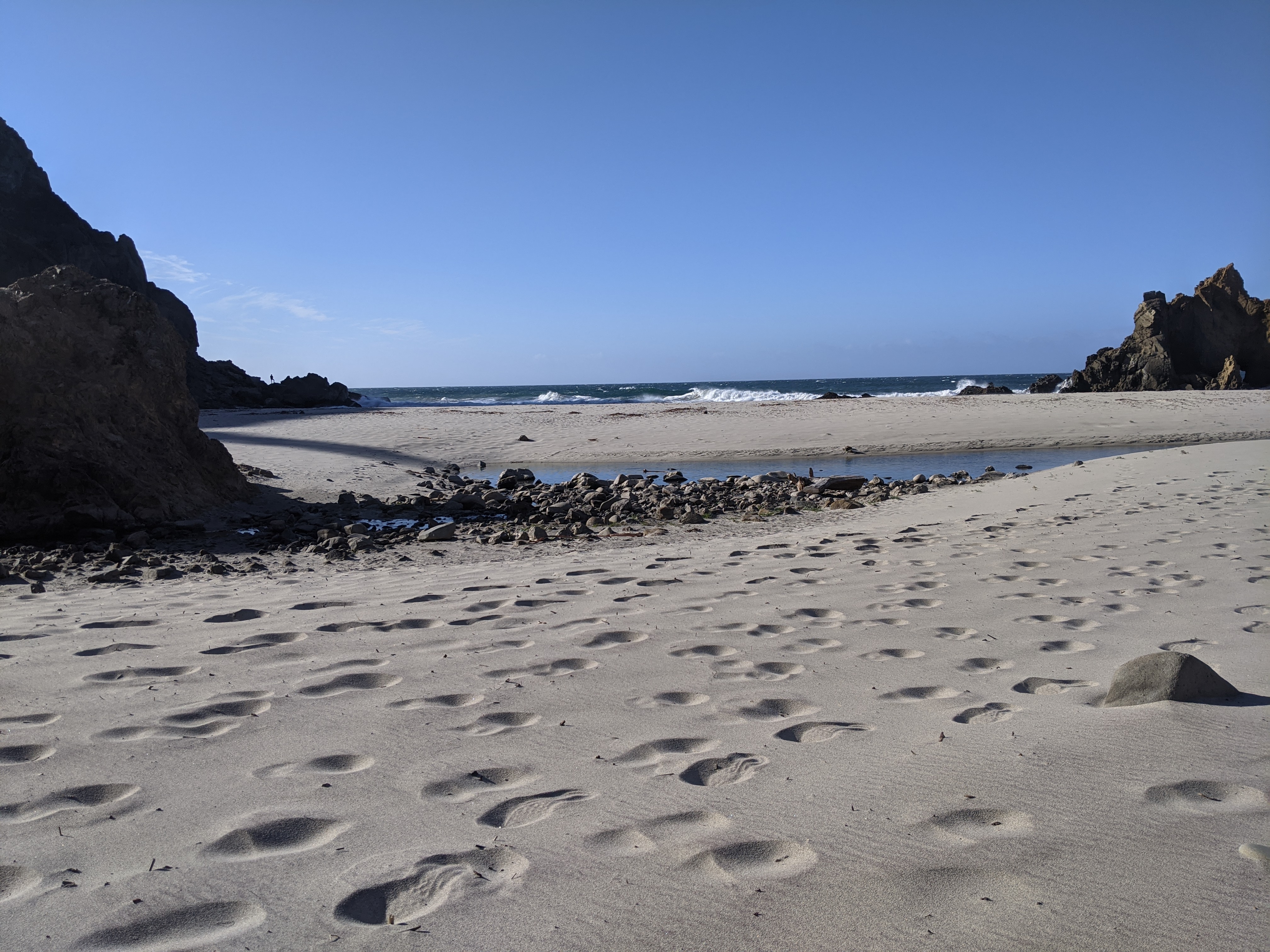
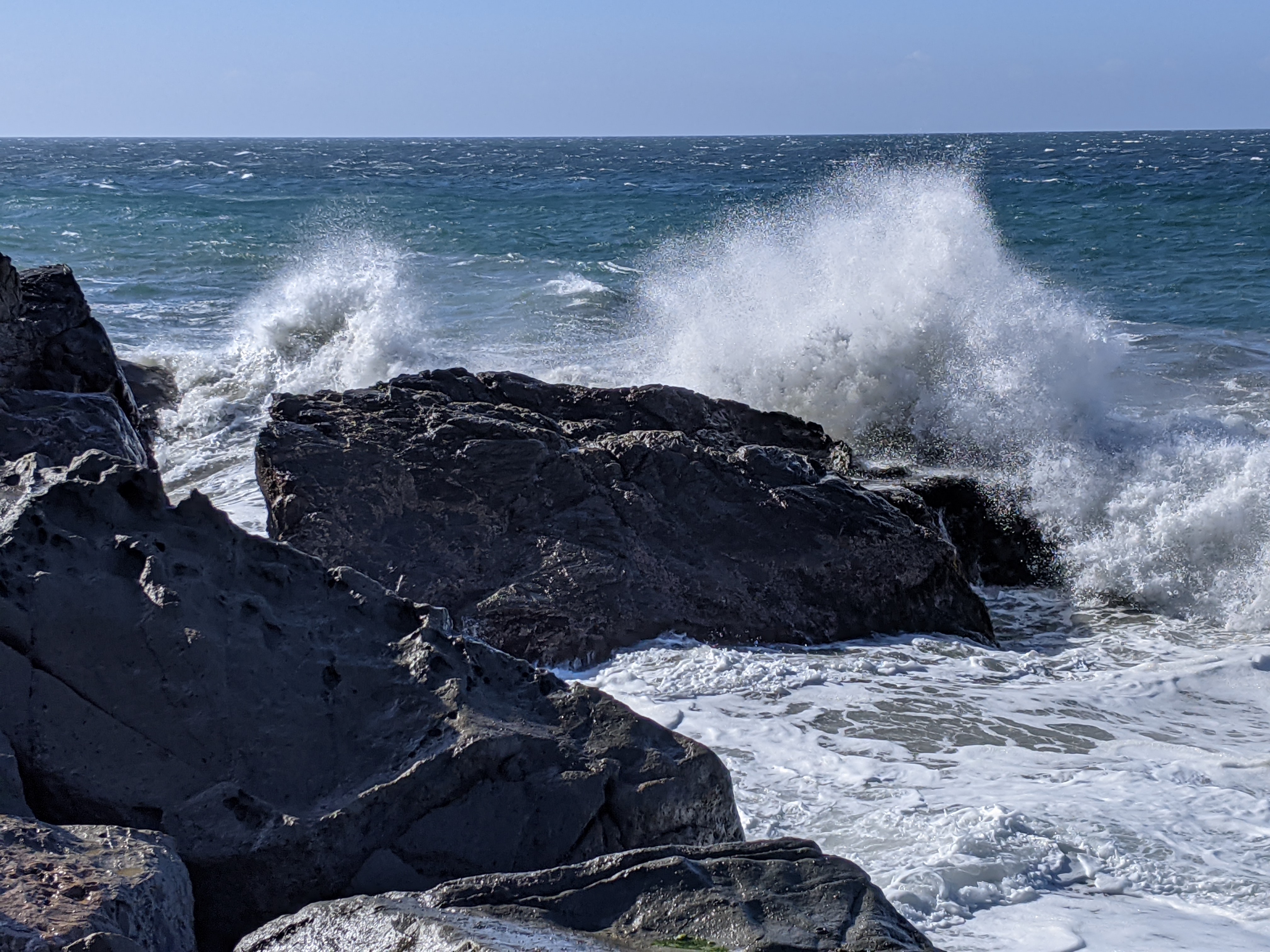
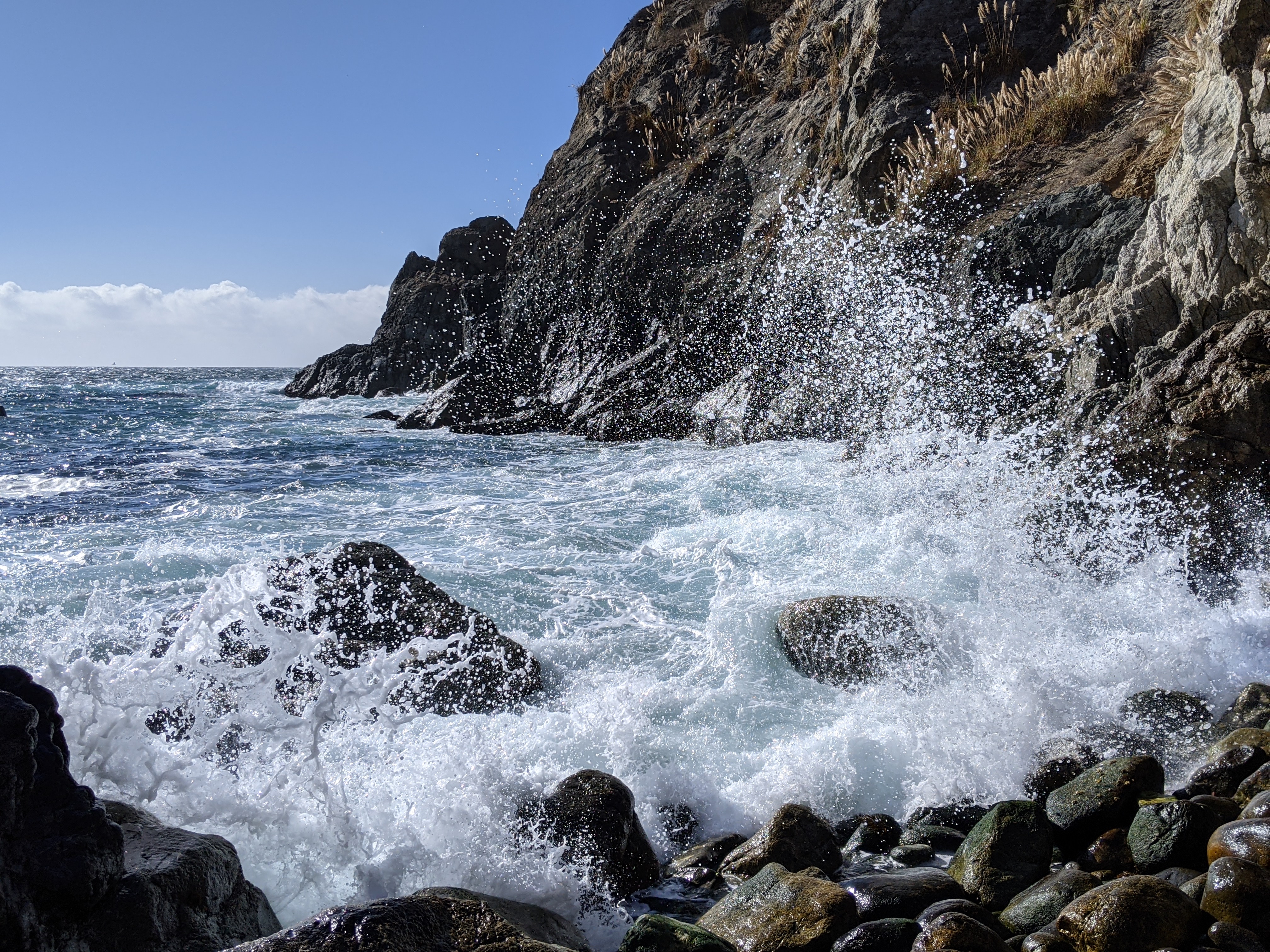
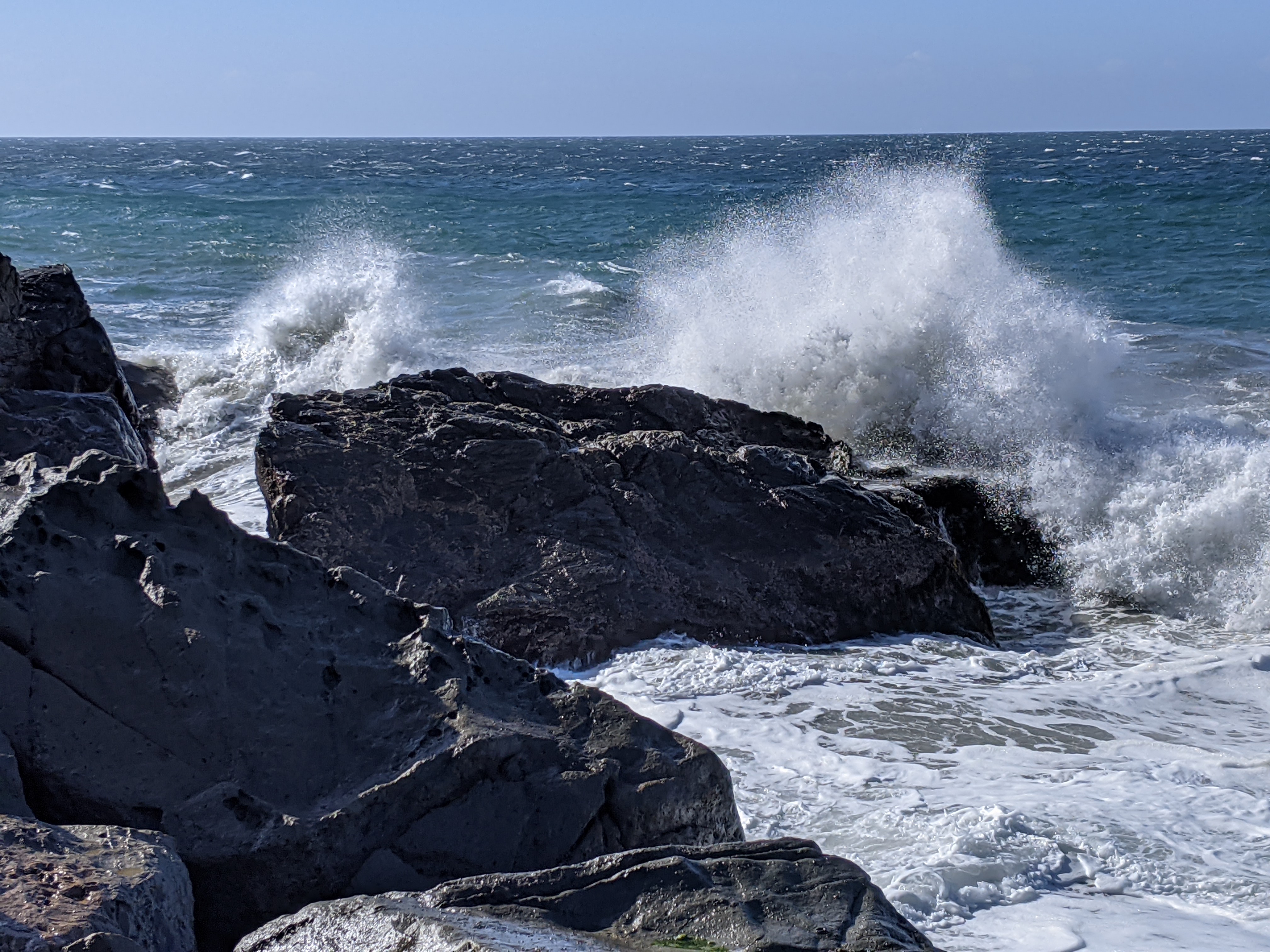
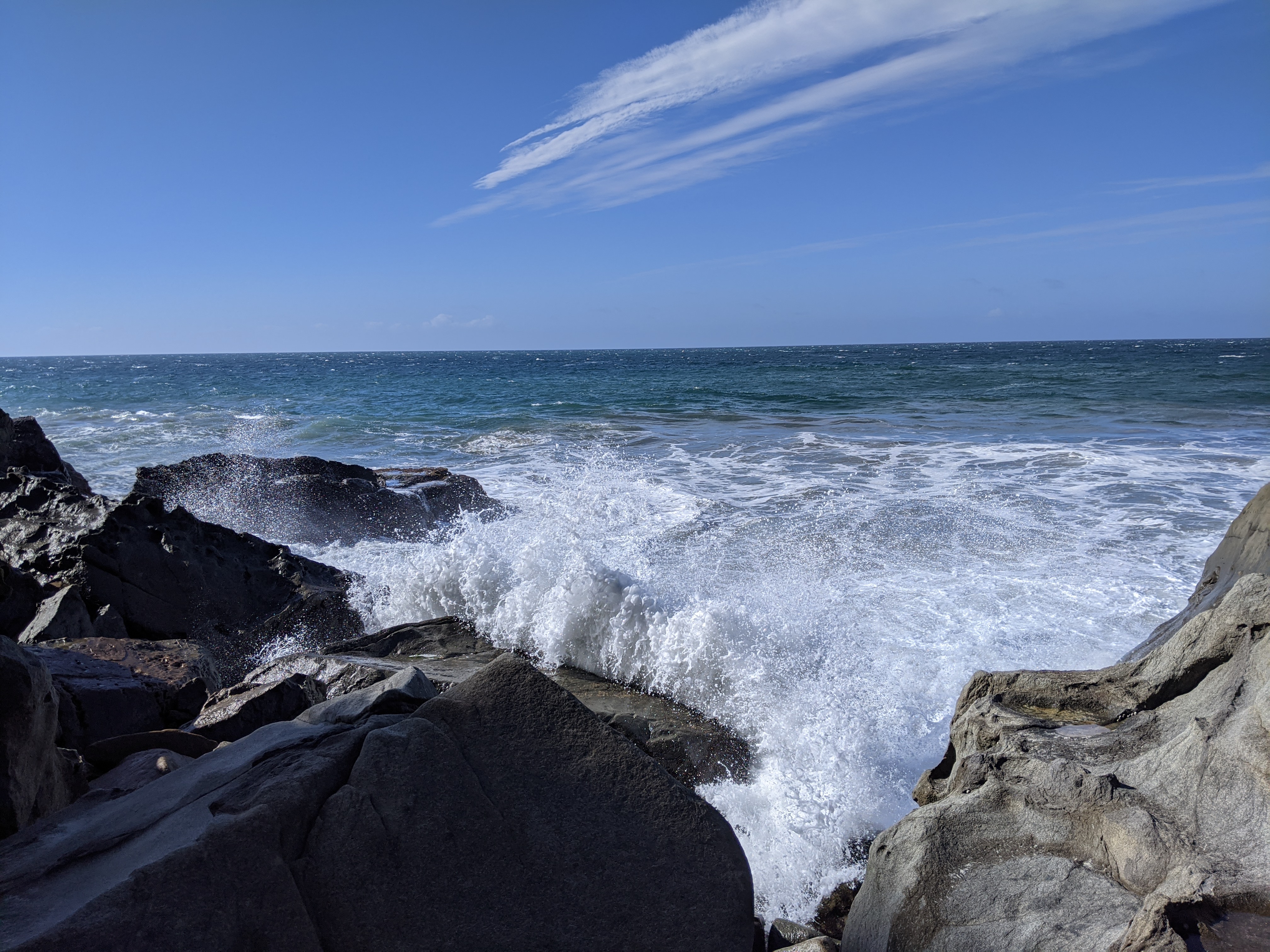
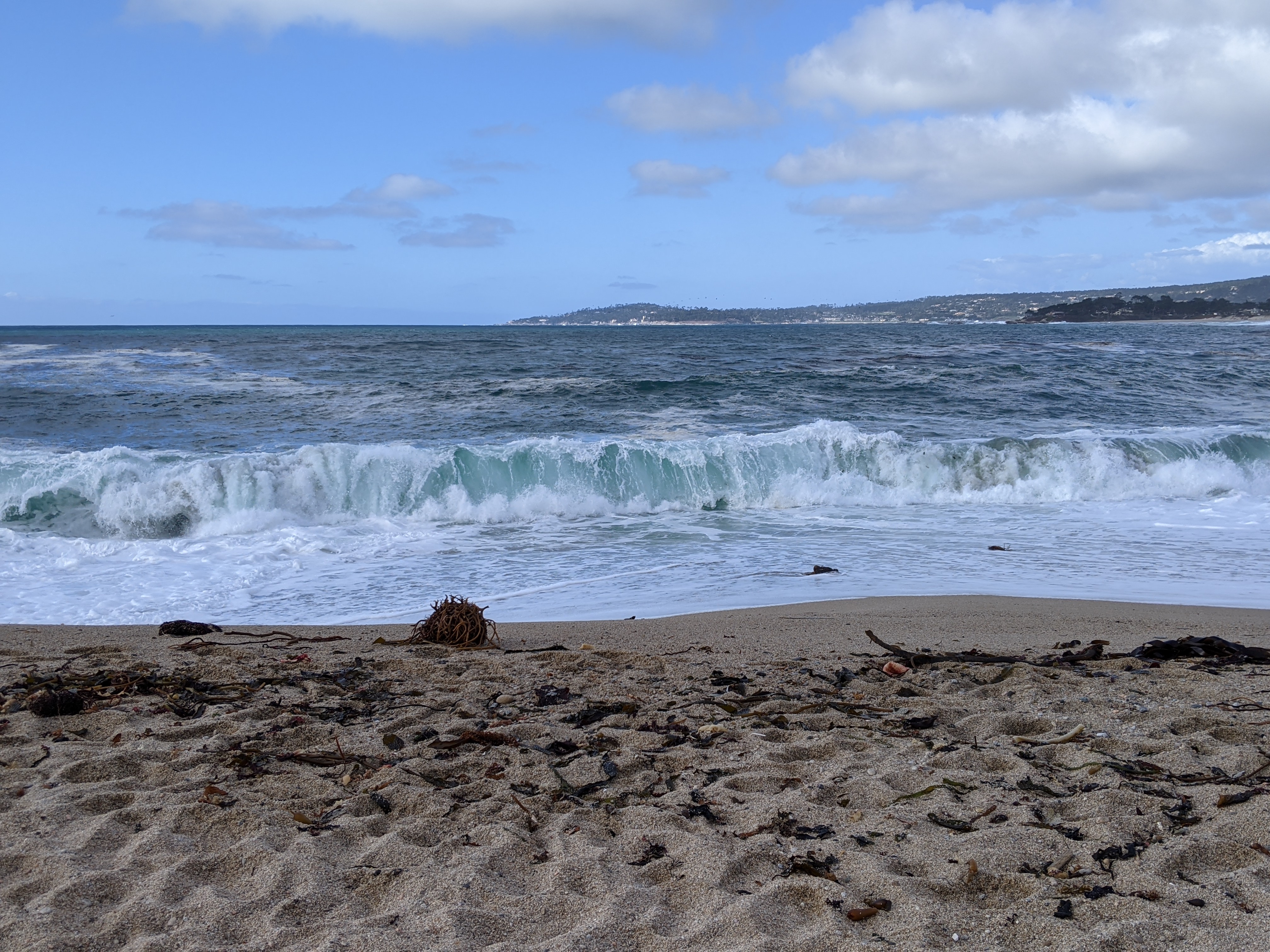
After a home-made breakfast in the well equipped cabin kitchen, we went to the nearby Pfeiffer Beach, for its pacific ocean view and its purple-colored sand. There were few travellers in the early morning, we brought along our own beach chairs and enjoyed the whole Pacific Ocean View. The close-up ocean waves, the rhythmic wave sounds, the splashing attack of the waves to the rocks were such reminders of the power and greatness of the Pacific Ocean, and of the Nature. The strong winds from the Pacific stirred up the sand, it was a rough beach, we enjoyed the ocean with nothing between us and the ocean.
We continued driving south on Highway 1 and arrived at Nepenthe for an early out-door lunch. Sipping a spicy bloody Mary and an after-meal Coffee with Brandy, with a hard-to-beat ocean view, life was good amidst the pandemic.
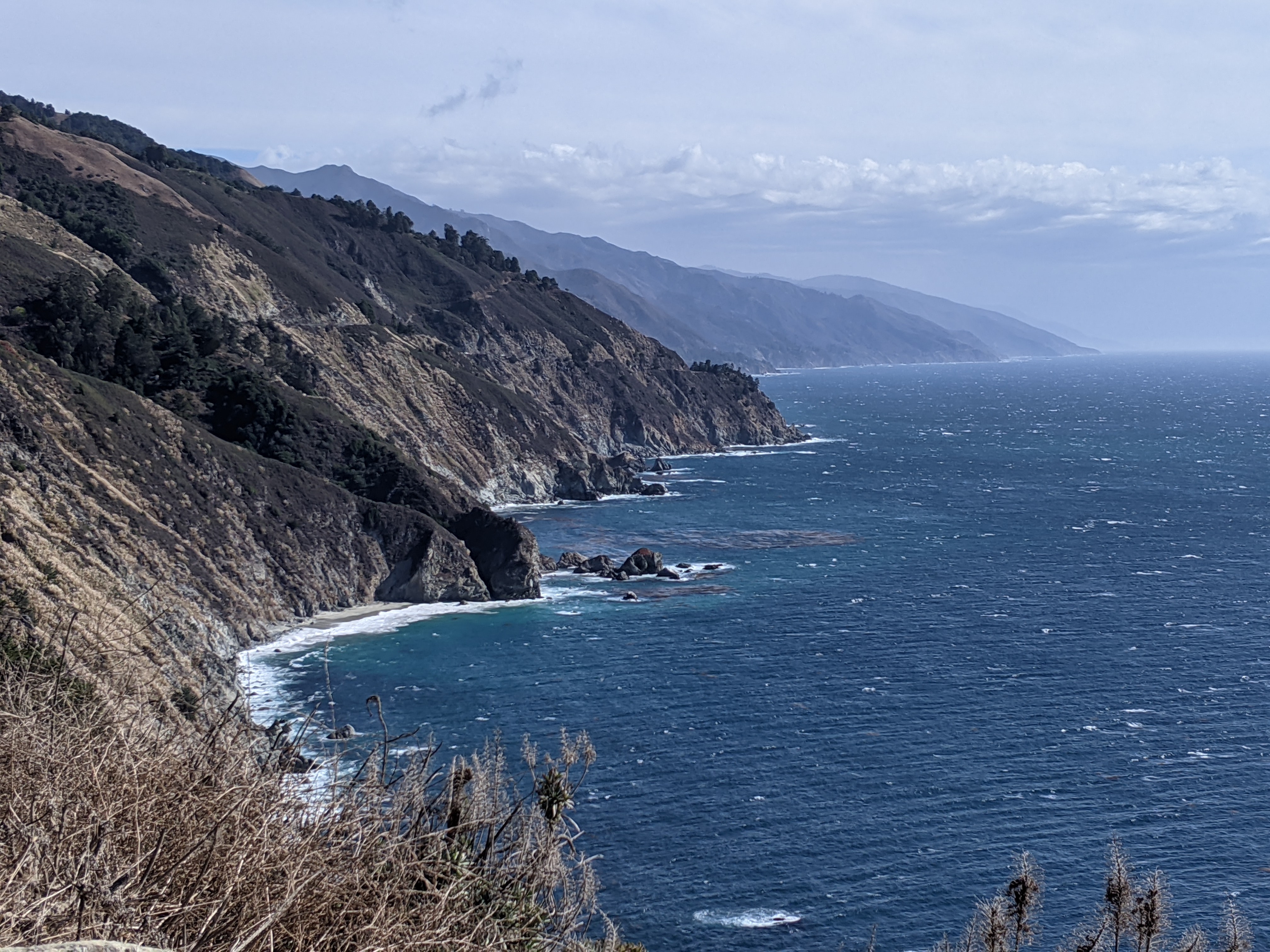
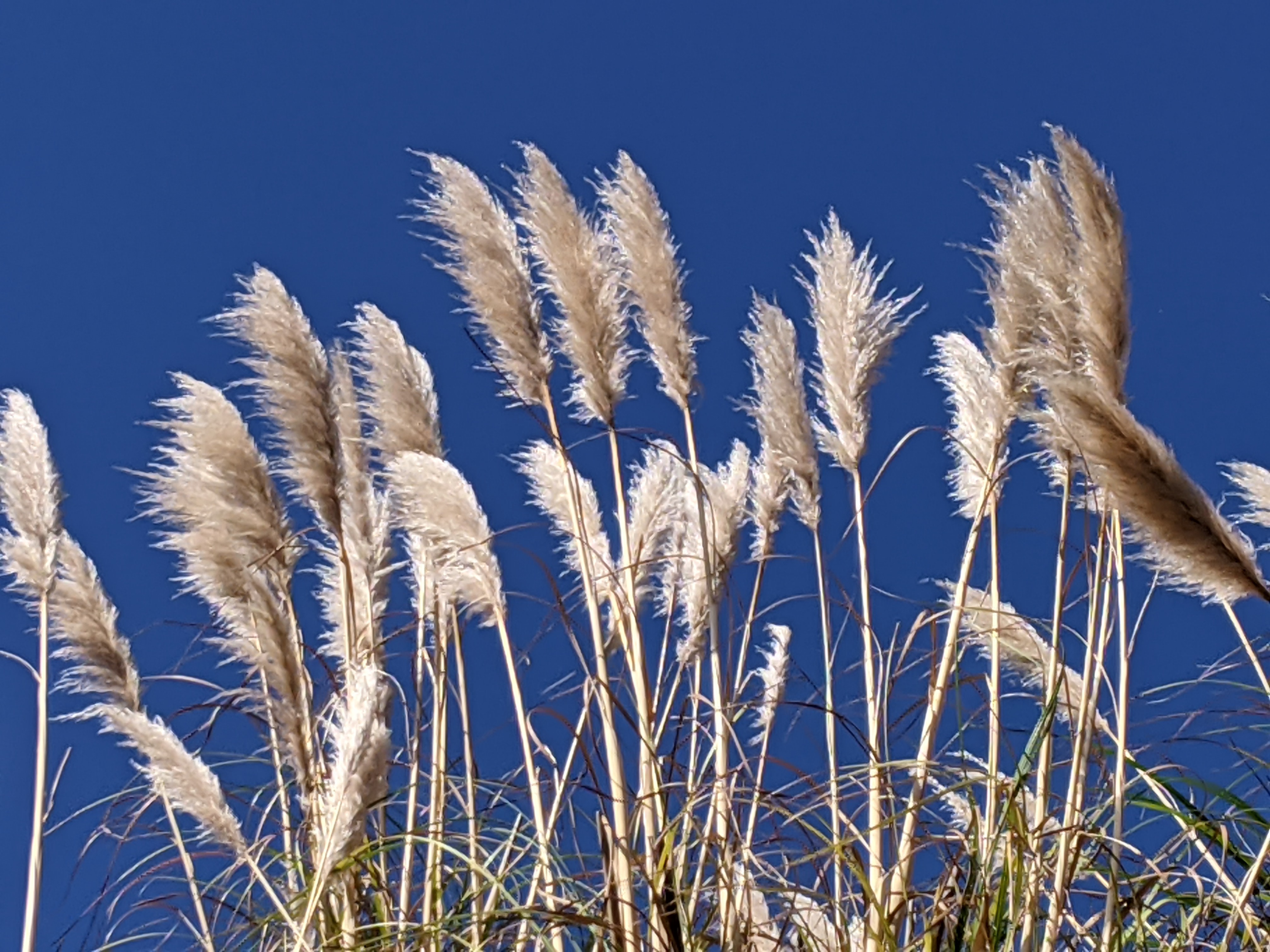
We drove further south only to find the Julia Pfeiffer Burns State Park close to the public due to recent fire. Disappointed, we went for a short hike down to another Oceanfront and were rewarded with the scenic pampas grass blossoming over the hill.
On our way back to the cabin, we stopped by the Henry Miller library, it was an interesting detour.
We continued our early dinner and retired to bed much earlier than usual.
Day 3, November 7
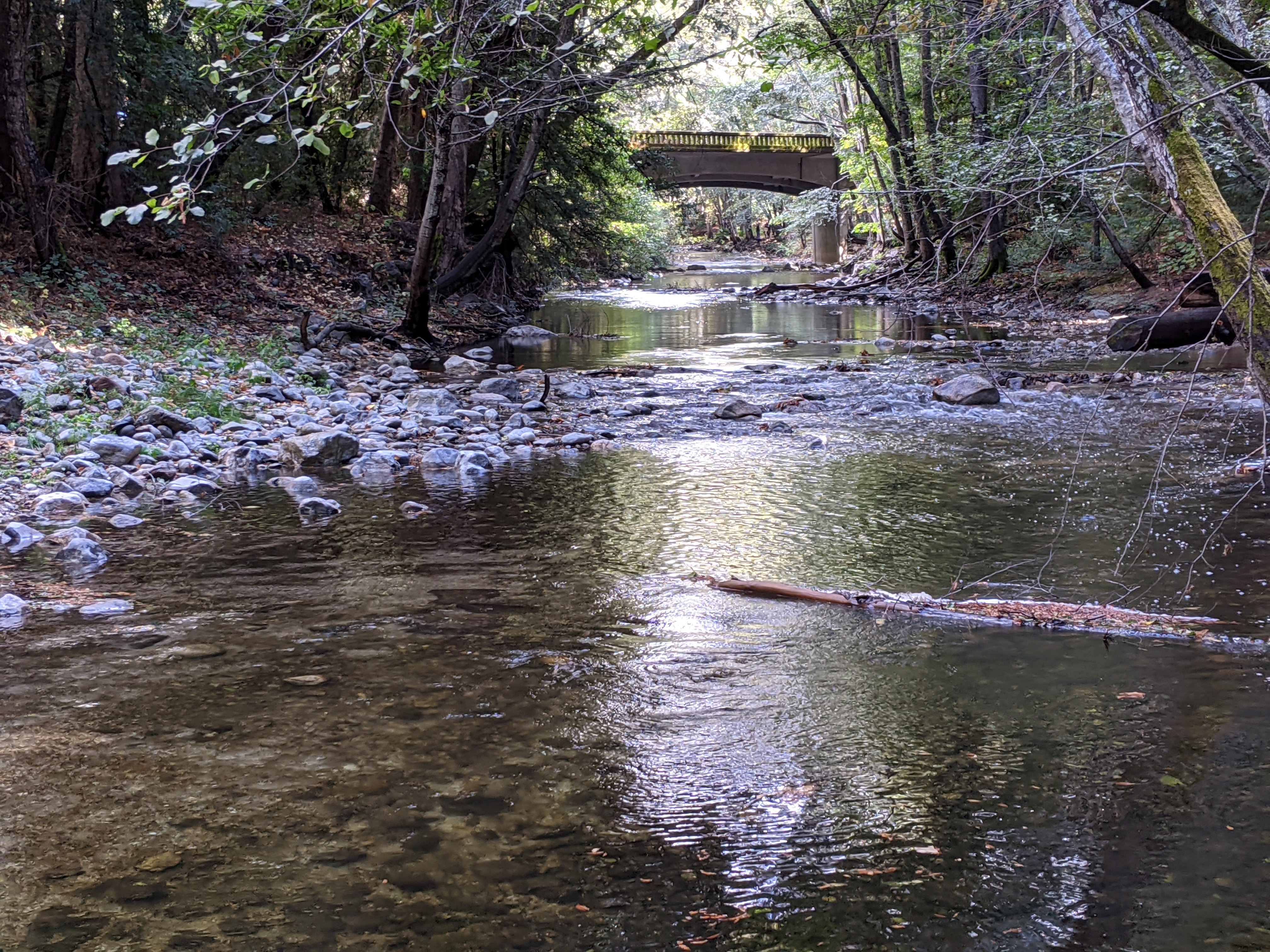
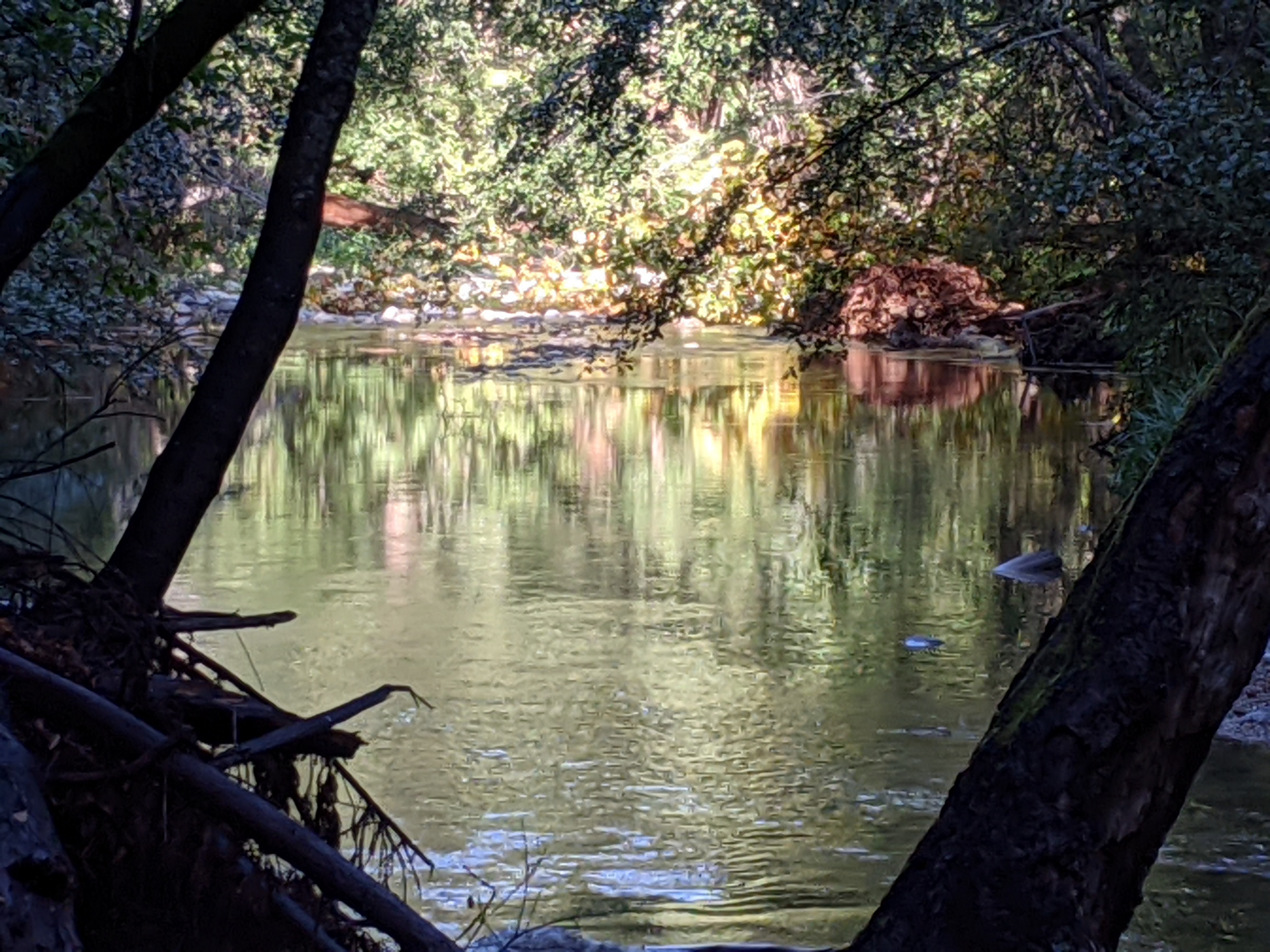
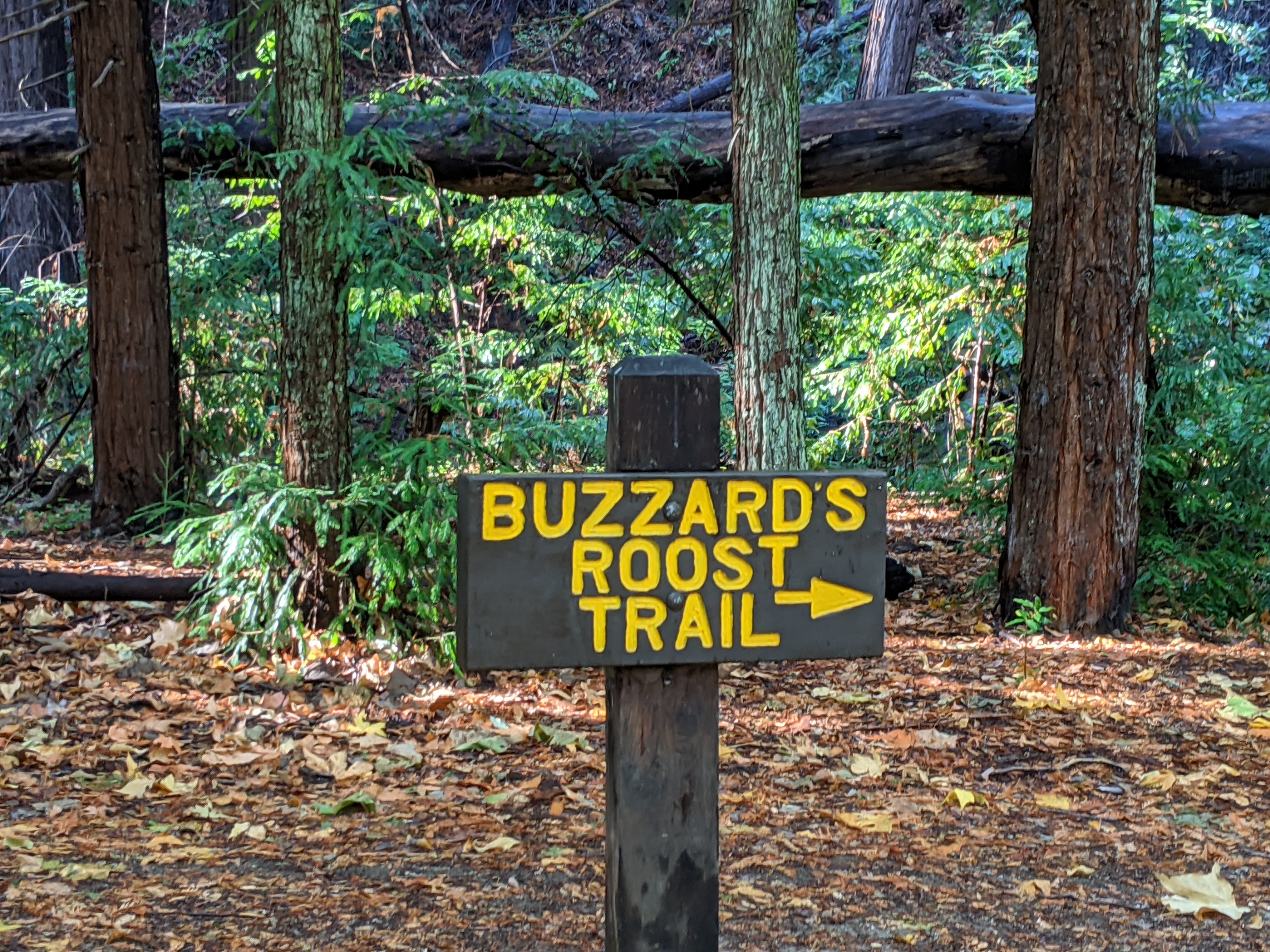
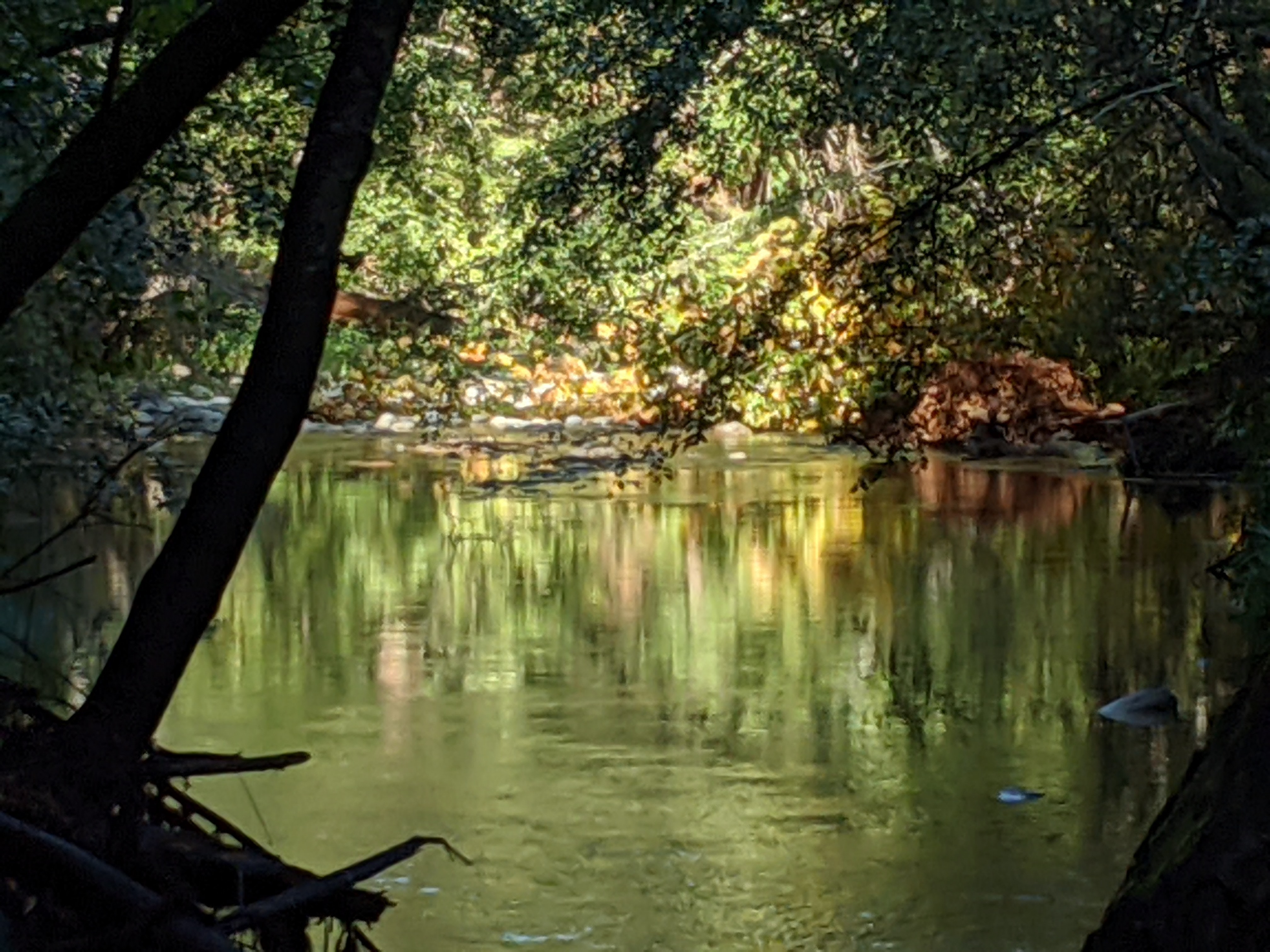
After another home-made breakfast, we went for a hike. Just when we felt that there were less animals and birds chirping among the redwoods, we were lucky to see a deer and a fawn which seemed to be as curious about us as we were about them. We went for a 4-mile moderate hike up the Buzzard Roost Trail, through the redwoods and tackled the gradual elevation up the hill. It ended up with a rather mediocre view of the Pacific Ocean far in the distance. It was a good hike and the hikers were all disciplined about wearing masks and social distancing.
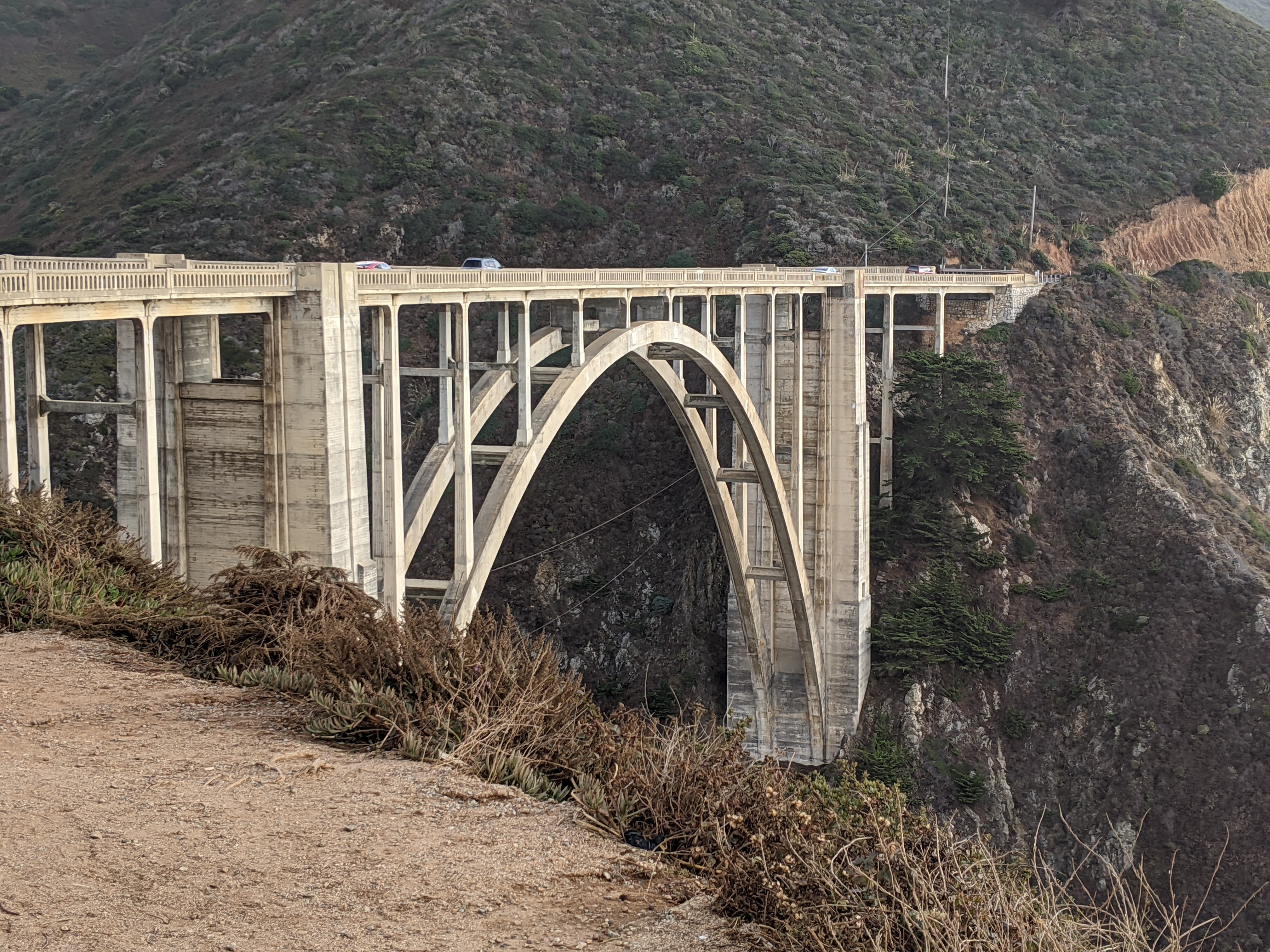
We had lunch at Carmel Crossroads, with an absolutely enjoyable outdoor scallop-fish-and-chip meal, as well as fresh oysters. Our spirits were lifted with the updates on the presidential election. On the way back to the cabin, we stopped to take pictures at the famous Bixby Bridge, we were far enough to see the grand view of the bridge above the rocky Pacific Ocean and the cliff above the water. My acrophobia was getting the better of me and left me in awe.
Back to the campgrounds, we shot some hoops and even had fun climbing the cargo net, only to find that we were no longer the age to get to its top.
We cooked T-bone steak and squash for dinner at the well equipped kitchen.
Day 4, November 8
Another short hike to the Pacific Ocean at the Andrew Molera State Park concluded our Big Sur trip. We stopped by Monterey for lunch, there was no crowd and it reminded us of the cold weather and the impact of the pandemic.
As we headed back to internet civilization, I made a pledge to not let my mobile phone take away that much of my time.
75 hours of Chinese history on Youtube make for great learning. In this 100-episode series, the first episode has attracted 1.4M views, while the last episode only earns 87K views. I highly recommend the series to anyone who wants to know more about the Chinese history. If you do not have time for the whole thing, there may be a few that could interest you.
The 1918 – 1920 Influenza killed tens of millions, and there was panic everywhere when very few were spared from its impact.
The Influenza happened at a time that US doctors were far less respected than their peers in Europe when Europe was consumed with the World War I. John chronicled the Great Influenza; and gave us a great account how some colossal figures transformed the US medical training and profession; and how the political climate profoundly affected the communication and the responses to the Pandemic.
It feels strange the book reads like the current Coronavirus pandemic in 2020. Is history repeating itself? We seem to be not any better in addressing the situation. Just like the Great Influenza, the political climate has overshadowed the medical judgement for a pandemic; just like the Great Influenza, the government cannot be trusted to put our health at the top priority; just like the Great Influenza, the politicians put blame on others regardless of evidence and is lack of.
This book tells you everything to know about the 1918 Pandemic and humbles us that we have yet to learn our lessons from it.
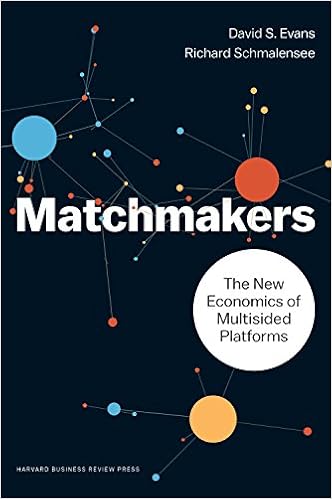
The Matchmakers: The new economics of multisided platforms By David S. Evans
I recently joined a product development group with the goal to build an ecosystem for voice computing platforms. Building a multi-sided platform is among the hardest challenges. The book explains the different considerations for a multi-sided platform from a regular product business and raises good questions to increase the chance of a multi-sided platform.
This book would be useful to those who are in the position to lead the development of a multi-sided platform.
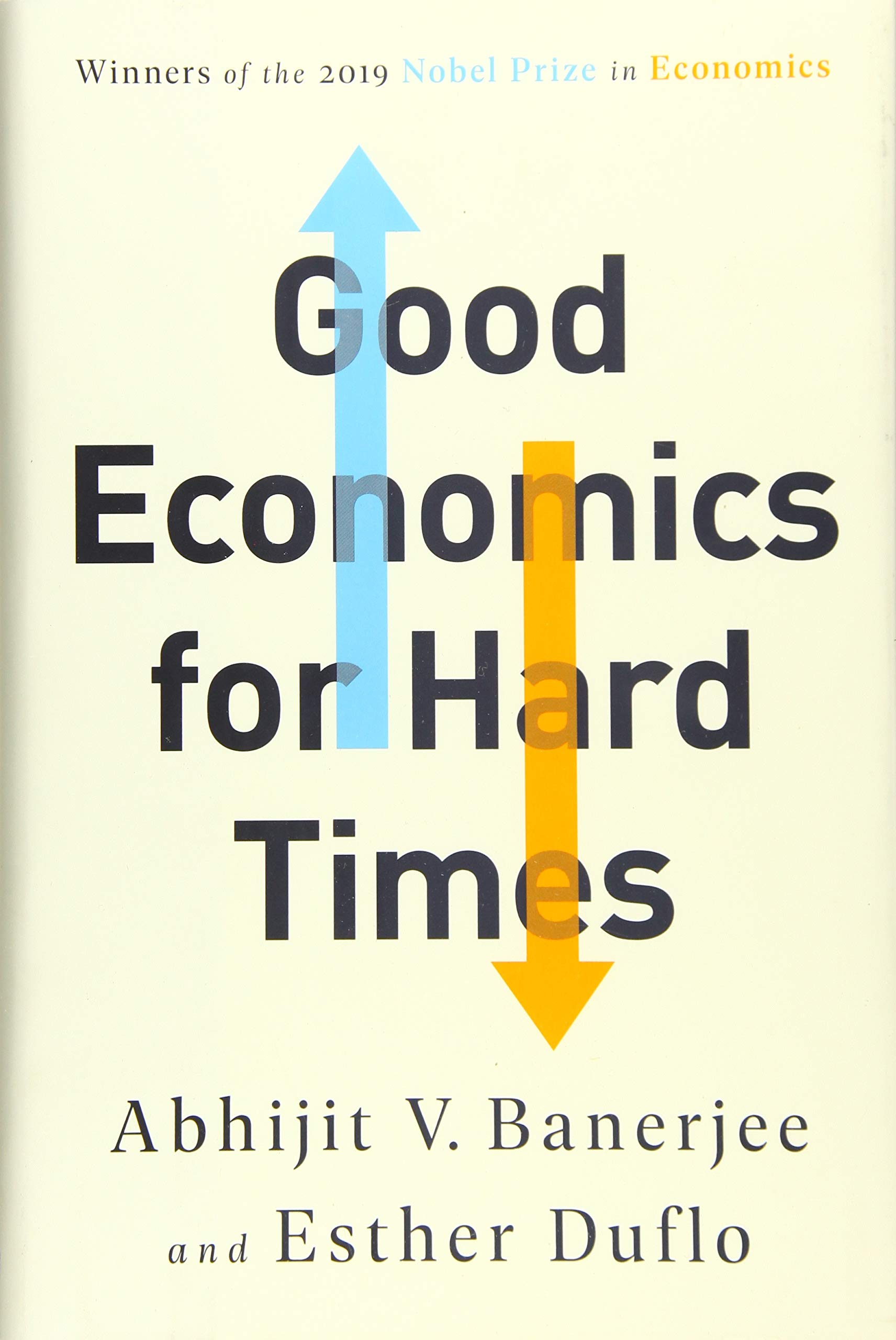
Good economics for hard times By Abhijit v. Banerjee and Esther duflo
Written by the 2019 Nobel prize winners in economics, the book gave an in depth look on a fairly broad set of topics: the social impact of global trade , the inertia of people to move for the better life , the unequal impact of global trade, the appropriateness of government intervention, the bias of society towards economic growth, the challenge of class mobility, the argument for universal basic income, the importance of any social welfare program to keep people’s dignity and respect in mind.
The broad brush on these economics leaves me dazzled with the impression there is just so much to be done to better the society.
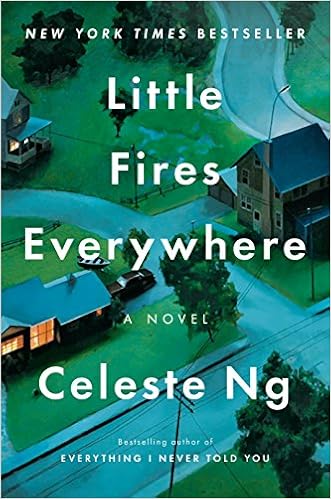
Little Fires everywhere By Celeste Ng
The story portrays distinct characters in two families, with contrasting ways of living & drastic differences in their approaches to lives: the so-called fit-ins and the outcasts. It provokes thoughts on hard choices between choosing a poor biological mother and an adoption promising a better life; the hard choices between a comfortable life and an uncertain life following the passion; the fear of losing someone vs the actual loss of someone. The novel has since been adopted into an American drama TV series. I enjoyed this book.
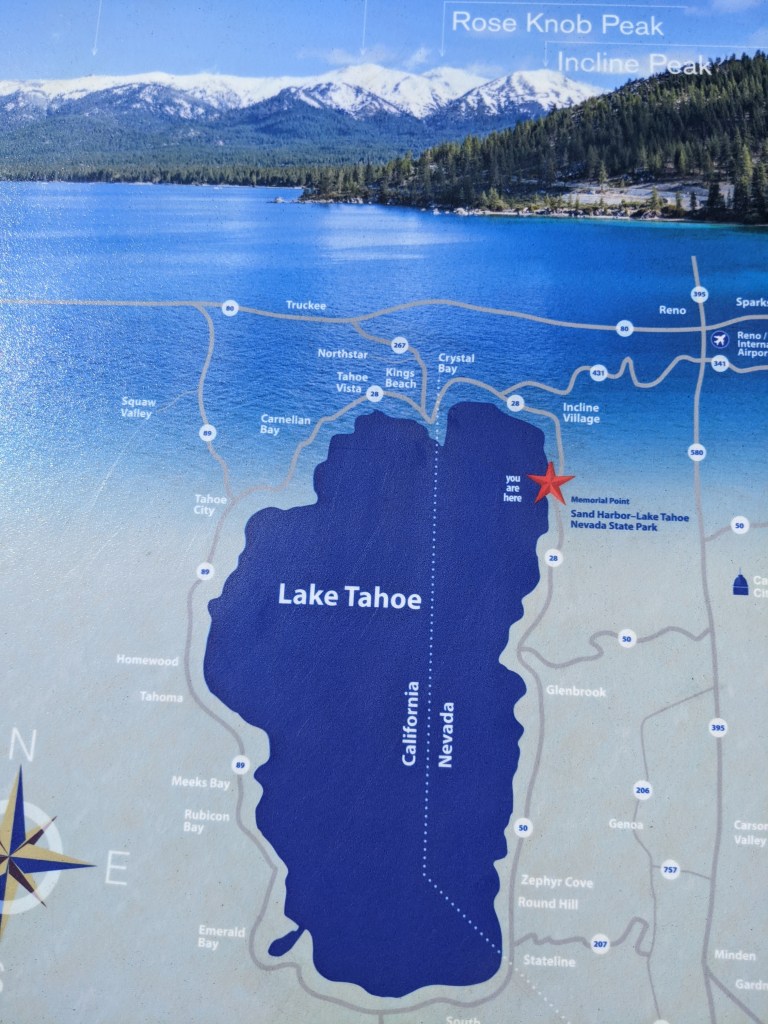
The pandemic has grounded us mostly for air travel. After ruling out international travel, we researched for a fall foliage trip to the East Coast, or a trip to Hawaii. We have our own doubts about travel safety for ourselves and for others, so we started with small short trips that are within driving distance. We went to North Lake Tahoe to celebrate a birthday and mid-Autumn festival.
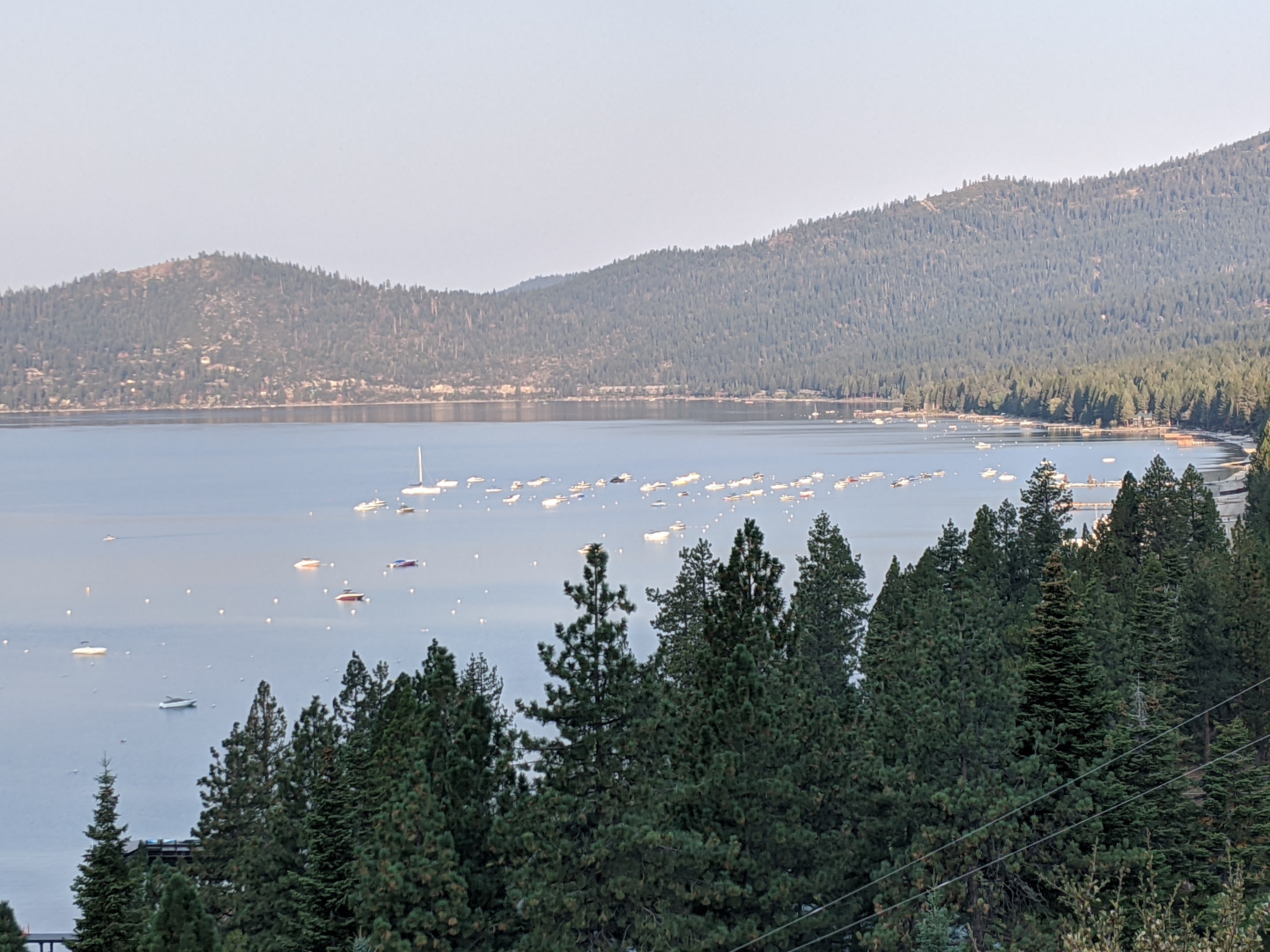
Pandemic reminds us how we miss the treasure in our lives. Lake Tahoe is such an illustration that we miss beauty right in front of us. We occasionally go there skiing in winter. Yet in spite of its natural beauty, and its offering of many summer lakeside activities, we used to have too many choices in summer to consider Lake Tahoe.
Incline Village, a small community of around 9,000, is located north of Lake Tahoe. It offers plenty of outdoor activities from hiking, to biking to skiing; and it has a slight feel of Hawaii, but not quite as touristy. The mansion, facing the Lake with its private dock, can still cost close to ten millions. Yet compared to the Bay Area, it is still much cheaper to own a home and stay during summer months.
Day 1
We got concerned with the unpredictable air quality due to the wildfire throughout California, it was too late to change plans. We got our rental car in the morning and packed up to go. On our way, we stopped for lunch at Hanami Sushi in Auburn, we enjoyed the food, the warmth of the sun and the outdoor setting.
Shortly after crossing the California-Nevada state line, we arrived and were pleased to find that the weather was great with blue sky, the air quality was moderate, and good enough for outdoor activities. The airbnb is a 765 sq. ft 1 bedroom 1 bathroom, built in 1982. I like its room layout and can imagine living in a compatible home during my retirement years. It has nice touches and thoughtful designs such as the high ceilings above the dinner table, and the space-efficient fully equipped kitchen.
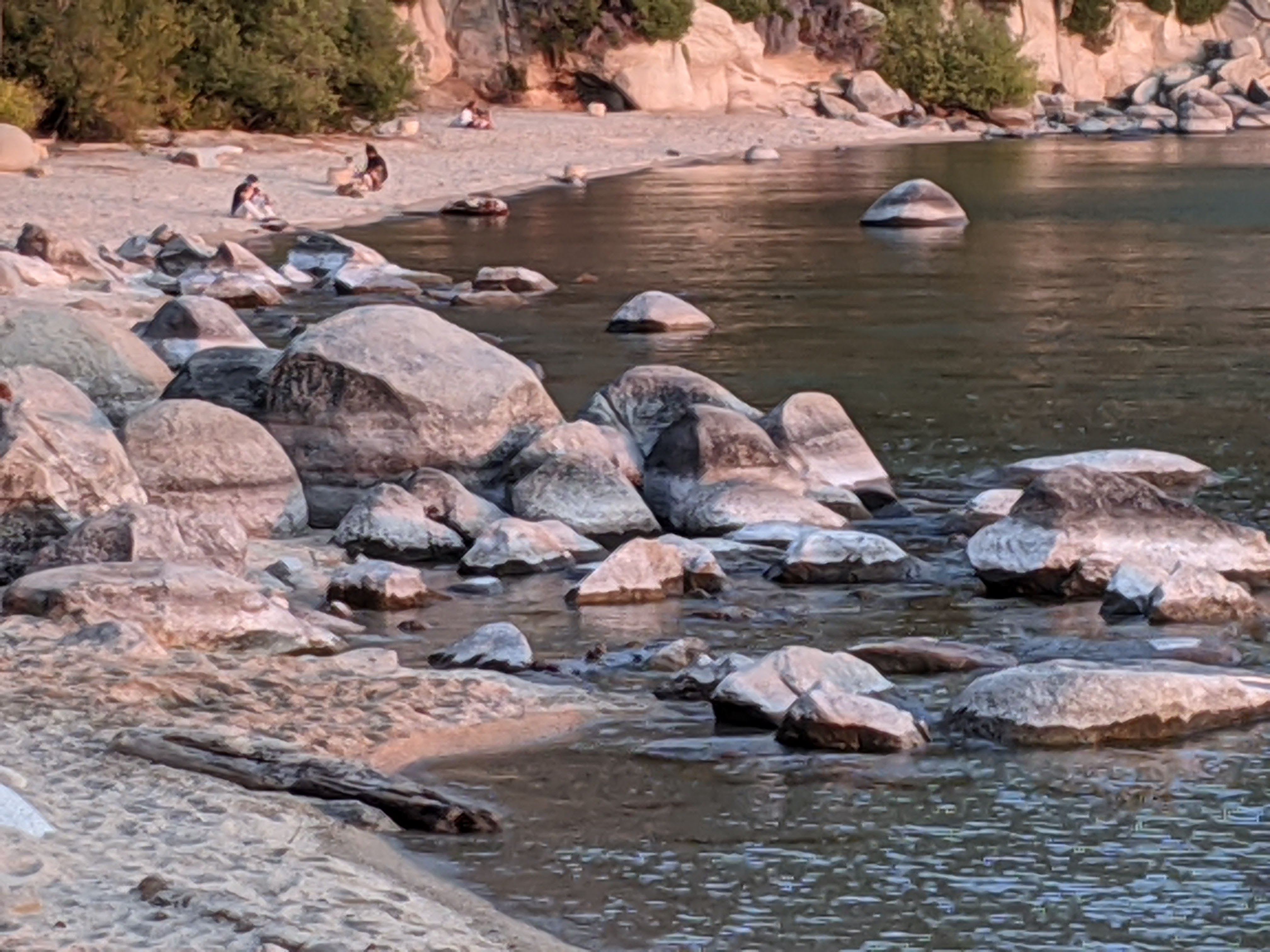
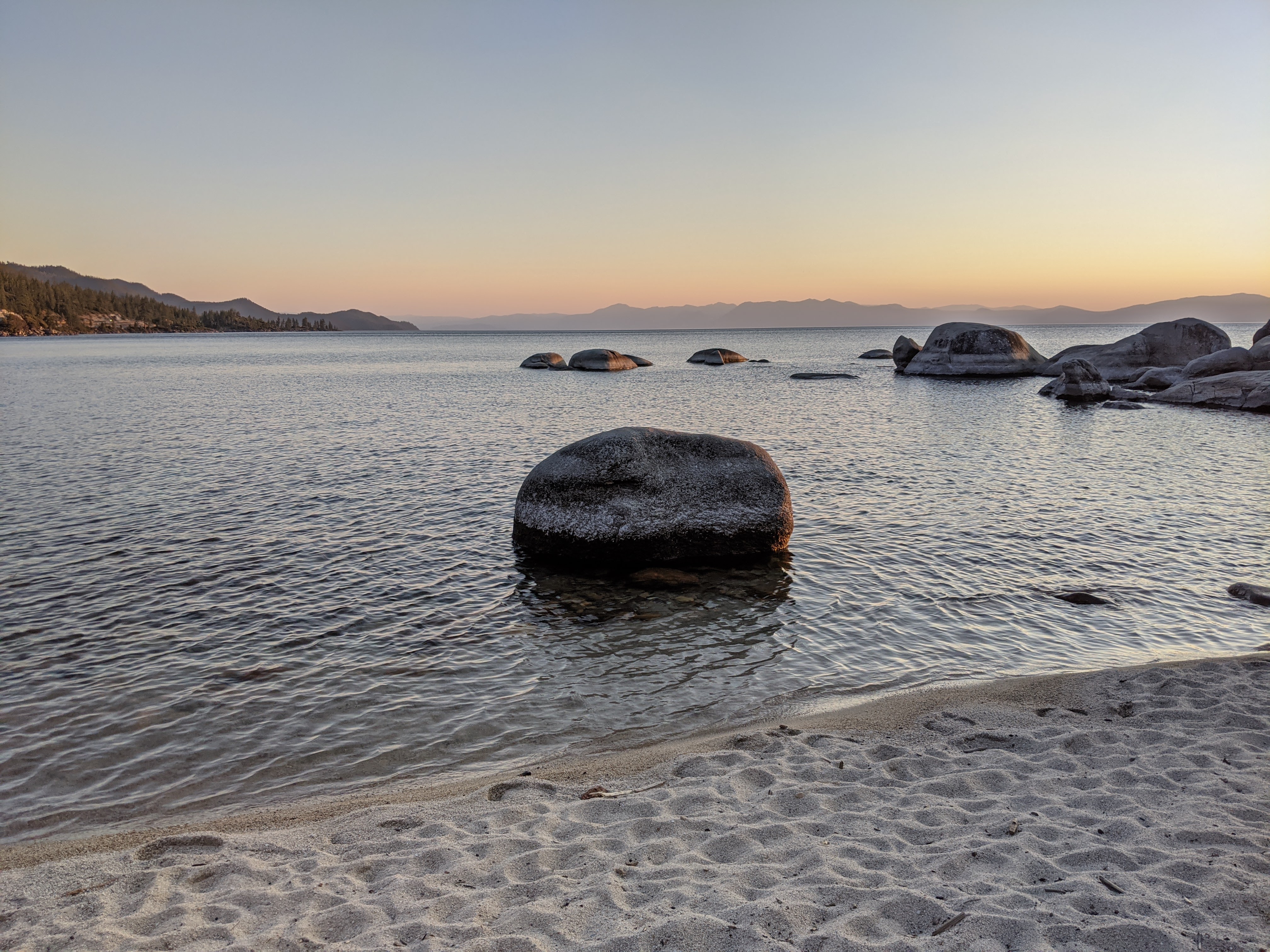
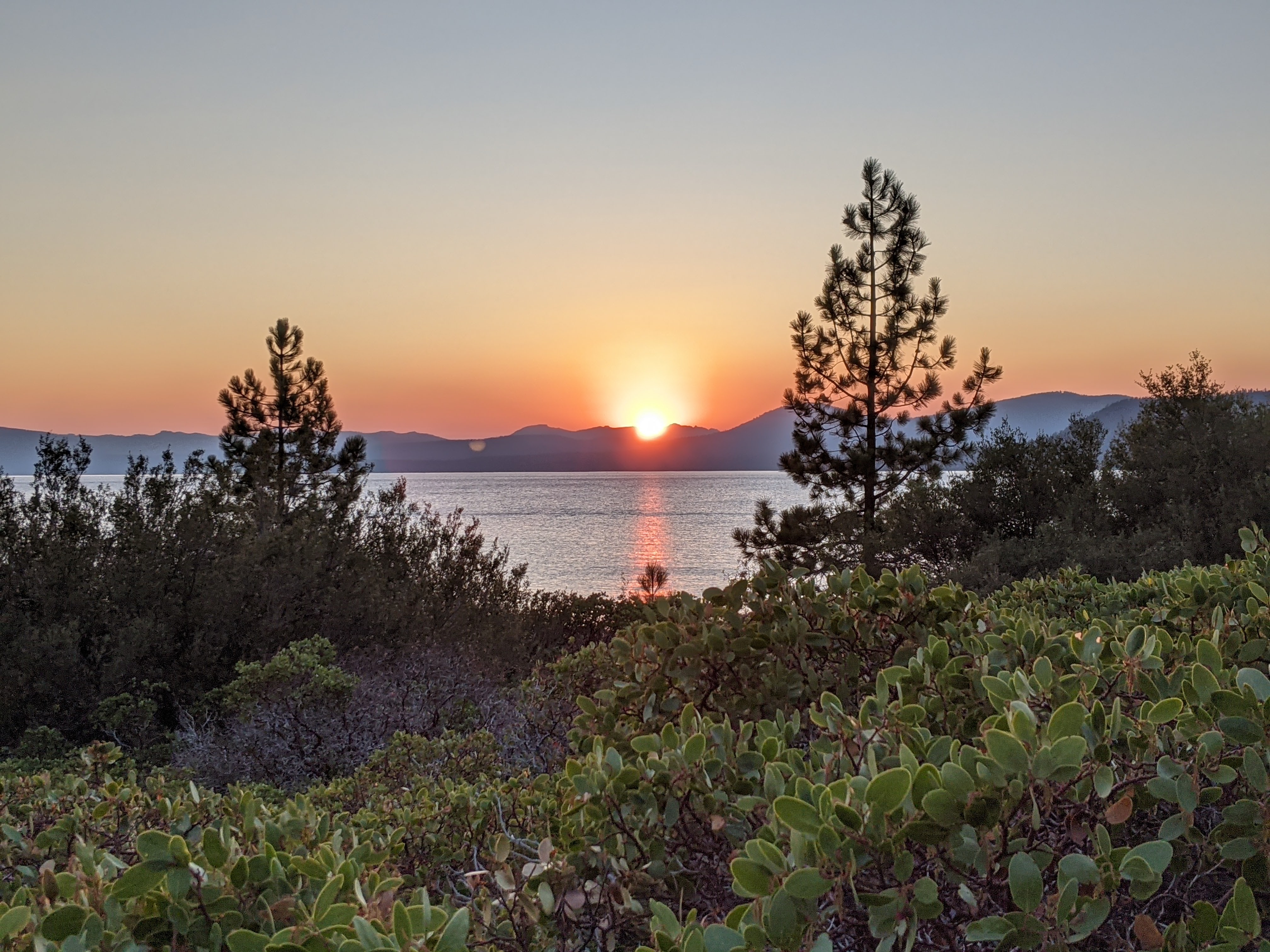
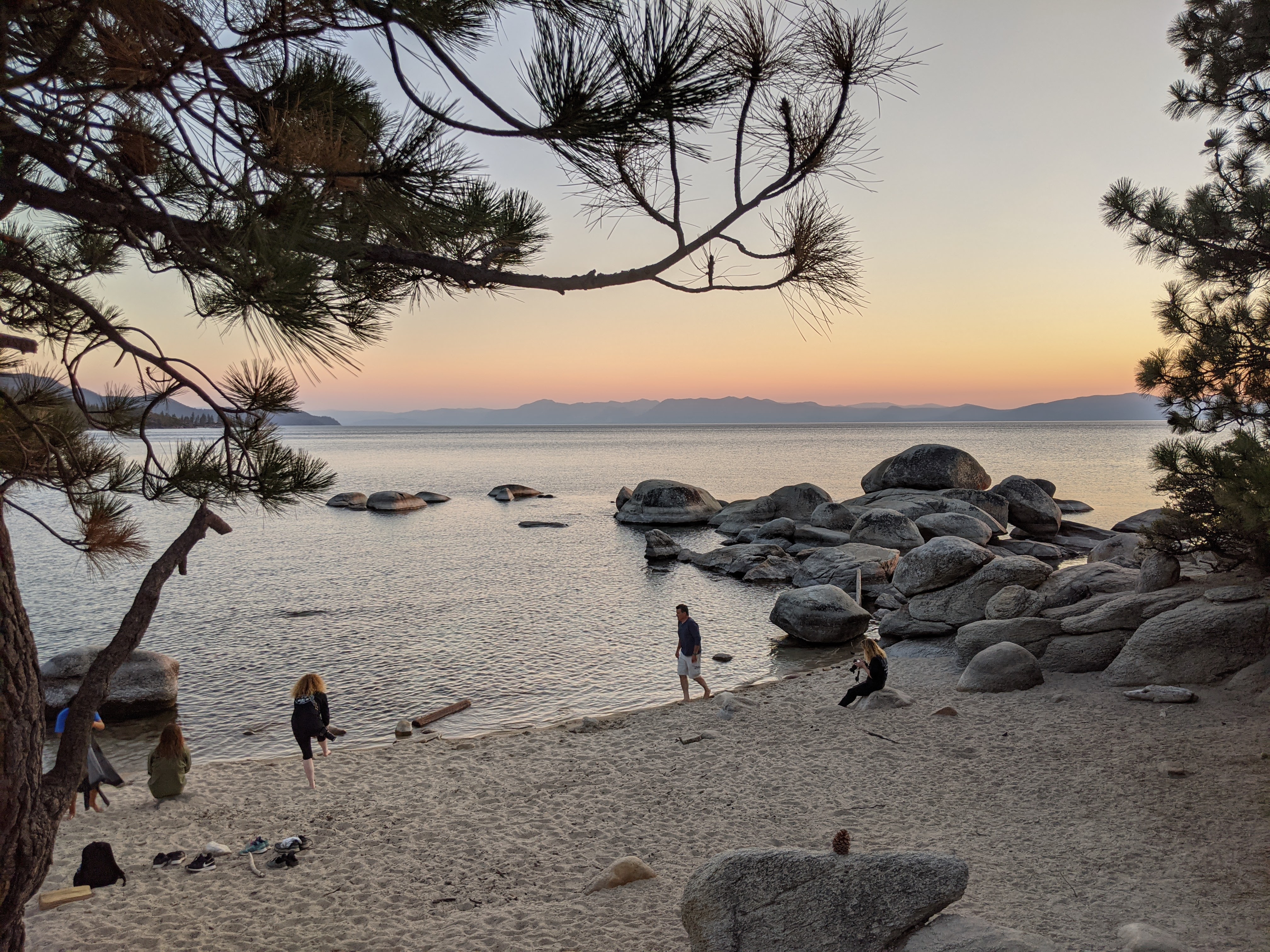
After settling down, we went to explore Lake Tahoe. Hidden Beach is 2.3 miles from our airbnb. We got tricked by the Google Map ,which first stated we were 7 minutes away, then it changed its mind and claimed we were 30 minutes away. We got lost with Google Map. With the technology, we were so used to following step-by-step instructions, and no longer had that big map in our mind. In hindsight, it was simply Google Map could not guide us to make an unusual (and possibly illegal) U-turn. Once we missed the destination, we had to drive another 20+ miles for a big loop on the highway to get back to the beach. Hidden Beach is beautiful, we dipped our feet in the cold-but-not-freezing water, it was refreshing, there were only a handful of swimmers, while a few others relaxed at the beach, quietly enjoying themselves, without wearing masks. We took some pictures and watched a very beautiful sunset over Lake Tahoe. The sunset happened quickly, from the full sun to its disappearing, it only took 2 minutes.
We bought some food from a nearby grocery market, and had dinner at the airbnb while whatsapping with our children on the birthday of my husband.
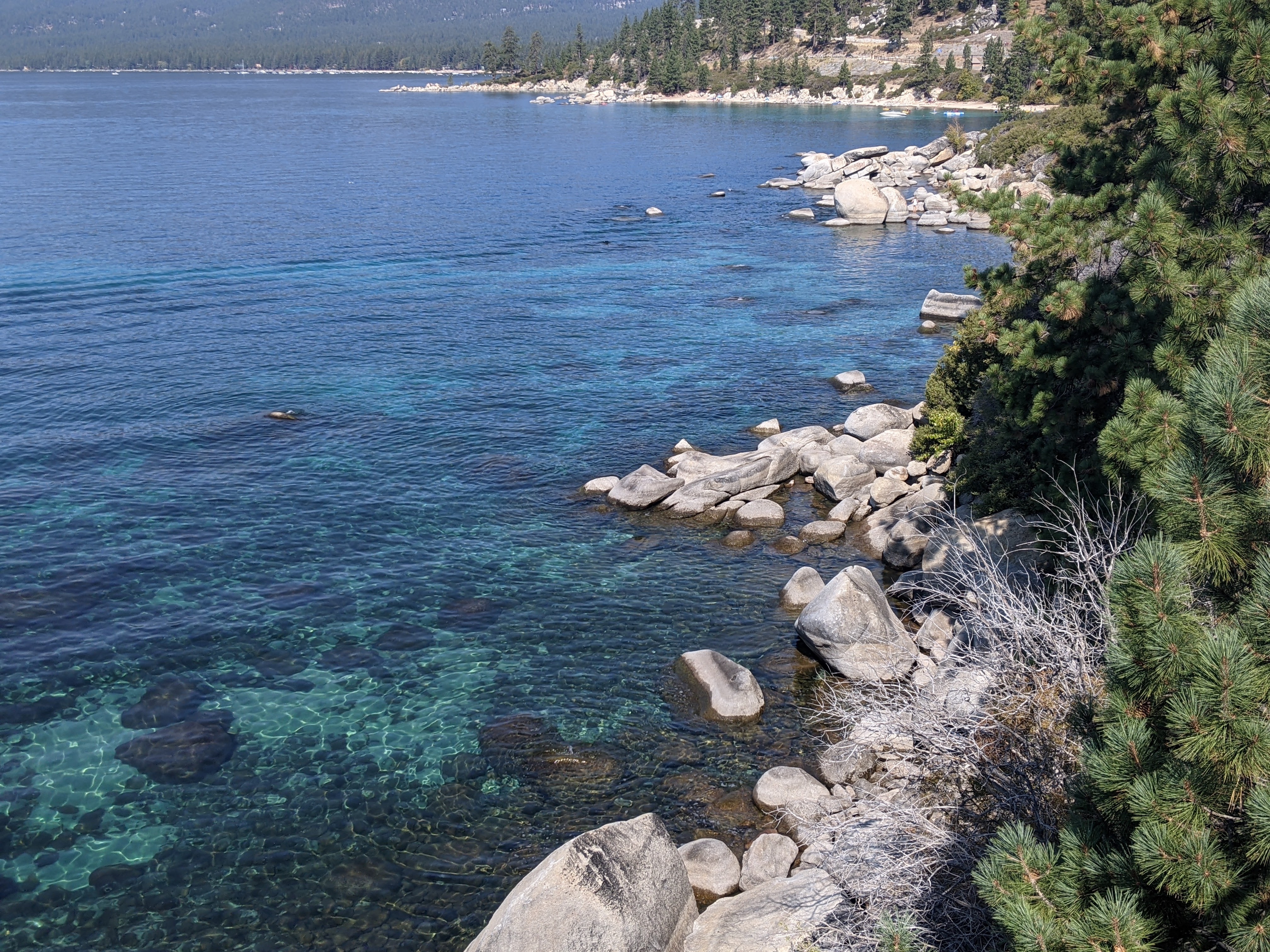
Day 2 We planned to do some hiking and picked the 7-mile moderate Tunnel Creek Trail. After parking at the Bullwheel Parking Lot, there was no sign of the trail head, and we asked and got in the wrong direction. After 30 minutes or so of walking, we finally asked another person, and discovered that we were on a different trail. We were reluctant to backtrack, and decided to continue on this easy and flat East Shore Trail. The trail is paved with concrete, and offers plenty of picture moments along Lake Tahoe. We passed by Hidden Beach, the Emerald cove, the Sunset cove and to the Sand Harbour. The East Shore Trail is a 5-miles round trip from the Bullwheel parking lot. It is one of the most scenic trails, with beautiful views of the piers, beaches and the lake. If you only have time for one hike in North Lake Tahoe, this probably should be the one.
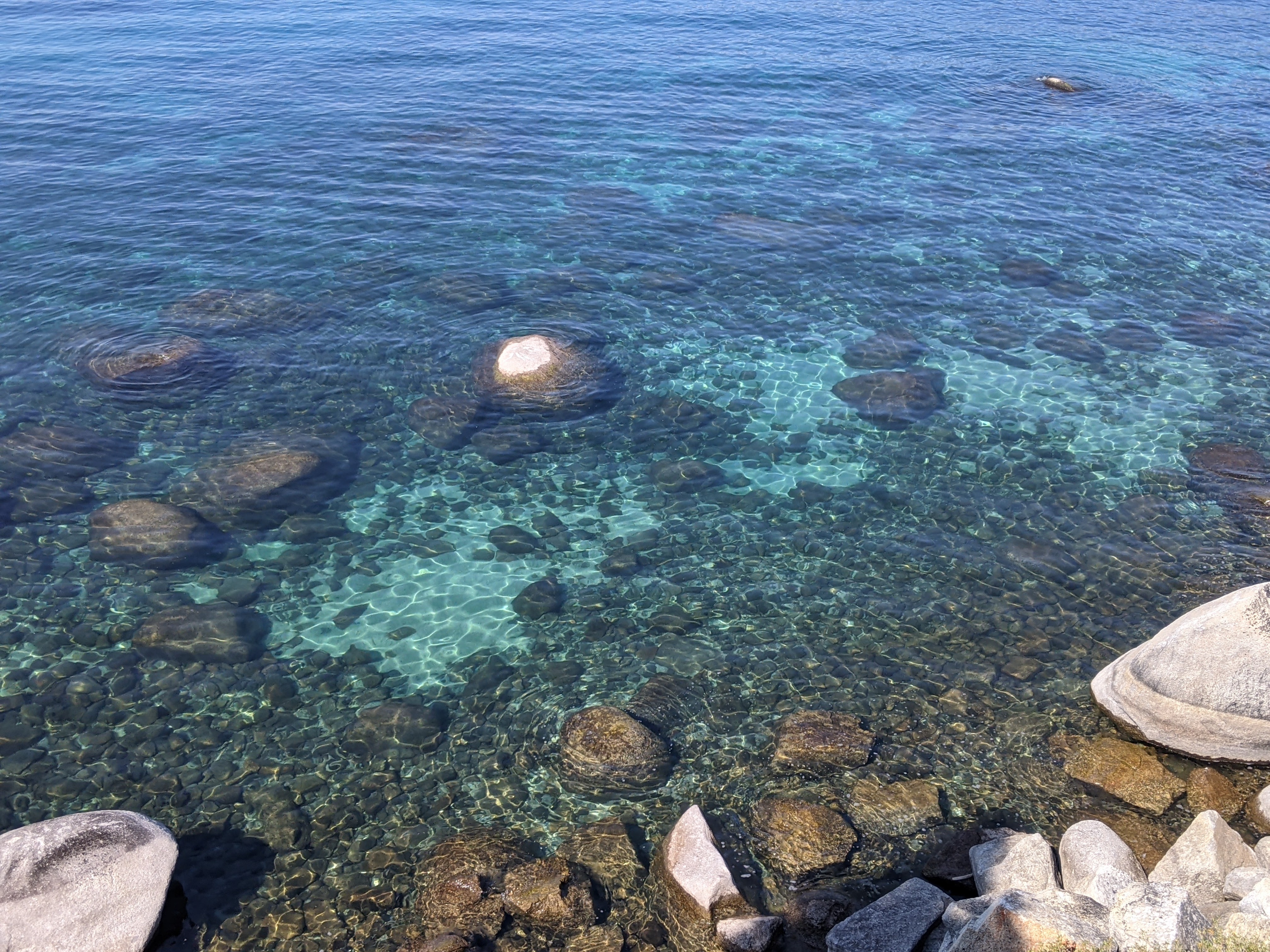
After the hike, we had burgers and some delicious garlic fries at the nearby Burgers and Brews. After some rest, we went to the nearby Inclined Beach, a private beach, to do nothing. The lake water is super clear and cool. It is a bit rocky at the waterline, the sand becomes silky smooth just a few feet into the water. My husband did a short swim and I told a picture of him sharing the lake with a paddling of ducks. We were tired after the hike and the beach outings, we barely finished a movie before retiring to bed early.
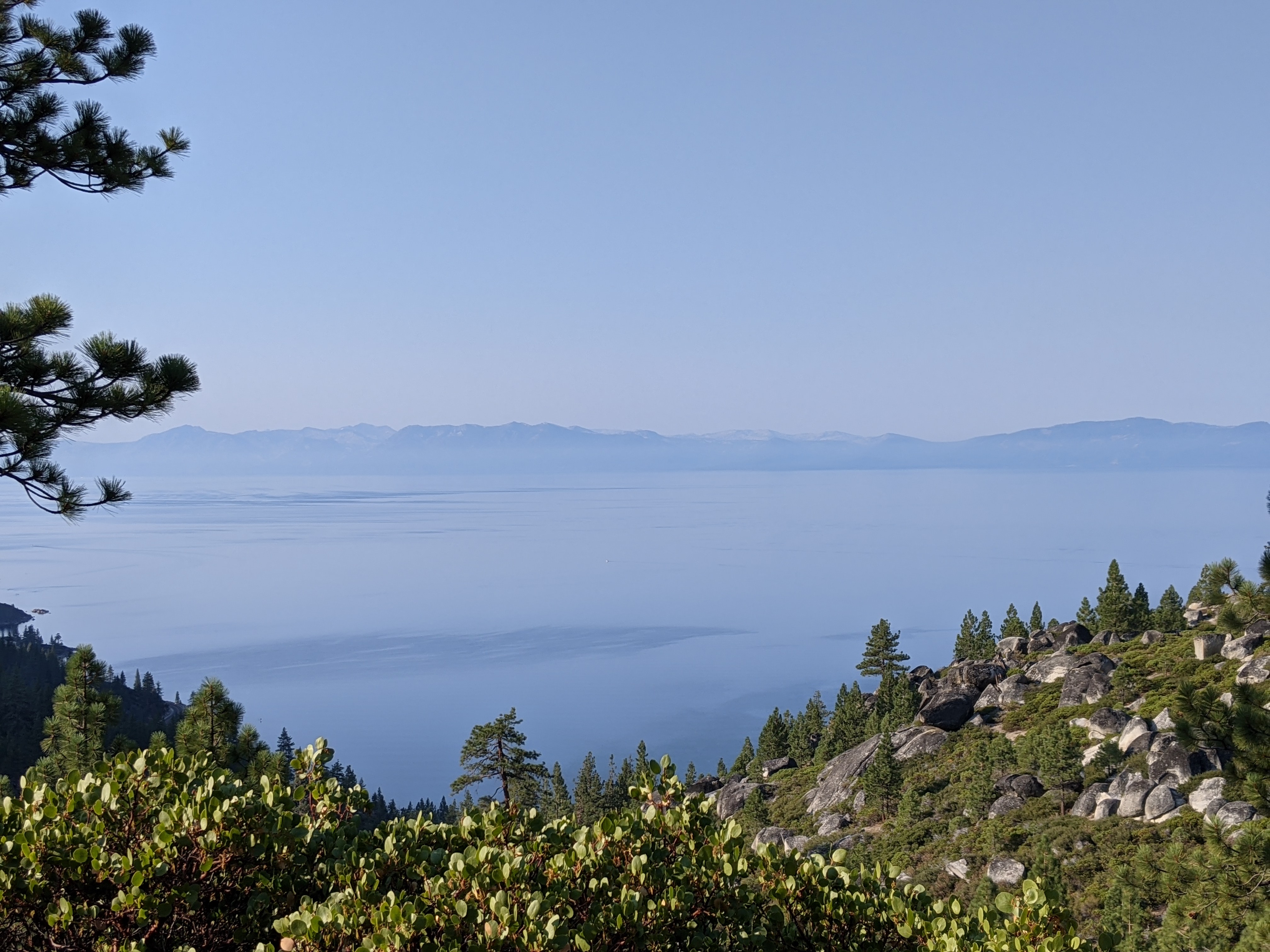
Day 3 We gave another try to the Tunnel Creek Trail for a panoramic view of Lake Tahoe. The weather and the air quality both cooperated. The air outside was cold and refreshing, the streets were quiet with one or two athletic looking joggers.
There were hardly any cars in the Bullwheel Parking Lot and it almost felt too quiet. At the trailhead, we saw and heard some California blue jays happily chirping with each other. The trail is well paved, just like walking on fine and hard sand, and easy for the feet. It shapes like many consecutive S-letters, sloping upwards. We were rewarded with the gorgeous Lake Tahoe views among the clusters of Jeffery Pines.
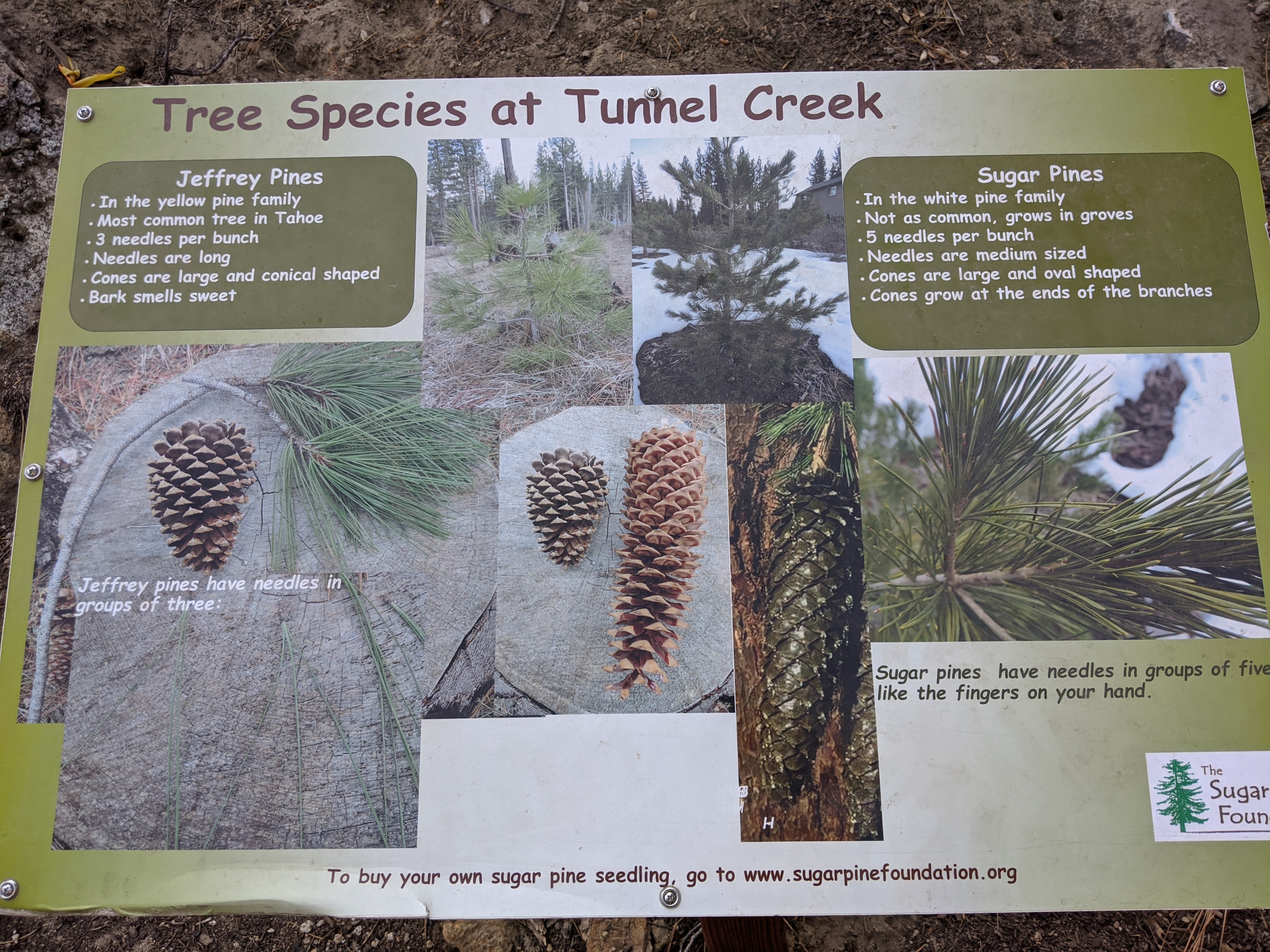
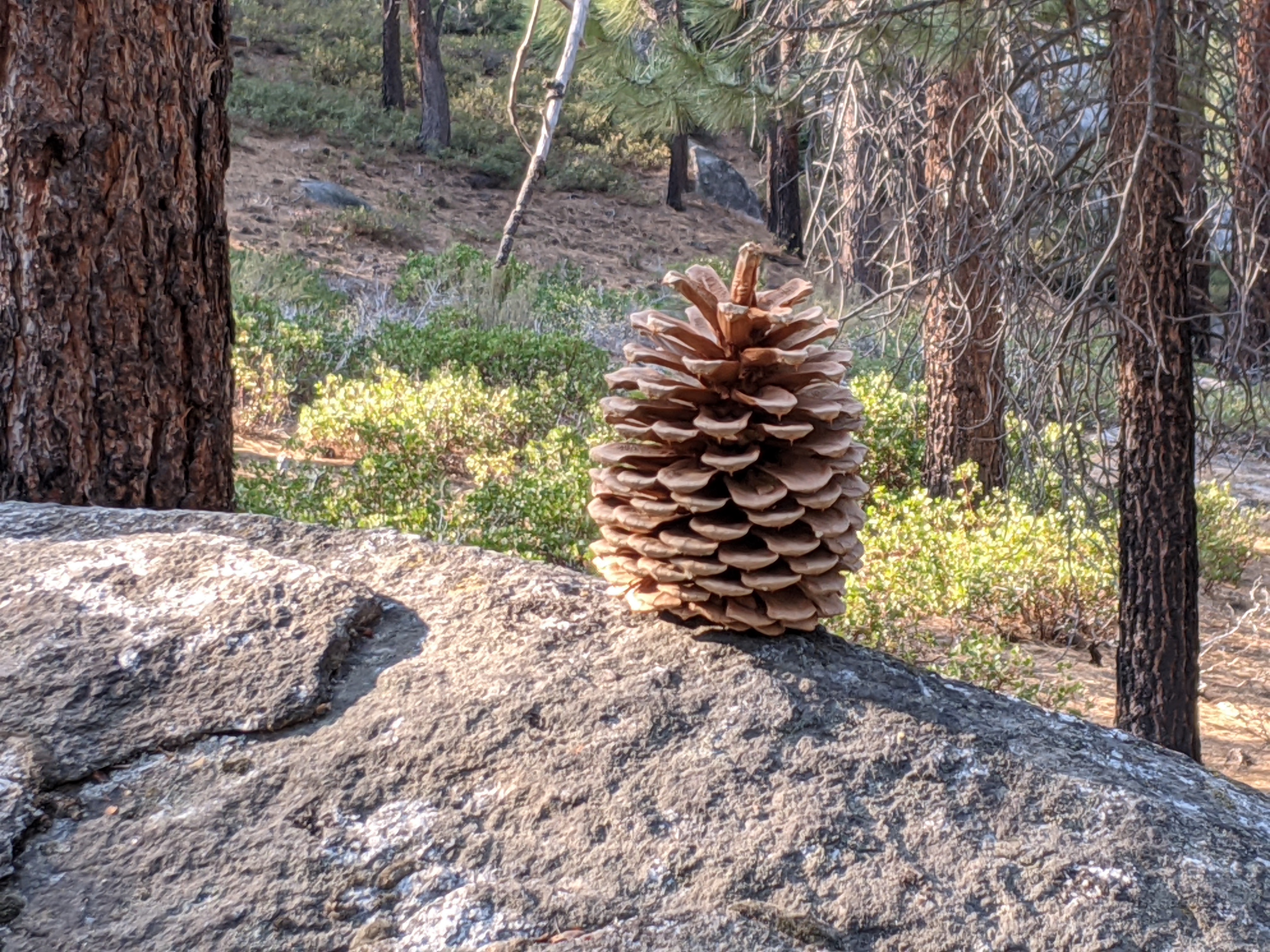
There are occasional signposts on the tree species and the effort to return the environment to how it has been; and how fires are sometimes planned to burn down some trees to create better forest spacing. There were pine cones almost everywhere. It was early in the morning, so we saw just a few hikers. We listened to the radio stations of Hong Kong and Spotify music along the way. The lake looks peaceful and calm from afar. We stopped often to take pictures, or called on Google Assistant to take our selfies. We could only afford two hours on the hike to be back at the airbnb to checkout.
We stopped for lunch near Donner Lake, had deep fried pickles, salad and smoky meat. The fried pickle was good and reminded us of the movie “An American Pickle” The smoky meat was too salty. Next to the restaurant is a Boba Tea shop, I could not have imagined a Boba Tea shop in this location, and spent $6 to get a Lavender Boba Tea.
I just booked another trip to South Lake Tahoe next May, and would look forward to visiting Lake Tahoe in the upcoming summer season.
I recently joined a product development group for a high tech product. After several years in the market, the product still faces significant headwinds to find product market fit. Amassing millions of users is no longer good enough, the economic value of a product is a function of the strength of the habits it creates. Increasing addiction to a product is key to drive sustained value. This book covers a recursive framework from trigger, to user action, to variable reward, to investment of users, and back to trigger. It is simple to understand and is a great read.
My children’s pediatrician is retiring from her practice and will go volunteer in Kenya. A friend, recently retired from various NGOs, suggested a book would make a good gift. This book has great Amazon reviews. I bought two copies, one for her and one for myself. I really enjoyed reading it. The genius of the author is to pick a seemingly vulnerable and unappealing woman as its main character. Eleanor is competent but lonely and antisocial with a childhood trauma that has left a scar on her face as well as her mind. After she gets off work on Friday, she spends her weekends drinking vodka until she is back to work on Monday. Everything changes as she and Raymond, her IT office support, save this kind old man Sammy . Through the kindness of Raymond and Sammy, Eleanor is able to get out of her isolation and face her past. The author weaves together a funny and charming story while portraying the loneliness and mental vulnerability of many living in a city.




















 oliviatamccue