oliviatamccue

about everything, anything or something

Finding Her Voice Through Artificial Intelligence

Since last year, my day job has been about Artificial Intelligence (AI), more specifically Generative AI. I believe AI is a real deal not just for its utilities but also for its many game changing potential on human needs. I spend time sharing tips and encourage more to use the technology for their benefits. I spend a decent amount of time in an effort to democratize AI. 

The most beautiful AI interaction turns out to be in a situation when I least expect it to be.

Soon reaching its 100 years old, International Toastmaster Club has over 200,000 members in more than 14000 clubs in more than 140 countries.Toastmaster is all about communication excellence, and for 100 years and counting, Toastmasters have been expressing themselves better, practicing, and evaluating in a fun club environment, shining all around the world. Once a distinguished Toastmaster club president, I stay as an active Toastmasters, making speeches occasionally. 

A few months ago, I could not be more surprised to find a new member with speech disability joining the club. Let’s call her Lady M. Lady M makes unrecognizable squeaks, her hand movements are sporadic, her facial expressions are different, her muscle movements are obviously compromised. That constantly reminds me of the limitation and likely hardship she encounters. Her presence brings that tiny discomfort that no-one really wants to show.
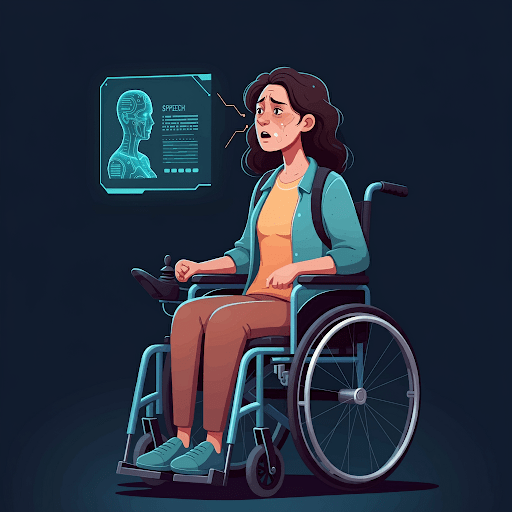
Over time, Lady M has proven to be an enthusiastic member. She is very brave. She wants so much to participate, including the table topics where one gets a short prompt to deliver a one to two minute impromptu speech response. Technology has come to her aid. She can type up her thoughts in group chats instead of speaking. Yet, her chats are hard to comprehend, the sentences are grammatically incomplete, and we cannot make sense of the words. Needless to say, most, in the club, have felt uneasy because of our limitations to interpret meaningfully what she has shared.  We have been candid to share that we do not understand. She is not deterred and has kept participating to my utmost admiration. 

Something happened in one recent meeting. In that meeting, I hosted the table topics. I called out a few club guests, gave them prompts, for them to deliver an impromptu speech.  I was about to conclude, when I got a glimpse, on the zoom window, that lady M was waving vigorously to get attention and to participate. I ended up posting the prompt in group chat for her to post a response. The reply was equally incomprehensible. AI has come to our aid this time. The president came up with the idea to use AI.  Rather than reading out the group chat of Lady M word by word, the president copied and pasted to the AI ChatGPT, and asked AI to help us to comprehend.  Afterwards he read out the AI-enhanced impromptu response.  How well has AI interpreted lady M? Judging by the reaction of lady M, it came across that, AI has read her mind better than any human toastmasters attending at the time. I have not seen lady M happier. That expression of feeling heard and feeling understood made a beautiful face.

Maybe we are bound by our learned grammar, words and languages. AI has gifted us this ability to better understand each other without that boundaries.  

A week after, at the Club, lady M was there again. This time, she shared that her father just passed away. In times of life’s most difficult moments, we hope her participation with the help of technology has brought her comfort and courage. We found her voice through Artificial Intelligence. 

Leave a comment »

Are we becoming more worldly with technology and AI?

The transcript of a speech I delivered in a couple of Toastmaster clubs on this topic “Are we becoming more worldly with technology and AI?”


I want to explore with you one  question, one human-centered question  in this era of AI. “Are we becoming more worldly with technology and AI? “ 

Our great grandparents lived their whole life in their own village.  They never left the village.  They knew a lot about their village, their families and neighbors, They were close to knowing nothing in places that were not reachable to them.  If you ask them what they thought of other villages.  LIkely they would say they didn’t know, or they thought all villages were similar.

Fast forward to this generation. Information is at our fingertips. Phone is with us. Travel is part of our life. We know the world has a lot of variances. With AI, we can understand different languages without putting in the effort to learn it. 

How many think “we are becoming more worldly with technology and AI”

Now I am going to share three experiences about different perspectives. The differences may be surprising, or even a bit unsettling.  

First, with the internet, we can access and digest different channels. How many of you subscribe to a channel that consistently has a different point of views from yours? I did, on this channel of a YouTuber, the channel has good subscribers and has an incredible voice. He is negative, always finds flaws, and mostly only reports bad doings of the government. It is not easy but I want to understand his perspective. Over time, I still disagree with his point of view, but I start to see him as a person, get his perspective, and hear from him the dark side. I sometimes leave a comment.  How do you become worldly or know the different perspectives?

Second, you have heard about Surveillance. Who thinks it is a good thing? Who thinks it is bad? I think it depends, and I don’t really mind to be monitored. Most news tends to be a bit negative about surveillance.. So I prompt different LLM “​​what do people think of surveillance”. While some LLM still share the negative before the positive, most show two sides of the opinion.  AI can give us different views.  Many friends told me they feel safer, they worry less, there is less crime, less drugs.  

Third, the media all have their positions. We don’t want them to think for us. Example, XinJiang, China has been on CNN or BBC quite a bit. I prompt LLM to “tell me the latest news about XinJiang”.  What did LLM say about XinJiang? Allegations of forced labor in supply chains, destruction of Mosques and religious suppression. It so happens that this week, seven of my siblings and in-laws are traveling to XinJiang, China. We have a real time connection using WhatsApp, I feel I am in California, I am also virtually visiting XinJiang, very cool.  From my siblings, everyday, I am getting lots of pictures from them, eating local food, visiting local museums, talking to locals, and even dancing with the locals etc. They are obviously having a great time. The locals, they talk to, are happy people with their dreams for the future. They run into people doing road trips on their own, not that unsimilar to people doing road trips in America. Are you aware of the different perspectives?

With these perspectives, I ask again “are we becoming more worldly”?

AI gifts us more ways to see the world and the differences. It is one of the greatest gifts from technology and AI.  We all can take advantage of the AI-powered world to become more worldly.  

My speech is a tiny step so that we can become more worldly. You all can take bigger steps.  You can prompt and push AI to give you different perspectives. Your choice from today onward makes all the difference whether we will have a world of acceptance and peace or a world of conflicts and wars. 


Leave comments to share your thoughts on the topic too.

Leave a comment »

Book Reviews of AI and diverse reads

Artificial Intelligence has arrived. 

In the AI-powered world, the Large Language models, Gemini, ChatGPT and the like, can summarize a book, give a nutshell of things, answer questions, and even analyze a book together with you. It is impressively powerful. It meets the ever raising expectations of what it can do. AI writes book reviews well too. I am sure that AI can do a better writing job after it digests trillions of words which I never would be able to. 

Let AI have the better ability in reading and writing. There is no existential crisis about it. I am pleased to keep the enjoyment of reading a book at the speed of a snail. I have the choice of my own interpretation of a book, the intent of its author and writing the book reviews.


You look like a thing and I love you
By Janelle Shane

It is a book about how Artificial Intelligence works and why it’s making the world a weirder place. With the hype of generative Artificial Intelligence (GenAI), it feels like eras have passed since this book was published in 2019. The ChatGPT / Generative AI debut is however not a baby born out of nowhere. The breakthroughs in computing, memory and storage power, the leap in machine learning and the focus in data science are all important notes leading to the Generative AI crescendo in November 2022. Many of the “how it works” are as relevant now as in 2019. 

This is a highly engaging and informative book. AI has already arrived. The best way to go forward with AI is to understand it – understand what problems AI can solve, what issues AI can create, and what can we do to manage the situations.

This book will endear you to AI, and why there’s every reason to be cautiously optimistic.


Never let me go 
By Kazuo Ishiguro

In a dehumanized world of dystopia, what would the experience of growing up, falling in love, making friends and the sense of mortality be like? The novel starts with a mystery that the protagonist is a carer unlike any carers we are familiar with. She takes care of different donor patients who need to recover from donations, and at times multiple donations. As the protagonist recalls her school lifes, her friends, her guardians and her years as carers of her closest friends, the readers discover a dystopia, unlike anything we have seen. In that world, their growing up, their relationship and mortality still resonate. 


Song of the Cell : an exploration of medicine and the new human
By Siddhartha Mukherjee 

Mr. Mukherjee is among my favorite authors. His book is always well researched and is a joy to read. Cells make up everything in our body. There are step jumps in our knowledge of the cells and there are still more to be discovered. Mr. Mukherjee perfectly combines the technicality of the deep complex topics and the poetic touch of his personal experience. Through his writing, the scientists, the doctors and the patients each come alive with their own unique characters. It is a book that requires focus to read, pause, and resume. As I finish the last page of the book, I feel there is so much in it that I would like to start all over again. 

Reading his book not only gives you a good set of knowledge of the topic. Reading his book  gives ideas on how to write a technical topic filled with beautiful personal stories, each with a human touch. It is these human touches and their stories that endears us to the doctors, the scientist and the new scientific discoveries about the cell. 


Determined. A science of life without free will
By Robert M. Sapolsky

The initial chapters of the book are pretty dense as the author introduced the framework among the free will, deterministic, nondeterministic, predictable, unpredictable together with different terminologies and how our brain works in neuro-science terms.

Halfway into the book, I got the gist of the author’s position and his argument. There is no freewill or there is much less freewill than what we think we have. Our behaviors, decision-making, failures, and successes are results of our nature (genes) and nurture (environment, family, friends and societies). 

So what? Why did the author, professor of  biology, neurology, neurological sciences, and neurosurgery at Stanford University suspend his teaching commitments, and spend time to write about the topic?

The second half of the book would provide the answer.

Do you believe that illness is a punishment of evil acts of our doing? Do you believe that schizophrenia is caused by bad parenting? Do you agree that people committing crimes deserve  the most severe tortures so justice is served?  Society has changed a lot in many things.  Depending on whether it is a “Yes” or “No” to these questions, we see the world with different degrees of empathy and compassion with one another. 

If more people agree to no free will or limited free will, there will be more support to change the education system, the justice system, and the moral system. The author conveys that we don’t need to be heartless, and judgmental to others with less fortune. There can be better systems and societies. 

This book has been named one of the best books by the Washington Post and the Wall Street Journal.

I suggest reading it with patience, taking breaks and taking as much time as needed. I get a lot a lot out of the book, and it gives a new perspective of many things around us.

Leave a comment »

AI Challenges

Toastmasters, a global organization about communication excellence, is celebrating 100 years. Toastmasters has global presence, with over 200,000 members and counting. I served as president of one toastmaster club for two terms. I remain active in two Toastmaster clubs including the AI club, the first toastmaster club with an AI themes. It is fitting to combine communication excellence and the latest AI technology as Generative AI storms into our lives, like no other technology before. Below is the speech script of my 7-minutes speech about AI challenges and how everyone can become an AI ambassador to have more people participating in the AI future.


I have been an active Toastmaster member and served as president of a Toasterster club for two-terms

We wake up with water, electricity and the internet. What if I decide not to use any of them? From where I live, the nearest body of water is over 5 miles. I would walk without Google Maps, no electric car, in the dark, to fill up buckets of water I need for the day. It would take over 4 hours for the round-trip. Technology has made our lives better. We have taken for granted people use helpful technology all the time. 

To my AI club fellows, I would like to share the obstacles facing AI adoption. By being aware of it, we can concretely set plans to address these obstacles.

I’m leading an initiative focused on upskilling and enabling AI, particularly GenAI, at all levels, to as many as possible for the company .  Every single day, I am humbled “people are not rethinking how their work and life can be improved with AI technology”. The reality is, technology adoption requires intentional effort to bring people along. Why is that? There are technical obstacles and psychological resistances.

Starting with the technical challenges,

  • We live in places with cutting edge technology. Do you know just about 65% of the global population are online (w/i internet). AI depends both on electricity and the internet. That means around 3 billion who do not have reliable internet, likely cannot benefit from AI. 
  • AI is intimidatingly complex. Some techies unconsciously throw out jargon. Terms like LLM, gpu, tpu, langchain, multimodal, neural network, encoder, decoder, transformer, hallucinations…just scared people away. 
  • Concerns about data privacy, biased input and security are real. Can you trust technology? When to trust , when not to trust AI? 

We develop strong opinions and emotions about things too. Every new technology challenges our comfort zone and injects the fear of the unknown, fear of mistakes and fear of losses.

Many people fear errors or lack of control when using AI for tasks traditionally done by humans. It is natural we are uncomfortable with machines generating creative content or making decisions in their personal lives.

  • Elon Musk said “We will have for the first time something that is smarter than the smartest human. There will come a point where no job is needed.“. He may have spoken his mind. How would you react about AI replacing human jobs and YOUR jobs?
  • When Singapore Prime Minister Lee was recently interviewed by Bloomberg, he said “There are a lot of things in AI that we don’t know.  We don’t know where it is going. The researchers do not know where it is going.”.  How could you manage the unknown?

You belong to this ai club toastmasters. I think you can do something. You can start with one thing.  Here are some suggestions.

  1. Listen to others’ concerns in adopting the technology. 
  2. Share how AI has benefited you
  3. Invite their curiosity to learn more.

Thomas Edison brought electric light to part of Manhattan in 1882. Even 4 decades later, only half of all homes in the US had electric power. Many Americans still lit their homes with gas lights and candles.

I invite you to stay aware of these Ai technical and psychological  obstacles, it is as easy as starting with one thing. Take the time to listen to concerns, share how AI works well for you and invite curiosity from others.  If you all do at least one thing, AI can be in more hands. We don’t need to wait 50 years.

Are you willing?

Thank you.


Leave a comment »

Keep the cool in AI era + book reviews

I recently joined an exciting AI-themed toastmaster club. This week, I gave an impromptu speech on “how AI would affect how we consume information?”. I seized the opportunity to talk about how humans, not technology, can keep their say in the era of internet, social media and AI. 

Many are uncomfortable with new technology or simply changes. Surprisingly, the same “many” often give technology even more say on what they think and how they think. For those who are uncomfortable with AI or new technology, the following are written for you to keep your say when you consume information on the internet, on social media, or in the future from AI.


  • Is it fact or opinion? 
    If you are not sure,  take it as the opinion of the writer.
  • Is it news or entertainment? 
    If you are not sure, categorize it as entertainment, and you don’t want to interpret most things as news on YouTube videos, Facebook live streams. 
  • Is it confirmation bias, or a discovery of new perspectives?
    You can better tame confirmation bias when you are open to discovering what you don’t know. It is my opinion that humans are flawed and that we cannot be right all the time.
  • Do supermen and villains ever switch roles? 
    If your information channels constantly portray the same country/party/persons are righteous, and the others are evil, it is time to read the other side of the story from other channels? There is no rush to take sides. 
  • Does your current stand influence you the most to decide the sides to take in new event(s)? 
    Be mindful if you let your existing stand make the decisions for you in new events. With the tsunami of information out there, you are likely going to find information supporting your current stand, even when the information is fake or opinionated. It is my opinion that it is beneficial to read different sides of the same stories. There is no rush to take sides.
  • Is your emotion ahead of your head to decide?
    We all have our emotional moments. When the emotion subsides, you have the right to change after going through the emotional reactions.
  • Are you ready to learn about history, cultures, and religions in the world?
    If this is a NO, it is my opinion that you are in no place to have a bad take on other countries, cultures or religions.

How much, with or without AI, have you enabled technology (internet, social media, online videos) to take over how you think, how you live, and what you do?


Reading is among the best ways to keep your heart and mind healthy. I feel quite sad to see books are becoming so cheap, and e-books even cheaper in the era of inflation and information overflow. You can help the authors and, even more so, yourself to find good books to read. 

Radical Candor by Kim Scott
I would not trade the fun of reading books, to a productivity play. Still, I tested the productivity hype about AI’s large language models. ChatGPT happily returned a clear summary to my prompt: ‘What is the book “Radical candor” by Kim Scott in a nutshell?’.  I shortened its summary to this within minutes: “Radical Candor” is a practical guide for leaders and managers to foster better communication and relationships within their teams. It’s about delivering honest feedback with empathy and respect. The book provides numerous real-life examples and actionable advice on how to implement these principles of radical candor in the workplace to create a more effective and harmonious working environment. 

The Demon-Haunted World: Science as a Candle in the Dark by Ann Druyan and Carl Sagan 
I wish this book was on the K-12 reading list. Filtering the information overload is like finding the straw of truth in a great ocean of confusion and conundrum.The baloney detection kits in this book are tools that can help you and the future generation in the much-needed critical thinking.  

The things you can see only when you slow down by Haemin Sunim
If you are looking for insights to “Why am I so busy?”, “When you are feeling low?”, “Being right isn’t important; Being Happy Together is”, “When you look for your calling”. My favorite chapter is “Three liberating insights” – people are not as interested in me as I had always believed; not everyone has to like me; and most things we do for others are in fact for ourselves. I keep coming back to some chapters in the book.  

Message in a Matchbox – Memories of a Childhood Tehran by Sara Fashandi
The title said it all. The stories of her brother from the author’s memories grow on me as I read on. Born poor, the characters have to overcome life obstacles to improve conditions for the family. At times tragic and emotional, this is a storied portrait of his brother’s childhood in Tehran. I recommend this book to see that part of the world.

The Tale of the Unknown Island by Jose Saramago
I love this book and have read the 51-page twice. It is not a children’s book, though the children can enjoy it. This charming story shares how we all are isolated in our own island, and we all are on our own island until we find connections with purpose and love. I enjoyed both this book as well as “Seeing” by the same author.

* José de Sousa Saramago is a Portuguese author and the recipient of the 1998 Nobel Prize in Literature. His parables, sustained by imagination, compassion and irony, [with which he] continually enables us once again to apprehend an elusory reality.

Seeing by Jose Saramago
A sequel from the book ‘Blindness’, which was made into movies. It starts with the majority of voters throwing blank ballots in the election. As the government reacts to it as a crisis, conspiracy and sedition, the story ends with the death of arguably the two best characters. It paints a vivid picture of how the world has become, how much we accept blindness to many things around us, and how much we still choose to see. It is a gem that is waiting for your discovery. It is a book that I would like to read again.

Dopamine nation : finding balance in the age of indulgence by Anna Lembke
Through the lived experience of the patients and her first hand experience of guilt pleasure turning into addiction, the author highlights the delicate balance between pain and pleasure. Self discipline becomes a thing of the past when immediate pleasure is within reach in so many ways and modern day comfort gives rise to more indulgence and addiction . Maintaining the pain-pleasure balance is essential for our health and well being. A quick read recommended to those who want to overcome addiction or bad habits.

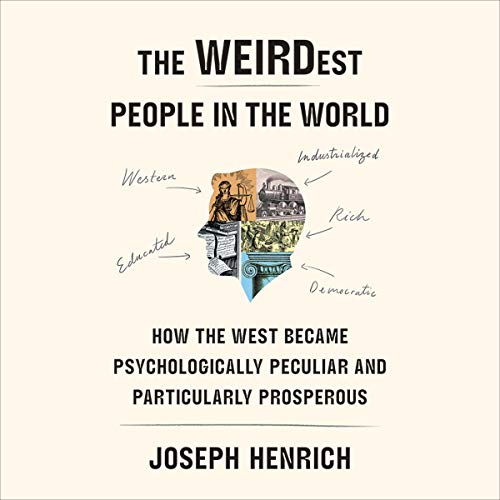
The WEIRDest people in the world by Joseph Henrich
A weird book, until you realize that WEIRD refers to West, Educated, Rich, Industrialized, Democratic. How could the minority people make all the big decisions for the world? There are so many decisions made by very few people and we all live in the aftermath of those decisions. This book attempts to give an answer. Agree or not, there is some interesting stuff in it, such as why we moved away from marriage within families, or why some cultures worked better with strangers than others, how the spread of Christianity triggered the need to create contracts with strangers. This book can help kill some time.

Trust by Hernan Diaz
Andrew Bevel was the protagonist who evolved into a mystical legend through a series of well-timed investments in the 1920s. The book has three versions of Andrew and his wife Mildred. This clever plot has a little bit of the 1950 classic “Rashomon” or the 2022 Netflix drama “Inventing Anna”. The story lost some momentum halfway in, and in the end, it has left the readers some open questions. Overall a good story. 


Leave a comment »

Silicon Valley latest buzz – ChatGPT / Bard

The ups and downs are a pattern in Silicon Valley. In the downs, the layoff shakes people to the core. In the downs, many middle managers face both mid-life crisis and financial crisis at the same time. In the downs, the genZ realizes, a corporation is a corporation no matter the vision, the mission or the propaganda on the company web page. We are in the downs.

Ups and downs, Silicon Valley continues to be the center of many technology innovations. Some change the world, many do not; it’s just hard to differentiate between the two.

During the internet boom in the 90s, many folks resigned from big corporations and dreamed of their startup making it to IPO.  They worked super long hours because of the hope that they would not need to work anymore after the IPO. It was those glory days that we asked each other whether we made it yet, and who has become millionaires overnight. Restaurants were full, highways were busy.  Everyone was upbeat. It was like living in the Great Gatsy era. It has been a golden era. 

Year 2K has been another buzz where the whole world was watching and maybe worrying how the 20th century transitioned to the 21 century. It is not so much of a Ponzi scheme. In hindsight, its crisis assessment has definitely been overblown. Yet it created so many IT job opportunities. The COBOL programmers, long considered as dinosaurs, came back alive and became hotly sought after. It was a mini-miracle there. Y2K came and went without much drama. It was a win-win.  

After the Y2K, there was the Cloud Buzz. It was advertised as if Cloud would solve all the problems of all corporations.  Every CIO put it as a priority and talked about getting on the wagon.  It was so overblown for a few years, then went quiet.  The same pitch deck can be used for so long before people ask for actual deliverables and results. After some more years of working out the kinks, it started to deliver.  Cloud is just a thing that once you are on its platform, it is pretty hard to get out.  This Cloud business would keep many busy for many future years.  

Then came the voice assistant. No one seems to figure out how to make money with these hardware devices or voice assistants. The most popular use cases for these devices remain to be “set a timer”, “play me a song”, “tell me a joke”, “tell me the news”. It is ahead of its time and technology. It needs a few more years before natural language technology is ready.

Machine Learning has been quite a breakthrough, benefiting from the data explosion and the abundance of computing power. It would probably be another few more years to discover the full commercial value. 

Generative AI is taking the world by storm.  

Having AI to write news articles is not something new. A few websites have been using AI to write poems or write news, only that they were not professional and some had pretty poor quality overall. With the ChatGPT (Generative pre-trained transformer) or BARD, their trained language model provides the professional touch and is impressive so far. Chatting with these generative AIs, I can stop admiring how fast it learns and how much it improves each day, not unlike the first year of a baby.

Silicon Valley techies can test these generative AI with the real problems to solve. The generative AI, ChatGPT or BARD alike, has such a powerful language model that it summarizes better than some high-income professionals.

  • Ask it “how to manage changes in a big corporation”, its advice is as good as,  if not better, than someone in my company who has worked as a change advisor for years.
  • Ask it to summarize lengthy articles, it gives a clean summary which is surprisingly logical and easy to follow.
  • Ask it to explain “technical jargon”, it explains in English terms and helps you learn more than talking to a pro.
  • Ask it to plan a trip itinerary, it gives a great start, and open to refine it along the way.

What impressed me the most is the language model, I feel that suddenly I have a “communication” person for anything I write to create more punchy and readable content. Disclaimer: I have not asked for the service of generative AI in this blog, and the blog continues to have the flaw of a human being.

Their limitations are quite obvious too. It is a language model. It cannot be extended, without a high price tag, to support images, urls, and other object types.  It has no shame to make up urls or information as it sees fit. That quality of making things up is among the most humane parts of generative AI.

If you worry about generative AI can replace humans in many jobs. Worry not. It is going to take away some jobs, and will create more jobs. If you worry about generative AI means that you cannot stay relevant with the same skills, it may be time to keep learning new skills. I am ready to attend the Generative AI conference this weekend.

Leave a comment »

Is Data-ism becoming a religion?

I came across the idea of Data-ism as the new religion in the book “A Brief History of Tomorrow”.  The novelty of the idea is intriguing, then a bit unsettling, just like we find out our pet has become our master.

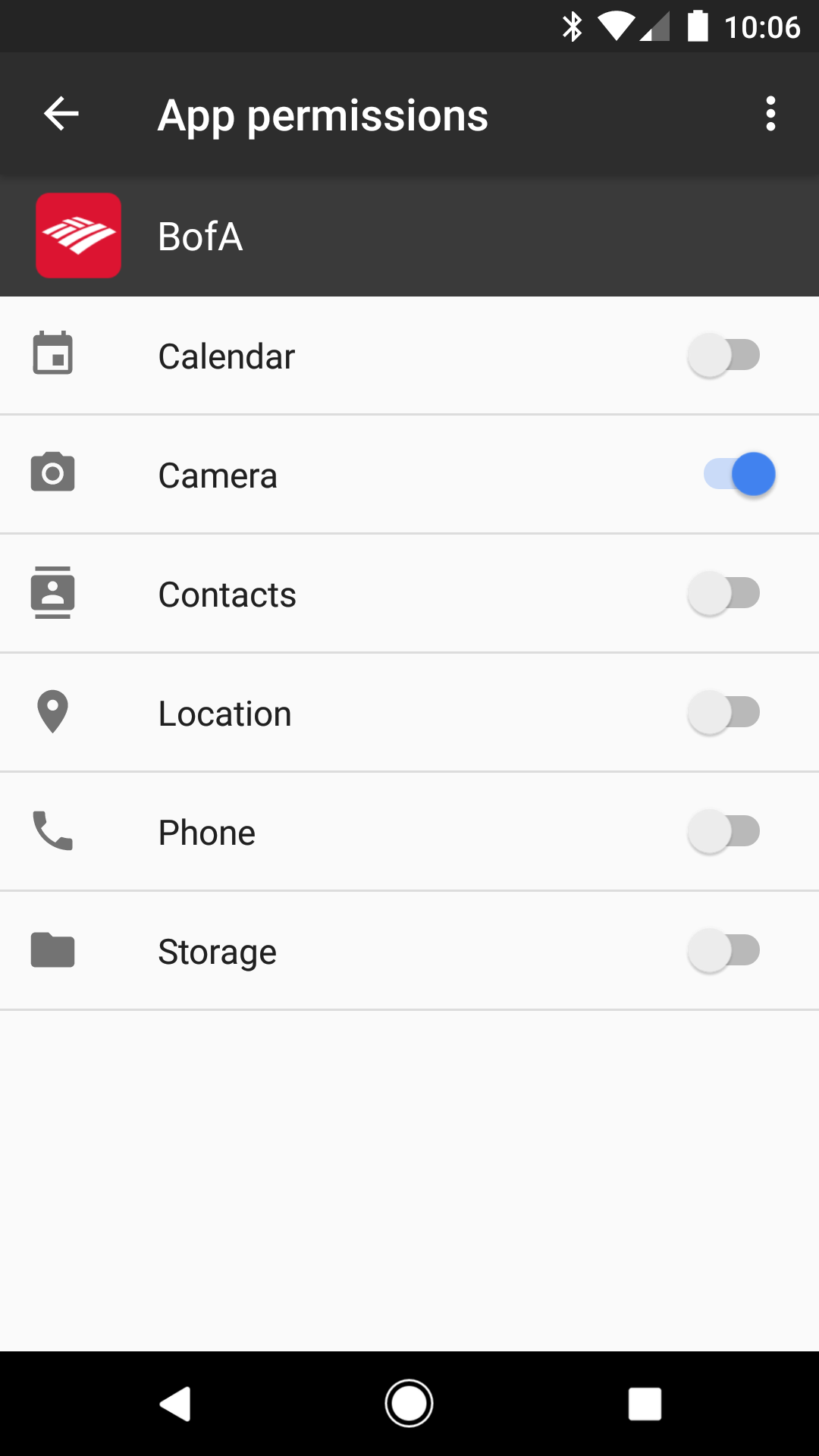
Screenshot_20170604-100630The smart device (aka the “Computer”) is getting smarter. It may know you, more than any other human being, as it “effortlessly” read and remember your email content, your calendar, your whereabout, and all your online activities.    It can remember all your password too, which I highly suggest that you deny every time it asks for your permission.

Just a few years ago, at a Japanese restaurant, a worker bragged about a new App that could recommend the sashimi of the day.  Over the last couple of years, the Computer has served us even more personally.

For example, the “Computer” knows from my gmail that my daughter is flying in from Japan, and without asking, it gives the latest arrival time.  Oh, her flight is going to land ahead of schedule.   Around her new arrival time,  the Computer reminds it is time to pick her up based on the latest traffic condition.  In the car, the Computer guides with a map.  Not that long ago, missing a turn is very bad, not anymore, the Computer gives the new route effortlessly.  If an accident just happens, no problem, the Computer gives a new route and I trust it to be the fastest path.   I search for a flight to Alaska, the Computer picks up my need, and alerts me a cheaper airfare.  I mean, if I am searching for a flight to Alaska, it is logical that in that moment, I am thinking of a visit.  The Computer is so thoughtful that it starts to show Ads (Advertisement) about vacation in Alaska and all the other travel ideas.   This is transformational that it turns the life-long negative perception towards Ads to a positive experience by showing relevant Ads.   Ads is no longer an interruption from what we are watching, it is becoming relevant and more interesting than what we have been watching.
auto reply
Did you notice that Gmail could suggest responses to incoming email?  Like many new features, I was impressed and was itched to use it and tell people about it.   As I accept or ignore the suggested responses, the Computer learns about it and next time, it would come up with a response that is even more thoughtful.

Because the Computer is so helpful in organizing our life, we love it, and willingly empower it.  If we pride ourselves in our ability to connect, think and learn, the Computer is superior in every way.  It is omnipresent and will soon be all-knowing.  Our judgement is giving ways to decisions largely influenced if not made by the Computer.

IMG_20170506_143818Next time, when you install an App, and it asks for permission access, what would you do? We could struggle to yield until we believe.  Just like how we turn a non-believer into a believer.

I still enjoy my senses and the beauty of our nature; and am humbled by my limitation.

Leave a comment »