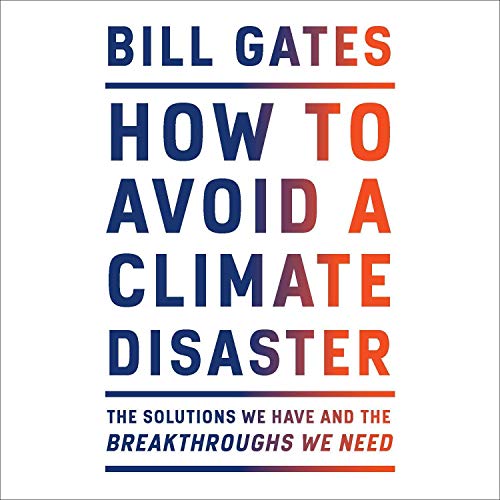
This is the book to read for climate control. Mr. Gates translated the complex topic into concrete causes and impact analysis. He walked through a comprehensive course of action, to be done, in a scale never done before for the government, the market and the technology to work together to prevent the climate disaster. The last part of the book called for actions for individuals.
With a combined effort of government intervention, technology innovation and market forces, there exists a narrow path to go from 51 billion of carbon dioxide emission to zero.
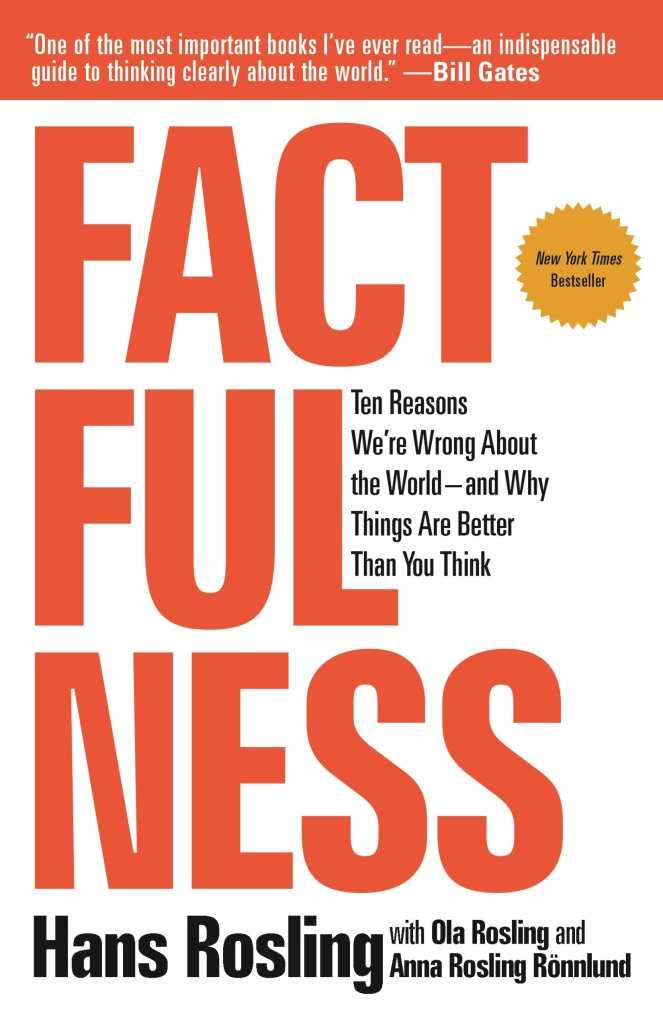
In his last days, Hans Rosling put all his heart into finishing this book. His passion in life shows so much in his worldliness and his global perspective.
Would you believe most people, experts included, have significant gaps in knowing the present state of the globe? How would their distorted world view affect the decision making of individuals, of companies and of governments?
Are you among those who think the Scandinavian countries have always been rich? Do you know the difference in living for people earning $2, $8, $32 or more dollars a day? GapMinder of the income levels is simply mind boggling.
This book is a great read especially for the young generations who need a lift and an awareness of the possibilities.
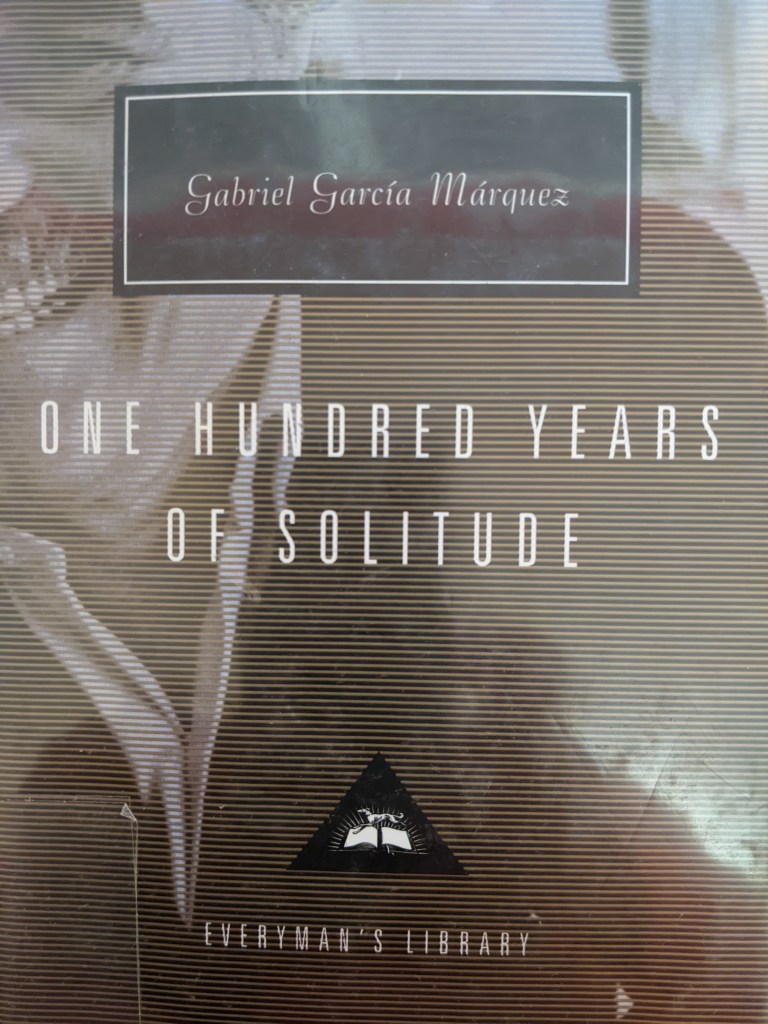
“The secret of a good old age is simply an honorable pact with solitude”.
Through the lives and struggles of the multi-generations of Buendia’s families, the book covers pretty much everything in the world.
In the imaginary plot of the insomnia plague, the book told of the desperation felt when one was deprived of sleep.
In the old age of Colonel Colonel Buendia, he questioned the purpose of the twenty-years war that he had led his compatriots fighting the revolutionary war against the government. He chose to live his final years in simple solitude after tasting the pride, the power, the liberation.
In the strike of the banana farm workers, the government hid the massacre so well that no-one believed in the witness who escaped. The banana farm was such a vivid demonstration of colonial exploitation.
Through the deluge that continued over several years, there was the humbling reality that nature and many other species were to win over human beings.
”Races condemned to one hundred years of solitude did not have a second opportunity on earth”.
I finished the book, feeling like just touching the first layer of the onion, with so much more remains to be discovered.
Taking the stress out of homework by Abby Frerich and Brian Platzer
Through the challenges facing the students while doing homework, these two experienced teachers drilled into the challenges in skill gaps, knowledge gaps and growth gaps; and offered practical advice for both the learners and the teachers. A good read for learners of all ages.
Feel the fear and do it anyway by Susan Jeffers, Ph. D.
A good read for those seeking encouragement to overcome life hardship and take opportunities
A good read for parents who want their children to be unique, confident, and rich; as well as adults who want to better understand the culture of Jewish to inquire, to debate, and to do something different.
Nine essential things I’ve learned about life by Harold S. Kushner
Covering with wisdom and clarity, the author offers a powerful narrative of “God sends us the strength to deal with the problem”, “Religion is what we do not what you believe” and that “It is ok to have doubt and anger”.
The 100 best stocks to buy in 2020 by Peter sander and Scott mobile
Not a classic, but an easy-to-read, if you are searching for a list of companies to research more.
The abundance of great books has been a source of happiness. In this last mile of the career, I am more interested in education, learning and development. As such it is a treat to read these great books on how we think, how we learn, how our brain remembers and forgets. I have also enjoyed reading the Cheery Friday emails of Dr. Barbara Oakley since attending her classes “Learning how to learn”, “Uncommon Sense Teaching” on coursera.org.
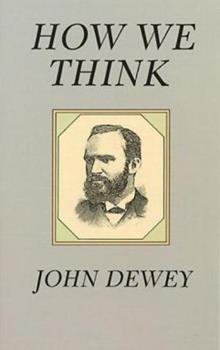
How we think
There may be no more critical time, than now, to educate the students how to think, how to differentiate the good and the bad from one’s own thinking and others’ thinking, how to cultivate the students with a system to think, to analyze and to differentiate so as to make rational choices and not become victim of fake news, polarized views and biases. “How we think” is a must-read for those who have a say in the education system. Published in 1910, it is among the most profound books about what “thoughts” are, how we think throughout our life, and the role of education in shaping how we think. It gives a rational discourse of the hits and misses of the education approaches. Over a hundred years after the publication, there is still so much work to be done to better our education approaches.
One round of readings is hardly enough to grasp all the essences. As a caution, this book is very dense and it has taken me a long time to finish the first round.
How we learn : Why Brains learn better than any machine for now
Published in 2020, over 100 years after the book “How we think”, the author started with the seven definitions of learning; and how human learning is still far superior than machine learning.
Human beings are born with a comprehensive start-up kit to support each baby to thrive in all kinds of environments, learn all kinds of languages; our nurture helps to select the right configuration to optimize at different stages of learning. There are optimal times to learn different matters and it is encouraging that we continue to learn throughout our lifetime. To learn well, we need to pay attention, engage actively, learn from errors and consolidate what we learn.
f you’re into learning and education, and want something more than a casual read, this is a good book to read.
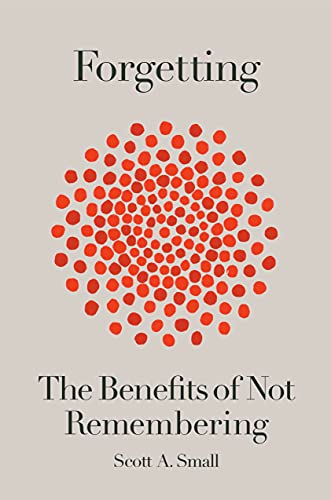
Forgetting – The benefits of not remembering
Many have lamented about forgetting about things, and wish for a better memory. Dr. Small shared his patient stories and used them as references to give a discourse of the latest understanding of how the brain works, from the metaphor of hippocampus as the teacher, prefrontal cortex as the library, amygdala as our emotional center, to our working memory, long term memory.
If you are interested in a slightly deeper understanding of neuroscience or intrigued about the brain function in normal aging versus Alzheimer, the book is for you. Or if you want to be convinced that a bad memory may actually be a blessing in disguise, you would enjoy the read.
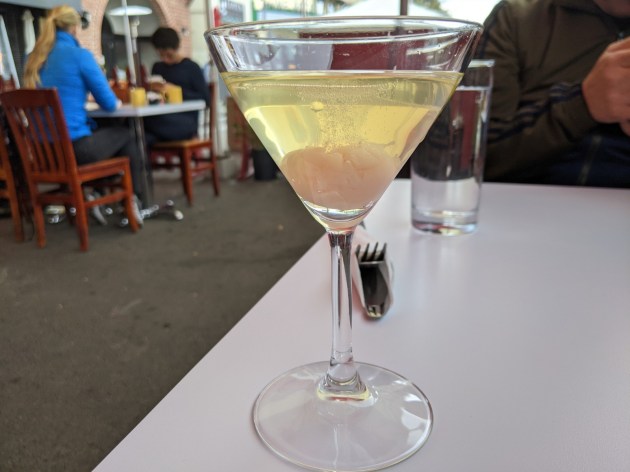
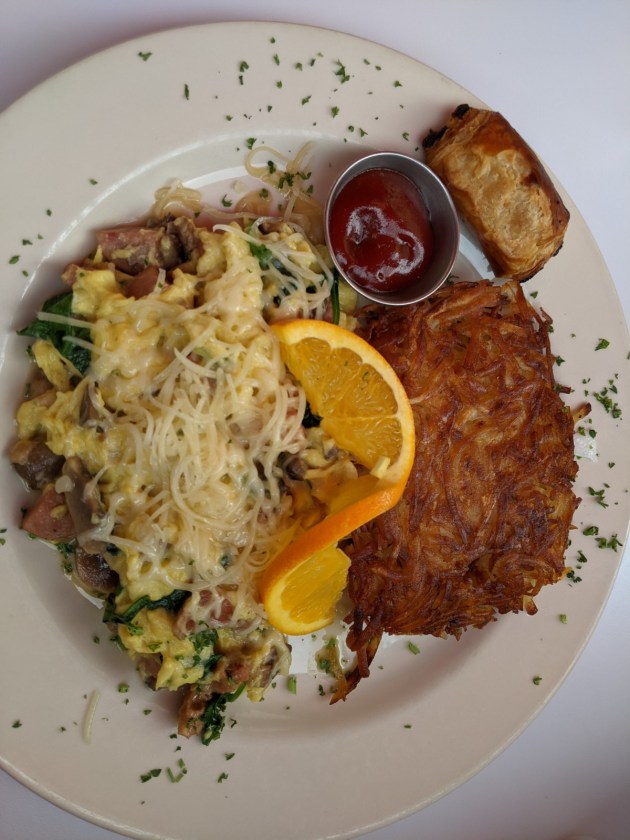
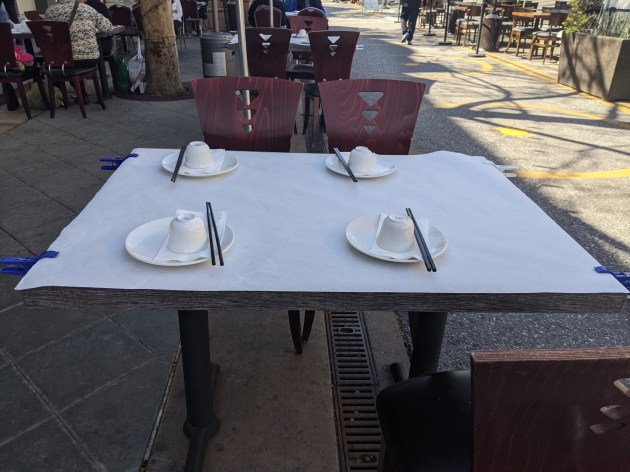
The Biden government and the vaccine situation have shown us some light towards the end of the Pandemic tunnel. This month, My husband and I visited the downtown of Mountain View, Sunnyvale, Palo Alto, Los Gatos, San Mateo and Menlo Park to experience the different outdoor dinings in each city.
During the pandemic, I have been able to read a few all-time classics used to be on the reading list during my retirement years.
Anna Karenina by Leo Tolstoy
In my high school years in Hong Kong, the high school had roughly half of students studying science (aka STEM) subjects, and another half studying art subjects. There was, and probably remains, a hierarchy in subjects where science subjects have often been ranked higher in the overall curriculum. Often considered among the greatest literature of all time, the novels by (Leo) Tolstoy were squarely reserved for those studying English literature, a subject for the art students.
Married to a powerful man Alexy, Anna was beautiful, charming, tactful to almost manipulative, and lived a perfect life until she met Vronsky. Vronsky lived his glamorous life until he desperately fell in love with Anna. Levin, an idealist and an intellectual who preferred living a real life in his farms and with the peasants, was devastated when his proposal to Kitty was not accepted. Kitty, the ex-lover of Vronsky, recovered herself in a sanatorium, and re-discovered her love for Levin. The pursuit of love, by these protagonists, changed everything for them; and reflected how the disparity of the society in the treatment of Anna and Vronsky in their affair. The plot acted as a conduit to write about the society and the protagonists. The power of “Anna Karenina” is in how well Tolstoy wrote about their emotions and how well the characters brought you to the society of the time. Reading the book is getting to know these characters – their inner thoughts, their expression of their thoughts which often were contradictory to their inner thoughts, and the doubts in their pursuit of love and purpose of life. It transported the reader to the society and witnessed the lives and the life events of the people from peasants, landlords, soldiers, public servants, and politicians. The pain, anguish and terror of Levin, in enduring the long labor process of Kitty, was arguably the best ever description of father-to-be experience, that dark side has been so seldom told. The visceral tortune in living through the long hours towards the inevitable death of Levin’s brother was powerful, vivid and absorbing. Anna’s heart-wrenching struggle, in her hopeless affair, could only lead to one inevitable outcome in her once perfect life.
The book leaves me wondering if science represents a certain understanding of nature and species, then literature gives us a multidimensional view of our beings from the past to the future.
The Element by Sir Ken Robinson
Often considered as the most watched Ted Talk, Sir Ken Robinson has been a strong advocate of education reform to cultivate curriculum diversity, ignite students’ curiosity and awaken learners’ creativity. His Ted Talk “Do schools kill creativity” is both entertaining and educational, and I could not recommend more.
The element is that intersection of the things(s) we enjoy doing and the thing(s) we naturally do well. Many run through their lives without discovering their elements. In his discourse, Sir Robinson believes finding the elements are both possible and crucial. It is never too late, just like Julia Childs discovered her element in French cooking in her fifties. To discover our element, we need to rethink the possibility, find our zone in things we enjoy doing so much that we lose track of time, meet others with similar passion, and open for help.
Full of examples, ideas and inspirational stories, this is a great book for all parents and educators.
I learn first hand even if we, parents, put in our best effort to help our children to discover their elements in the most personalized setting, there is no guarantee for success.
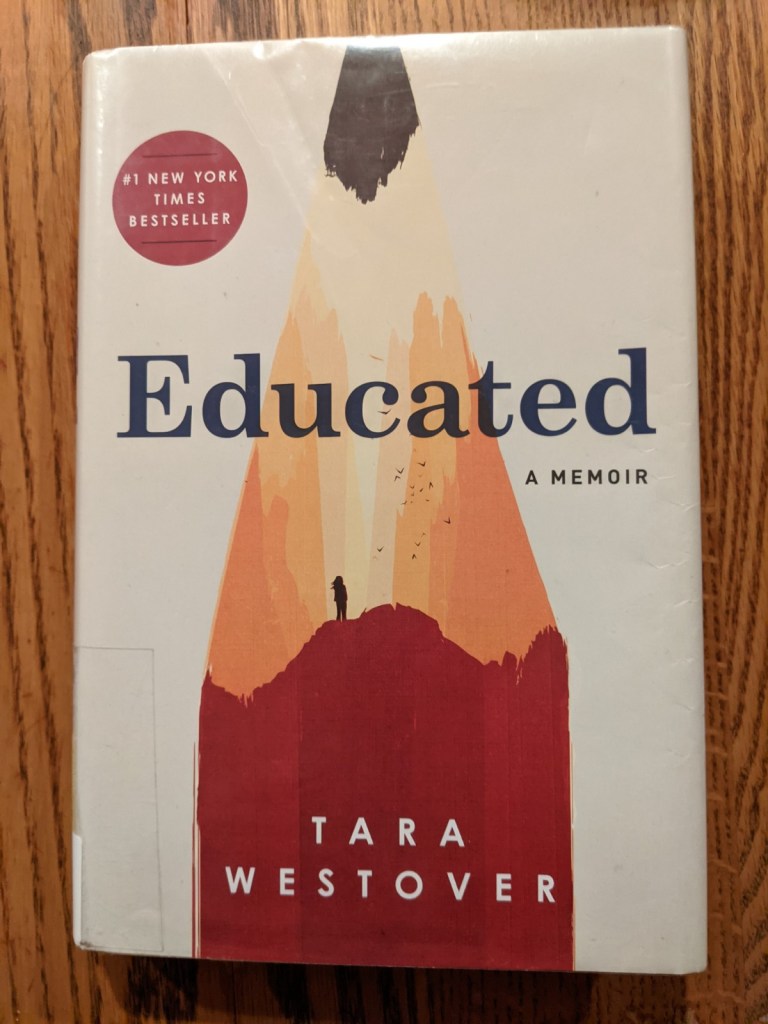
Educated, a memoir by Tara Westover
Born and raised in Idaho in a large family, the author has been isolated from the society. Her parents do not trust the government, do not go to medical facilities, do not allow children to go to school and her father believes himself to be the Mormon prophet and has the strictest code of conduct for his children . He dominates the family with his long lectures, and his religious doctrines to the level of abuse. He loves his children in his own distorted way, and tolerates abusive behavior of his sons. Her family has been the whole world for the author, until she miraculously found her way to attend BYU. Through her hard work, her intelligence and her persistence, she was awarded scholarships to Cambridge and Harvard, and earned her PhD from Cambridge. The more she got into the mainstream society, the more her parents saw her as being possessed and became a disgrace for the family. Would she compromise to remain in the distorted worldview of her father and have a family to go back to? Would she stand up to the values she acquires through education? This is a memoir of her struggle, her courage, and how she makes different choices as she becomes educated.
Education changes who we are and what we would become; so do our family, our upbringing and our culture. It pains to read the struggle the author has to suffer between the evangelical view of her parents and the values that she learned through education.
It is a story of self definition and self belief through the power of education.
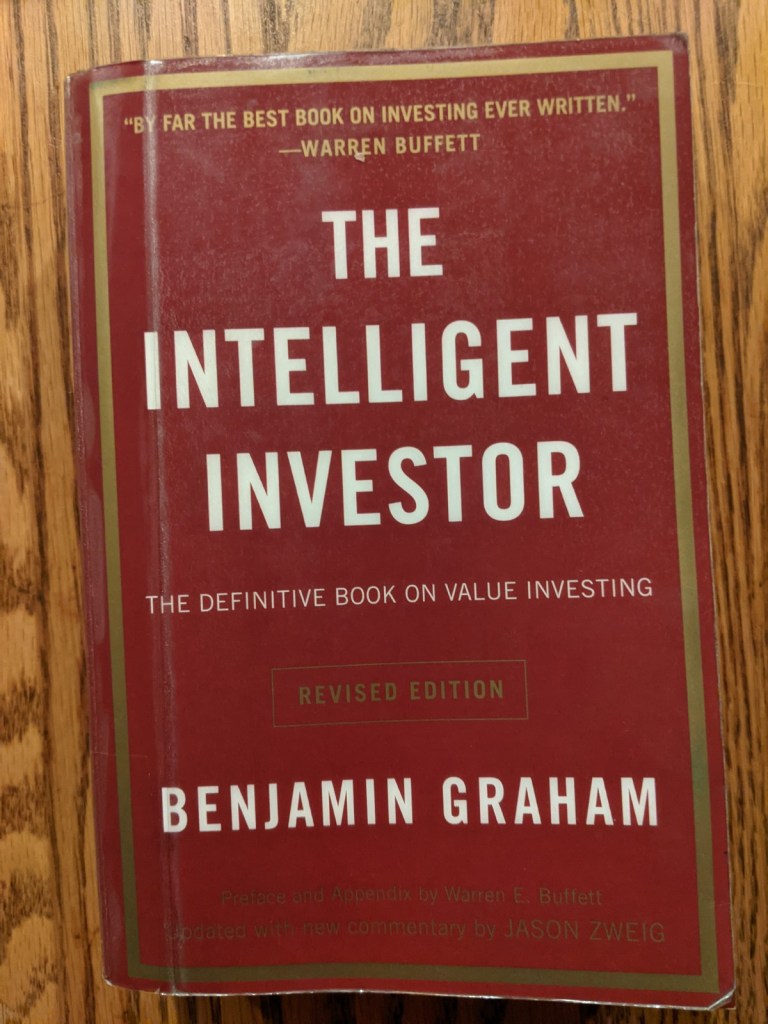
The Intelligent Investor By Benjamin Graham
Warren Buffett, one of the most successful investors, if not the most, said it all: By far the best book on investing ever written.
First published in 1950, the book has been a must read for anyone who cares about making good decisions on their finances. Mr. Graham wrote: “an investment operation is one, which upon thorough analysis promises safety of principal and an adequate return. Operations not meeting these requirements are speculative”; and “The speculative public is incorrigible. In financial terms it cannot count beyond 3. It will buy anything, at any price , if there seems to be some “action” in progress. It will fall for any company identified with “franchising”,computers , electronics, science, technology, or what have you, when the particular fashion is raging. Our readers, sensible investors all, are of course above such foolishness.”.
Reading his investment advice is like reading the answers to the questions that would come up in the final for the subject of “investment”. Yet so many continue to make the same mistakes, and (choose to) behave as speculators than investors.
Xmas 2020 has come and gone. 3.8 millions people passed through US airports from December 23 to 26, down from 9.5 millions in 2019 for the same days. Doing what we can, my daughter decided not to come home.
Thank you to the technology of online meeting . We managed some zoom meetings with friends. We did a Marathon family chat on Christmas Day. On Boxing Day, we got together online to unwrap our gifts together. “Santa” would normally have gifts for children; and this year, that “Santa” donated the gifts to the needy.
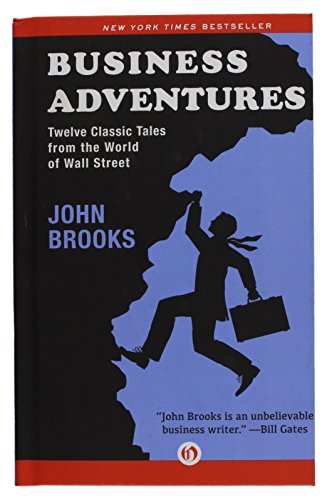
Business Adventures By John Brooks
The book has twelve classic tales from the world of wall street. Published in 1969, John has this gift to turn all kinds of complex happenings into engaging narratives with interesting characters and sustained implication to modern worlds. In doing so, each tale is memorable. The tales of “Xerox” and “the fate of (Ford) Edsel” are insightful for anyone developing a new product. The tale of taxation is super educational for taxpayers esp. how few of us ponder how we get into this mess of complexity. As an amateur investor, I thoroughly enjoyed the tale on insider trading and the devaluation of British pounds. The judicial ruling in the “One Free Bite” tale in 1963 on intellectual property and employment change is still relevant for the millions who are working in technology, innovation and research.
This book is among the best reads for the year. Bill Gates once said, “Business Adventures remains the best business book I’ve ever read.”
Creativity, Inc. By Ed Catmull
My senior leader(s) at work is reading this book, so am I. Creativity is important in new product development, it is difficult to cultivate and possibly harder to sustain. Steve Jobs acquired Lucasfilms in 1986 and created Pixar, and the journey of Pixar is one of sustained creativity and excellence.
Picking from his presidency at Pixar and later also Disney Animation, Ed Catmull is no doubt a savant in the world of creativity. Drawn from decades of learning and experience, he shared an abundance of wisdom towards sustained creativity and excellence.
Unleashing creativity requires leaders to loosen control, accept some risk, trust colleagues to own/solve problems, to clear path, to discover hidden items, and to pay attention to anything that creates fear.
Sustained creativity is a very complex, active and ongoing process. This book does not offer short-cut or ten set steps to get there. The last chapter “starting points” offers some prompts. As the author said, “the trick is to think of each as a starting point, as a prompt toward deeper inquiry, and not as a conclusion”. I benefit and would like to experiment some ideas, and you would too.
The book would not be complete without this chapter “the Steve we knew” whose vision and sponsorship is arguably the single most important factor for the success of Pixar.
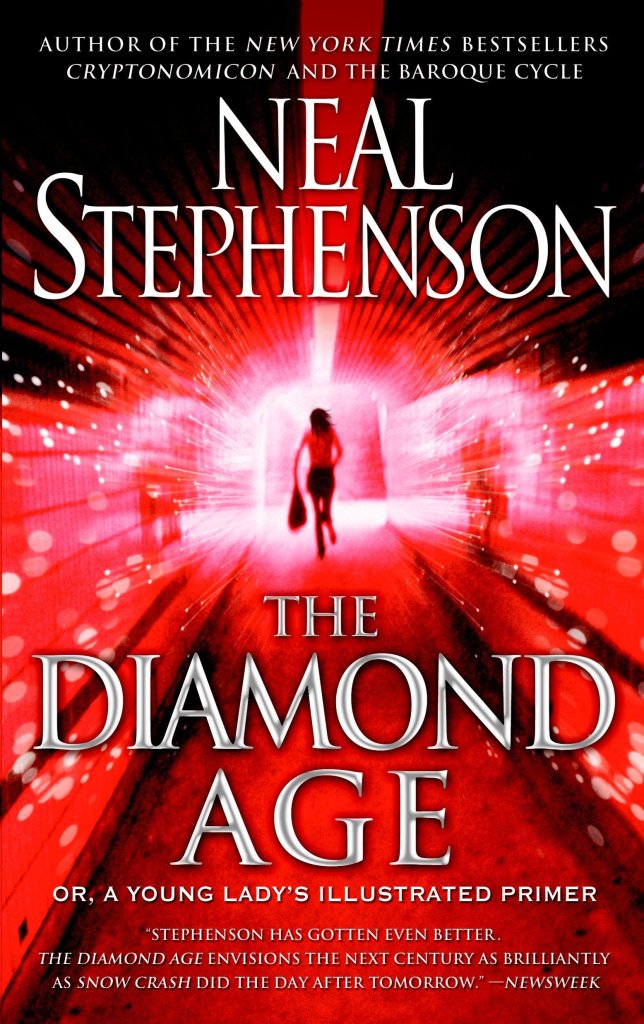
The Diamond Age By Neal Stephenson
I recently joined a product group to democratize education and inspire learners.
This book has an interesting spin on personalized learning through a super intelligent device based on the environment and experience of the device owner. Through the device, the main character acquired a tremendous level of knowledge on her own, and has become a “heroine” to change the world. That part is interesting and promising.
There are quite a few futurist speculations such as nanodevices for everyday life, material replicators that could fulfil our daily needs, the floating skyscrapers, the exchange of minds and the world organization around like-culture, like-minded “tribes” more so than countries. There could have been potential to develop an amazing story. Yet the plot is rather a mixed pot of many things going on, but not neatly tied together. Together with weak character formation, it is hard to relate to the story nor the characters. Then the plot carries an undertone of tribes stereotypes , such as tribes similar to “high class british”; and some undertone of disrespect to tribes which are more like “the Chinese in the early twenty century”.
All these have left me a dose of bad taste for the book.
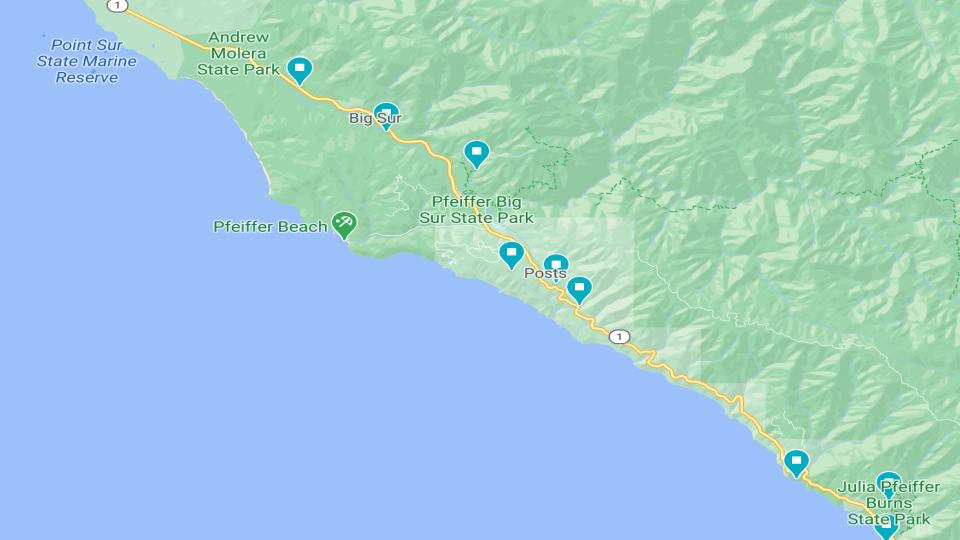
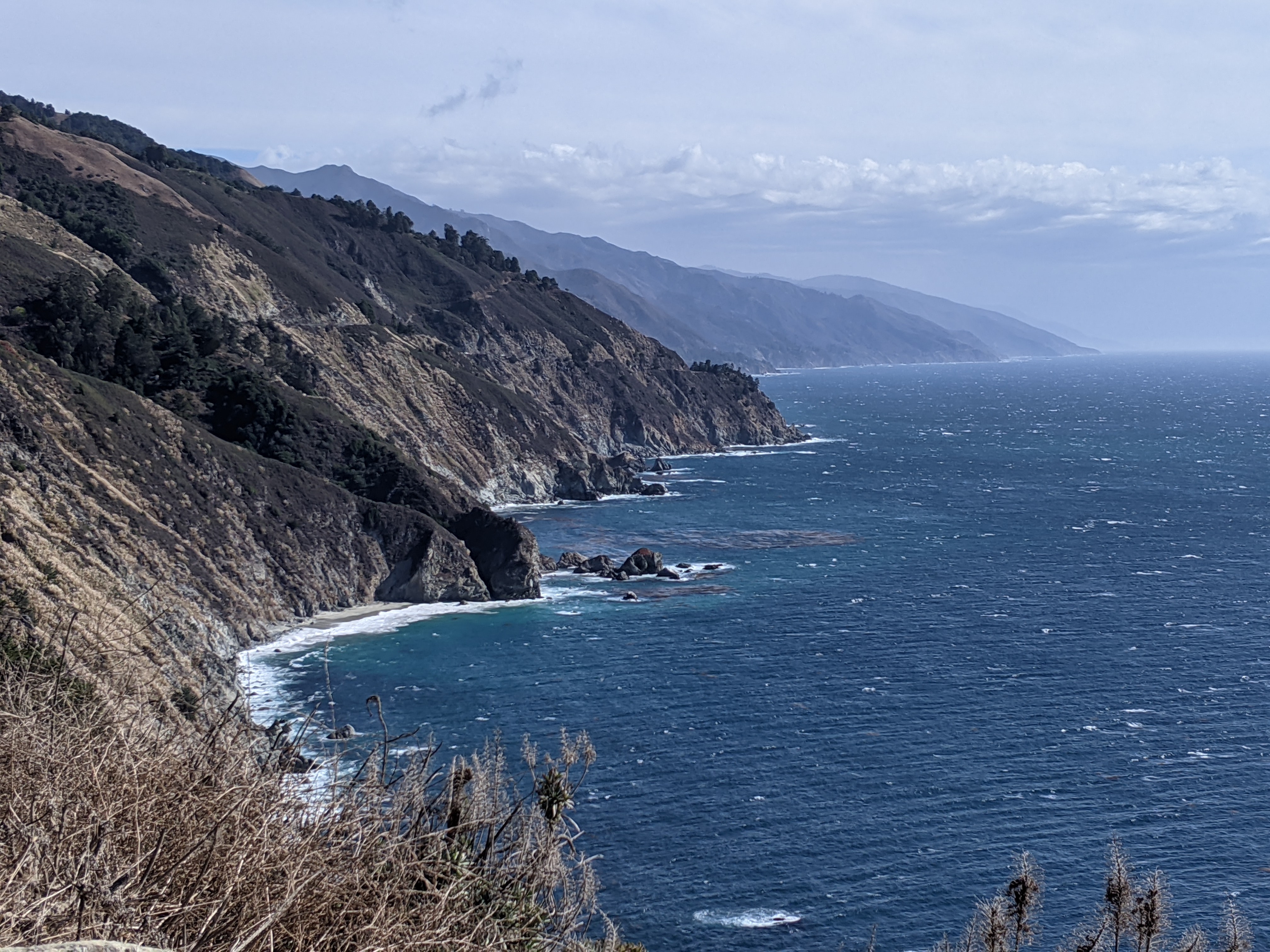
Big Sur has no Wi-Fi nor internet service providers. It was annoying and the lack of connectivity took some getting used to. I would remember this Big Sur trip as a memorable social media retreat.
Day 1 November 5
Two days after the Presidential election day, many states were still counting votes. I cared about the results and had election stress. Watching the news all the time did not get me the news faster, nor would it change any results. The true winner could well be the media as the election day dragged into the election week.
Carmel-by-the-sea is a 90-minute drive from home, through the highway 85, 17 and 1. It was a Thursday, and the place lacked the usual touristy feel. We had an outdoor lunch at an Italian restaurant. It served a scorching hot wild mushroom risotto that I had to wait some time before I could ingest the Arborio rice. The risotto was super creamy, mixed well with the mushroom, truffle and Parmigiano Reggiano; it was absolutely delicious. The portion was large and heavy with the cream, so we ended up enjoying the leftover in the next couple of days.
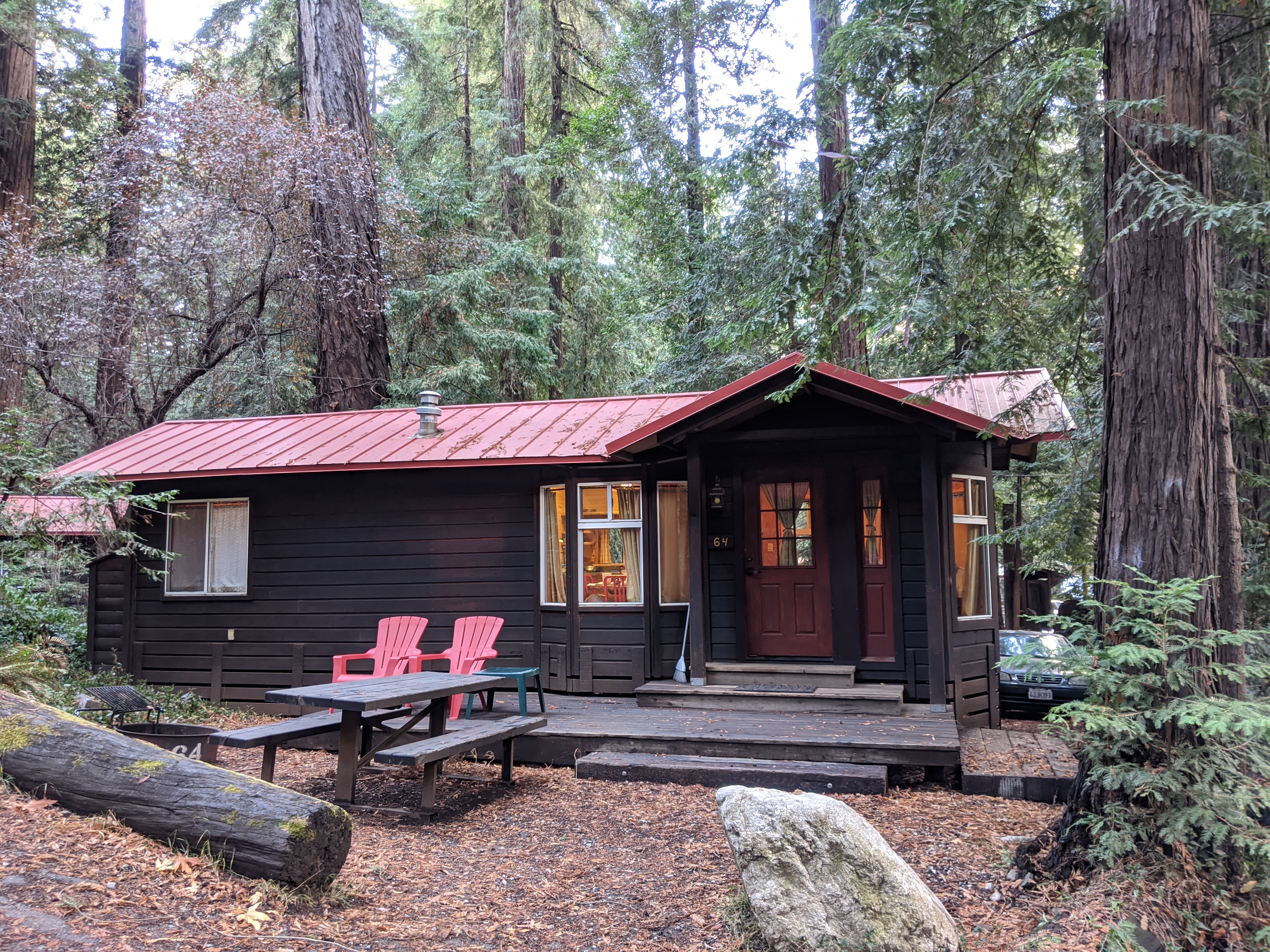
Big Sur is about a 40-minute drive from Carmel-by-the-sea on the winding highway 1. As we entered the Big Sur, we could smell the fresh redwood scent in the humid ocean air. Our cabin was a lovely cottage among the redwoods. It delighted us with its internal decor and made a super comfortable home. We explored a number of grocery stores in the 5-mile radius, there were basic supplies and household items, but little fresh produce nor meat. I used four quarters at a payphone to call our daughter who just got back from a trip in Cuenca, Educador. This was like going back a decade when we called each other by phone, rather than the messaging app.
We lit up some firewood outside of our cabin, had a super early dinner before retiring for the night.
The only thing that gave us updates about the election news was the poorly-received AM radio station on our car. Time has a different rhythm without the attention grabbing internet technology.
Day 2, November 6
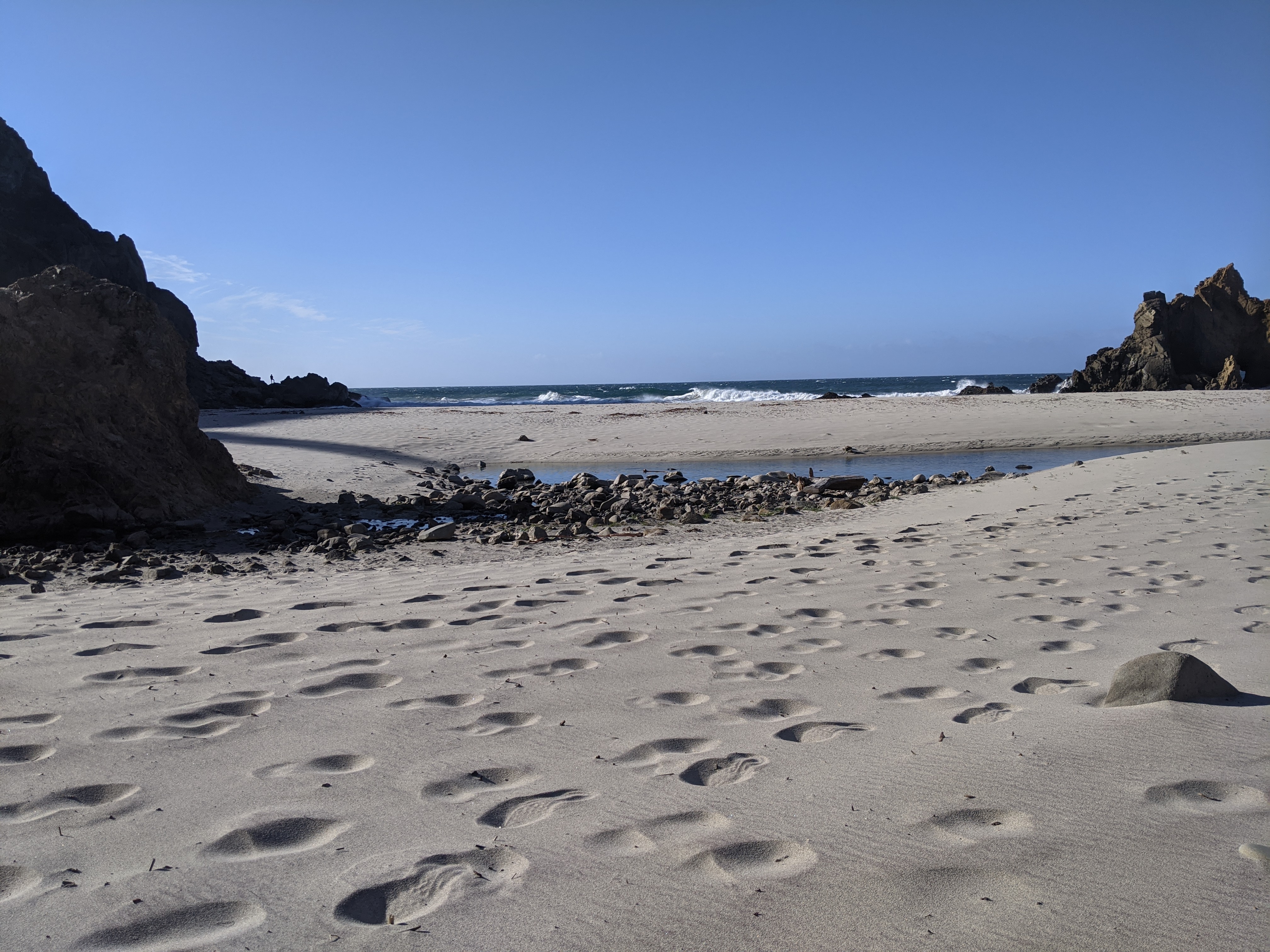
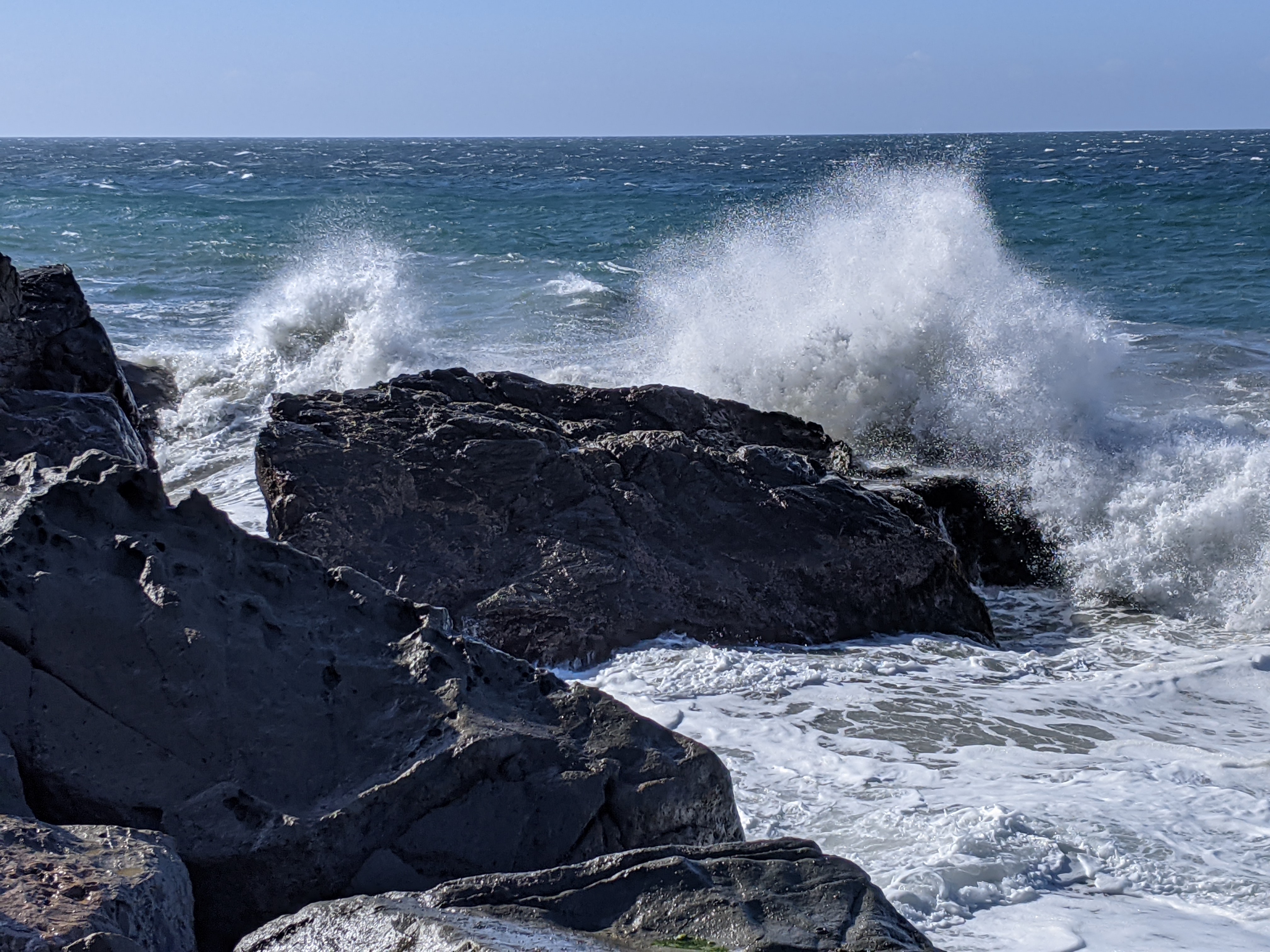
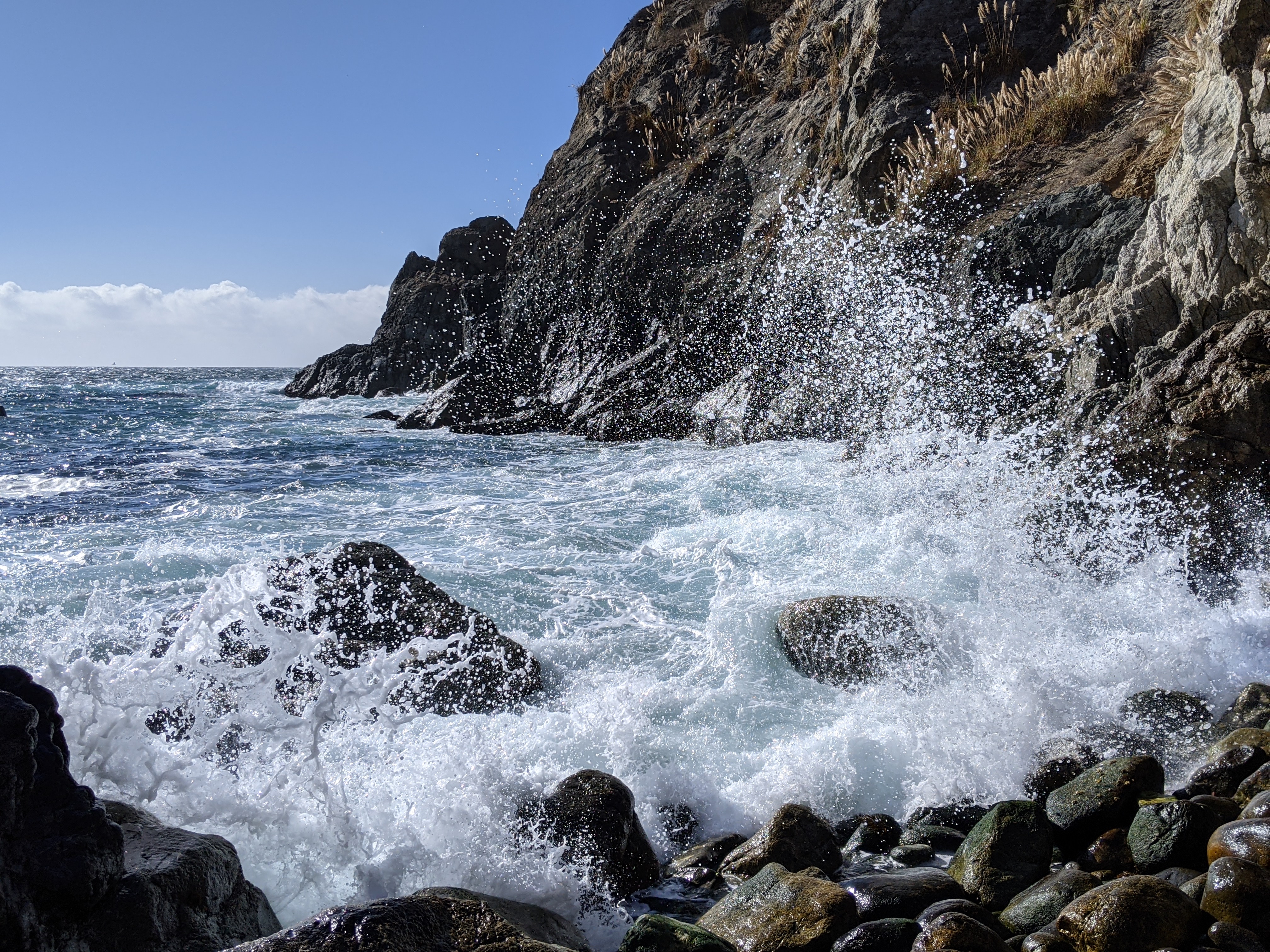
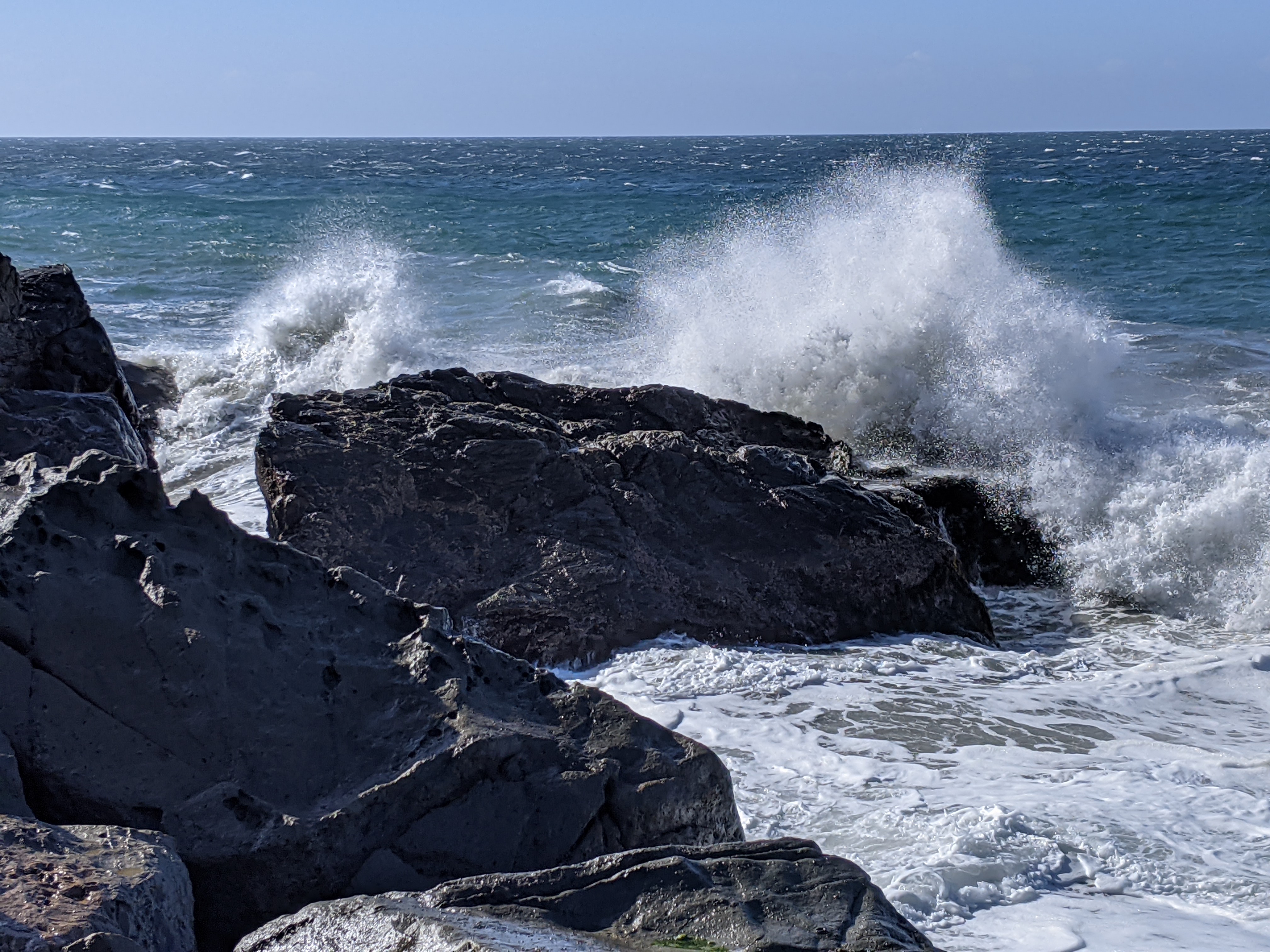
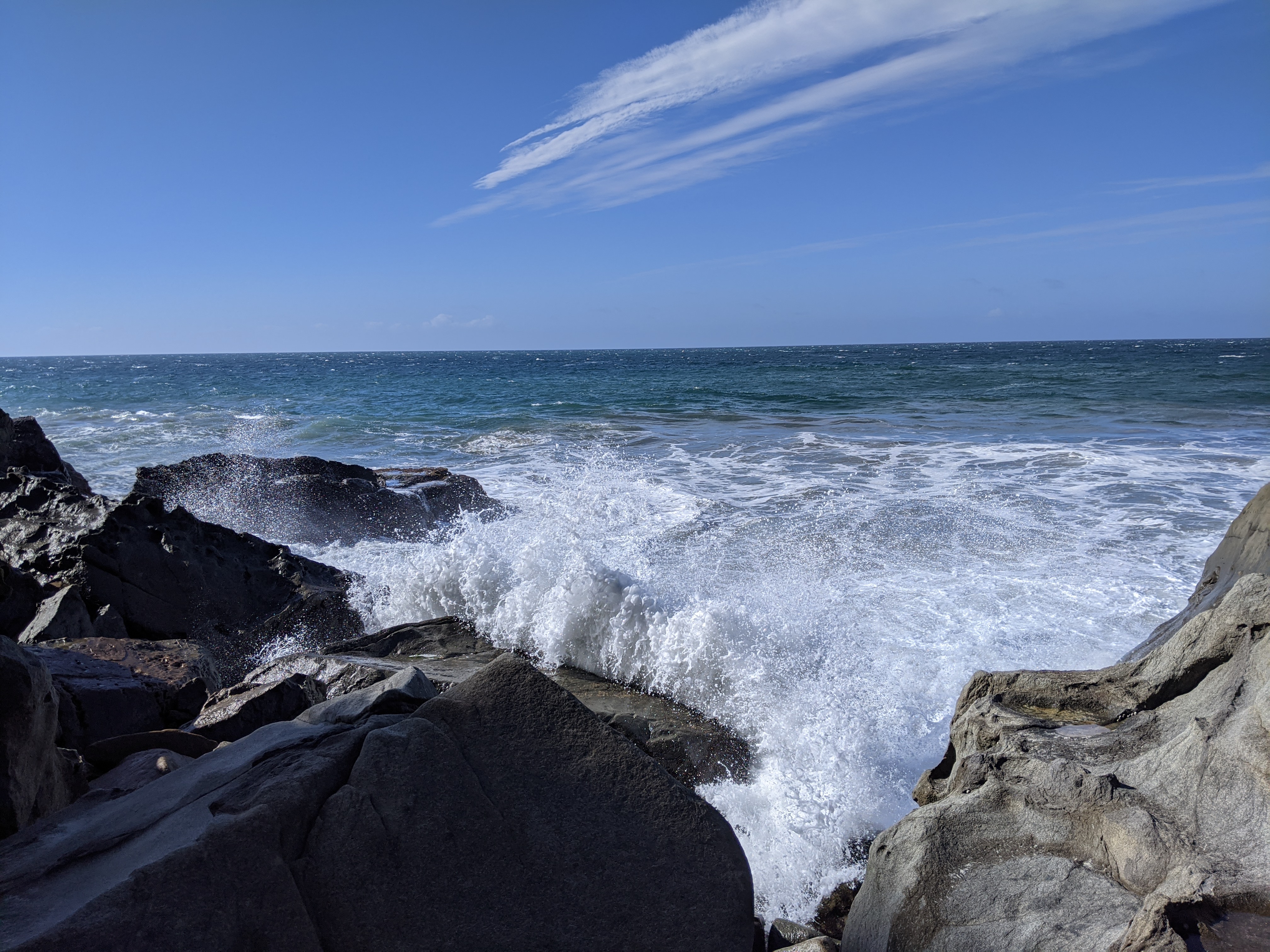
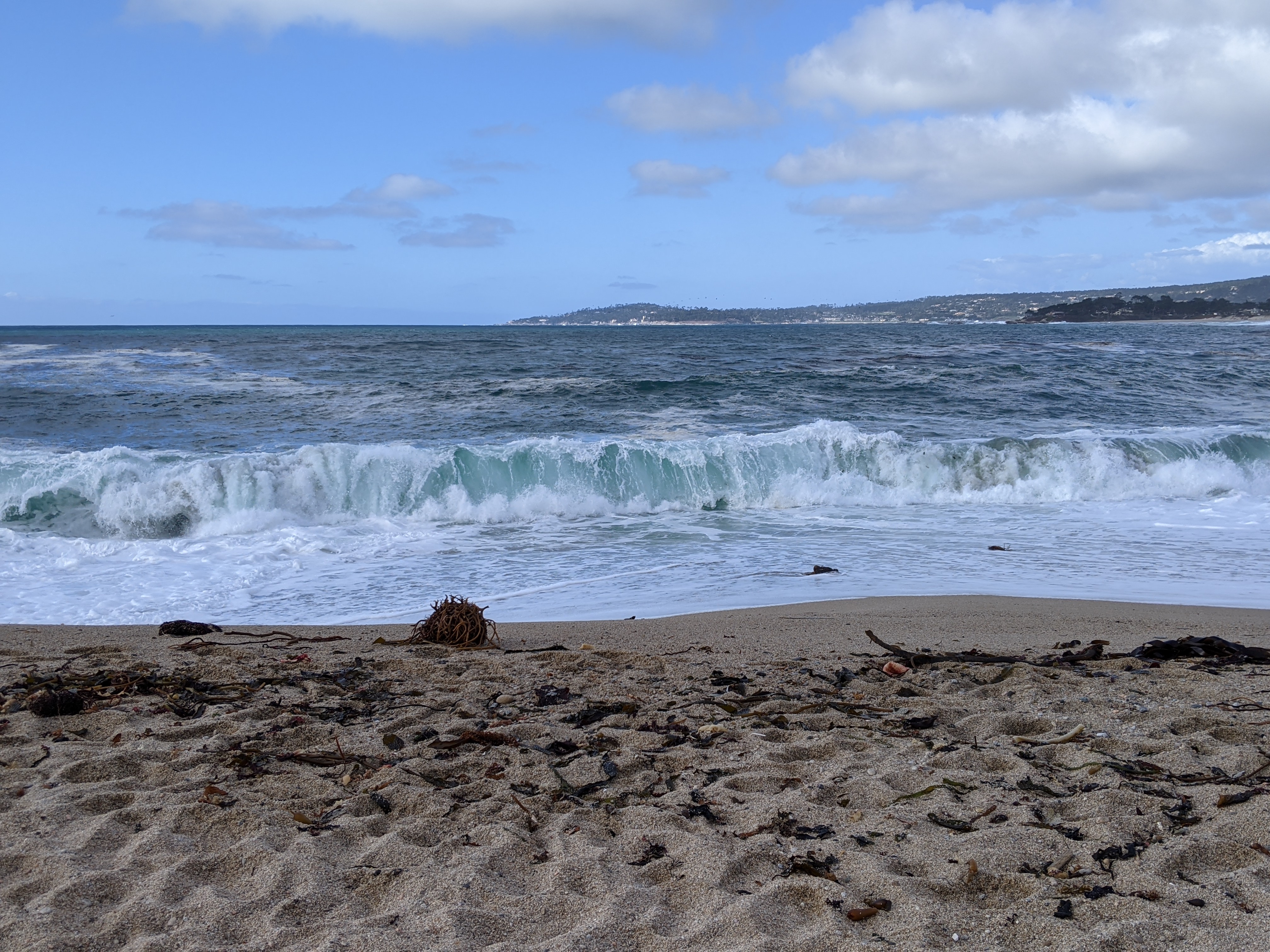
After a home-made breakfast in the well equipped cabin kitchen, we went to the nearby Pfeiffer Beach, for its pacific ocean view and its purple-colored sand. There were few travellers in the early morning, we brought along our own beach chairs and enjoyed the whole Pacific Ocean View. The close-up ocean waves, the rhythmic wave sounds, the splashing attack of the waves to the rocks were such reminders of the power and greatness of the Pacific Ocean, and of the Nature. The strong winds from the Pacific stirred up the sand, it was a rough beach, we enjoyed the ocean with nothing between us and the ocean.
We continued driving south on Highway 1 and arrived at Nepenthe for an early out-door lunch. Sipping a spicy bloody Mary and an after-meal Coffee with Brandy, with a hard-to-beat ocean view, life was good amidst the pandemic.
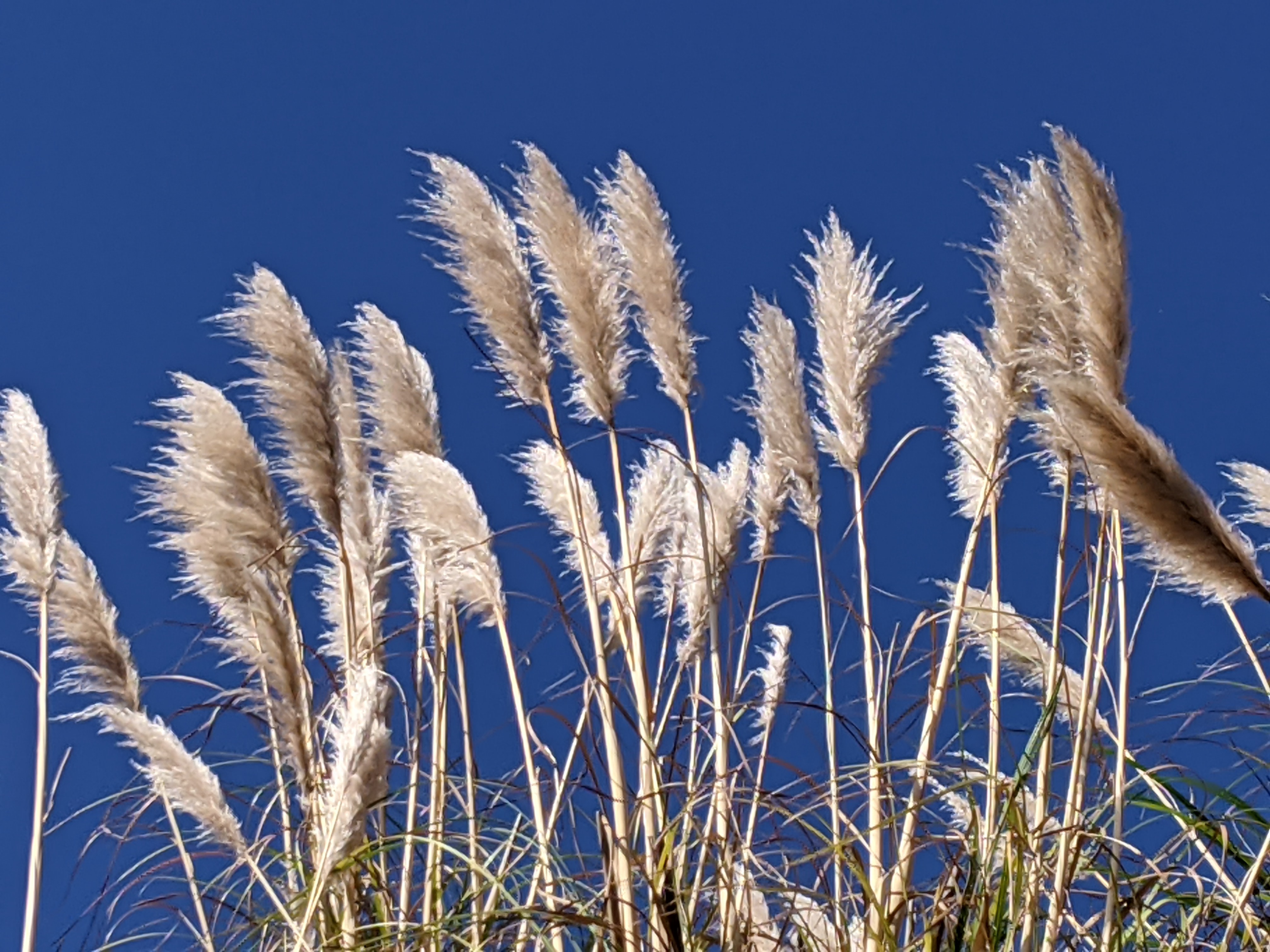
We drove further south only to find the Julia Pfeiffer Burns State Park close to the public due to recent fire. Disappointed, we went for a short hike down to another Oceanfront and were rewarded with the scenic pampas grass blossoming over the hill.
On our way back to the cabin, we stopped by the Henry Miller library, it was an interesting detour.
We continued our early dinner and retired to bed much earlier than usual.
Day 3, November 7
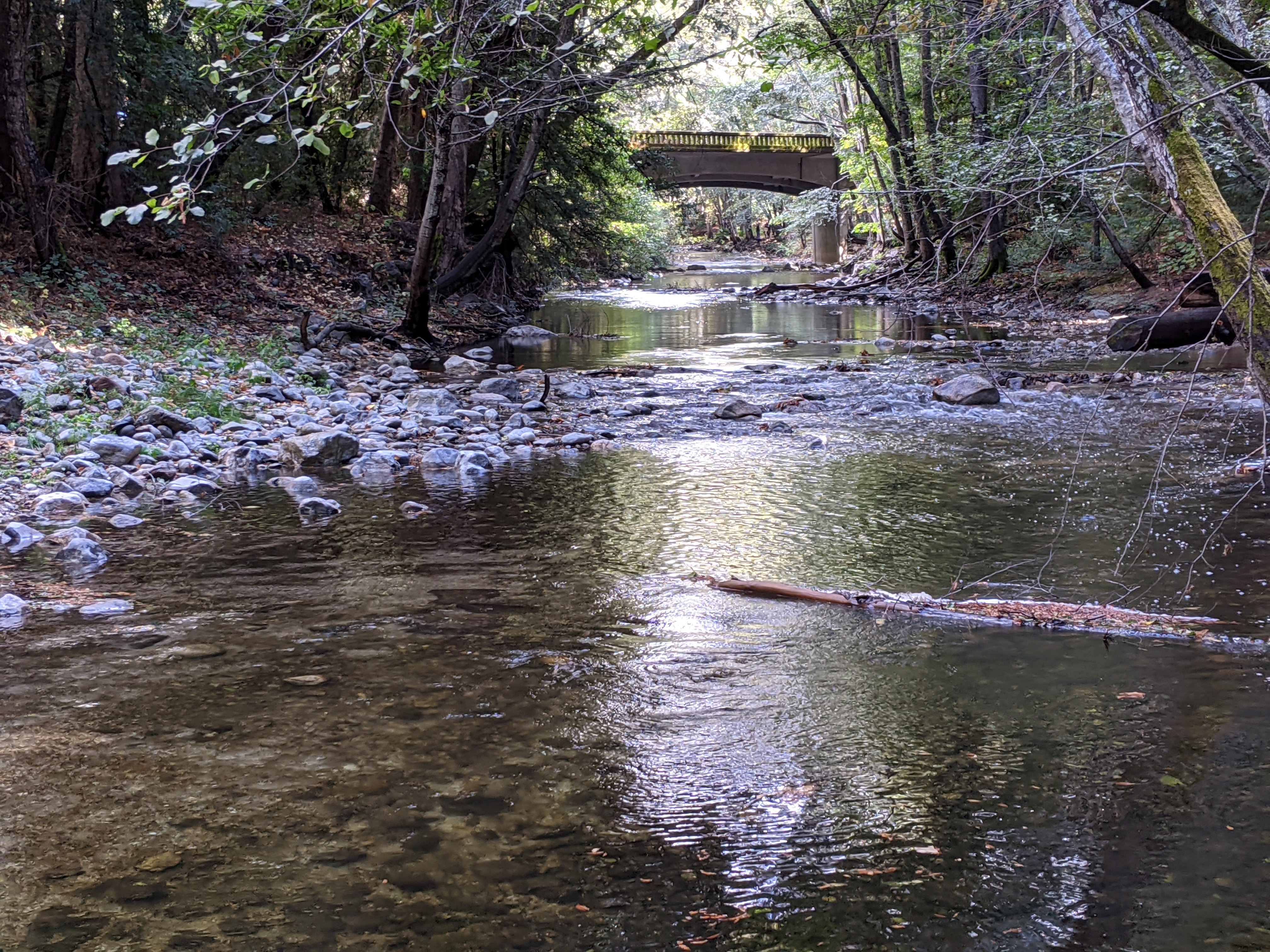
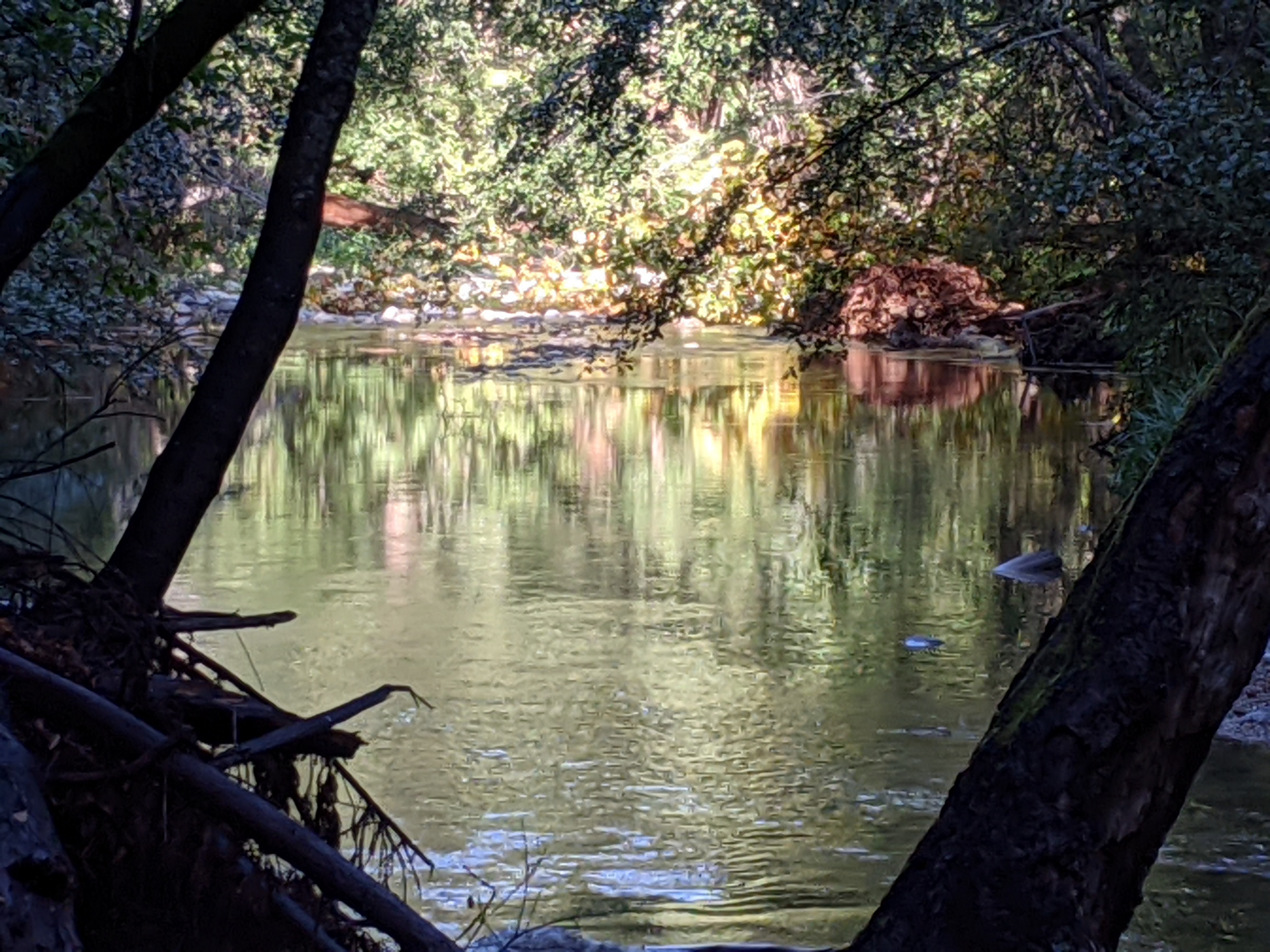
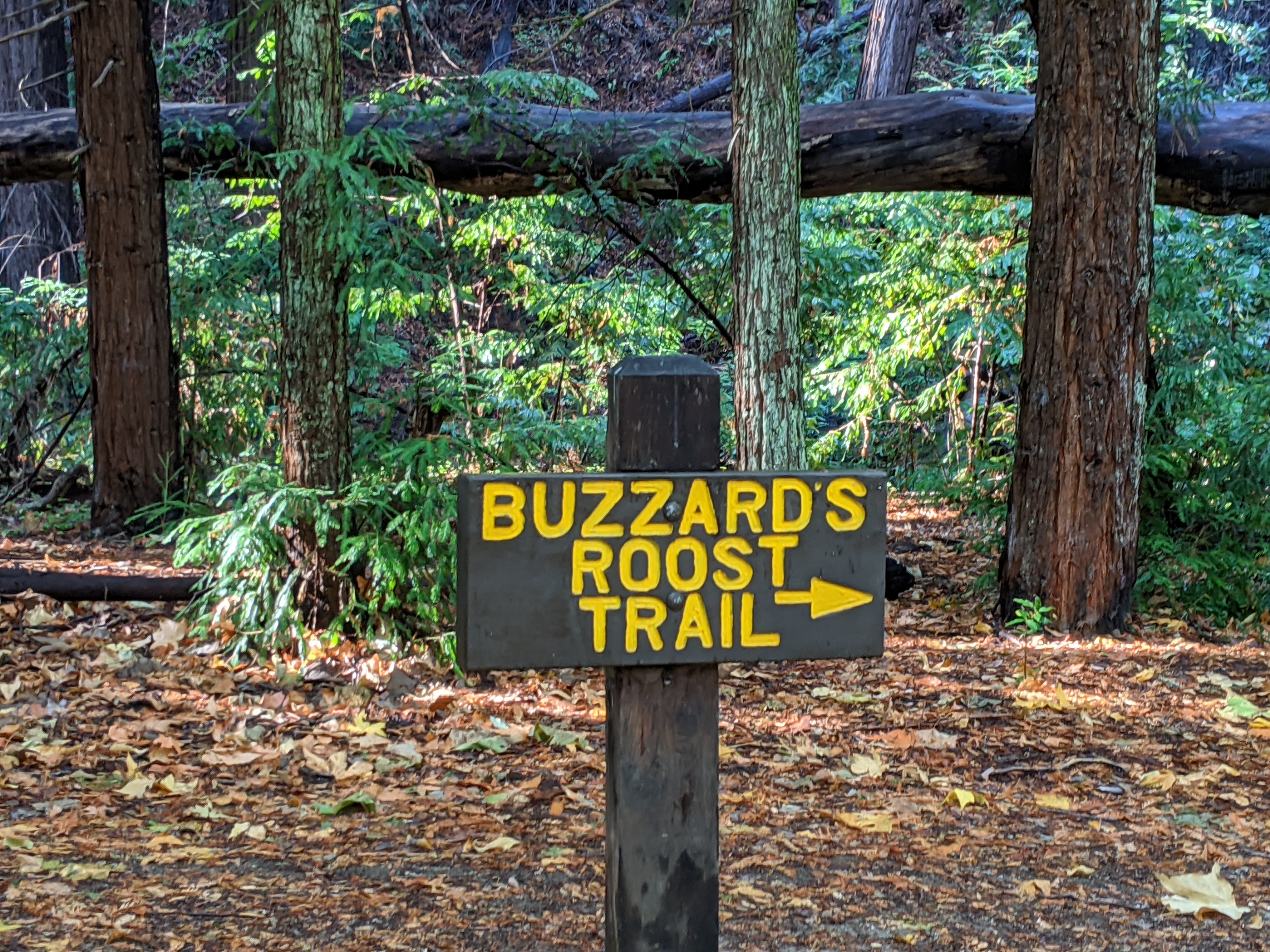
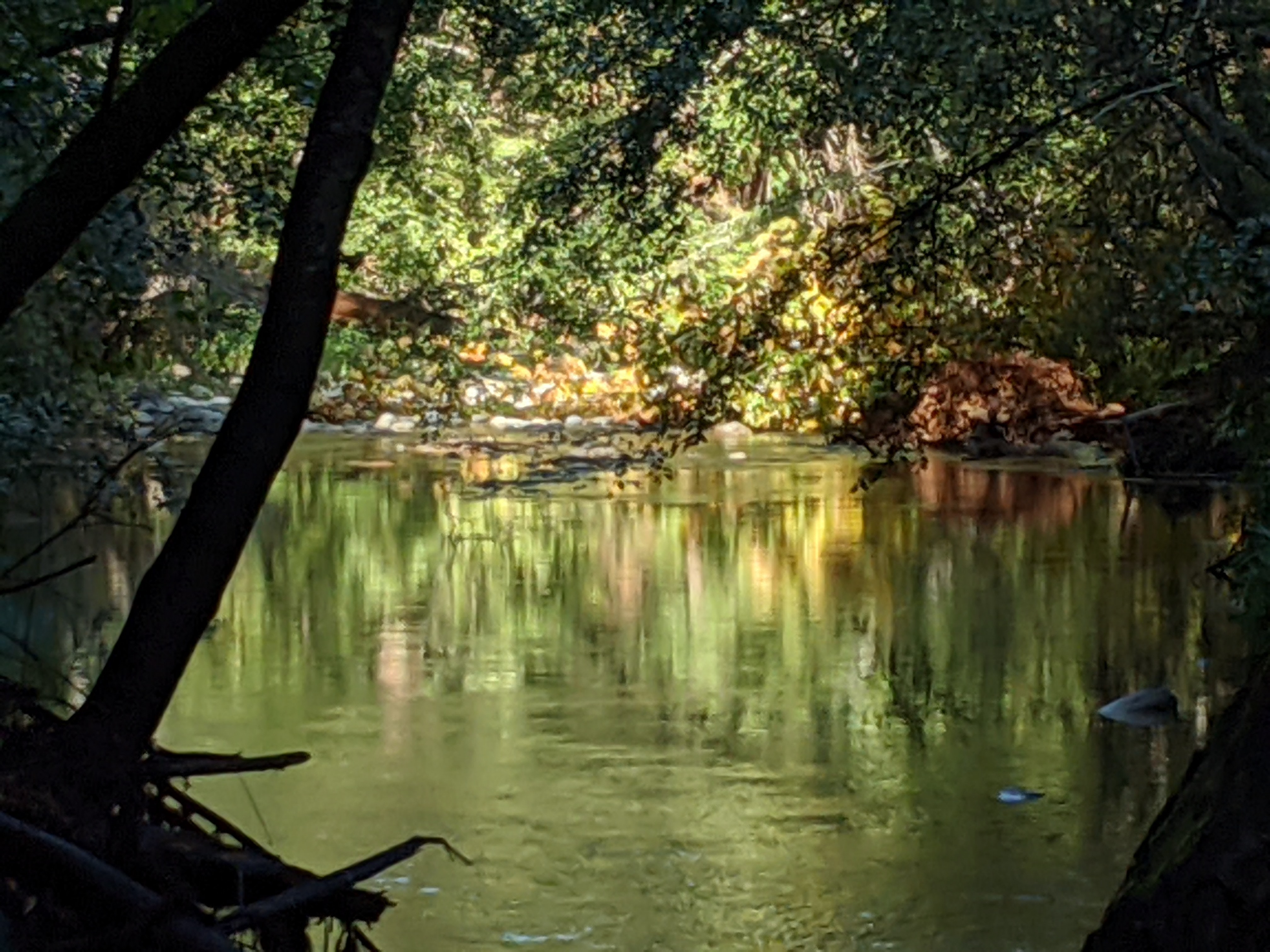
After another home-made breakfast, we went for a hike. Just when we felt that there were less animals and birds chirping among the redwoods, we were lucky to see a deer and a fawn which seemed to be as curious about us as we were about them. We went for a 4-mile moderate hike up the Buzzard Roost Trail, through the redwoods and tackled the gradual elevation up the hill. It ended up with a rather mediocre view of the Pacific Ocean far in the distance. It was a good hike and the hikers were all disciplined about wearing masks and social distancing.
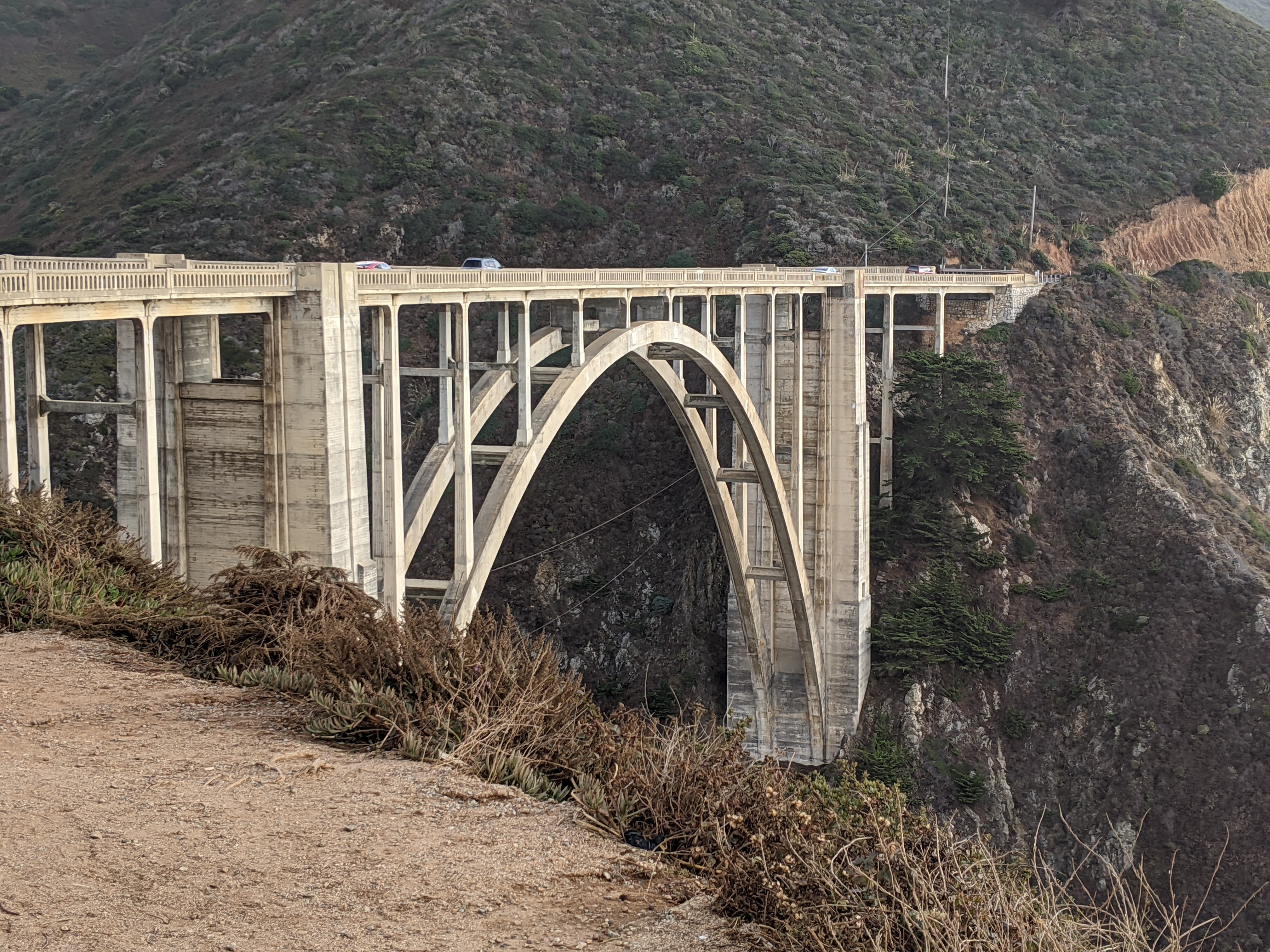
We had lunch at Carmel Crossroads, with an absolutely enjoyable outdoor scallop-fish-and-chip meal, as well as fresh oysters. Our spirits were lifted with the updates on the presidential election. On the way back to the cabin, we stopped to take pictures at the famous Bixby Bridge, we were far enough to see the grand view of the bridge above the rocky Pacific Ocean and the cliff above the water. My acrophobia was getting the better of me and left me in awe.
Back to the campgrounds, we shot some hoops and even had fun climbing the cargo net, only to find that we were no longer the age to get to its top.
We cooked T-bone steak and squash for dinner at the well equipped kitchen.
Day 4, November 8
Another short hike to the Pacific Ocean at the Andrew Molera State Park concluded our Big Sur trip. We stopped by Monterey for lunch, there was no crowd and it reminded us of the cold weather and the impact of the pandemic.
As we headed back to internet civilization, I made a pledge to not let my mobile phone take away that much of my time.
75 hours of Chinese history on Youtube make for great learning. In this 100-episode series, the first episode has attracted 1.4M views, while the last episode only earns 87K views. I highly recommend the series to anyone who wants to know more about the Chinese history. If you do not have time for the whole thing, there may be a few that could interest you.
The 1918 – 1920 Influenza killed tens of millions, and there was panic everywhere when very few were spared from its impact.
The Influenza happened at a time that US doctors were far less respected than their peers in Europe when Europe was consumed with the World War I. John chronicled the Great Influenza; and gave us a great account how some colossal figures transformed the US medical training and profession; and how the political climate profoundly affected the communication and the responses to the Pandemic.
It feels strange the book reads like the current Coronavirus pandemic in 2020. Is history repeating itself? We seem to be not any better in addressing the situation. Just like the Great Influenza, the political climate has overshadowed the medical judgement for a pandemic; just like the Great Influenza, the government cannot be trusted to put our health at the top priority; just like the Great Influenza, the politicians put blame on others regardless of evidence and is lack of.
This book tells you everything to know about the 1918 Pandemic and humbles us that we have yet to learn our lessons from it.
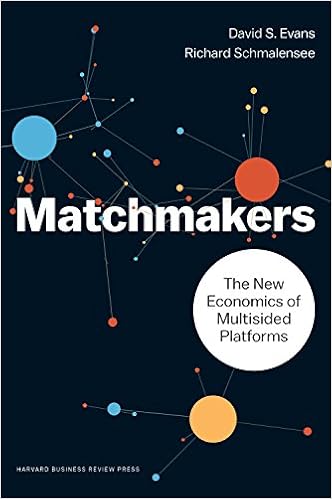
The Matchmakers: The new economics of multisided platforms By David S. Evans
I recently joined a product development group with the goal to build an ecosystem for voice computing platforms. Building a multi-sided platform is among the hardest challenges. The book explains the different considerations for a multi-sided platform from a regular product business and raises good questions to increase the chance of a multi-sided platform.
This book would be useful to those who are in the position to lead the development of a multi-sided platform.
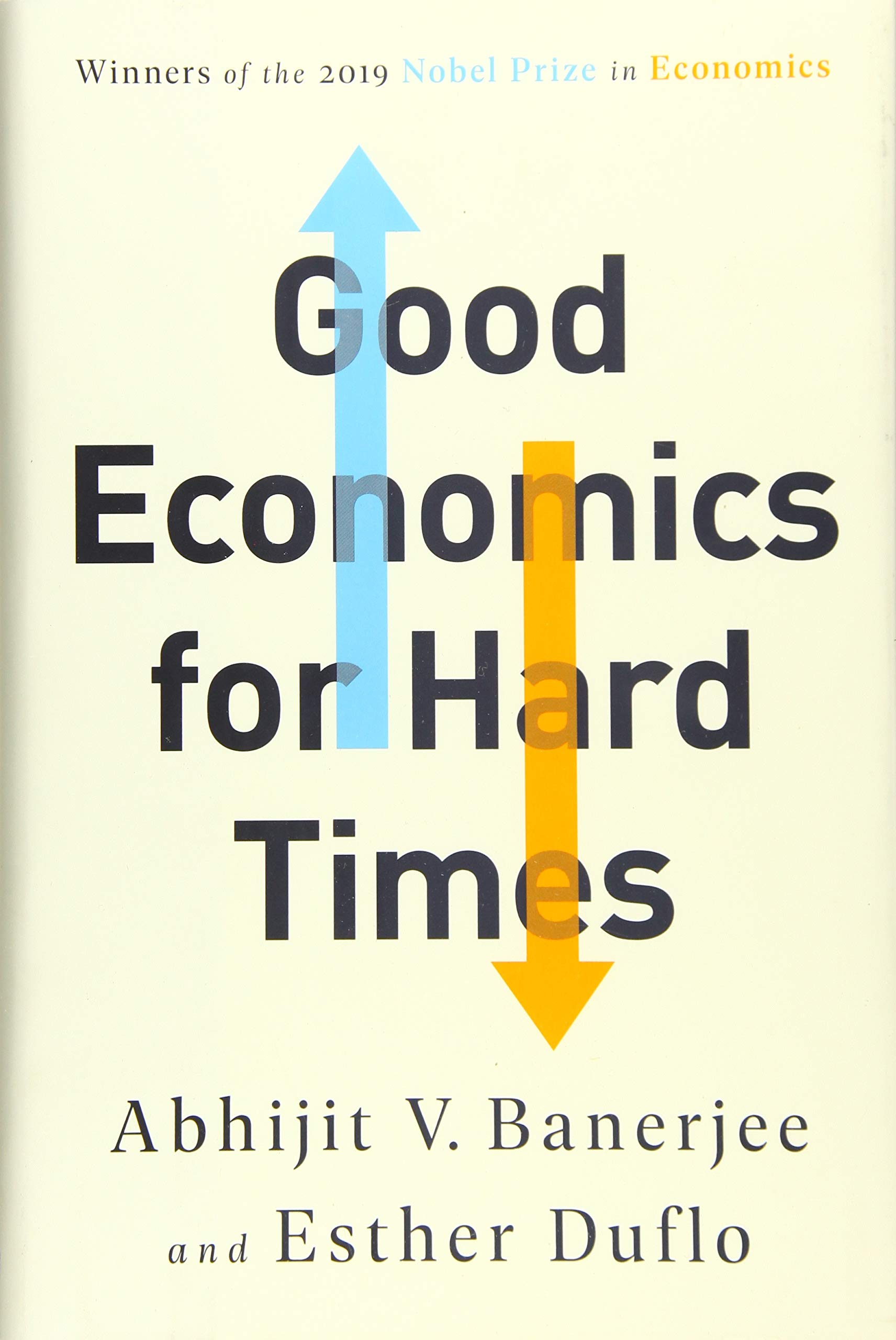
Good economics for hard times By Abhijit v. Banerjee and Esther duflo
Written by the 2019 Nobel prize winners in economics, the book gave an in depth look on a fairly broad set of topics: the social impact of global trade , the inertia of people to move for the better life , the unequal impact of global trade, the appropriateness of government intervention, the bias of society towards economic growth, the challenge of class mobility, the argument for universal basic income, the importance of any social welfare program to keep people’s dignity and respect in mind.
The broad brush on these economics leaves me dazzled with the impression there is just so much to be done to better the society.
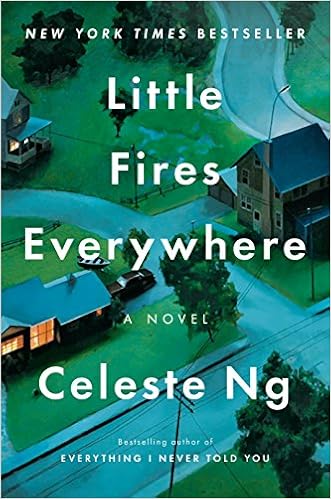
Little Fires everywhere By Celeste Ng
The story portrays distinct characters in two families, with contrasting ways of living & drastic differences in their approaches to lives: the so-called fit-ins and the outcasts. It provokes thoughts on hard choices between choosing a poor biological mother and an adoption promising a better life; the hard choices between a comfortable life and an uncertain life following the passion; the fear of losing someone vs the actual loss of someone. The novel has since been adopted into an American drama TV series. I enjoyed this book.
Restaurants, salons, gym in Bay Area continue to be mostly shut down from spring to fall. We are back to times without all these conveniences.
We do not need an office, I work from home. We do not need a gym, I can do stretching at home and jog in the neighbourhood.
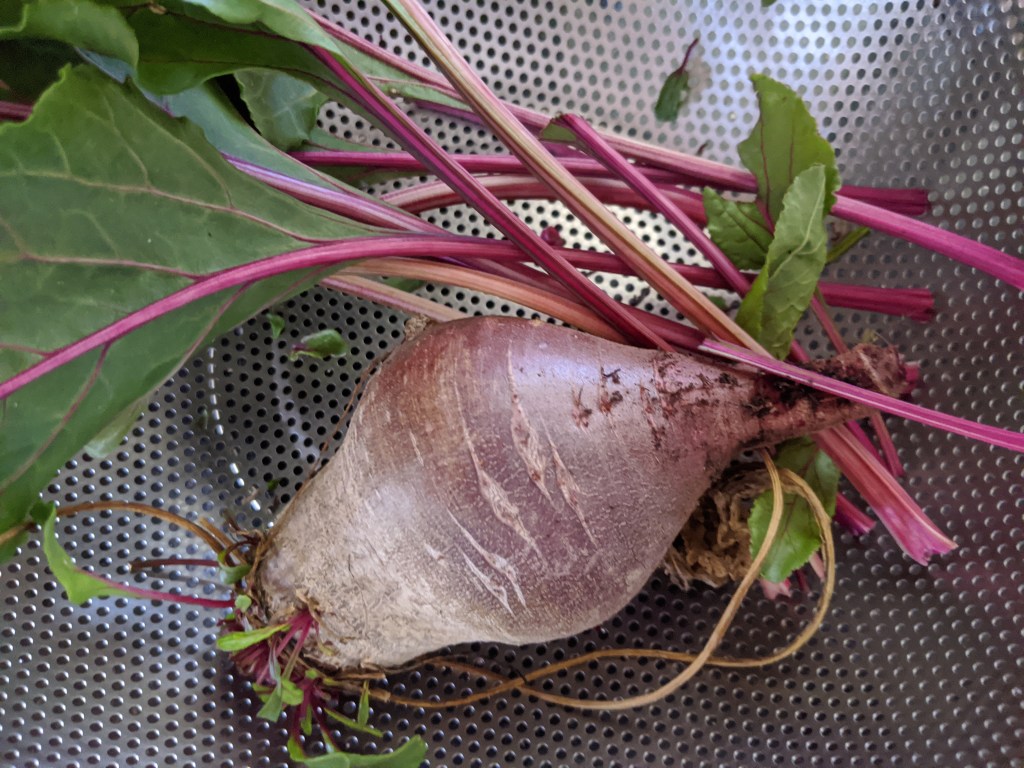
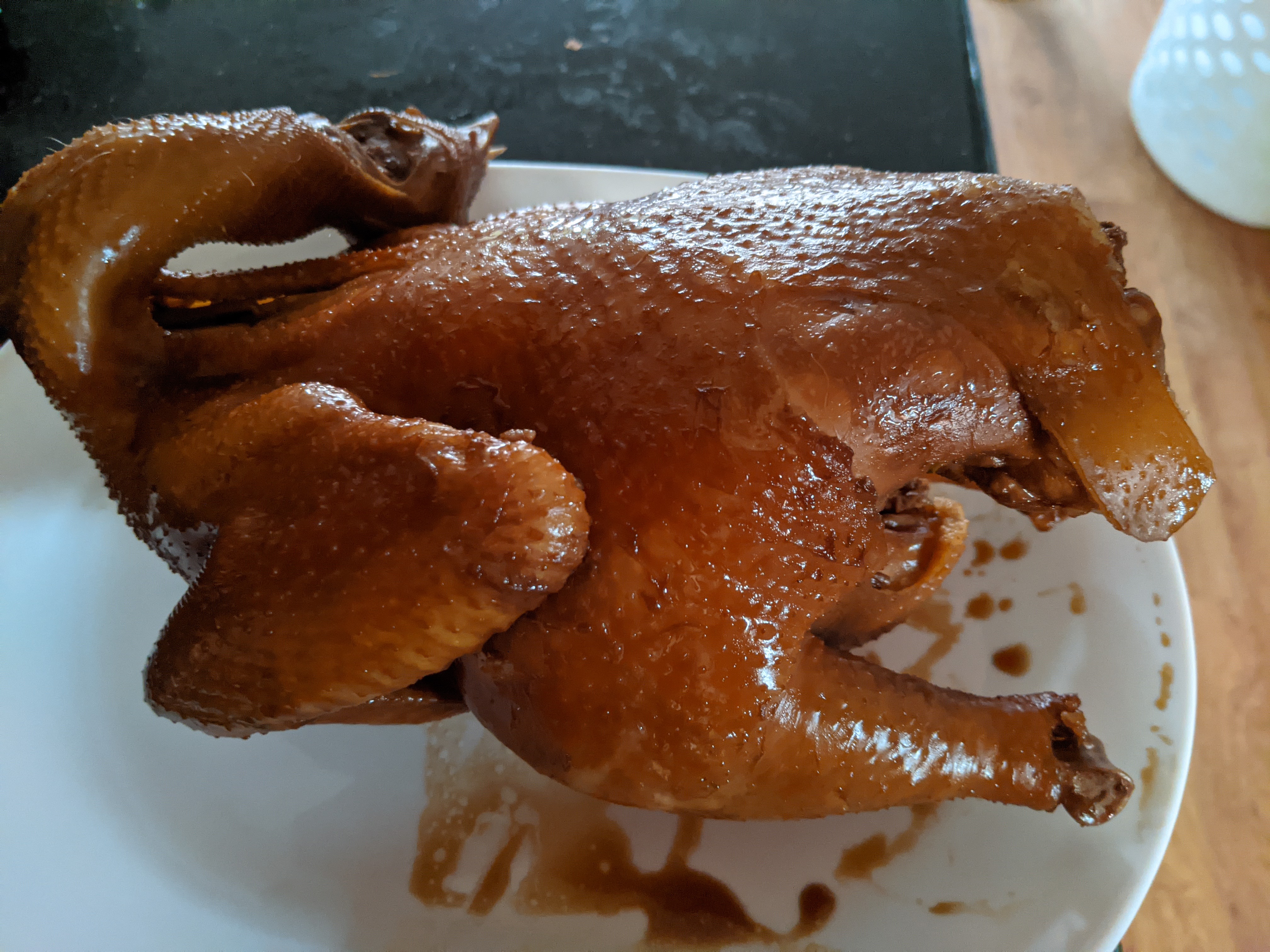
We prepare our own meals. Lunch is often a choice of instant noodles, dumplings sandwiches, cereal that I can prepare quickly. Dinner time, my husband cooks a complete meal as I finish up my work from home. On weekends, we try some new dishes to cook. My son has made ratatouille and pancakes from wheat; my daughter has made Dutch baby pancake with spiced plum, baked curry buns and pineapple buns; I have made paella rice, oyakodon, soy sauce chicken, my husband has created the sous vide duck leg and bbq pork . Cooking is a habit forming and is rewarding. Our kitchen pantry is all stocked up with tens of ingredients and seasonings; home cooking becomes more convenient than ordering take outs (bad for restaurant owners). We also have done gardening and harvested carrots, kale, rosemary mint as well as beet. I have used mint to make tea with honey, interesting but not gourmet. Carrots are so fresh to eat right after harvest. Most of the time, the harvests are used to cook or make soup.
We made our mask from bandana at the beginning when masks are nowhere to be brought. It was functional but not comfortable and we stopped making ours once the masks are available for sale. When the tissue paper was in high demand, we learned that the lamb’s ear that grows quickly in our garden could be a substitute, we never get to use that.
My hair used to be a low maintenance activity, still we need to cut it once in a while. With the salon shutdown stretching from weeks to months , the hair becomes more of a concern, so we also learn to help each other to do each other haircuts at home. That brought back memories of a haircutting class I took long long time ago. That class took place in a rather untidy studio inside an unassuming building in an average neighborhood. Every student was given a head with a full body of hair, every lesson we would trim it and practice different techniques. My fingers were clumsy, often I could not hold on to the hair, and ended up with a head that looks quite disastrous. It was humbling as I observed the better looking heads in the hands of my classmates. Fortunately the head was not for a real person, I could not remember if I finished the class or it looked so bad that I just could not continue with it, probably the latter. I concluded that I did not have the talent, that was in the years that we believed talents, not passions, are needed to be successful. With the pandemic, I just did a haircut for my husband using the modern multi grooming trimmers. The result looks reasonably tidy and neat , he can go meet friends though it is better to have no one looking closely. And what is the difference between a good haircut and a bad one ? Two weeks (hahahaha).
Amidst the adaptation and making the best out of the situation, I miss my hairdresser a bit more than the salon . I miss the coworkers at work more than work. I miss meeting friends in restaurants more than the restaurants. I miss going to places more than the hotels or airports. Nature once again reminds us of its prowess, and I miss nature and the outdoors so very badly.
From Toni Morrison : its examination of the hazards and hopes of black male life is as profound as it is revelatory. This is a required reading to more deeply understand “Black Lives Matter”, a phrase so frequently heard in recent months. The book is a long letter from a father to his son, depicting what life has been like and will be like for the black people in the States. From the author’s perspective, race is the child of racism and the American dream is reserved for the white people. Black people have been intentionally excluded from the dream. In his first hand depiction, the author learns to live in fear, learns how to disguise his fear with what we come to know as typical black people behavior in the inner city, how he finds camaraderie in Howard university and a new sense of freedom in Paris. Many names, events and places references are unknown to me. As I Google them up, I am shocked at how many of these dark sides have been buried. If you are affected by the recent social events on the brutality towards the black people and want a deeper understanding of their history and their struggle, this is a must read.
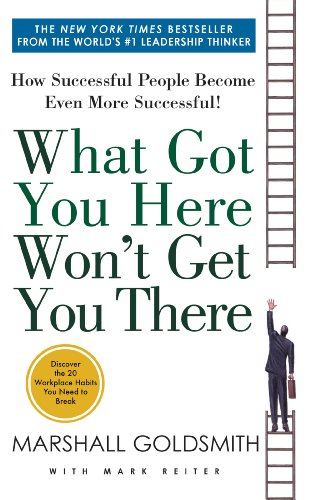
I have always wanted to join a book club. I finally joined one and facilitated some discussion. It has been fun and educational. This first book we read is about how to make your already successful career to be more successful. It is full of the author’s coaching experiences, with many CEO-to-be clients. My book club discussed the 20 habits that the very successful business people may need to let go for further successes. My book club members are not CEO-to-be yet, and we feel many of these habits are the reasons to be successful, we need to be successful first before thinking of more successes. I had a chance to ask the author this same question and his response has been, at the beginning, we need to care about those habits such as winning, adding value; as our career progresses, we start letting go of some of these habits. Because of the book club, I enjoy the book more and feel that it helps to retain the learning.
Since Chinese New Year, I have spent a few minutes daily jotting down three things I am thankful for. In days when I am not in the best mood, it takes more effort. Habit shapes our character. These few minutes almost always pivot my mind onto something positive, and has the effect of a more positive outlook in spite of challenging moments like difficult work, fake news or bad news.
My husband and I visited Yosemite National Park on Valentine’s day. We hoped to watch the firefall at the Horsetail Fall. Yosemite is a 4-hour drive from home, and we stayed at the well maintained and cozy Yosemite Valley Lodge. The reception forewarned us this year, there was no water, and therefore no chance of any glowing waterfall at sunset. We were already there, might as well do some walking. From the lodge, it was a 45 minutes easy walk to the Horsetail Fall. To avoid damaging nature with too many human footprints, the rangers have set up a driving lane to be a pedestrian-only path. It was a bit cold, we were there around 5pm, and waited for the sunset. There were about a dozen photographers setting up their cameras in the area. Without the water, it was still beautiful to see the turn of color on the rock from granite color to shining yellow to golden then to red, before the sun was down. We joked about seeing “firerock” rather than “firefall”, we took pictures to capture the changes of colors on the El Capitan .
The next morning, we had a delicious breakfast at the cafeteria, and it was pleasing to see the many visitors in full hiking gear, looking happy for whatever they have planned for the day. It reminded me about school trips, though these are mostly strangers. We took an easy hour-long hike to the Mirror Lake. The perfect reflections and the absolute calmness of the lake have been healing, calming and just pleasing.
On our drive back, we stopped at almost every pharmacy, to look for earloop face masks. Along that 180+ miles, there was only one pharmacy shop that had 3 boxes of masks, I grabbed one, leaving the other two on the shelf.
******** Do No Harm by Henry Marsh Written with candor and compassion, neurosurgeon Henry Marsh shares first insights into the joy of brain operating, the successes and failures of his surgeries, the delicate balance of being emotionally detached from patients and being compassionate, and how he faces approaching his patient with no hope of getting better.
Do No Harm provides unforgettable human dramas that take place in a busy modern hospital, with black humor in how the medical system has created more challenges for the doctors who want to focus on just saving patients.
******** Billions and Billions by Carl Sagan Last book written by Carl Sagan, before he died a few months later in 1996.
“Billions and Billions” is a term that he has been quoted saying, but he has never actually said because it was scientifically ambiguous. This is a beautiful collection of stories where Carl Sagan unpacks many interesting subjects that touch our lives. Beautifully written, he applies scientific thinking to weave together the causes and remedy of ozone depletion, the path towards climate control, pro-choice vs pro-life, the self-inflicted military race, and his own personal life and death ordeal.
Here is how he sums up the last century: “The twentieth century will be remembered for three board innovations: unprecedented means to save, prolong, and enhance life; unprecedented means to destroy life,… and unprecedented insights into the nature of ourselves and the Universe”.
On his ordeal over his terminal illness, he writes “Six times now have I looked Death in the face. And six times Death has averted his gaze and let me pass. Eventually, of course, Death will claim me…. I’ve learned much from our confrontations – especially about the beauty and poignancy of life, about the preciousness of friends and family, and about the transforming power of love. In fact, almost dying is such a positive, character-building experience that I’d recommend it to everybody…. I would love to believe that when I die I will live again… I know of nothing to suggest that it is more than wishful thinking”.
The epilogue by his wife is so very touching. Carl Sagan stays true to his belief in scientific thinking and he experiences the fullness of life till the very end.
On the first day of many years, I write down a few annual goals on a piece of paper. On the last day of the year, I was often surprised to discover that some goals have either started or achieved.
My top goal for 2020 is to stay healthy and to live with a high level of well being. Just because I enjoy learning, for things that are challenging and less enjoyable, I want to translate the hardship into a journey of learning.
After reading the book “The Gratitude Diaries”, I have wanted to start my own gratitude journey to write things to be thankful for everyday. And what better day to start this habit than Chinese New Year day, and that was exactly what I did.
The Gratitude Diaries By Janice Kaplan
Janice made a New Year resolution to live the year with a gratitude mindset. From marriage, family, money, career to health, caring and connections, Janice narrated how her year of gratitude has transformed her life. The mindset shift not only has added to her own happiness, but also deepened her connections with family and friends. With a journalist background, Janice is a great story teller. She brought in a range of experts, and adds their stories to her own gratitude experiments from winter to autumn.
Gratitude has no end. If we choose to look for it, gratitude is everywhere.
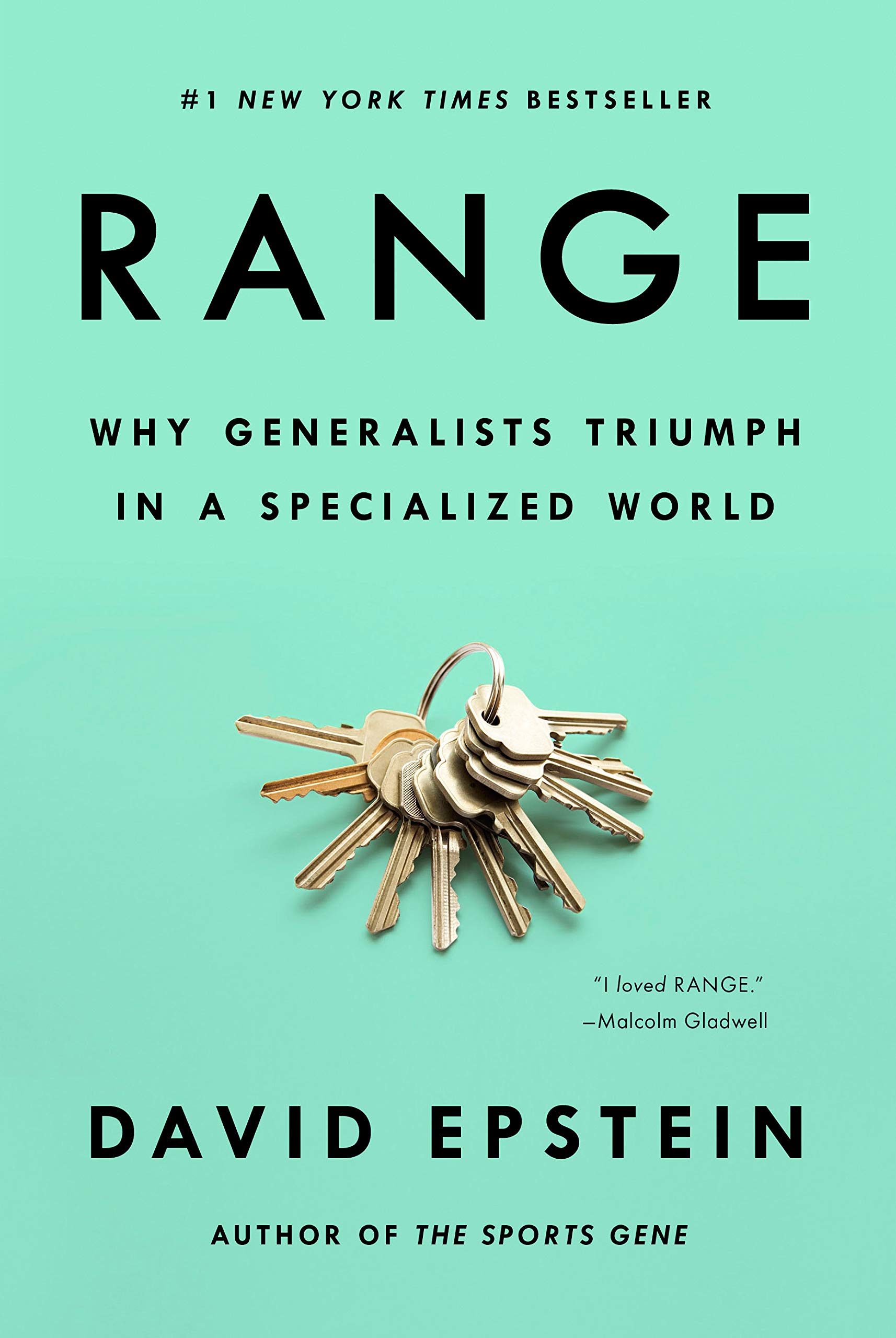
Range by John Epstein
The world is not lacking experts for every topic and specialization is happening earlier. This book unveils a refreshing theory that in the modern world, the environment is complex and unique (aka wicked); challenges are no longer repeating itself and they cannot be overcome by the same specialized solutions. The author debates the wicked world need the range of generalists to bring in the breadth, the creativity, the leverage from different domains to tackle super complex problems that remain unresolved by specialists for decades. While hyper-specialization works in a repetitive “kind” environment, it argues, with plenty of real-life stories, that the current world problems require the range of generalists as much as the narrow depth of specialists.
Public speaking is hard. Motivating others is powerful but few has this natural gift. Speaking on a topic that you are interested in, but not as a recognised expert, is scary. I challenged myself a bit, it has been a good experience in preparing for it, and presenting it last month.
The transcript of my recent Toastmaster speech on financial tips.
_____________________________________________________
I have yet to hear someone say “ I want to be poor in my life”. More people seem to be saying “I want to be rich and richer”.
I grew up in a poor family in Hong Kong, my parents worked hard At that era, Hong Kong still had a lot of factories, and they subcontracted simple chores that we could complete at home. I started helping out when I was like 3 years old, we barely made enough and we could not afford toys, snacks or ice creams.
I want to be richer. Shortly after I arrived in the US, I enrolled in a 2-year personal financial planning program.
To my dear Toastmasters, I am excited to share a few ideas that could go a long way to your financial well being.
Well, life is not just about how much money you have, but your financial position could help or hinder you towards your life goals. Only you know your life goal, you may want to “see the world”, “spend more time with your loved ones”, “make the world better”, “maximize happiness”, “relax or have fun”. Your life goal influences your standard of living which then influences how much money you need.
When is the right time to start? It is N-O-W, now. Very simple. The younger you start, the more you have at the end. Can you save an extra $50 each pay check? If you do this for the next 30 years, you would earn $58,000 with a meager 3% return, and a $100,000 with a 6% return. And if you save $500 each pay check, you would be a millionaire with the same 6% return. Anyone knows about the rule of 72? If you divide 72 by your annual rate of return, what you get is the number of years that your money will double. Over the long run, the stock market has had an annualized return rate of between six and seven percent, with this rate, your money doubles every 12 years.
How much are you going to save? The tip would be set aside saving prior to spending; and not the other way round. It is a mindset change. If I enjoy buying things, I would mostly likely spend more, if I don’t set aside savings.
How to make it happen? It is far better to automate the saving so you never even have the money in your pocket. Set up an investment account, set up the payroll so your savings would automatically be transferred to this account from each paycheck.
If you are already doing everything I have said and more, congratulations. You may still be able to do more! Investing the money is a topic by itself, I would share my thoughts on investment that is not often mentioned.
Be aware of your risk tolerance, but also remember the biggest risk is probably not invest your money, just like if you don’t invest yourself in learning. What many financial books do not say is that your risk tolerance can change and sometimes, you may be able to push yourself a bit especially when you are young.
Very few of us can claim discipline is their strength. As such, automate the schedule of your investment, such as investing on the 1st Monday of every month or after every 2 pay checks.
When I started in California years ago, I have worked eight years already in Hong Kong, yet I had a very old car, I did not have a house, I did not have a 401k , I didn’t have much savings. Over the years, I have earned my house, my car, my investment portfolio and my retirement account.
In summary, now is the time to start, automate savings to an investment account, automate the investment schedule, and you can do more. If you take action now, at some stage, the return of your investment account would exceed your pay check. And you have more financial freedom towards your life goals.
To apply this wisdom to the political unrest in Hong Kong, “it doesn’t matter whether a person is in black or in white, if they live their proper role, they are good citizens”.
Hong Kong is a relatively homogeneous society, inhabited by smart, intelligent, efficient and often charitable citizens. Its prosperity and international status sometimes hide its darker side that it does not always embrace diversity and inclusion in its soul. In Cantonese, there are nicknames for caucasian, black, mainland Chinese, and other races. In the early 90s, there are nicknames for mainland Chinese which belittle them quite a bit. Decades of world-renowned economic successes in this small city create some deep-rooted but subtle sense of pride, superiority and entitlement. Pursuit of capitalism and colonial elitism come with a chasm between the poor and the rich, the have and have-not, the will-have and the will-not-have; without artful colonial maneuver, it creates a dangerous level of resentment among the have-not, will-not-have and the righteous. Quick-thinking, short-cuts, pragmatism and efficiency, at times, are more highly valued in this city than critical thinking and Socrates discussion or Aristotle thinking. These sentiments can be hijacked in current challenging situations.
I was born and raised in Hong Kong; and love the city. For a moment, let’s try to use the Aristotelians’ first principle and applies them to the five core demands.
First principles
A rational and calm mind is better than an irrational and angry mind. If your emotions take over the reasoning, you become the victim of emotional hijacking, it is time to pause discussion and delay action. E.g. You get outraged after watching some YT videos, and in that moment, you translate a few specific incidents into anger against all protestors, or all police or all establishments.
A government needs to be diligent and care about the citizens. (勤政愛民) Even if we discount the organizers’ reported protestors participation, there are still thousands or tens of protestors that are disgruntled, the government has responsibilities.
A citizen needs to follow the law and order. Asking for “I burn with you” is not fulfilling the role of basic citizenship. Bullying law enforcement officers are not following the law and order. Obstructing and vandalizing LegCo, the set up to scrutinize bills, are not following the law and order.
A citizen needs to accept consequence in acts against the law. Regardless of the situation, attacking police is against the law; obstructing police is against the law; vandalizing is against the law.
People in Hong Kong love Hong Kong. Call out those who may use Hong Kong for their political agenda; and those who may love other countries instead.
Ad hominem behaviour is not acceptable. Ad hominem is when you start to attack others’ character and motive rather than their behaviours. E.g. Rather than condemning specific violence of some individuals, it turns to attack the character of the whole class of protestors, police and their families to be shameless, and flawed in character.
Seeing the five demands through the lens of first principles:
Full withdrawal of the extradition bill. Demand met. Demand does not compromise any first principles. It has been suspended and now withdrawn.
A commission of inquiry into alleged police brutality. Partially met with adding top officers to CAPO. Demand for commission, outside of existing system, compromises first principle 1: are the police brutality a few cases or systematic pattern that warrants a total overhaul of the system to inquiry police complaint? Are there evidences that HKPD is using more force than NYPD or police in other places in handling unrest? Demand also compromises first principle 3 & 6: are the citizens behaving as good citizens to bully the law enforcing officers with labels, expose their family, surround their police stations?
Retracting the classification of protesters as “rioters” Demand not met. Demand compromises first principles 3 and 4. If burning the cities, throwing petrol bombs, vandalizing and obstructing subways, police stations, airport and more are not the behaviours of rioters, what are?
Amnesty for arrested protesters Demand not met. Demand compromises first principles 3 and 4.
Dual universal suffrage Demand not met. This is emotional hijacking to take advantage the outrage and other resentments for something else.Demand compromises first principle 1 and 5. Do these people, with political agenda seeking support from foreign countries, love Hong Kong or love foreign countries? The result of last LegCo direct elections do not show clear evidence that Hong Kong people value democratic movement higher than other things they want for the city.
These first principles are of course debatable. The point is that such an approach, to think through the first principles and stack them against the demands, can give a boost to your rational mind, and avoid your emotions to take over your intelligence without your knowing.
More rational minds are needed in my beloved city to return back to safety and beauty.
















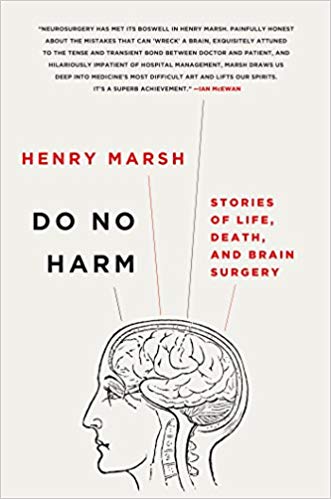 Written with candor and compassion, neurosurgeon Henry Marsh shares first insig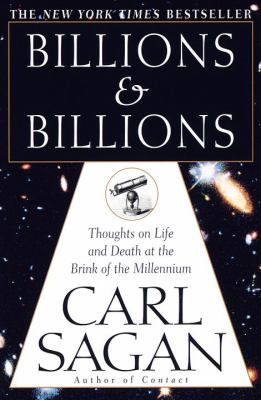


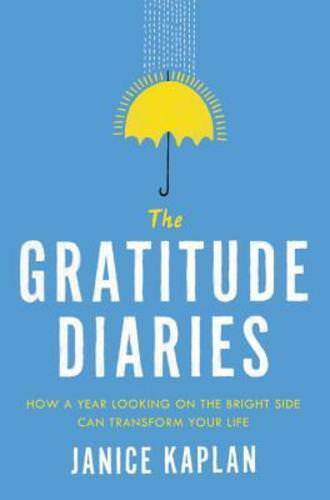 Janice made a New Year resolution to live the year with a gratitude mindset. From marriage, family, money, career to health, caring and connections, Janice narrated how her year of gratitude has transformed her life. The mindset shift not only has added to her own happiness, but also deepened her connections with family and friends. With a journalist background, Janice is a great story teller. She brought in a range of experts, and adds their stories to her own gratitude experiments from winter to autumn.
 The world is not lacking experts for every topic and specialization is happening e
 Public speaking is hard. Motivating others is powerful but few has thi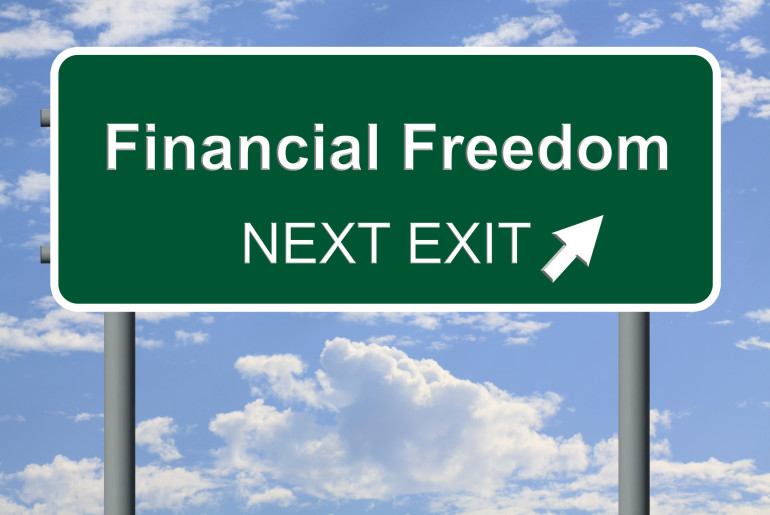
 The great Chinese leader and visionary

 oliviatamccue