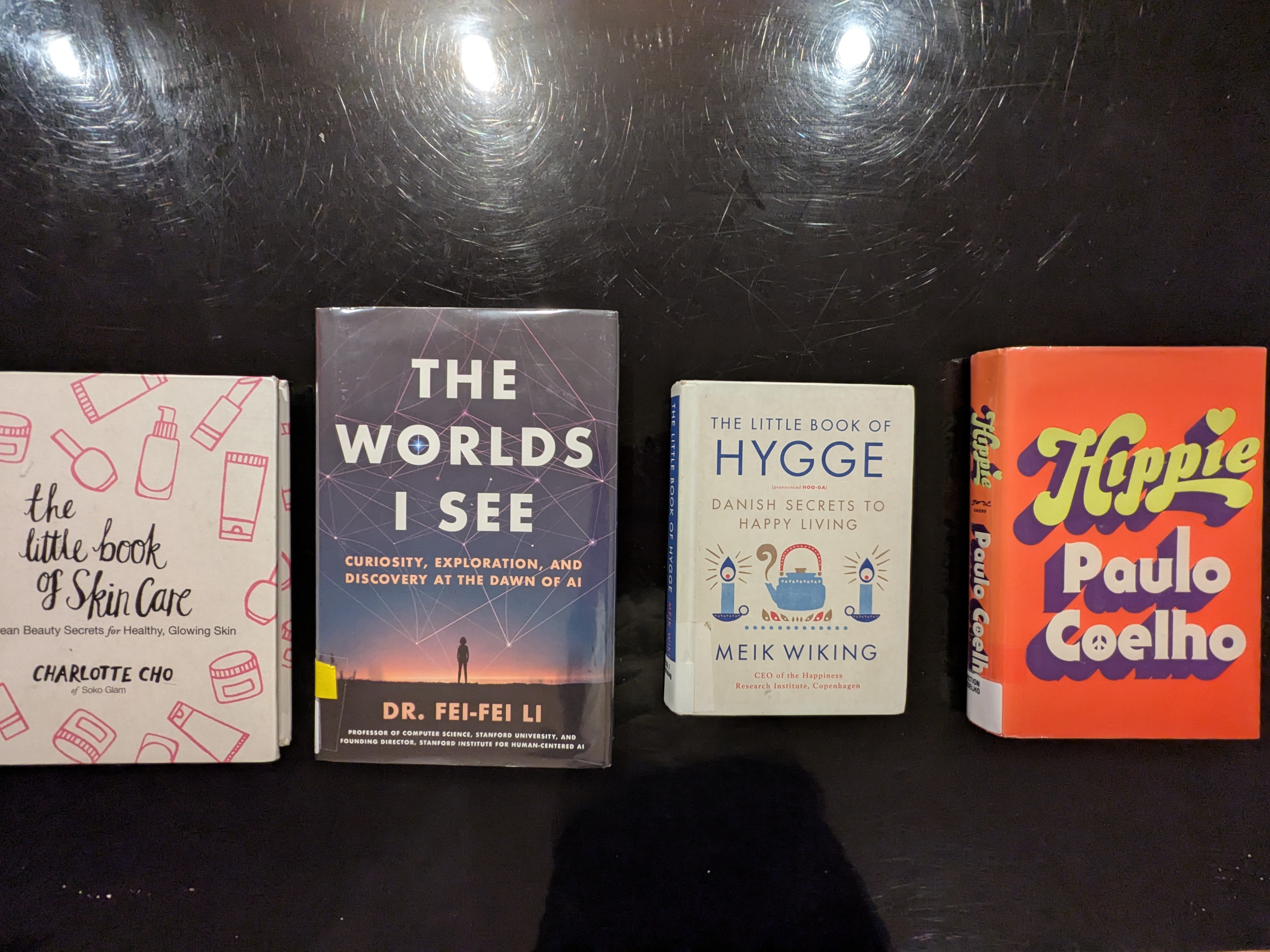
The books I read during the holiday, transported me to new places, and new experiences. The Worlds I See had been on my to-read list for ages, and I finally checked it off. It’s a memoir, an immigrant story, a personal journey, and an AI journey all wrapped into one. It doesn’t get better than this. The other books were serendipitous finds, with The Little Books offering delightful reads for everyone.
The worlds I see By Dr. Fei-Fei Li
If you search “Godmother of AI”, Google search results will list “Dr. Fei-Fei Li” at the top.
Dr.Fei-Fei Li is a through-and-through trailblazer. In the tech world, Dr. Fei-Fei Li has chased after Data, when algorithms and complex logic have been the unparalleled kings and queens in the computer kingdom. The resulting ImageNet has contributed to AlexNet and Neural Network. In the world where technology is the hype, Dr. Fei-Fei Li established the human-centered AI institute (HAI) in Stanford.
Her research and accomplishments are numerous. Her resilience, her commitment, her passion and her value stands out more in this world where the rich and the powerful get it all. It is touching to read about how she achieves, while caring deeply for her family, her parents, her spouse and her children, her students and the people around.
Her personal journey from China to America, New Jersey to Palo Alto will inspire you. The world will be better, if more of us see it through her lens.
Please add this to your to-read list.
The Little Book of Hygge: Danish secrets to happy living By Meik Wiking
I love these little books. The first chapter of light, about candles and lamps, is almost a bore. That is the whole point that many found all the normal things around us become a bore.
If you can pass through the first chapter of very normal things around us, you will be rewarded with a real sense of Hyggeligt. If you get through the last page, you don’t need to be in Denmark to discover the secrets of Happy Living.
The whole point of Hygge (contentment, comfort, coziness, and so much more) is about making the most of what we have in abundance : the everyday.
I love this little book. I am deeply grateful to the author Meik Wiking, CEOof Happiness Research Institute, Copenhagen. The world will be a better place if more people see and enjoy the common things around them.
Hippie By Paulo Coelho
I love his book “The Alchemist”. This is an autobiography of the author, travelling with a newly known Dutch woman from Amsterdam to Kathmandu. It has a bit of everything in life, the spectrum of people (real characters) they met and their experiences, the personal discoveries as they journeyed together from Amsterdam to Kathmandu. Just like many things in life, when we are seeing it as it is, there is some weirdness that cannot be comprehended or making sense of it. That weirdness stays with me long after reading the book.
The Little Book of Skin Care: Korean beauty secrets for Healthy, Glowing Skin By Charlotte Cho
This book transforms how I think of the skin care routine from a chore to really enjoying it. It has real good tips if you want to have a dewy look. I recommend the book to readers of all ages.
Since last year, my day job has been about Artificial Intelligence (AI), more specifically Generative AI. I believe AI is a real deal not just for its utilities but also for its many game changing potential on human needs. I spend time sharing tips and encourage more to use the technology for their benefits. I spend a decent amount of time in an effort to democratize AI.
The most beautiful AI interaction turns out to be in a situation when I least expect it to be.
Soon reaching its 100 years old, International Toastmaster Club has over 200,000 members in more than 14000 clubs in more than 140 countries.Toastmaster is all about communication excellence, and for 100 years and counting, Toastmasters have been expressing themselves better, practicing, and evaluating in a fun club environment, shining all around the world. Once a distinguished Toastmaster club president, I stay as an active Toastmasters, making speeches occasionally.
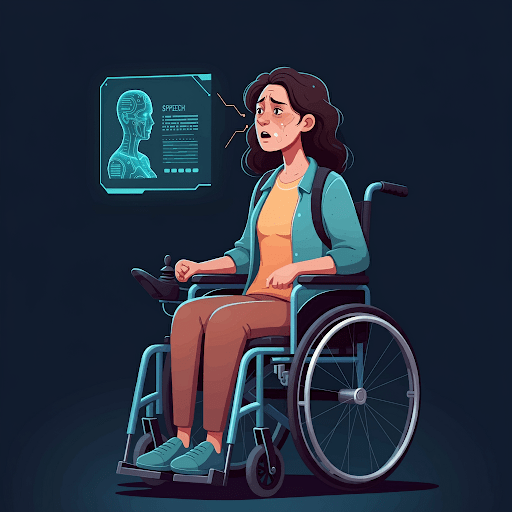
A few months ago, I could not be more surprised to find a new member with speech disability joining the club. Let’s call her Lady M. Lady M makes unrecognizable squeaks, her hand movements are sporadic, her facial expressions are different, her muscle movements are obviously compromised. That constantly reminds me of the limitation and likely hardship she encounters. Her presence brings that tiny discomfort that no-one really wants to show.
Over time, Lady M has proven to be an enthusiastic member. She is very brave. She wants so much to participate, including the table topics where one gets a short prompt to deliver a one to two minute impromptu speech response. Technology has come to her aid. She can type up her thoughts in group chats instead of speaking. Yet, her chats are hard to comprehend, the sentences are grammatically incomplete, and we cannot make sense of the words. Needless to say, most, in the club, have felt uneasy because of our limitations to interpret meaningfully what she has shared. We have been candid to share that we do not understand. She is not deterred and has kept participating to my utmost admiration.
Something happened in one recent meeting. In that meeting, I hosted the table topics. I called out a few club guests, gave them prompts, for them to deliver an impromptu speech. I was about to conclude, when I got a glimpse, on the zoom window, that lady M was waving vigorously to get attention and to participate. I ended up posting the prompt in group chat for her to post a response. The reply was equally incomprehensible. AI has come to our aid this time. The president came up with the idea to use AI. Rather than reading out the group chat of Lady M word by word, the president copied and pasted to the AI ChatGPT, and asked AI to help us to comprehend. Afterwards he read out the AI-enhanced impromptu response. How well has AI interpreted lady M? Judging by the reaction of lady M, it came across that, AI has read her mind better than any human toastmasters attending at the time. I have not seen lady M happier. That expression of feeling heard and feeling understood made a beautiful face.
Maybe we are bound by our learned grammar, words and languages. AI has gifted us this ability to better understand each other without that boundaries.
A week after, at the Club, lady M was there again. This time, she shared that her father just passed away. In times of life’s most difficult moments, we hope her participation with the help of technology has brought her comfort and courage. We found her voice through Artificial Intelligence.
There are many book lovers in the world. I am one. I am not enthused about book clubs that need us to read the same book at the same time. Why? There are just so many genres to read about, each book reading pattern is as unique as the readers’ fingerprints. Just like friends, if you pay attention and don’t transport your memory of their younger days to their present days, the friends change subtly over time too. Those changes are often reflected by the kinds of books they are reading.
Just like good friends, good books don’t go away. May you find one or two, from the following reviews, that you are interested in reading right away. For all the others, I hope it is not whether you will read them, but when you will read them.
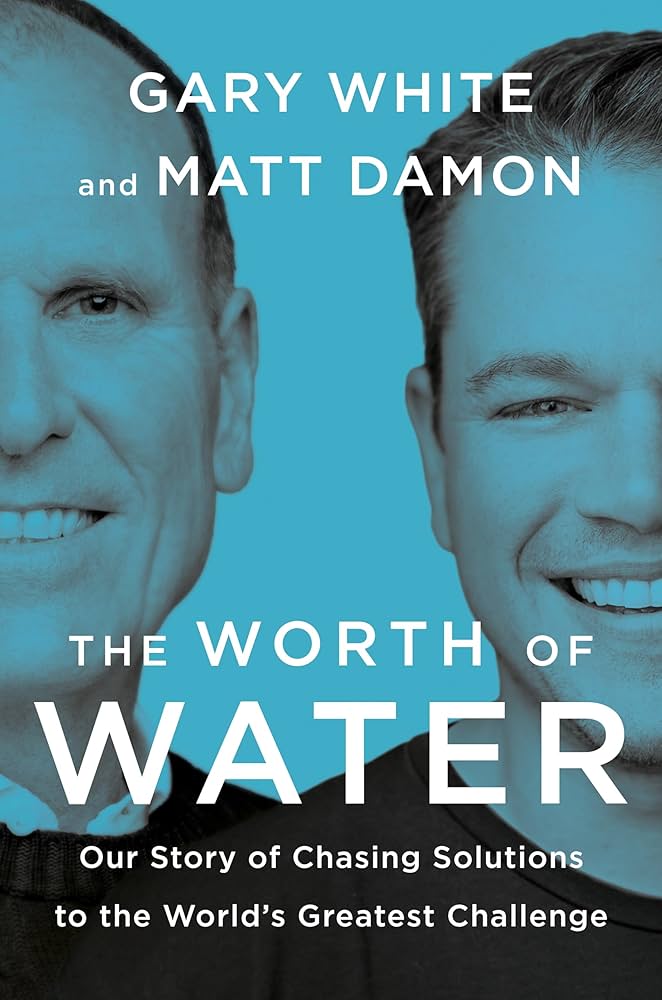
We are in a world with abundance that is so unevenly distributed. We can all relate to what life is like to spend hours every morning to get buckets of murky water to survive.
This is a book that gives concrete paths to solve the water and sanitation problem.
Supporting microloans, a sustainable market-based approach, can help hundreds of millions to tap into existing water infrastructure to give them water, and allow them to use the time to go to school or to earn more income.
Supporting resourceful teams to help utilities improve operations and find more paying customers to keep investing in better infrastructures in urban areas.
Supporting Governments, wealthy nations and NGOs can reach the poorest , most rural regions.
Check out the book or the water.org. It feels immoral to do nothing for the billions who happen to be born somewhere without water and sanitation.
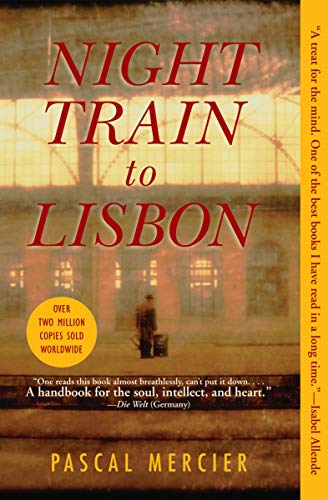
Raimund Gregorious teaches classical languages at a Swiss school. Everyday is the same routine, down to the minute until one day. On his way to school, he saved a beautiful woman, who was about to jump off a bridge. This one day, he questions his life and leads him to an extraordinary book about an extraordinary person, Amadeu De Prado, in Portugal. He boards the last train to Lisbon. His adventure turns into unbelievable discoveries of deep human connections as he retraces the life of Amadeu, his families, his loved ones, and his comrades.
Life is not what we live, but what we imagine living. At times dreamlike, at times unreal, this is a book that stirs your mind to reveal something new to yourself.
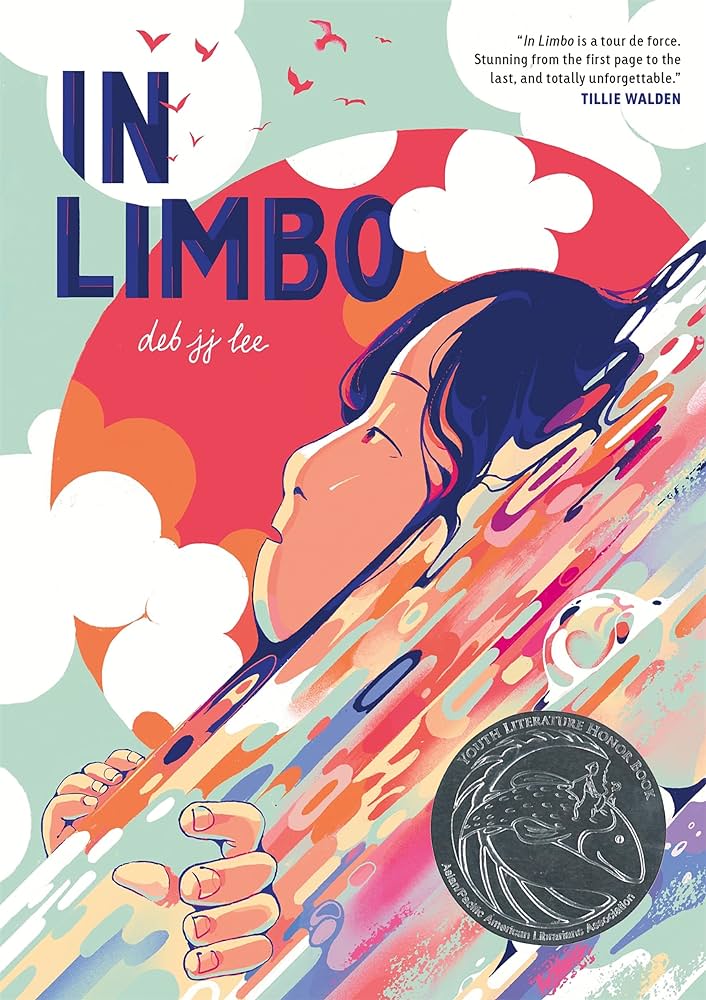
For those who have immigration experience, over time, they recognize that immigration is a multi-generational journey not an event. It is an experience that sends a person, the families and future generations to an alternate universe where the new universe offers contrasts in family values, morals and cultures.
Beautifully narrated and illustrated, this book shares the journey of a first generation Korean American how she copes with the challenges of family relationship, identity uncertainty, loneliness and friendship.
Many first generation Asian American will resonate with the growing up of the protagonist Deb. It is a good read for both their parents and them to appreciate the multi-generational implications of the migration.
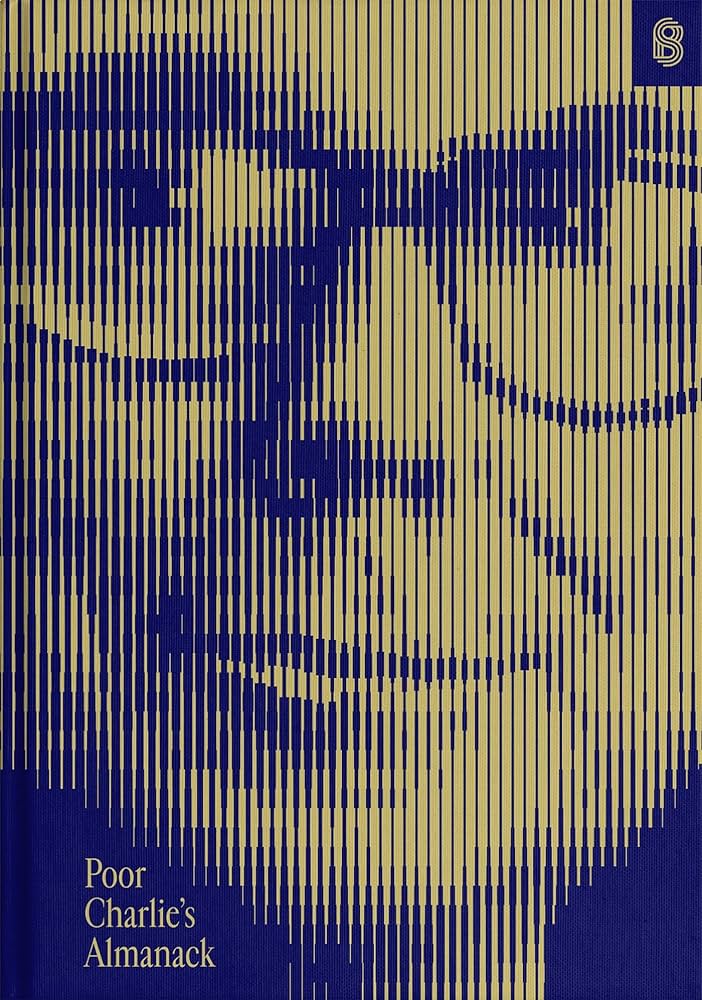
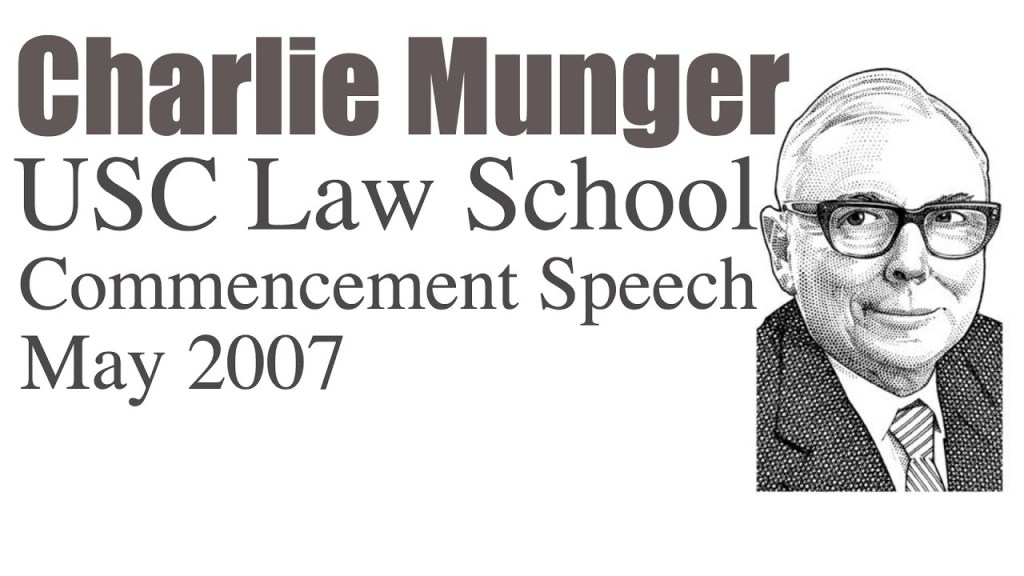
Charlie Munger is almost 100. He died a few months ago. His wisdom, humor and fatherly advice have lived on in his speech and his book. He said “acquisition of wisdom is a moral duty”.
His commencement speech to the USC Law Graduates, to advise them on a good life, particularly resonated. His speech is full of gold and offers values for anyone. Here are some of his worldly wisdom.
The safest way to get what you want is to try to deserve what you want. You want to deliver to the world what you want to buy if you were on the other side. It is a golden rule.
Be a learning machine. Develop a multi-disciplinary knowledge in important domains: business, psychology, math and history.
Hard work and strong work ethics are essential. As obvious as it is, we often forget it when things are not going well.
Mr. Munger continues to advise us in this universe even though he has moved on to another universe. Hope you will not miss the advice.
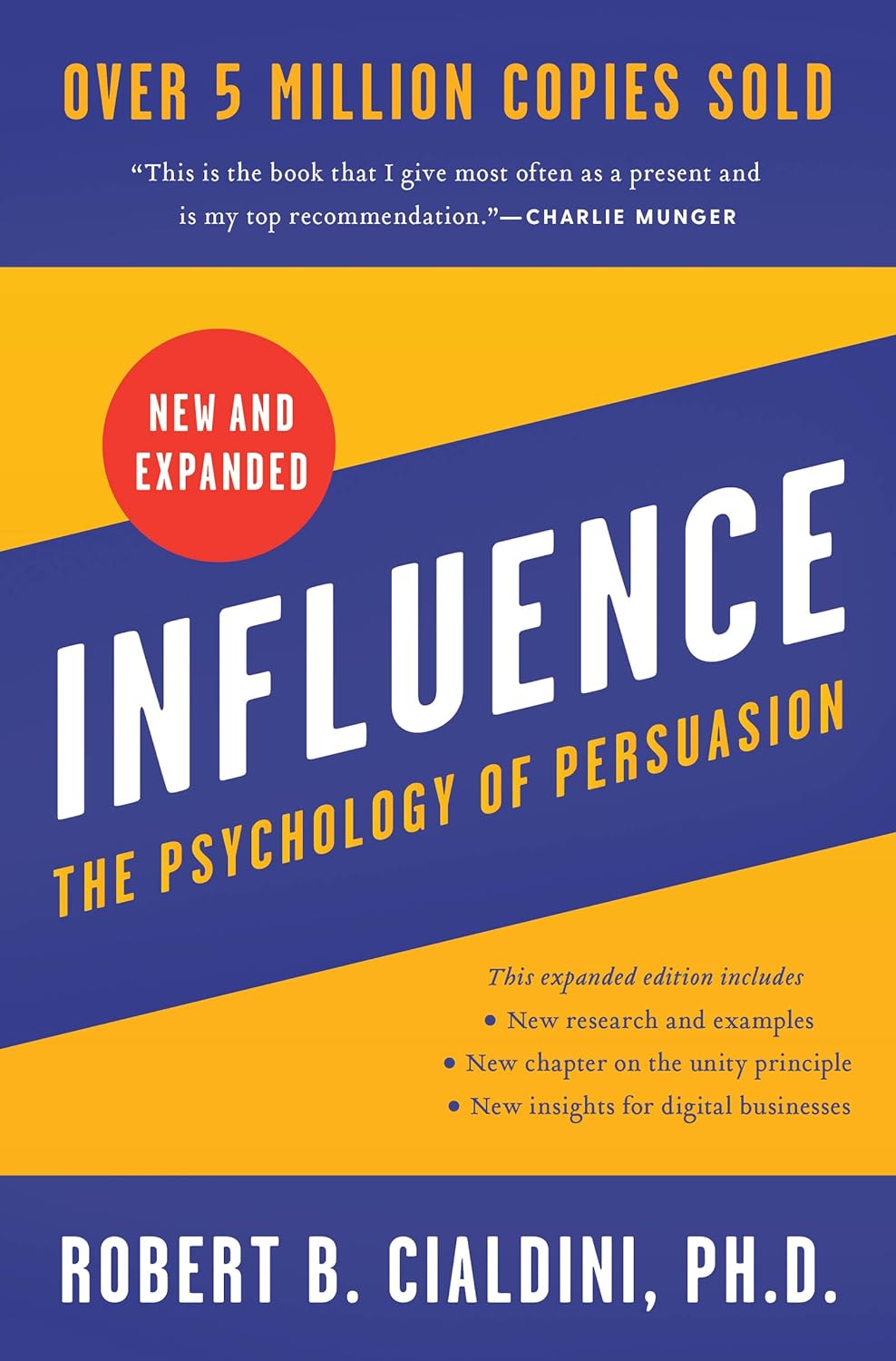
The abundance of knowledge and information overload overwhelm the smartest of all. This is an era of short cuts to influence decision making. It is a world where relationship building could get you further than the traditional intellectual and emotional intelligence. First published in 1984, the latest edition in 2021 continues to capture the psychology of persuasion.
If you are a compliance professional to influence others or you are someone who doesn’t want to be tricked by these psychological shortcuts, this book makes an important book to read.
For shortcuts to the book, the seven shortcuts include “reciprocation”, “liking”, “social proof”, “authority”, “scarcity”, “commitment and consistency”, “unity”. Or you can ask the large language model, chatGPT, Gemini and the like, to give you a summary to decide where to deep dive into.
You may also be intrigued by the author on the importance of preventing the abuses or misuses of these shortcuts, so as to keep the shortcuts working effectively for the majority.
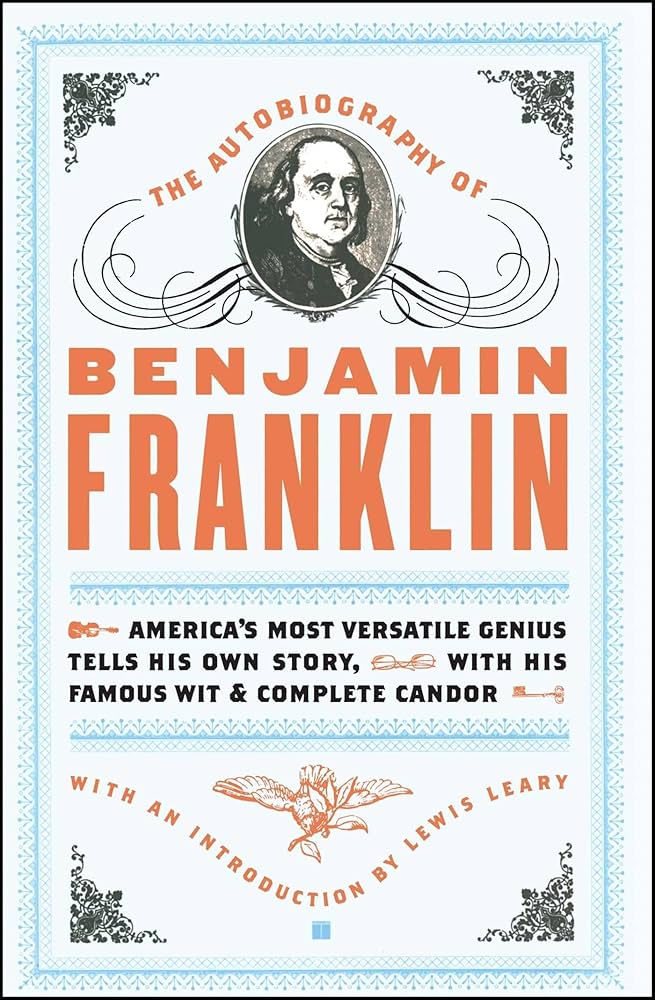
You may be familiar with Mr. Benjamin Franklin as one of the Founding Fathers of the United States, a drafter and signer of the Declaration of Independence. I discovered so much more of his impact on my daily lives after reading his autobiography.
Written by Mr. Benjamin Franklin from 1771 to 1790, this unfinished account of his own life remained relevant if not more relevant with the US state of affairs.
The first set of notes is a letter that started with “Dear Son”, where Mr. Franklin talked about his lifes, his younger days, the lessons learned, the business and the errors he has made. The discourse is candid and particularly touching to share life lessons from father to son.
The second set of notes was written a few years later. It listed out the 12 moral virtues + humility. Mr. Franklin created a “spreadsheet” to practice the virtues and tracked his progress. He had expected to acquire the habit of one virtue each week, and ended up taking a year to cycle through the 13 virtues. His design and rigorous progress tracking on virtues are amazing to read and to practice.
The last set of notes illustrated his printer business and his public services. His setup of public libraries, his establishment around the concepts of firefighting and military has impacted all of us living in the United States. His kite experiment, to demonstrate the connection of lightning and electricity, once again reminded us the importance of multidisciplinary knowledge to better understand the world.
It is a book to read, also a book to read multiple times.
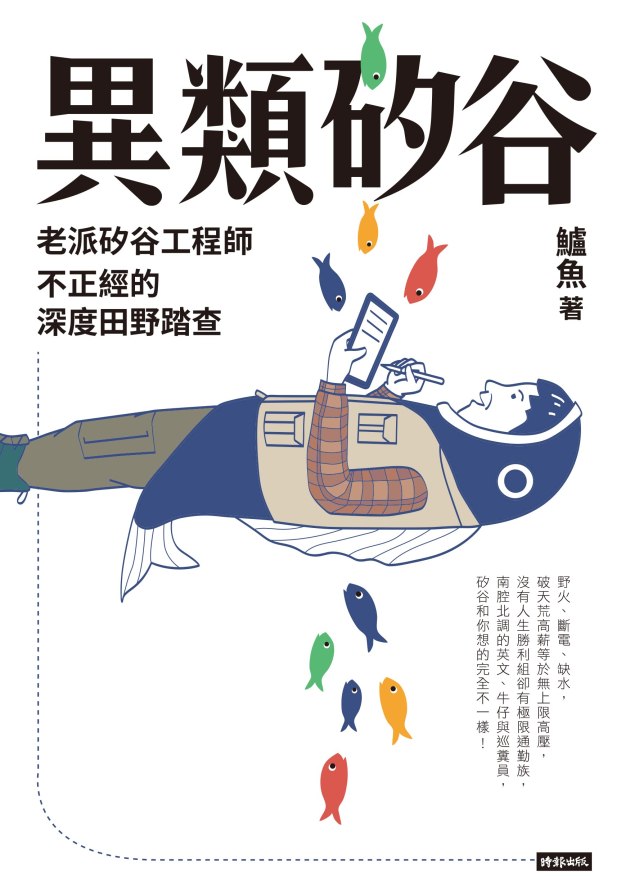
Every single day we are missing the people, the places and the events around us. Being in Silicon Valley for decades, I have the illusion I know about the area, until it becomes obvious that there are so many new discoveries waiting. In his unique lens, the author 鱸魚 shares absolutely delightful anecdotes that transport me to a more beautiful, more diverse, more humane Silicon Valley beyond the technology, the tech start-up, the magnificent seven and the venture capitalists.
His message will stay with me for a long time – Silicon Valley is a colorful puzzle that provides spaces for everyone to participate and there is such a broad spectrum of possibilities for everyone to have a role in it. Such contrasts make up a beautiful landscape.
This is a book for everyone to relate to Silicon Valley, including those who are too busy to notice the stories, and those who live far away.
I am enchanted by the author and his Silicon Valley stories. I subscribe to his blog and can’t wait to read his new book 我失敗的美式生活 (I fail in living the American life).
My Toastmaster Club President asked if I would like to be a speaker in the upcoming club meeting. It is not any special request. Such a request serves as a trigger about what meaningful speech I would like to share with the fellow club members, many of whom will have many ventures and career years ahead of them. The Club president did not have much of a suggestion of the topics. June is the month of college graduation. I decided to use a speech to echo the wisdom of three commencement speeches. The first of the three speeches was dated in 2007. I read the speech transcript from “Poor Charlie’s Almanack”, a book with so much wisdom. The other two speeches were more freshly delivered in June this year.
My speech transcript re: “Echoes of wisdom: three commencement speeches”.
How many remember the commencement speeches from your college graduations? Because I don’t remember anything, I could not put into practice the wisdom from the speech of my college graduation. As you have many ventures and years ahead, I have three commencement speeches from three great persons to share with you today.
Charlie Munger at USC Law, 2007 Munger is known for his 60 years of partnership with Warren Buffet, and the unusual successes of the company Berkshire Hathaway. His wisdom and humor have lived on in his speech and his book. He said “acquisition of wisdom is a moral duty”.
The safest way to try to get what you want is to try to deserve what you want. You want to deliver to the world what you want to buy if you were on the other side. It is a golden rule. Be a learning machine. Develop a multi-disciplinary knowledge in important domains: business, psychology, math and history. Hard work and strong work ethics are essential. As obvious as it is, we often forget it when things are not going well.
His speech is full of gold and offers values for anyone.
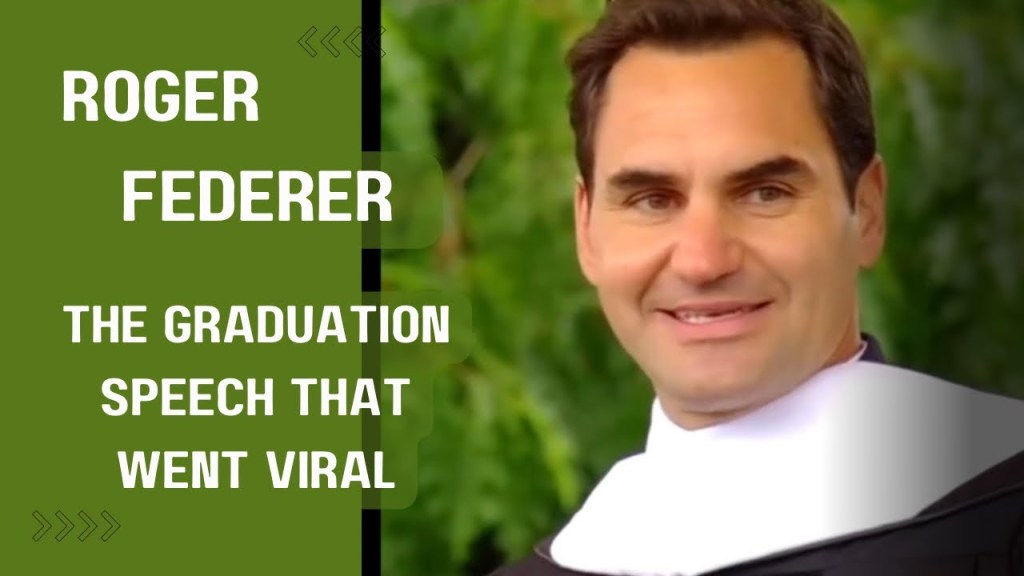
Roger Federer at Dartmouth, 2024 Roger is arguably the most beloved tennis player of all time. He retired in 2022. I was there in London watching him to play the last match at the London O2 arena, and his emotional farewell. He did not finish high school. Yet his tennis accomplishment earned him the honor of a Doctor of Humane Letters degree from Dartmouth.
Effortless is a myth: For many who have watched him play, his play looks easy and effortless. This is misleading. He explains that he had to work very hard to make his game look easy. Next time, when you see some successful people get an easy promotion, think again. It’s only a point: A tennis match has many points, just like our life has many points. Federer shares that during the point, you see the point as the most most important point in your life that you put 100% in. When the point is over, win or lose, you need to learn and move on, so you have your 100% for the next point. Life is bigger than the court: Federer has his foundation that helps children in Africa get an education. It’s important to have a purpose in life beyond your career.
Jensen Huang, CEO of Nvidia at CalTech, 2024 Jensen famously said the following : “To me, no task is beneath me, because I used to be a dishwasher, I used to clean toilets and I’ve cleaned more toilets than all of you combined”. In his commencement speech, he shared with the graduates a detailed history of Nvidia, and the journey.
Develop an informed and reasoned belief in something unconventional and unexplored. Find a craft to dedicate the lifetime to perfect. He famously said that he has nothing to do other than being the CEO of Nvidia. Prioritize. Jensen has a prioritized list, and first thing in the morning, he takes care of the most important priority, leaving him plenty of time to take care of people and other priorities
With technology, many commencement speeches are available on YouTube, waiting for you to discover. Consider checking out a commencement speech. That may turn out to be the best use of the time and you would go to bed wiser than in the morning. As Mr. Munger once said, acquisition of wisdom is a moral duty.
The transcript of a speech I delivered in a couple of Toastmaster clubs on this topic “Are we becoming more worldly with technology and AI?”
I want to explore with you one question, one human-centered question in this era of AI. “Are we becoming more worldly with technology and AI? “
Our great grandparents lived their whole life in their own village. They never left the village. They knew a lot about their village, their families and neighbors, They were close to knowing nothing in places that were not reachable to them. If you ask them what they thought of other villages. LIkely they would say they didn’t know, or they thought all villages were similar.
Fast forward to this generation. Information is at our fingertips. Phone is with us. Travel is part of our life. We know the world has a lot of variances. With AI, we can understand different languages without putting in the effort to learn it.
How many think “we are becoming more worldly with technology and AI”
Now I am going to share three experiences about different perspectives. The differences may be surprising, or even a bit unsettling.
First, with the internet, we can access and digest different channels. How many of you subscribe to a channel that consistently has a different point of views from yours? I did, on this channel of a YouTuber, the channel has good subscribers and has an incredible voice. He is negative, always finds flaws, and mostly only reports bad doings of the government. It is not easy but I want to understand his perspective. Over time, I still disagree with his point of view, but I start to see him as a person, get his perspective, and hear from him the dark side. I sometimes leave a comment. How do you become worldly or know the different perspectives?
Second, you have heard about Surveillance. Who thinks it is a good thing? Who thinks it is bad? I think it depends, and I don’t really mind to be monitored. Most news tends to be a bit negative about surveillance.. So I prompt different LLM “what do people think of surveillance”. While some LLM still share the negative before the positive, most show two sides of the opinion. AI can give us different views. Many friends told me they feel safer, they worry less, there is less crime, less drugs.
Third, the media all have their positions. We don’t want them to think for us. Example, XinJiang, China has been on CNN or BBC quite a bit. I prompt LLM to “tell me the latest news about XinJiang”. What did LLM say about XinJiang? Allegations of forced labor in supply chains, destruction of Mosques and religious suppression. It so happens that this week, seven of my siblings and in-laws are traveling to XinJiang, China. We have a real time connection using WhatsApp, I feel I am in California, I am also virtually visiting XinJiang, very cool. From my siblings, everyday, I am getting lots of pictures from them, eating local food, visiting local museums, talking to locals, and even dancing with the locals etc. They are obviously having a great time. The locals, they talk to, are happy people with their dreams for the future. They run into people doing road trips on their own, not that unsimilar to people doing road trips in America. Are you aware of the different perspectives?
With these perspectives, I ask again “are we becoming more worldly”?
AI gifts us more ways to see the world and the differences. It is one of the greatest gifts from technology and AI. We all can take advantage of the AI-powered world to become more worldly.
My speech is a tiny step so that we can become more worldly. You all can take bigger steps. You can prompt and push AI to give you different perspectives. Your choice from today onward makes all the difference whether we will have a world of acceptance and peace or a world of conflicts and wars.
Leave comments to share your thoughts on the topic too.
In the AI-powered world, the Large Language models, Gemini, ChatGPT and the like, can summarize a book, give a nutshell of things, answer questions, and even analyze a book together with you. It is impressively powerful. It meets the ever raising expectations of what it can do. AI writes book reviews well too. I am sure that AI can do a better writing job after it digests trillions of words which I never would be able to.
Let AI have the better ability in reading and writing. There is no existential crisis about it. I am pleased to keep the enjoyment of reading a book at the speed of a snail. I have the choice of my own interpretation of a book, the intent of its author and writing the book reviews.
It is a book about how Artificial Intelligence works and why it’s making the world a weirder place. With the hype of generative Artificial Intelligence (GenAI), it feels like eras have passed since this book was published in 2019. The ChatGPT / Generative AI debut is however not a baby born out of nowhere. The breakthroughs in computing, memory and storage power, the leap in machine learning and the focus in data science are all important notes leading to the Generative AI crescendo in November 2022. Many of the “how it works” are as relevant now as in 2019.
This is a highly engaging and informative book. AI has already arrived. The best way to go forward with AI is to understand it – understand what problems AI can solve, what issues AI can create, and what can we do to manage the situations.
This book will endear you to AI, and why there’s every reason to be cautiously optimistic.
In a dehumanized world of dystopia, what would the experience of growing up, falling in love, making friends and the sense of mortality be like? The novel starts with a mystery that the protagonist is a carer unlike any carers we are familiar with. She takes care of different donor patients who need to recover from donations, and at times multiple donations. As the protagonist recalls her school lifes, her friends, her guardians and her years as carers of her closest friends, the readers discover a dystopia, unlike anything we have seen. In that world, their growing up, their relationship and mortality still resonate.
Mr. Mukherjee is among my favorite authors. His book is always well researched and is a joy to read. Cells make up everything in our body. There are step jumps in our knowledge of the cells and there are still more to be discovered. Mr. Mukherjee perfectly combines the technicality of the deep complex topics and the poetic touch of his personal experience. Through his writing, the scientists, the doctors and the patients each come alive with their own unique characters. It is a book that requires focus to read, pause, and resume. As I finish the last page of the book, I feel there is so much in it that I would like to start all over again.
Reading his book not only gives you a good set of knowledge of the topic. Reading his book gives ideas on how to write a technical topic filled with beautiful personal stories, each with a human touch. It is these human touches and their stories that endears us to the doctors, the scientist and the new scientific discoveries about the cell.
The initial chapters of the book are pretty dense as the author introduced the framework among the free will, deterministic, nondeterministic, predictable, unpredictable together with different terminologies and how our brain works in neuro-science terms.
Halfway into the book, I got the gist of the author’s position and his argument. There is no freewill or there is much less freewill than what we think we have. Our behaviors, decision-making, failures, and successes are results of our nature (genes) and nurture (environment, family, friends and societies).
So what? Why did the author, professor of biology, neurology, neurological sciences, and neurosurgery at Stanford University suspend his teaching commitments, and spend time to write about the topic?
The second half of the book would provide the answer.
Do you believe that illness is a punishment of evil acts of our doing? Do you believe that schizophrenia is caused by bad parenting? Do you agree that people committing crimes deserve the most severe tortures so justice is served? Society has changed a lot in many things. Depending on whether it is a “Yes” or “No” to these questions, we see the world with different degrees of empathy and compassion with one another.
If more people agree to no free will or limited free will, there will be more support to change the education system, the justice system, and the moral system. The author conveys that we don’t need to be heartless, and judgmental to others with less fortune. There can be better systems and societies.
This book has been named one of the best books by the Washington Post and the Wall Street Journal.
I suggest reading it with patience, taking breaks and taking as much time as needed. I get a lot a lot out of the book, and it gives a new perspective of many things around us.
Few in the States follow the Inter Miami pre-season world tour. Its stop in Hong Kong was a PR disaster for the pre-season. The no-show of Messi and the seemingly lack of empathy towards his fans have turned a Messi-mania in my beloved city to a Messi-mess. After a few days of ubiquitous media coverage, the government demanded explanations, the organizer agreed to a 50% refund, and the sports authority in China canceled two upcoming exhibition matches of the Argentina team in China.
The reaction of the city dwellers, the organizer and the government are surprising. I wrote an article to the SCMP, the top English newspaper in Hong Kong, with the intent to those who still felt anguish about the situation. HongKongers hated to be disappointed, even worse, hated to lose face 唔俾面, and hated to be caught as dumb consumers 水鱼. Looking back, there is the silver lining with the unity of the city in their anger and frustration. I have missed the unity of the city in the last many years.
SCMP is a Hong Kong English-language newspaper founded in 1903, has a daily circulation of 100,000+ readers and an online version. SCMP published my article about “Give Messi the benefit of doubt” here, with some minor publishing edits and some related pictures/links.
Here is the original version.
Title: Reason and Respect : Messi deserves the benefits of doubts
The 2022 Qatar World Cup was a fairy tale moment for Messi. My family has followed Messi & his matches since. After defeating France in the final, he was often booed when he played for PSG in France. At age 36, he joined Inter Miami in a city of many Spanish speaking people. This opinion is for those who are still suffering from the anguish of the Messi no-show.
In sports, injury happens, fatigue happens. Messi is an “old” man in the soccer world. He played so many matches last year. He has not been close to 100% for at least a few months.
Soccer is not even in the top 3 sports in the US. Yet, Messi created a Messi Mania last year when he and Inter Miami won matches one after another. Many bought the highly inflated stadium tickets, drove hours only to find out Messi could not play. While disappointed, most understood and enjoyed the game. It is unfortunate that he had a no-show in Hong Kong. Soccer is a team sport, not a solo concert. The game carries on with or without Messi.
Inter Miami was ranked the lowest in the league for a reason. Often, their games were even hard to watch. I thought the Hong Kong team had a real chance to win. Sadly, the Inter Miami team never trailed, and the Hong Kong team lost comfortably. That was the only game Inter Miami won on this world tour. If you were a coach, what decision would you make? Would you risk the stars?
There were many theories about disrespect. Do people know Messi rarely showed up in US press conferences? He arrived in Hong Kong on a long flight after losing the last game six to zero, in Saudi Arabia. He was likely not 100%. Give him a break. He is not a PR pro.
With the no-show, the Hong Kong exhibition achieved international coverage on CNN, Times, CNBC and more. The US media covered the complaints from HK CEO Mr. Lee and the HK fans; and was overall empathetic.
This is no doubt a PR disaster for Inter Miami. Hong Kong receives some sympathy. Let’s wish Messi a quick recovery, a great season and show up in HK soon.
For the super fans, there will be an Argentina vs Chile game in June in New Jersey. His show up is no guarantee.
Toastmasters, a global organization about communication excellence, is celebrating 100 years. Toastmasters has global presence, with over 200,000 members and counting. I served as president of one toastmaster club for two terms. I remain active in two Toastmaster clubs including the AI club, the first toastmaster club with an AI themes. It is fitting to combine communication excellence and the latest AI technology as Generative AI storms into our lives, like no other technology before. Below is the speech script of my 7-minutes speech about AI challenges and how everyone can become an AI ambassador to have more people participating in the AI future.
I have been an active Toastmaster member and served as president of a Toasterster club for two-terms
We wake up with water, electricity and the internet. What if I decide not to use any of them? From where I live, the nearest body of water is over 5 miles. I would walk without Google Maps, no electric car, in the dark, to fill up buckets of water I need for the day. It would take over 4 hours for the round-trip. Technology has made our lives better. We have taken for granted people use helpful technology all the time.
To my AI club fellows, I would like to share the obstacles facing AI adoption. By being aware of it, we can concretely set plans to address these obstacles.
I’m leading an initiative focused on upskilling and enabling AI, particularly GenAI, at all levels, to as many as possible for the company . Every single day, I am humbled “people are not rethinking how their work and life can be improved with AI technology”. The reality is, technology adoption requires intentional effort to bring people along. Why is that? There are technical obstacles and psychological resistances.
Starting with the technical challenges,
We live in places with cutting edge technology. Do you know just about 65% of the global population are online (w/i internet). AI depends both on electricity and the internet. That means around 3 billion who do not have reliable internet, likely cannot benefit from AI.
AI is intimidatingly complex. Some techies unconsciously throw out jargon. Terms like LLM, gpu, tpu, langchain, multimodal, neural network, encoder, decoder, transformer, hallucinations…just scared people away.
Concerns about data privacy, biased input and security are real. Can you trust technology? When to trust , when not to trust AI?
We develop strong opinions and emotions about things too. Every new technology challenges our comfort zone and injects the fear of the unknown, fear of mistakes and fear of losses.
Many people fear errors or lack of control when using AI for tasks traditionally done by humans. It is natural we are uncomfortable with machines generating creative content or making decisions in their personal lives.
Elon Musk said “We will have for the first time something that is smarter than the smartest human. There will come a point where no job is needed.“. He may have spoken his mind. How would you react about AI replacing human jobs and YOUR jobs?
When Singapore Prime Minister Lee was recently interviewed by Bloomberg, he said “There are a lot of things in AI that we don’t know. We don’t know where it is going. The researchers do not know where it is going.”. How could you manage the unknown?
You belong to this ai club toastmasters. I think you can do something. You can start with one thing. Here are some suggestions.
Listen to others’ concerns in adopting the technology.
Share how AI has benefited you
Invite their curiosity to learn more.
Thomas Edison brought electric light to part of Manhattan in 1882. Even 4 decades later, only half of all homes in the US had electric power. Many Americans still lit their homes with gas lights and candles.
I invite you to stay aware of these Ai technical and psychological obstacles, it is as easy as starting with one thing. Take the time to listen to concerns, share how AI works well for you and invite curiosity from others. If you all do at least one thing, AI can be in more hands. We don’t need to wait 50 years.
Particularly in technology, “the” new kid on the block is to be admired and loved. We like knowing about the new kid so do the media like reporting them for the audience. OpenAI is arguably “the” technology story of this year. The recent ousting and reinstating of its CEO Sam Altman in OpenAI has added to the storyline. Just before Thanksgiving, there came a failed coup in the boardroom. We are fortunate to live in these modern days where no-one dies in the process in a coup. Being THE new kid, there has been more forgiveness and relatively few punish the company as a result of the coup.
We unconsciously ask for more from the other players such as Google or Amazon or many others “once-the”. These other players now belong to the “one of the” club. Last week Google announced its latest, if not its greatest, multimodal AI: Gemini. Surprisingly, the magical six-minute demo “Hands on with Demo : interacting with multi-modal AI” has attracted quite a bit of criticism. It was a concern that the demo is not a real-time demo of how the actual multimodal AI product behaves (yet). Rather tweaks here and there to help the narration and to show what is possible with the technology. When was the last marketing demo not piecing things together to make a more impressive narrative?
Transition happens when one changes from “the” to “one of the”, or from “one of the” to “the”.
I particularly worry about potential transitions of the US being “the” superpower to the possibility of “one of the”. Will there be more “wars” to resist “the” to “one of the”?
I particularly feel these transitions as the years go by : transition from being “the” most important person to the children to “one of the”; transition from “the” youngest in a group to “one of the”; transition from “one of the” oldest to “the” oldest in a group.
Mastering these transitions makes life good. Mastering these transitions among the geopolitics make the world more peaceful.
Set in the backdrop of the computer game industry from the 90s, the novel weaves in the novel of three co-founders creatively designing, coding and producing computer games. Not only do they creatively produce unique games for the gamers, they find themselves needing to creatively live through the different lowlights, and highlights along the way. There is always a new life after the “game over ”, as long as you keep playing.
You’ll enjoy the read of this beautiful story about growing up, love and friendship, whether you play or create computer games.
I recently joined an exciting AI-themed toastmaster club. This week, I gave an impromptu speech on “how AI would affect how we consume information?”. I seized the opportunity to talk about how humans, not technology, can keep their say in the era of internet, social media and AI.
Many are uncomfortable with new technology or simply changes. Surprisingly, the same “many” often give technology even more say on what they think and how they think. For those who are uncomfortable with AI or new technology, the following are written for you to keep your say when you consume information on the internet, on social media, or in the future from AI.
Is it fact or opinion? If you are not sure, take it as the opinion of the writer.
Is it news or entertainment? If you are not sure, categorize it as entertainment, and you don’t want to interpret most things as news on YouTube videos, Facebook live streams.
Is it confirmation bias, or a discovery of new perspectives? You can better tame confirmation bias when you are open to discovering what you don’t know. It is my opinion that humans are flawed and that we cannot be right all the time.
Do supermen and villains ever switch roles? If your information channels constantly portray the same country/party/persons are righteous, and the others are evil, it is time to read the other side of the story from other channels? There is no rush to take sides.
Does your current stand influence you the most to decide the sides to take in new event(s)? Be mindful if you let your existing stand make the decisions for you in new events. With the tsunami of information out there, you are likely going to find information supporting your current stand, even when the information is fake or opinionated. It is my opinion that it is beneficial to read different sides of the same stories. There is no rush to take sides.
Is your emotion ahead of your head to decide? We all have our emotional moments. When the emotion subsides, you have the right to change after going through the emotional reactions.
Are you ready to learn about history, cultures, and religions in the world? If this is a NO, it is my opinion that you are in no place to have a bad take on other countries, cultures or religions.
How much, with or without AI, have you enabled technology (internet, social media, online videos) to take over how you think, how you live, and what you do?
Reading is among the best ways to keep your heart and mind healthy. I feel quite sad to see books are becoming so cheap, and e-books even cheaper in the era of inflation and information overflow. You can help the authors and, even more so, yourself to find good books to read.
Radical Candor by Kim Scott I would not trade the fun of reading books, to a productivity play. Still, I tested the productivity hype about AI’s large language models. ChatGPT happily returned a clear summary to my prompt: ‘What is the book “Radical candor” by Kim Scott in a nutshell?’. I shortened its summary to this within minutes: “Radical Candor” is a practical guide for leaders and managers to foster better communication and relationships within their teams. It’s about delivering honest feedback with empathy and respect. The book provides numerous real-life examples and actionable advice on how to implement these principles of radical candor in the workplace to create a more effective and harmonious working environment.
The Demon-Haunted World: Science as a Candle in the Dark by Ann Druyan and Carl Sagan I wish this book was on the K-12 reading list. Filtering the information overload is like finding the straw of truth in a great ocean of confusion and conundrum.The baloney detection kits in this book are tools that can help you and the future generation in the much-needed critical thinking.
The things you can see only when you slow down by Haemin Sunim If you are looking for insights to “Why am I so busy?”, “When you are feeling low?”, “Being right isn’t important; Being Happy Together is”, “When you look for your calling”. My favorite chapter is “Three liberating insights” – people are not as interested in me as I had always believed; not everyone has to like me; and most things we do for others are in fact for ourselves. I keep coming back to some chapters in the book.
Message in a Matchbox – Memories of a Childhood Tehran by Sara Fashandi The title said it all. The stories of her brother from the author’s memories grow on me as I read on. Born poor, the characters have to overcome life obstacles to improve conditions for the family. At times tragic and emotional, this is a storied portrait of his brother’s childhood in Tehran. I recommend this book to see that part of the world.
The Tale of the Unknown Island by Jose Saramago I love this book and have read the 51-page twice. It is not a children’s book, though the children can enjoy it. This charming story shares how we all are isolated in our own island, and we all are on our own island until we find connections with purpose and love. I enjoyed both this book as well as “Seeing” by the same author.
* José de Sousa Saramago is a Portuguese author and the recipient of the 1998 Nobel Prize in Literature. His parables, sustained by imagination, compassion and irony, [with which he] continually enables us once again to apprehend an elusory reality.
Seeing by Jose Saramago A sequel from the book ‘Blindness’, which was made into movies. It starts with the majority of voters throwing blank ballots in the election. As the government reacts to it as a crisis, conspiracy and sedition, the story ends with the death of arguably the two best characters. It paints a vivid picture of how the world has become, how much we accept blindness to many things around us, and how much we still choose to see. It is a gem that is waiting for your discovery. It is a book that I would like to read again.
Dopamine nation : finding balance in the age of indulgence by Anna Lembke Through the lived experience of the patients and her first hand experience of guilt pleasure turning into addiction, the author highlights the delicate balance between pain and pleasure. Self discipline becomes a thing of the past when immediate pleasure is within reach in so many ways and modern day comfort gives rise to more indulgence and addiction . Maintaining the pain-pleasure balance is essential for our health and well being. A quick read recommended to those who want to overcome addiction or bad habits.
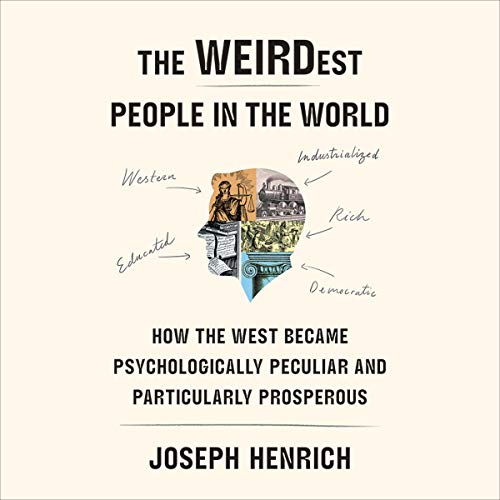
The WEIRDest people in the world by Joseph Henrich A weird book, until you realize that WEIRD refers to West, Educated, Rich, Industrialized, Democratic. How could the minority people make all the big decisions for the world? There are so many decisions made by very few people and we all live in the aftermath of those decisions. This book attempts to give an answer. Agree or not, there is some interesting stuff in it, such as why we moved away from marriage within families, or why some cultures worked better with strangers than others, how the spread of Christianity triggered the need to create contracts with strangers. This book can help kill some time.
Trust by Hernan Diaz Andrew Bevel was the protagonist who evolved into a mystical legend through a series of well-timed investments in the 1920s. The book has three versions of Andrew and his wife Mildred. This clever plot has a little bit of the 1950 classic “Rashomon” or the 2022 Netflix drama “Inventing Anna”. The story lost some momentum halfway in, and in the end, it has left the readers some open questions. Overall a good story.



 oliviatamccue