oliviatamccue

about everything, anything or something

El Calafate, first stop in Patagonia

Patagonia’s snowy mountains, the glacier and natural beauty can remind us of Alaska (My 2021 trip to Alaska). They are different from each other. Alaska is about 1.6 times the size of Patagonia and its glaciers are about 4 times larger. South America is far different from North America in culture, their languages are different, and the history is very different. Patagonia has comparatively milder weather, and has some world famous hiking trails such as the W trek and the Laguna De Los Tres trek. For us, both Alaska and Patagonia offers once-in-a-life experiences.

The Portuguese explorer Ferdinand Magellan discovered the land and coined the name Patagonia five hundred years ago. Was he in awe of the natural beauty? Did he admire the Perito Moren Glacier? Did he track the strenuous  Laguna De Los Tres trek to get a good look of Fitz Roy? Or simply  treasure its vastness? The term “Patagonian” (or Patagon/Patagón) historically denoted the “giants”, the tall natives with big feet compared to the Spanish colonist. Patagonia has not been useful in commercial purpose until the industrial revolution hundred years later, with the consumer interests in wool. Patagonia spreads itself across Chile and Argentina. Argentina has the majority share of Patagonia but the smaller neighbor Chile has arguably  the more famous Torres del Paine National Park, the popular W trek. Last November we flew into El Calafate from Buenos Aires, and had a memorable two weeks in Patagonia, Argentina.

Travelling to Patagonia requires some good planning. There is no easy international direct flight to El Calafate, Patagonia. It took us 8 hours to fly from Iguazu (IGR) to El Calafate (FTE) via Buenos Aires (AEP). El Calafate is the southernmost city among the places we have been to, so far. It has a lot to offer but is more known as the gateway to Los Glaciares National Park and the massive Perito Moreno Glacier within. 
Perito Moreno Glacier

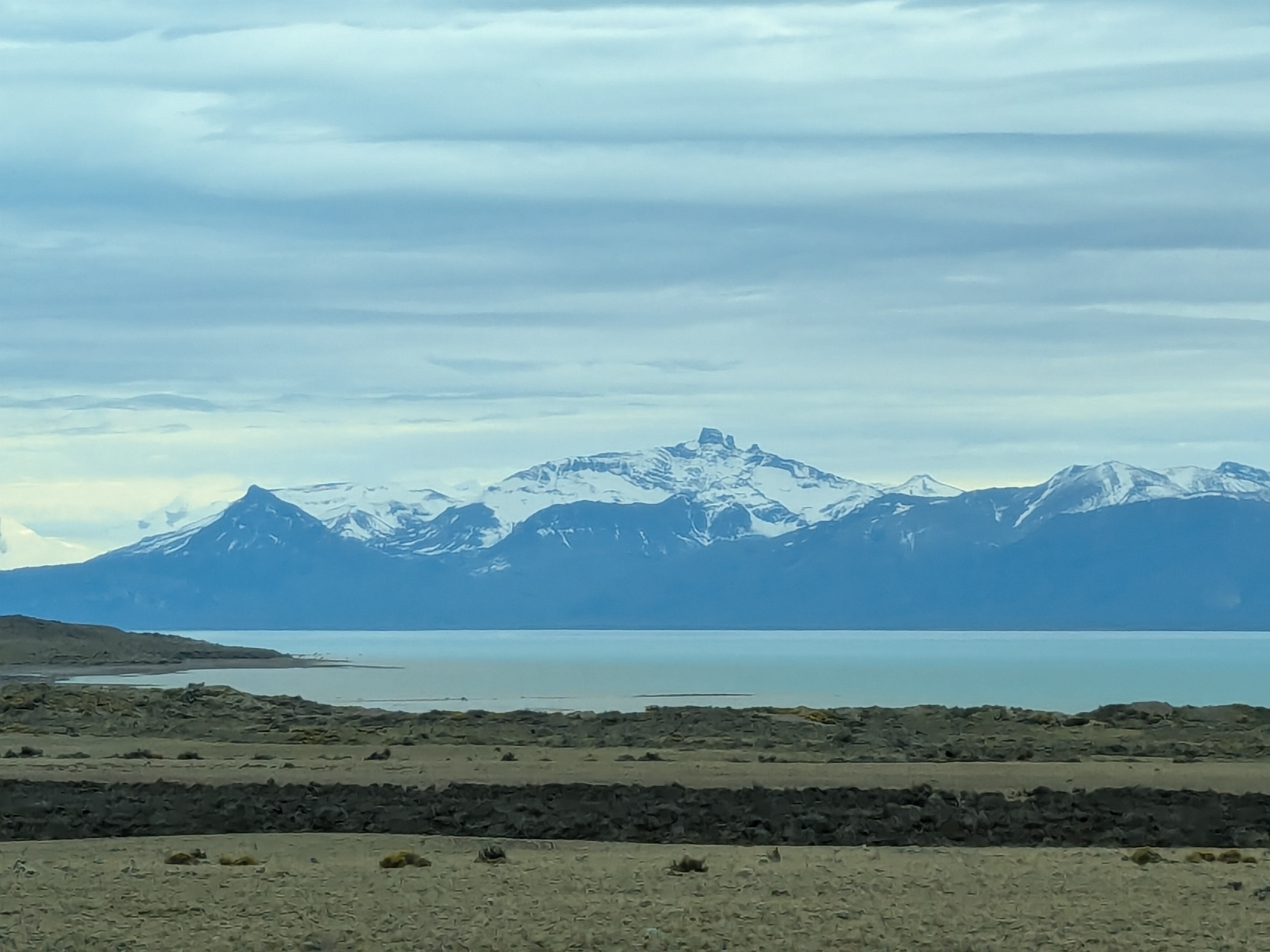
My first impression of El Calafate is the beautiful turquoise color and the tranquility of the huge Lago Argentino (Lake Argentina). I hoped the car, taking us to our Airbnb, moved slower so that I could appreciate the lake and the first Patagonian impression slowly from afar.

The Airbnb is a comfortable unit, located 15 minutes walk to the downtown. The proximity to the touristy downtown area is why we picked it. It turned out that to walk to the touristy downtown, we needed to pass through the neighborhood with a few run down houses, some half done construction and several stray dogs that were not particularly welcoming. I am afraid of dogs so that did not help. I made a mental note to check the neighborhood of future Airbnb carefully and not just rely on its proximity to touristy areas. (Fortunately, we picked another Airbnb when we came back a few days later to El Calafate. That other Airbnb is arguably one of the best decorated Airbnb cottage with a colorful garden of beautiful Lupines and a remote view of the Lake).

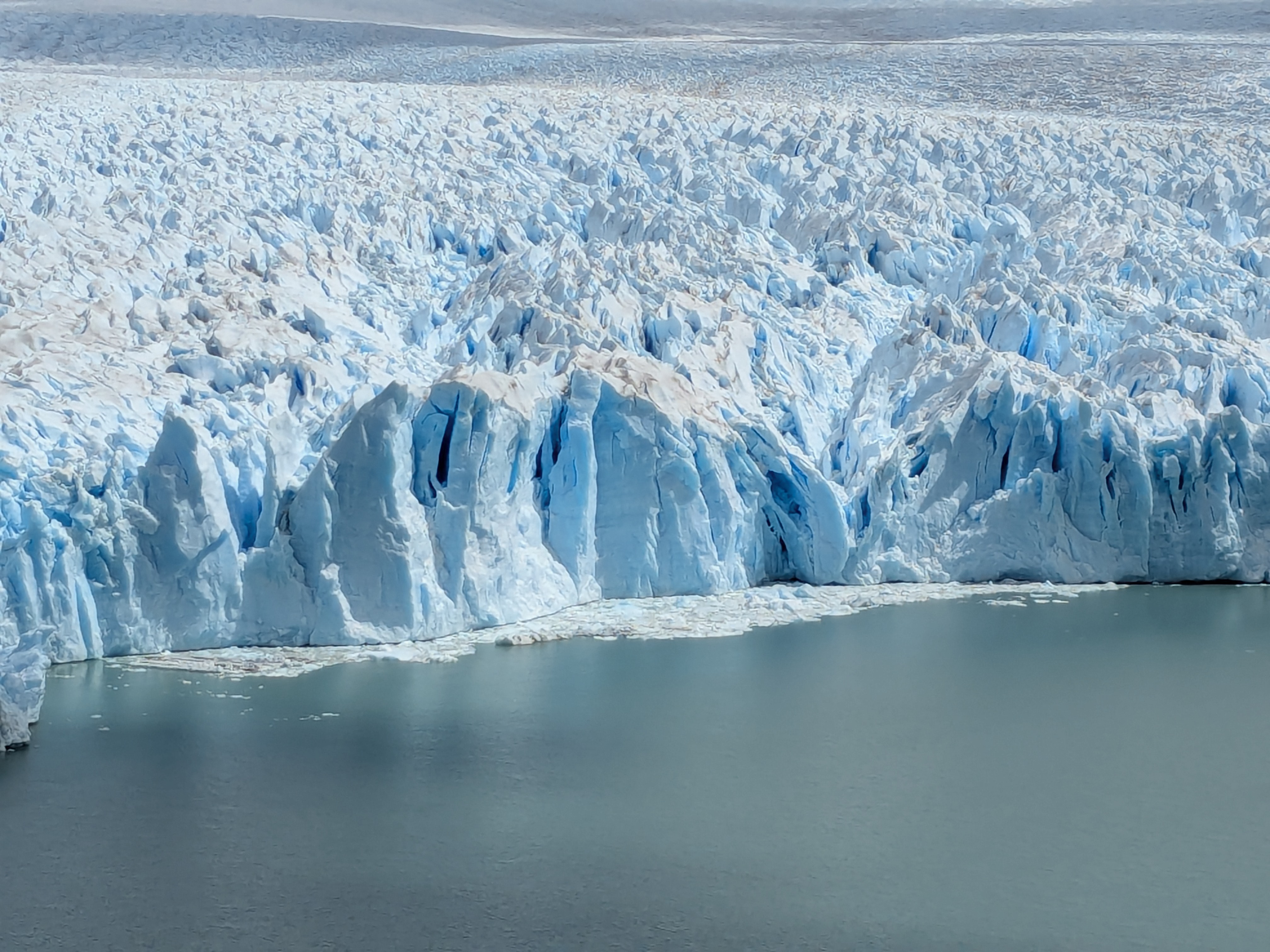
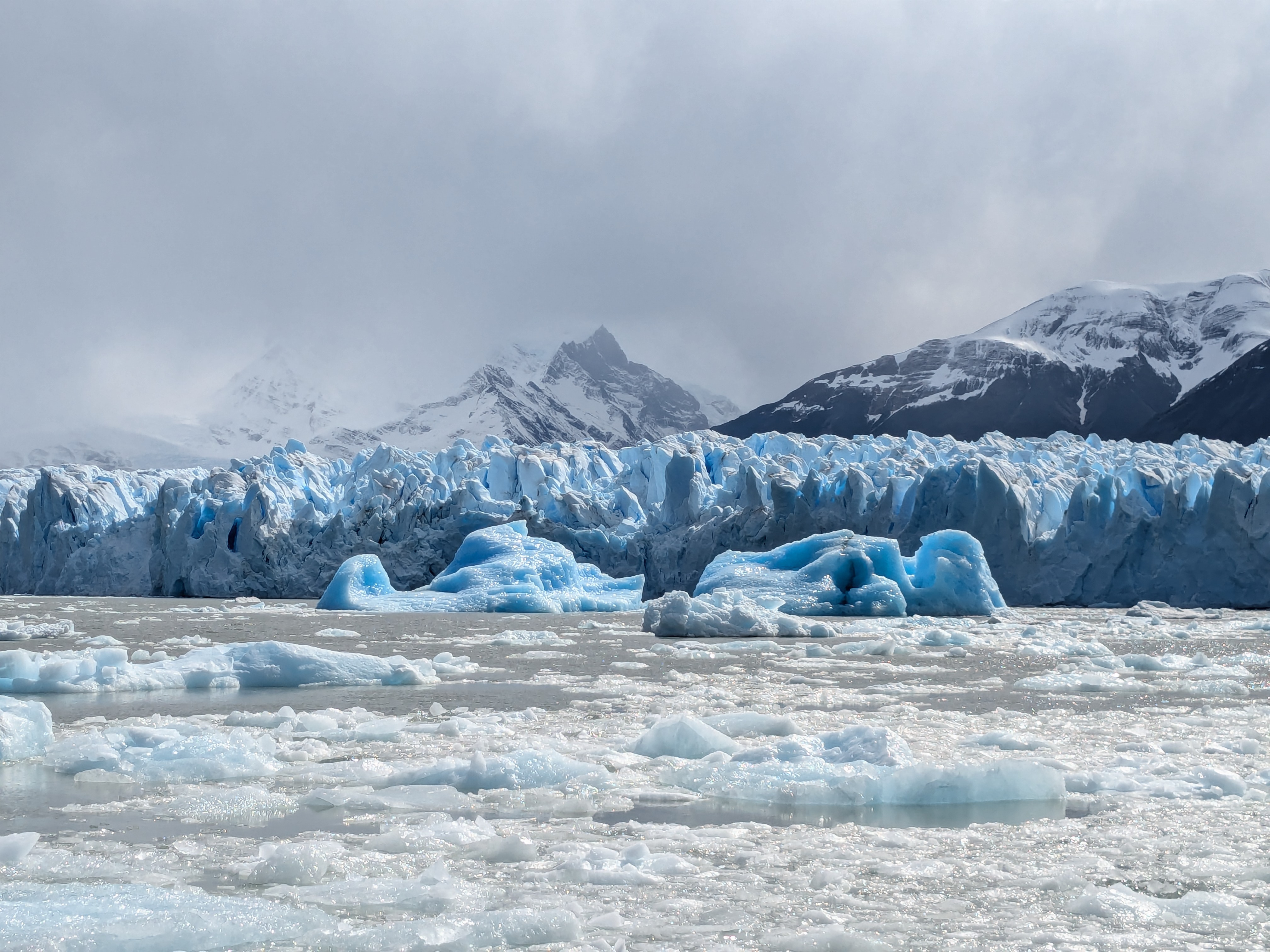
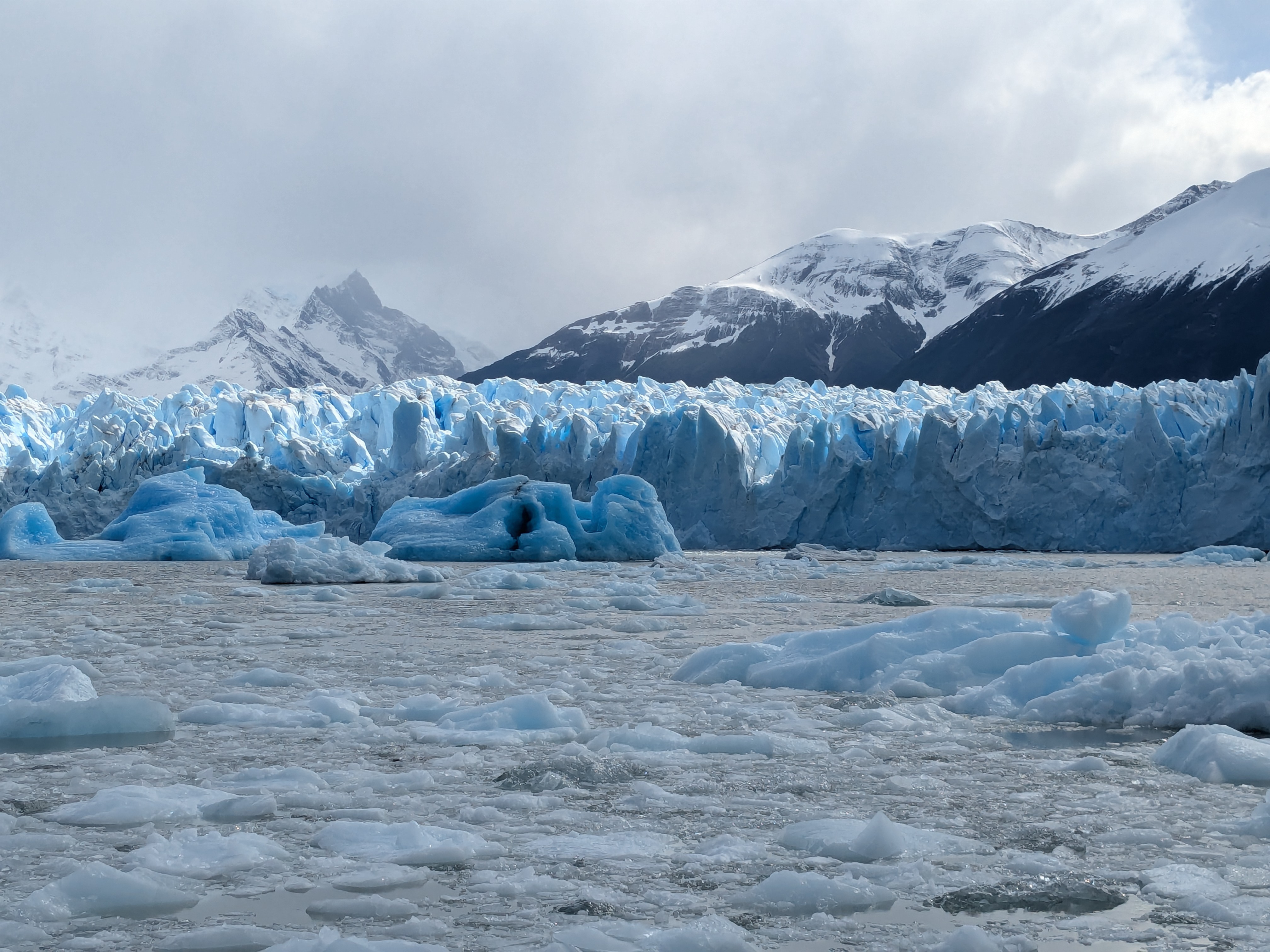
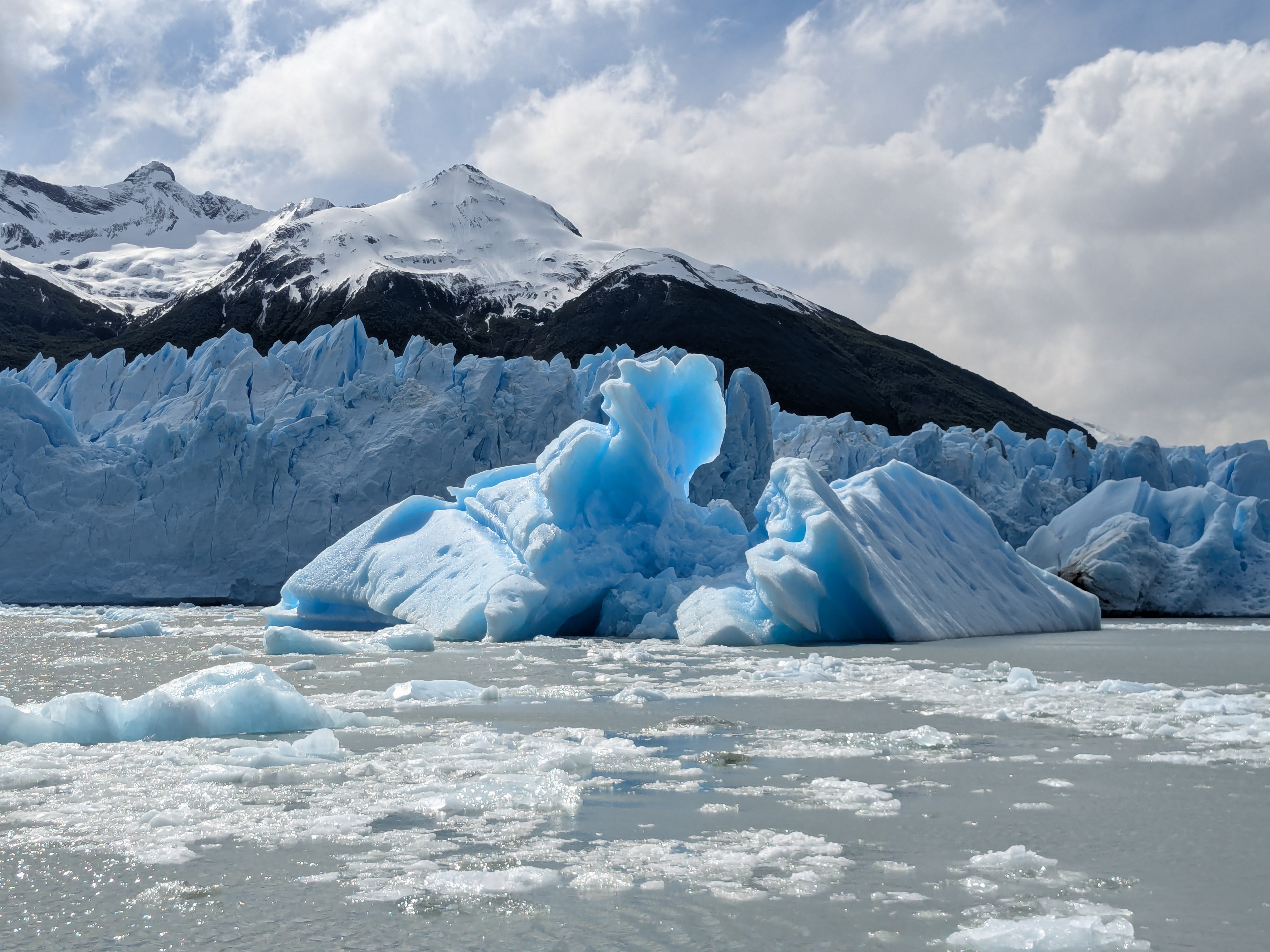
The next day, we joined a one-day tour, inclusive of all transportation and a boat ride, to Moreno Glacier inside Los Glaciares National Park. Moreno Glacier looks like a gigantic flat top “icy mountain” with jagged landscape that look like cliffs and spires on its sides. Because of its vastness, the glacier does not look like its average height of 240 feet above the surface of Lake Argentino. In a direct comparison, the Perito Moreno Glacier is larger than the city of Buenos Aires! 
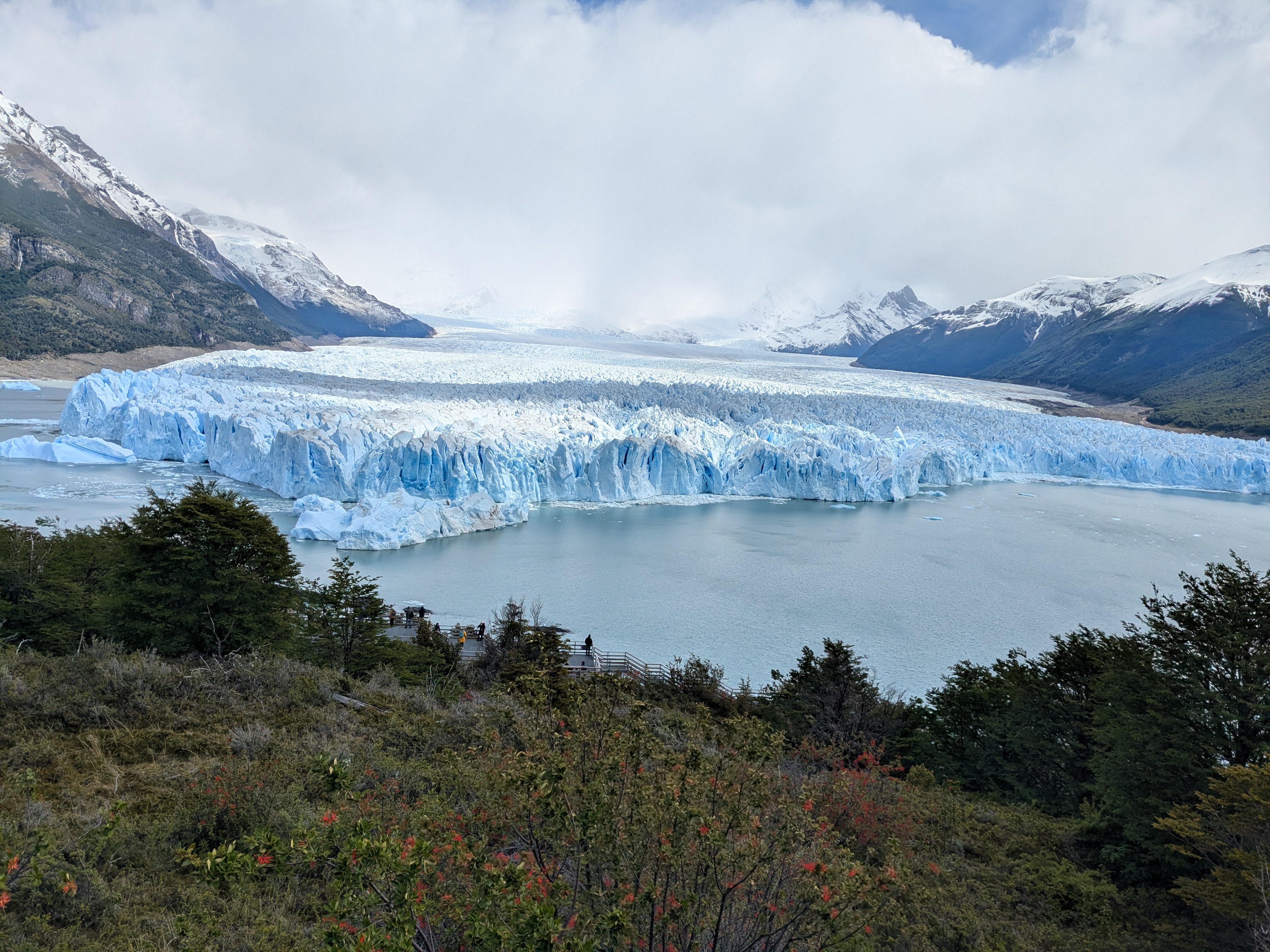
To take the Moreno glacier all in, we spent a few hours on well paved boardwalks and stairs built across the Glacier. There are plenty of photo opportunities of the different sides of the Glacier. On these boardwalks, we occasionally heard the cracking and thundering noise that reminded us of the glacier calving and the power of nature. To get closer, we took a boat ride to fully admire the gigantic Glacier, its beautiful blue and white floating ice blocks everywhere and its chills. It is a scene to remember for a very long time. Perito Moreno Glacier alone would have been worth the long trip to Patagonia. But there is much more waiting in Patagonia.
Next: Nibepo Aike Estancia, a functional estancia (farm), Nov 19 to 21 2025

Leave a comment »

Iguaçu Falls – Brazil

Some travelers may have only one day to explore Iguaçu Falls.  After spending a day in Argentina and another day in Brazil, we asked ourselves the question “which side would we go if we only had a day to spare?”  

We arranged a one-day driver service for about $100 USD. The service includes picking us up from the Airbnb, helps us to cross the border to Brazil, drop us off at the Iguaçu National Park, and take us back to the Airbnb. It relieved us from the logistic distractions.

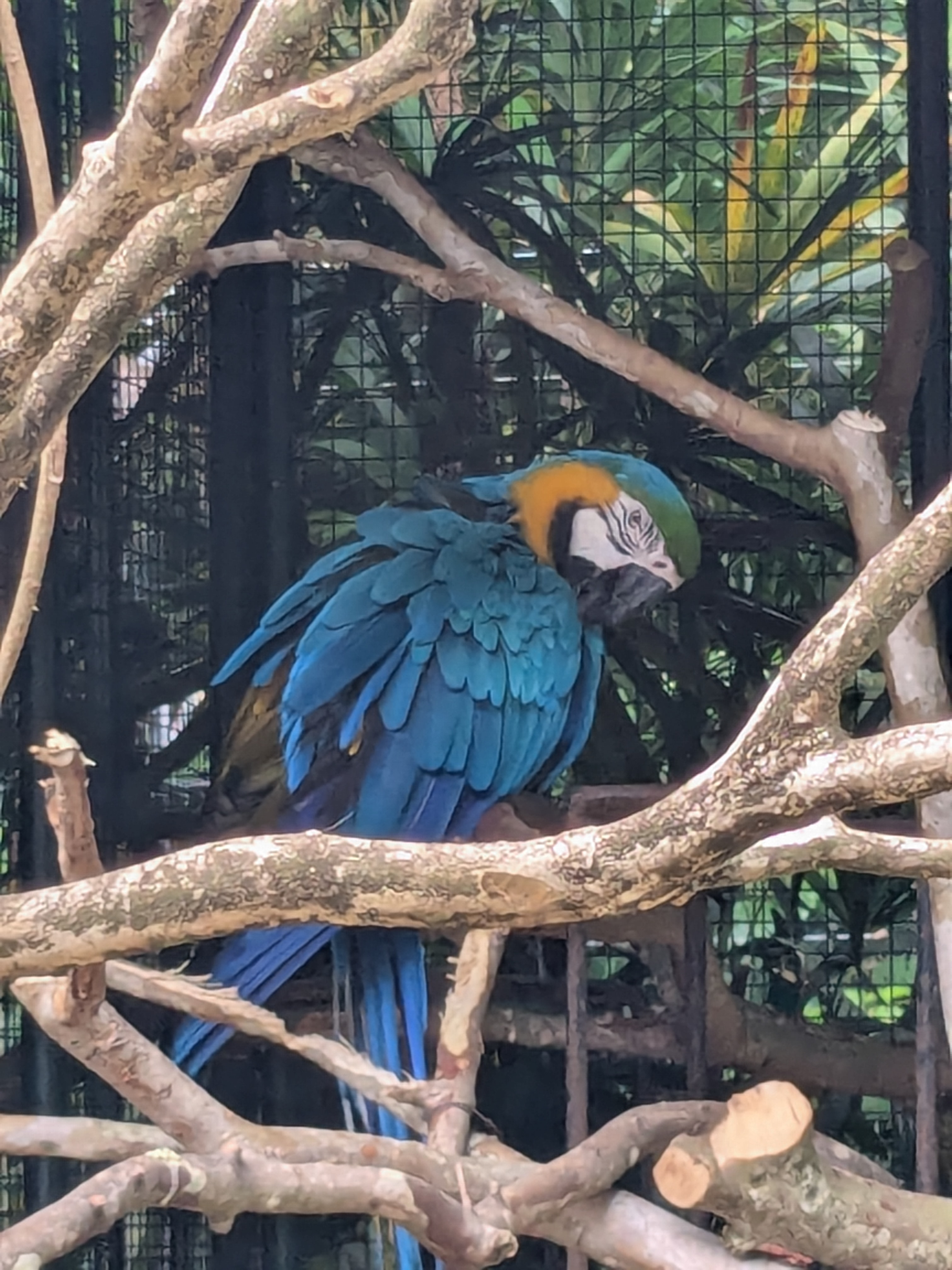
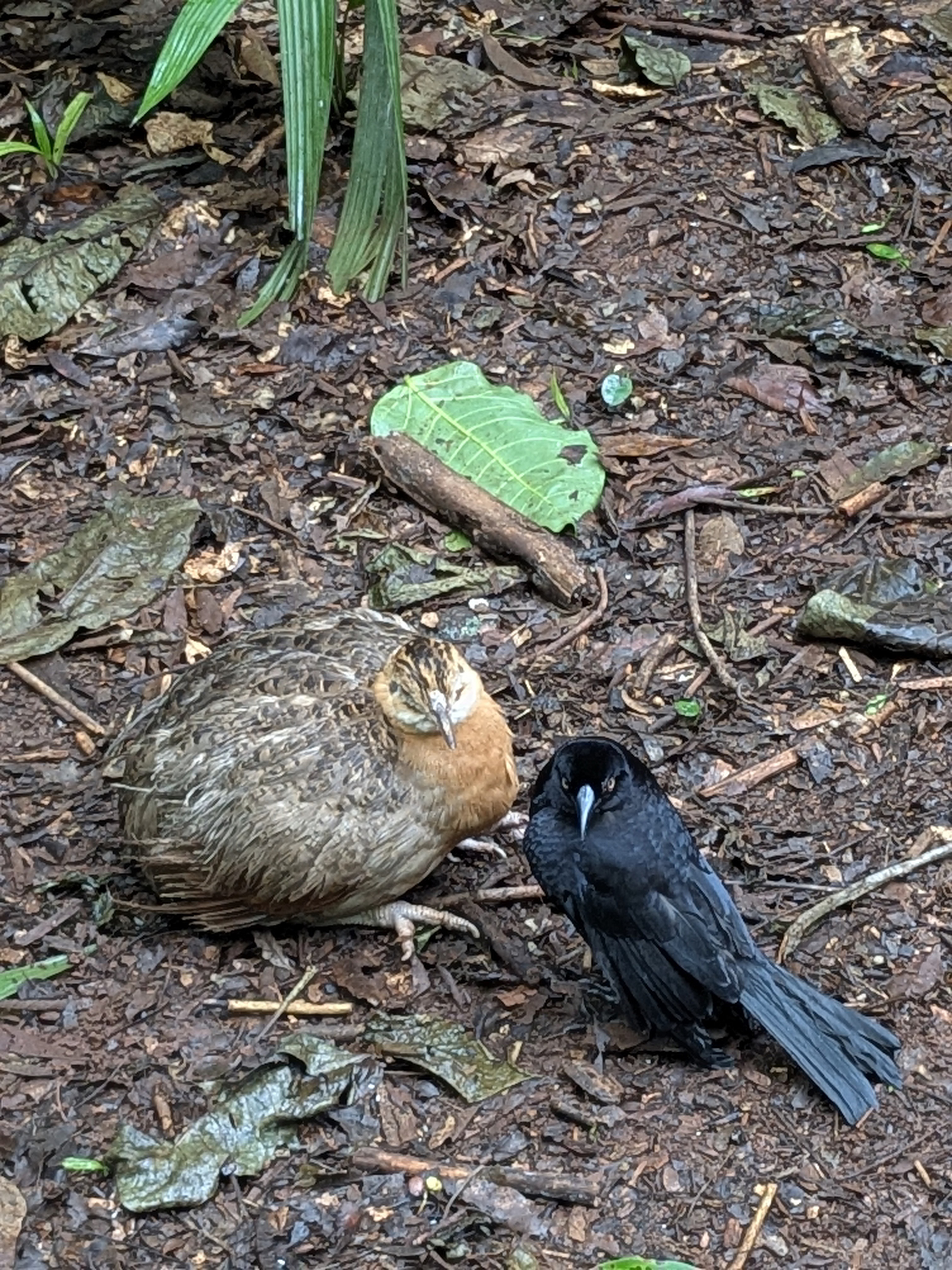
Across Iguaçu National Park, there is a bird park Parque das Aves. The bird park is among the best places for us to enjoy the exotic and colorful birds, not commonly seen in North America. Unlike its unassuming entrance, the park is well maintained showing great care to the birds.  There are large aviaries and lots of spaces for the birds. There are restaurants and rest places for the travellers. The park is designed very well with beautiful flora, lots of educational signage along the trail and secure entrances/exits from one aviary to another. We ended up spending almost three hours in the park, appreciating the stylish Owls, the graceful Flamingoes, the beautiful Scarlet Ibis, the colorful Toucans, and many many more. We can spend more time there if not for the reserved admission time of Iguaçu National Park. 

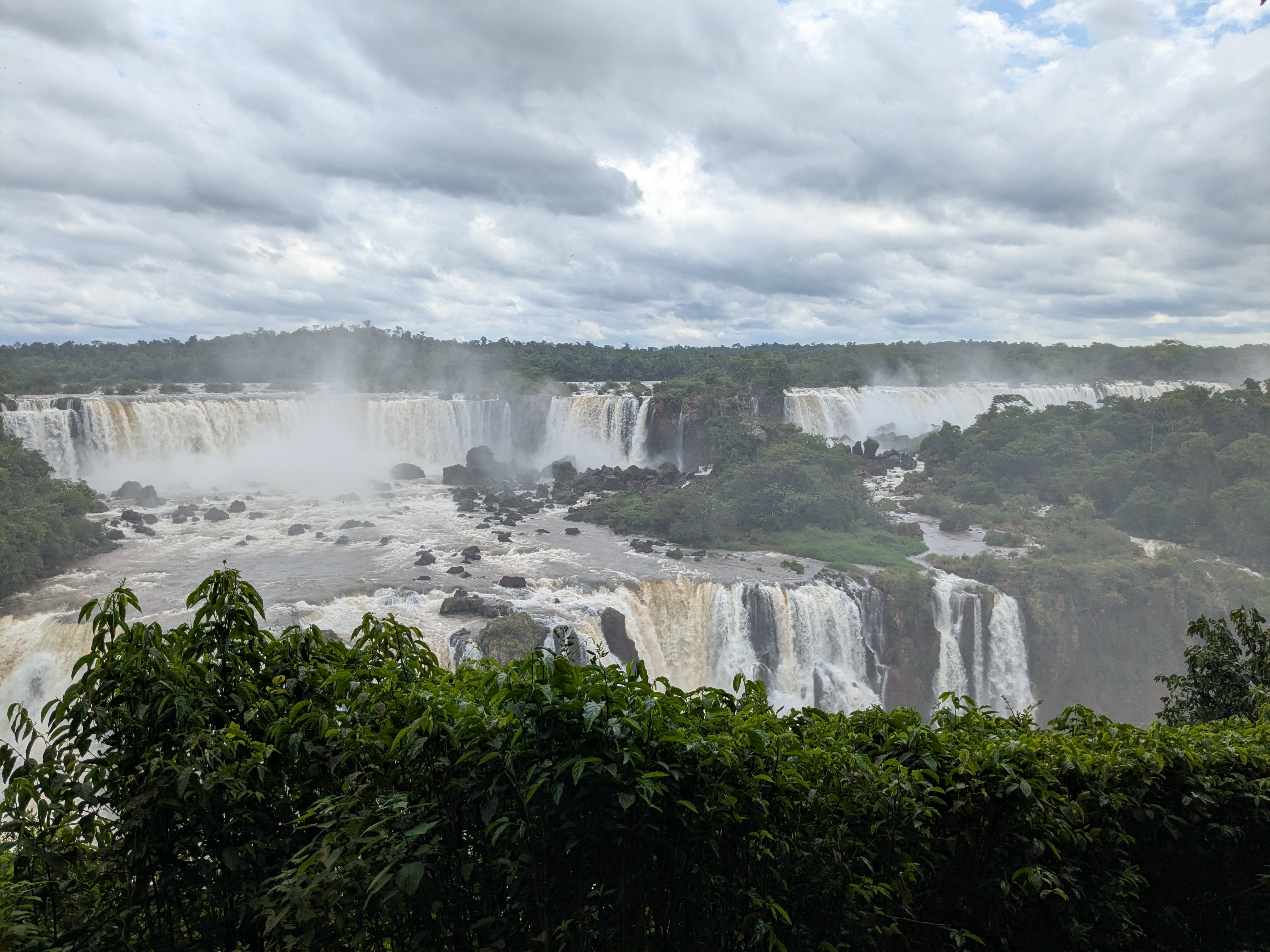
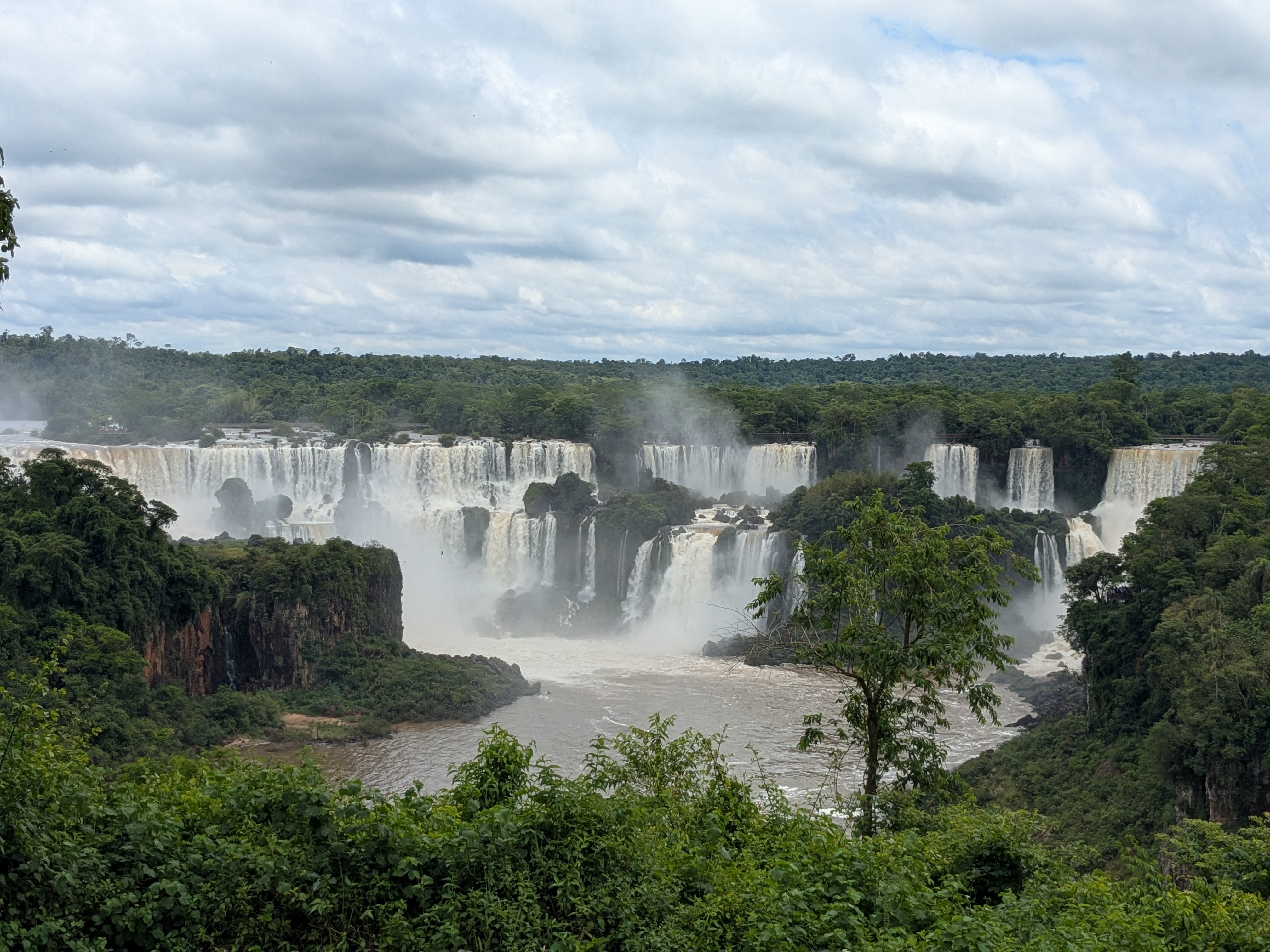
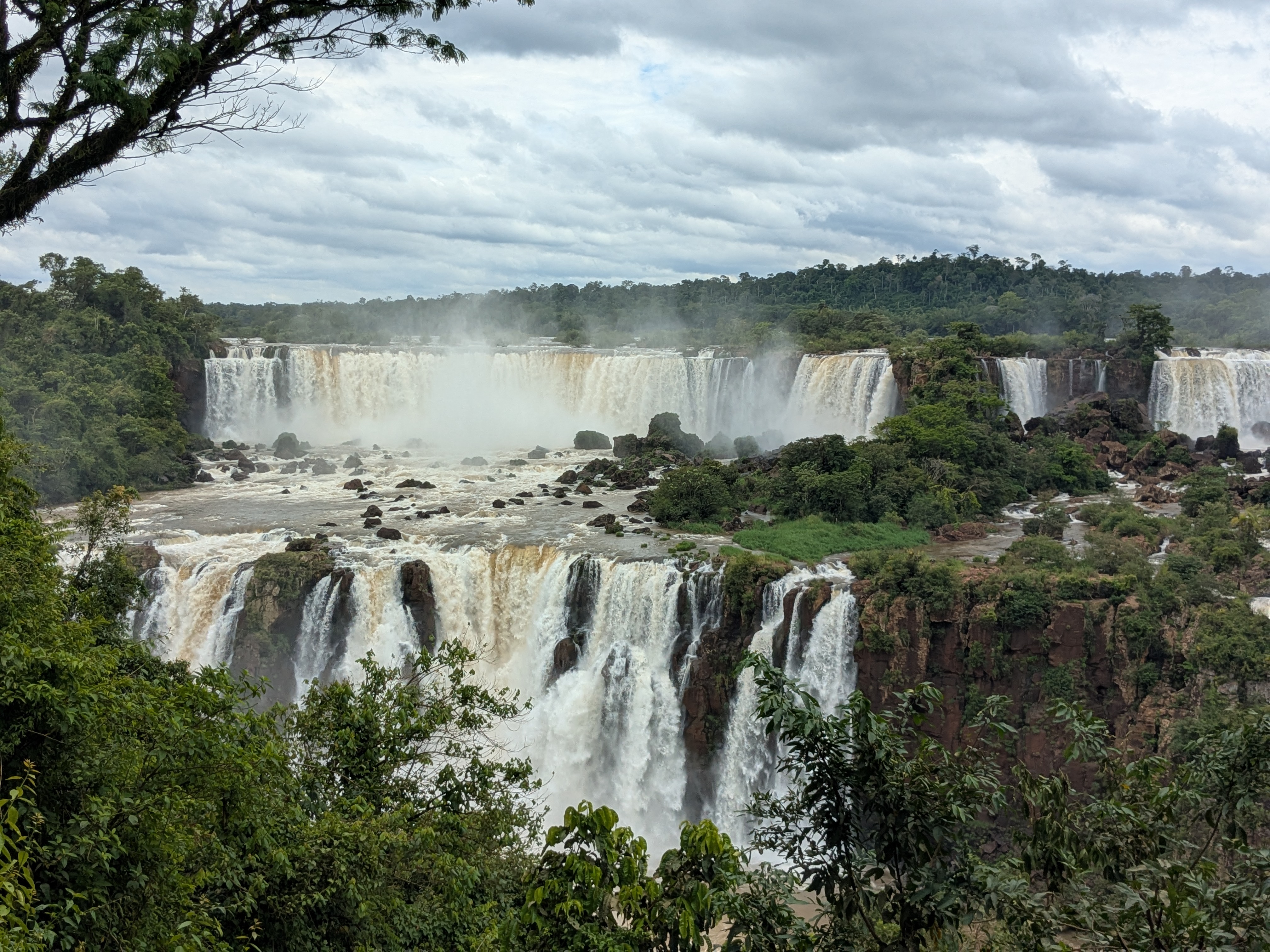
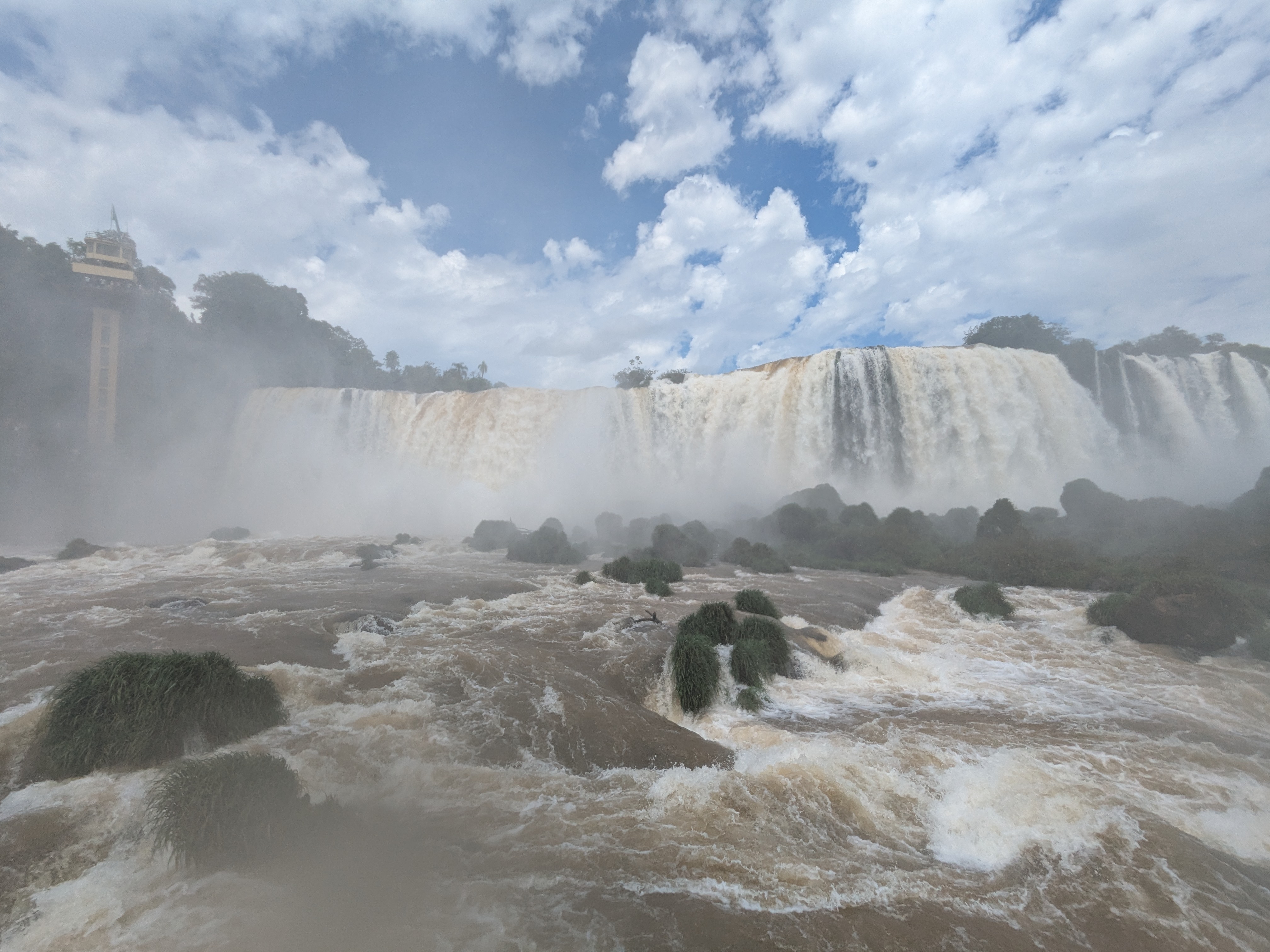
The logistics of Iguaçu National Park of Brazil are different from that of Argentina. In Argentina, helicopter service is prohibited due to environmental concerns such as noise level, impact to the animals. The Iguazu Falls National Park on the Argentina side is connected by trains and trails. In Brazil, there are helicopter services to see the falls and there are buses, with long queues, at the entrance to take you to a fixed number of stops in the park. We got off at the arguably most popular stop right across the Belmond Hotel das Cataratas inside the park. From there, there is an easy stroll full of photo opportunities of the Falls. This Brazilian side offers sweeping panoramic views of roughly 80% of the waterfalls located in Argentina and the staircase character of the falls. There are boardwalks to take you close to some individual falls to experience the waterfall mists and the winds. It was fun and wet.  

So “where (which side) would we go if we only had a day to spare?” We think the Brazilian side has the edge with the amazing panoramic views to see its scale and the grandeur. For boat rides, Argentina has the edge. Our recommendation: It takes quite some logistics to visit Iguazu Falls. Why not spend more days in the biggest waterfall systems of the world? 

Next: El Calafate Nov 17 to 21

Leave a comment »

Iguazu Falls – Argentina

The Iguazu Falls (Argentina) or Iguaçu Falls (Brazil) are major tourist attractions in South America. Upon seeing Iguazu, the United States First Lady Eleanor Roosevelt reportedly exclaimed, “Poor Niagara!”. In November, we visited Iguazu and spent two full days there. 

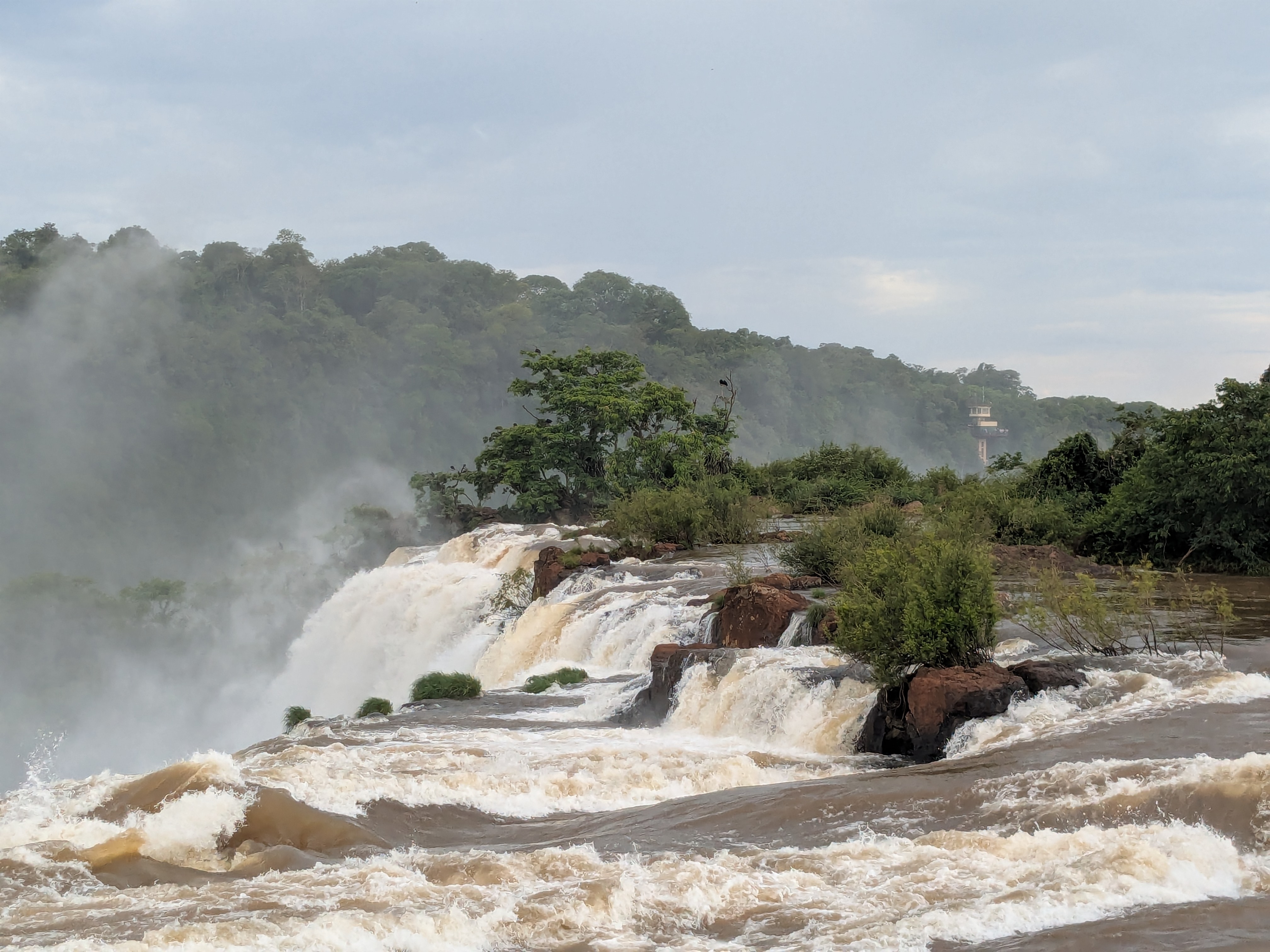
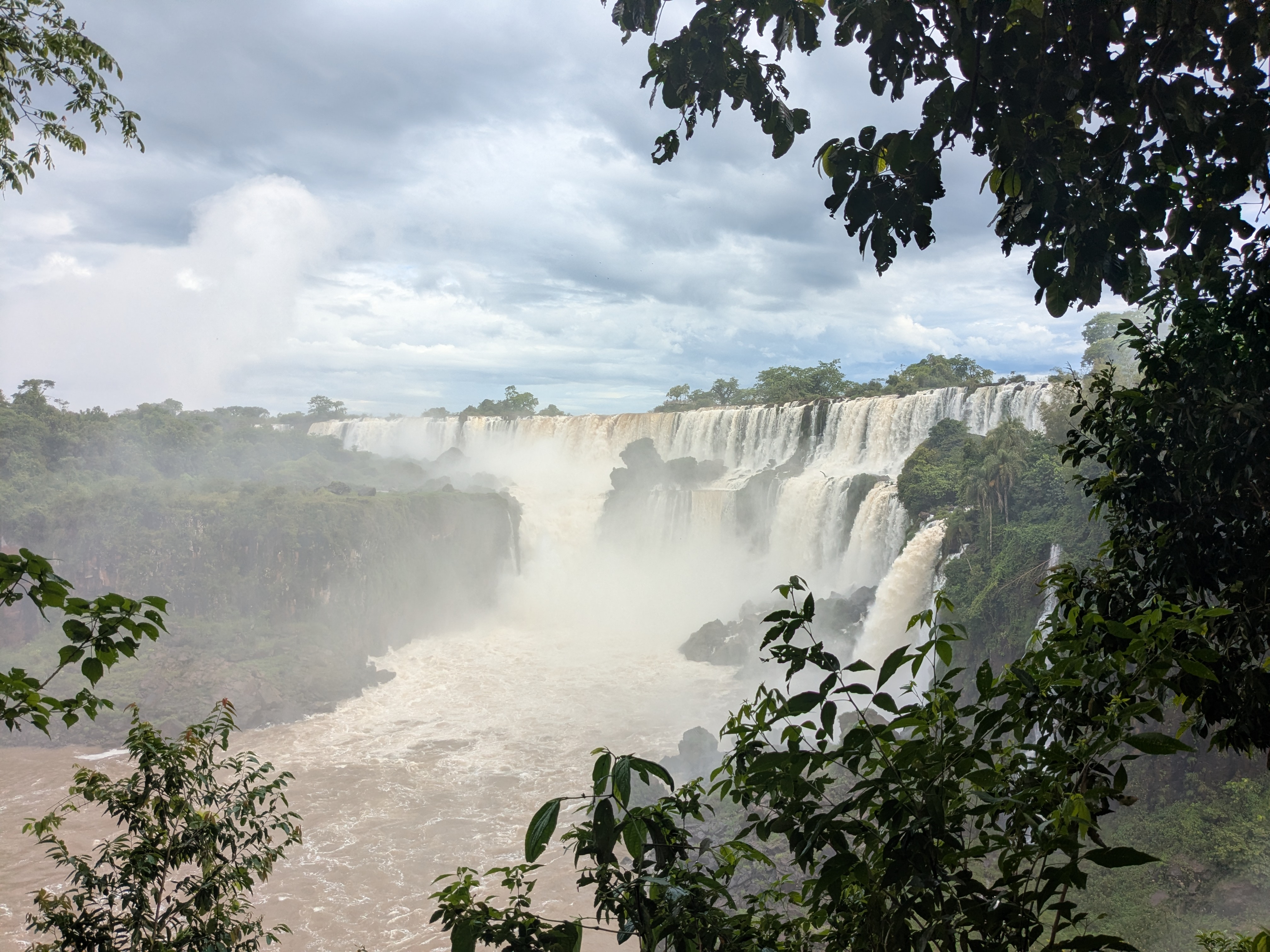
Spanning across 1.7 miles, Iguazu Falls are arranged in a massive, semicircular “horseshoe” shape and composed of over 200 individual falls. In comparison, Victoria Falls in Africa are 1.1 miles wide and Niagara Falls in Canada are 0.6 miles wide. The river of the Iguazu Falls is the Iguazu River, which flows from Brazil, forms the border between Argentina and Brazil, and then empties into the Paraná River, creating one of the world’s largest waterfall systems, if not the. About half of the river’s flow falls into a long and narrow chasm called the Devil’s Throat, along the Argentina–Brazil border. On the right bank is the Brazilian territory, which is home to more than 95% of the Iguazu River basin but has just over 20% of the jumps of these falls, and the left side jumps are Argentine, which make up almost 80% of the falls. From the Argentine territory, you have the chance to boat up close or hike up close to hear its thunder and experience its power. From the Brazilian territory, it is easier to take more impressive panoramic pictures of the 80% of the falls in Argentina.

A day in Argentina

It is a two hour flight from AEP (Buenos Aires) to IGR (Iguazu). Uber is not as consistently available in Argentina outside of Buenos Aires.  At IGR, we met the taxi driver Ada who spoke bits and pieces of English phrases on the ride to our Airbnb.  We understood each other well enough that Ada became our driver for another few rides. The ride from IGR airport to our Airbnb was very scenic with forest along the way and lots of butterflies hovering above the flowers paving the road. We were pleasantly reminded that November is Spring time in South America. The Airbnb is very spacious, modern and comfortable and it has a water dispenser which saves us the effort of buying bottles of water. There are restaurants and grocery markets within easy walking distances. The neighborhood seems more for locals than for tourists and lacks the camaraderie of fellow travelers.

The Iguazu Falls, on the side of Argentina, reside in the Argentine province of Misiones, and make up close to 80% of the falls. We had a reservation for a 3-hour boat ride, including jungle transport to the river. The open-top jungle transport was a comfortable ride. There were birds chirping, we saw colorful Toucans and enjoyed the forest as we rode through the jungle with fellow travellers. The tourist guide explained everything in both English and Spanish. 

After hundreds of stairs going down, we arrived at the river, were given life vests and a big waterproof bag, to put everything in, and were reminded that no raingear would save us from getting soaking wet. Then began the boat ride. The first leg was on a quiet river flow. Soon, there were individual waterfalls and more waterfalls. As the boat approached the waterfalls up close, it felt more like a roller coaster ride, except this ride, we were under the waterfalls. At times, it was like being in a shower. At other times, it was like being “hit” by powerful water jets. We got soaking wet and the boat kept going back to be under the waterfalls. When we had enough, the boat was back to the quiet river again and we headed back to the jungle. It was cold, fun and exciting.  If you go for the boat ride, just remember to bring a spare set of clothes, unless you want to spend the remainder of the day in wet apparels.

In the afternoon, we took the slow moving and comfortable train ride in the park, and did the popular hikes : the Devil’s Throat trail first, and then the Upper Circuit, Lower Circuit. The Devil’s Throat trail leads to the most powerful section of the falls with well paved suspended walkways.  At the Devil’s Throat, we were level with the waterfall, hearing its thunder and feeling its mist as the water jumped down the 200 feet canyon. The Upper Circuit allows us to see the waterfalls from above. The lower circuit allows relaxing stroll on boardwalk over the river, and gets us close-up views from below.  There were many many individual waterfalls we visited along these hikes. These hikes, some with stairs, are overall friendly to travellers of different degrees of fitness. 

The boat ride, the trains and the hikes offer stunning and varied perspectives of the falls. 

Next: Iguaçu Falls – Brazil

Leave a comment »