I recently joined an exciting AI-themed toastmaster club. This week, I gave an impromptu speech on “how AI would affect how we consume information?”. I seized the opportunity to talk about how humans, not technology, can keep their say in the era of internet, social media and AI.
Many are uncomfortable with new technology or simply changes. Surprisingly, the same “many” often give technology even more say on what they think and how they think. For those who are uncomfortable with AI or new technology, the following are written for you to keep your say when you consume information on the internet, on social media, or in the future from AI.
- Is it fact or opinion?
If you are not sure, take it as the opinion of the writer. - Is it news or entertainment?
If you are not sure, categorize it as entertainment, and you don’t want to interpret most things as news on YouTube videos, Facebook live streams. - Is it confirmation bias, or a discovery of new perspectives?
You can better tame confirmation bias when you are open to discovering what you don’t know. It is my opinion that humans are flawed and that we cannot be right all the time. - Do supermen and villains ever switch roles?
If your information channels constantly portray the same country/party/persons are righteous, and the others are evil, it is time to read the other side of the story from other channels? There is no rush to take sides. - Does your current stand influence you the most to decide the sides to take in new event(s)?
Be mindful if you let your existing stand make the decisions for you in new events. With the tsunami of information out there, you are likely going to find information supporting your current stand, even when the information is fake or opinionated. It is my opinion that it is beneficial to read different sides of the same stories. There is no rush to take sides. - Is your emotion ahead of your head to decide?
We all have our emotional moments. When the emotion subsides, you have the right to change after going through the emotional reactions. - Are you ready to learn about history, cultures, and religions in the world?
If this is a NO, it is my opinion that you are in no place to have a bad take on other countries, cultures or religions.
How much, with or without AI, have you enabled technology (internet, social media, online videos) to take over how you think, how you live, and what you do?
Reading is among the best ways to keep your heart and mind healthy. I feel quite sad to see books are becoming so cheap, and e-books even cheaper in the era of inflation and information overflow. You can help the authors and, even more so, yourself to find good books to read.
Radical Candor by Kim Scott
I would not trade the fun of reading books, to a productivity play. Still, I tested the productivity hype about AI’s large language models. ChatGPT happily returned a clear summary to my prompt: ‘What is the book “Radical candor” by Kim Scott in a nutshell?’. I shortened its summary to this within minutes: “Radical Candor” is a practical guide for leaders and managers to foster better communication and relationships within their teams. It’s about delivering honest feedback with empathy and respect. The book provides numerous real-life examples and actionable advice on how to implement these principles of radical candor in the workplace to create a more effective and harmonious working environment.

The Demon-Haunted World: Science as a Candle in the Dark by Ann Druyan and Carl Sagan
I wish this book was on the K-12 reading list. Filtering the information overload is like finding the straw of truth in a great ocean of confusion and conundrum.The baloney detection kits in this book are tools that can help you and the future generation in the much-needed critical thinking.
The things you can see only when you slow down by Haemin Sunim
If you are looking for insights to “Why am I so busy?”, “When you are feeling low?”, “Being right isn’t important; Being Happy Together is”, “When you look for your calling”. My favorite chapter is “Three liberating insights” – people are not as interested in me as I had always believed; not everyone has to like me; and most things we do for others are in fact for ourselves. I keep coming back to some chapters in the book.
Message in a Matchbox – Memories of a Childhood Tehran by Sara Fashandi
The title said it all. The stories of her brother from the author’s memories grow on me as I read on. Born poor, the characters have to overcome life obstacles to improve conditions for the family. At times tragic and emotional, this is a storied portrait of his brother’s childhood in Tehran. I recommend this book to see that part of the world.


The Tale of the Unknown Island by Jose Saramago
I love this book and have read the 51-page twice. It is not a children’s book, though the children can enjoy it. This charming story shares how we all are isolated in our own island, and we all are on our own island until we find connections with purpose and love. I enjoyed both this book as well as “Seeing” by the same author.
* José de Sousa Saramago is a Portuguese author and the recipient of the 1998 Nobel Prize in Literature. His parables, sustained by imagination, compassion and irony, [with which he] continually enables us once again to apprehend an elusory reality.
Seeing by Jose Saramago
A sequel from the book ‘Blindness’, which was made into movies. It starts with the majority of voters throwing blank ballots in the election. As the government reacts to it as a crisis, conspiracy and sedition, the story ends with the death of arguably the two best characters. It paints a vivid picture of how the world has become, how much we accept blindness to many things around us, and how much we still choose to see. It is a gem that is waiting for your discovery. It is a book that I would like to read again.
Dopamine nation : finding balance in the age of indulgence by Anna Lembke
Through the lived experience of the patients and her first hand experience of guilt pleasure turning into addiction, the author highlights the delicate balance between pain and pleasure. Self discipline becomes a thing of the past when immediate pleasure is within reach in so many ways and modern day comfort gives rise to more indulgence and addiction . Maintaining the pain-pleasure balance is essential for our health and well being. A quick read recommended to those who want to overcome addiction or bad habits.
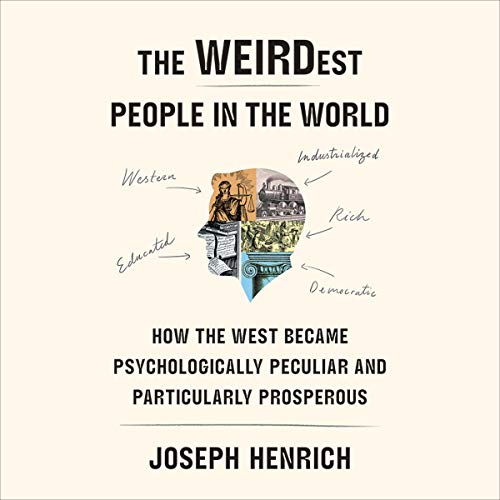
The WEIRDest people in the world by Joseph Henrich
A weird book, until you realize that WEIRD refers to West, Educated, Rich, Industrialized, Democratic. How could the minority people make all the big decisions for the world? There are so many decisions made by very few people and we all live in the aftermath of those decisions. This book attempts to give an answer. Agree or not, there is some interesting stuff in it, such as why we moved away from marriage within families, or why some cultures worked better with strangers than others, how the spread of Christianity triggered the need to create contracts with strangers. This book can help kill some time.
Trust by Hernan Diaz
Andrew Bevel was the protagonist who evolved into a mystical legend through a series of well-timed investments in the 1920s. The book has three versions of Andrew and his wife Mildred. This clever plot has a little bit of the 1950 classic “Rashomon” or the 2022 Netflix drama “Inventing Anna”. The story lost some momentum halfway in, and in the end, it has left the readers some open questions. Overall a good story.
 oliviatamccue
Leave a comment