The Biden government and the vaccine situation have shown us some light towards the end of the Pandemic tunnel. This month, My husband and I visited the downtown of Mountain View, Sunnyvale, Palo Alto, Los Gatos, San Mateo and Menlo Park to experience the different outdoor dinings in each city.
During the pandemic, I have been able to read a few all-time classics used to be on the reading list during my retirement years.




Anna Karenina
by Leo Tolstoy
In my high school years in Hong Kong, the high school had roughly half of students studying science (aka STEM) subjects, and another half studying art subjects. There was, and probably remains, a hierarchy in subjects where science subjects have often been ranked higher in the overall curriculum. Often considered among the greatest literature of all time, the novels by (Leo) Tolstoy were squarely reserved for those studying English literature, a subject for the art students.
Married to a powerful man Alexy, Anna was beautiful, charming, tactful to almost manipulative, and lived a perfect life until she met Vronsky. Vronsky lived his glamorous life until he desperately fell in love with Anna. Levin, an idealist and an intellectual who preferred living a real life in his farms and with the peasants, was devastated when his proposal to Kitty was not accepted. Kitty, the ex-lover of Vronsky, recovered herself in a sanatorium, and re-discovered her love for Levin. The pursuit of love, by these protagonists, changed everything for them; and reflected how the disparity of the society in the treatment of Anna and Vronsky in their affair. The plot acted as a conduit to write about the society and the protagonists. The power of “Anna Karenina” is in how well Tolstoy wrote about their emotions and how well the characters brought you to the society of the time. Reading the book is getting to know these characters – their inner thoughts, their expression of their thoughts which often were contradictory to their inner thoughts, and the doubts in their pursuit of love and purpose of life. It transported the reader to the society and witnessed the lives and the life events of the people from peasants, landlords, soldiers, public servants, and politicians. The pain, anguish and terror of Levin, in enduring the long labor process of Kitty, was arguably the best ever description of father-to-be experience, that dark side has been so seldom told. The visceral tortune in living through the long hours towards the inevitable death of Levin’s brother was powerful, vivid and absorbing. Anna’s heart-wrenching struggle, in her hopeless affair, could only lead to one inevitable outcome in her once perfect life.
The book leaves me wondering if science represents a certain understanding of nature and species, then literature gives us a multidimensional view of our beings from the past to the future.


The Element
by Sir Ken Robinson
Often considered as the most watched Ted Talk, Sir Ken Robinson has been a strong advocate of education reform to cultivate curriculum diversity, ignite students’ curiosity and awaken learners’ creativity. His Ted Talk “Do schools kill creativity” is both entertaining and educational, and I could not recommend more.
The element is that intersection of the things(s) we enjoy doing and the thing(s) we naturally do well. Many run through their lives without discovering their elements. In his discourse, Sir Robinson believes finding the elements are both possible and crucial. It is never too late, just like Julia Childs discovered her element in French cooking in her fifties. To discover our element, we need to rethink the possibility, find our zone in things we enjoy doing so much that we lose track of time, meet others with similar passion, and open for help.
Full of examples, ideas and inspirational stories, this is a great book for all parents and educators.
I learn first hand even if we, parents, put in our best effort to help our children to discover their elements in the most personalized setting, there is no guarantee for success.
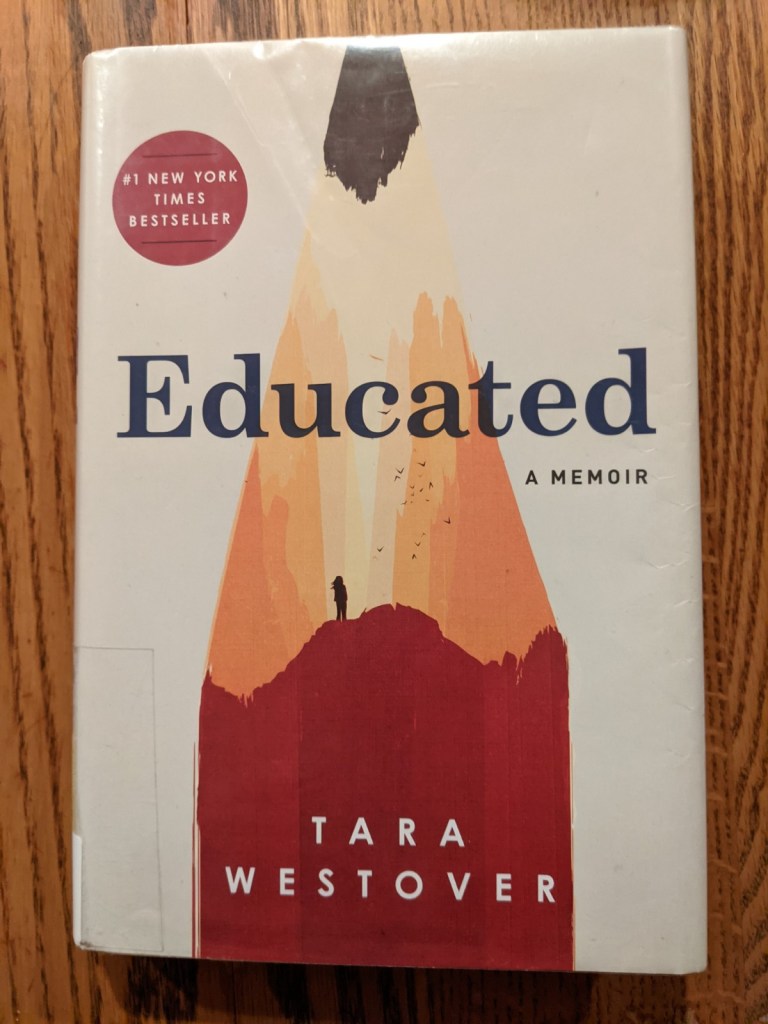
Educated, a memoir
by Tara Westover
Born and raised in Idaho in a large family, the author has been isolated from the society. Her parents do not trust the government, do not go to medical facilities, do not allow children to go to school and her father believes himself to be the Mormon prophet and has the strictest code of conduct for his children . He dominates the family with his long lectures, and his religious doctrines to the level of abuse. He loves his children in his own distorted way, and tolerates abusive behavior of his sons. Her family has been the whole world for the author, until she miraculously found her way to attend BYU. Through her hard work, her intelligence and her persistence, she was awarded scholarships to Cambridge and Harvard, and earned her PhD from Cambridge. The more she got into the mainstream society, the more her parents saw her as being possessed and became a disgrace for the family. Would she compromise to remain in the distorted worldview of her father and have a family to go back to? Would she stand up to the values she acquires through education? This is a memoir of her struggle, her courage, and how she makes different choices as she becomes educated.
Education changes who we are and what we would become; so do our family, our upbringing and our culture. It pains to read the struggle the author has to suffer between the evangelical view of her parents and the values that she learned through education.
It is a story of self definition and self belief through the power of education.
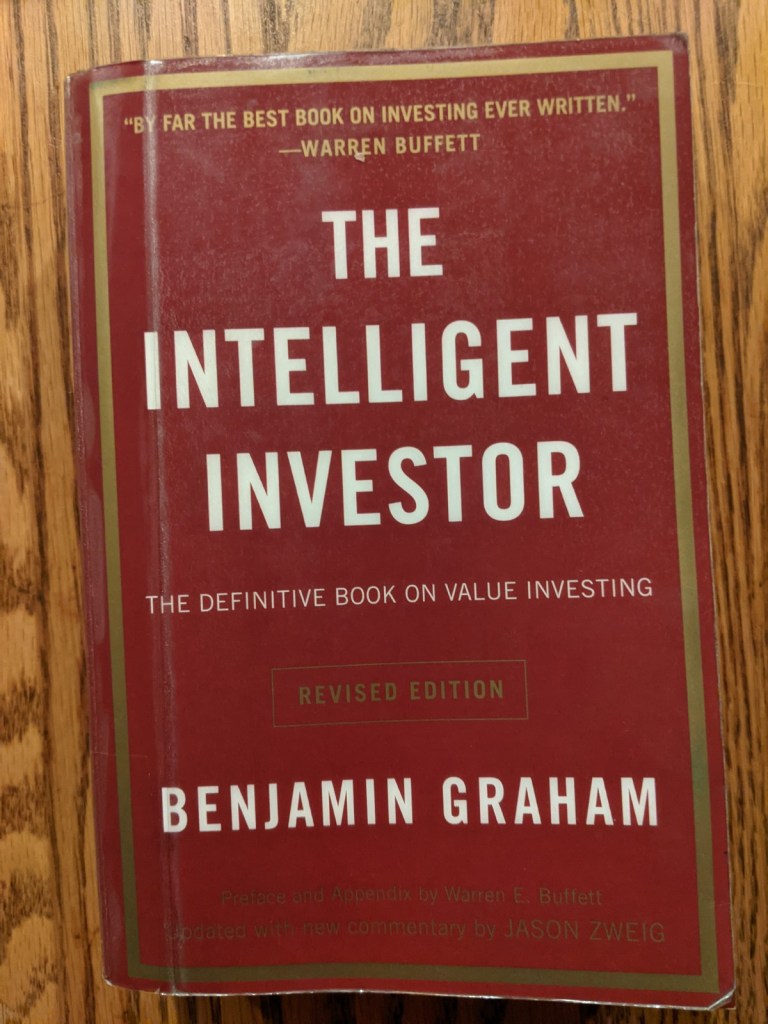
The Intelligent Investor
By Benjamin Graham
Warren Buffett, one of the most successful investors, if not the most, said it all: By far the best book on investing ever written.
First published in 1950, the book has been a must read for anyone who cares about making good decisions on their finances. Mr. Graham wrote: “an investment operation is one, which upon thorough analysis promises safety of principal and an adequate return. Operations not meeting these requirements are speculative”; and “The speculative public is incorrigible. In financial terms it cannot count beyond 3. It will buy anything, at any price , if there seems to be some “action” in progress. It will fall for any company identified with “franchising”,computers , electronics, science, technology, or what have you, when the particular fashion is raging. Our readers, sensible investors all, are of course above such foolishness.”.
Reading his investment advice is like reading the answers to the questions that would come up in the final for the subject of “investment”. Yet so many continue to make the same mistakes, and (choose to) behave as speculators than investors.
*******





 oliviatamccue