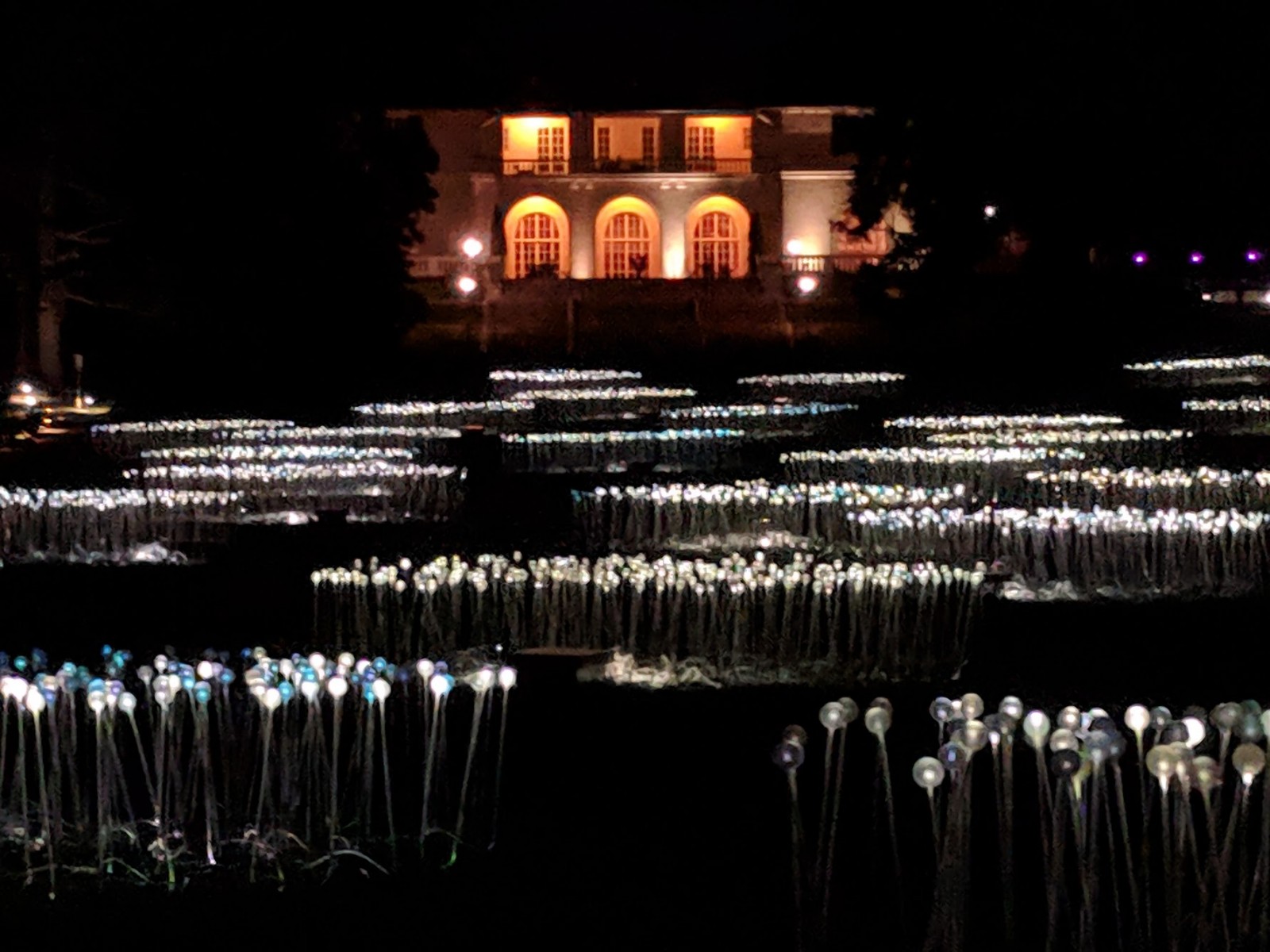
 First week of the month, my daughter and I went to watch a beautiful lights show by the artist Bruce Monro.
As the children went back to college, my spouse and I slid back to empty nester. Australian Open came and gone, the miraculous 2017 and the slightly less but still spectacular 2018 did not repeat. Towards the end of the month, we set up a raised garden bed which has been a gift sitting in the garage for years. We planted the lovely herbs Rosemary, Thyme, Parsley, Cilantro, some Kale and some pepper seeds. The money spent on the garden soil, seeds and the plants could e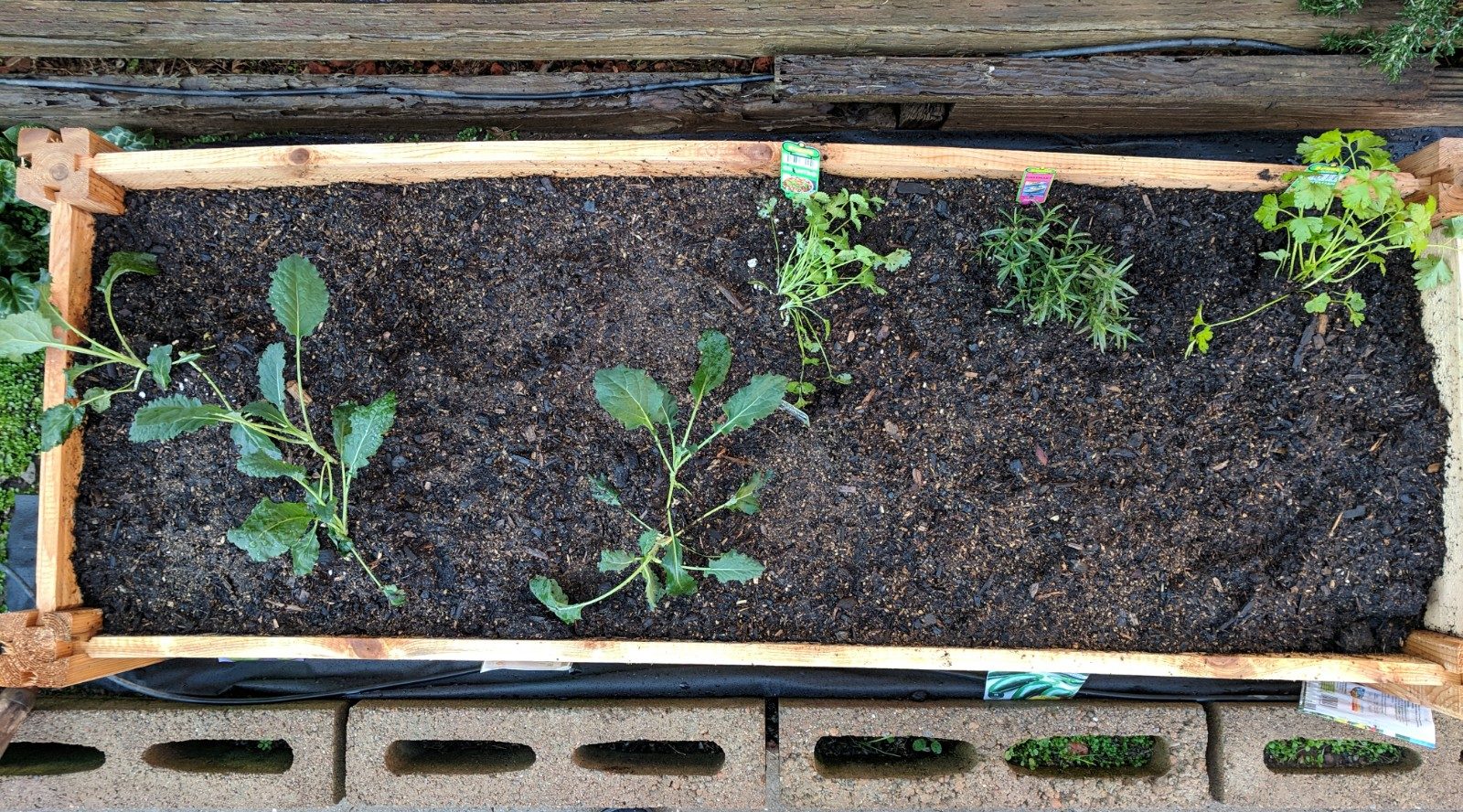 asily afford us a month or two of expenses in vegetables, not to mention the labor, the water and later the fertilizers. This again reminds how little farmers earn, and yet play such an important a role in our society.
I finished reading two non-fictions. The first book, written by ex-GM of Google China, covers and analyzes Artificial Intelligence (AI), a topic that everyone is curious about. The other book, written by a physician and claimed the Pulitzer prize, covers a topic that people rather whisper about.
AI Superpowers: China, Silicon Valley, and the New World Order
by Kai-Fu Lee
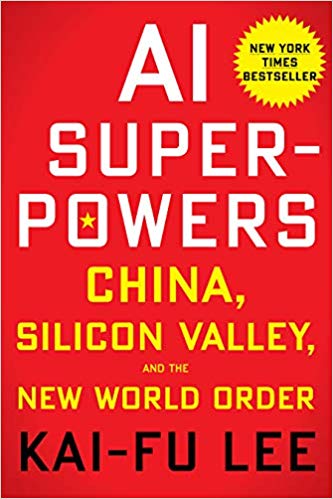 The book has both the Chinese and English version. I read the Chinese version.
Many of us are curious about “who would win the AI race?”, “how would AI affect the world?”, “how many jobs would be eliminated?”, and even further, “is human, as a species, going to become extinct?” This book provides a comprehensive coverage of AI technology impact to the world, to the superpowers, and to each of us.
Once the GM of Google China, he decomposes the four success factors for AI: Data, Entrepreneur, Talents/Technicians, and Government; and provides a structural comparison how the two superpowers, China and United States, would compete with each other. On a broader scheme of things, it provides a thought provoking analysis how AI would affect the society and its wealth distribution; and ends with a hypothesis how AI can play a role to enrich human life.
From his near death encounter with a deadly illness, the author reckons human future lies in our spirit of humanity and most importantly, our ability to love.
The Emperor of all maladies : A biography of cancer
by Siddhartha Mukherjee
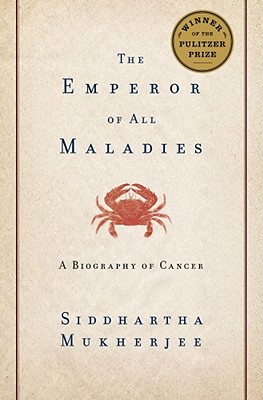 How would a book on such a dire illness, win the Pulitzer Award?
The book is among the most engaging, educational, and absorbing read of all the books I have read. I can’t help but admiring how the author weaves narratives of the scary radical surgery, the poisonous chemo trials, the difficult battles against the tobacco industry and the serendipitous “invention” of mammogram and pap smear.
Far from brutally fearsome, this eloquent chronicle of cancer is full of humane spirit and surprisingly heartwarming, with its first documented appearances thousands of years ago, through the decades of battles to prevent and cure, to the latest gene mutation research of the illness.
Through the experience of Carla, a patient who survived, we cannot but realize the potential immortality of cancer with its prowess originated from the exact human capacity to grow, adapt spread and thrive. It leaves us the question not if we will encounter cancer in our lives but when.
It ends with the author’s final meeting with another cancer patient, Germaine, who spent six years fighting, and finally found herself stare into an empty vault of resourcefulness and resilience. Such is the chilly reality for the four-thousand-year-old war against the disease.
Rather than a defeatist, it leaves us with a profound insight into, and a deeper connection to the millions who has or will have an encounter with this emperor of all maladies – cancer.
 oliviatamccue