Australian Open 2017 is less than a month old in the tennis history books. Tennis, as a sport, is not built for sensationalism and tennis players are mostly private people. Almost all the news were built around the post-match interviews, as such, a few days after the Epic final, there was hardly any new stories.


There is no down month for tennis except December. February, however, has more of the smaller events which do not feature many top players and there is a void of star power after the ecstatic fairy tale ending of Australian Open 2017. There are books out there to fill that void and invite us to the memory lane of prior tennis generations. Jimmy Connors, John McEnroe, Pete Sampras, Andre Agassi, Rafa Nadal, Novak Djokovic and many others had written autobiography or biography. I have read quite a few of them. The game of tennis is not just made of stars and legends, there are hundreds of other professional players and without them, the stars do not shine as much.
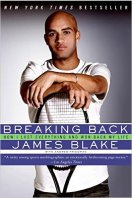 You don’t need to know much about tennis to like reading “Breaking Back” by James Blake. James Blake is a retired tennis pro and is two years older than Roger Federer. He achieved a career high ranking at number 4 after surviving a freak-accident during practice in Rome, the loss of his beloved father, and a potential career-ending illness. James Blake provides detailed recollections of his professional wins and losses, his relationship with family and friends, his struggles to overcome life challenges. It is a story of his relationship with life and how he overcome the dark days, and arrive on the other side with a new approach to everything on the court and off. It is an inspiring read.
“Top Spin”, by Eliot Berry, is a book about college and 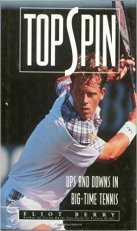 professional tennis in the 90s – those were the years when Pete Sampras was on the rise and Stefan Edberg was fading. It covers some matches of Pete Sampras and some matches of Stefan Edberg. Yet, this is not a book about tennis stars, it is a book about those lesser-known and their path towards college or skipping college to be a professional tennis player. The author followed a few up-and-starters (Jonathan Stark, a pro made it to the top 30s at one point; Ania Bleszynski, a Stanford college tennis player). For those who love stars, there is a chapter covering a conversation with tennis legends in the 60s and 70s (Rod Laver and Ken Rosewall), and there is a chapter devoted to Wimbledon.
“Epic”, by Matthe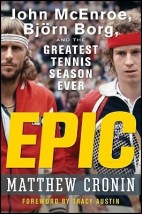 w Cronin, is the riveting account of the McEnroe vs Borg rivalry through the Wimbledon and US Open Finals in 1980. Many would remember the 18-16 tie breaker in the fourth set of the 1980 Wimbledon final and until 2008, the 1980 Wimbledon final has been considered by many as the greatest Wimbledon final. The author recollected the two finals with detailed accounting of many points in those engrossing five setters, and in between those sets, covered the personality, the career and the relationship of the two players. Their rivalry, their friendship, and their contrasting style was unmatched until almost 28 years later as Federer and Nadal played that “heart breaking” five setters in the Wimbledon final in 2008. “Epic” is a reminder of the many great tennis matches, and that the sport is bigger than any players.
If these books are not enough to satisfy the tennis appetite, there is the Bud Collins’ Modern Encyclopedia of tennis, covering players from 1874 to 1994.
 I love tennis. The challenge is thrilling, there is that desire to play better and the happiness, associated with the presence of mind in the playing moments, delivers even at tough moments in life.
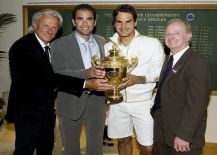 Every fan has different favorite tennis players. How much I hope Lendl would have won Wimbledon. He tried so very hard, he skipped French open for 2 years and focused on grass practice, but it was not meant to be, and he ended up as 2-times Wimbledon finalist. It was a good moment when Murray, his
 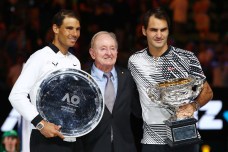 Nadal. The 2009 devastating loss of Federer against Nadal in AO final also hurt, in a match that Federer knew he should have won. That same year, Federer was rewarded with the elusive French Open, followed by a Wimbledon win. Those reverse of fortune is so telling that there is always something after the toughest setback. Tennis is greater than any player, but Federer comes that close to equate to tennis.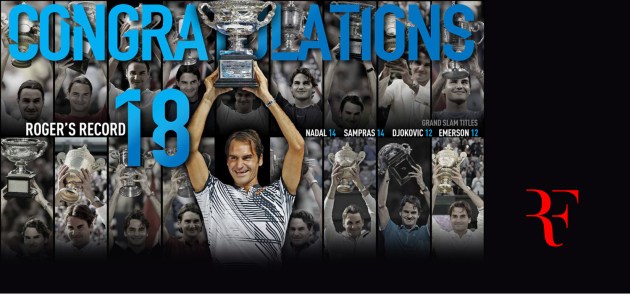
 oliviatamccue