Interviews provide a path for first hand information about many things of a company. The process, the way interviews are conducted, the questions being asked and the style of interviewers all reflect company DNA. Experiencing a company through on-site interviews provide solid insight to how well the company selects hire, which tells a lot about the “future” well being of the company.
When an applicant passes some rounds of phone interviews, the next thing is likely to be an onsite interview. If the phone interviews are like the early rounds of a tennis tournament, the onsite interview would be the semifinal or final. It is a day’s life at the campus meeting with a number of employees and Q&A. On that day, it shows the company in human form, and reflects what the company is looking for and how one stands in terms of fits.
Acing inter views are not only about an offer. Interviewing is finding answers to the “competence”, “compatibility” and “chemistry” between the two parties. An effective interview provides laser clarity, and minimizes ambiguity to those questions. I am lucky enough to experience this top notch onsite interview at this world famous technology company. It is revealing, energizing and opens up the window of learning.
The experience helps to check our perception of the company through conversations with real people who have worked there from less than 2 years to over 13 years. The responses to “how do you like the company?” are a repeating theme of “I want to retire with this company”, ” I cannot think of working for another company”, “I really like it here”, “I have a chance to work with so many smart people”, “this would be the last company I work in”. It is hard to imagine this company could fail, with this level of pride, loyalty and talent.
The kinds of questions being asked reveal the quality of people, how the company works and the day-to-day challenges. Great interviewers ask insightful questions to tie them to the profile that best fit the position and reveal the ability of the candidates. While answering the questions, not only the brain works in overdrive, there is also the experience of an ongoing flow of learning to become a better interviewer in situations of role reversal. On the day, there are quite a bit of questions on resolving disputes among technical teams, how to seek support from technical teams, how to use data/scientific models to solve problems, mostly around solving either a real business need or a day-to-day math problem on the spot. Those on-the-spot problem solving is toughest esp. in the latter part of the day, when the head is getting dense. It is truly telling how a person can meet the ambition of solving difficult problems. It is all about ability not so much about experience nor people skills.
An effective interview not only helps both sides to answer the “competence”, “compatibility” and “chemistry” questions. It is a learning experience, a chance to connect with folks and understand where one still can improve, all in one day. At the end, the question may be very simple “do you enjoy the day?” That can tell if the company is a fit for you.
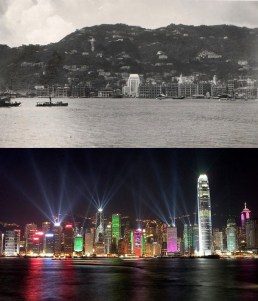 tuff that may not be readily available in the arriving cities; not any more, it is more that we need to bring money in case we miss something these days. Wait a minute, we don’t need to bring money or travelers’ checks neither, we bring “global” cards and the ATM machine would flush out the right currencies. Globalization and technology deserve credits for these conveniences. At the same time, technology occupies the luggage with more electronic devices and their accessories than ever before. It has not been long when bringing a laptop has been a practice more for the computer professionals on business trips. These days everyone is bringing some sorts of computer devices. For my household of 4, in our 2014 trip to Hong Kong, there are 1 Kindle Fire, 1 laptop/tablet, 1 laptop, 3 smart phones, 1 Nintendo, 1 iPad; a total of 8 devices, an average of 2 per person; and not to mention the 2 local phones that have been arranged. And these devices have their own “friends” as a big bag of adapters, power plugs, and bundles of cables in the luggage.
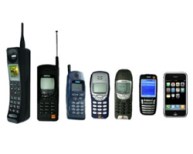 be of the size of water bottle and can be used as a defensive weapon when needed. Now it is more of a personal choice with size to fit in the pants’ pocket or with size more pleasing to the eye; the cell phone at times become more of an essential than the wallet used to be. On the subway, three quarters of folks, regardless of their ages, are busy on their phones – games, text, videos, movies and only once-in-a-while that they are talking on the phone. And in the subway, there is a frequent announcement to remind folks to not only pay attention to their cell phone while riding on an elevator. Is the phone (aka telephone) still being used the same as what the dictionary has defined it to be – an apparatus, system or process for transmission of sound or speech to a distant point, especially by an electronic device?
 oliviatamccue