Just that happiness is a pursuit of so many, when I search books related to “happiness” on Amazon, some 39,453 matches are returned.
In his book “Flo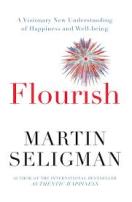 urish”, Martin E. P. Seligman provides a visionary new understanding of Happiness and Well-being. Both Happiness and Well-being are the topic of Positive Psychology. Martin E.P. Seligman, Professor of Psychology at the University of Pennsylvania, has led the Positive Psychology movement for fifteen years, where the goal is about raising the bar for the human condition. In as much as the national wealth is measured by Gross Domestic Product (GDP) or Federal deficit, there is yet a well-known metric to measure the well-being of the countrymen.
What is the Well-Being Theory? It has 5 elements: Positive emotion, Engagement, positive Relationship, Meaning and Accomplishment (PERMA). This theory has far reaching effects including the idea and implementation of “Strength Finder”.
How would such a “Well-Being” index look like for a company workforce? My starter …
Positive emotion: the ratio of positive emotion (feedback) versus negative emotion (criticism) in a day’s work. Culture, the interactions across functions, the interactions among teams, the management style and the team would have their influence. Do co-workers give credits to others? Or do they criticize on others’ work? And how is the annual performance review being managed? D
 oes
oes
it focus on the accomplishments and build on strengths? Or does it look more for areas of improvements?
Engagement: the frequency of leaders communicates such as employee meetings, informal chat with workforce in the o
ffice, or that the leaders are being seen in the office. The workforce treats co-workers and customers in similar ways as how they are being treated. Much of the company results depend on an engaged (and committed) workforce.
Positive Relationship: # of people in the company to become friends when the employee is no longer in the same company. What does he/she say about this statement – “I have a best friend at work”?
Meaning: the extent the work matters to the individual and he/she is willing to spend extra effort.
Accomplishment: the extent the employee feels that he/she has achieved something at work.
Well-Being of the Workforce: all things considered, the probability to stay in spite of another better offer; or reciprocal of the probability to leave without anything equivalent. If people are leaving a position without a job in this tough economy, it is a clear sign that he/she is neither happy nor well.
How would you assess the company with which you are spending majority of your waking hours?
If it does not bring well-being to you, it may be time to change.
 oliviatamccue
Leave a comment